Inspiration
Threads makes it easy to start public conversations, but people may hesitate to send honest questions or feedback when their identity is visible.
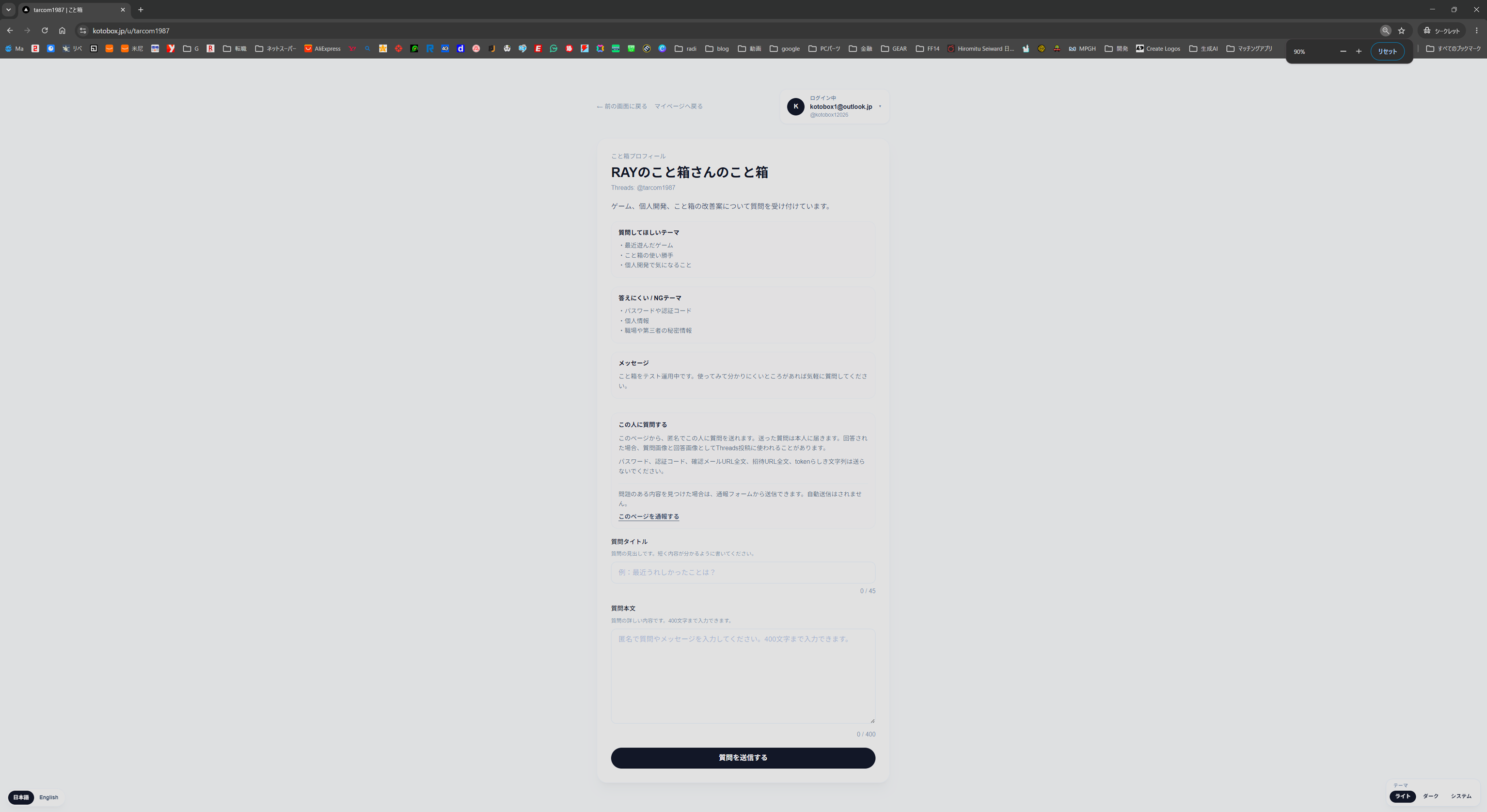
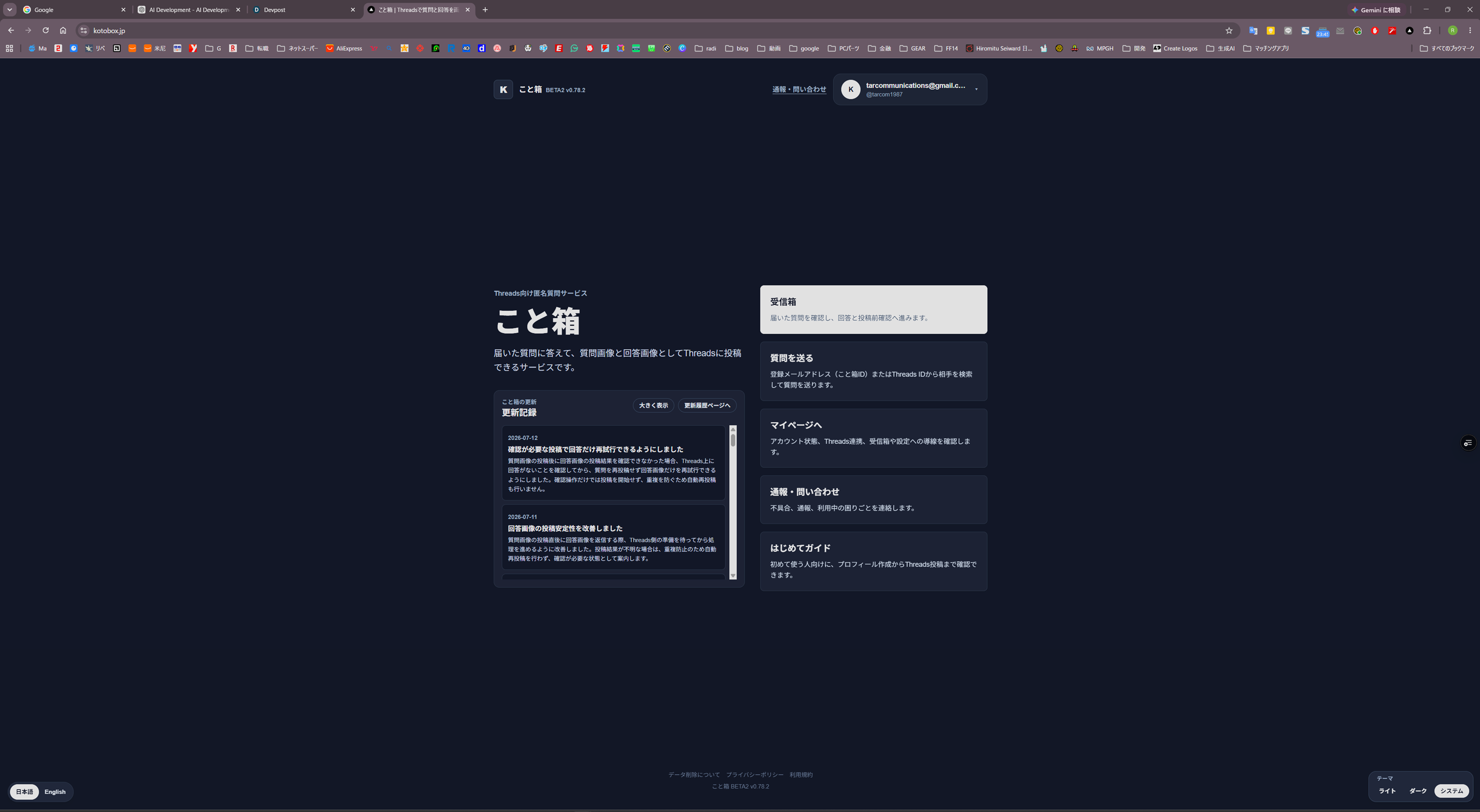
I built Kotobako to give Threads users a simpler way to receive anonymous messages and turn selected questions into clear, shareable conversations.
What it does
Kotobako is an anonymous question-and-answer service designed for Threads users.
Users can:
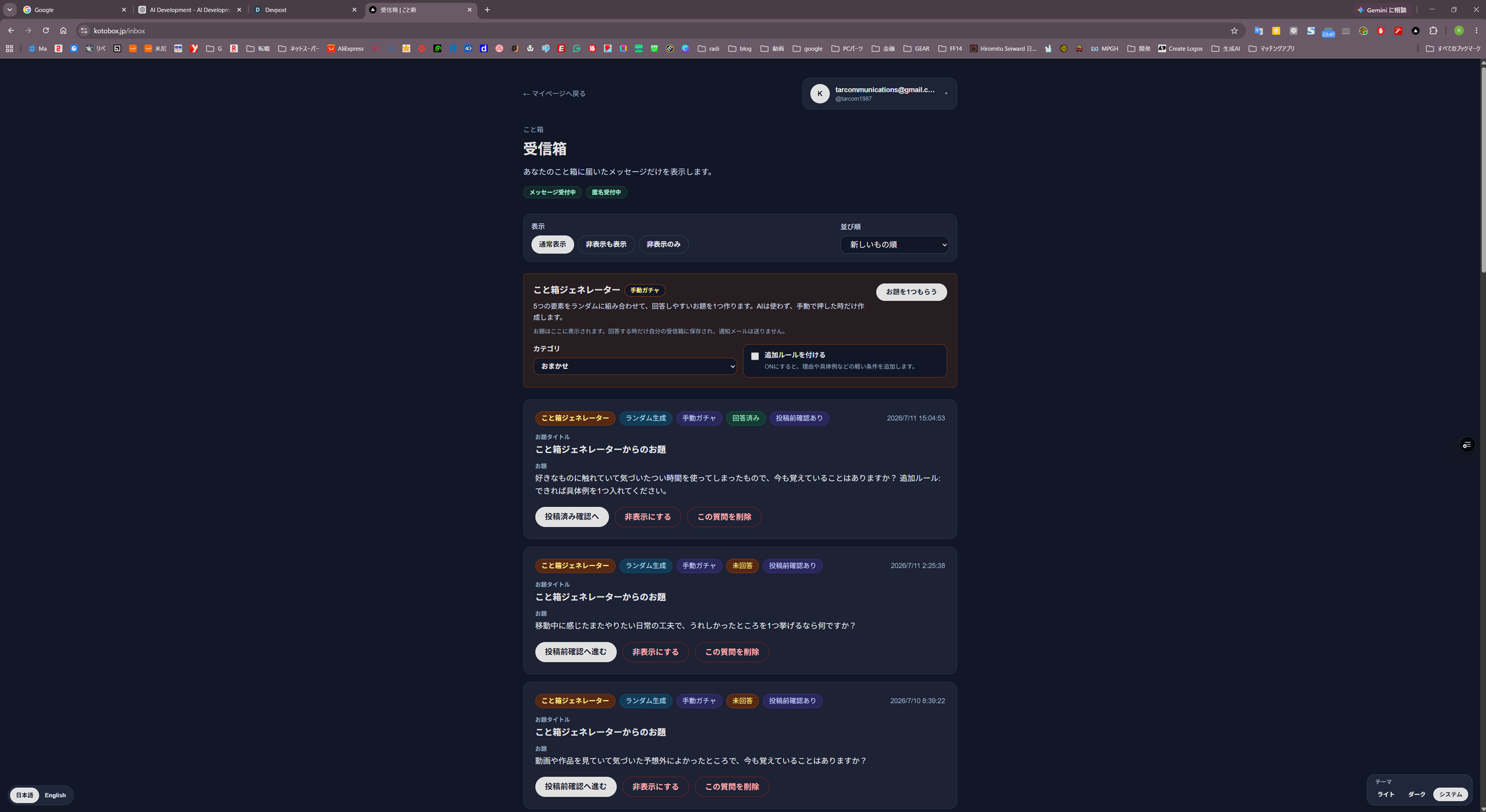
- Create their own Kotobako inbox
- Receive anonymous questions
- Write and save replies
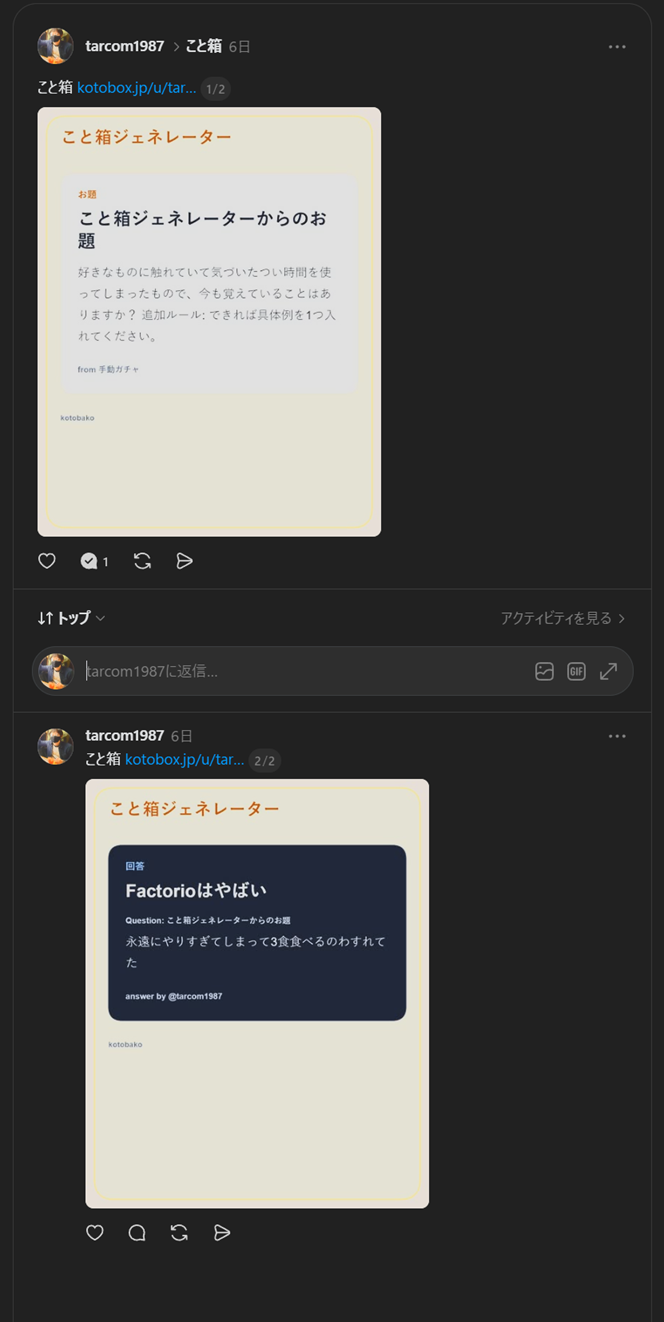
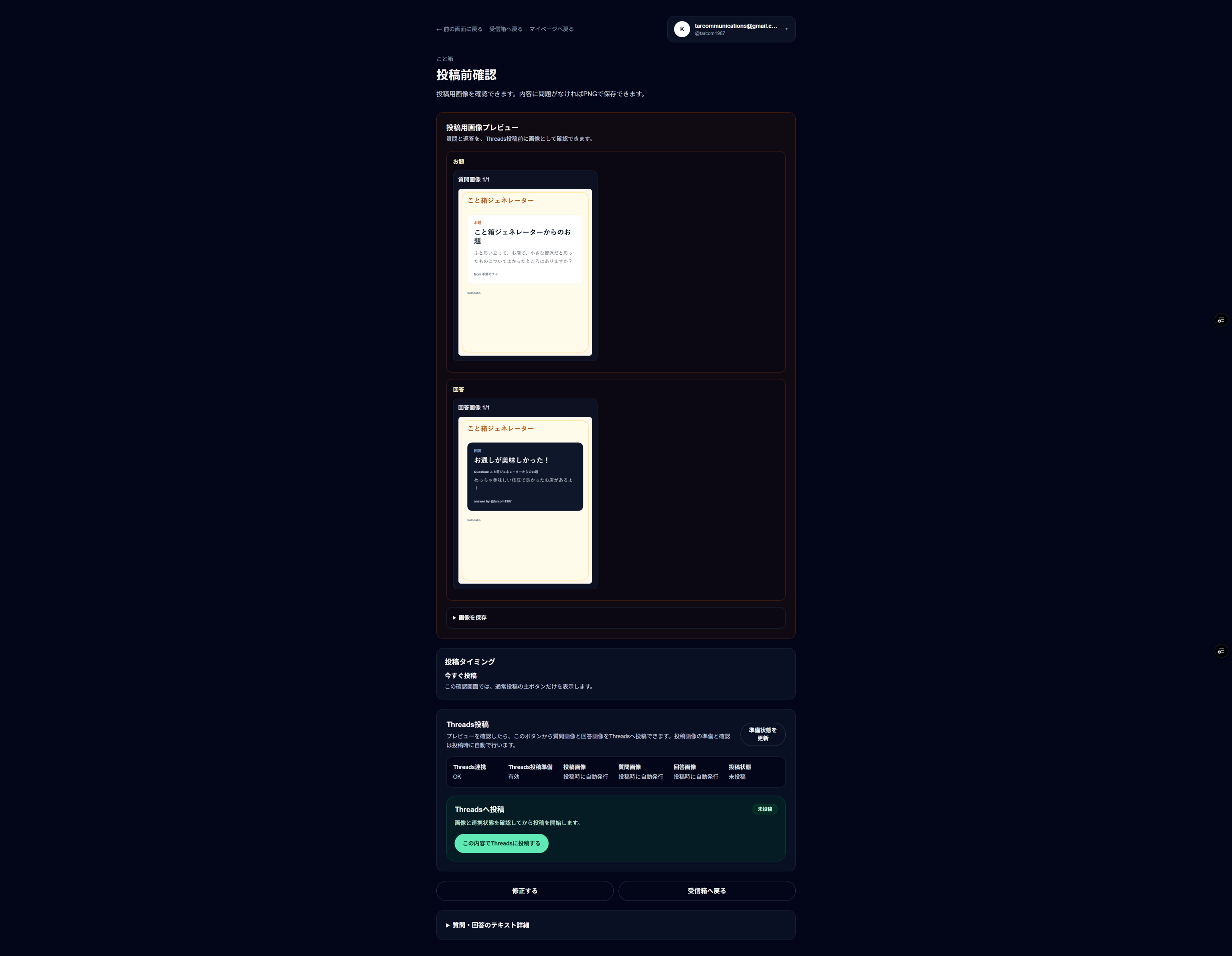
- Preview questions and answers as paired images
- Publish the question and answer to Threads in sequence
- Track publishing progress
- Recover interrupted or failed publishing jobs
- Control anonymous messages, muted words, and notifications
The system avoids publishing only the question. The question and answer are treated as one publishing flow.
How we built it
Kotobako is built with Next.js, React, TypeScript, Neon Postgres, Vercel, Vercel Blob, Tailwind CSS, Resend, and the Threads API.
During OpenAI Build Week, I used Codex with GPT-5.6 to inspect the existing publishing architecture, investigate failure states, implement recovery for stranded Threads publishing jobs, improve status presentation, and strengthen related tests.
Codex supported code investigation, implementation planning, testing, documentation, and review. I reviewed the proposed changes and validated them through automated checks, Git history, and Preview testing.
Challenges we ran into
The most difficult problem was making multi-step Threads publishing reliable.
The question post may succeed while the answer post fails, the browser may be closed during publishing, or a job may remain in an incomplete state. The system must recover safely without creating duplicate posts or incorrectly showing the job as completed.
Separating Production, Preview, database, and external API operations was also important because an apparently small change could affect real Threads posts.
Accomplishments that we're proud of
- A working anonymous question and reply flow
- Paired question-and-answer image generation
- Threads account connection and sequential publishing
- Durable publishing-job state management
- Recovery of interrupted and stranded publishing jobs
- Clear Preview and Production operational boundaries
What we learned
Reliable social publishing requires more than calling an API. State management, retry safety, duplicate prevention, recovery, and clear feedback to the user are essential.
Codex was especially useful when investigating an existing codebase, comparing multiple job states, and converting operational edge cases into explicit implementation rules and tests.
What's next for Kotobako
Next, I plan to complete the remaining publishing-recovery edge cases, strengthen security and moderation, improve onboarding, and gradually expand the public beta while preserving anonymity and preventing incomplete or duplicate posts.
Built With
- api
- blob
- codex
- css
- gpt-5.6
- neon
- next.js
- postgresql
- react
- tailwind
- threads
- typescript
- vercel

Log in or sign up for Devpost to join the conversation.