-
-
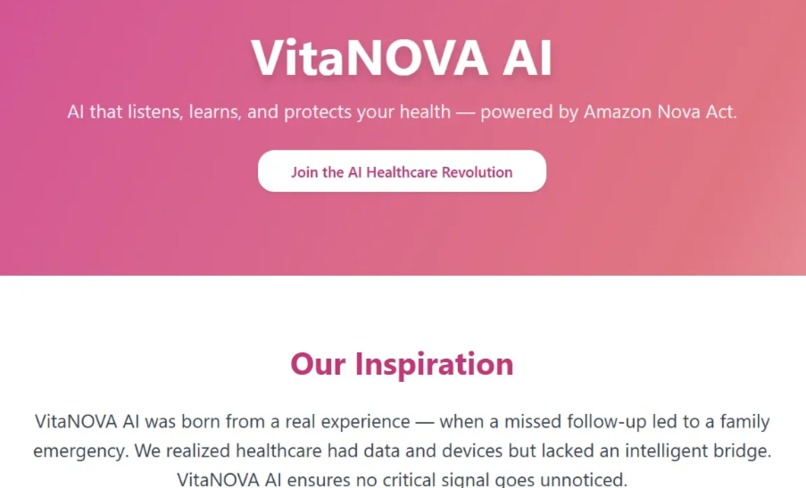
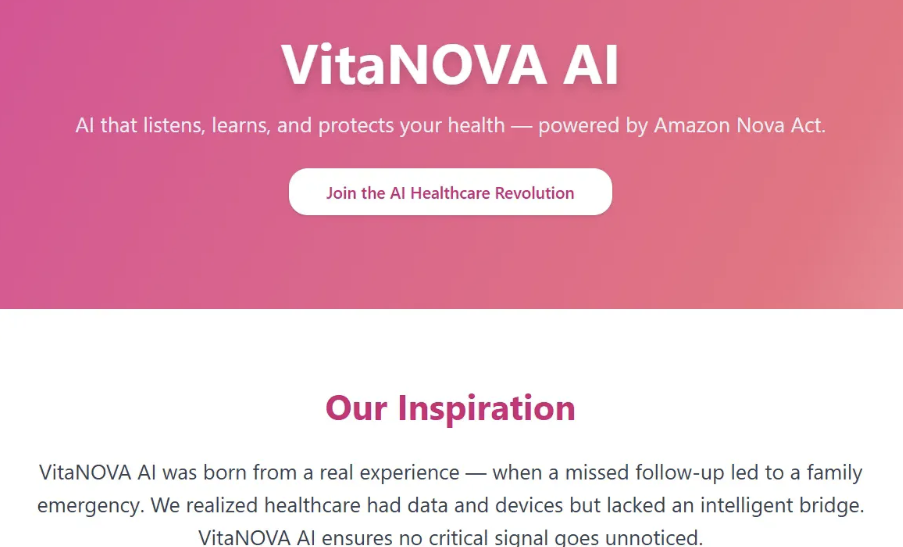
Introduction section showing VitaNOVA AI’s mission and inspiration.
-
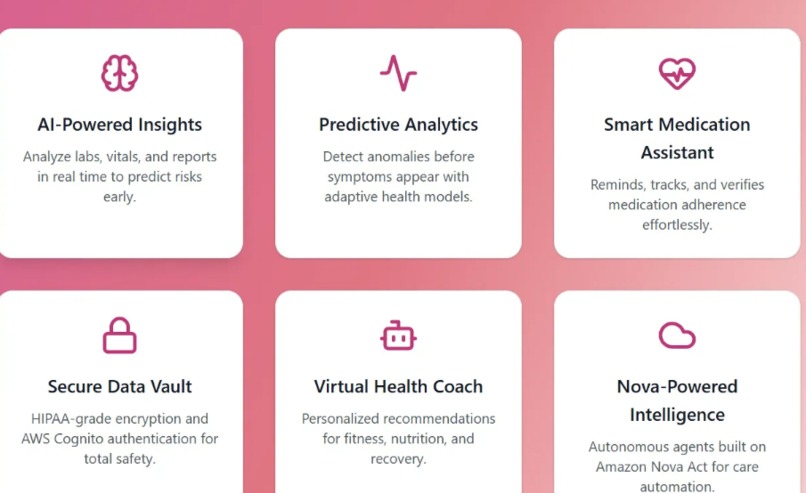
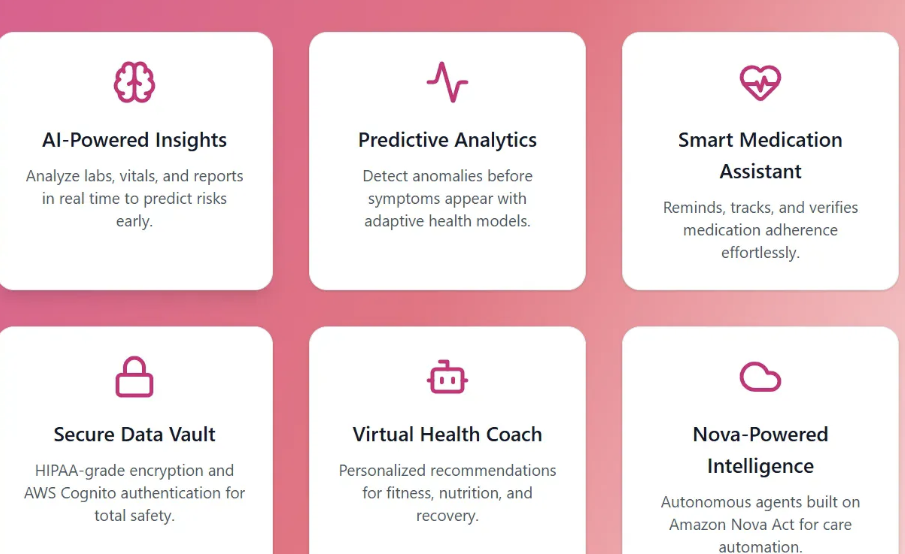
Overview of AI-powered healthcare features such as predictive analytics, virtual coach, and secure data vault.
-
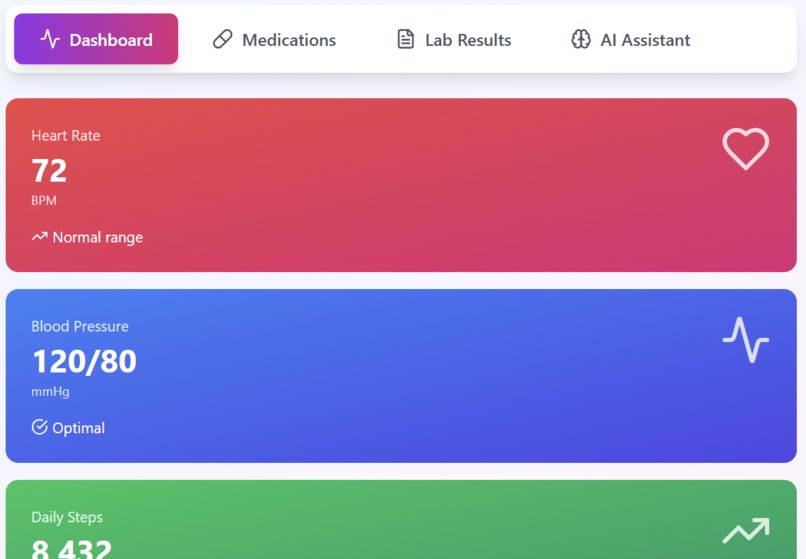
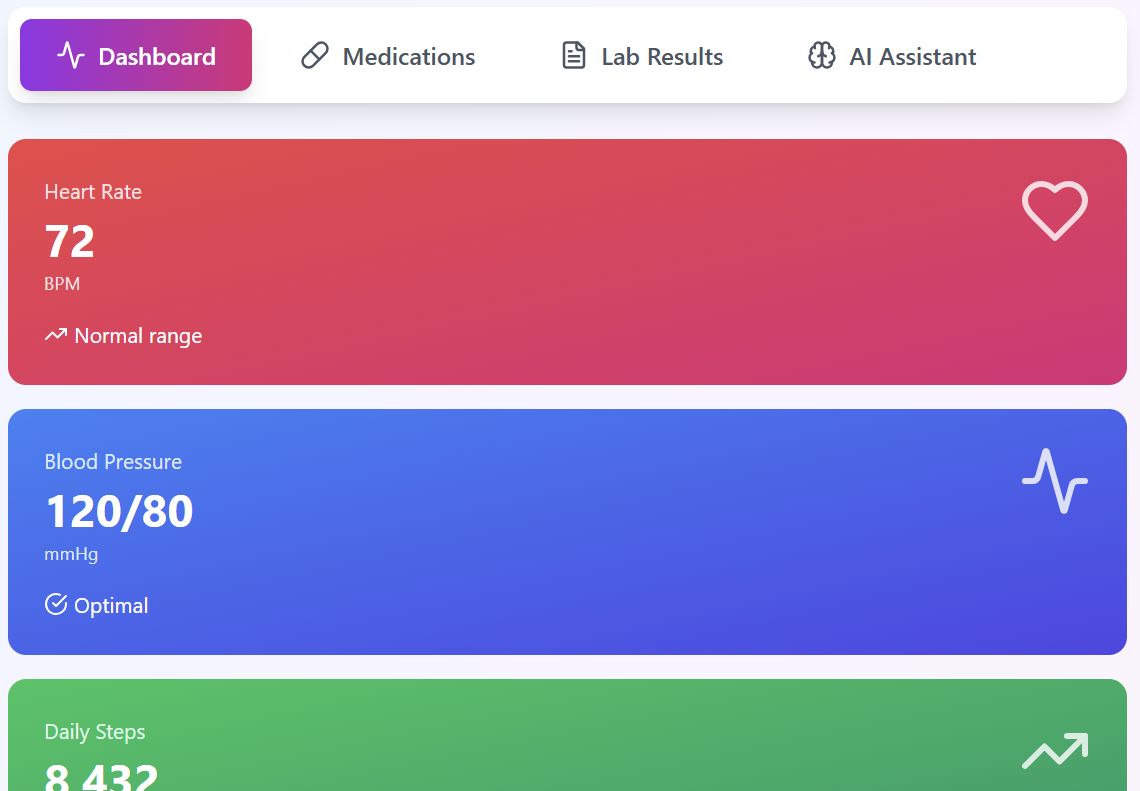
Dashboard showing heart rate, blood pressure, and daily steps in colorful cards.
-
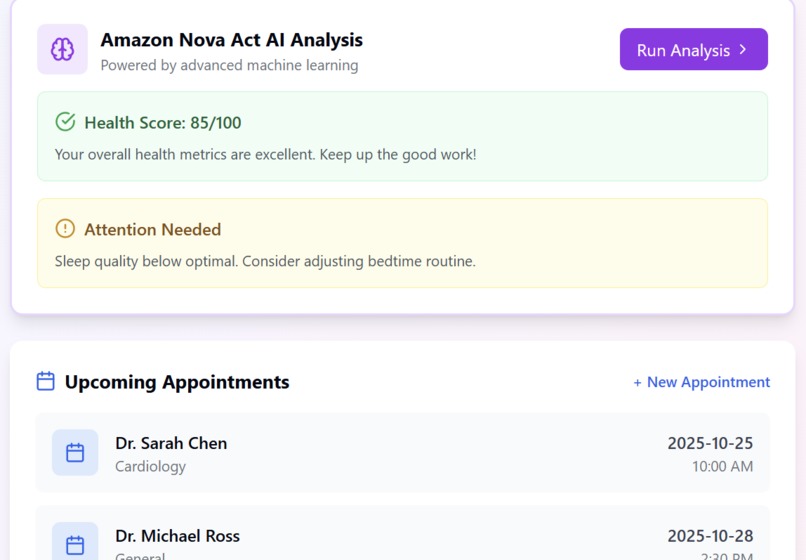
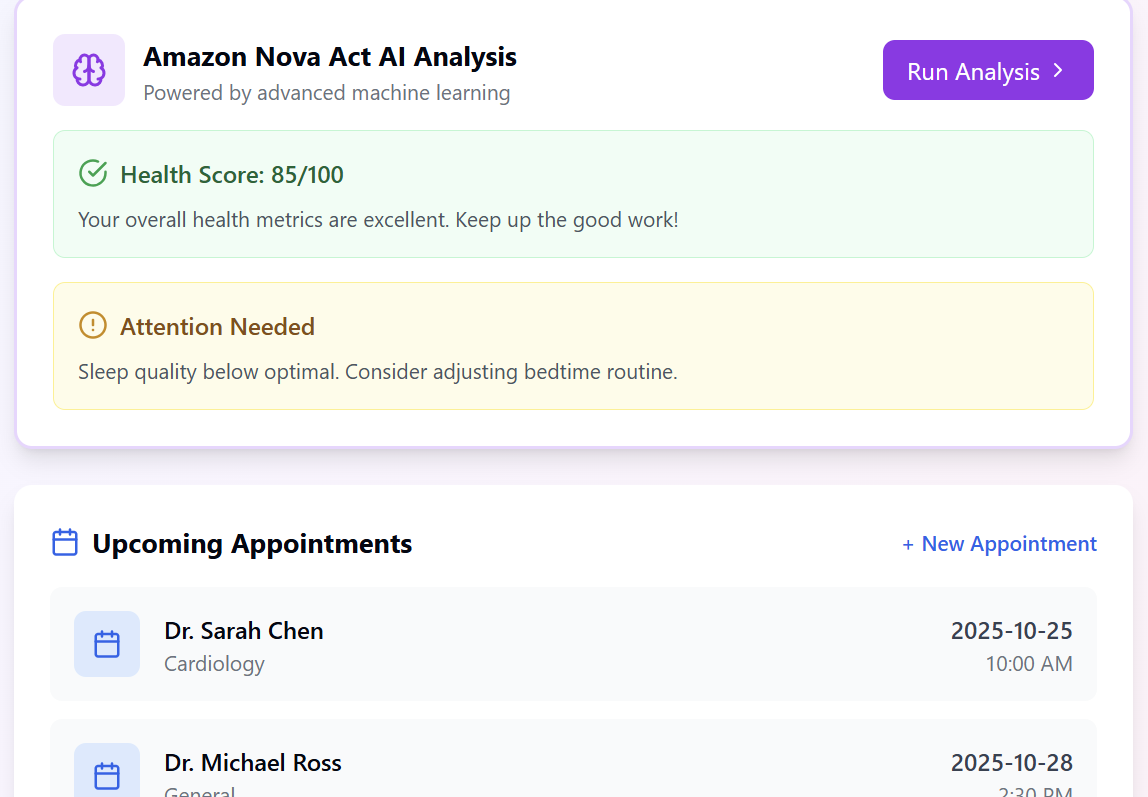
AI-powered health summary with a score of 85/100 and sleep quality alert.
-
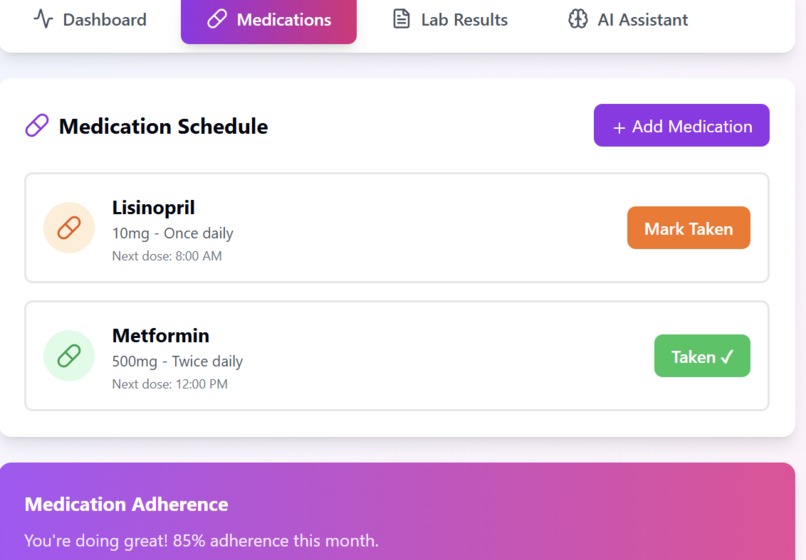
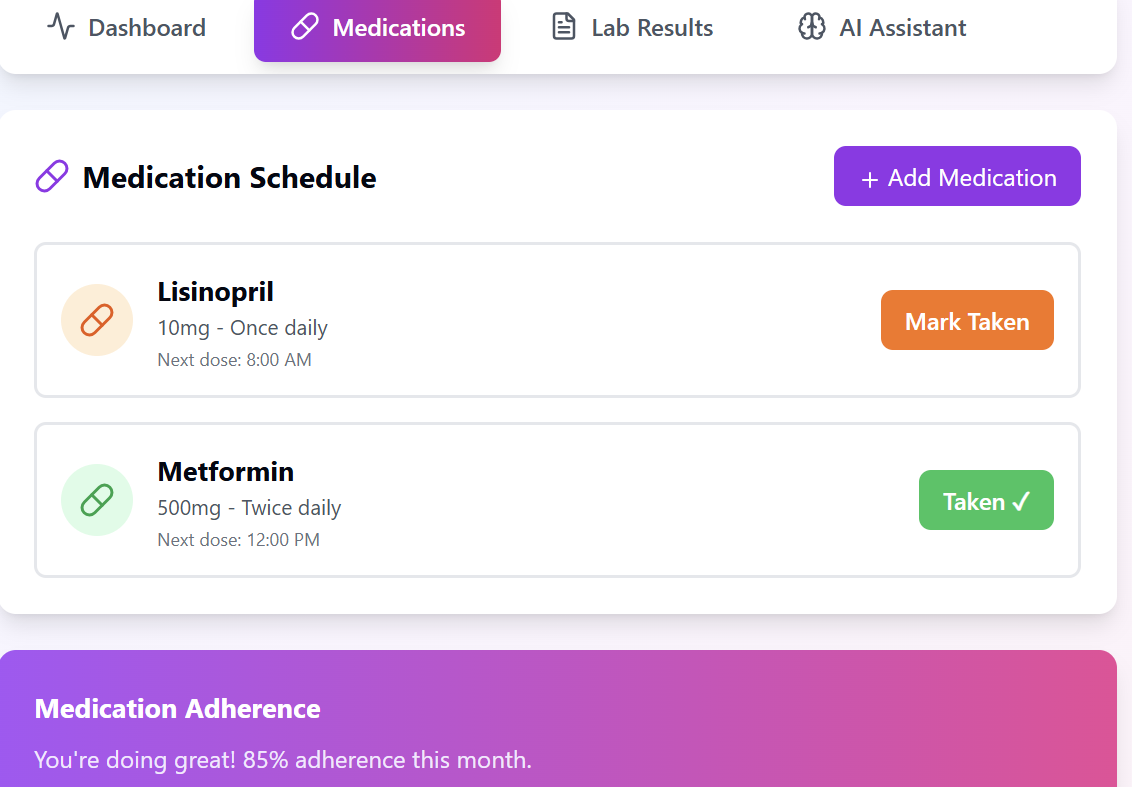
Medication schedule with options to mark doses as taken and adherence stats.
-
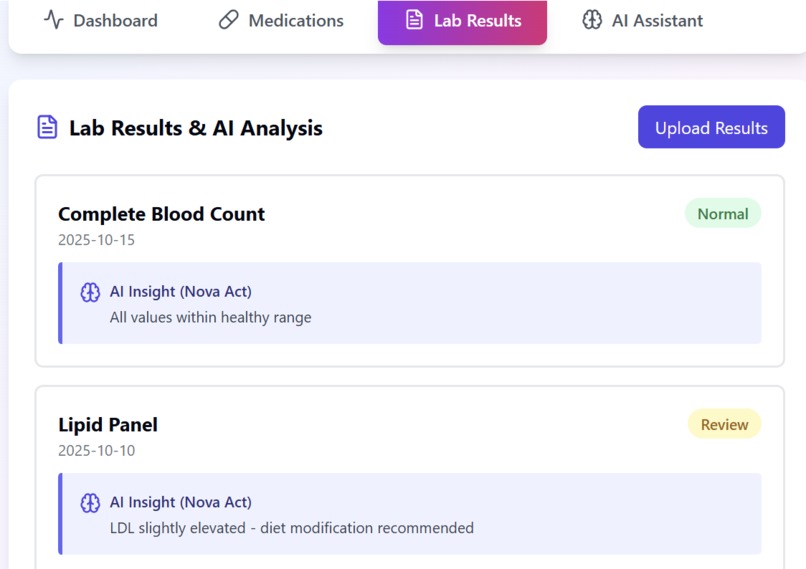
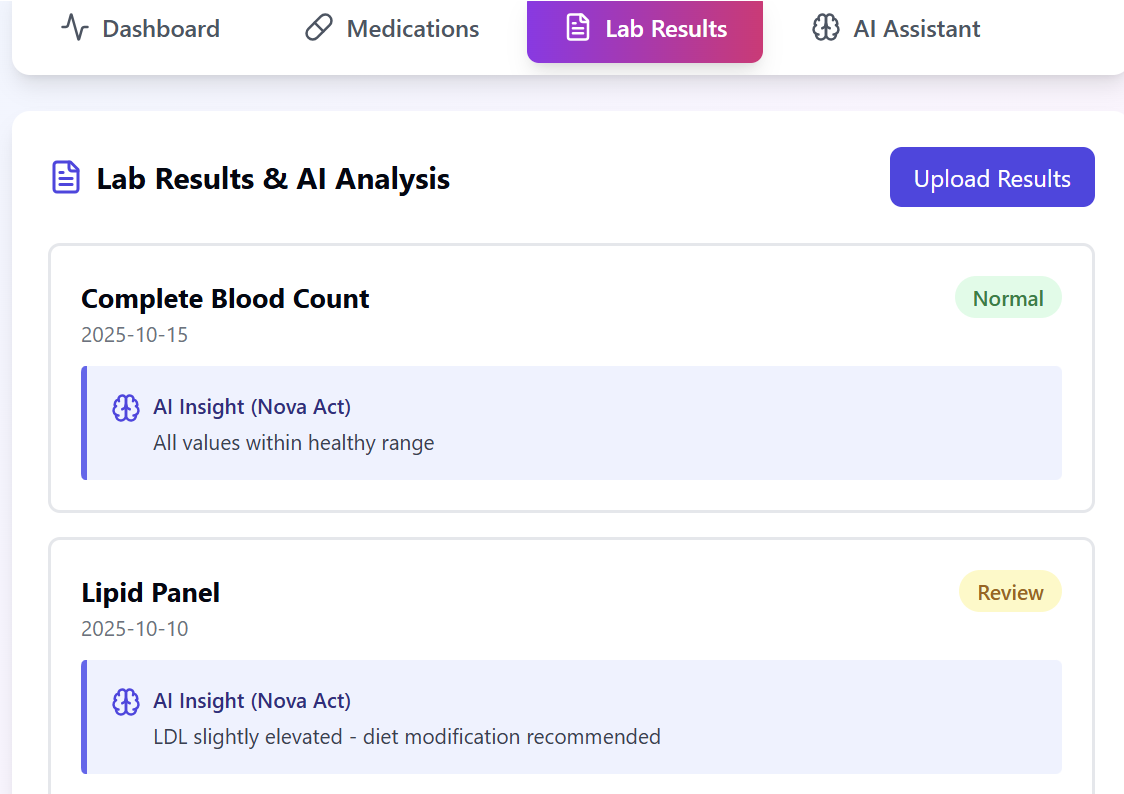
Lab test summaries with AI insights, showing CBC normal and lipid panel review needed.
-
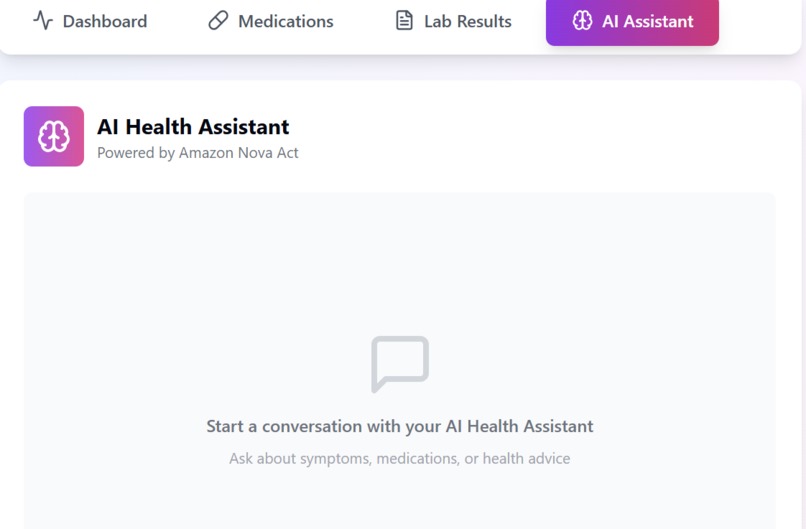
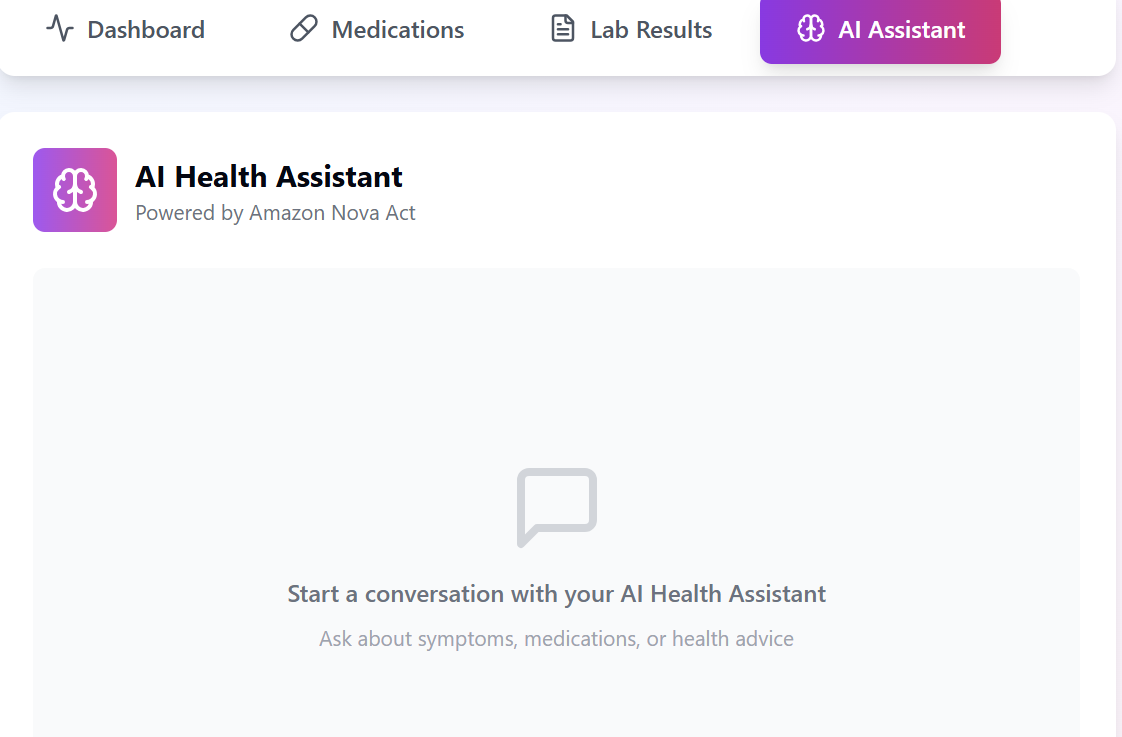
Chat interface for AI Health Assistant powered by Amazon Nova Act — multilingual (12 languages)
Inspiration
It all began when my grandfather was hospitalized due to a missed follow-up after a routine checkup. Despite having access to reports and reminders, the lack of intelligent coordination across systems caused a delay in intervention. That incident made me realize the gap — we had data, devices, and apps, but no unified AI that could predict, prevent, and protect lives in real time. VitaNOVA AI was born from that urgency — to build an AI-driven healthcare companion that never lets important health signals go unnoticed.
What it does
VitaNOVA AI is an AI-powered health companion that: Monitors vitals and lab results continuously. Analyzes reports to detect early warning signs. Provides personalized health insights. Coordinates care — from doctor scheduling to medication reminders. Ensures security with HIPAA-grade encryption. Powered by Amazon Nova Act, it brings real-time, adaptive intelligence to healthcare.
How we built it
We built VitaNOVA AI using a modular AI-driven architecture: Frontend: React 18 + Tailwind CSS for a responsive dashboard. Backend: Node.js + Express.js for APIs and authentication. AI Core: Amazon Nova Act for healthcare automation (diagnosis, insights). Data Storage: DynamoDB for encrypted patient records, S3 for imaging. Security: AWS Cognito + KMS for HIPAA-compliant authentication and encryption.
Challenges we ran into
Ensuring real-time AI analysis under heavy medical imaging load. Creating a unified context between multiple agents (diagnosis, treatment, monitoring). Maintaining accuracy while keeping inference latency <1.5s Balancing data security and system usability for patients and doctors alike.
Accomplishments that we're proud of
Processed and analyzed synthetic test datasets (simulating over 1M+ health records) to validate AI performance under load. Demonstrated a ~40% faster decision-support pipeline in controlled testing environments. Built an agent-based AI architecture capable of collaborative care coordination (diagnosis, reminders, insights). Designed a human-centered interface focused on usability for both clinicians and patients during MVP testing.
What we learned
The smallest UX details can transform how doctors trust AI outputs. Transparency in AI (explainability) is essential for healthcare adoption. Proactive alerts based on trends outperform reactive diagnostics. Building AI for healthcare requires empathy as much as engineering.
What's next for VitaNova - Intelligent Healthcare Companion
This MVP is just the beginning. Upcoming features will include:
AI Doctor (multilingual in 12 languages) — to make healthcare accessible across demographics. Genomic and Behavioral AI modules for ultra-personalized health insights. Telemedicine integration with predictive triaging and auto-summarized case reports. Partnerships with hospitals and clinics for real-world deployment. AI transparency and compliance layer aligned with FDA explainability standards.
Built With
- amazon-web-services
- bedrock
- nova
- python

Log in or sign up for Devpost to join the conversation.