En
Cardio should feel immersive. But for us, it usually meant constantly reaching for our phones with sweaty hands, skipping songs that killed our pace, or spending centuries trying to find a playlist that somehow matched an entire workout.
The problem was never the music itself. It was that playlists stay static while workouts constantly change.
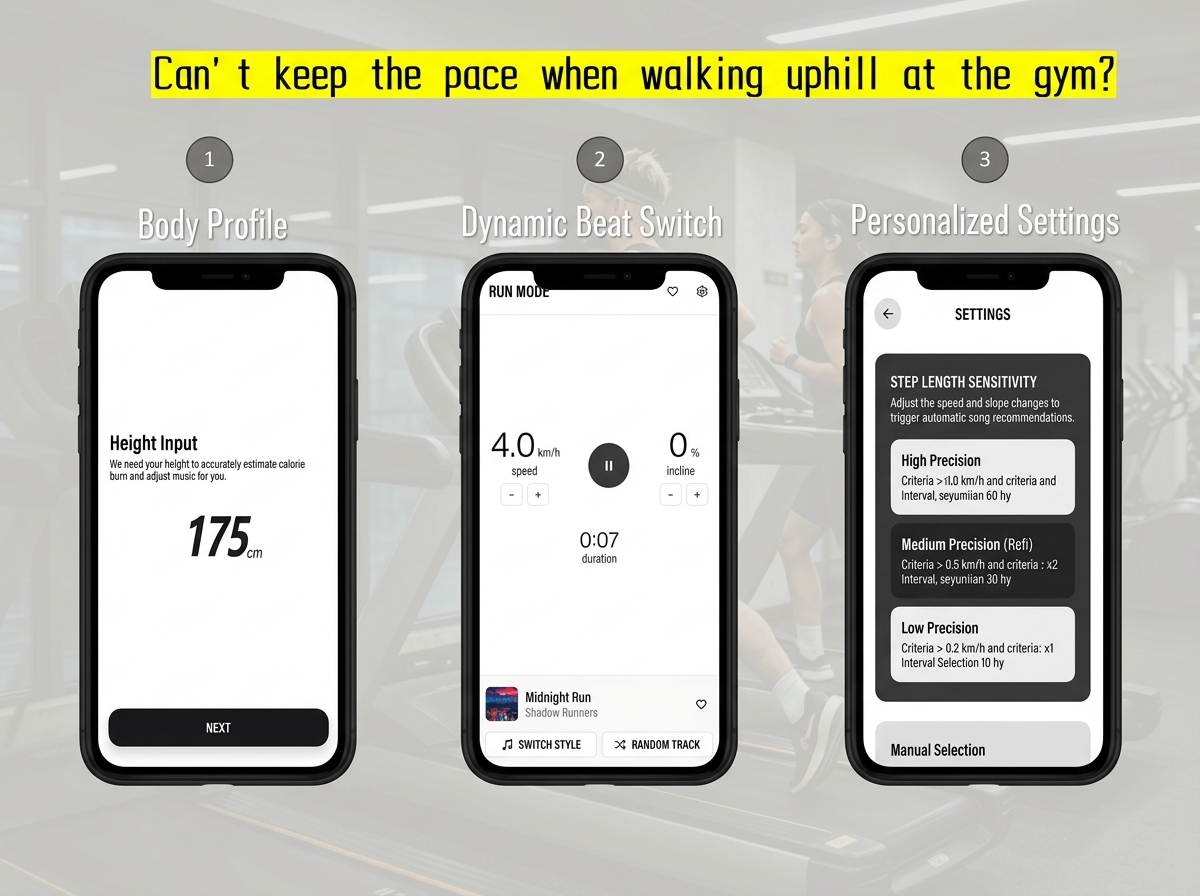
So we built an app that adapts music in real time based on users’ climbing speed and incline. As workout intensity changes, the rhythm and energy of the music change with it.
Instead of adjusting our playlist to fit our workout, the playlist finally adapts to us.
Ch
有氧爬坡本来应该是一种沉浸、专注的状态。
但现实却是:满手是汗地切歌、节奏突然掉拍、歌单永远匹配不上完整的训练流程。从热身到燃脂冲刺,总会有某一刻被音乐“打断状态”。
问题其实不在于音乐不够多,而是歌单是固定的,但运动状态是实时变化的。
所以我们做了这款 App。它会根据用户实时的爬坡速度和坡度,自动切换最匹配当前状态的音乐节奏和能量。
这一次,不再是人去适应歌单,而是歌单开始适应人。
Inspiration
Cardio should feel immersive. But for us, it usually meant constantly reaching for our phones with sweaty hands, skipping songs that killed our pace, or spending forever trying to find a playlist that somehow matched an entire workout.
The problem was never the music itself. It was that playlists stay static while workouts constantly change.
As a team that regularly spends time doing incline cardio at the gym, we realized how surprisingly fragmented the experience felt. Our energy changes minute by minute, but our music does not adapt with us.
So we started asking a simple question:
What if music could respond to your workout in real time?
That idea became Svibe Music, a lightweight fitness music experience that dynamically adapts music based on climbing speed and incline, helping users stay focused, motivated, and fully in rhythm with their workout.
What it does
Svibe Music creates a more immersive cardio experience by matching music to the user's real-time workout intensity.
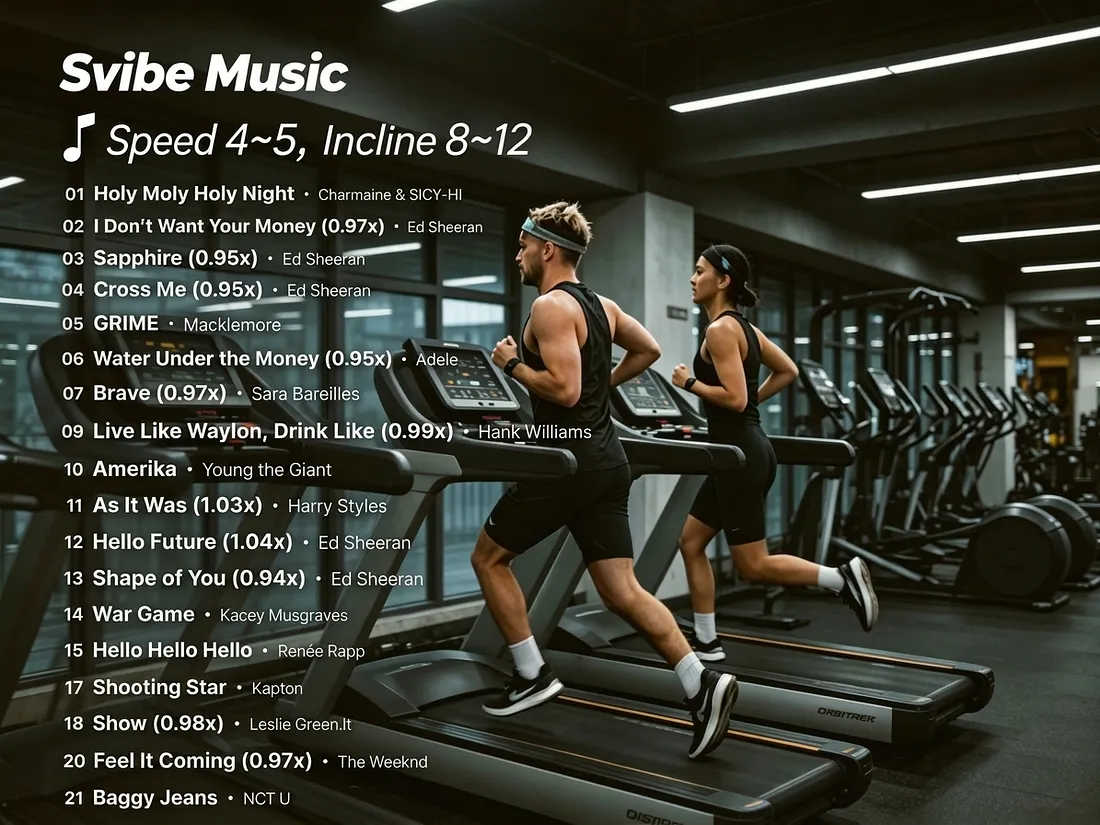
Instead of relying on static playlists, the app adjusts music based on two key workout factors: climbing speed and incline. When the workout becomes more intense, the music can shift toward higher BPM and stronger energy. When the user slows down or enters a recovery phase, the music becomes more relaxed and steady.
The goal is simple: less distraction, less manual skipping, and a workout flow that feels natural.
Users can also import their music preferences, including favorite playlists, artists, and genres. This allows Svibe Music to personalize recommendations while still matching the real-time energy of the workout.
How we built it
We built Svibe Music around the idea of connecting fitness data with music intelligence.
First, we designed the core workout logic. We used climbing speed and incline as the main signals to estimate workout intensity. Based on these signals, the app determines the user's current workout state, such as warm-up, steady pace, high intensity, or recovery.
Then, we mapped each workout state to music characteristics such as BPM, energy level, and overall mood. This allowed the system to recommend or switch music in a way that feels connected to the user's movement.
We also focused on making the experience lightweight and easy to understand. The interface was designed to reduce unnecessary interaction during exercise, because users should not have to constantly touch their phones while working out.
AI tools helped us move faster during the project. We used AI to support brainstorming, product planning, documentation, interface ideas, and technical prototyping. However, we still had to define the product direction, user experience, and logic ourselves.
Challenges we ran into
One of the biggest challenges was translating workout intensity into music behavior.
Speed and incline are simple numbers, but the user's real feeling during cardio is more complex. A small change in incline can feel very different depending on the user's pace, stamina, and workout phase. We had to think carefully about how to make the music response feel smooth instead of random.
Another challenge was balancing automation with personal taste. Users want music that matches their workout, but they also want music that feels like their own. If the system only focuses on BPM, the recommendations may feel technically correct but emotionally wrong. This helped us realize that personalization is just as important as real-time adaptation.
We also had to keep the product simple. During workouts, users do not want complicated settings or too many decisions. The challenge was to build something intelligent in the background while keeping the front-end experience clean and effortless.
Accomplishments that we're proud of
We are proud that we turned a small everyday frustration into a clear product idea.
Instead of building just another music player or fitness tracker, we created a concept that connects both experiences together. Svibe Music is designed around a real user problem: people want music that keeps up with their workout without constantly interrupting their flow.
We are also proud of the product thinking behind the project. We defined a clear user scenario, identified the core pain points, designed the adaptive music logic, and built the idea into a lightweight experience.
Most importantly, we are proud that the project feels practical. It is not only a futuristic AI idea, but something that could actually improve a common gym experience.
What we learned
One of the biggest things we learned during this project was that AI works best when humans provide clear intention, structure, and taste.
While AI helped us rapidly prototype ideas and accelerate development, we realized that good outputs still depend heavily on how clearly humans define the problem, the desired experience, and the expected outcome.
Product thinking, prototyping, and documentation still matter. Not because AI cannot generate things, but because humans still need to understand what we truly want to build.
We also learned that good technology should not interrupt the user. Especially in fitness scenarios, the best experience is often the one that feels natural and almost invisible. The app should support the user's rhythm instead of distracting them from it.
What's next for 动感音乐
We are excited about bringing Svibe Music to wearable devices.
The first reason is that it fits how people already work out. Many people already use sports watches during cardio, so having adaptive music directly on a wearable device would make the whole experience feel much more seamless and natural.
The second reason is that we are excited about where AI will live next. As models become smaller and easier to deploy on lightweight hardware, we believe AI experiences will move beyond phones and laptops and become more integrated into everyday life.
In the future, we would like to improve the personalization system, support more workout types, and explore integration with smartwatches, fitness equipment, and music platforms.
Just like how the internet and the first iPhone changed how people interacted with technology, we are excited to see what the next wave of AI hardware could look like — and we would love to be part of it.
Built With
- and
- and-openai-api.-the-app-uses-firebase/supabase-for-backend-services
- apple-healthkit
- deployment
- docker
- expo.io
- express.js
- figma-for-ui-design
- firebase-authentication
- for
- github-for-version-control
- google-fit-api
- node.js
- postgresql
- rest-apis
- this-fitness-app-was-built-with-react-native
- typescript


Log in or sign up for Devpost to join the conversation.