Inspiration
This system was developed in response to real issues observed in the public healthcare system, where a large number of patients have to wait for diagnoses. This leads to a heavy workload for medical personnel and limited access to healthcare services for people in certain areas.
What it does
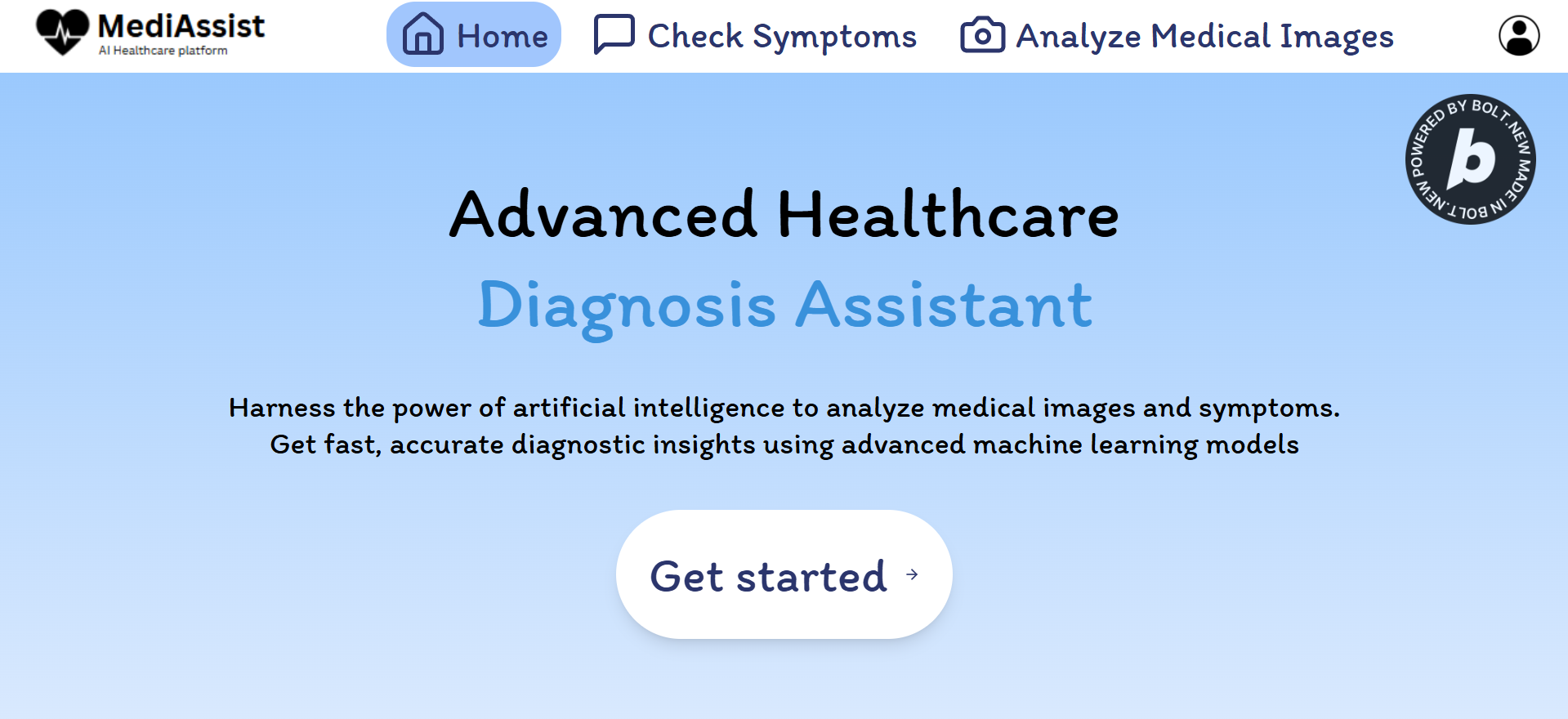
Providing services directly to users through a website. Takes your symptoms as input to assess the likelihood of various diseases.
How we built it
We used Bolt to build the frontend and integrated an LLM directly via API key (e.g., Typhoon). The backend, which we deployed separately, handles API requests for storing user input and managing application logic. The frontend connects to both the LLM and backend to deliver health insights based on symptoms.
Challenges we ran into
connecting the LLM to our project using bolt
Accomplishments that we're proud of
Built a complete frontend using Bolt that connects seamlessly to both an LLM and our deployed backend, enabling real-time AI responses and backend-powered functionality.
What we learned
We learned the importance of choosing a reliable and suitable domain for deployment to ensure accessibility, stability, and a smooth user experience. A good domain setup not only affects usability but also impacts trust and performance.
What's next for .
Switch to a more responsive backend domain to enhance performance. Improve the stability of the LLM connection.

Log in or sign up for Devpost to join the conversation.