-
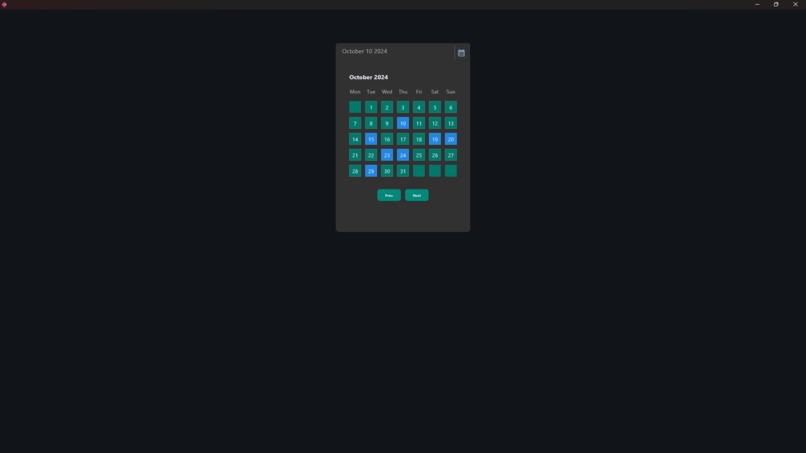
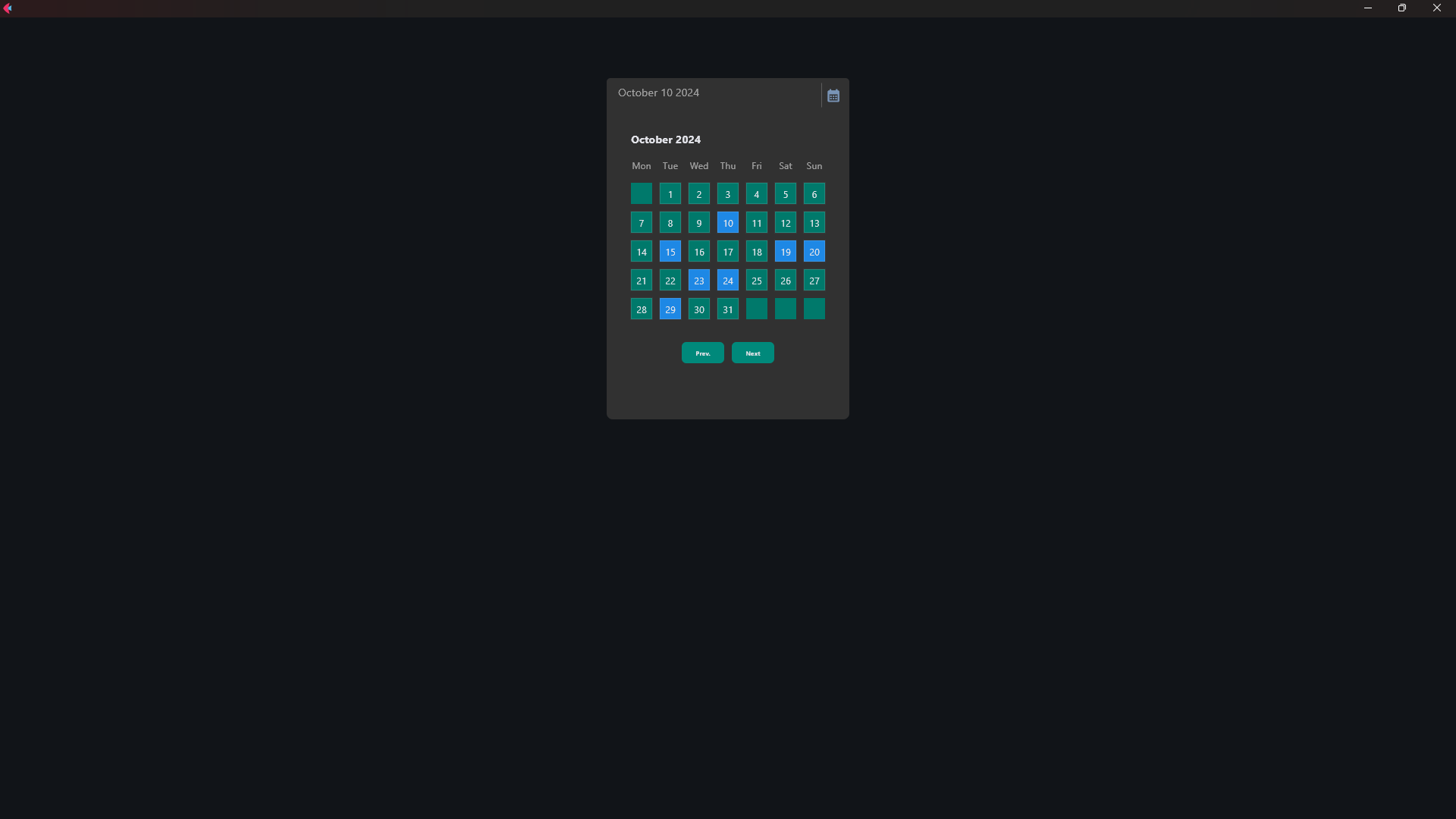
Thats how the app looks like, more seem to be a widget. Also, by the buttons at the bottom you can switch the months.
Inspiration
Inspiration for this project comes from issues we observed in our society. Our whole team is from one school, and we noticed some of the problems students face during the academic year. We study at Nazarbayev Intellectual Schools under the IB program. It is widely acknowledged that teenagers require 7-8 hours of sleep, as this is important for maintaining high brain performance, productivity, a positive mood, and overall mental and physical health. However, students must juggle heavy workloads, summative assessments, and school pressure, all while managing social life (sports, gym, preparation for projects, olympiads, competitions, family time, etc.) and sleep. When students try their hardest to balance school work, training, preparation for adult life, and family time, it often results in insufficient sleep among high schoolers. This lack of sleep predominantly affects high school students who are preparing to apply to colleges. According to the CDC (2024), the prevalence of insufficient sleep among high school students—both male and female—has significantly risen from 69% in 2009 to 77% in 2021. Insufficient sleep itself has negative consequences: “It is linked to many chronic health problems, including heart disease, kidney disease, high blood pressure, diabetes, stroke, obesity, and depression. Sleep deficiency is also linked to a higher chance of injury in adults, teens, and children” (What are sleep deprivation and deficiency? | NHLBI, NIH. 2022). As we have observed, students feel terrible both mentally and physically. Physically, many report that their immune systems are weakened, their motivation and energy levels are reduced, their athletic performance declines, and they experience general physical fatigue. Mentally, they feel burnt out from studying; their concentration and energy are diminished, and they report increased stress levels. The list of negative effects goes on. Hence, our team has tried its best to create an application that will help solve these problems, or at least provide advice to students.
What it does
The application aims to help students manage their time, prioritize tasks, and receive personalized advice on sleep hygiene, productivity, and well-being. It tracks students’ schedules, monitors sleep patterns, and provides recommendations to optimize sleep while balancing academics and extracurricular activities. Additionally, the app offers tips on stress management, energy restoration, and maintaining a healthy lifestyle amidst the demands of school life.
How we built it
We used a combination of health data sources, sleep science insights, and student feedback to design the app. Our development team focused on integrating sleep monitoring and productivity tools, combining these with an easy to understand and user-friendly interface. We built the backend using Python for algorithms and data processing
Challenges we ran into
One major challenge was testing the app with students and adjusting it to meet different needs, from academic stress to athletic schedules, required several iterations.
Accomplishments that we're proud of
We are proud of our product (even though we could do better) since it completely solutes the problem. We are indeed proud of it because we appreciate that the ability to address the cause of the problems, and not simply the symptoms, is what makes this product such a unique and effective one.
What we learned
After spending several days coding with Kivy and Flet modules using Visual Code Studio, we have familiarized ourselves with the surroundings of the Kivy and Flet frameworks in Python programming. This uniquely made programming learning possible, and we found it much easier to attain better skills because we managed to combine it with a visual studio for our productions. With Kivy, which is also the area of the Software Development curriculum, Kivy Development, the design and development of multi-touch applications is considered.
What's next for Health care application
With the development of modified medicine and predictive analytics, the potential of machine learning and artificial intelligence in healthcare may be fully realized. Based on data mining techniques, predictive analytics uses artificial intelligence to scan a variety of patient data sources and predict outcomes related to treatment, potential illnesses, and overall health. By using these strategies, medical practices will become more efficient and the appropriate interventions will be given to the correct patient at the right time. Examples of predictive analytics that medical officers utilize mostly deal with predicting patient outcomes, the development of different illnesses or disorders, and the likelihood of a given treatment's reaction.
Built With
- calendar
- datetime
- flet
- google-calendar
- kivy
- python
- tkinter


Log in or sign up for Devpost to join the conversation.