MCF and Theoria
Inspiration
High-quality educational content is often locked inside platforms that require reliable internet, modern hardware, accounts, and continued access to a company’s service. That creates a real barrier for disadvantaged children and communities using older devices or limited connectivity.
I built MCF, the Modular Curriculum Format, so complete interactive courses can remain portable, human-readable, and independent of any single platform. A course can be copied to a USB drive, shared over a local network, opened as a standalone file, or studied through Theoria.
MCF also lowers the barrier to course creation. A teacher, parent, tutor, volunteer, student, or knowledgeable community member can use GPT-5.6 to help draft a course, then review, edit, validate, compile, and distribute the source themselves.
What it does
The project is an educational ecosystem with four principal parts:
- MCF 1.0 specification — an open, implementation-independent source format for courses.
- mcf-npm — the reference TypeScript compiler and validator.
- mcf-python — an independent Python compiler implementing the same core workflow.
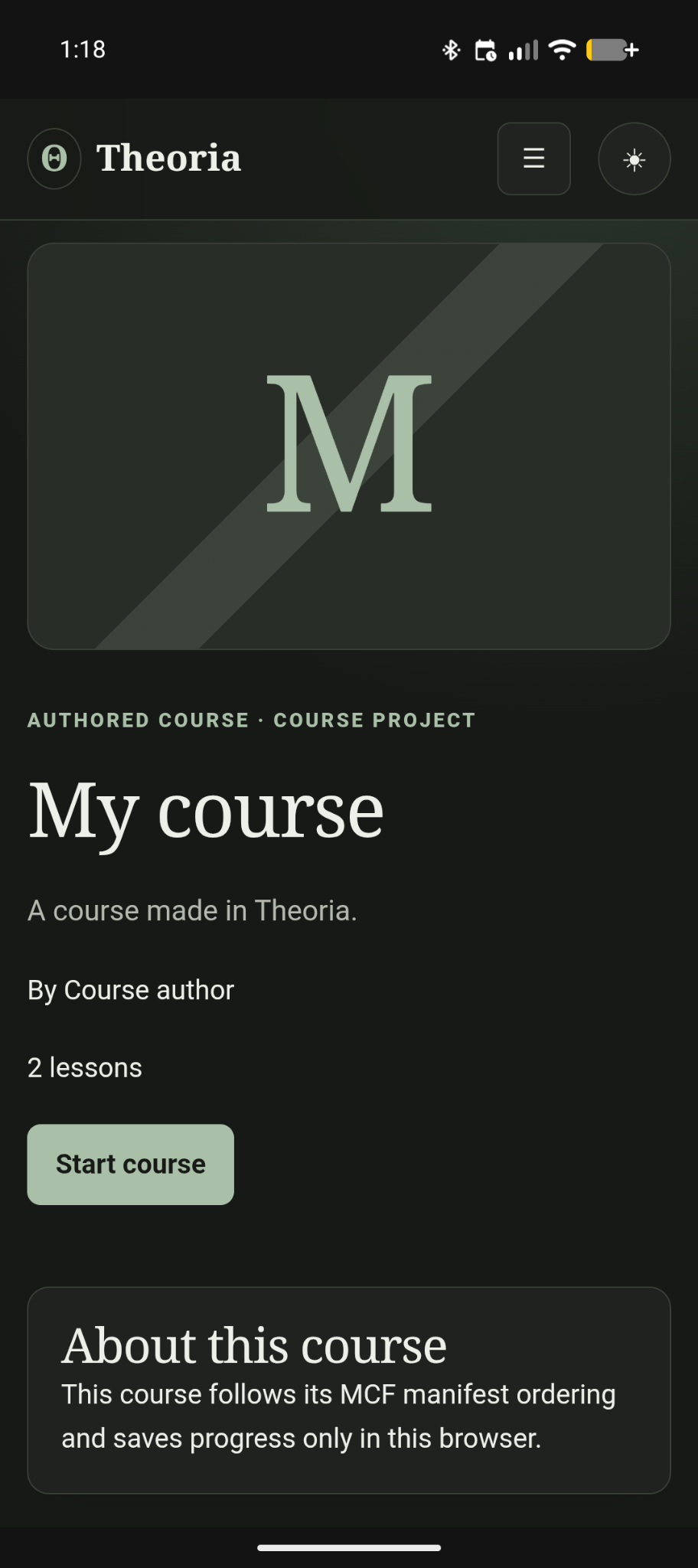
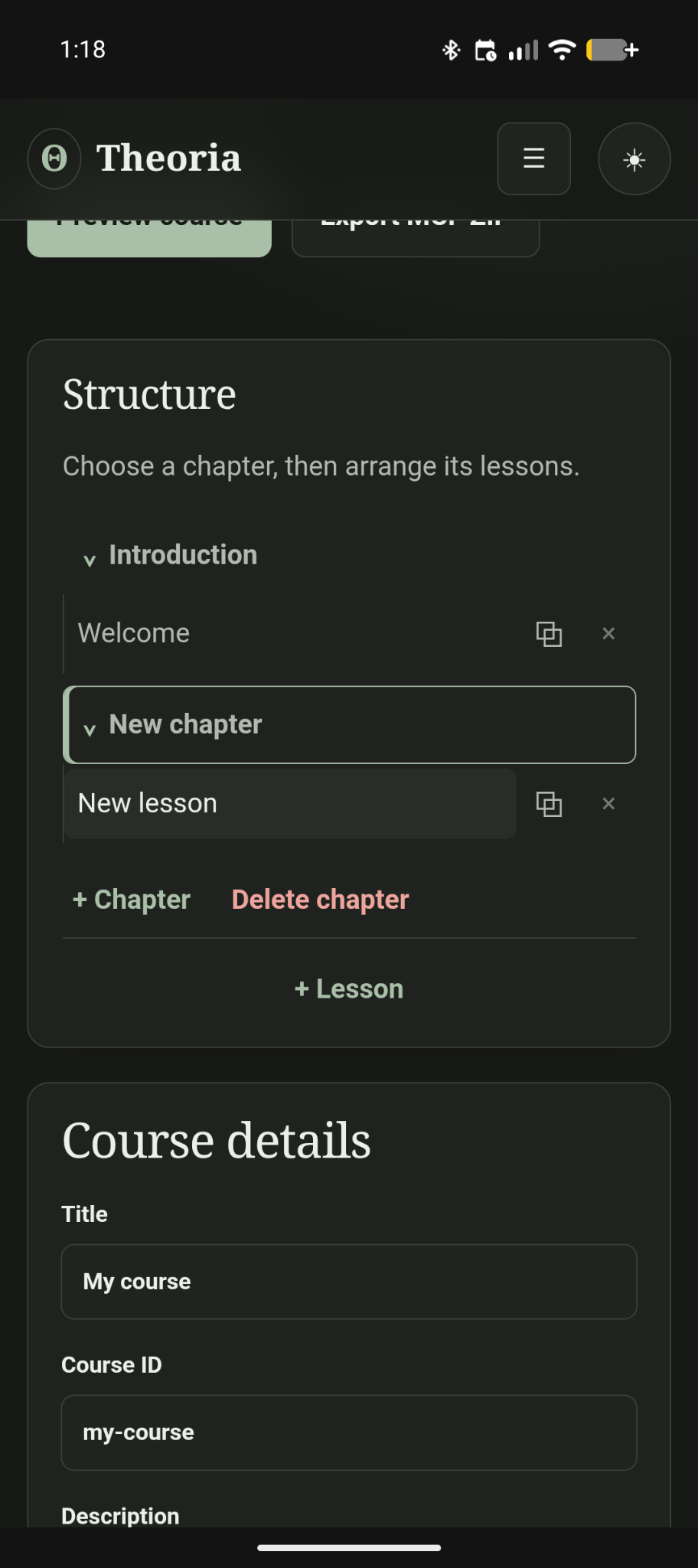
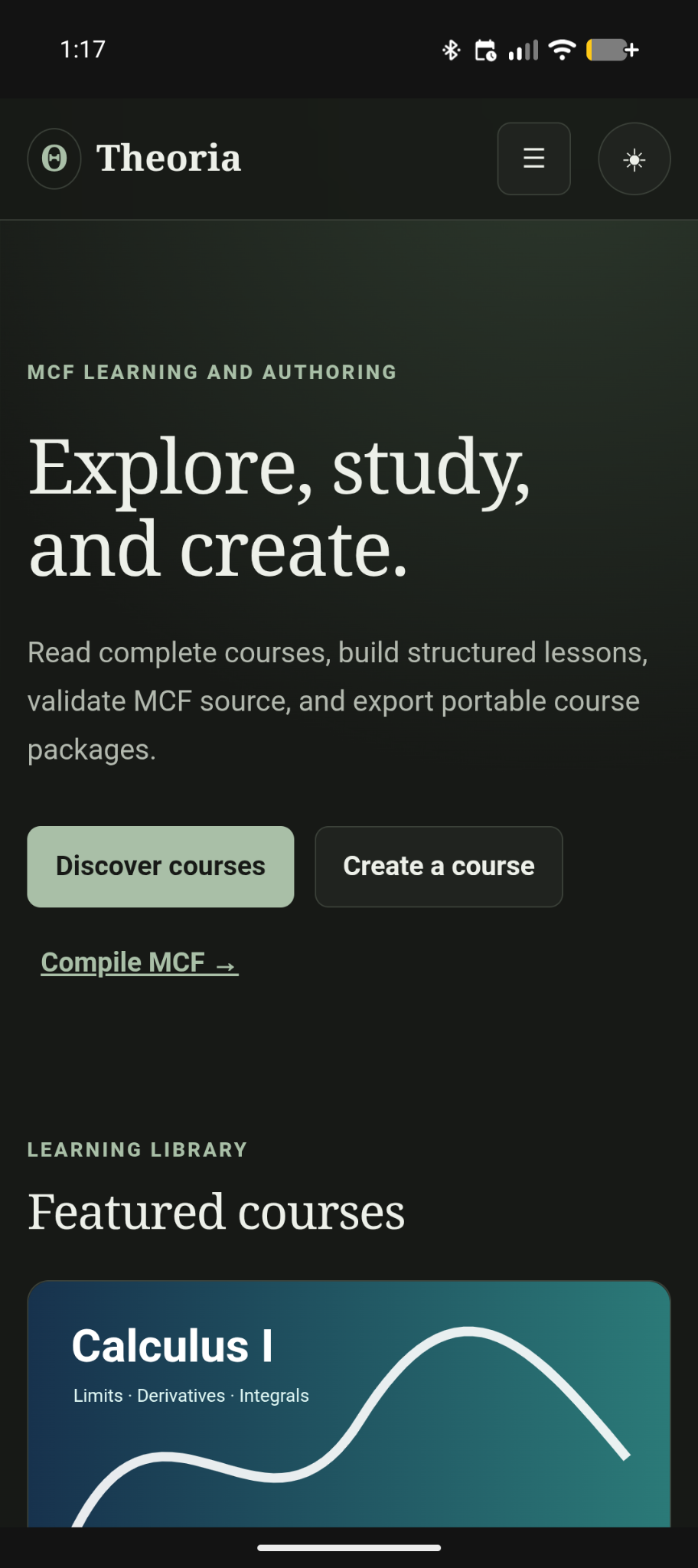
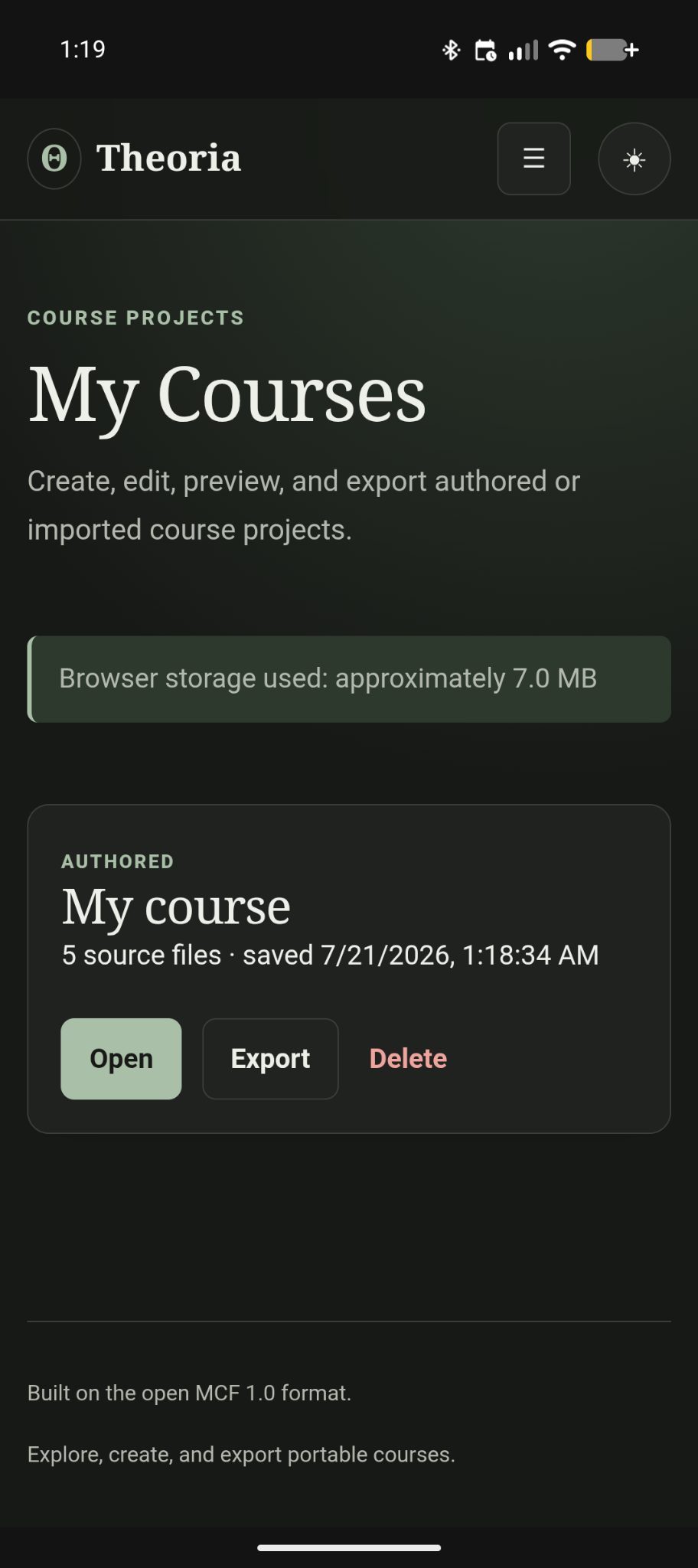
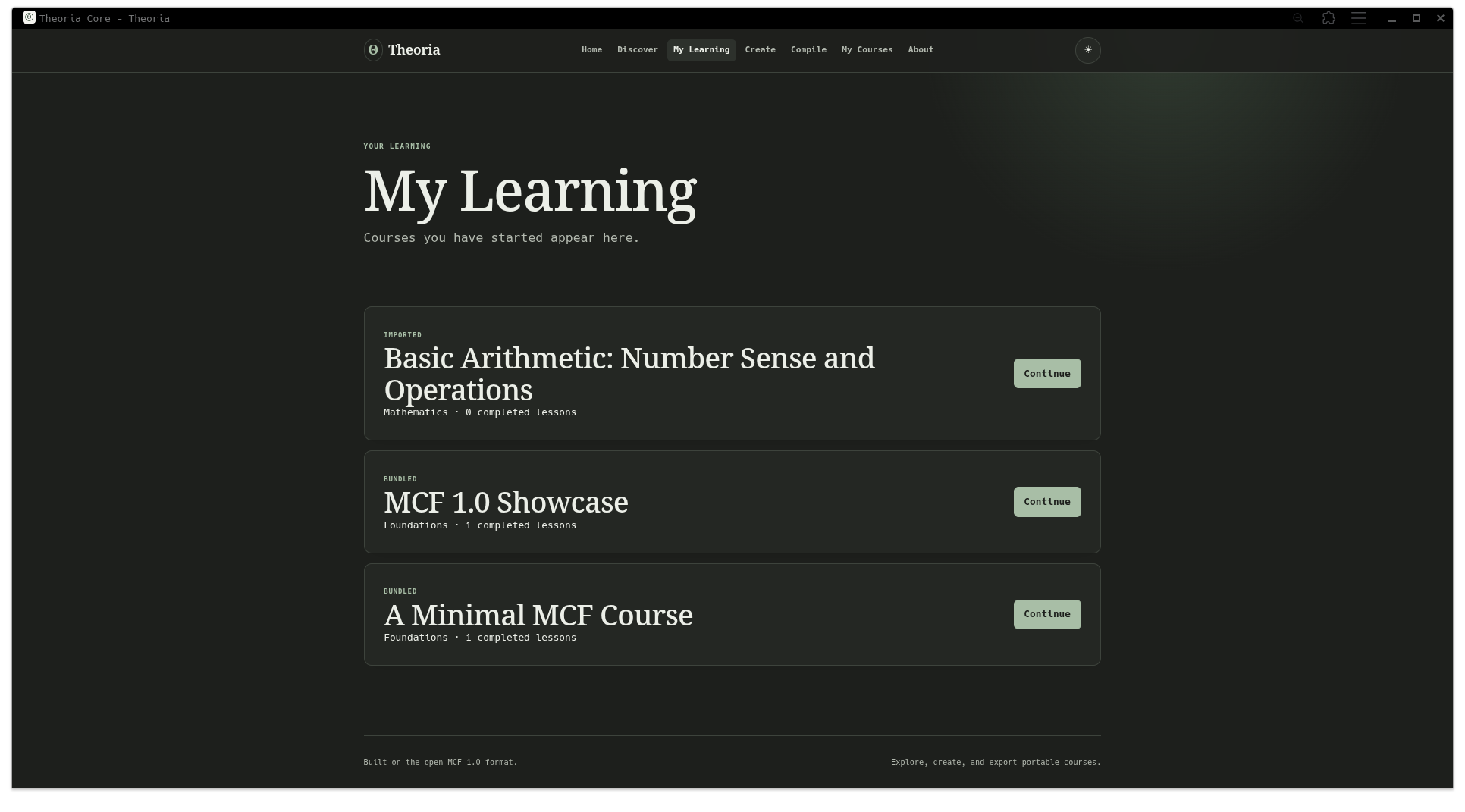
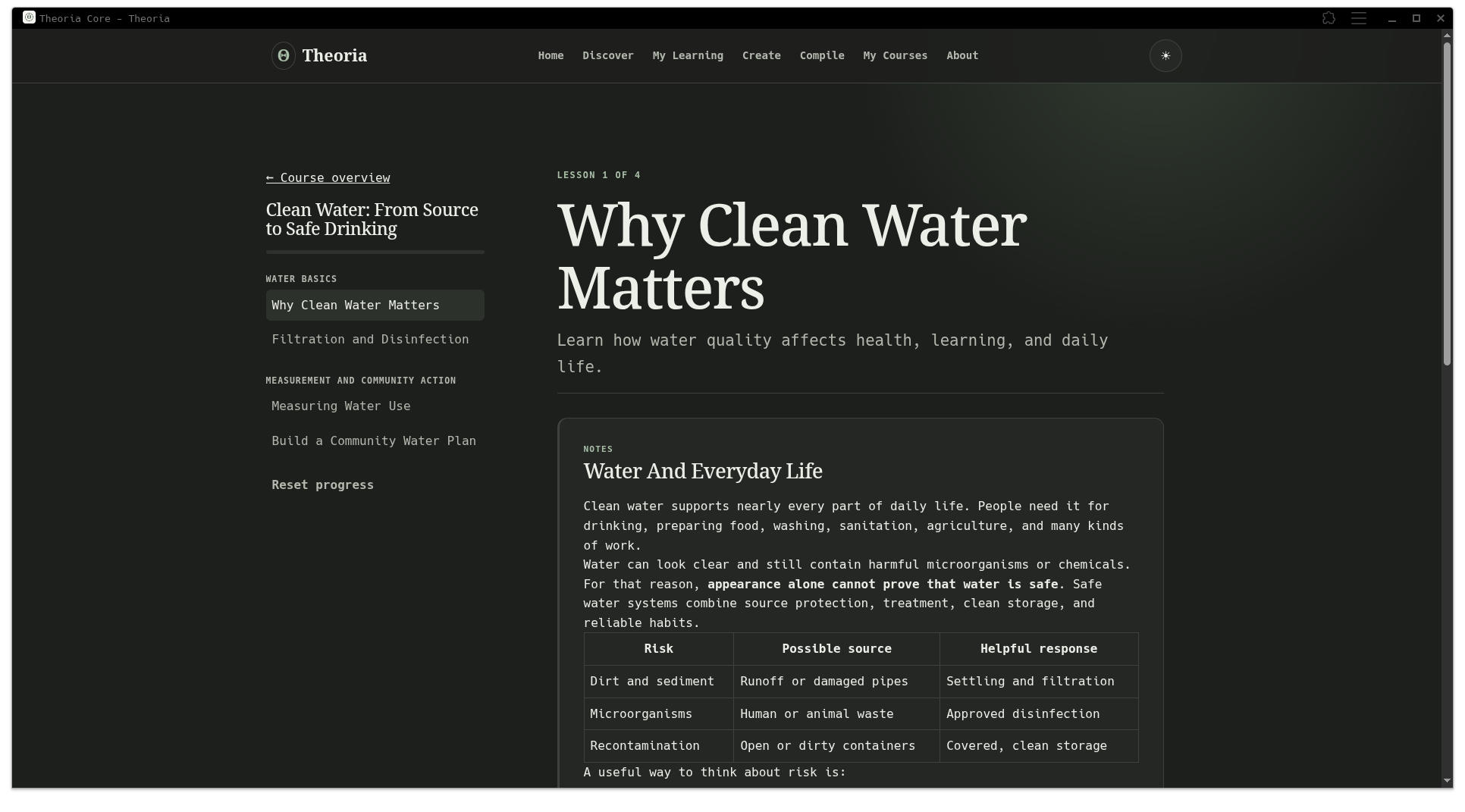
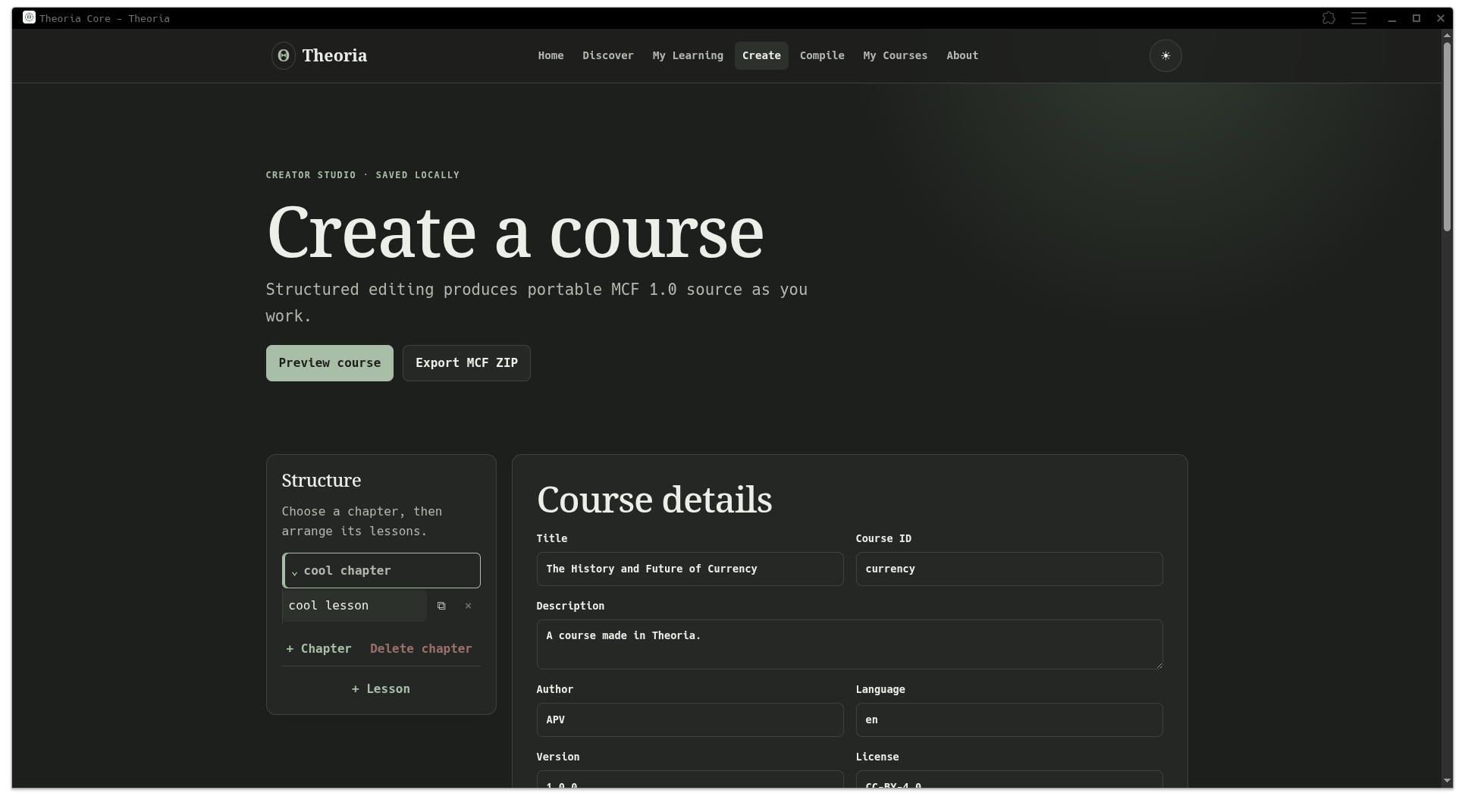
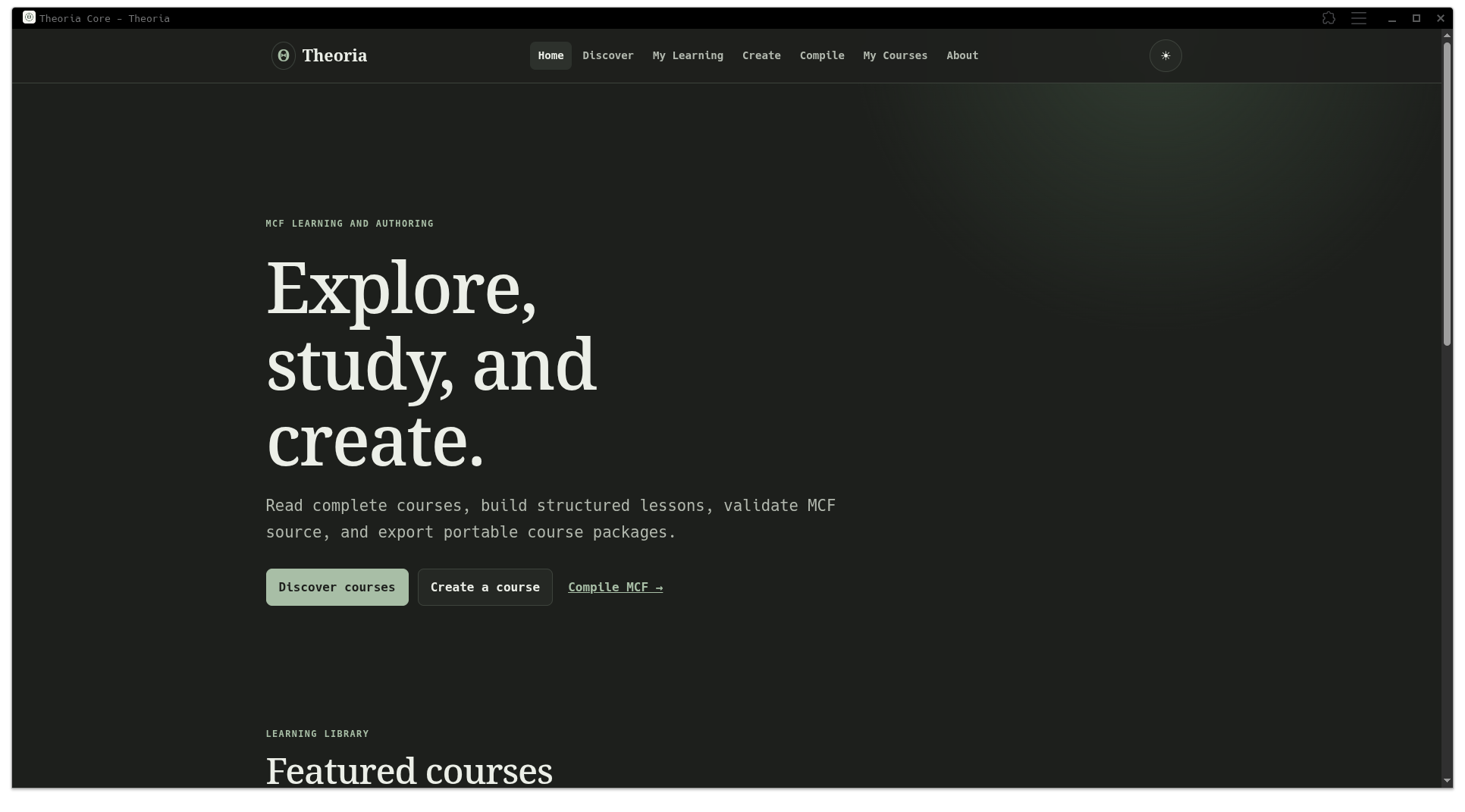
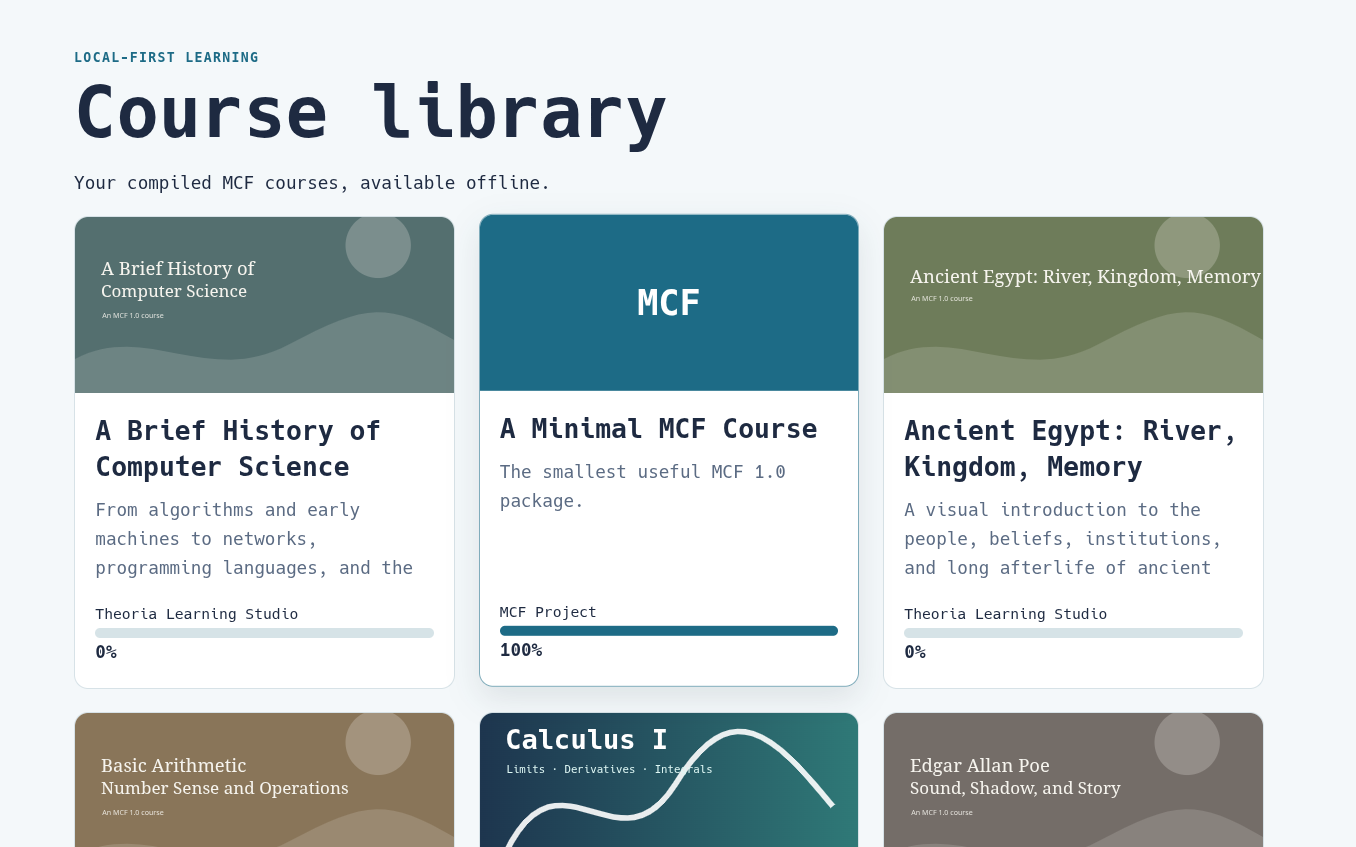
- Theoria — a browser-native PWA for browsing, studying, creating, importing, validating, and compiling MCF courses.
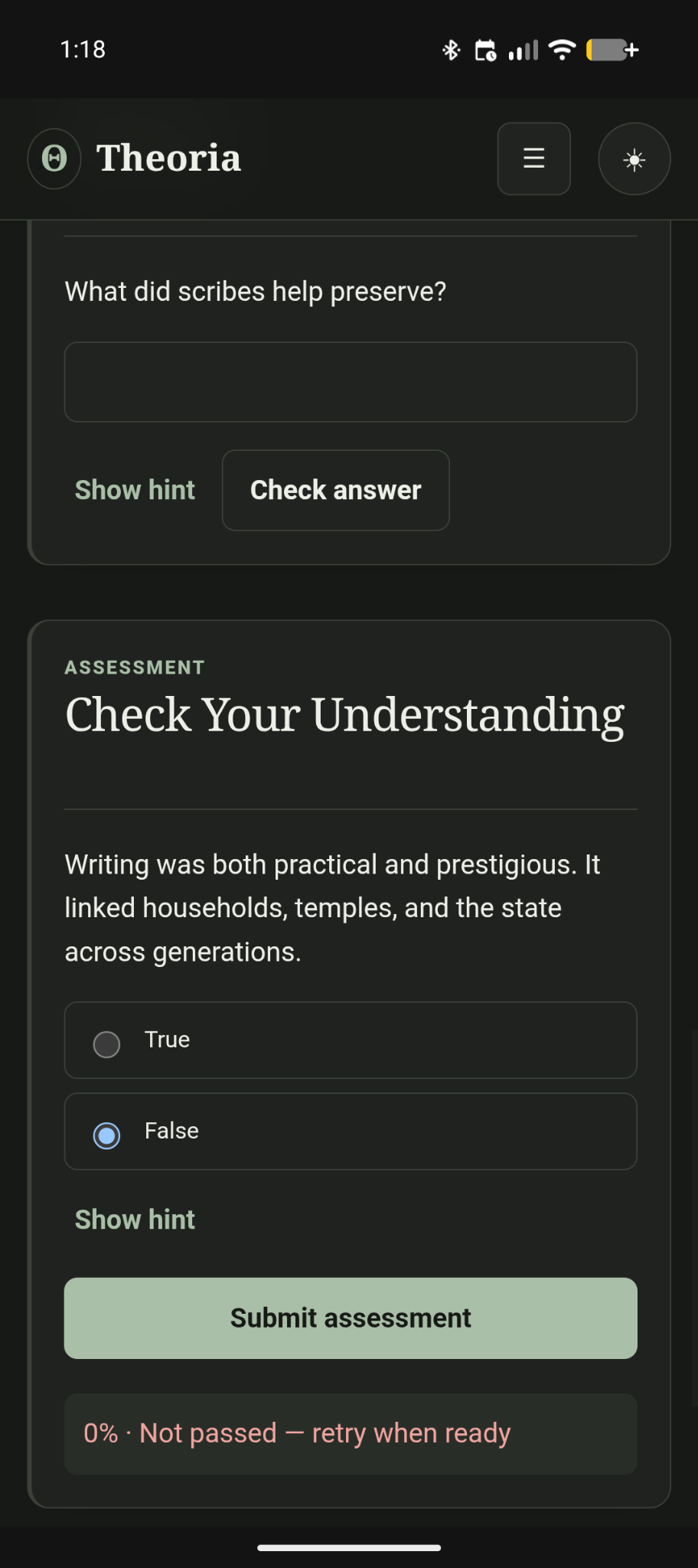
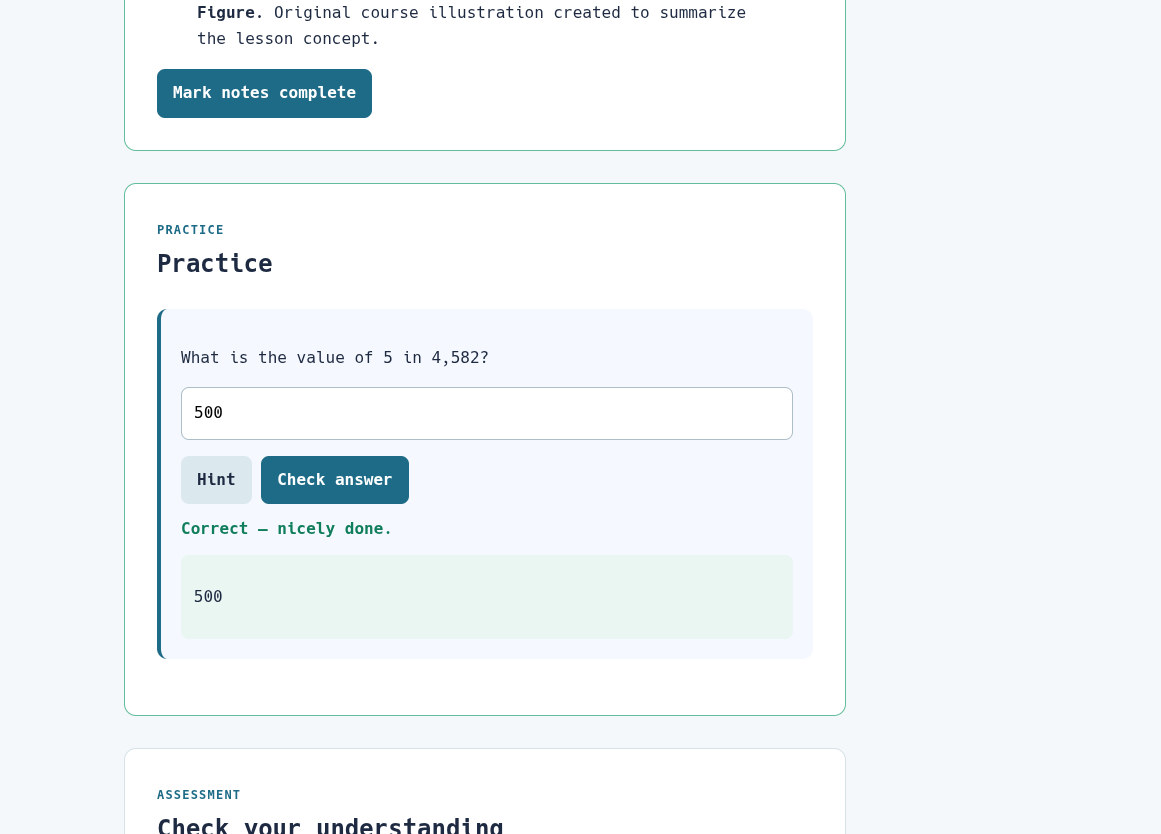
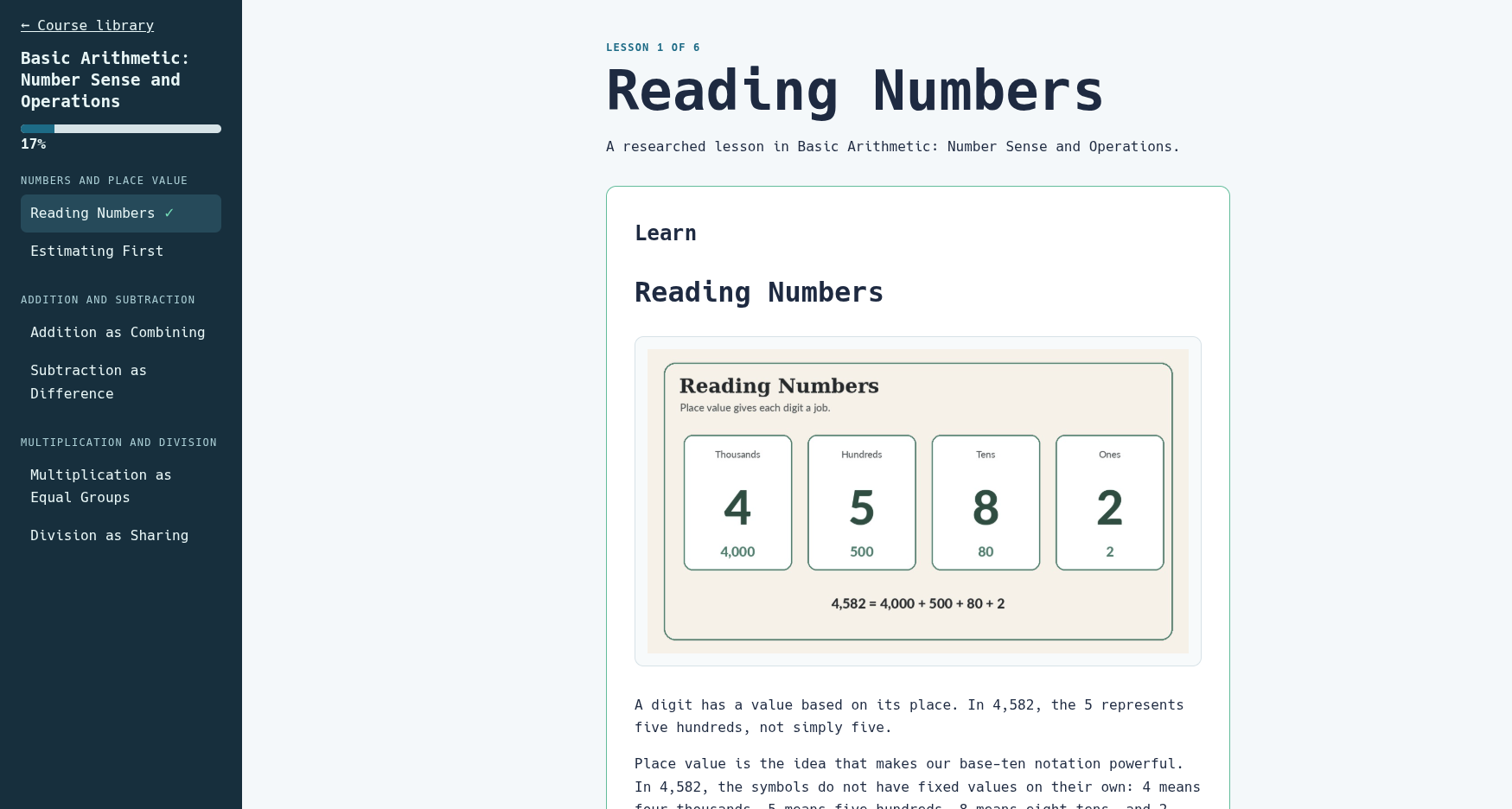
An MCF course is a human-readable package containing a manifest, ordered chapters, lessons, local assets, notes, practice activities, assessments, media, mathematics, and multiple question types.
Both compilers consume the same MCF source and can produce either a complete static course library or one standalone HTML file containing the reader, styling, lessons, questions, and local media. The single-file target was designed with Android in mind, making a complete course easy to transfer and open on a phone without managing a folder of supporting files.
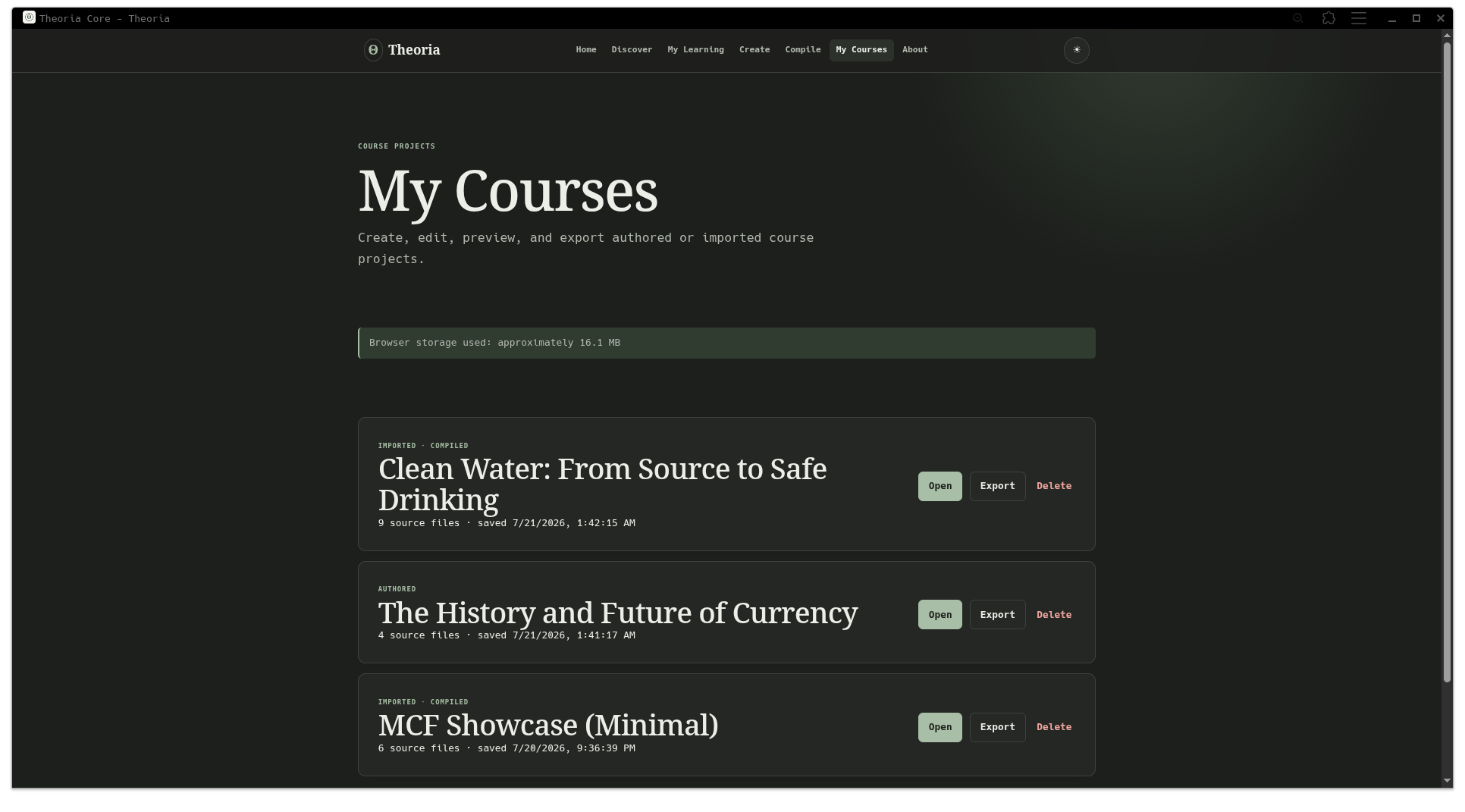
Theoria is intended to become for MCF what Acrobat became for PDF: the familiar application people use to open, study, create, and manage a portable format. It runs entirely in the browser, requires no account or backend, stores progress locally, supports course authoring and import, and can compile downloadable courses directly on the device. On supported mobile browsers, it can be installed as a PWA and launched like a native application.
How it was built
I used GPT-5.6 to refine the MCF specification, reason through educational structure and compiler semantics, make architectural decisions, diagnose cross-implementation issues, and shape the final product experience.
Codex accelerated implementation, debugging, testing, repository cleanup, compiler parity work, browser behavior fixes, documentation, and synchronization across the TypeScript compiler, Python compiler, sample-course collection, and Theoria. (it basically did everything)
The two independent compilers are important because they demonstrate that MCF is a genuine source-format standard rather than documentation for one JavaScript codebase.
Theoria uses Vite, React, strict TypeScript, React Router, IndexedDB, Web Workers, and a service worker. It is a static, browser-only PWA with no server runtime, database, authentication system, secrets, or cloud persistence.
Challenges
The hardest part was keeping behavior consistent across multiple independent implementations while preserving MCF as an implementation-neutral format. Media paths, binary asset preservation, lesson ordering, question semantics, progress behavior, single-file packaging, and browser storage all had to work without allowing one compiler or reader to redefine the standard.
Another major challenge was making browser-only compilation practical. Theoria needed a virtual filesystem, safe ZIP and folder import, validation, local asset handling, downloadable output, IndexedDB persistence, and PWA behavior without relying on a backend.
Accomplishments
- Published a complete MCF 1.0 specification.
- Built independent TypeScript and Python compilers.
- Added normal multi-file output and portable standalone HTML output.
- Created seven sample courses covering multiple subjects and MCF features.
- Built a complete browser-only PWA for learning and authoring.
- Preserved local images, mathematics, activities, assessments, and progress.
- Made the format usable for offline and low-connectivity learning scenarios.
- Demonstrated how GPT-5.6 can help ordinary people create structured educational material without locking that content inside an AI product.
What I learned
A portable format becomes much more credible when two independent implementations agree on its semantics. I also learned that offline-first design is not simply caching a webpage: course assets, progress, compilation, file import, browser security restrictions, and mobile behavior all need to be considered together.
Most importantly, AI-assisted authoring is more useful when the generated work stays inspectable and portable. GPT-5.6 can assist with creating educational material, while MCF keeps the result editable, validatable, and independent of the model or platform that helped produce it.
What’s next
The next steps are broader third-party compiler support, stronger conformance tooling, additional authoring features, more languages and subjects, and an MCF 1.1 revision for labs, simulations, and richer interactive learning activities.
The long-term goal is for MCF to become a durable interchange format for education and for Theoria to become its standard reader and authoring environment.
Built With
- codex
- gpt-5.6
- indexeddb
- katex
- markdown
- node.js
- pwa
- python
- react
- typescript
- vite
- web-workers
- yaml

Log in or sign up for Devpost to join the conversation.