-
-
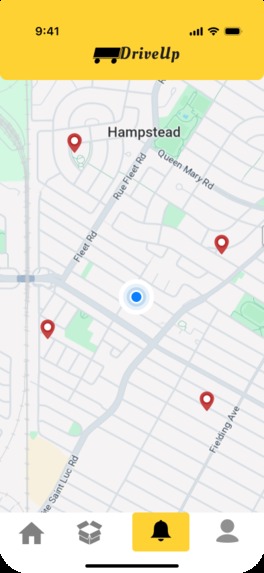
Home
-
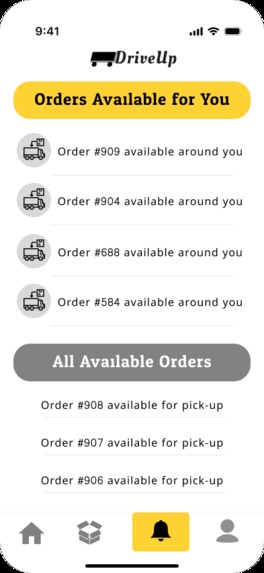
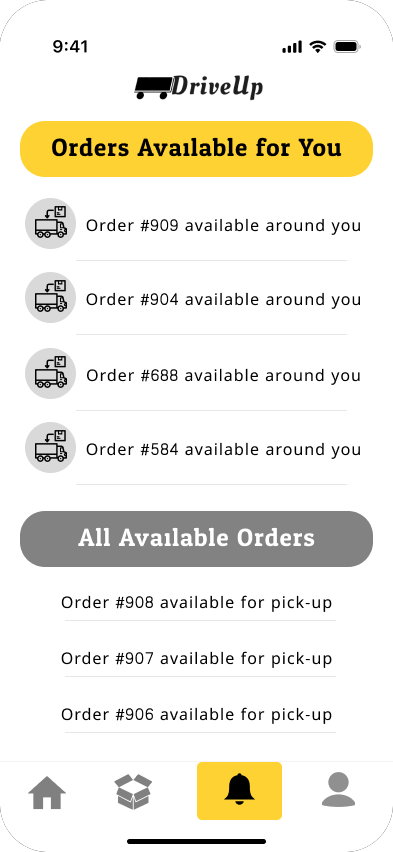
Order Availability
-
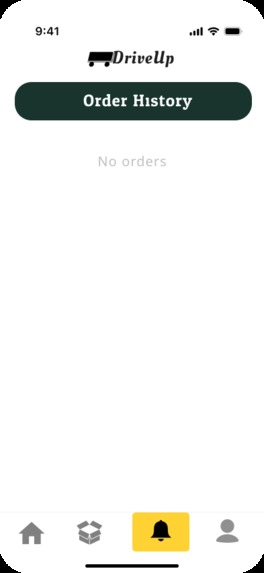
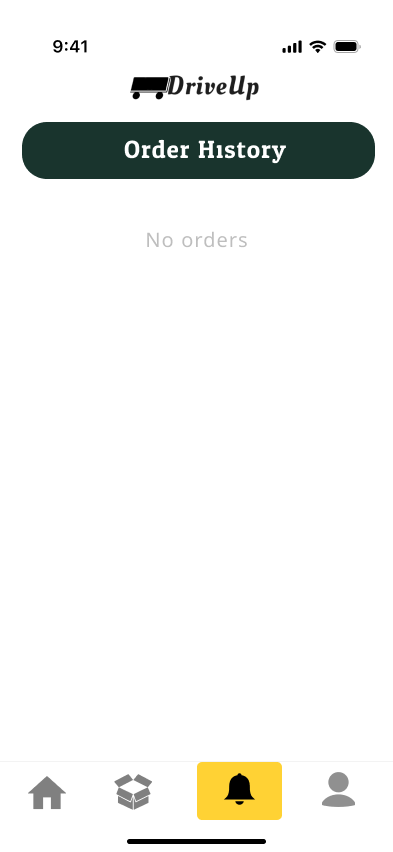
Order History
-
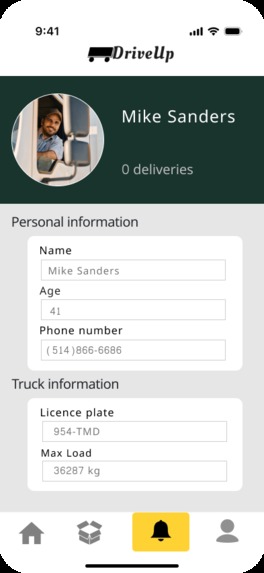
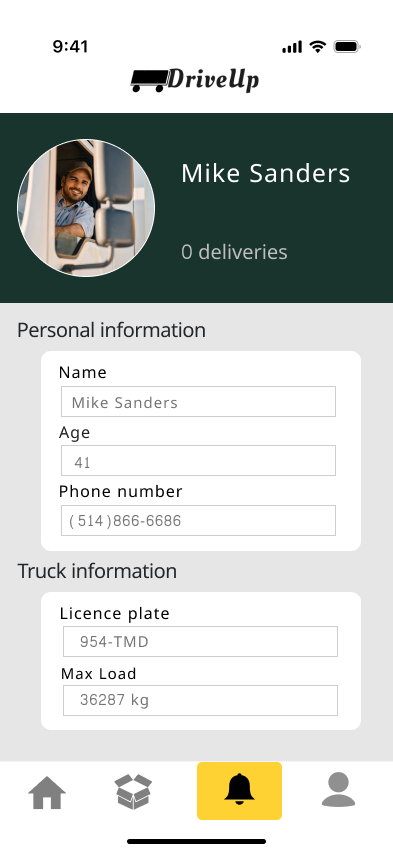
Trucker Profile
-

Welcome page
-
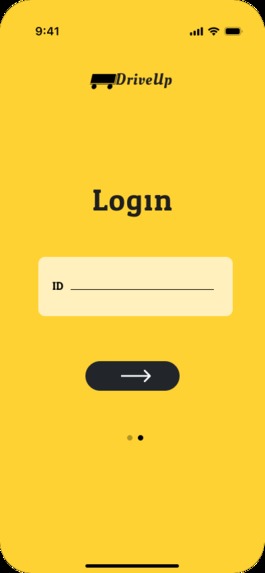
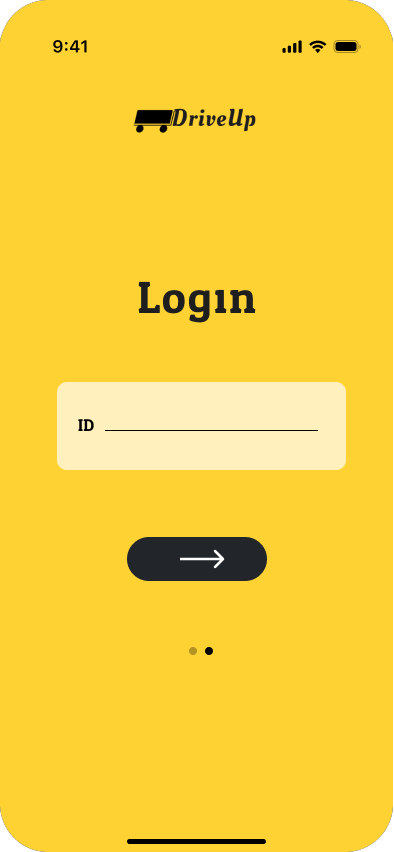
Login page
-
DriveUp Logo
-
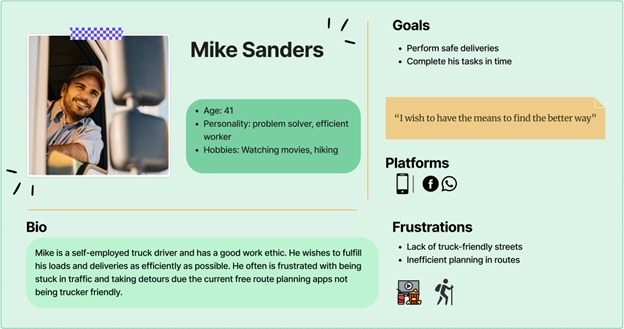
User Persona

DRIVE UP CAUSE WE NEVER BACK DOWN
Motivation
Your parents' motor vehicle, your own car, or even your ideal car is always the first thing that comes to mind when you think about motorized vehicles. But the average user—and hence, the tech businesses as well—never really thinks of trucks.
And this optimization challenge provides our team with a great intersection of familiar academic concepts, new interesting applications of them, and an exploration of hands-on full-stack application development.
Inspiration
As for the UI/UX design, we were inspired by the modern, slick, minimalistic trend and present-day mobile applications. In the research of the current market for applications available for truckers, the most widely used are Google Maps and Waze, which despite not being trucker friendly, they are free of charge. Due to the time constraints, a survey couldn’t be given based on the actual target audience, but thorough research has been done to get the user persona of 'Mike Sanders'. The color yellow has been chosen as the primary color as it serves to bring attention. A complementary green color has been chosen to emphasize certain areas. The user interface has been carefully designed by the likes of Uber due to its minimalist design that serves to emphasize the task at hand which is to get a ride or find a customer.
What it does
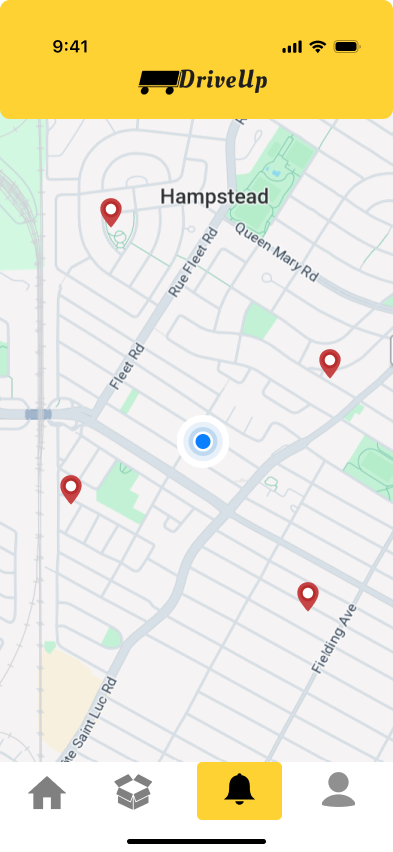
DriveUp is a modern logistics management platform engineered to assist administrators and end-users in the dynamic world of transportation. With a custom filtering algorithm at its core, DriveUp enables admins to efficiently view how trucks and loads based on parameters such as distance, truck user preferences, and profit margins. The platform holds a real-time notification engine that delivers timely alerts, ensuring admins stay informed about load proximity, user preferences, and potential profits. A unique feature, the suggestion list, provides optimization opportunities by recommending loads that may not perfectly align with user preferences. DriveUp's interactive map integration offers a visual representation of real-time truck and load locations, enhancing spatial awareness for admins.
The user-friendly interface ensures seamless navigation through various functionalities, and give truck drivers the authority to accept or deny incoming notifications, aligning decisions with their own motivations and interests. DriveUp stands as a technological achievement, providing a comprehensive solution for logistics challenges. Its innovative features, including real-time updates and intuitive design, contribute to streamlined workflows, optimized resource allocation, and informed decision-making. In the ever-evolving logistics landscape, DriveUp emerges as a pivotal tool for admin users seeking efficiency and excellence in their transportation operations.
How we built it
Utilizing NextJS, we seamlessly incorporated JavaScript, CSS, and HTML to build a responsive and dynamic platform. The frontend, crafted with HTML and styled using CSS, provides an intuitive user interface. JavaScript, in conjunction with NextJS, facilitated real-time interactions, enabling instant notifications and updates for users. To enhance the communication between the server and client, we integrated MQTT (Message Queuing Telemetry Transport) for efficient data exchange. This powerful combination of technologies not only ensured a visually appealing and user-friendly frontend but also enabled the seamless integration of real-time data, contributing to a robust and interactive user experience.
Challenges we ran into
Navigating Next.js posed challenges for our team, primarily due to the merging of server-side and client-side logic and from the team's lack of experience with the framework. The intricacies of this integration proved perplexing, requiring extra effort for comprehension. As beginners, grasping the nuances of Next.js presented a high learning curve, highlighting the importance of collaborative problem-solving to overcome the complexities inherent in merging server and client functionalities. In addition to technical complexities, effectively managing time, scope, and requirements proved challenging during the project's development. Striking a balance between delivering a polished product within a tight timeframe led to meticulous planning. Team organization and communication posed initial hurdles but were overcome through concerted efforts and effective collaboration. The inevitable consequence of sleep deprivation further intensified the project's demanding nature.
Accomplishments that we're proud of
We feel proud to have successfully implemented a complete filtering mechanisms, enhancing the platform's functionality. The incorporation of suggestion features and the interactive map not only elevates user experience but also helps logistics management.
What we learned
Navigating the intricacies of Next.js proved challenging yet rewarding. The framework's complexity presented a steep learning curve, but its powerful capabilities for server-client interactions and real-time updates opened new avenues for our team's expertise in web development.
What's next for DriveUp
In the future, DriveUp aims to enhance its features by improving on the real time filtering system. additionally, machine learning algorithms could be used for more advanced analysis. Additionally, we plan to implement multi-factor authentication for heightened security, ensuring DriveUp's quick rise in its goal of world domination.
Built With
- css
- html
- javascript
- nextjs
- react
- thepoweroffriendship


Log in or sign up for Devpost to join the conversation.