-
-
-
-
-
-
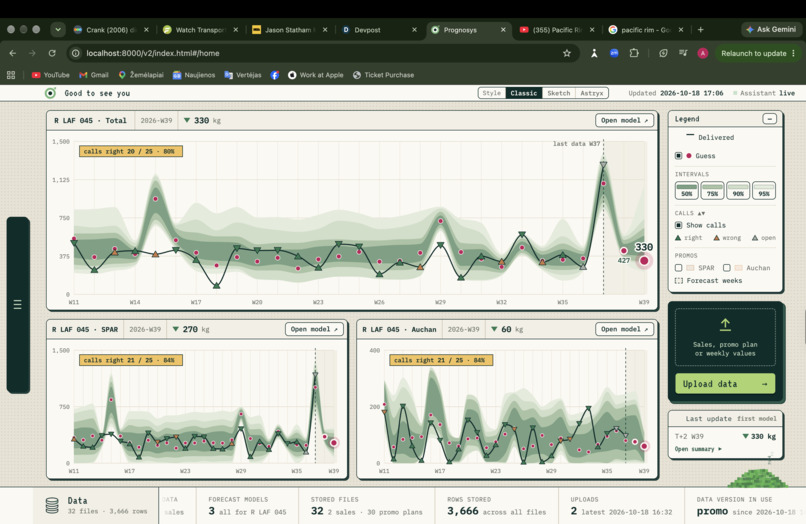
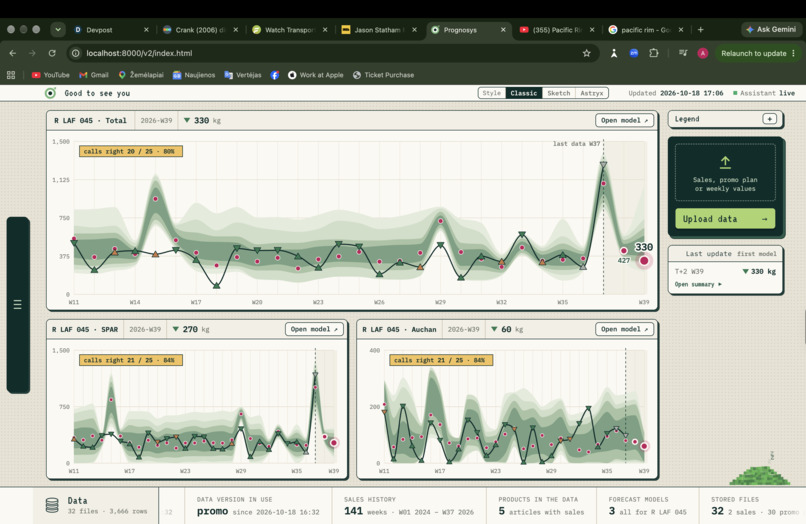
Home page
-
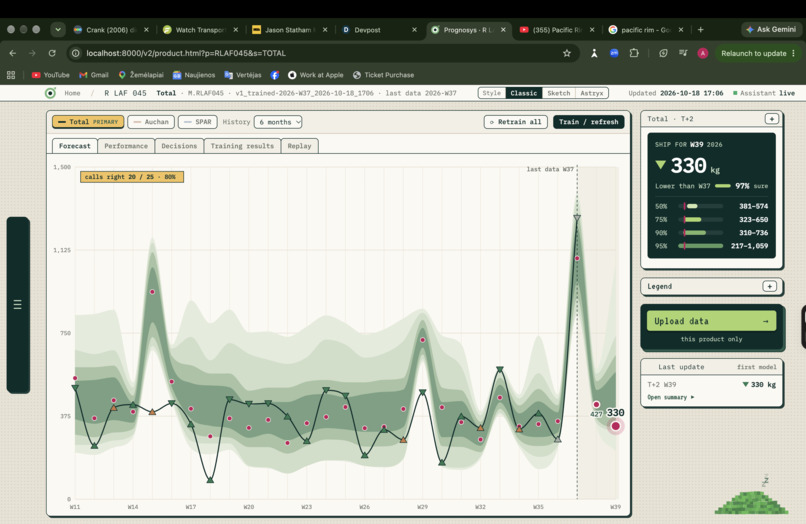
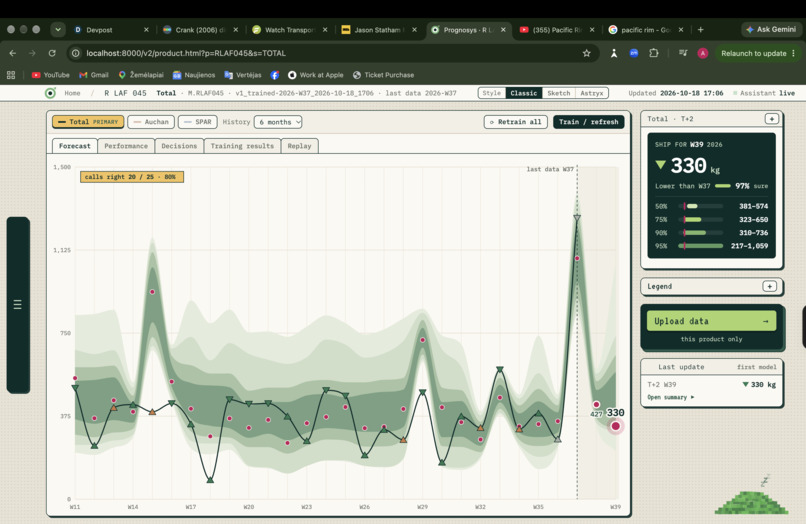
Model Page
-
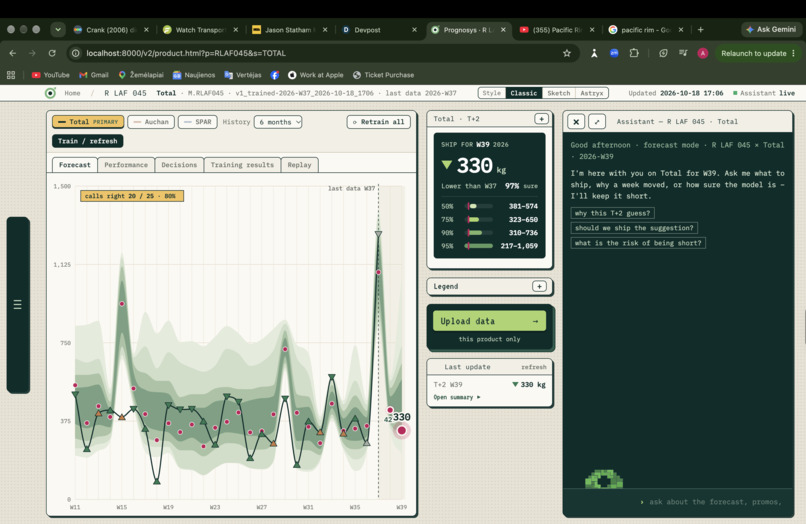
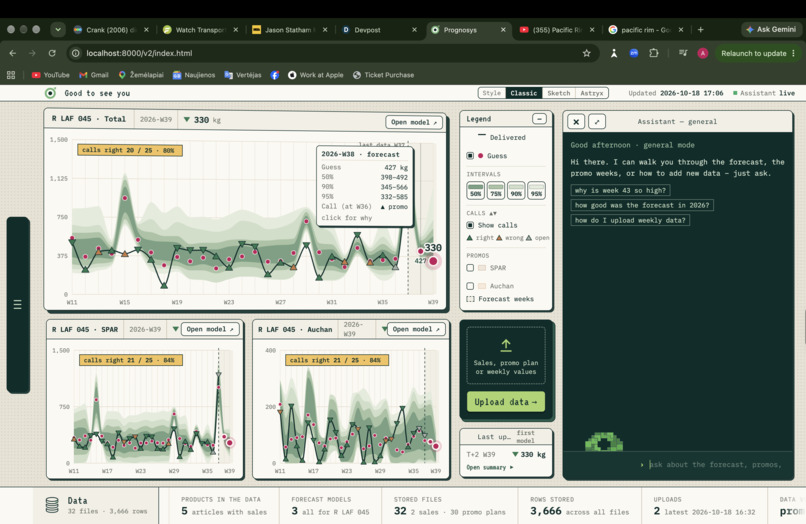
AI Agent
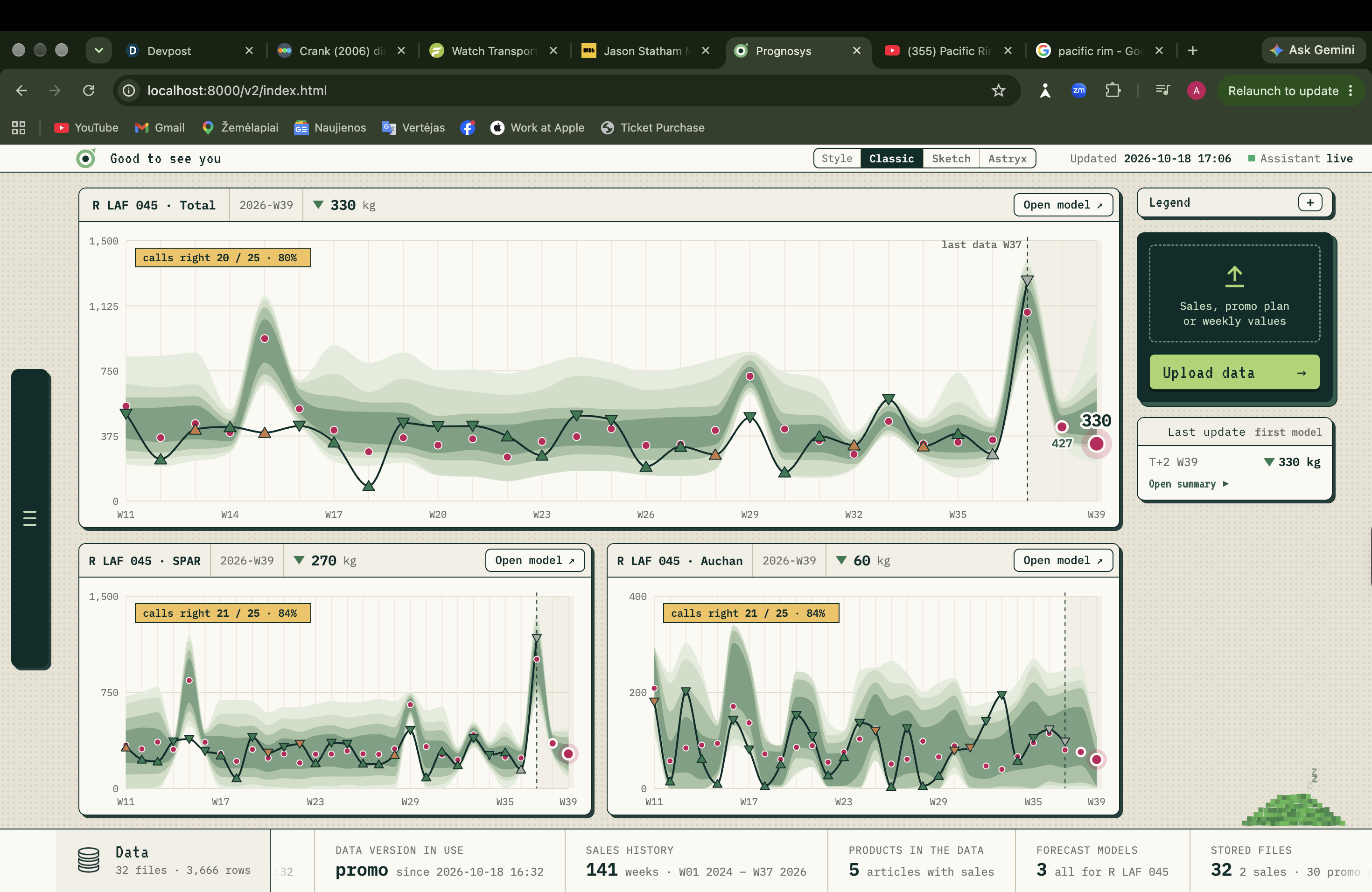
Inspiration
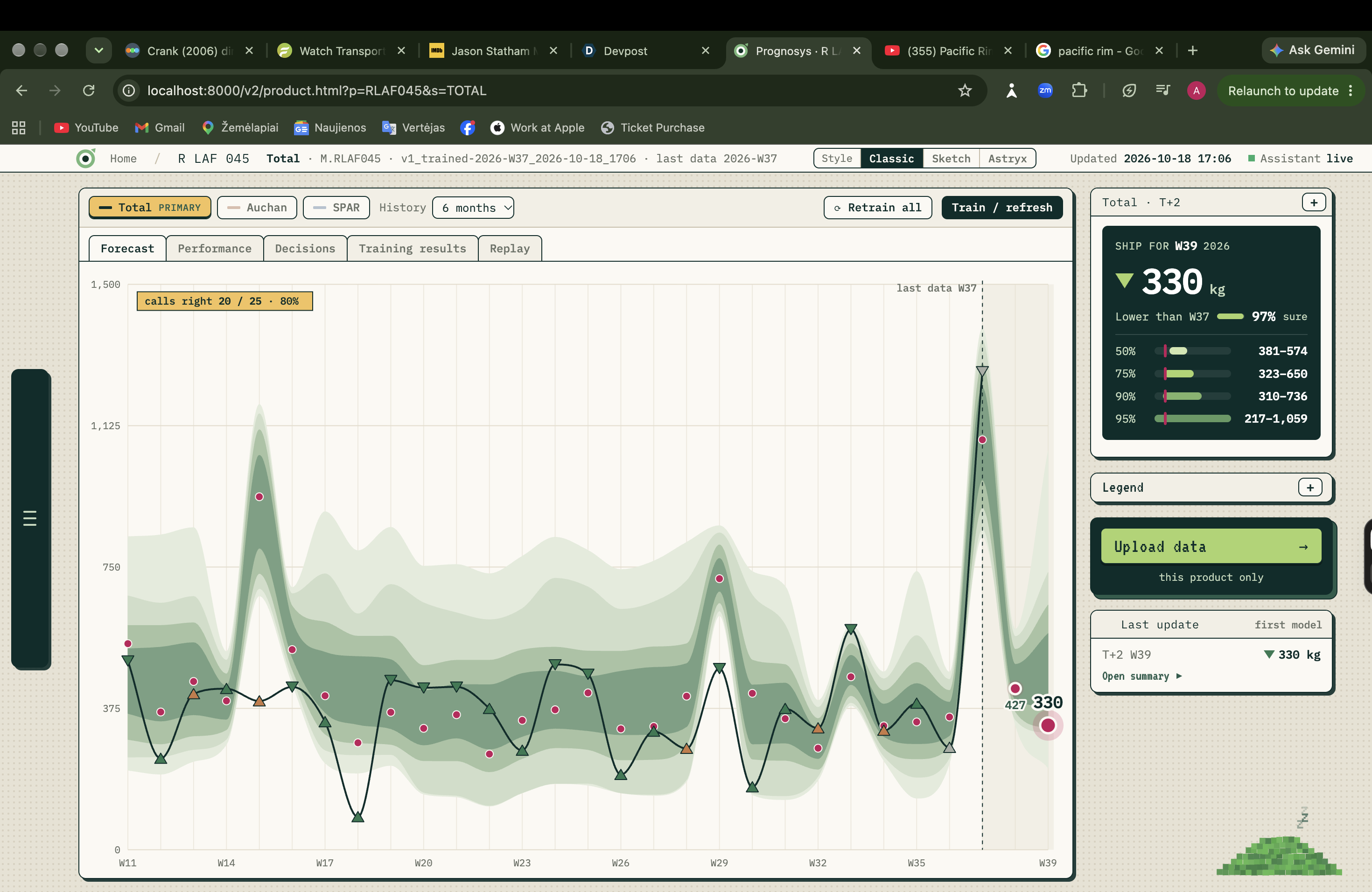
Prognosys was built for one real business problem: a fresh-food producer has to decide how much to make two weeks before customers place their orders. Make too much and the product is wasted; make too little and the customer charges penalties. These decisions were being made every week largely on gut feeling, and the mistakes were expensive.
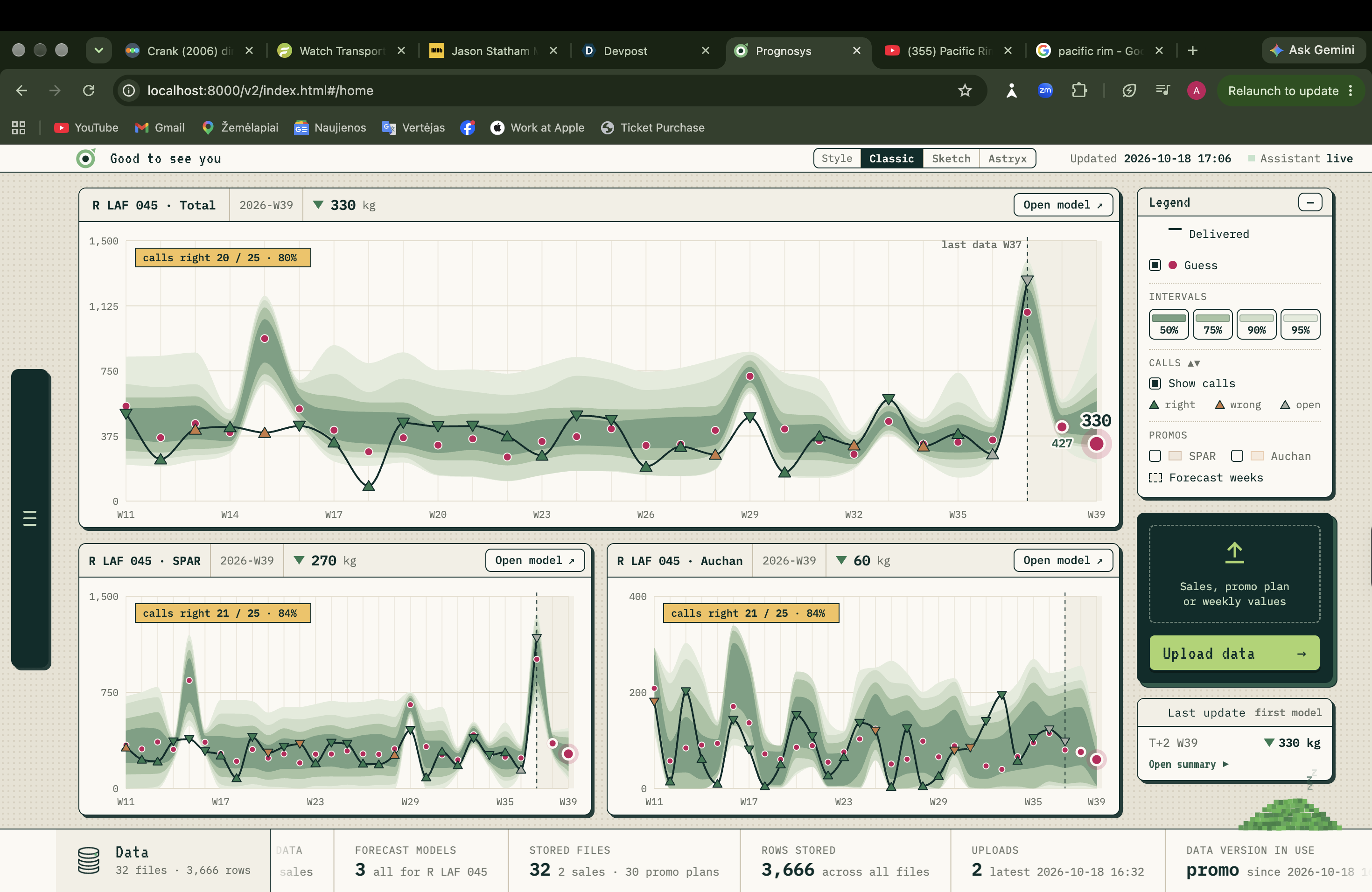
We wanted to give planners one clear answer each week: how much to ship, and why.
What it does
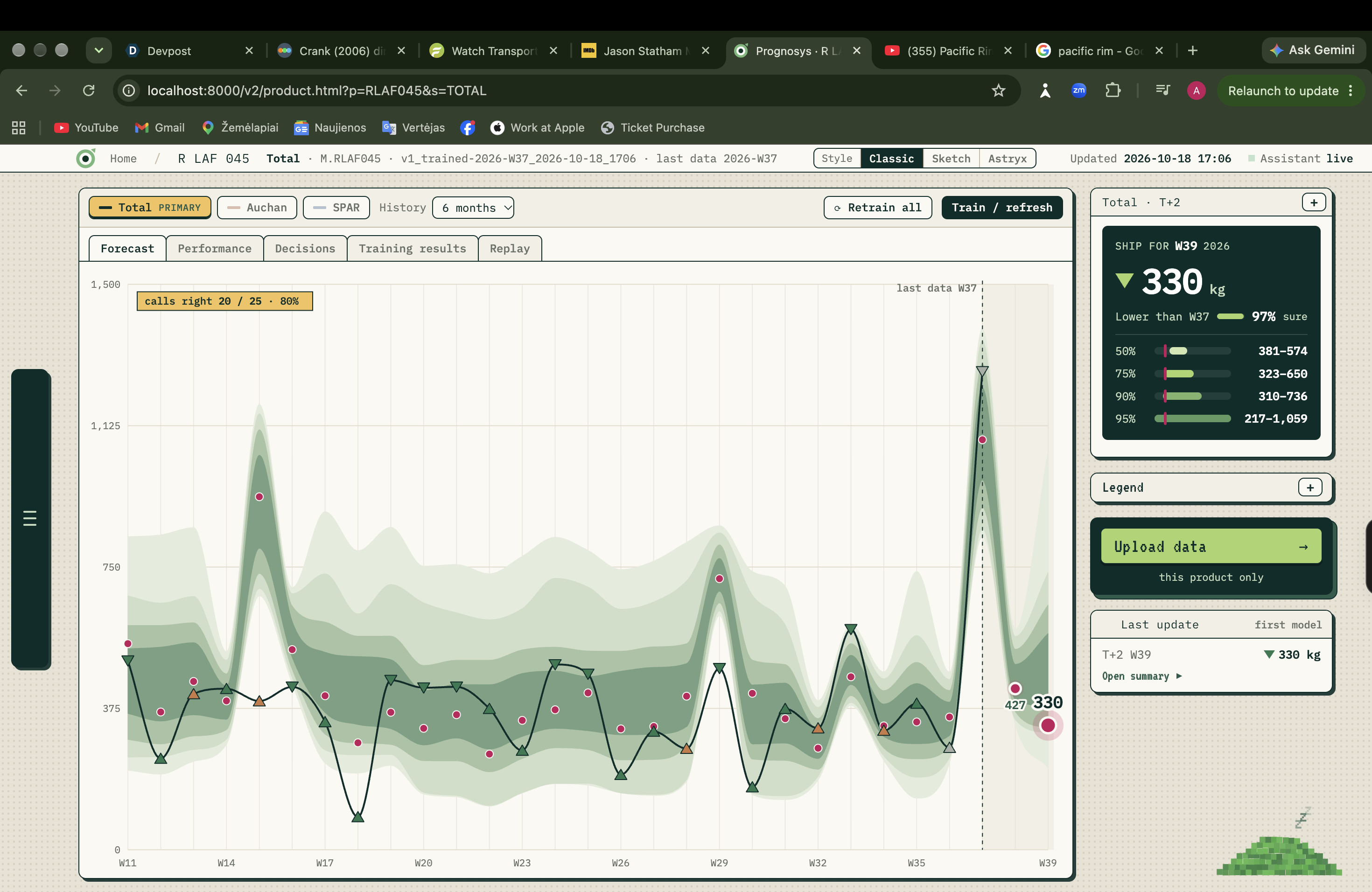
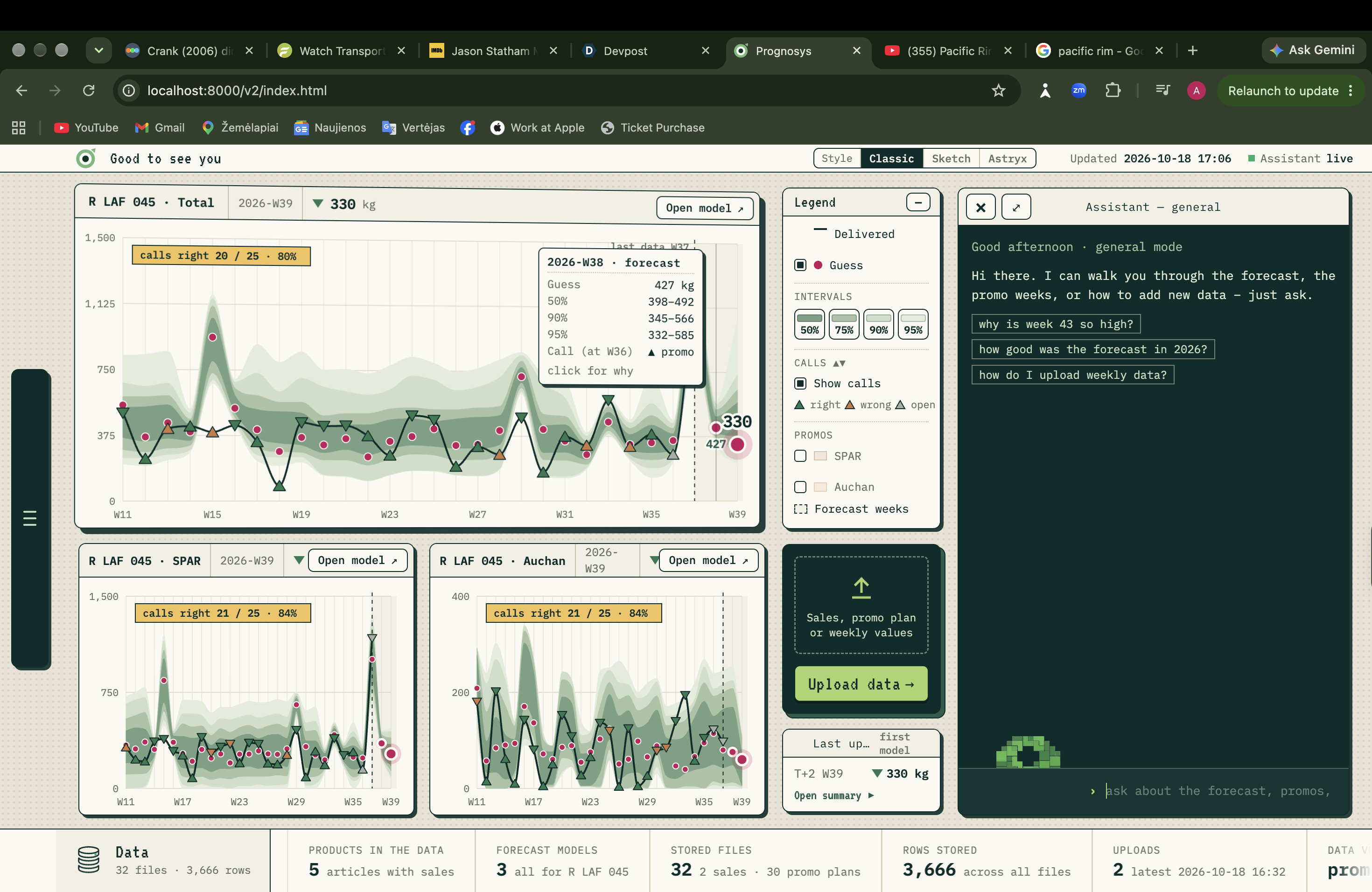
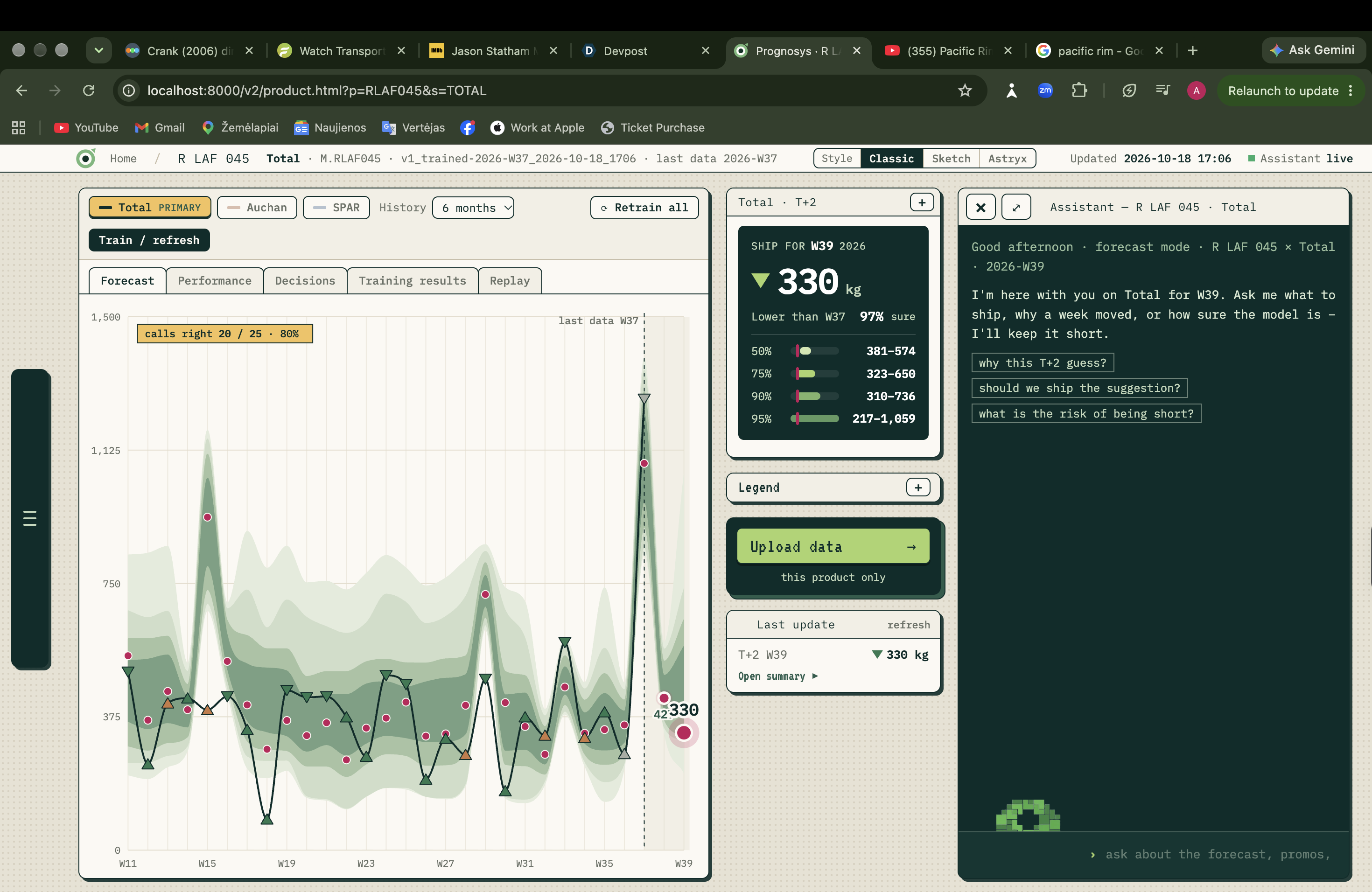
Prognosys learns from past sales and promotions, forecasts each customer's order two weeks ahead with a likely range, and turns it into a simple recommendation. A built-in assistant explains every forecast in plain words, and each week the model checks how it did and updates itself.
How we built it
A Python backend handles data checks, cleaning and forecasting; a lightweight web app shows the forecasts as clear, interactive charts; and an AI assistant explains the results. Every forecast is tested the way it would be used in real life, predicting week $t+2$ using only what was known at week $t$.
We focused on whether the forecast gets the direction right (will demand go up or down?), because that's what drives the decision:
$$ \text{Directional accuracy} = \frac{\text{correct up/down calls}}{\text{all calls}} $$
Challenges we faced
- Limited, noisy data: a short history with sharp promotion spikes.
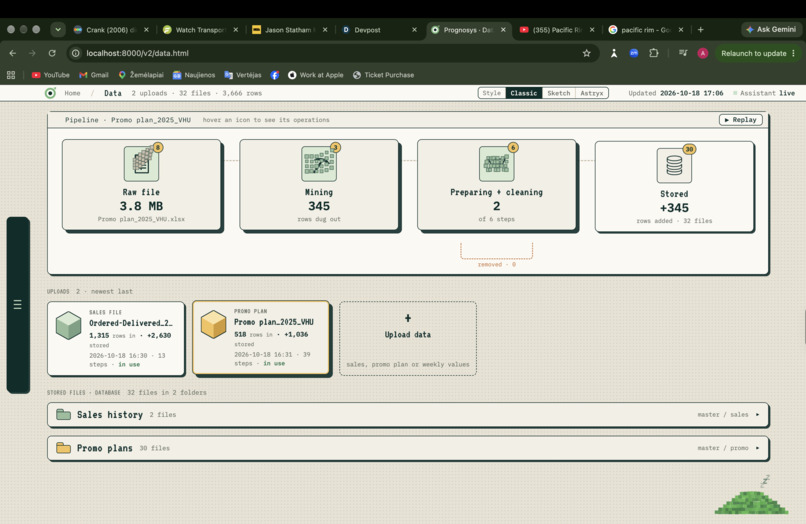
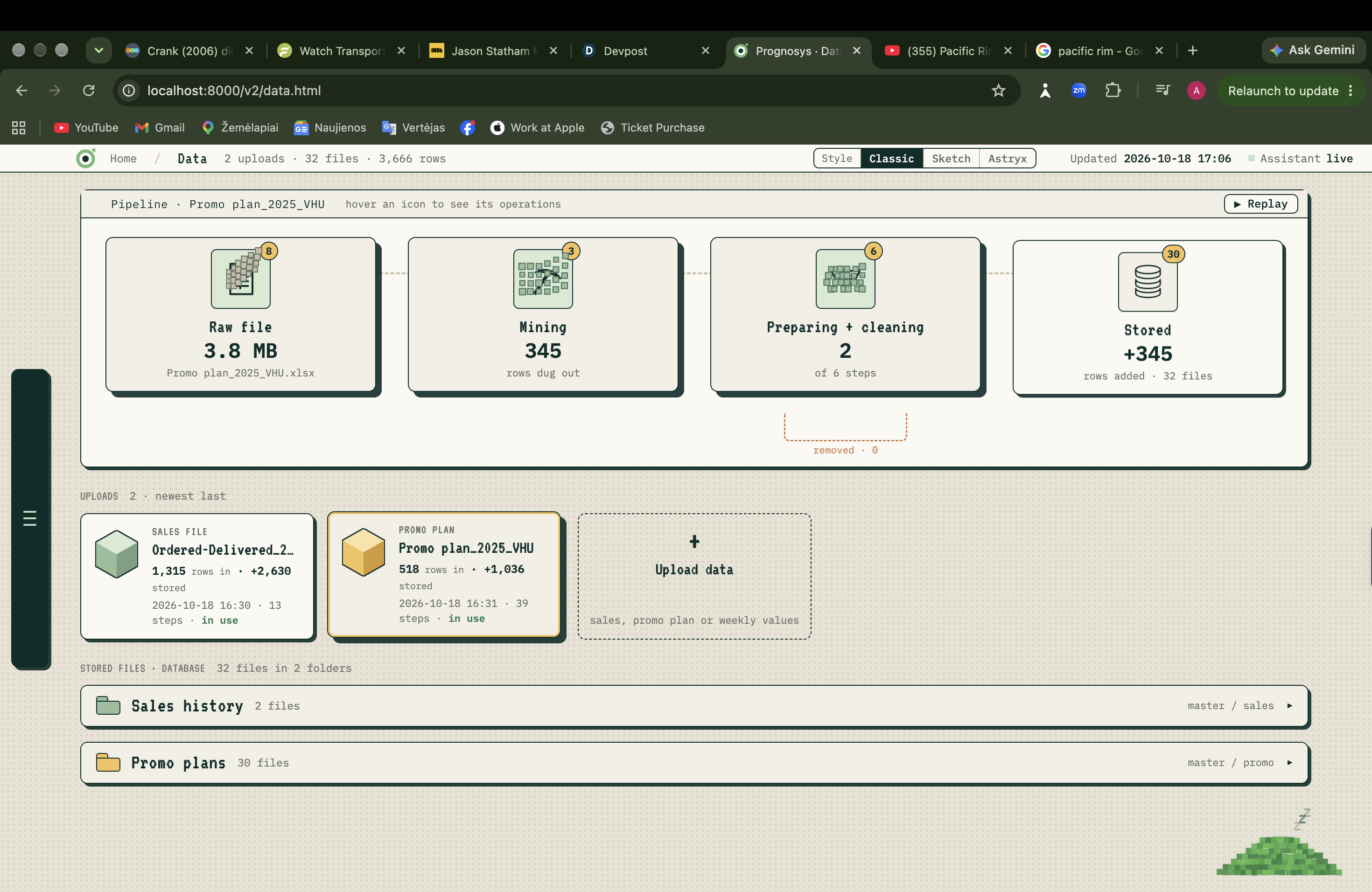
- Messy real-world files: exports that needed careful cleaning and validation before the model could trust them.
- Trust: planners won't act on a number they don't understand, so explanations had to be short, honest and concrete.
What we learned
- For real decisions, knowing the direction and the uncertainty often matters more than a perfect single number.
- Most of the work is in data quality and trust, not just the model.
- A clear interface is what turns a model into a tool people actually use.
What's next
- Real-world pilot: testing Prognosys with a real business on its weekly decisions.
- More products: extending the forecasts beyond the first product line.
- Smarter data pipeline: AI that extracts and cleans data from messy files and asks for missing data when it needs more.
- AI model selection: automatically choosing the best model for each product and customer.
- Data control in the app: editing and aggregating data directly in Prognosys, without spreadsheets.
Built With
- claude
- python
- visual-studio

Log in or sign up for Devpost to join the conversation.