-
-
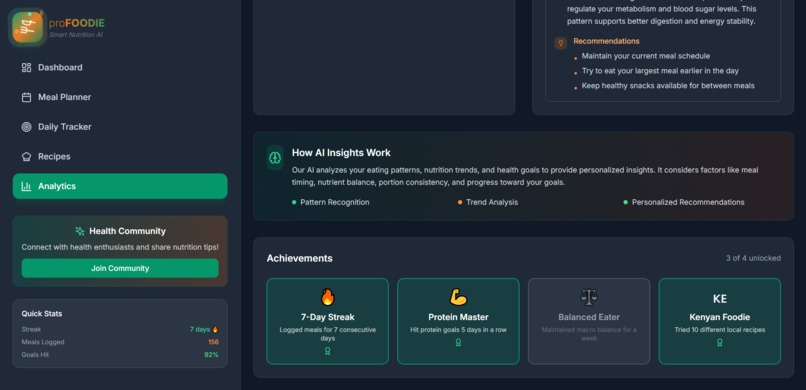
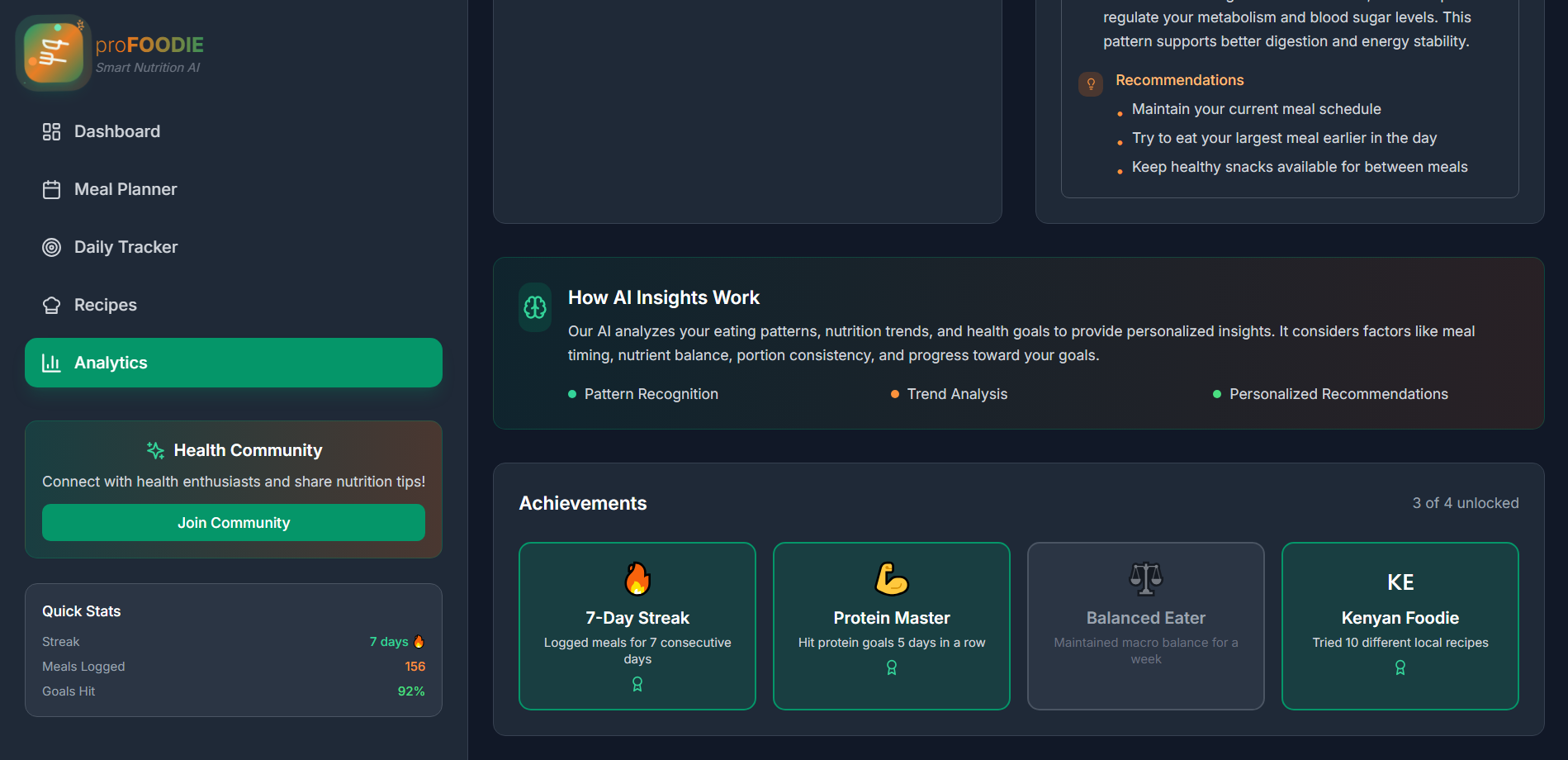
AI Analytics Bottom Page
-
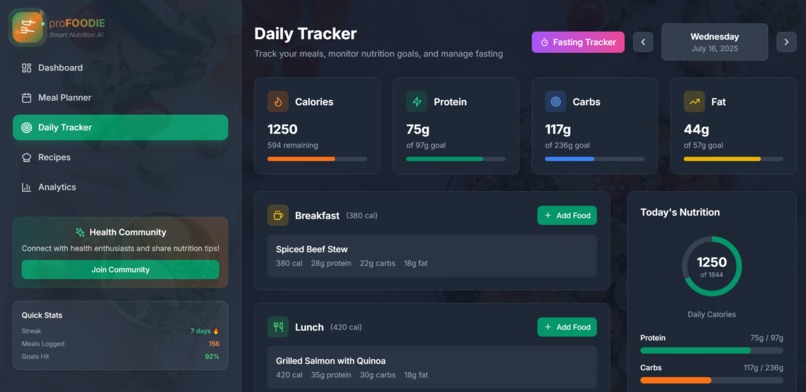
Daily Tracker Page
-
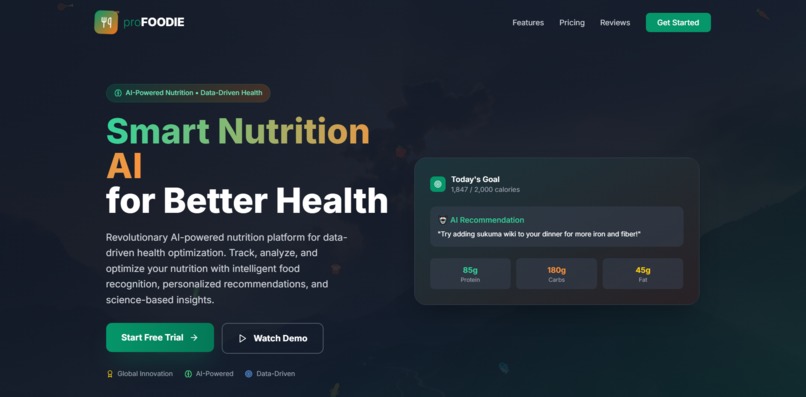
Landing Page
-
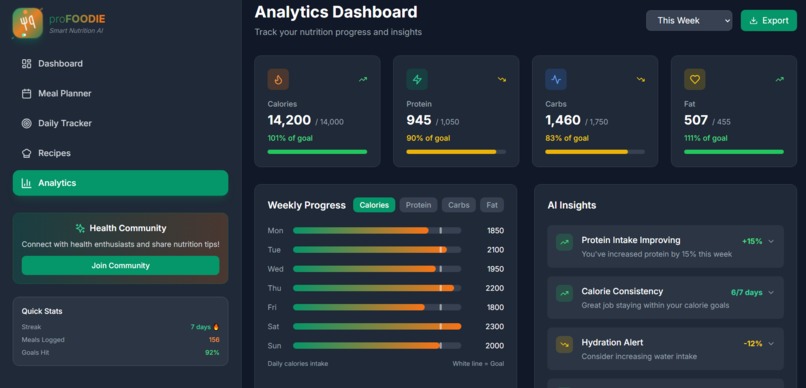
AI Analytics Page
-
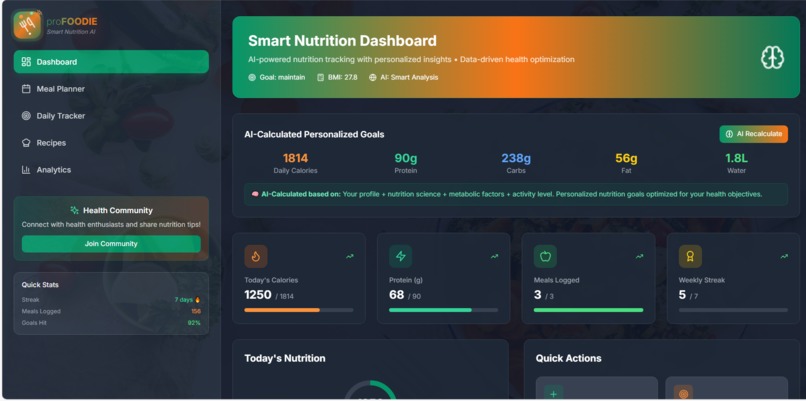
Dashboard Page
-
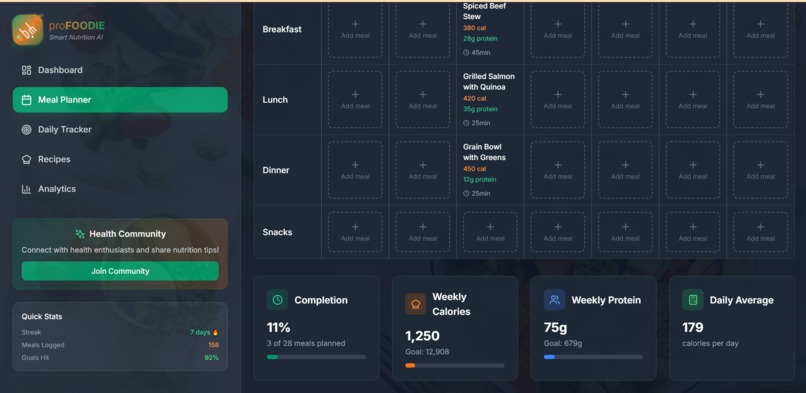
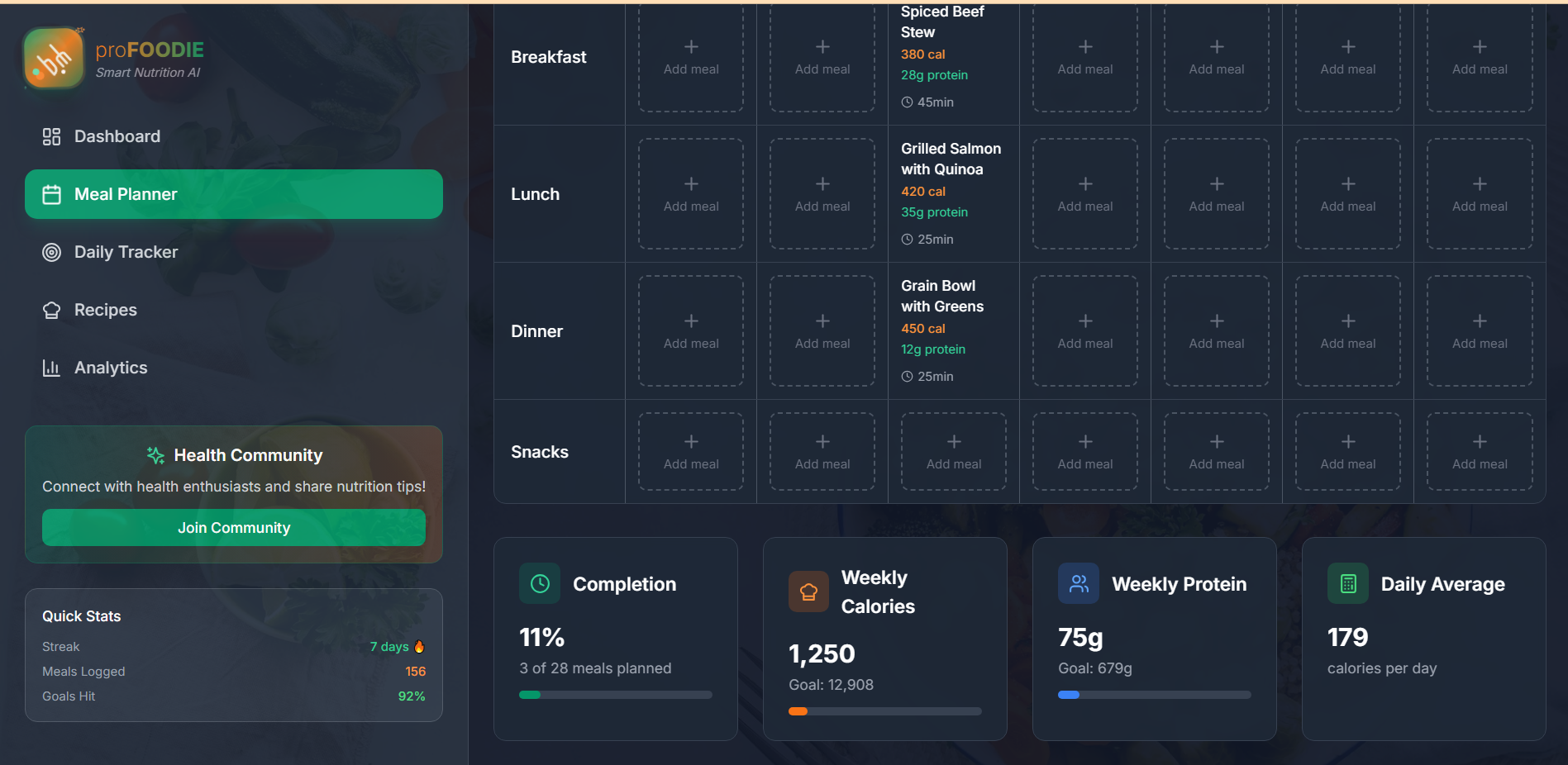
Meal Planner Page
-
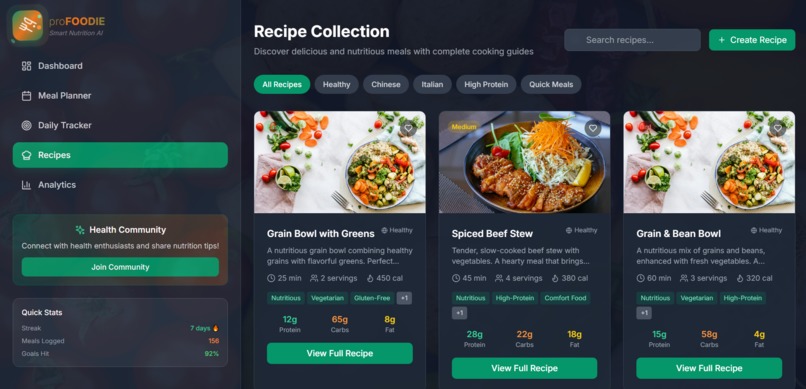
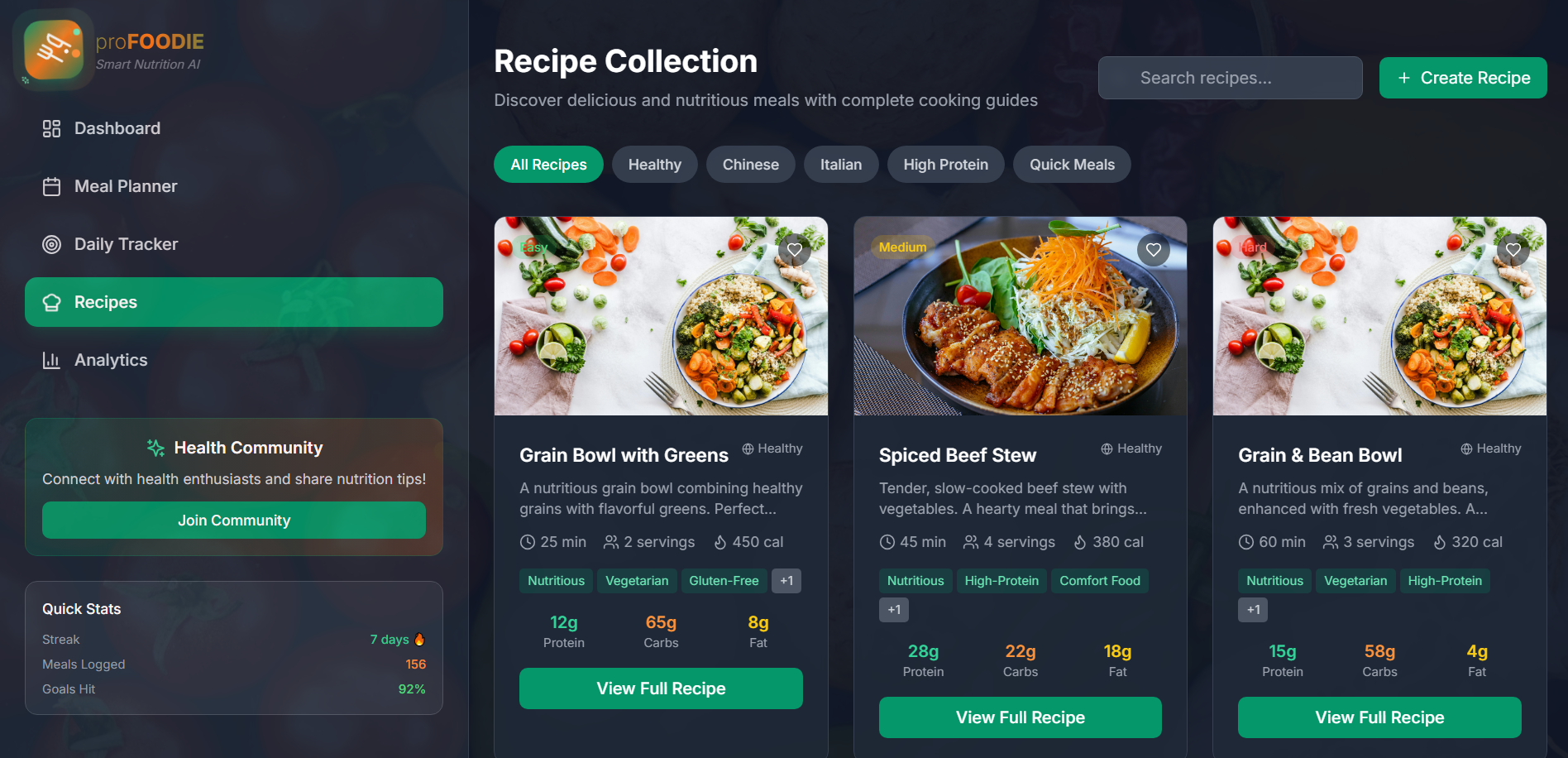
Recipes Page
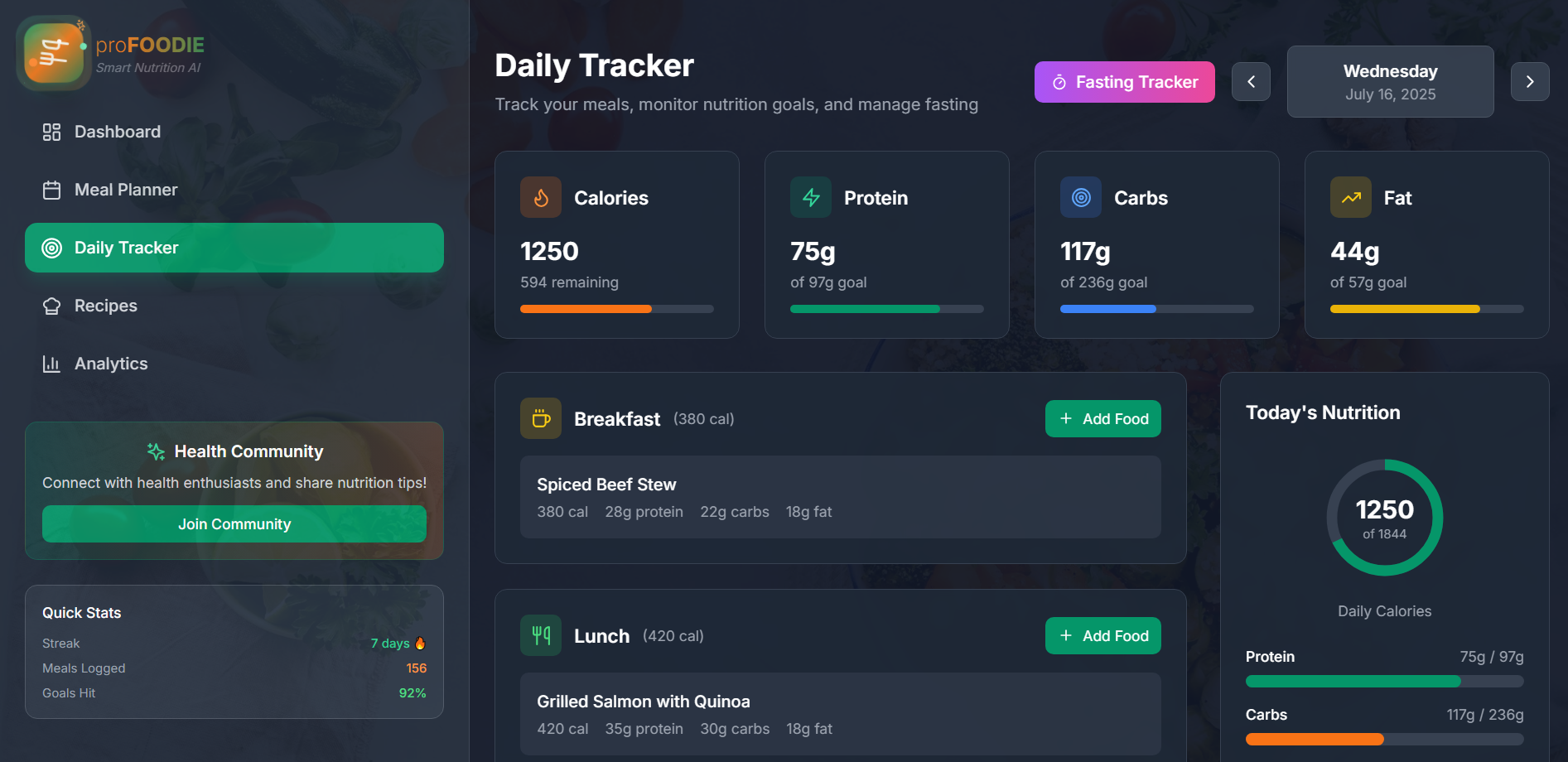
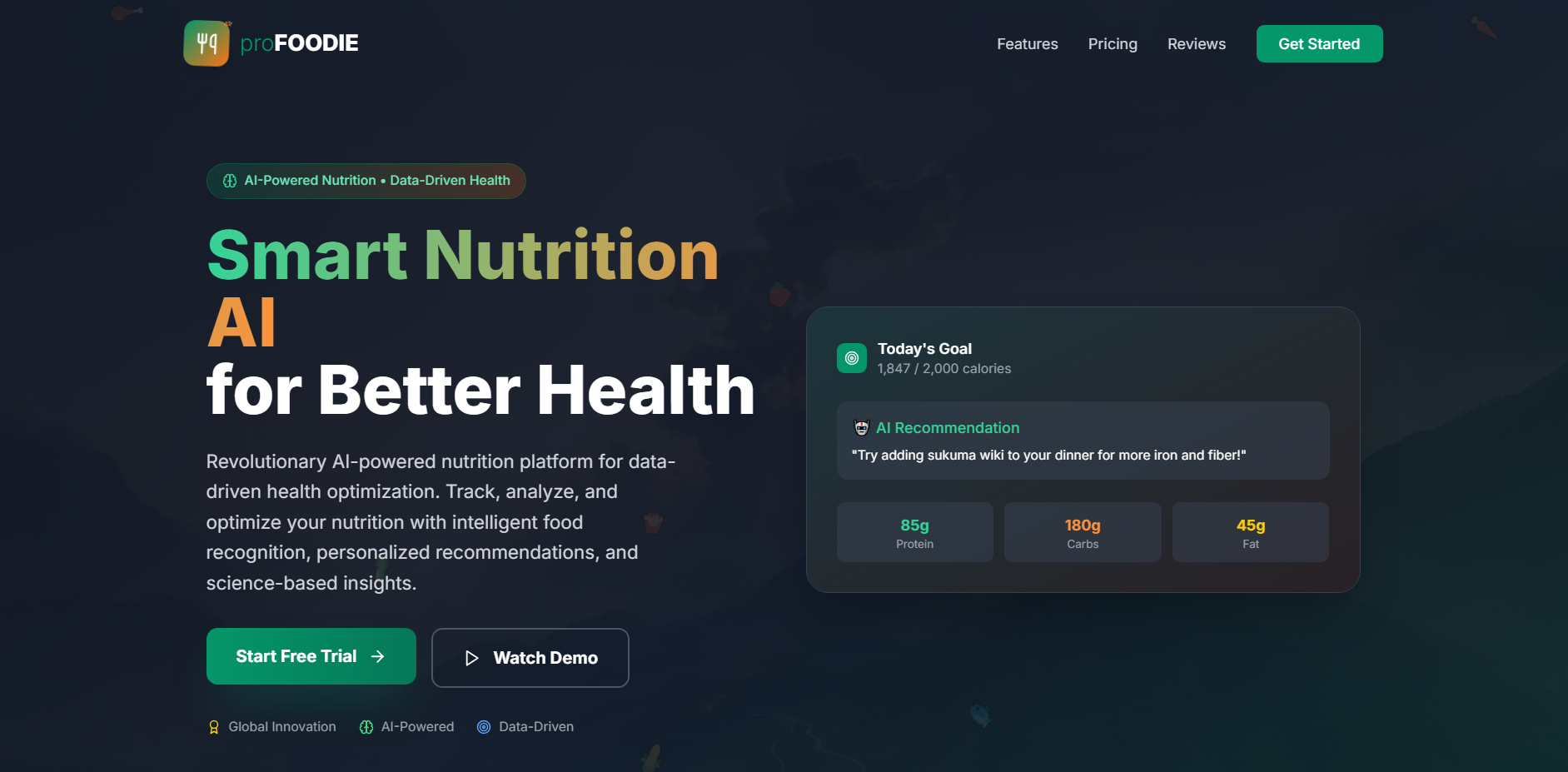
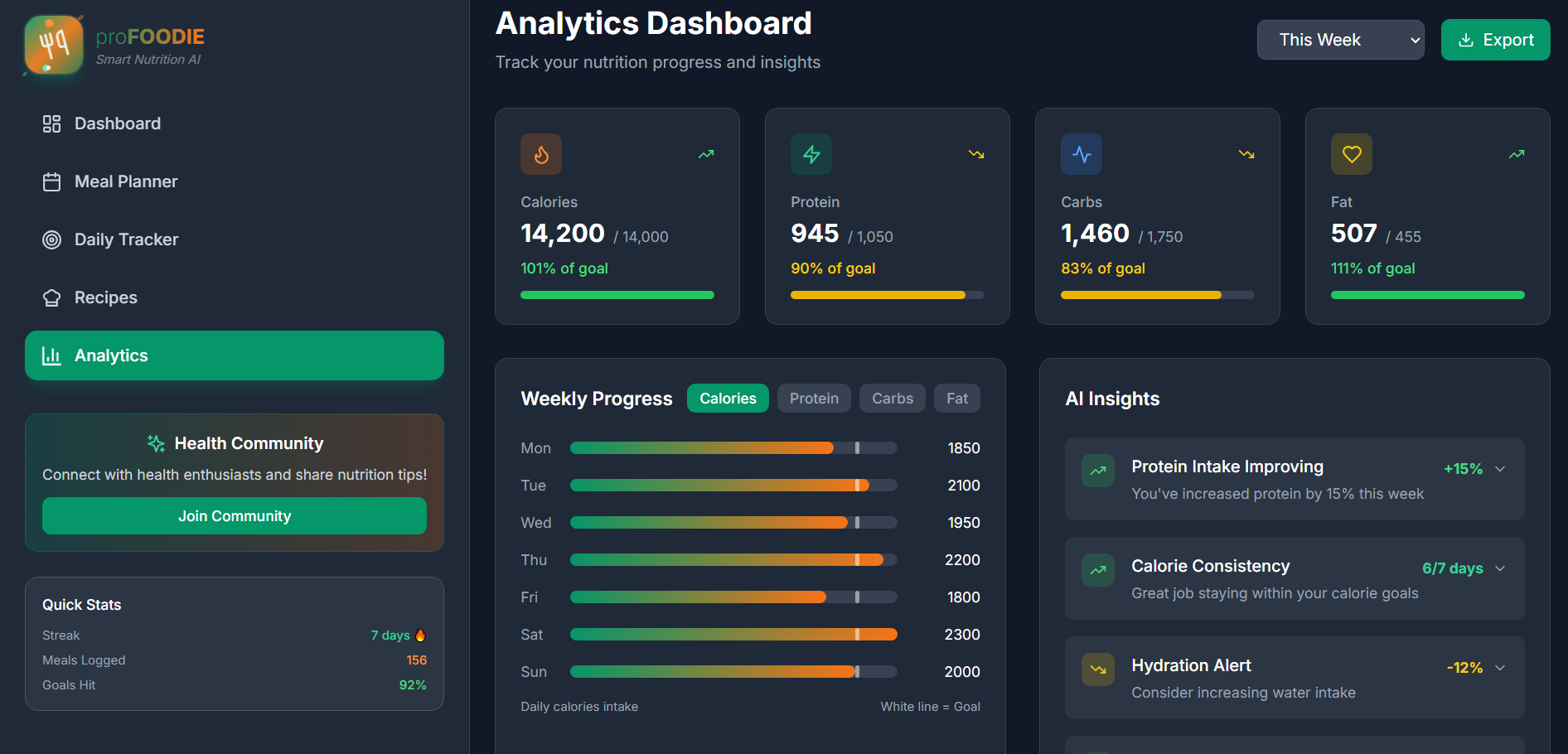
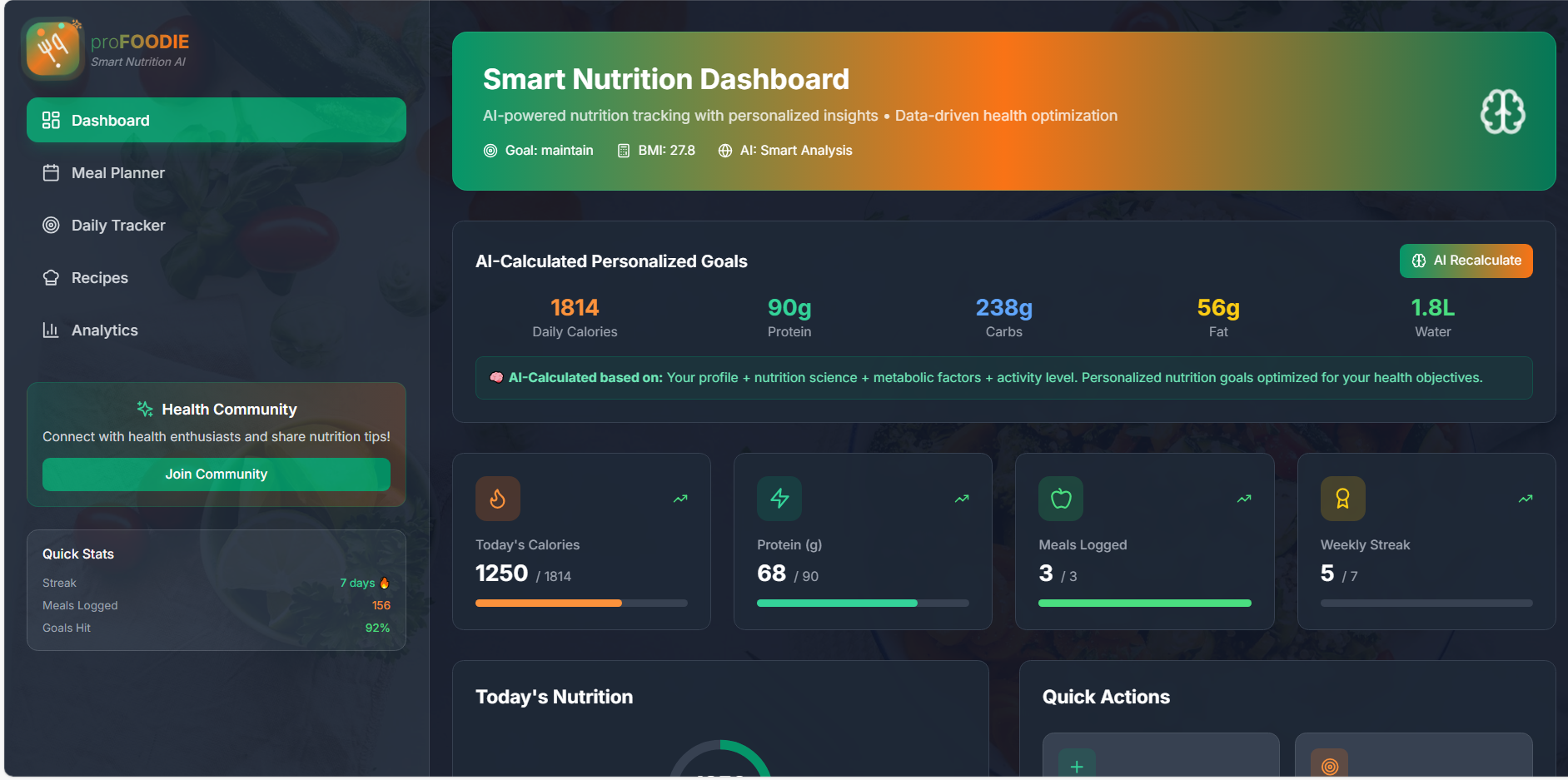
proFoodie – Building AI-Powered Nutrition From My Own Weight Loss Journey
What Inspired Me
In early 2023, I weighed 88 kg and was struggling with my nutrition. Like many people, I was overwhelmed by vague advice, inconsistent tracking apps, and conflicting diet tips online.
Then AI exploded — tools like ChatGPT, Midjourney, and other LLMs were changing everything.
Naturally, I asked myself:
“What if AI could understand food just like it understands language?”
That's when I began experimenting with AI for nutrition, using models to analyze meals and build personalized meal plans. By mid-2024, I had lost 17 kilograms through AI-assisted food planning.
People around me started asking, “How did you do it?”
That question sparked proFoodie — a smart, global-first nutrition platform powered by AI.
How I Built It
proFoodie is a full-stack AI-powered platform built with:
- 🧠 AI Models: Computer vision + LLMs for food identification and nutrition breakdown
- 🌐 Frontend: React + Tailwind in a universal PWA shell (offline-first)
- 📦 Backend: Node.js + Python APIs for inference and data management
- 🧠 Nutrition Intelligence Engine: A fusion of food science + cultural understanding
- 🌍 Globalization: Supports 50+ cuisines and cultural portion sizes using a dynamic metadata engine
I also implemented a global AI function:
const analyzeGlobalCuisine = async (image, description, userCulture) => {
  const culturalContext = getGlobalCuisineDatabase(userCulture);
  const aiEstimate = await universalNutritionAI.analyze({
    image,
    description,
    cuisineType: detectCuisineType(image, description),
    culturalPortions: culturalContext.servingSizes,
    regionalIngredients: culturalContext.commonIngredients
  });

  return culturallyAwareNutritionData;
};
What I Learned
- Cultural food data is hard to find – most nutrition platforms ignore cultural nuance.
- Accuracy matters more than features – people want trust in nutrition data.
- AI needs human reinforcement – I built feedback loops into the app so users can improve recognition.
- User retention is everything – I realized the app has to feel intuitive for a daily habit to form.
Challenges I Faced
Food Recognition Models: Getting models to recognize diverse cuisines was tough.
Cultural Bias: Most datasets are Western-centric. I had to build a small dataset of my own to support African, Indian, and Asian cuisines.
Offline Mode: Making the app work offline-first while keeping AI components functional was one of the biggest challenges.
Scaling AI on Budget: GPUs are expensive. I used quantization and model distillation with TensorFlow Lite to run inference affordably.
Math Behind My Journey
Target weight loss:
$$ \Delta W = W_{start} - W_{target} = 88\,\text{kg} - 71\,\text{kg} = 17\,\text{kg} $$
Caloric deficit needed:
$$ \text{Total Deficit} = 17\,\text{kg} \times 7700\,\text{kcal/kg} = 130,900\,\text{kcal} $$
Daily deficit for 6 months:
$$ \frac{130,900}{180} \approx 727\,\text{kcal/day} $$
AI helped me maintain a consistent 700–800 kcal/day deficit by optimizing meal plans without starving or guesswork.
Closing Thoughts
proFoodie is more than a product. It’s a mission born from my own health journey — built with code, vision, and empathy.
AI helped me lose weight. Now, I’m using AI to help the world eat better — one dish at a time.
“If AI can understand food like humans, maybe it can finally help us eat like we should.”
Whats next for proFoodie
At proFoodie we are building a universal health interfcase powered by AI. It’s a mission born from my own health journey.
Nutrition is deeply personal. Culture is non-negotiable. AI is the bridge.
“That’s the future we’re building with proFoodie.”
Tech Stack & Architecture
proFoodie is built as a modern, modular, and offline-capable frontend application using a robust and scalable web stack:
Frontend Framework
- React 18.3 – Fast, dynamic UI with component-driven design and Hooks
- Vite 5.4 – Lightning-fast dev server and build toolchain for React projects
- TypeScript 5.5 – Static typing for safer code and faster developer iteration
Styling & UI
- Tailwind CSS 3.4 – Utility-first CSS framework for responsive, clean design
- Framer Motion 10.16 – Smooth animations and transitions for great UX
- Lucide React 0.344 – Scalable icon system for consistent visual design
Data Visualization
- Chart.js 4.4 + react-chartjs-2 5.2 – Beautiful and interactive data visualizations
- Date-fns 2.30 – Lightweight date utilities for tracking nutrition over time
UX Feedback & Delight
- React Hot Toast 2.4 – Toast notifications for feedback and alerts
- React Confetti 6.1 – Lightweight celebration effects for user goal milestones
Tooling & Dev Experience
- ESLint 9.9 + TypeScript ESLint 8.3 – Code linting and static analysis
- PostCSS + Autoprefixer – CSS transformation and compatibility handling
- React Refresh + ESLint Plugin Hooks – Fast refresh and React-specific linting
Project Structure Highlights
- Modular TypeScript-first codebase – Extensible and developer-friendly
- PWA-ready shell – Designed to support offline-first use cases in future
- React Router DOM 6.20 – Modern routing solution with nested layout support
This stack ensures proFoodie is scalable, performant, and user-friendly — ready to evolve into a globally distributed AI-powered platform.
Built With
- framer
- react
- tailwindcss
- vite

Log in or sign up for Devpost to join the conversation.