-
Maximizing shareholder value
We got access to an exchange with eight stocks, a bunch of bots and a lot of other teams, and the only rule was to make money. We didn't have a big master plan. We just wanted to understand the market first and then see what actually works.
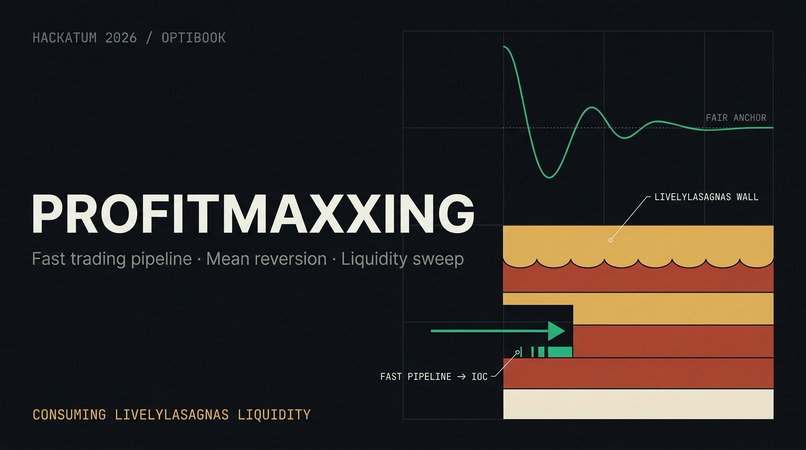
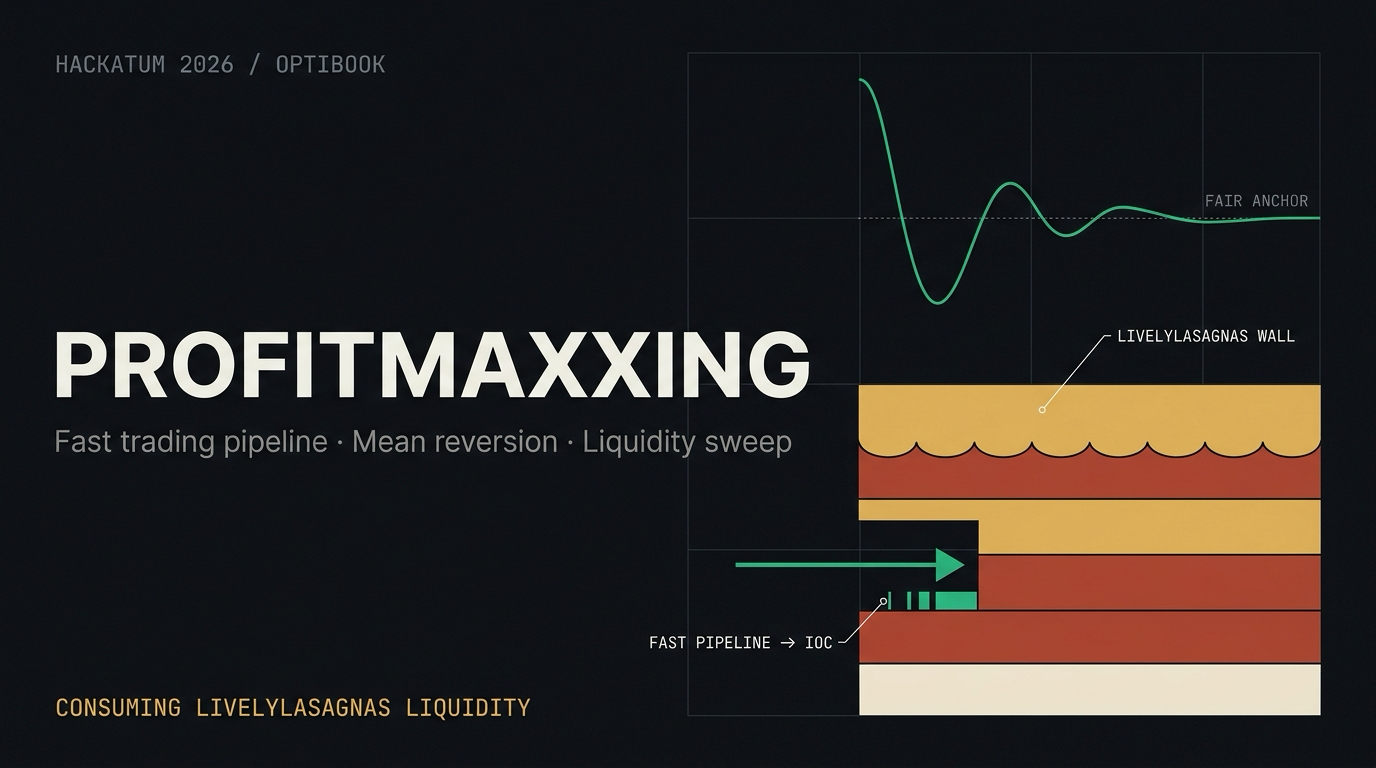
So we started recording everything right after the opening, every order book, every trade and our own orders, and spent most of the weekend testing ideas against that data. Most of them died there. In the end we landed on two things that many other teams were doing too. First, three of the eight stocks are basically copies of three others: when NVDA jumps, SNDK follows a moment later, and the same goes for AVGO and NBIS, and for MU and CRWV. So when a leader jumps, our bot immediately buys or sells up to 100 shares of the follower and gets out ten seconds later. Second, every stock keeps drifting back to its fair value. If a stock trades far above it, we go short; if it trades far below, we go long, and the further away it is, the bigger the position.
The hard part was not finding these ideas but getting them to work live. Every jump is a race in which about 50 teams send almost the same order within a few milliseconds, and in the beginning we were often too late and got nothing. So we kept cutting down the time from "leader jumps" to "our order is at the exchange". On top of that, there is only one login per team. If you start a second bot by accident, it kicks out the first one, which happened to us more than once, at night, with open positions. And honestly, the most painful part was throwing things away: we built a market maker, a trend follower and a few signal models. All of them looked great in the backtest and lost money live.
Along the way we learned a lot. Simple things you actually understand beat complicated models. A backtest is only worth something once you've checked it for mistakes. And sleep is optional, but an agent that stops running overnight is not.
Built With
- claude
- python
- trading
