Inspiration
When I was in Class 11, I was preparing for JEE, one of India's toughest engineering entrance examinations. My coaching institute regularly gave us assessment sheets containing difficult questions. Many of them were not directly available in textbooks or reference material, and I often could not solve them on my own.
The usual solution was to search the internet. Sometimes websites such as Doubtnut, Toppr and others had similar questions, but finding the exact problem and a complete explanation was difficult. Many useful solutions were also behind paywalls.
What was missing was simple: a student should be able to take any difficult question, ask for help, and receive a clear explanation instead of just an answer.
That experience stayed with me. When I entered engineering, I started thinking about how technology could make high-quality learning assistance available to every student, regardless of where they live or how much they can afford.
That idea became Professor X AI.
What We Are Building
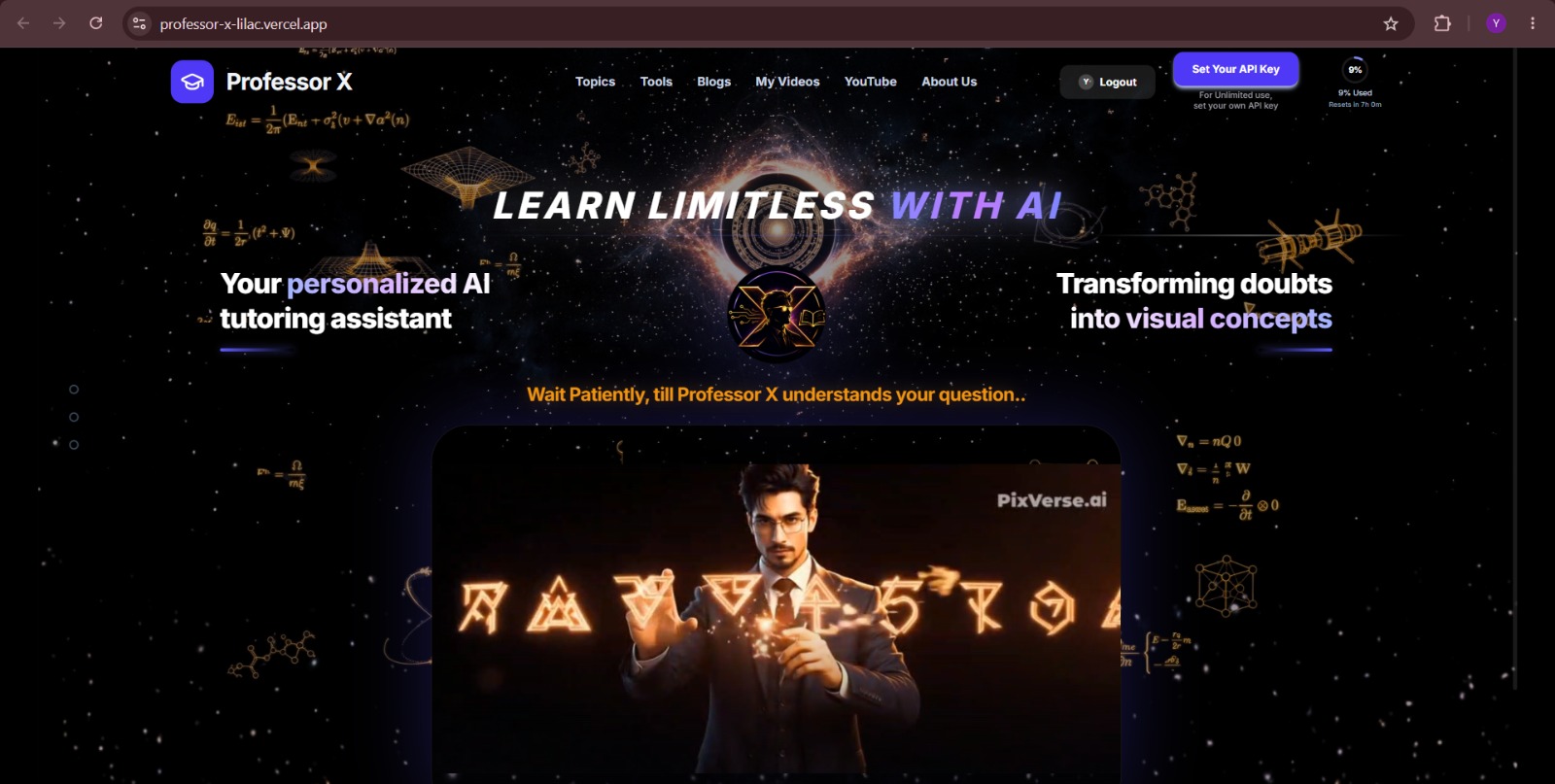
Professor X AI is an AI-powered learning platform designed to turn difficult questions and concepts into understandable, interactive learning experiences.
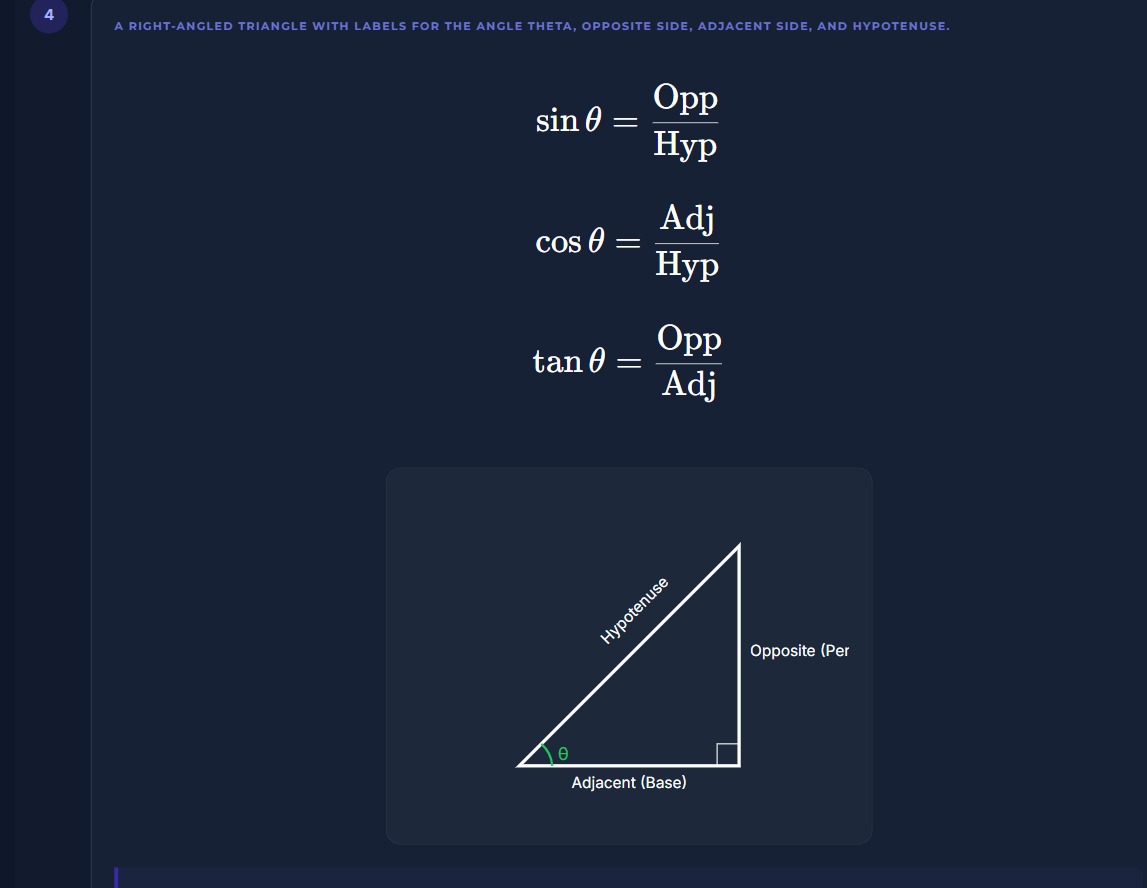
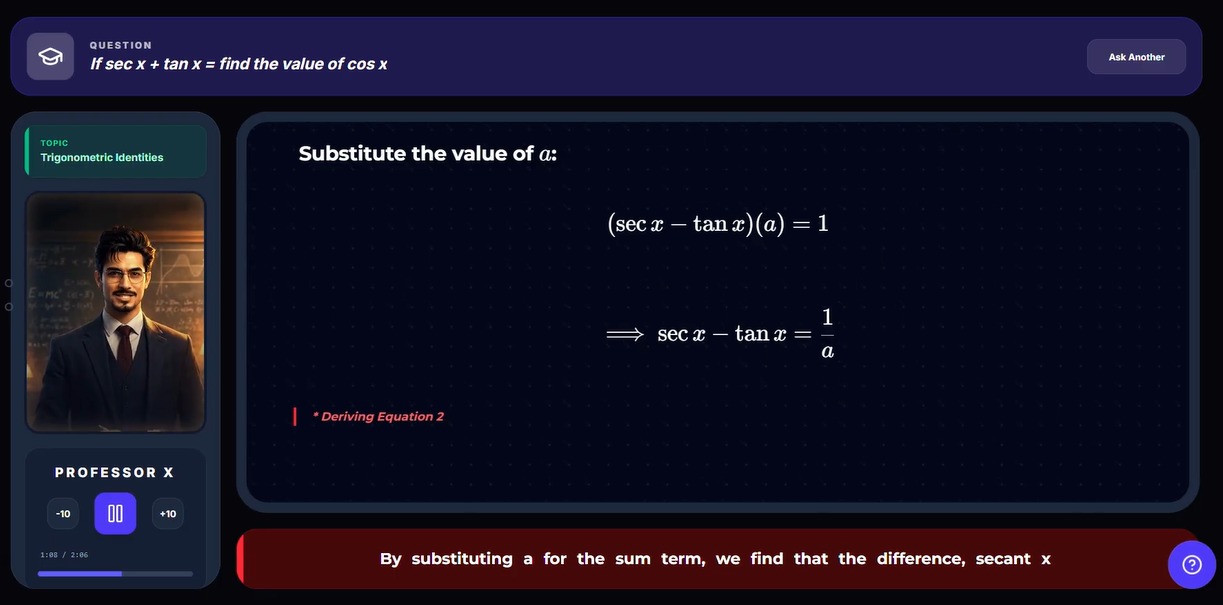
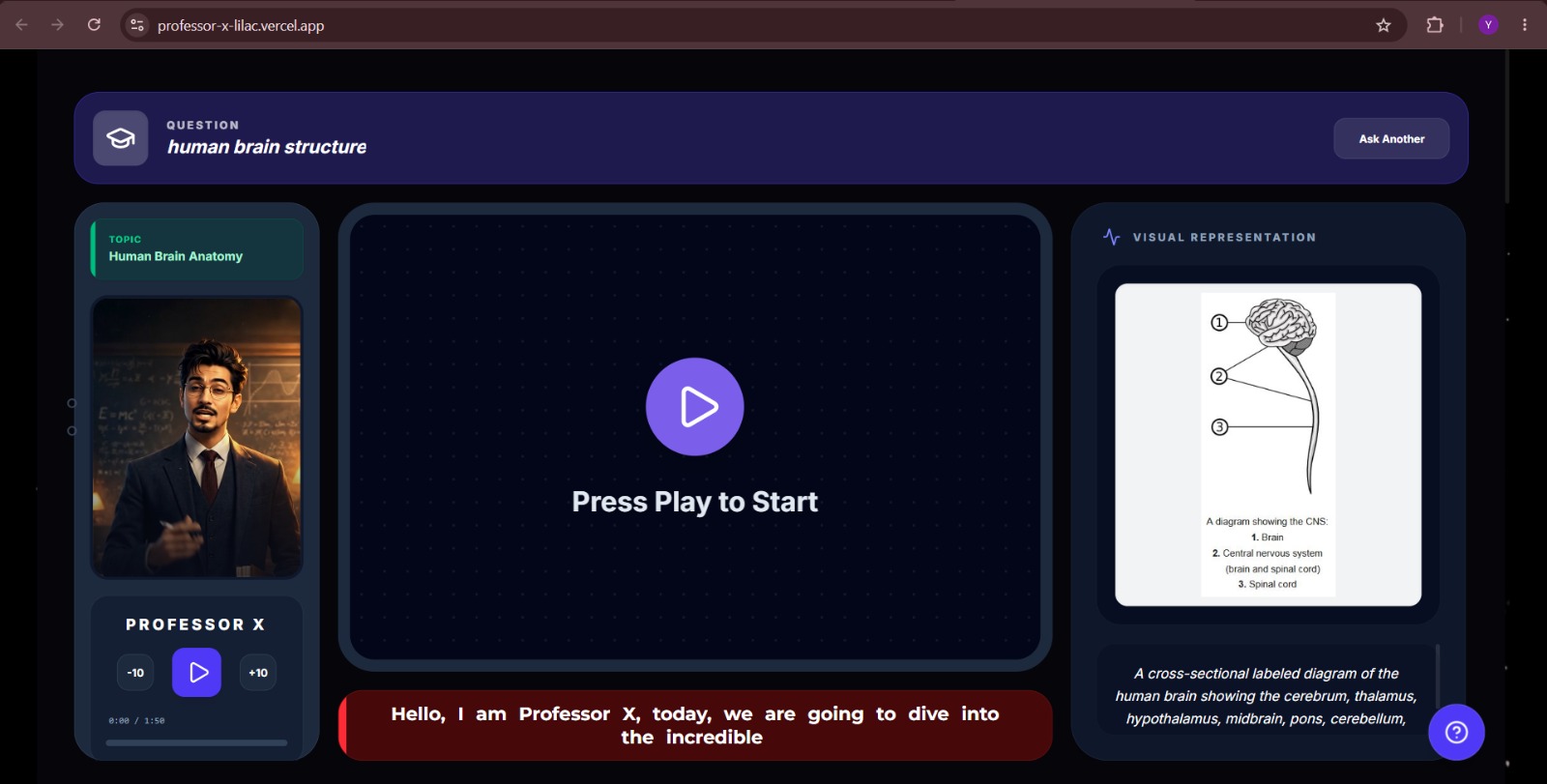
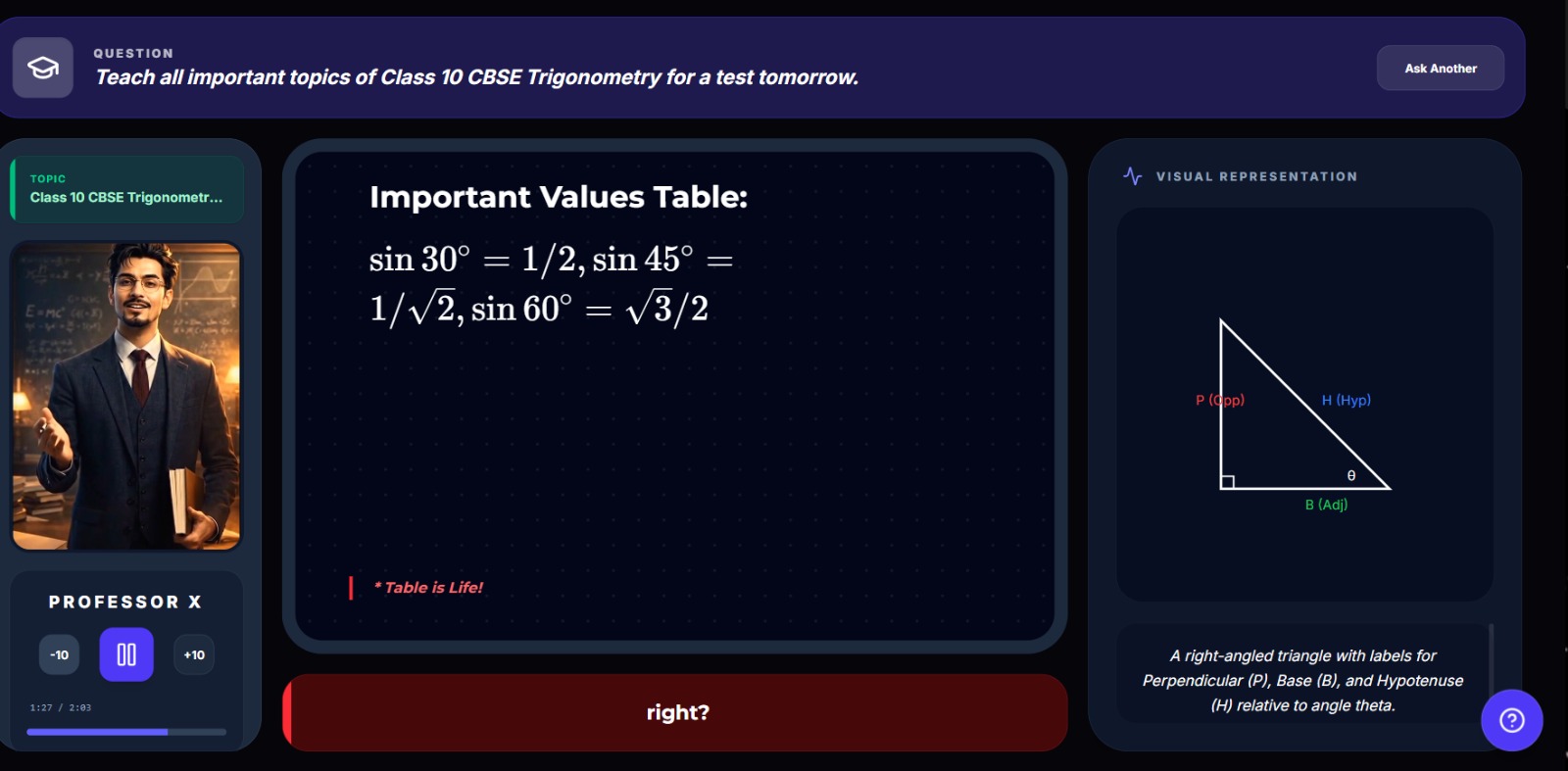
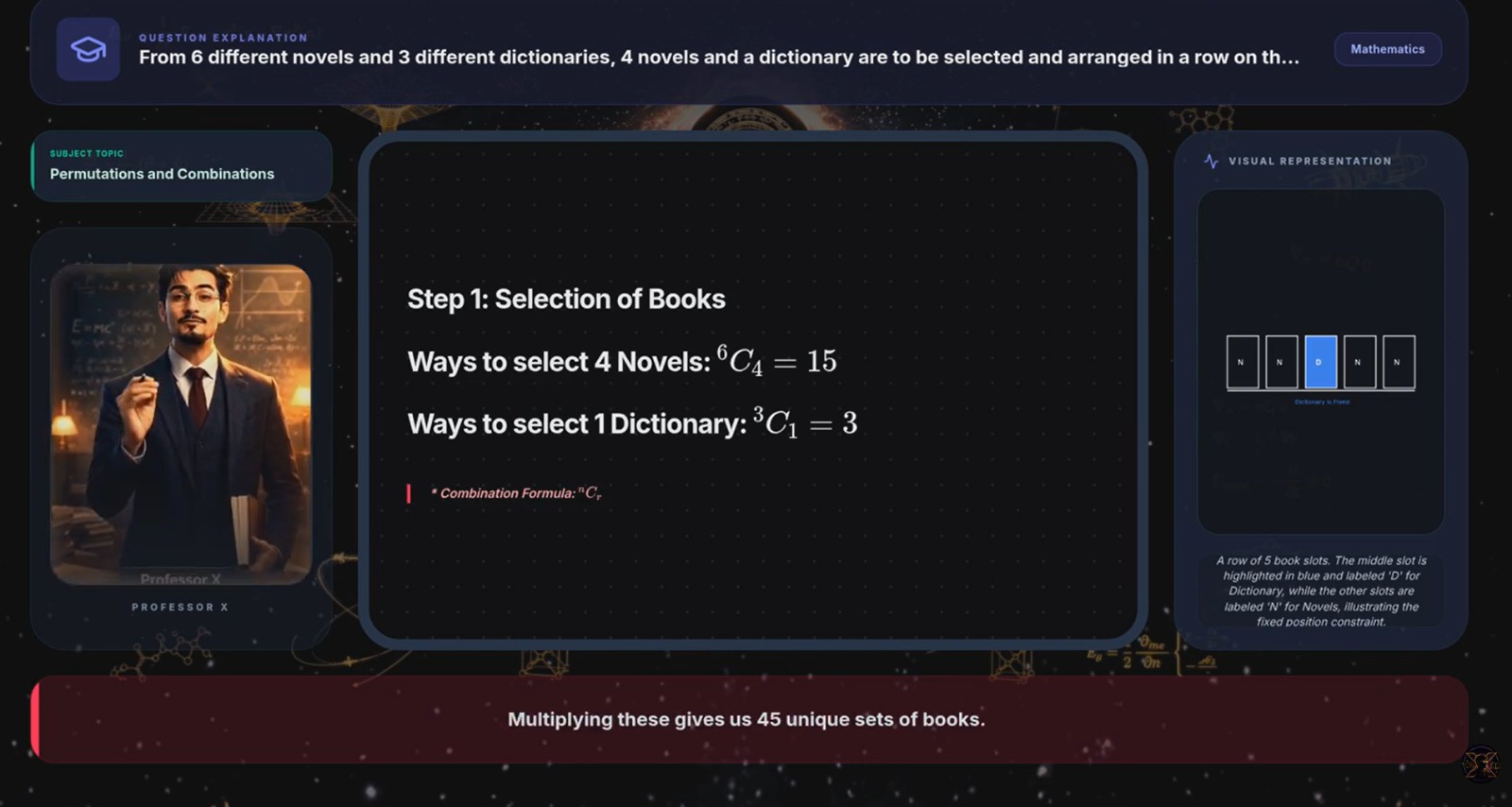
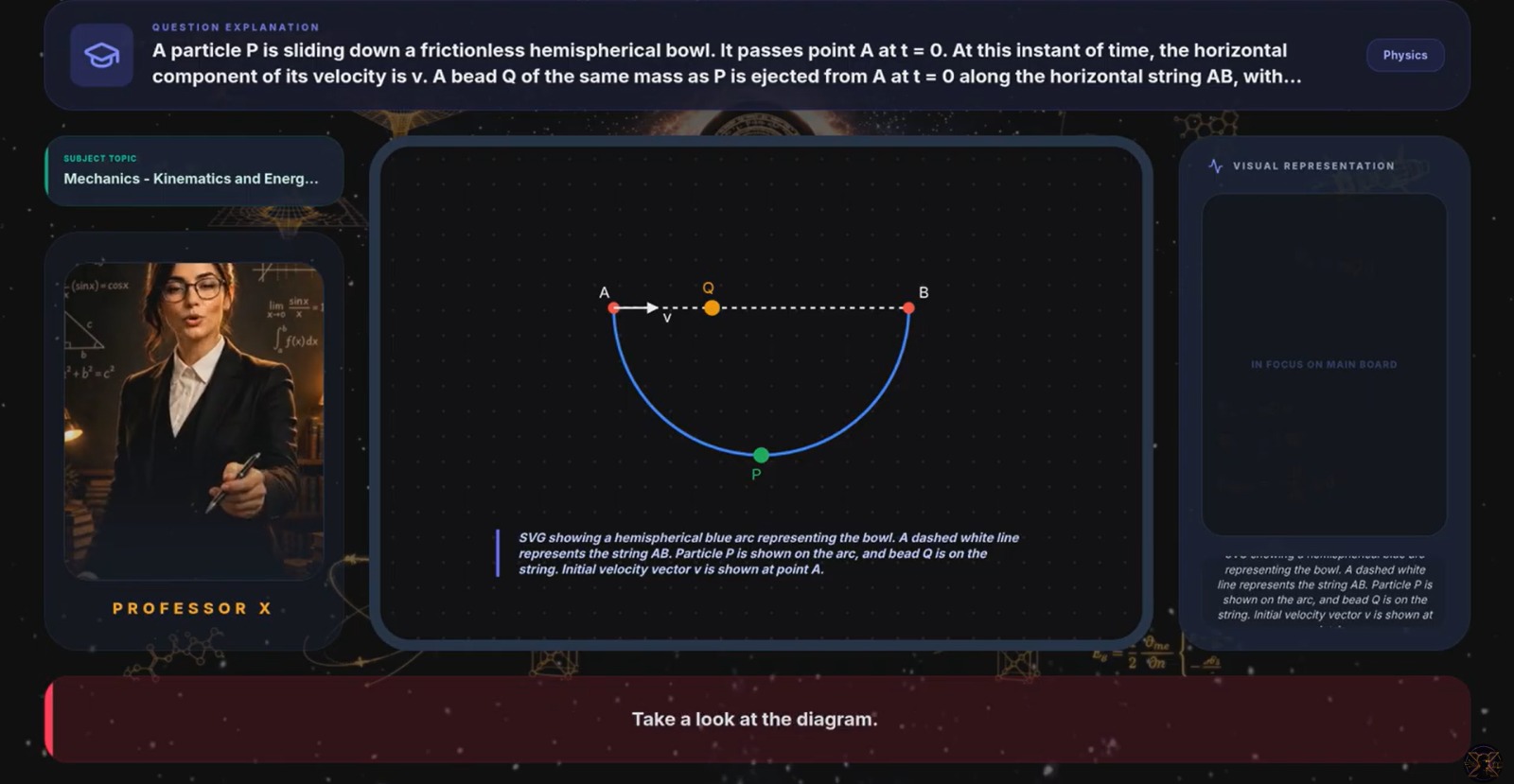
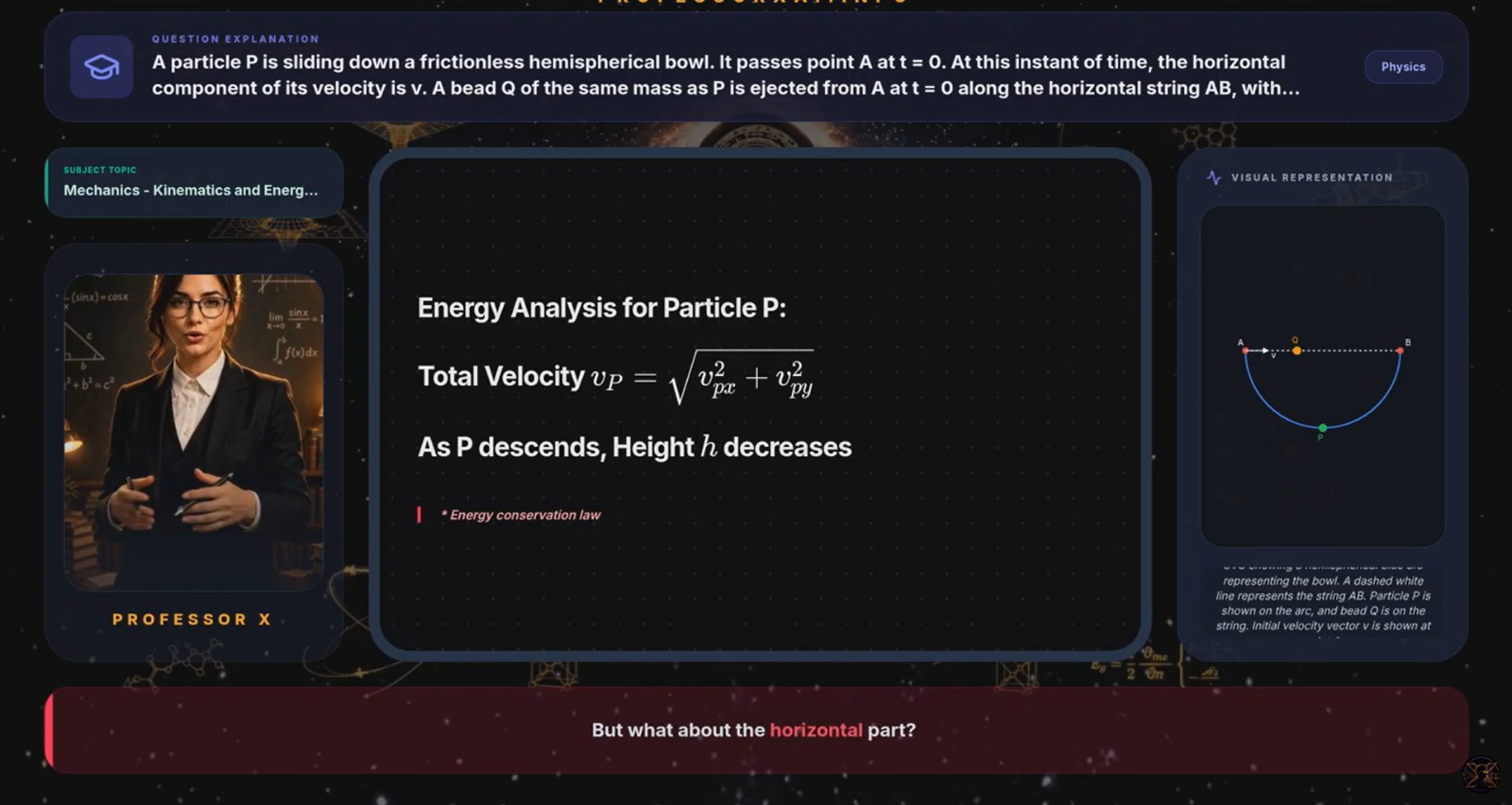
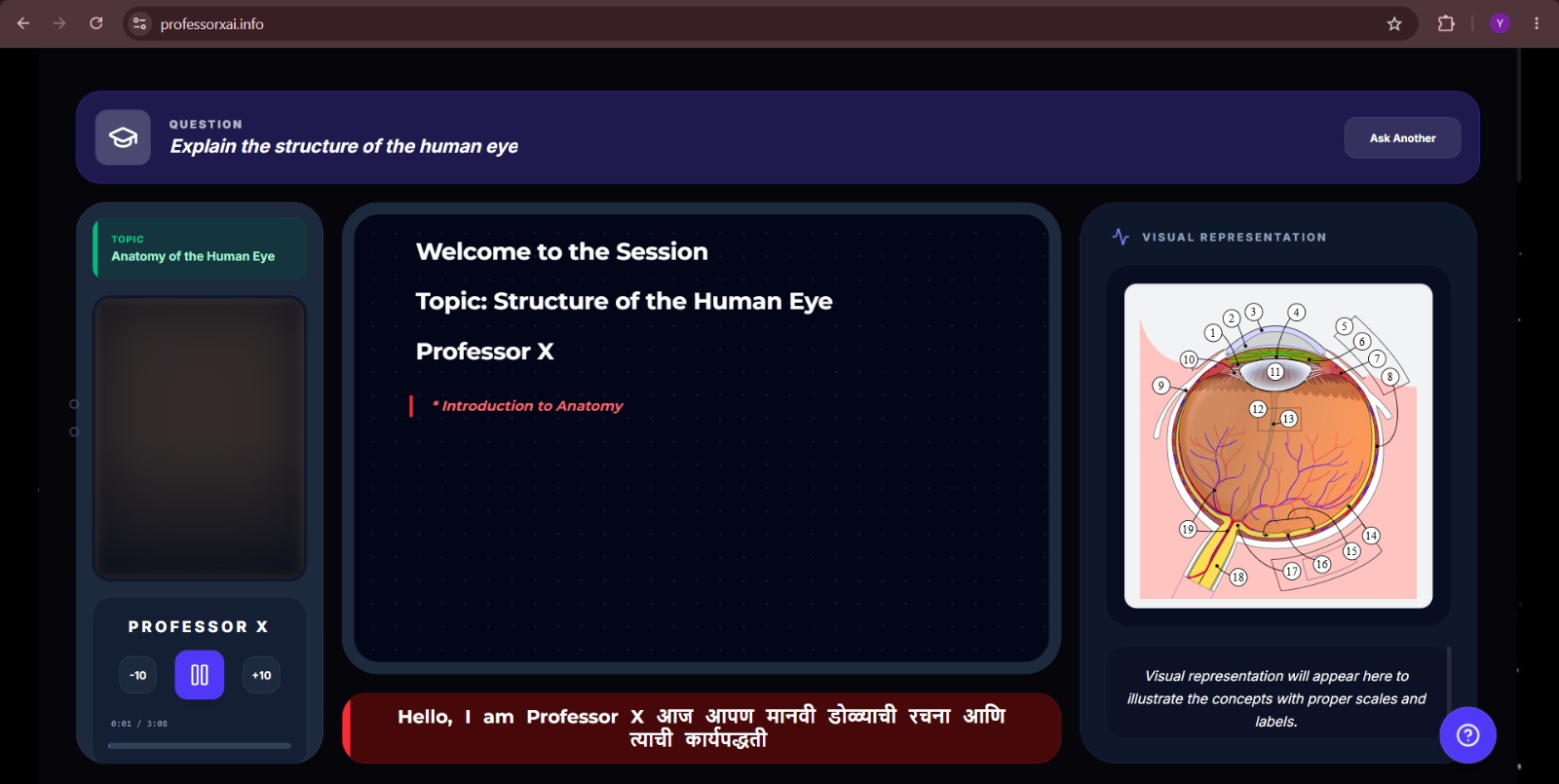
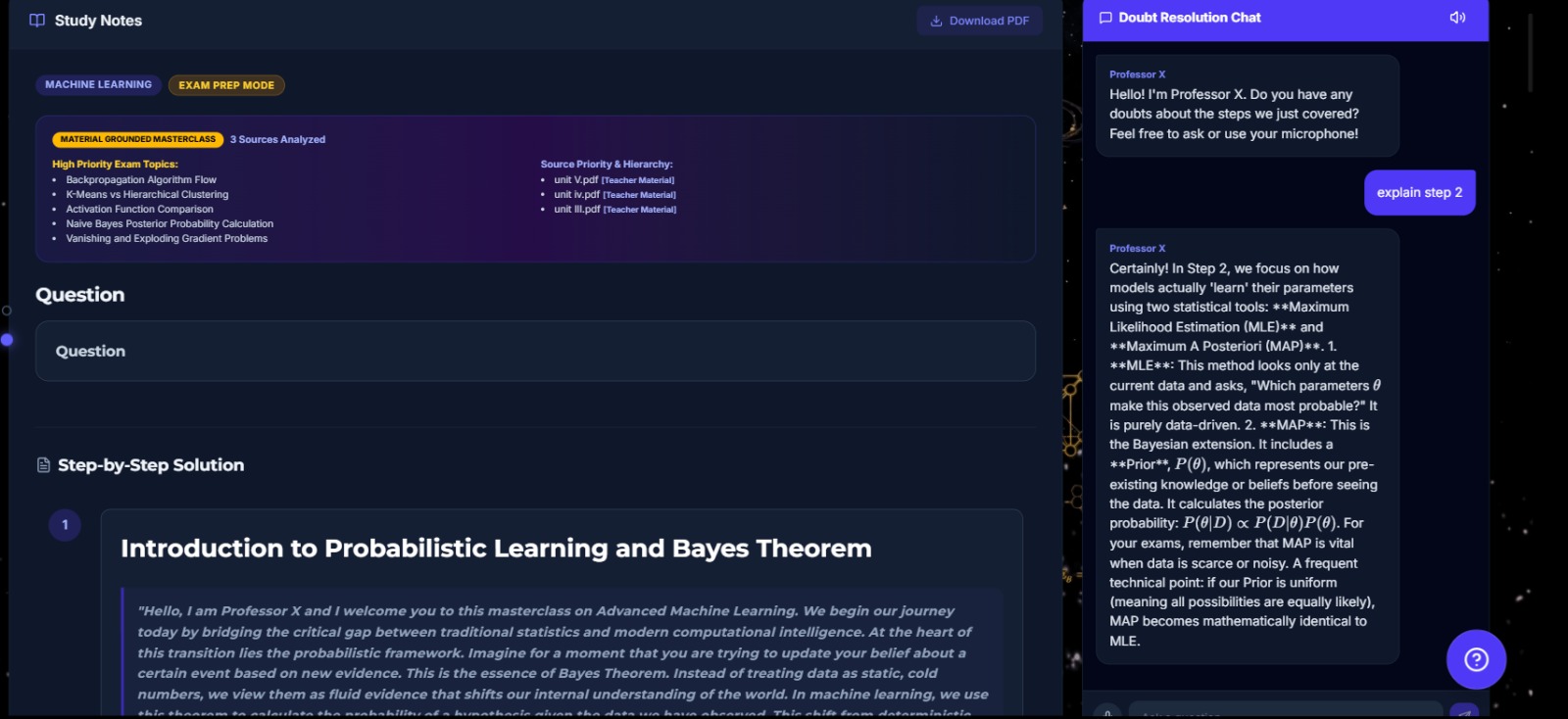
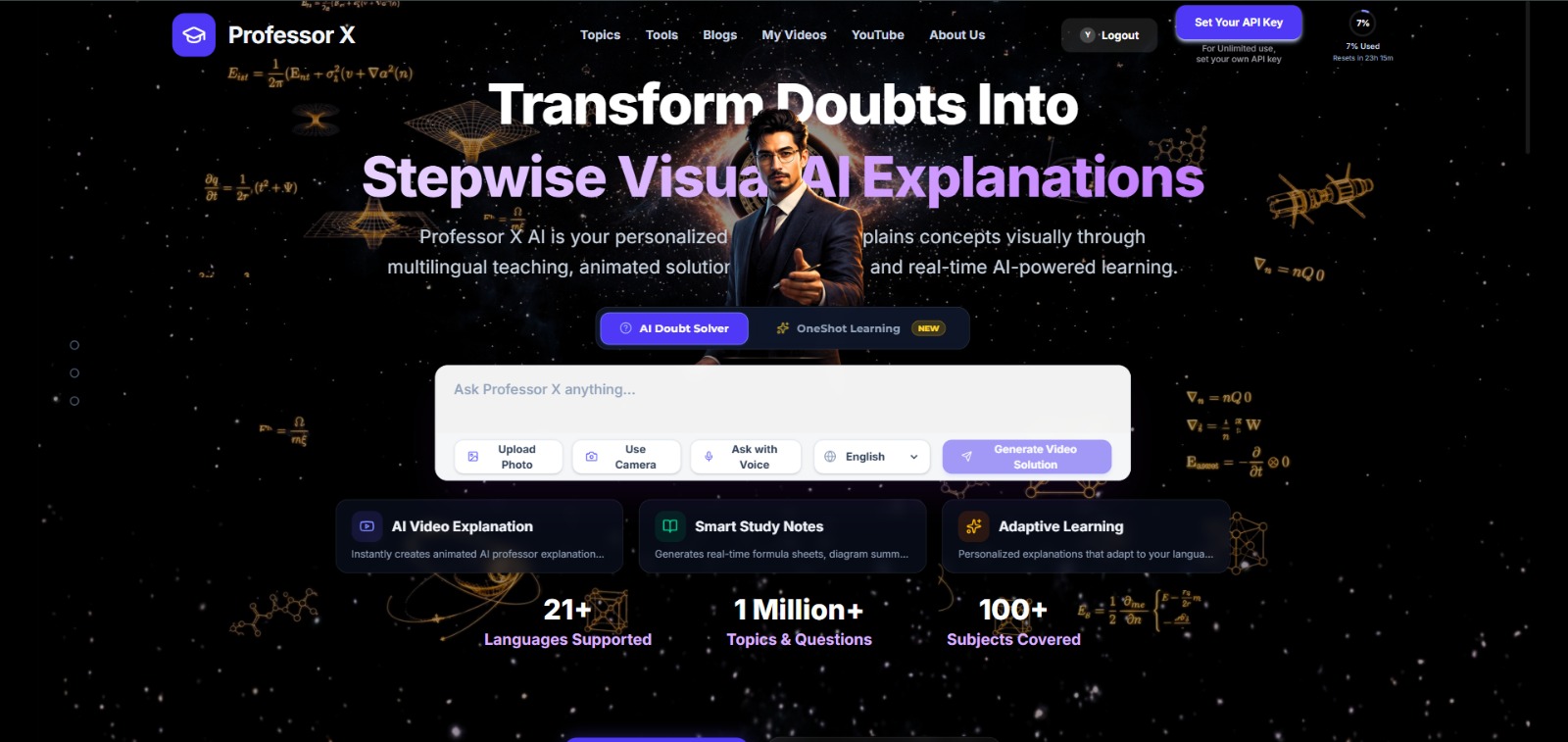
A student can type a question or upload an image of a problem. Professor X understands the problem, works through the reasoning, and presents the solution step by step with an AI teacher, visual explanations, mathematical notation, diagrams, voice narration, notes and an interactive doubt-solving interface.
The goal is not simply to give students the final answer.
The goal is to help them understand how and why the answer is reached.
Professor X is also designed to go beyond mathematics. The platform can support subjects such as physics, chemistry, biology, coding and engineering, with subject-specific visual explanations, diagrams, graphs, formulas, examples and learning structures.
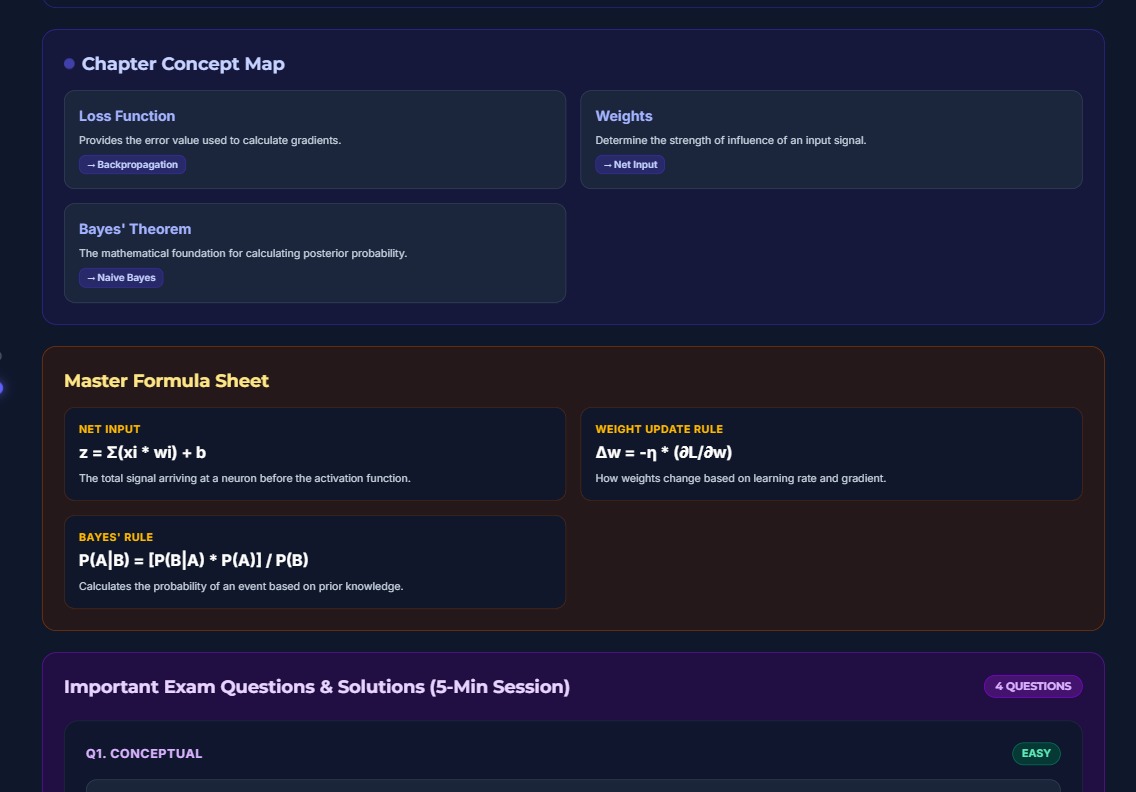
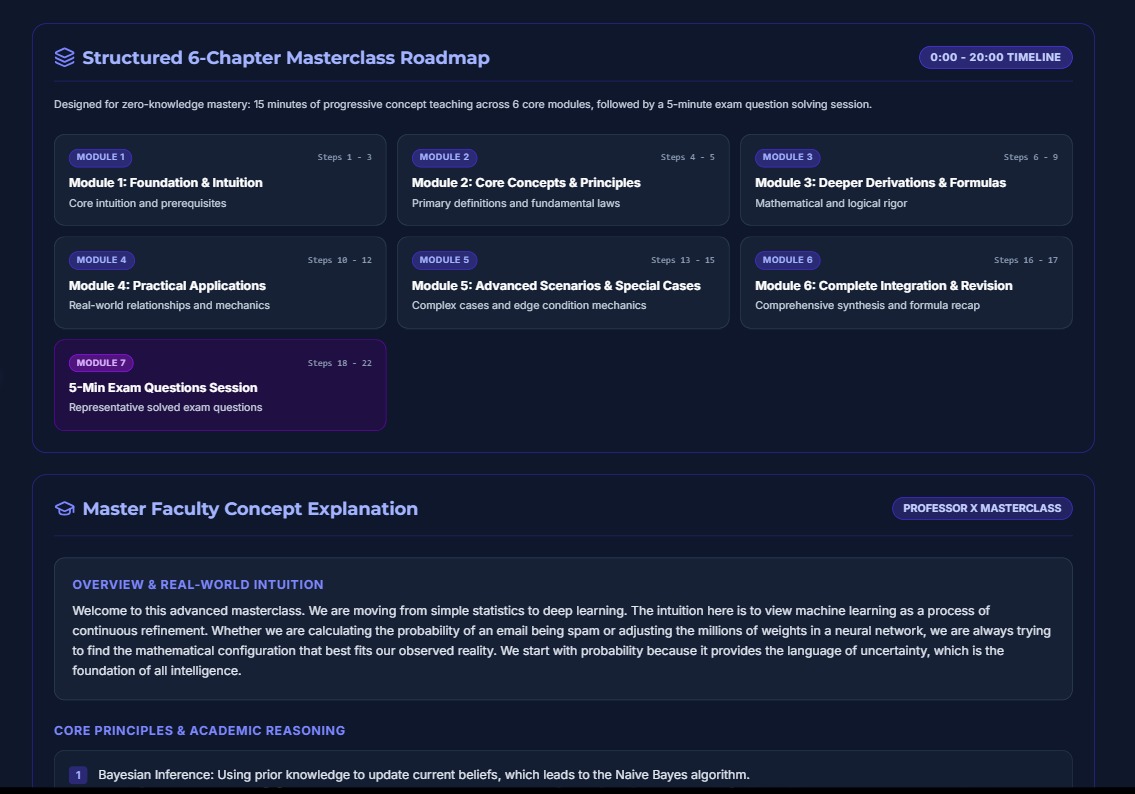
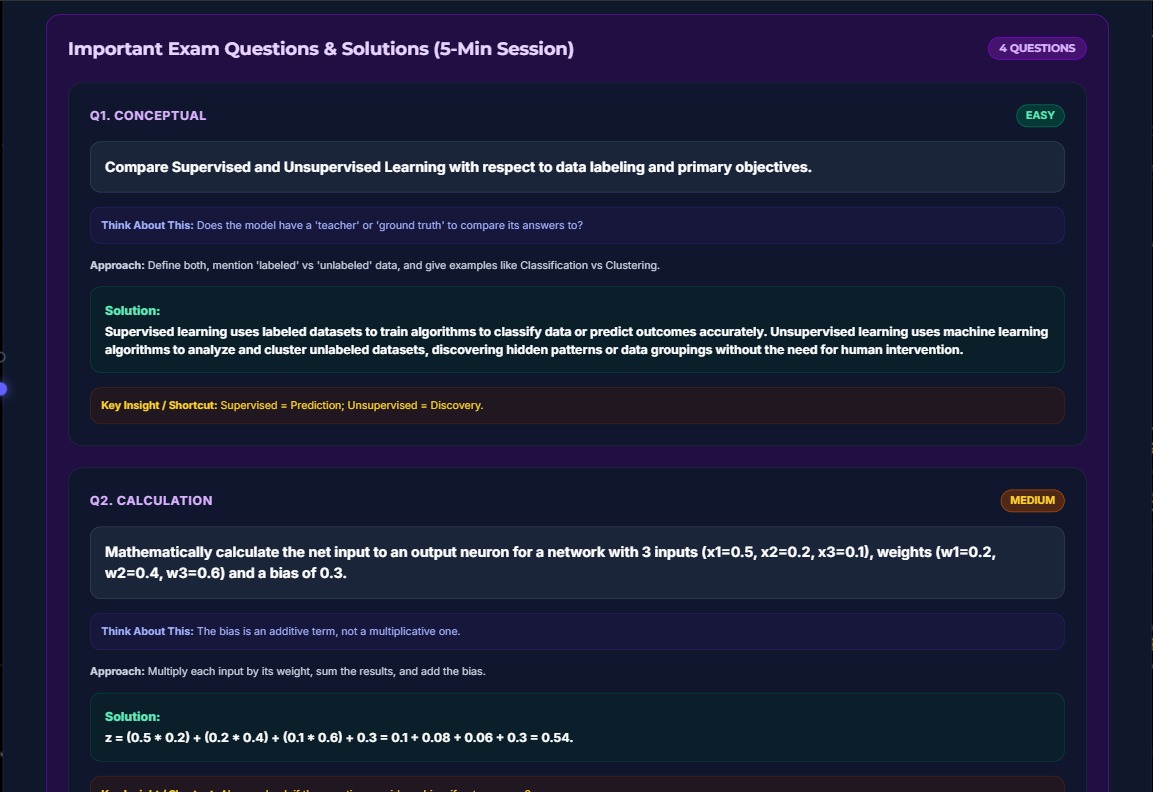
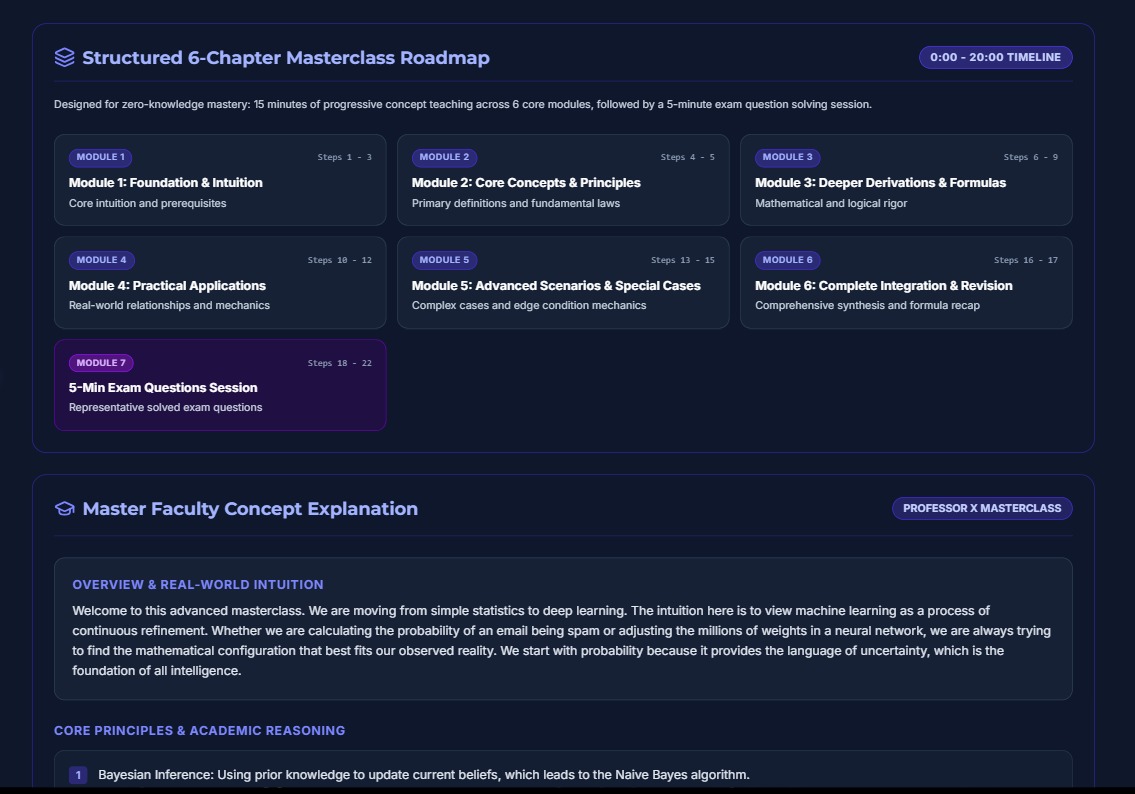
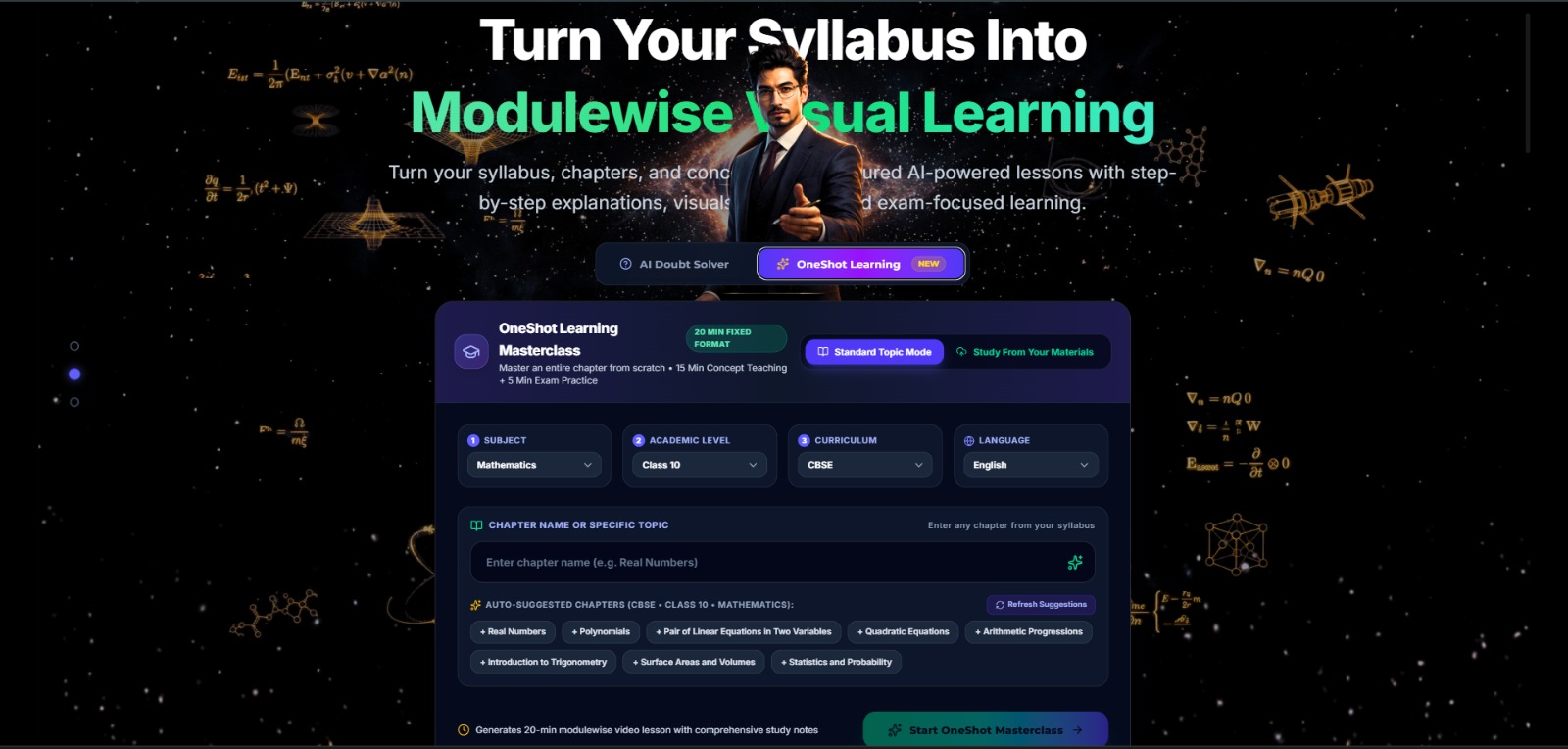
We are also building a Learning Mode where students can learn an entire chapter or topic through a structured one-shot lesson. The system first creates a learning roadmap and then generates a focused 15-minute explanation covering the essential concepts, followed by approximately 5 minutes of important question discussion. Students can then use the interactive doubt solver for anything they still do not understand.
This makes Professor X useful not only when a student is stuck on one question, but also when they need to learn or revise an entire topic quickly.
The Journey
Building this was much harder than I initially expected.
When I started, there were very few practical references for creating the type of educational video experience I had imagined. Most AI video tools were focused on generating conventional AI videos or talking avatars. My problem was different. I needed the underlying explanation itself to become the video.
The system needed to understand a problem, generate a logically structured solution, convert that solution into visual steps, create diagrams where necessary, generate narration, synchronize everything and present it as one coherent learning experience.
There were very few ready-made pipelines for this.
For months, I researched different programming languages, libraries, AI models, animation systems, mathematical rendering techniques, audio generation methods and video pipelines. Some tools had interesting capabilities but no usable API. Others had APIs but very limited documentation. Many approaches simply did not produce the educational experience I needed.
Eventually, I built my own pipeline by combining multiple technologies for reasoning, content generation, mathematical rendering, visual generation, audio generation, synchronization and interactive presentation.
The first working version was far from polished. It was functional, but the experience was not yet good enough.
Later, with the emergence of modern AI-assisted development and coding tools, I was able to completely rethink and rebuild the prototype. I improved the interface, pipelines, visual system, generation logic, synchronization, interactions and overall user experience.
Challenges
One of the biggest challenges was generating educational videos automatically rather than manually producing each lesson.
Another major challenge was creating visual explanations that actually correspond to the reasoning. A diagram should not simply look attractive. It should explain the concept being discussed.
Multilingual learning was another challenge. The platform needed to support natural voice explanations in different languages while keeping mathematical and technical notation academically consistent.
Real-time doubt solving introduced another layer of complexity. Students should be able to ask follow-up questions instead of receiving only a single generated solution.
I also had to think carefully about making the platform accessible to students without creating a high cost barrier for every interaction.
These challenges pushed the project from being a simple AI question-answering system into a much broader AI learning platform.
What I Learned
The biggest lesson was that building an AI product is not just about connecting an AI model to a website.
The difficult part is designing the complete system around the model.
The quality of the final experience depends on reasoning, structured outputs, visual generation, audio, synchronization, interaction design, error handling and the way all these components work together.
I also learned that a good educational AI system should focus on understanding rather than simply producing answers.
Where Professor X Is Going
The long-term vision is to create a real-time AI self-learning ecosystem where students can learn, ask questions, revise concepts and interact with an AI teacher whenever they need help.
The platform is being designed to support multiple languages, including foreign languages and, in the future, a much wider range of Indian languages so that students across India can access high-quality AI-assisted learning in languages they are comfortable with.
Professor X is built around one simple belief:
Every student should be able to ask, "Why?" and receive an explanation they can actually understand.
Built With
- ai
- api
- canvas
- css
- d3.js
- framer
- gemini
- generative
- javascript
- language
- latex
- motion
- multimodal
- natural
- node.js
- processing
- react
- rest
- sarvam
- speech-to-text
- svg
- tailwind
- text-to-speech
- typescript
- vite

Log in or sign up for Devpost to join the conversation.