-
-
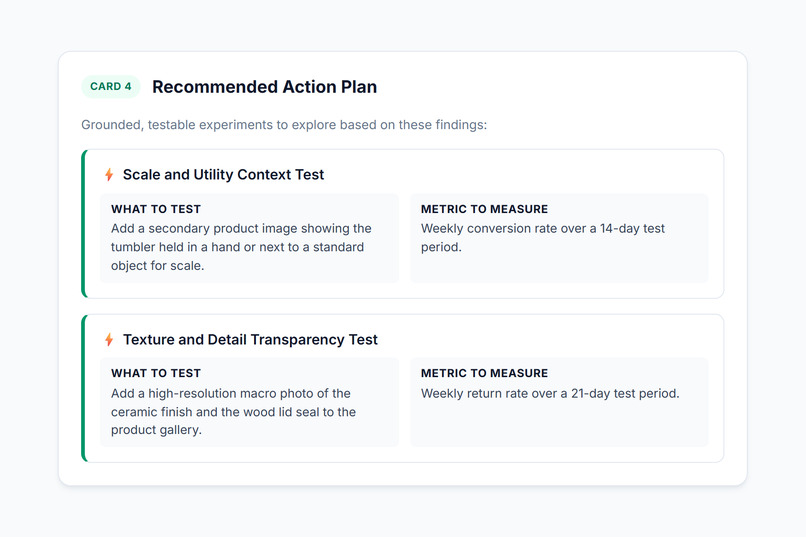
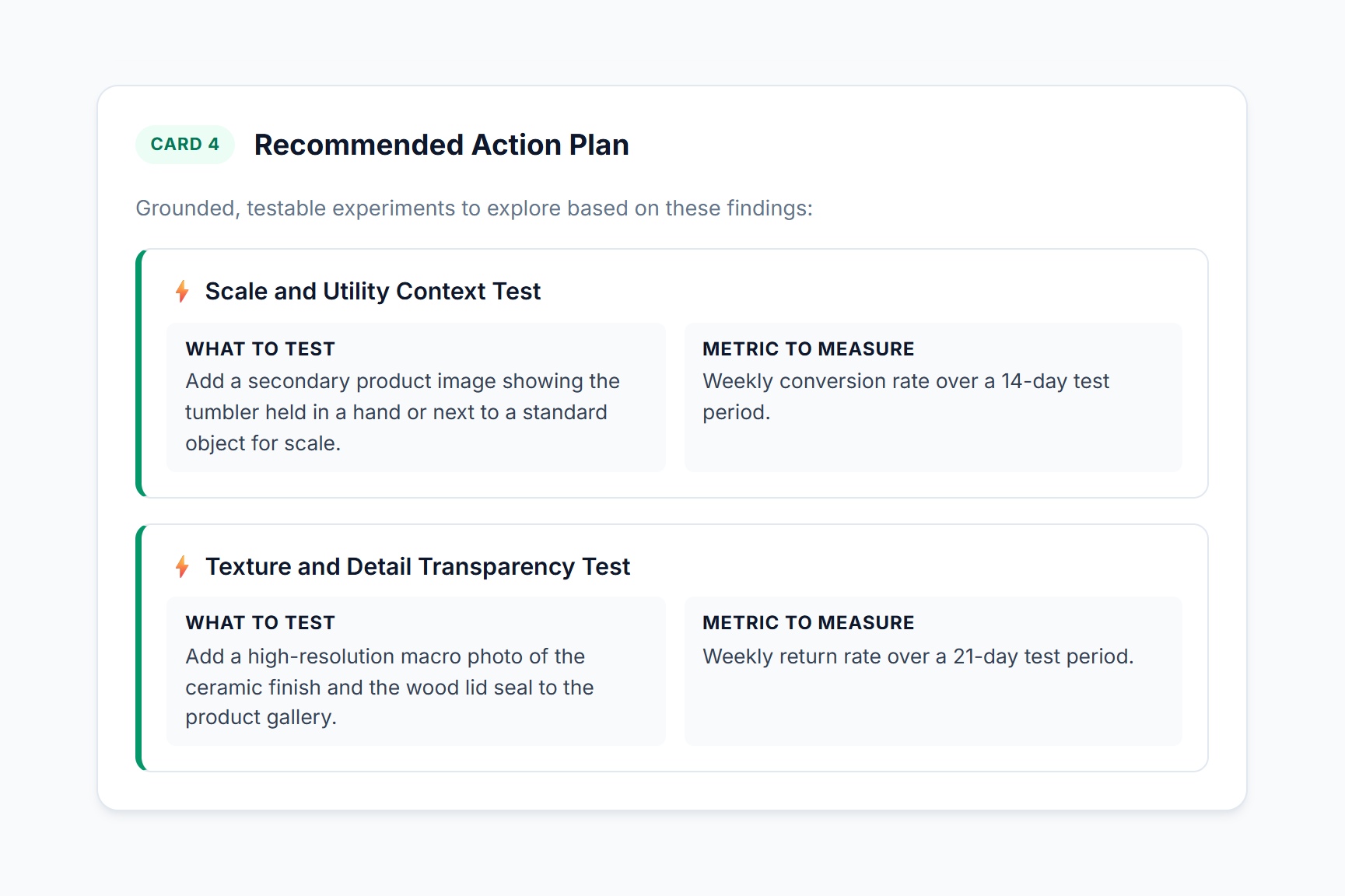
Actionable testing framework outlining specific variables to tweak and metrics to measure next.
-
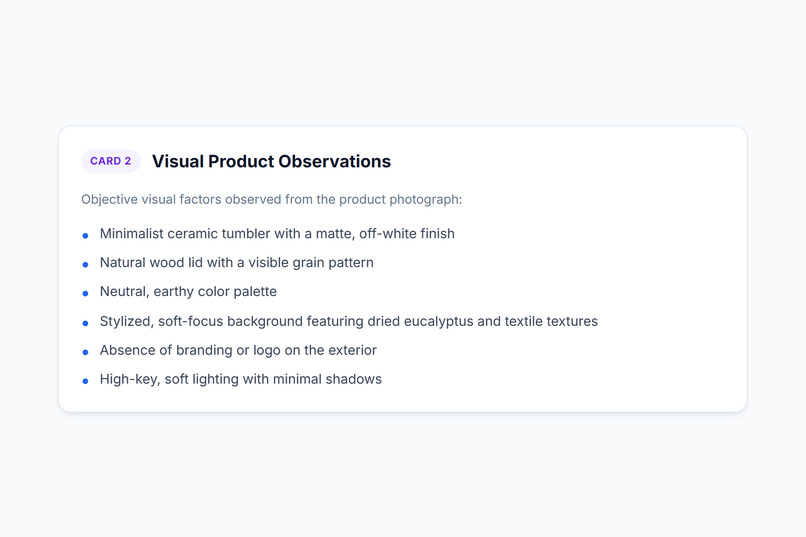
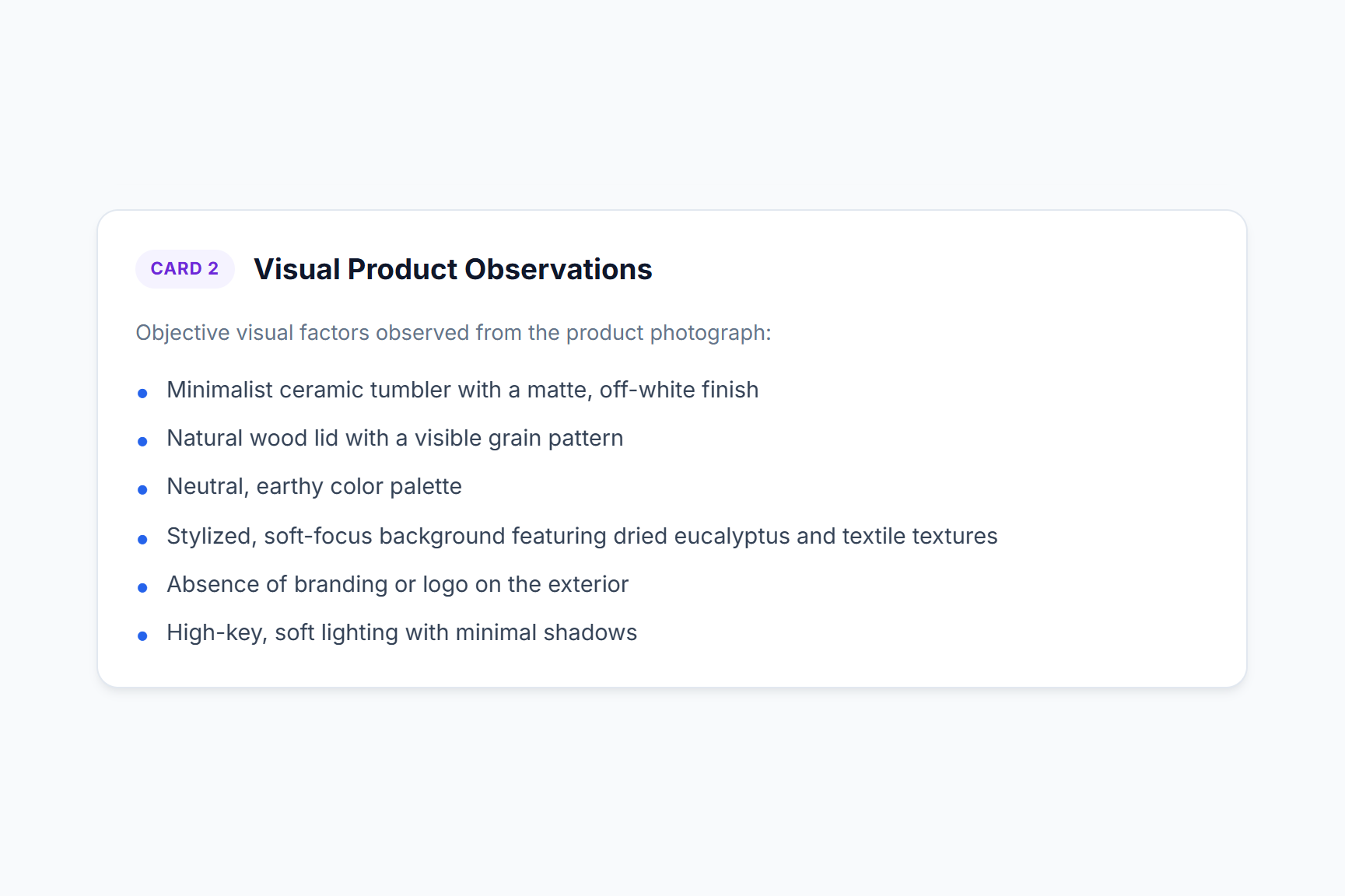
Computer vision extracting objective visual factors like lighting, minimalist aesthetic, and staging cues.
-
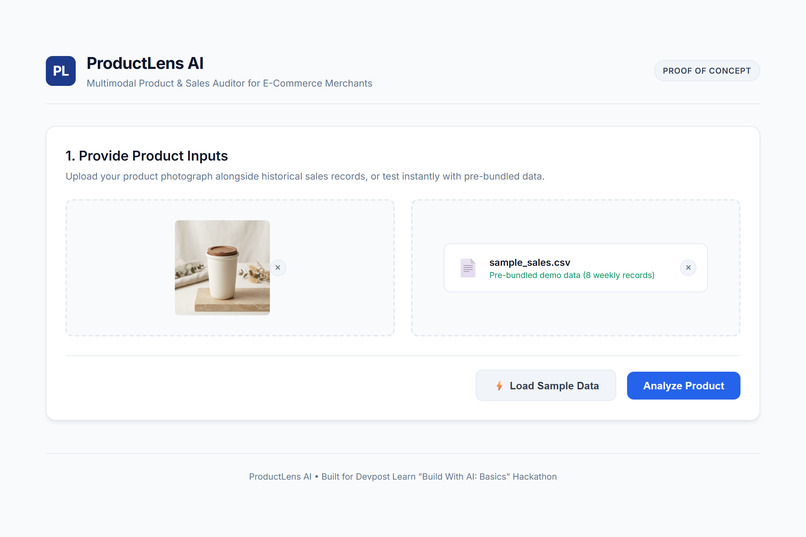
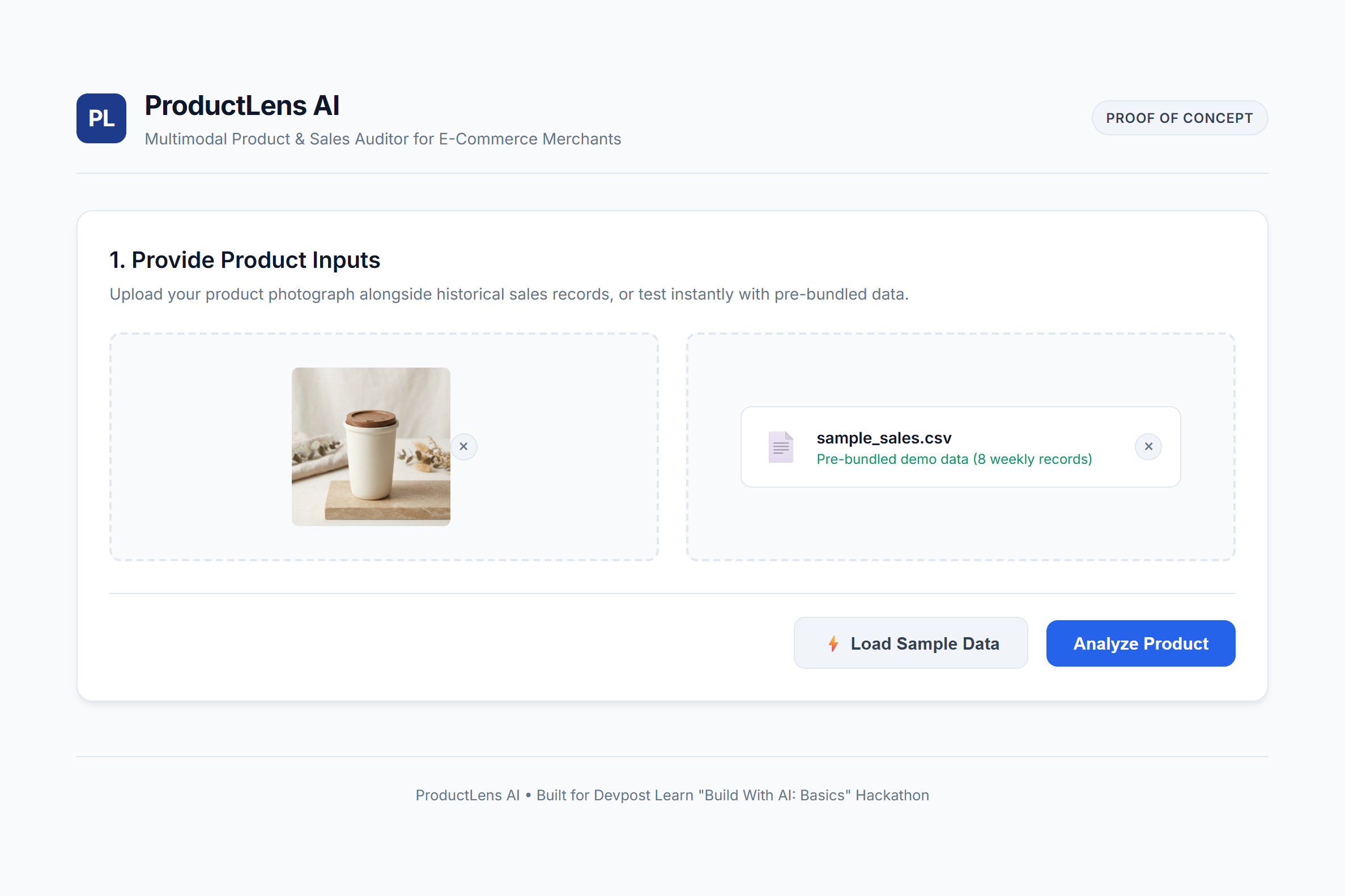
Clean multimodal inputs: pairing any product photograph with historical sales CSV records or sample data.
-
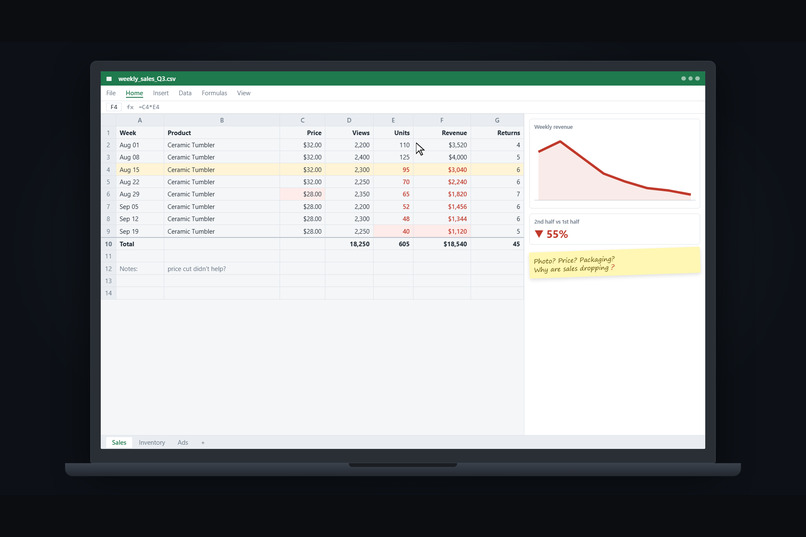
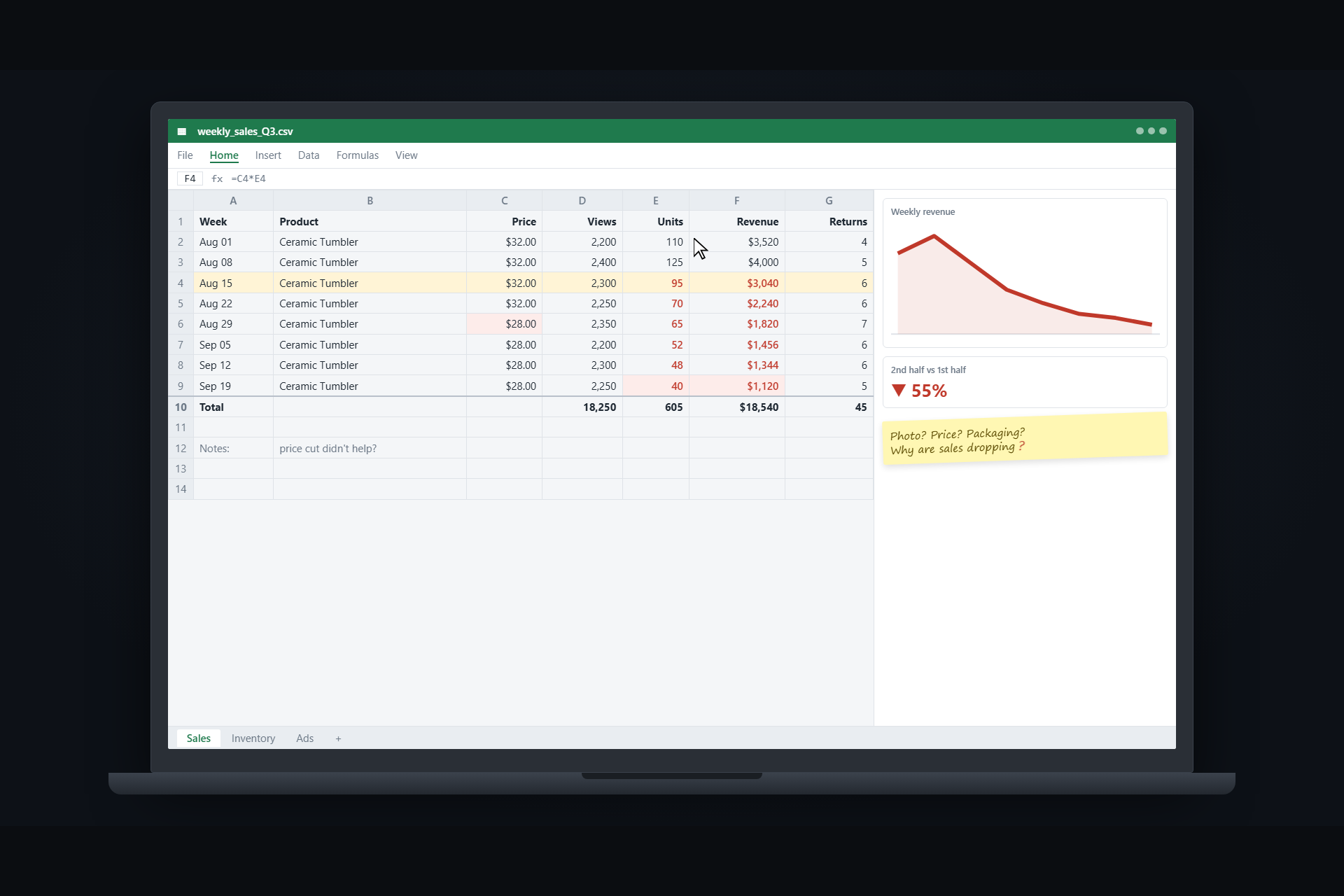
The e-commerce blind spot: tracking dipping revenue in spreadsheets without knowing why sales are dropping.
-
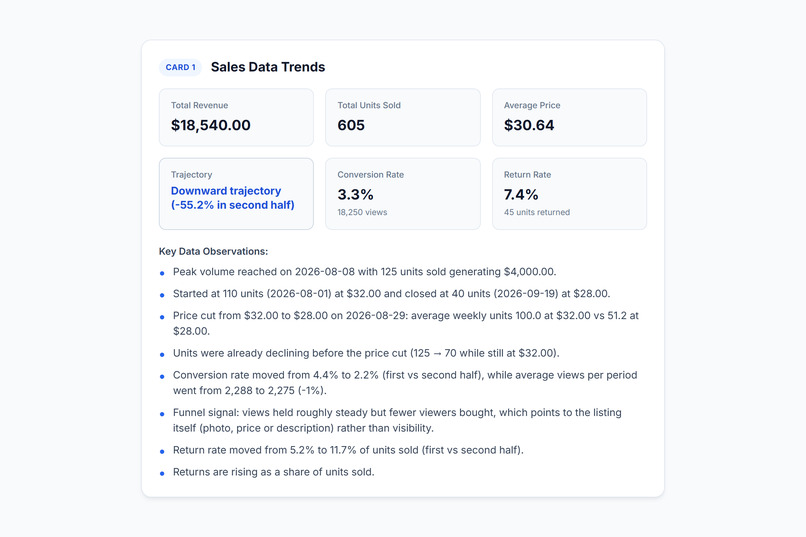
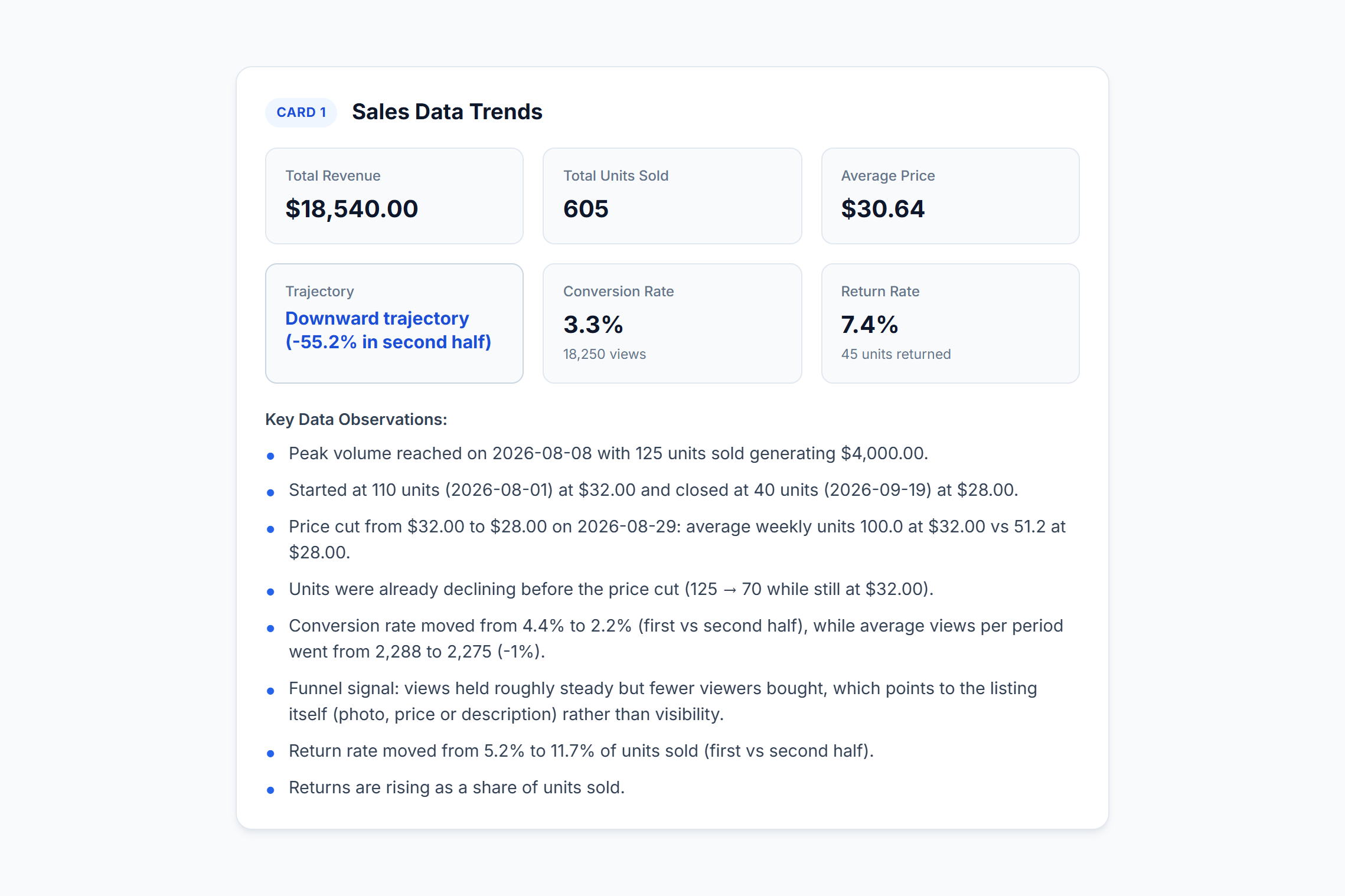
Deterministic Pandas code processing sales records to calculate performance trends, conversion rates, and return rates.
-
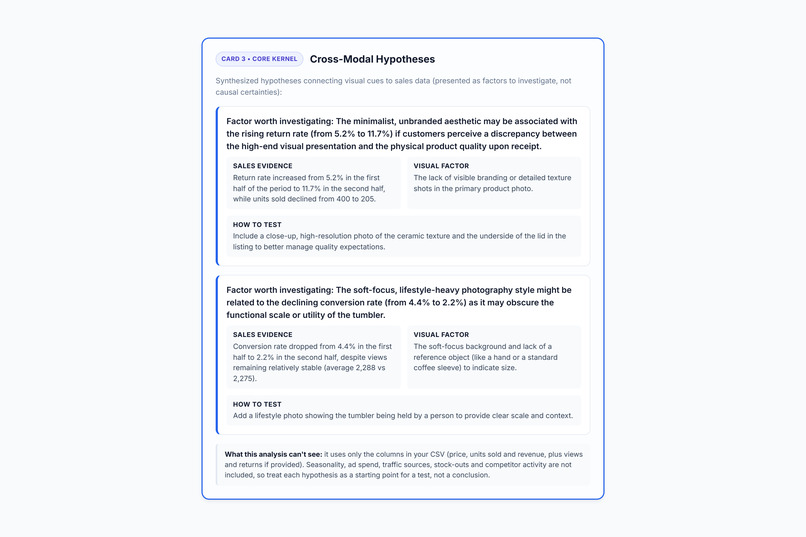
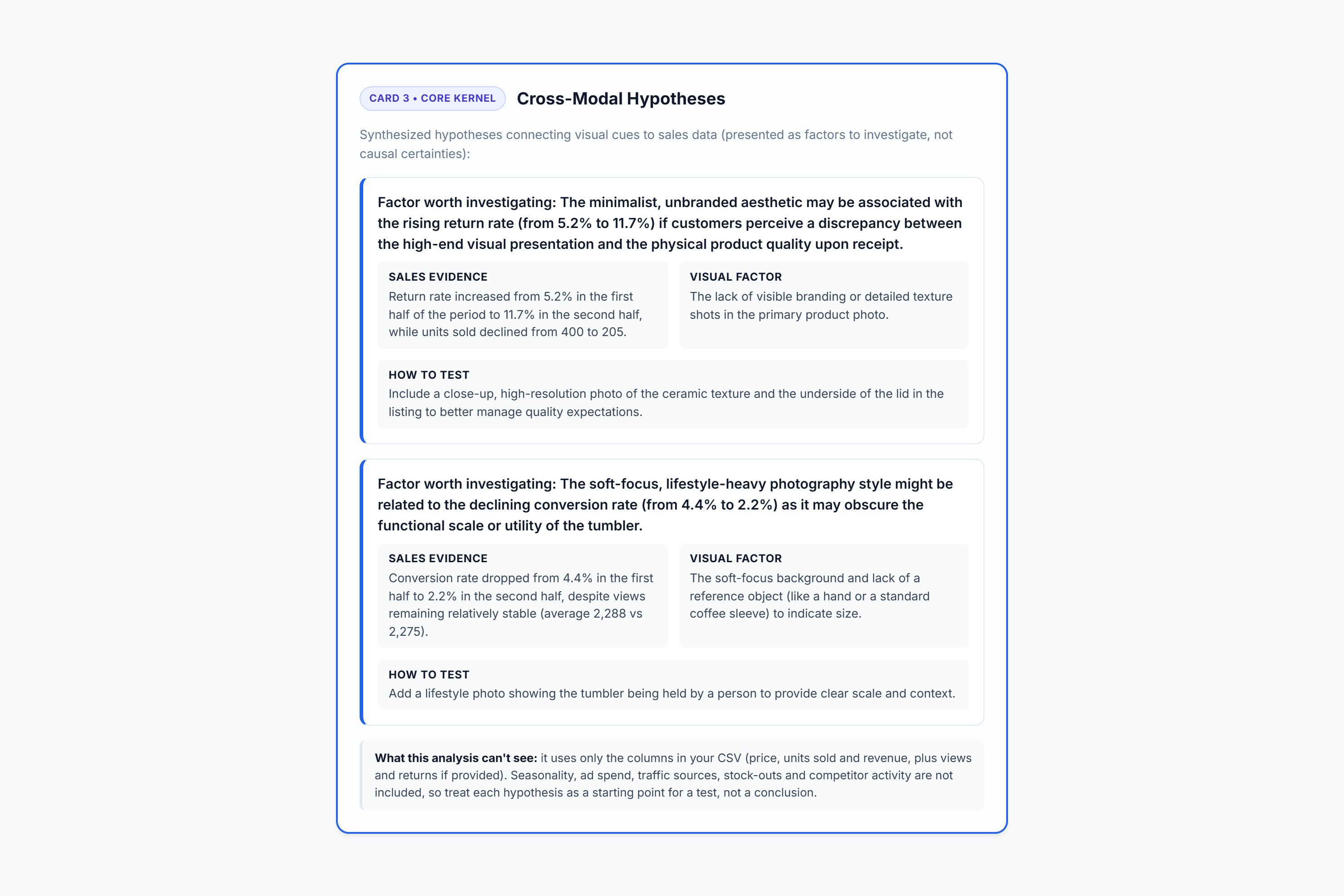
Synthesizing visual cues and sales metrics into grounded, non-causal hypotheses to investigate.
Inspiration
Every day, indie e-commerce sellers managing their own inventory stare at a frustrating disconnect. Their sales dashboards show revenue dipping, but spreadsheets can't tell them why. Is it a poor product photo? Outdated packaging? Or a pricing mismatch? Merchants are forced to guess, manually cross-referencing visual assets with sales CSVs.
With total US retail returns reaching $890 billion in 2024, and 77% of shoppers stating that high-quality product images and videos matter to their purchase decisions, this guesswork directly hurts small businesses. We built ProductLens AI to bridge this gap by combining deterministic data analysis with computer vision into a single intelligent workflow.
What it does
ProductLens AI is a multimodal product and sales auditor designed for indie e-commerce sellers. It pairs any product photograph with historical sales records (CSV) to conduct a deep cross-modal audit, translating raw data into grounded, testable hypotheses rather than black-box guesses.
How we built it
We designed a strict architecture split to ensure technical rigor:
- Deterministic Pandas Code: Accurately calculates core metrics like performance trends, second-half revenue drops, conversion rates, and return rates without letting LLMs hallucinate numbers.
- Multimodal AI (Gemini): Audits the visual cues from the product image (such as staging, lighting, and scale markers) and synthesizes structured insights.
- Actionable Testing (Card 4): Outputs structured, testable experiments across a defined evaluation window so merchants know precisely what variable to tweak and what metric to measure next.
Challenges we ran into
- Fighting Causal Bias in LLMs: Our biggest hurdle was keeping the AI from slipping into definitive, causal declarations. We had to heavily refine system prompts and fallback logic to ensure Gemini strictly outputs hypotheses ("factors to investigate") rather than absolute claims, acknowledging missing variables like ad spend or traffic sources.
- Messy Real-World Data: Handling inconsistent CSV headers, currency symbols, and missing view/return columns required building robust data sanitization before the metrics hit the analysis layer.
What we learned
Building this for the Devpost Build With AI Hackathon taught us the immense value of a clean division of labor in AI application architecture: letting code handle the hard math (Pandas) while letting multimodal LLMs handle visual synthesis and qualitative reasoning results in a much more trustworthy, reliable tool.
What's next for ProductLens AI
- Integrating direct marketplace API connectors for seamless data syncing.
- Incorporating net profit margin calculations and categorical return-reason tagging to address sellers' most acute financial pain points.
Built With
- css
- fastapi
- google-gemini-api
- html
- javascript
- pandas
- pydantic
- python

Log in or sign up for Devpost to join the conversation.