-
-
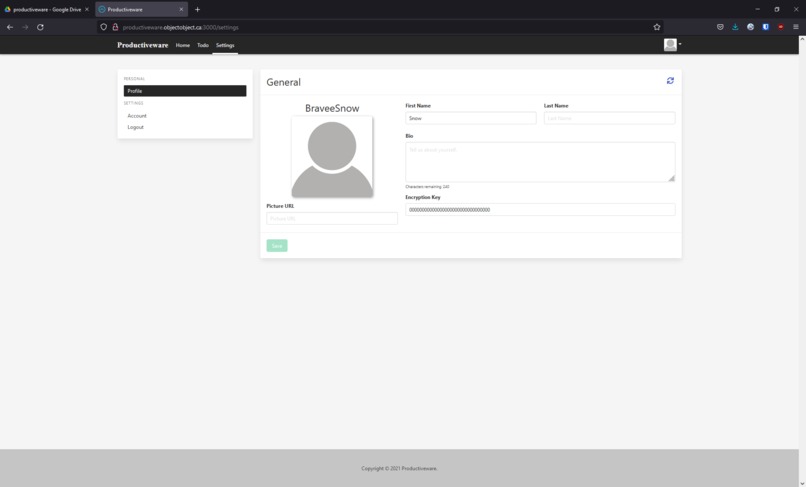
Account settings interface
-
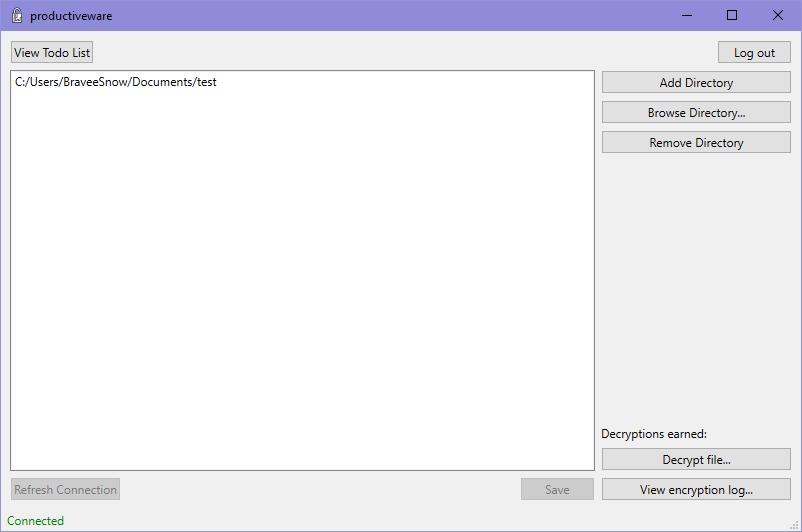
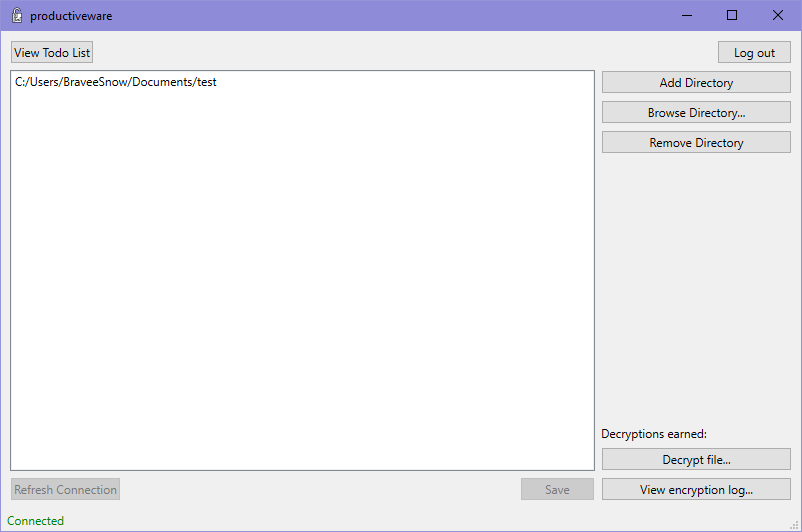
Client interface
-
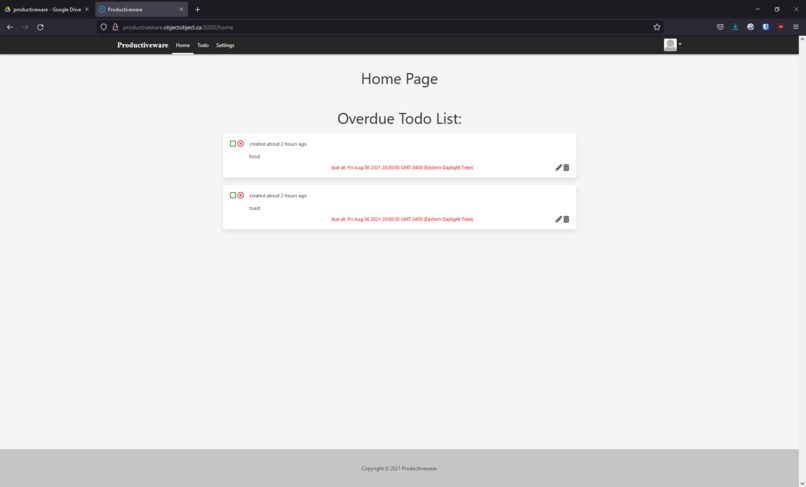
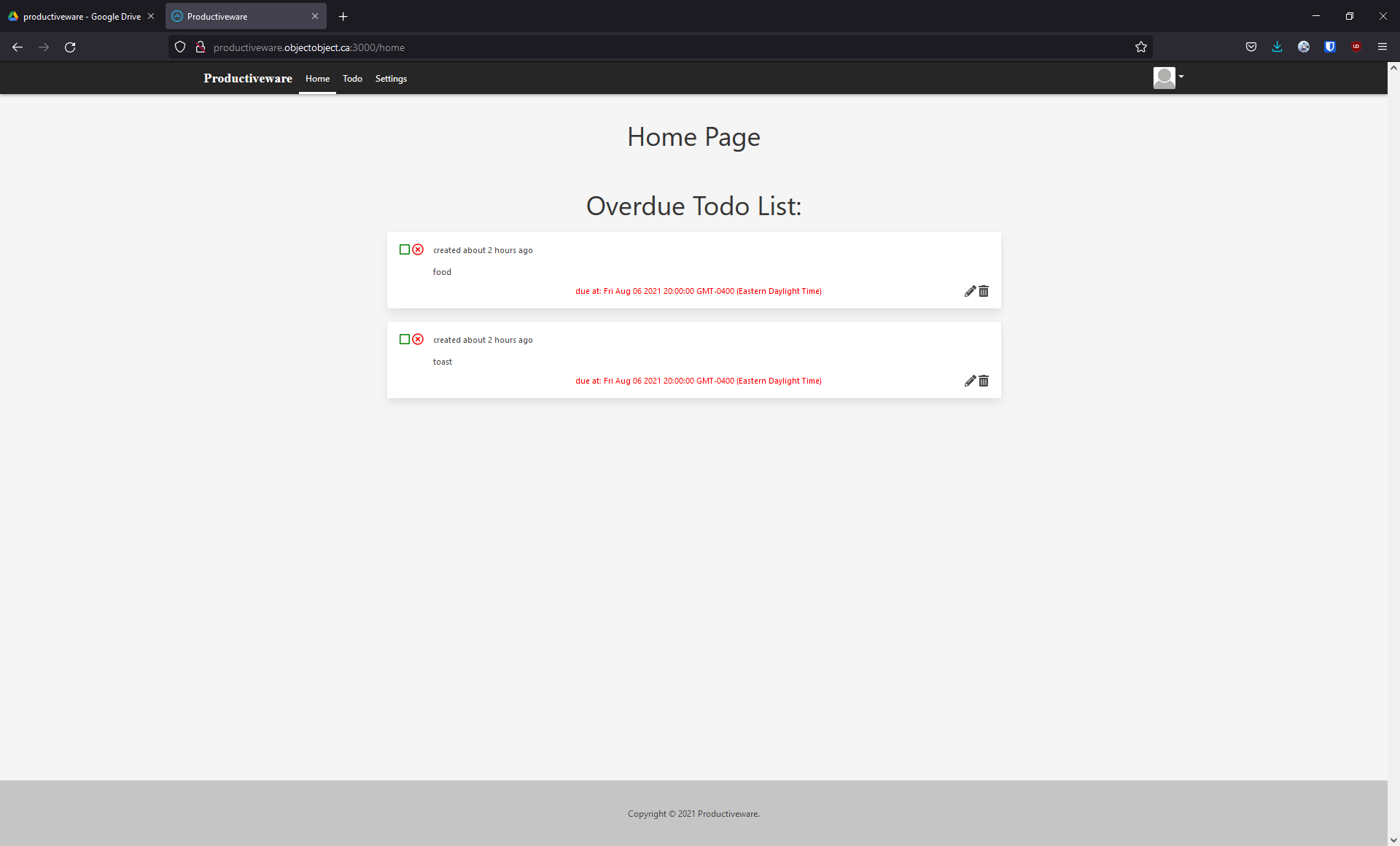
Main web page
Inspiration
We're a group of procrastinators and somehow put together the idea of ransomware and to-do lists.
What it does
Productiveware is a to-do list with one big twist: if you don't do your tasks, some of your files get encrypted! If that does happen, you can put in more effort and be awarded decryptions.
How we built it
There are two parts to Productiveware: the client and the web interface.
Client
We used python and the Qt library in order to build our GUI and a cryptography library for encryption.
Web
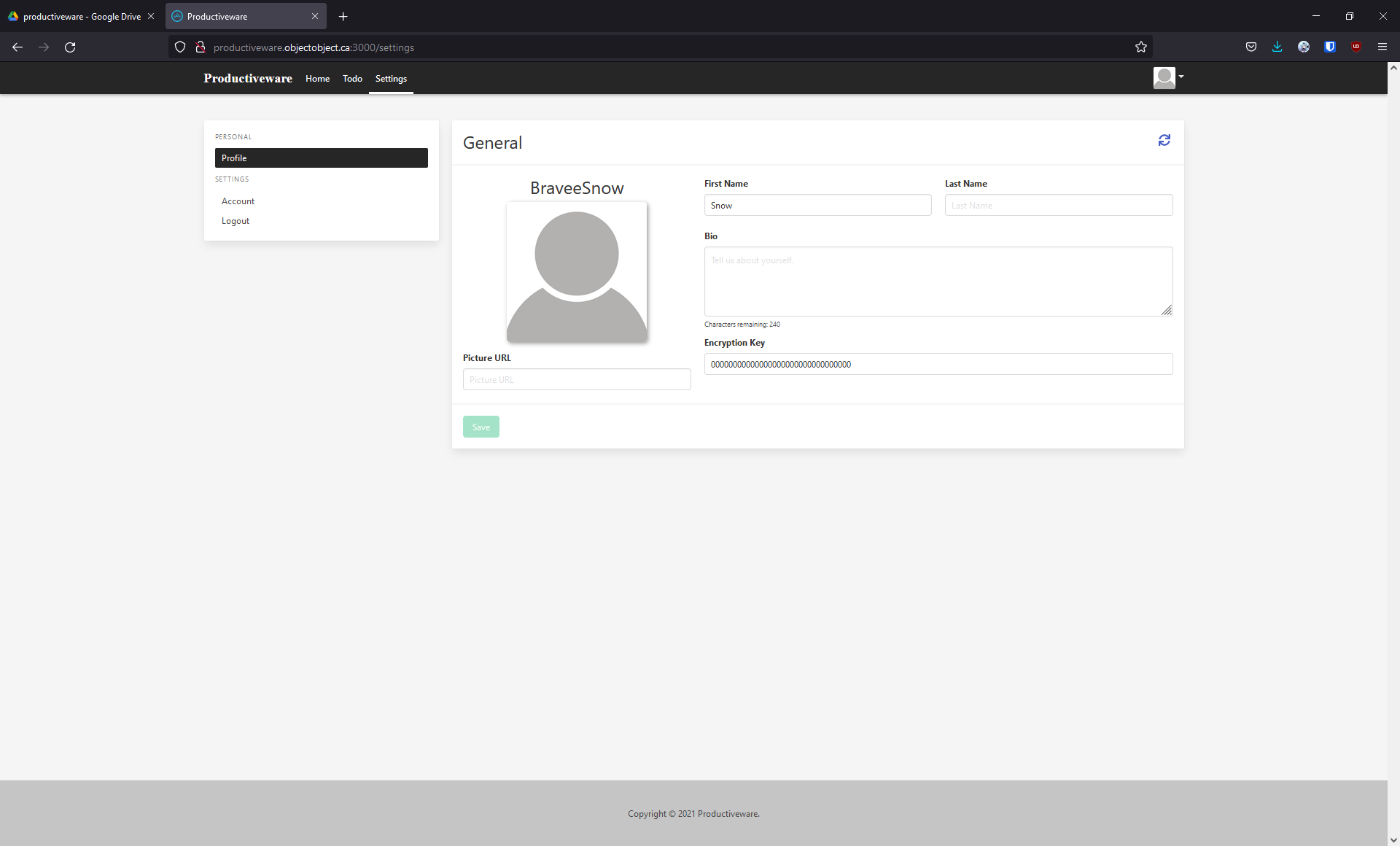
For the web, we used the MERN stack. Our client will communicate with the back-end.
Challenges we ran into
We planned to use websockets in order for the client to encrypt files when listening to an event. However, it was hard to both get the Qt library and socket.io to work at the same time. This forced us to rely heavily on the RESTful API and an ugly workaround to know when to encrypt a file.
We also had trouble with plans as they kept changing throughout the event.
Accomplishments that we're proud of
- "Works on my machine!"
- First GUI with Qt
- Our client and back-end can communicate
- Exposure to AWS
What we learned
The biggest thing we learned is that we really, really, really need to plan ahead of time.
We also learned a variety of skills, including:
- GUI development with Qt
- Web sockets (Even though we didn't use it)
- MERN stack
- Databases
- AWS
What's next for Productiveware
The next step is to obviously clean up the whole codebase. It's a mess.
Perhaps in the future, Productiveware can provide more tools and services to keep its users productive.



Log in or sign up for Devpost to join the conversation.