-
-
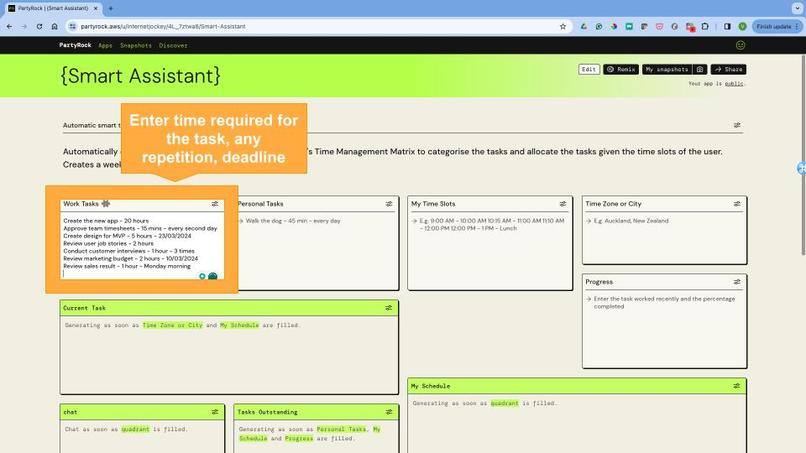
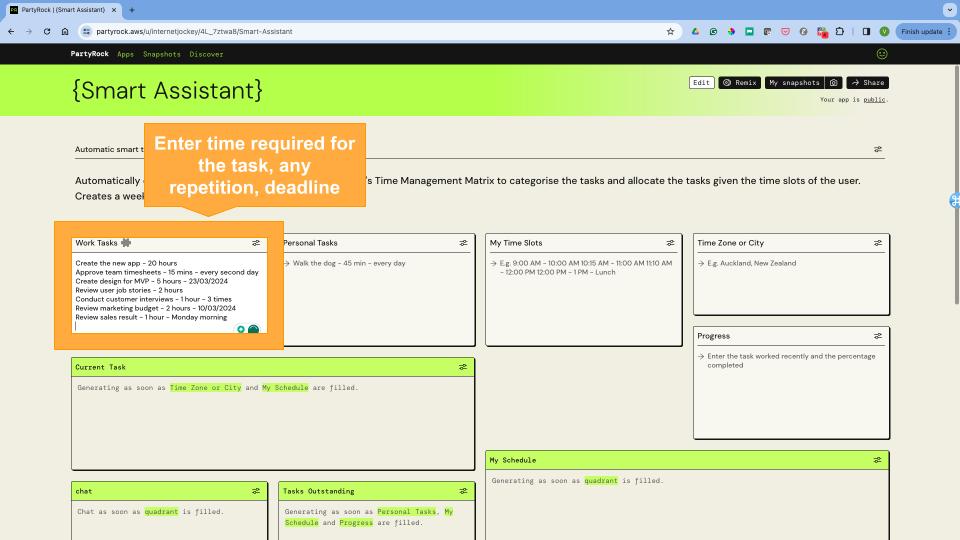
Add tasks in natural language
-
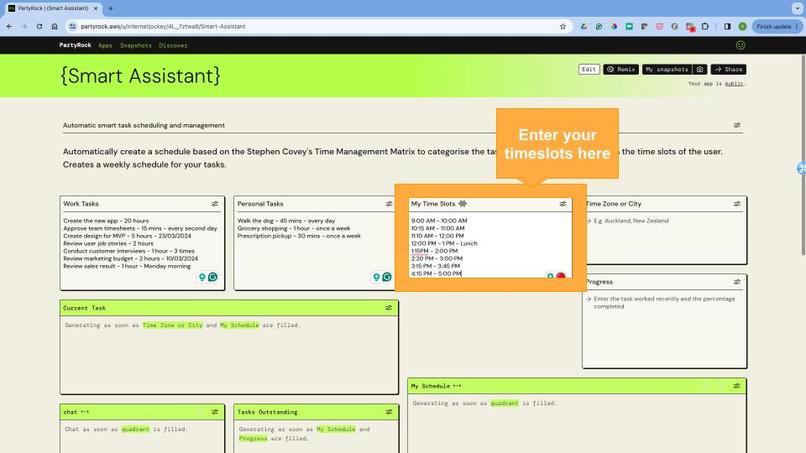
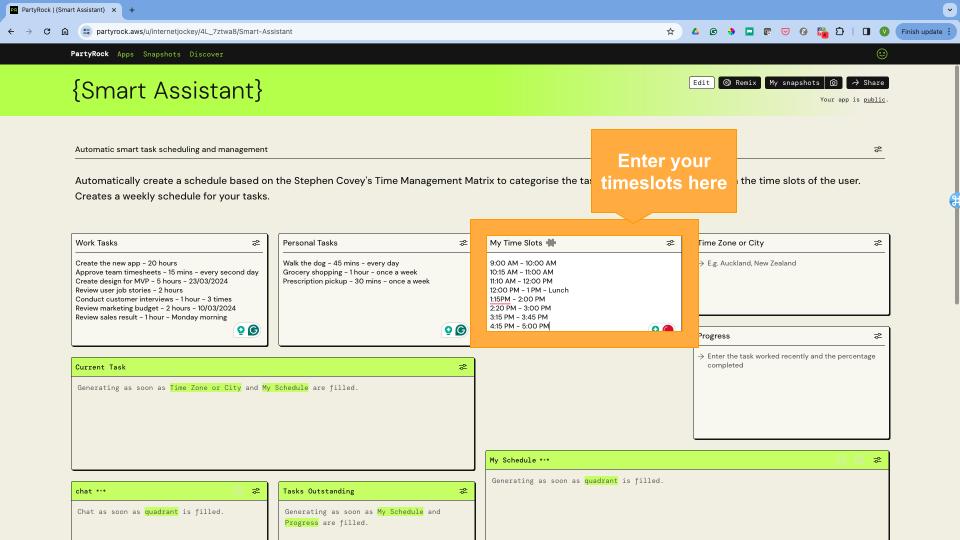
Specify timeslots for your work/activity
-
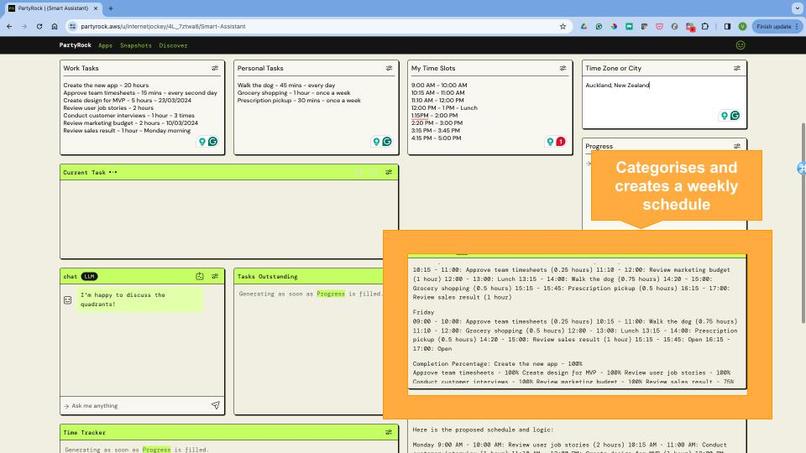
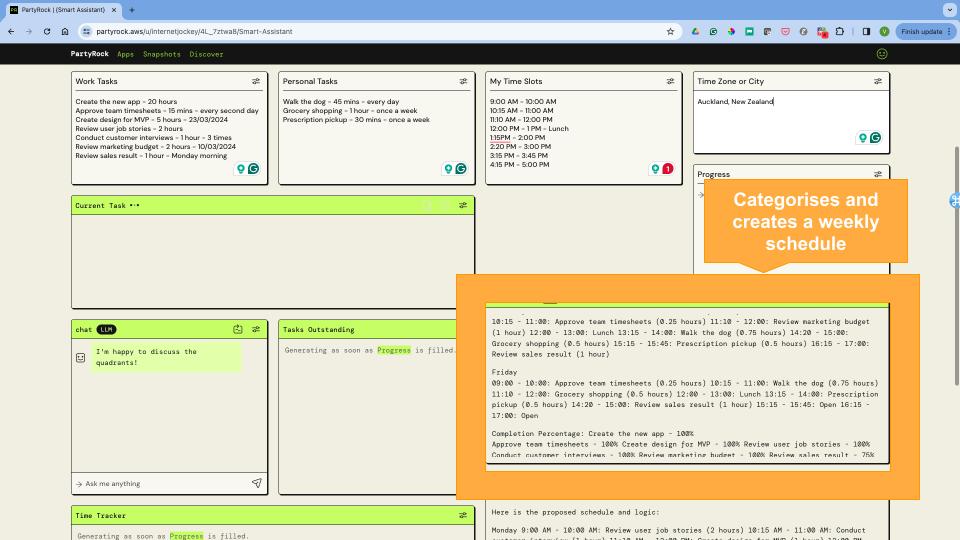
Automatically creates a weekly schedule after automatically categorising the activities
-
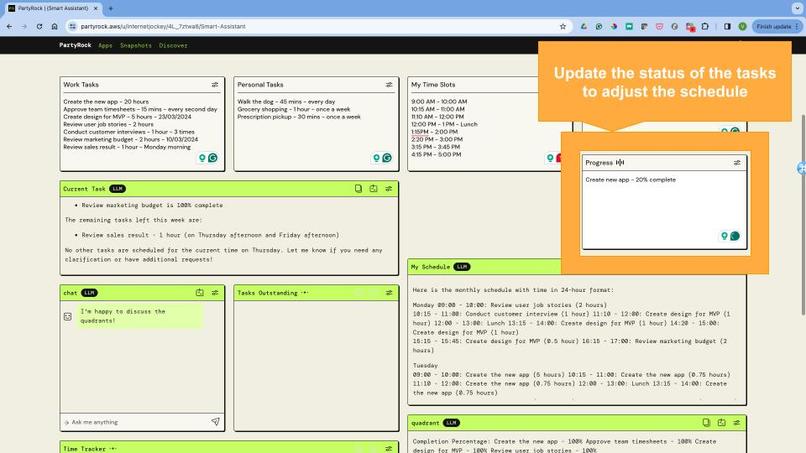
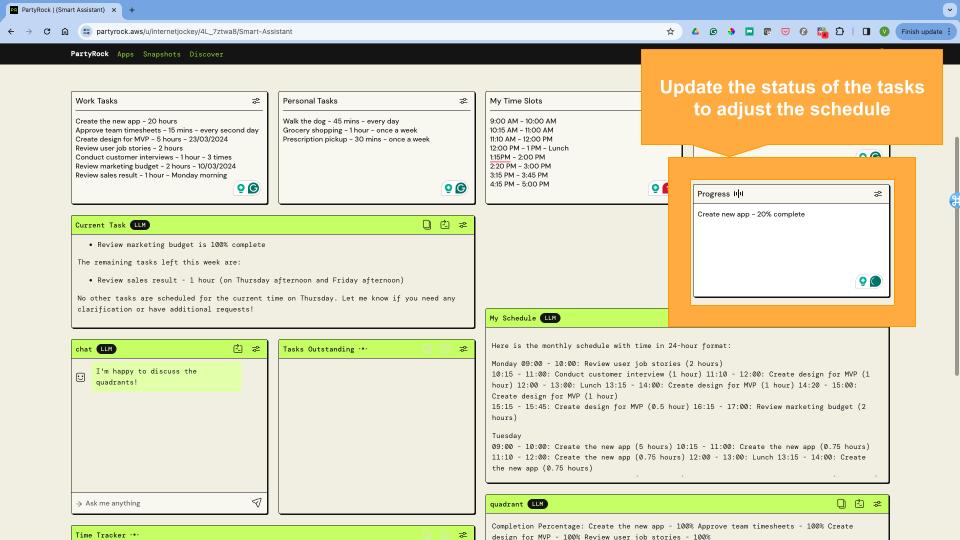
Update the status to take into account the progress of the tasks and automatically modify the schedule
Inspiration
I usually have a large number of tasks and deadlines. It is a challenge to manage the tasks especially when there are deadlines associated. Prioritisation of tasks and spending time on the right things at the right time are key to great productivity. Usually, it takes a lot of time to create effective plans and even more effort to maintain the plan with the changes and progress. Automation of this process not only saves time but also takes into account the various moving pieces and ensures that you are not missing key aspects of planning.
What it does
This application allows users to enter tasks with details like estimated time, due dates, recurrence and status of tasks. The tasks are then automatically categorised into four quadrants
- [Important-Urgent]
- [Important - Not Urgent]
- [Not Important - Urgent]
- [Not Imporant - Not Urgent]. It then automatically schedules the tasks into a weekly plan, balancing priority and time allocation. Users can see the schedule and task completion status. Users can update the progress of the tasks. The application then automatically accounts for the progress and adjusts the schedule for the next day and weeks based on the priority of the tasks and their importance, continuously keeping it updated.
How we built it
I utilized a combination of connected PartyRock natural language processing to develop this intelligent task-scheduling application.
The first NLP component accurately extracts key details from free-form task descriptions like titles, estimated times, due dates, and recurrences. This allows users to simply type tasks in everyday language.
With the details extracted, we implemented iterative scheduling algorithms that optimally assign tasks across a calendar by maximizing urgency and importance. The algorithms consider factors like workload per day, task dependencies, and timing constraints.
Challenges we ran into
There is no access to the current time that the model can use to keep track of the tasks and update the progress in real time.
Accomplishments that we're proud of
The current version is excellent and I have been using it for my work easily. There are a few minor areas of improvement but it is very functional.
What we learned
The use of PartyRock is easy and efficient. It is very extensible by chaining components to build complex logic and sub-components. New functionality can be easily added and inserted with instant results. Moreover, the model provides better results as it is run multiple times.
What's next for {Smart Assistant}
Provide current time to the model through API or another means so that the model can take the current time into account in determining the current task and the next tasks.
Integration of the intelligent scheduler with Google Calendar APIs or other calendars to display the generated schedule in a familiar calendar interface. Users can then easily view their task calendar on the web and mobile devices.
The application stores all tasks and completion status in a MongoDB database. As users mark tasks as complete, the schedule updates dynamically.
Create a front-end built with React for smooth, responsive views of the task input form, calendar, and task analytics.
Built With
- partyrock

Log in or sign up for Devpost to join the conversation.