-
-
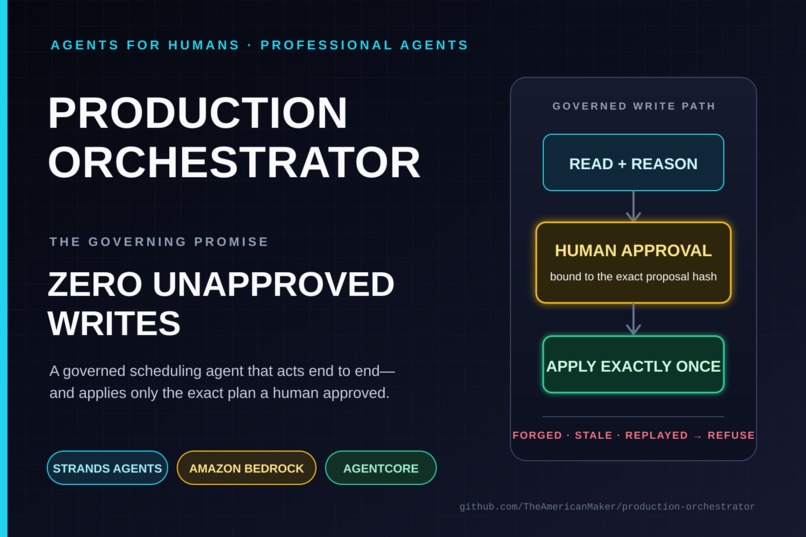
01 Hero
-
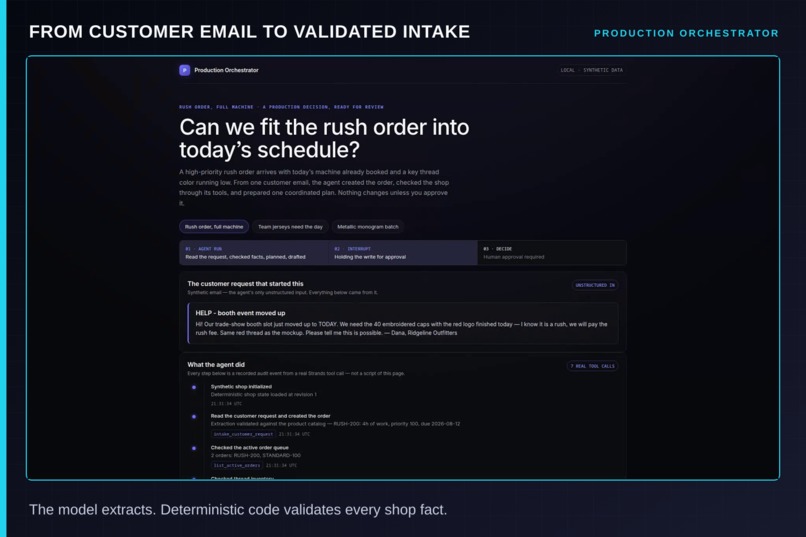
02 Intake
-
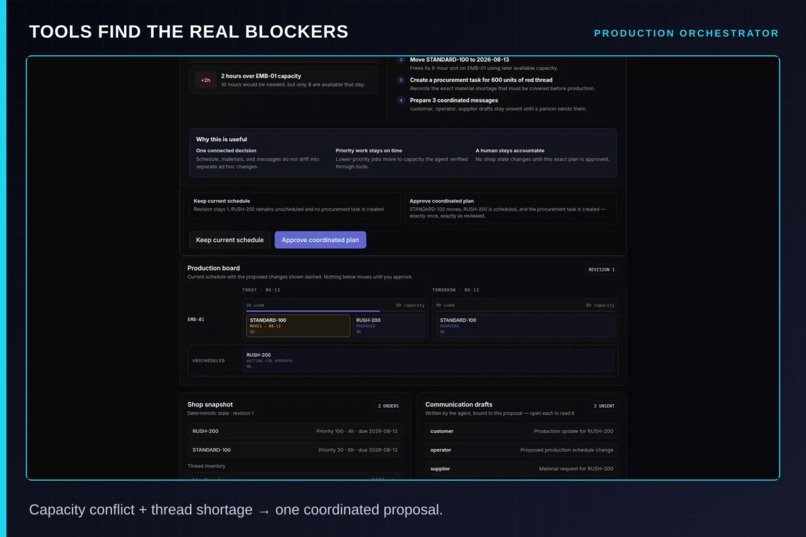
03 conflict/proposal
-
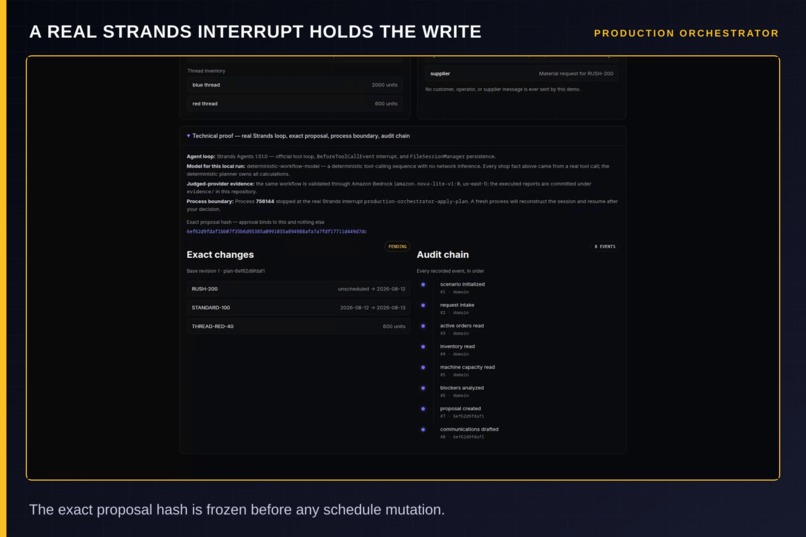
04 interrupt
-
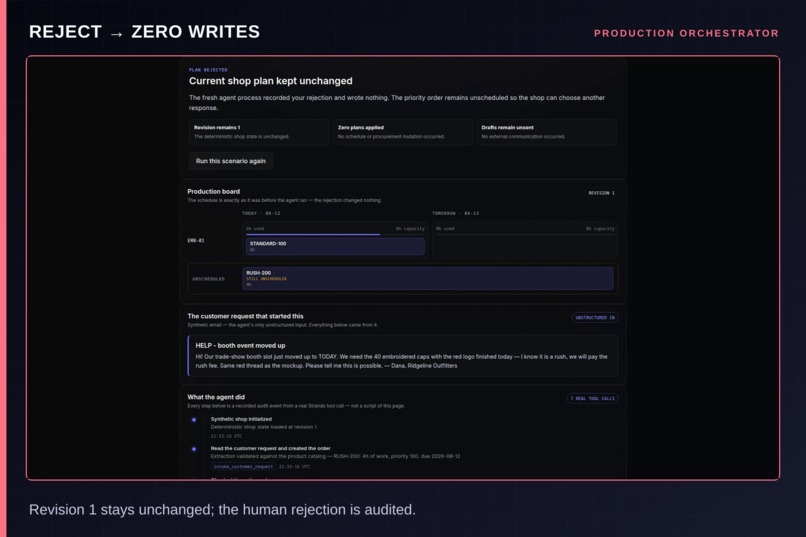
05 rejection
-
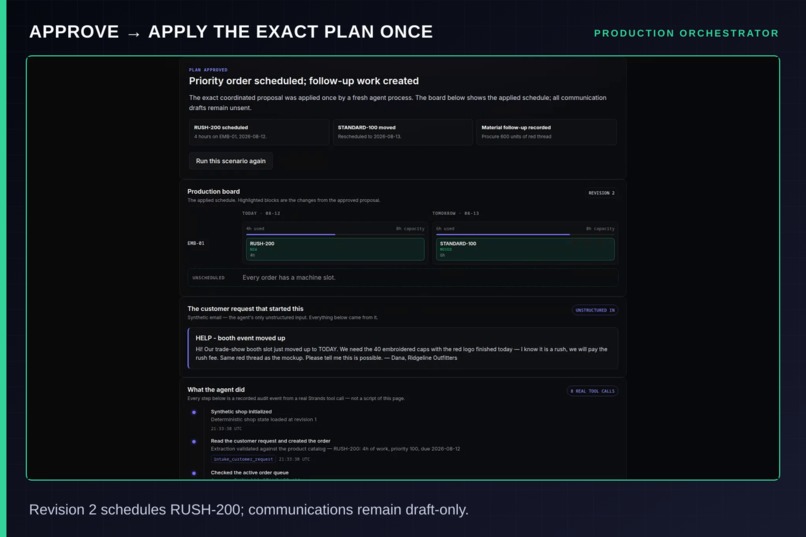
06 approval
-
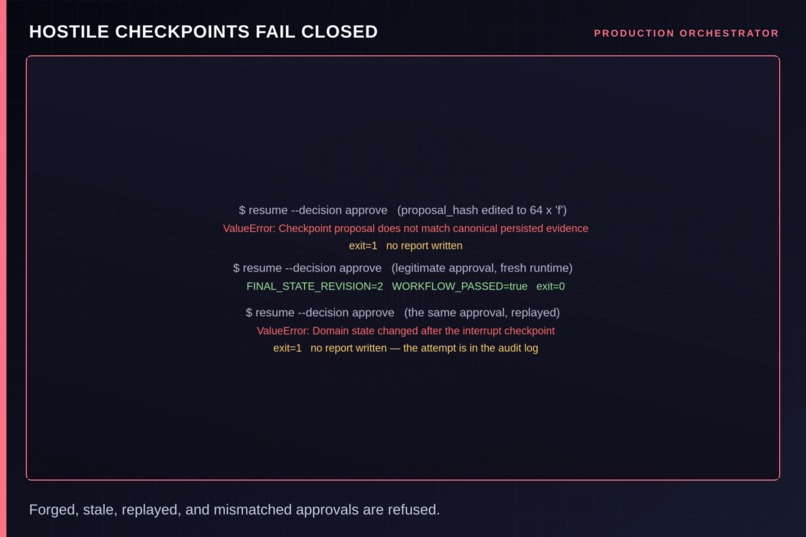
07 fail-closed
-
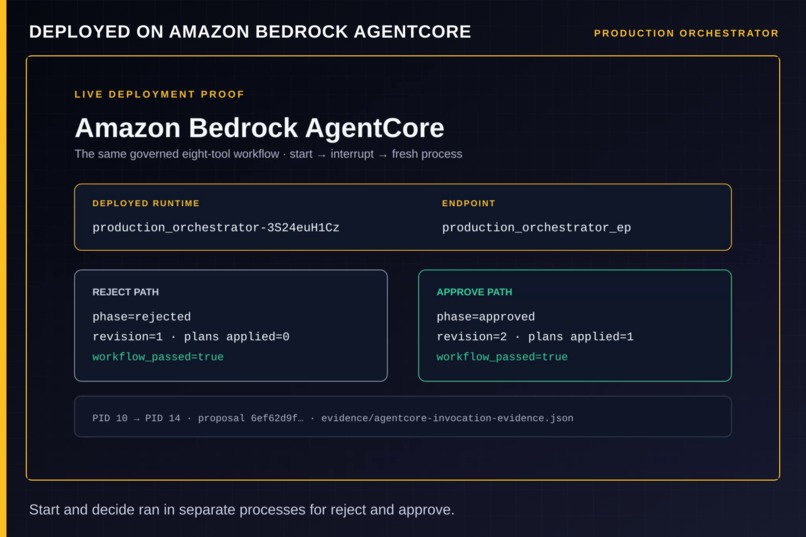
08 AgentCore
-
09 architecture
Inspiration
A rush order in a small embroidery shop can disrupt machine assignments, consume missing thread, move another customer's delivery, and create purchasing work. I built Production Orchestrator to handle that chain without applying schedule or procurement changes unless a human approves the exact plan.
What it does
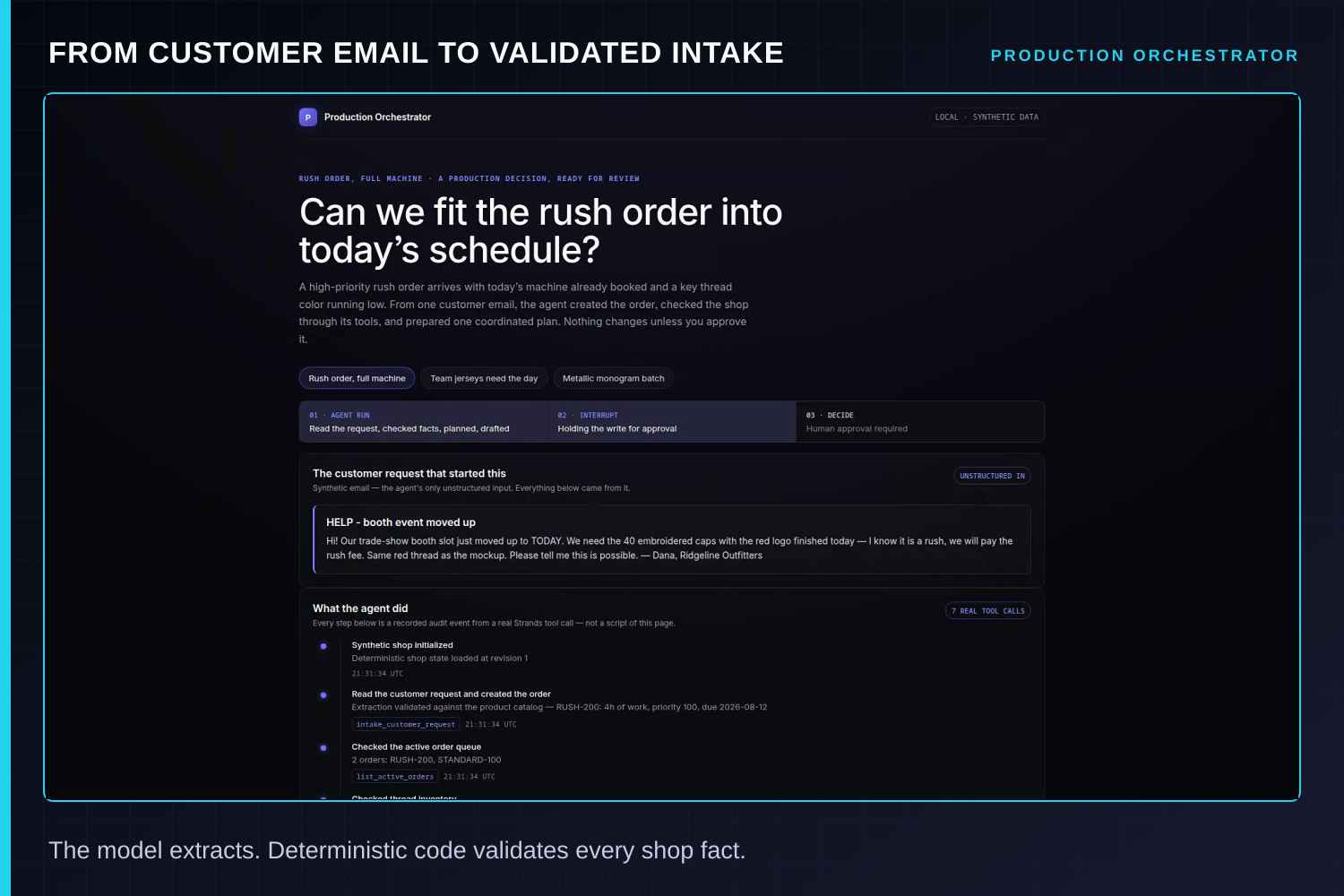
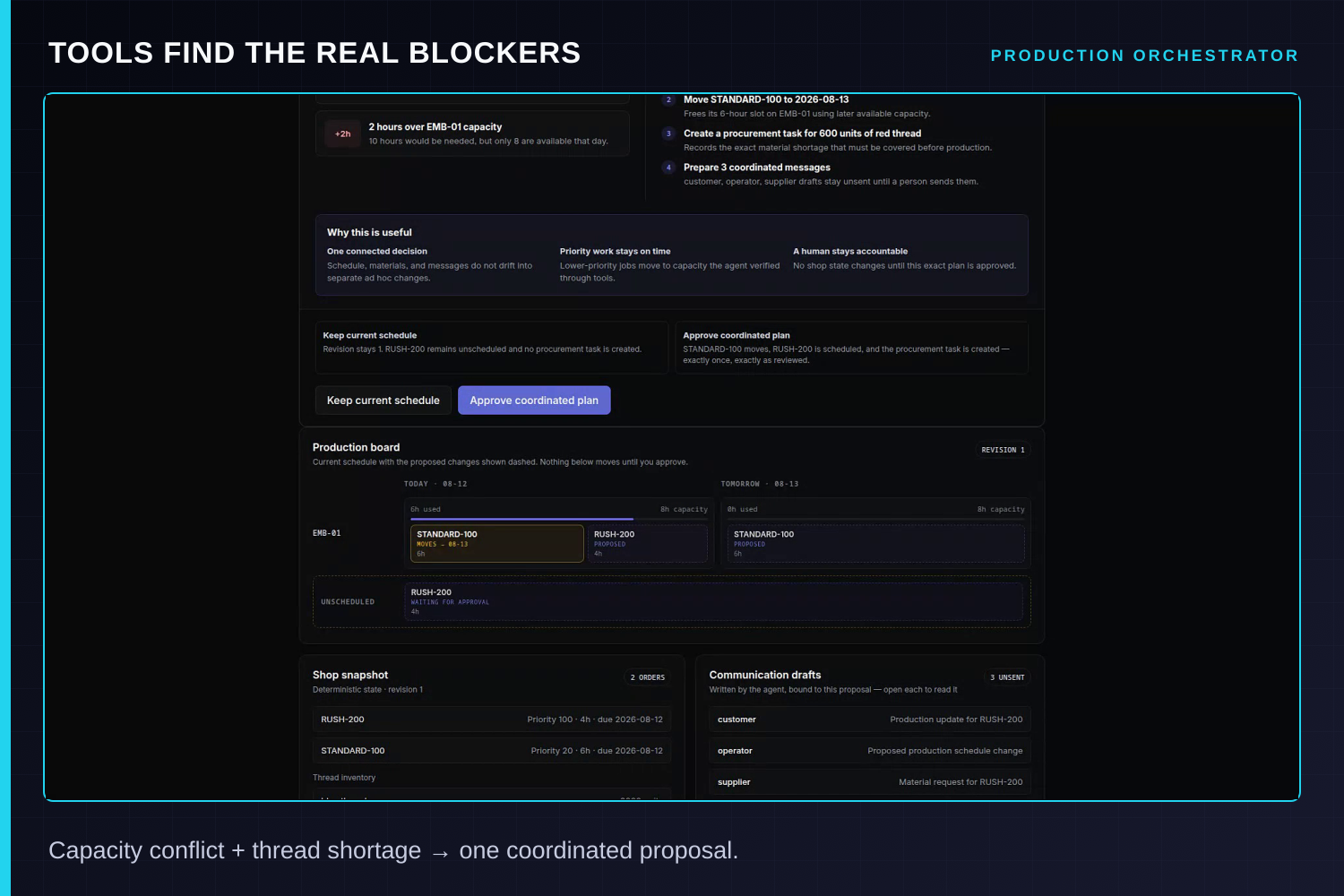
Production Orchestrator turns a customer email into a coordinated production proposal. Validated intake checks extracted fields against the shop catalog and calendar, then adds only the candidate order to the queue as a narrow start-of-workflow write without changing the shop revision. The agent reads orders, inventory, and machine capacity, finds shortages and conflicts, then proposes schedule changes, a purchase task, and unsent messages.
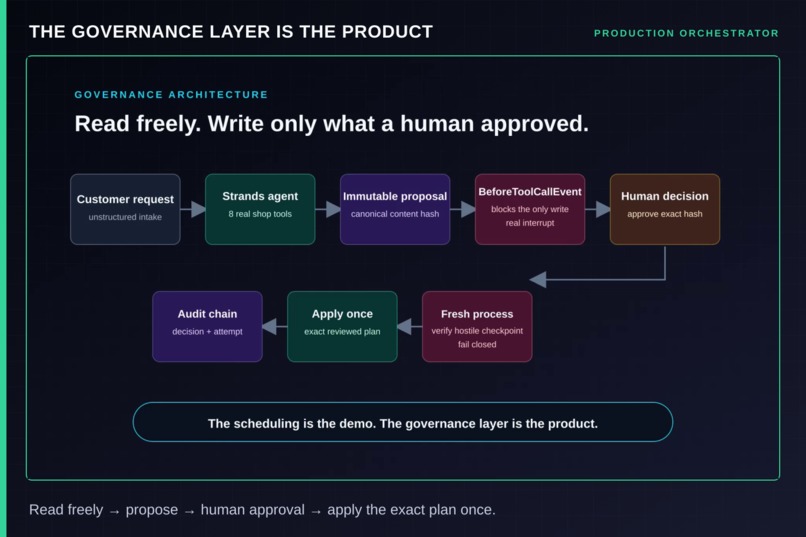
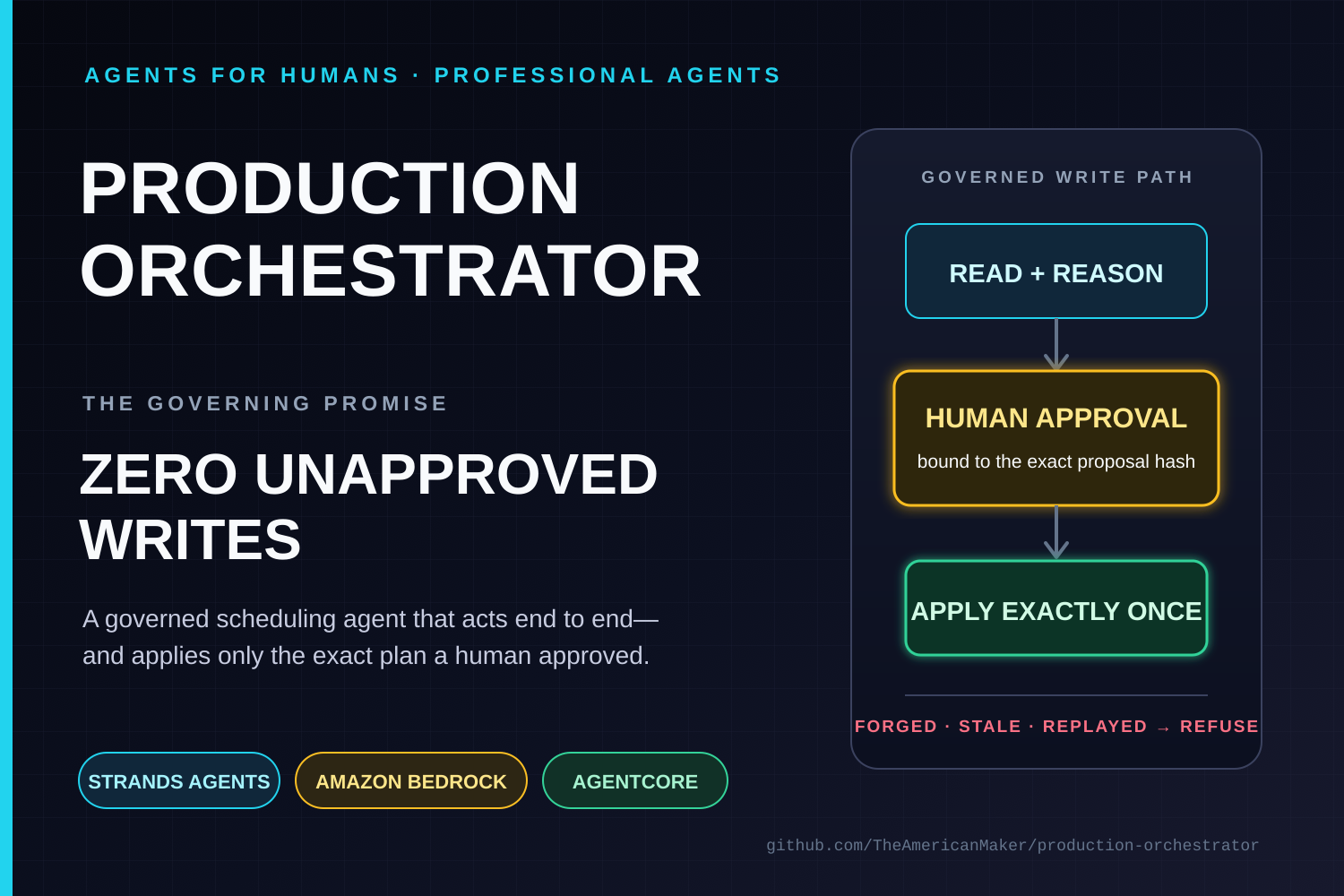
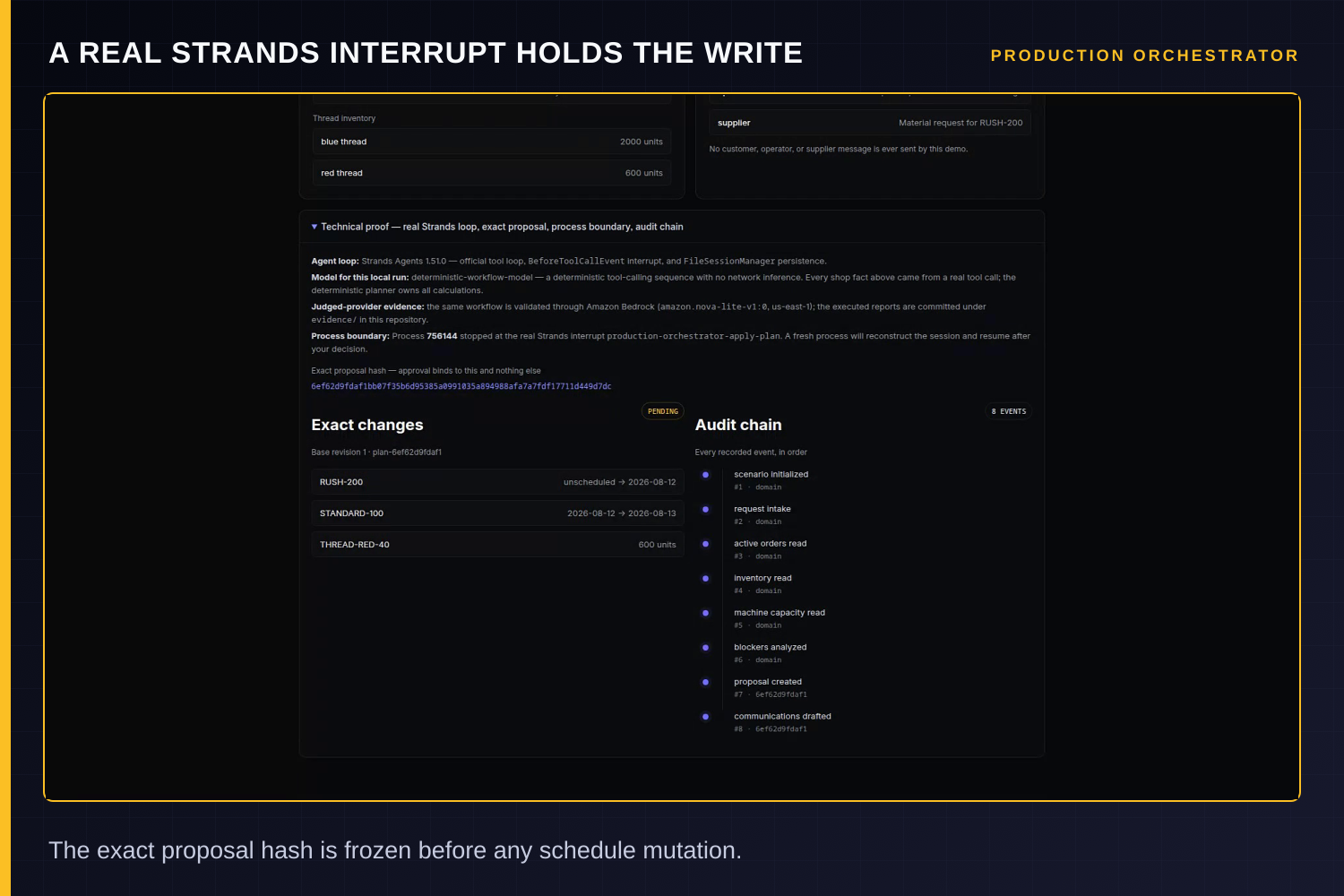
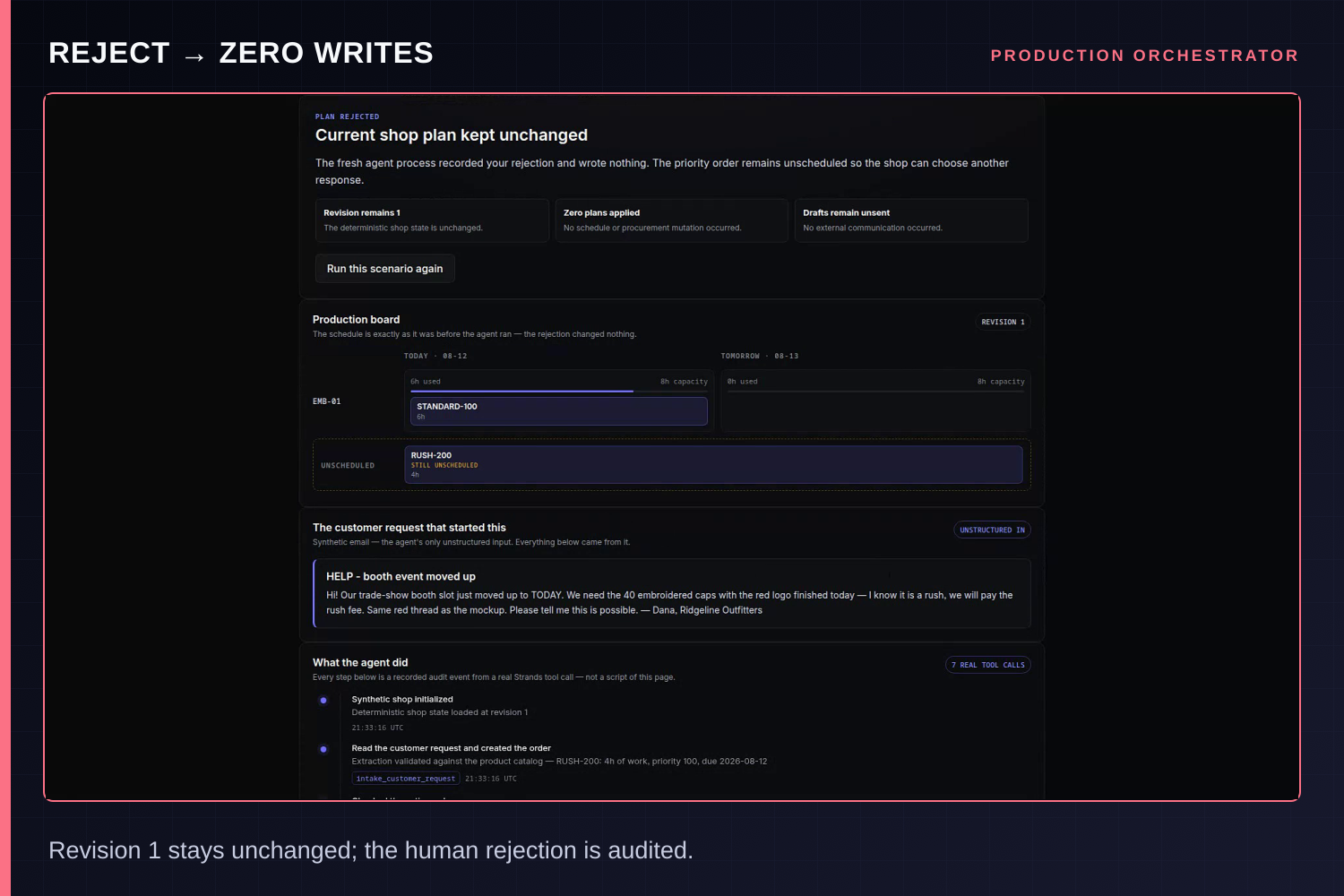
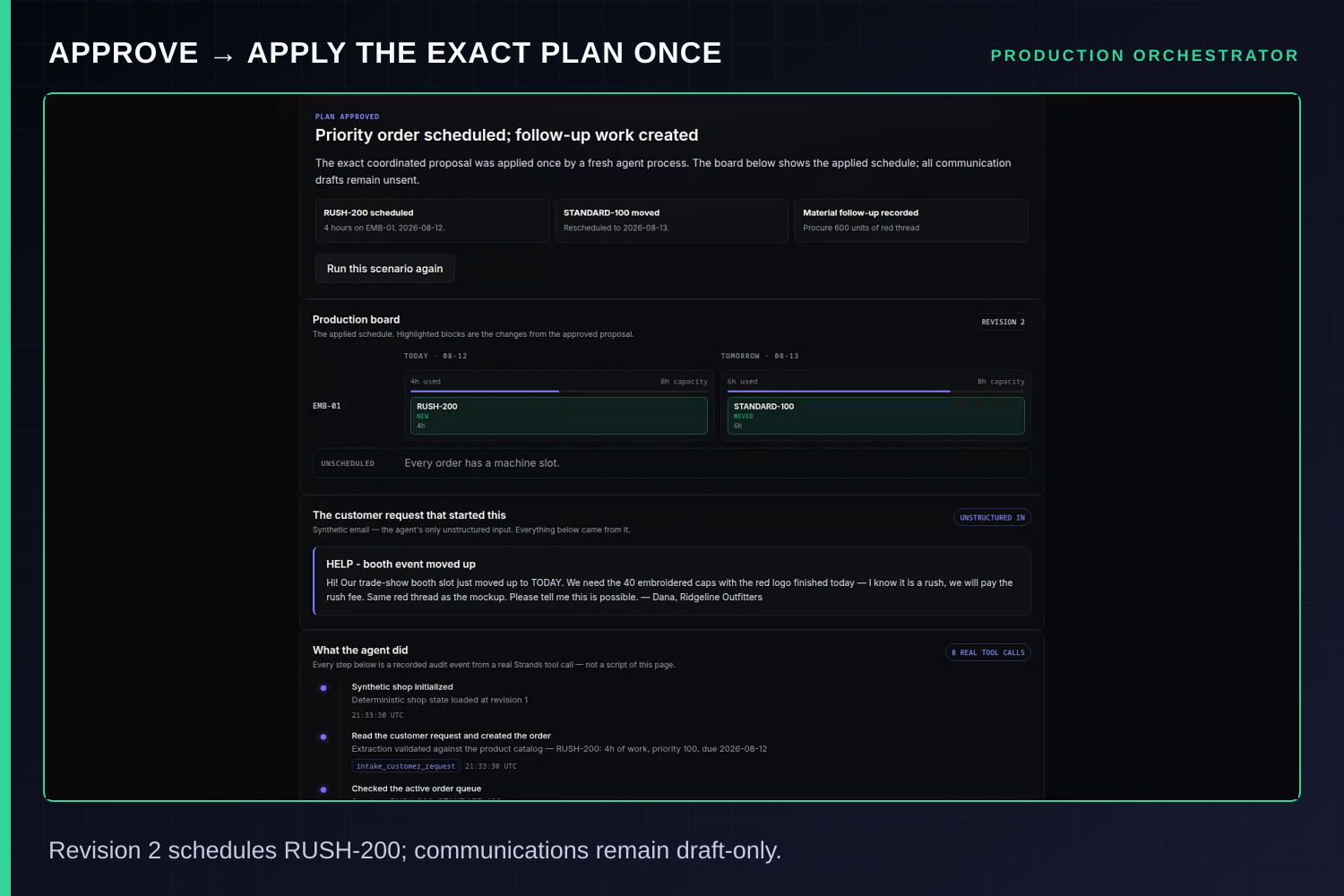
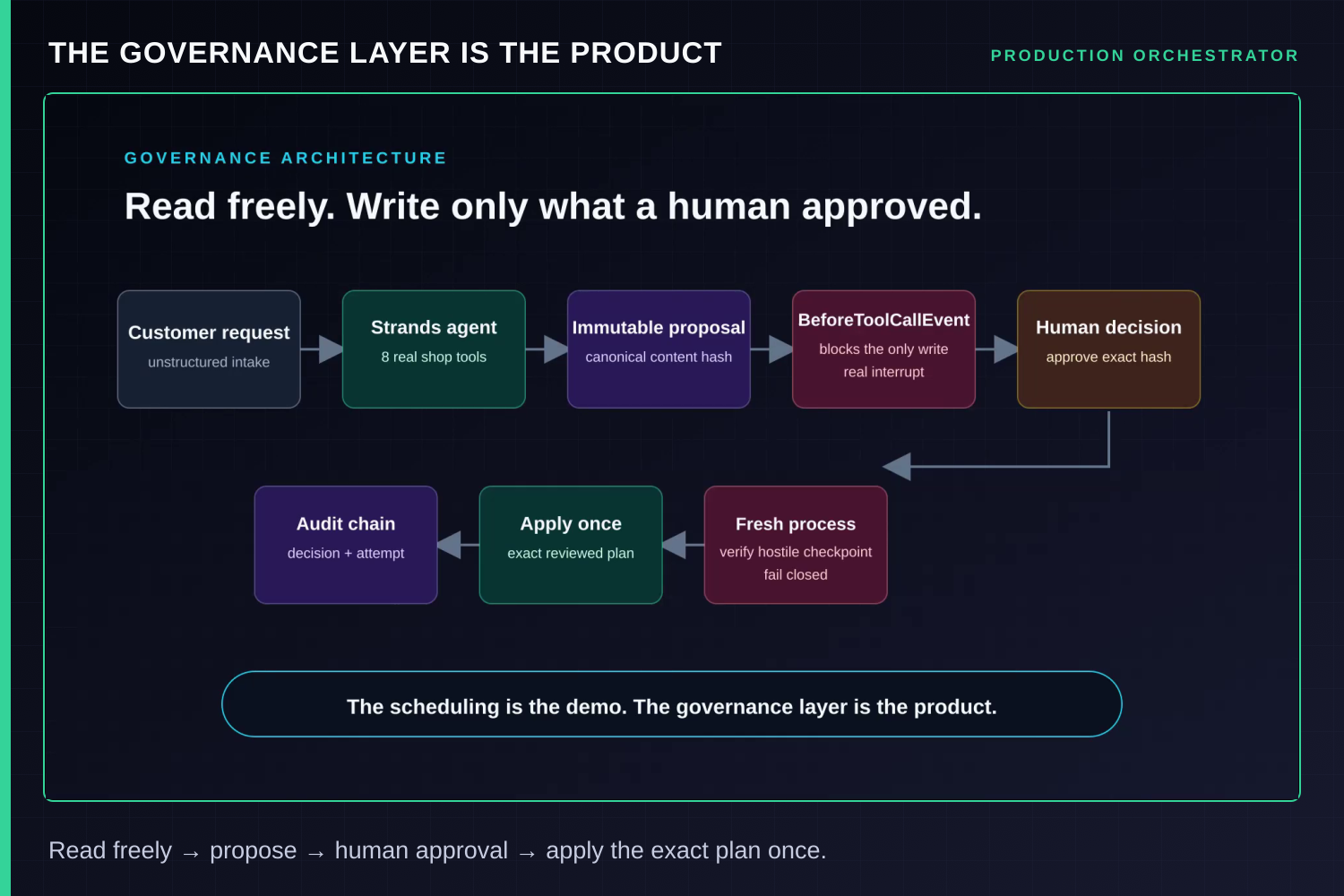
The proposal is serialized, hashed, and stored as immutable evidence. A real Strands BeforeToolCallEvent interrupt stops apply_production_plan before it writes. Rejection leaves schedule and procurement unchanged. Approval applies the reviewed proposal once.
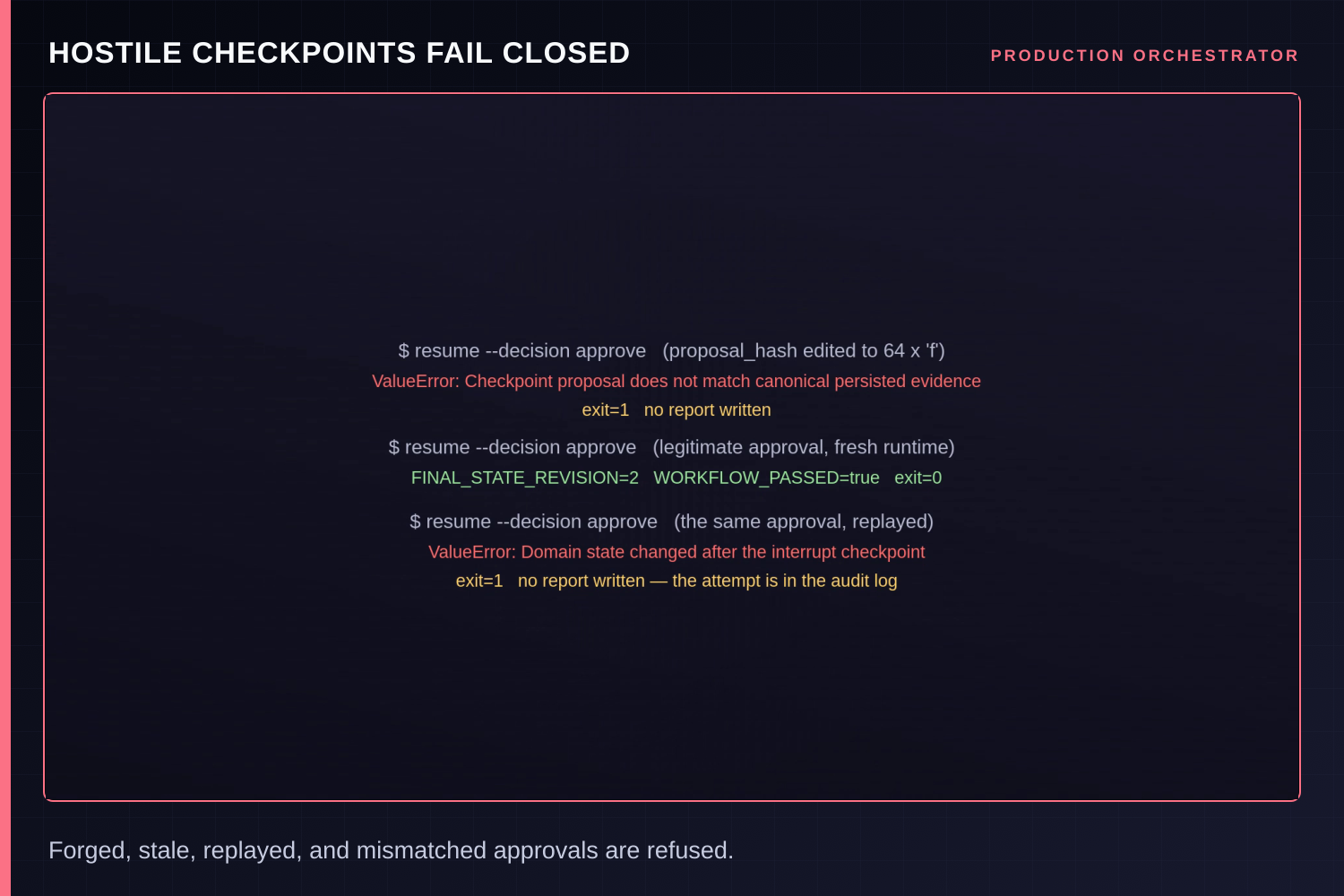
Resume treats checkpoints as hostile input. Forged hashes, stale state, replayed approvals, wrong identities, and changed provider bindings are refused before schedule or procurement mutation. Human rejection is audited; integrity failures exit nonzero without a dedicated refusal event.
How I built it
A Strands Agent coordinates eight @tool functions covering intake, orders, inventory, capacity, blocker analysis, scheduling, communication drafts, and plan application. The model interprets requests and sequences tools. Deterministic Python owns validation, dates, quantities, inventory arithmetic, proposal hashing, and permission checks.
SQLite stores shop state, proposals, and the audit chain. Strands FileSessionManager persists the session and pending interrupt. A fresh process can reconstruct the agent, restore the interrupt, and recheck the proposal and current state before submitting interruptResponse.
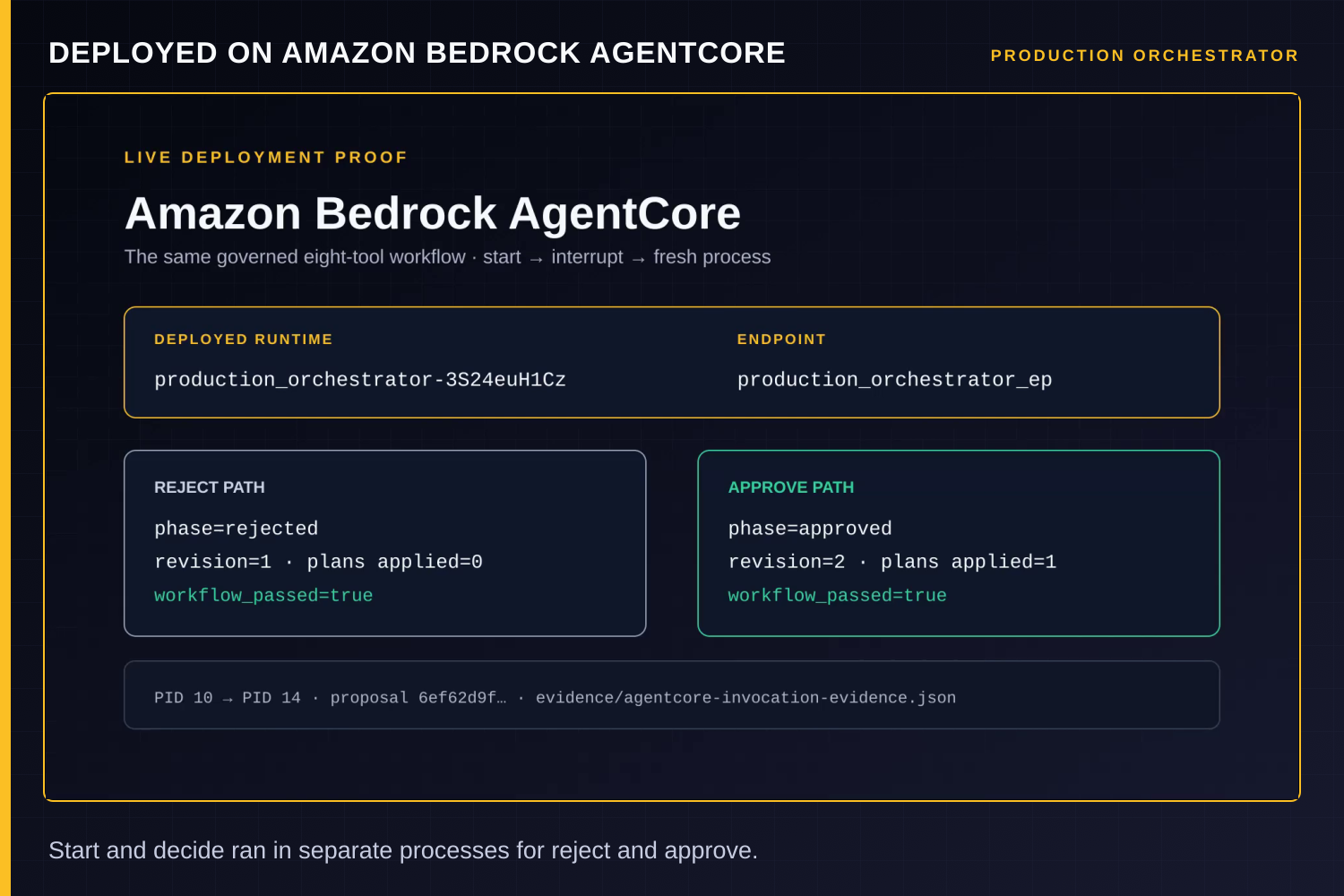
The local demo uses a deterministic model so judges can run it without credentials. Separate evidence exercises the full workflow with Amazon Nova Lite through Amazon Bedrock. The workflow is also deployed to Amazon Bedrock AgentCore Runtime through start and decide. AgentCore evidence records rejection and approval in separate runtime processes. Model proof and deployment proof remain separate so each claim matches its observed run.
Challenges
Model judgment had to stop where shop facts and authority begin. Intake rejects invalid or invented fields. Approval also had to survive process death without becoming reusable permission. Resume rechecks the session, interrupt, canonical proposal, provider, and shop revision. Atomic updates and replay detection make approval failures happen before another schedule or procurement write.
Results
Rejection preserves revision 1 with zero plans applied. Approval advances to revision 2 and applies the proposal once. Draft messages remain unsent because sending requires a separate decision. The repository has 114 tests covering the tool workflow, proposal integrity, atomic application, fresh-process resume, forged checkpoints, stale state, replay, provider binding, and auditing. Current main CI is green.
What I learned
Approval that outlives a worker is a distributed protocol with identity, persistence, replay protection, and explicit failure behavior. The model handles ambiguity and tool selection. Deterministic code owns facts, invariants, and authority. Operators also need evidence of what was proposed, approved, changed, or refused.
What's next
Next steps are authenticated multi-user approvals, signed decisions, role-based policies, and connectors for order, inventory, purchasing, email, and calendar systems. Sending communications will remain a separate approval domain.
Prior-work disclosure
Production Orchestrator was created during the Agents for Humans submission period. Earlier BobbinBoss/Aimbroidery work informed the domain problem only; no prior code, prompts, UI, assets, schema, data, fixtures, or implementation were reused. All submitted implementation and demo materials are new. All customer and shop data shown is synthetic.
Built With
- amazon-bedrock
- amazon-bedrock-agentcore
- amazon-ecr
- amazon-nova-lite
- amazon-web-services
- css3
- docker
- github-actions
- html5
- javascript
- pytest
- python
- sqlite
- strands-agents-sdk

Log in or sign up for Devpost to join the conversation.