-
-
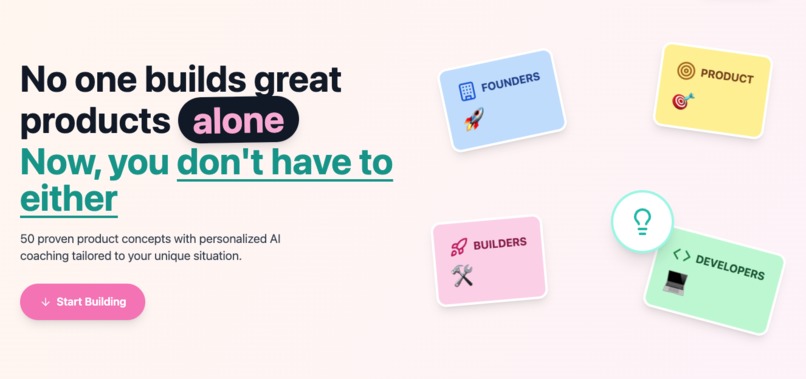
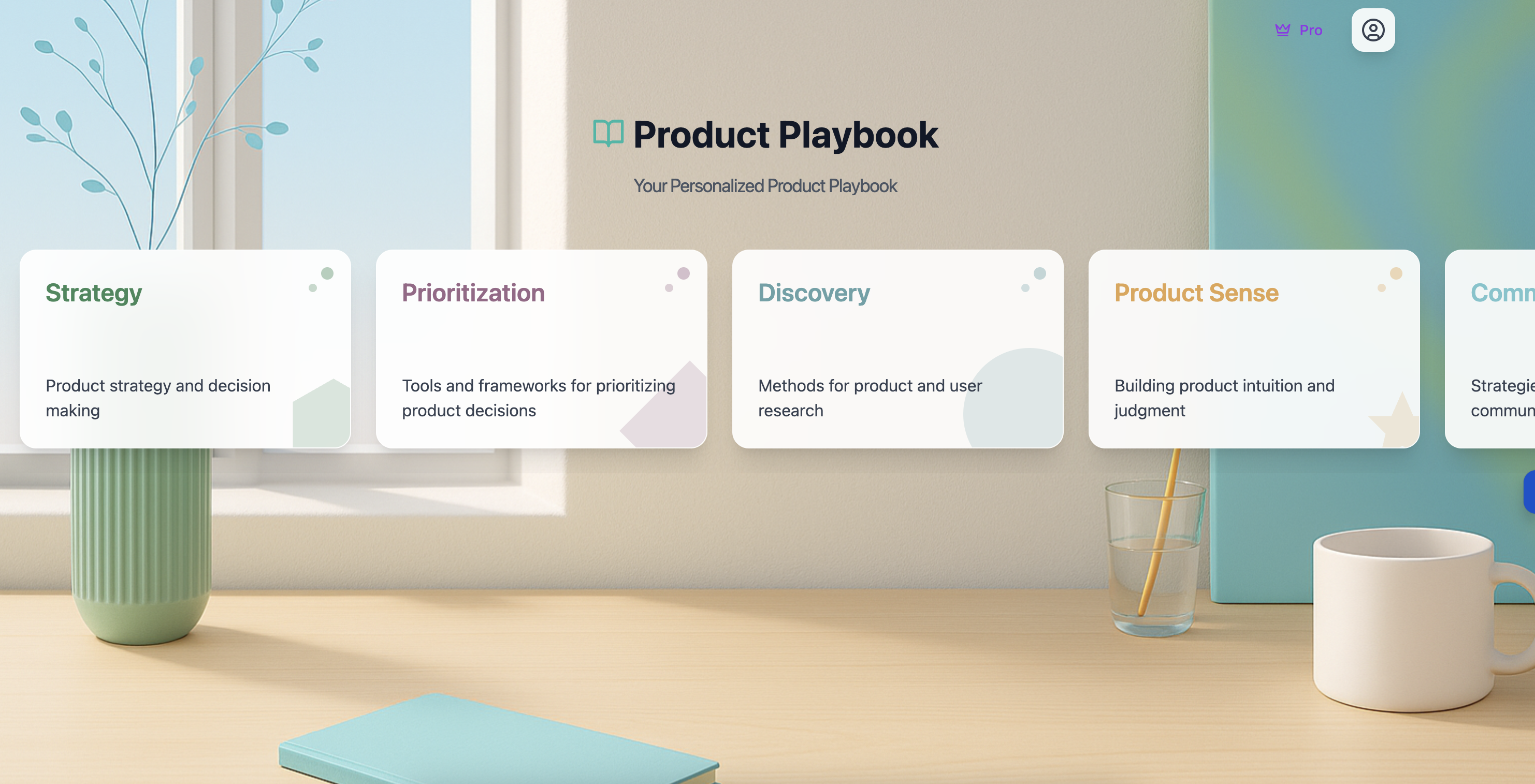
Home Page
-
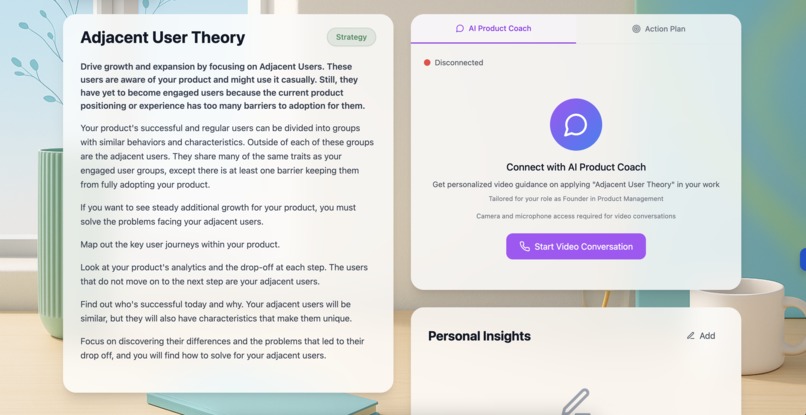
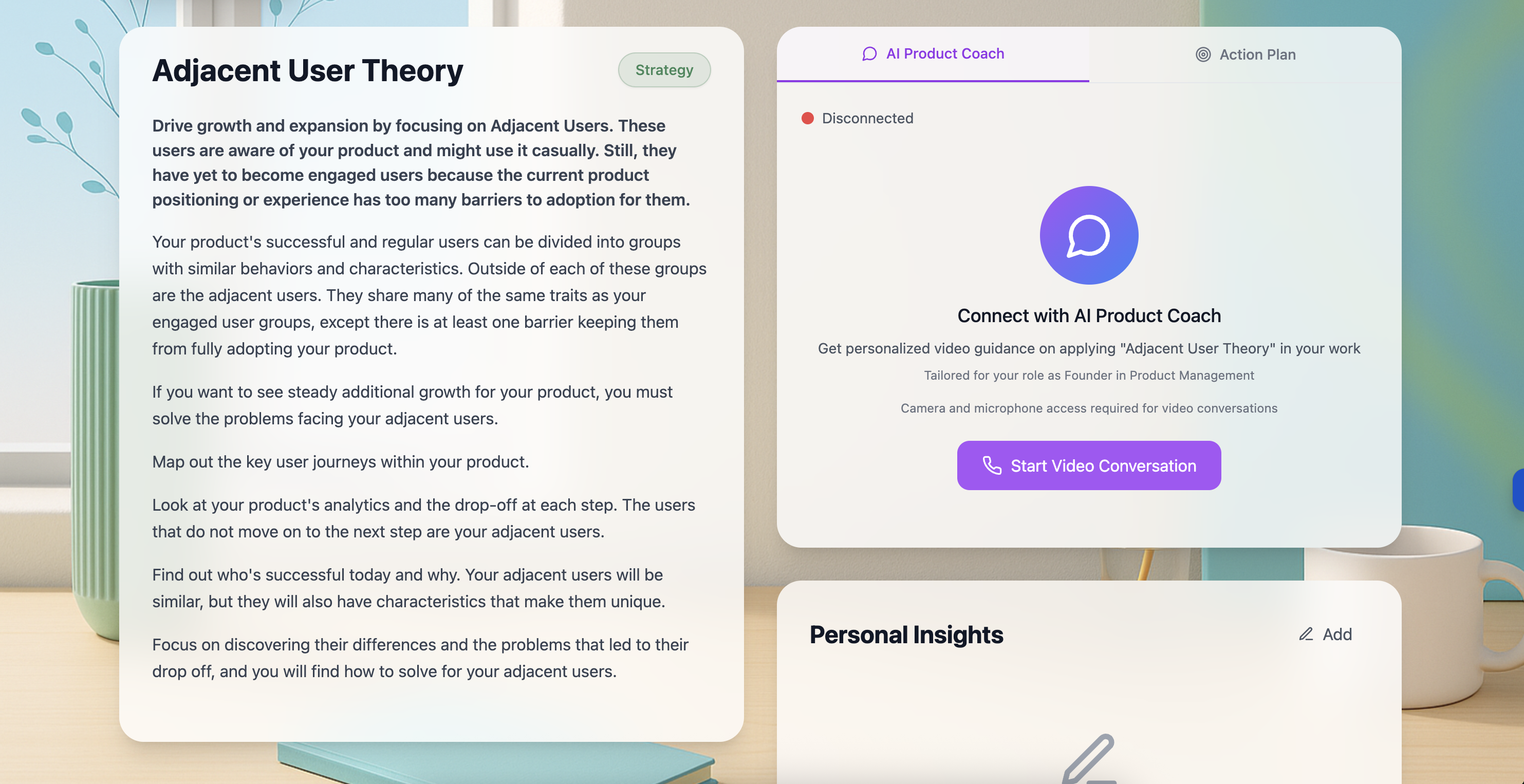
Example Card and Coaching Area
-
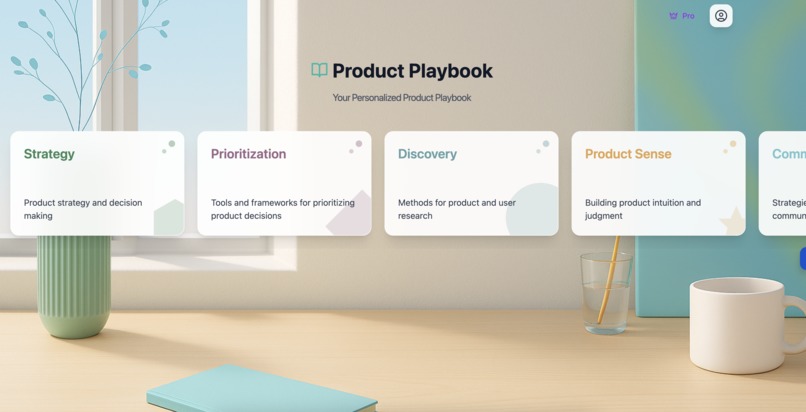
Personalized Product Playbook
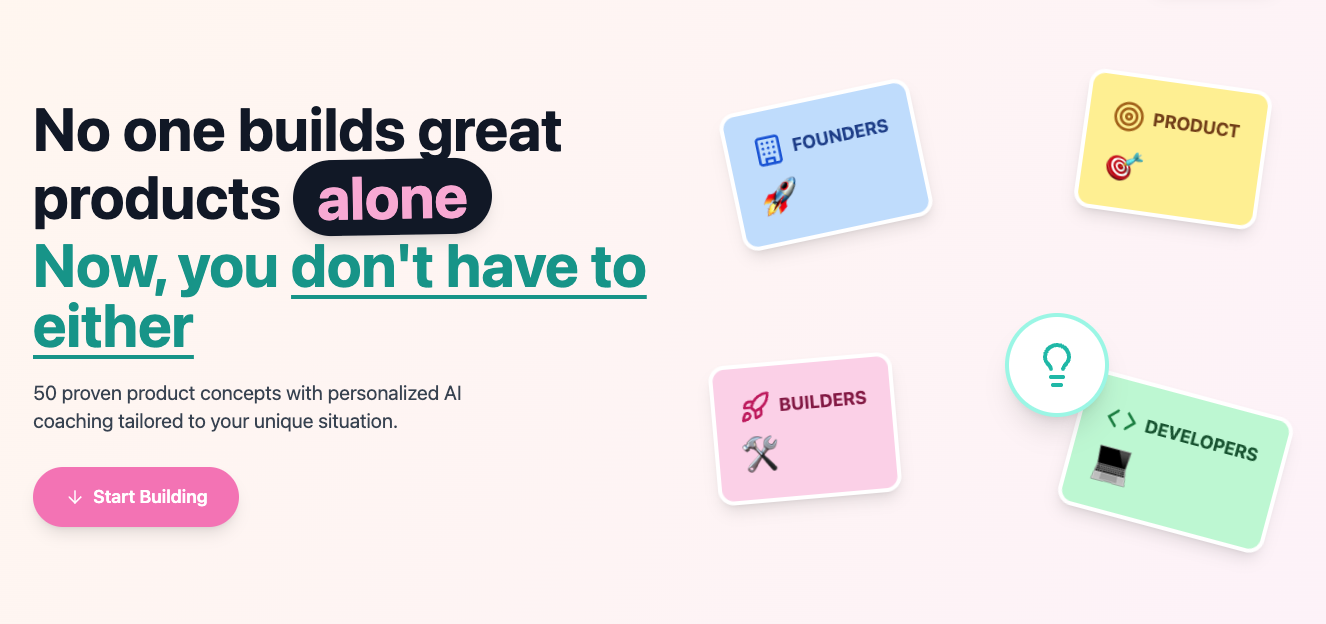
Inspiration
I've worked in product management for years and have been solo-building projects for the last several. One of the biggest pain points I kept running into was not having anyone to bounce ideas off or help give direction. It’s so easy to jump into a project and start building before doing any real validation.
With the rise of tools like Bolt and other no-code builders, it’s become easier than ever to quickly spin up software—but it’s also easier to skip the fundamentals. We’re moving faster, but too often we’re ignoring timeless product principles around strategy, discovery, and prioritization.
When we skip these steps, we end up with products that not only offer a poor user experience, but also fail to solve a real customer need. I wanted to build something that could be your constant companion while you build—something you can reference no matter what challenge you're up against.
What it does
Product Playbook is based on 50 proven product principles and strategies. Each section gives you a short, actionable lesson on a concept, followed by two interactive options:
Use the AI Coach to explore how to apply the principle to your current project
Generate a personalized action plan to move forward
You can also write down your thoughts and reflections on each principle. That way, you’re not just consuming content—you’re building a personal product journal that evolves with your work.
How we built it
The entire app was built in Bolt, with Supabase powering the backend—handling card content, user auth, note-taking, and Stripe subscription tracking.
I integrated OpenAI’s 4o-mini model for fast, cost-efficient personalized action plans, and used Tavus AI agents for interactive coaching sessions. Stripe manages in-app upgrades and subscriptions.
Challenges we ran into
Getting Tavus working for the first time took some trial and error—especially limiting users to one free AI coaching session before requiring an upgrade. It took a good amount of logic setup to make that work cleanly.
Moving from Stripe’s test mode to live mode also introduced more friction than I expected in Bolt. It required quite a bit of re-prompting and extra coordination to finalize the transition.
Accomplishments that we're proud of
I’m proud of how I structured the backend to make card editing easy without needing to re-prompt Bolt each time. It made ongoing development faster and more flexible.
I’m also excited about the product-led growth strategy—offering free value upfront, then gently encouraging upgrades once users start finding real utility. It’s a sustainable way to grow and scale.
This was also my first time using AI video agents, and the implementation went smoothly.
What we learned
I learned how to better navigate Bolt’s build process—how to experiment, hit dead ends, then rebuild more cleanly the second time around. I deepened my knowledge of Tavus, Stripe webhooks, and most importantly, the product principles themselves.
I actually learned a lot by writing the cards and using my own tool—which is exactly the outcome I hope other builders experience.
What's next for Product Playbook
I’d love to introduce multiple product coach personas—each with a different background and point of view. Builders could choose which coach they want to work with depending on their situation. This would require UI updates and some smart agent routing, but I think the variety of perspective could be incredibly powerful.
I also plan to optimize API usage with Tavus to better control costs per session.
I wrote a book in 2020 called Every Product Manager's First 90 Days, I saw the need for new product managers to have a way to navigate their first product roles. I envision this tool solving a similar problem but for product managers across all different stages of their careers. Ideally people can use this over and over again even if their roles change or they are simply building new features.
Built With
- bolt
- openai
- stripe
- supabase
- tavus

Log in or sign up for Devpost to join the conversation.