-
-
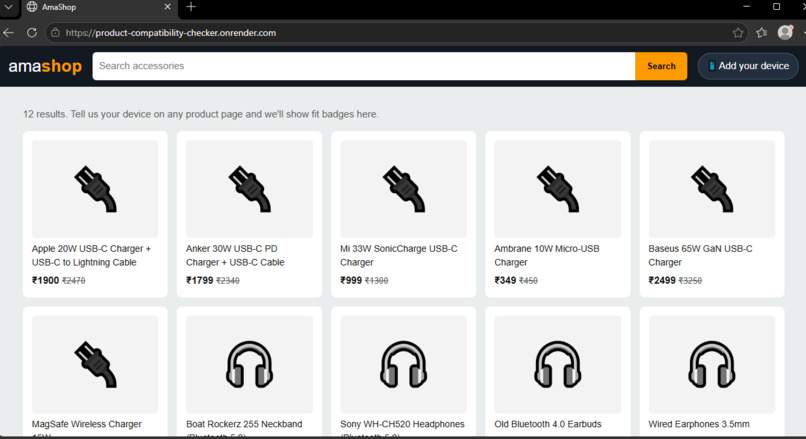
Dashboard
-
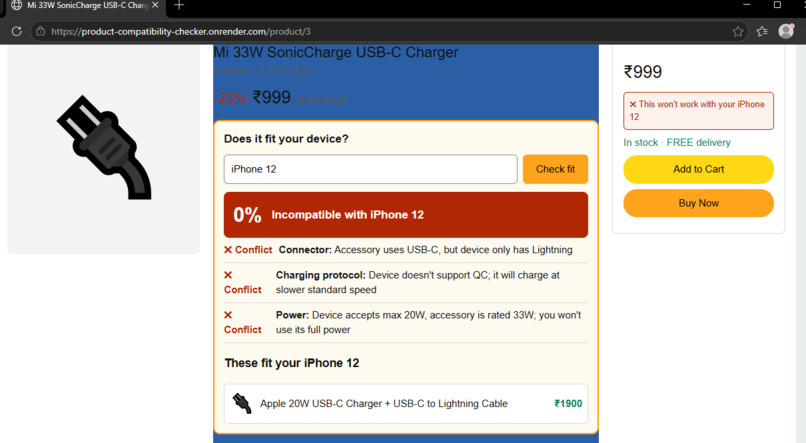
Check fit product 1 (Compability Test)
-
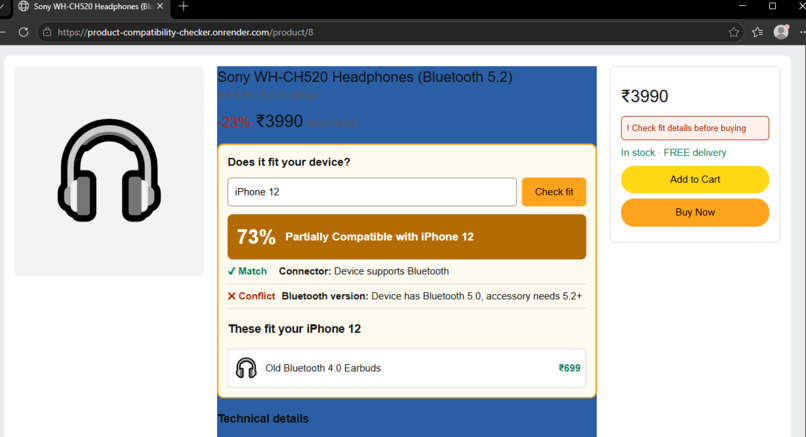
Check fit product 2 (Compability Test)
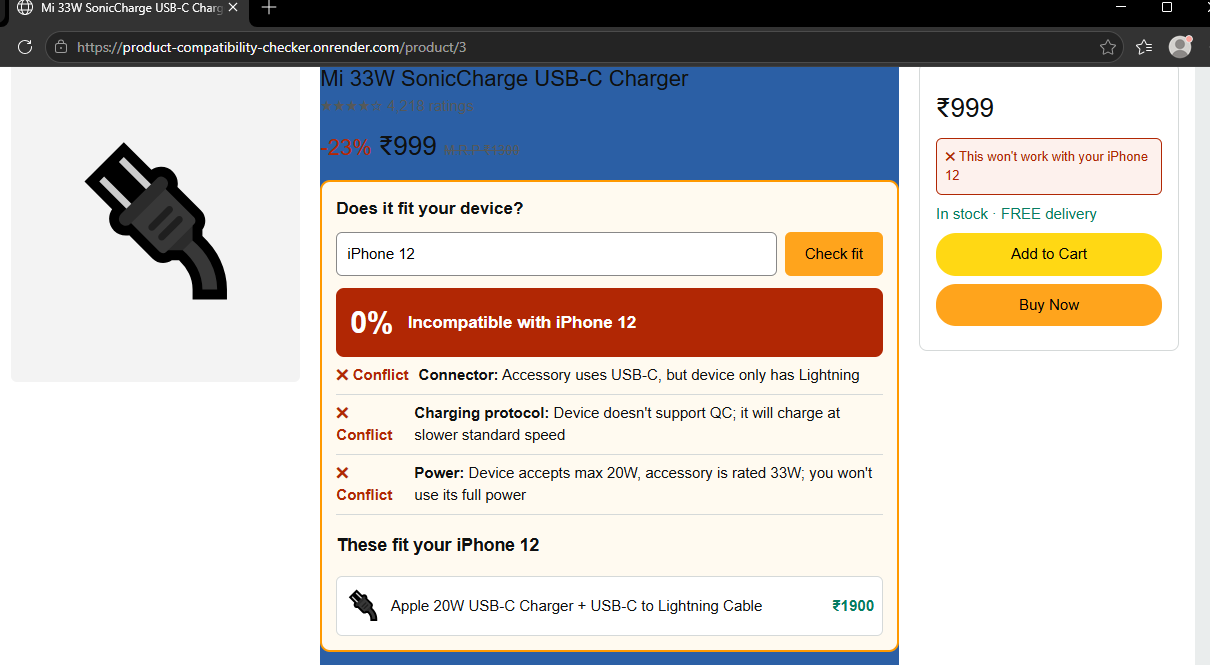
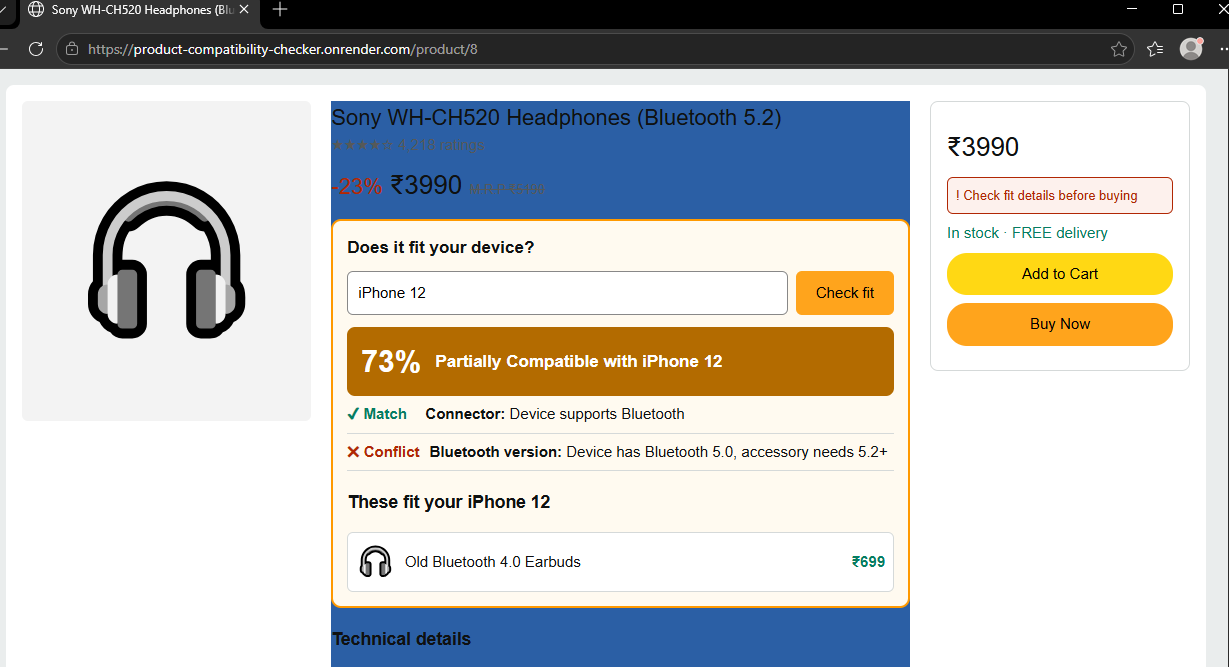
Inspiration: The idea for this project came from a common problem faced by customers: buying accessories that do not work with their existing devices because of incompatible connectors, power requirements, or technical specifications. This can waste money, cause frustration, and lead to unnecessary product returns. I wanted to create a solution that helps people make smarter purchasing decisions.
What it does: Product Compatibility Checker helps customers check whether an accessory is compatible with their existing device before purchasing it. It compares technical specifications such as connectors, power requirements, and supported features. It displays clear compatibility results, explains possible issues, and suggests suitable alternatives to help users avoid incorrect purchases and save money.
How we built it: I planned a web application called Product Compatibility Checker. It uses HTML, CSS, and JavaScript for the frontend, Python Flask for the backend, and SQLite to store device and accessory specifications. A rule-based compatibility engine compares the specifications and displays whether an accessory is compatible, partially compatible, incompatible, or has insufficient information. It can also suggest suitable alternatives.
Challenges we ran into: One of the main challenges was planning reliable rules for checking compatibility between different devices and accessories. Another challenge was handling missing technical information and explaining compatibility issues in a simple way. I addressed these challenges in the design by including different compatibility statuses, warnings, and alternative suggestions.
Accomplishments that we're proud of: We are proud to develop an idea that solves a real-world problem in online shopping. Our project focuses on making technical information easier to understand and helping customers make smarter purchasing decisions. We have planned a rule-based compatibility system, clear result categories, warnings for missing information, and alternative product suggestions.
What we learned: We learned how web technologies such as HTML, CSS, and JavaScript can work with Python Flask and an SQLite database. We also explored how rule-based logic can compare product specifications, identify compatibility issues, and provide understandable results. Most importantly, we learned the value of designing technology around real customer needs.
What's next for Product Compatibility Checker: Next, we plan to develop and improve the web application by adding more devices and accessories to the database, improving compatibility checks, and making the interface more user-friendly. In the future, we aim to introduce AI-powered product matching, natural-language search, and personalized recommendations based on device requirements, budget, and user preferences.

Log in or sign up for Devpost to join the conversation.