Inspiration
ProducerOS started from a simple frustration: creative production can get messy very quickly.
When people are working on music, film, content, or other creative projects, information is usually spread across different tools. Notes are in one place, tasks are somewhere else, timelines are separate, and important production changes can easily get missed.
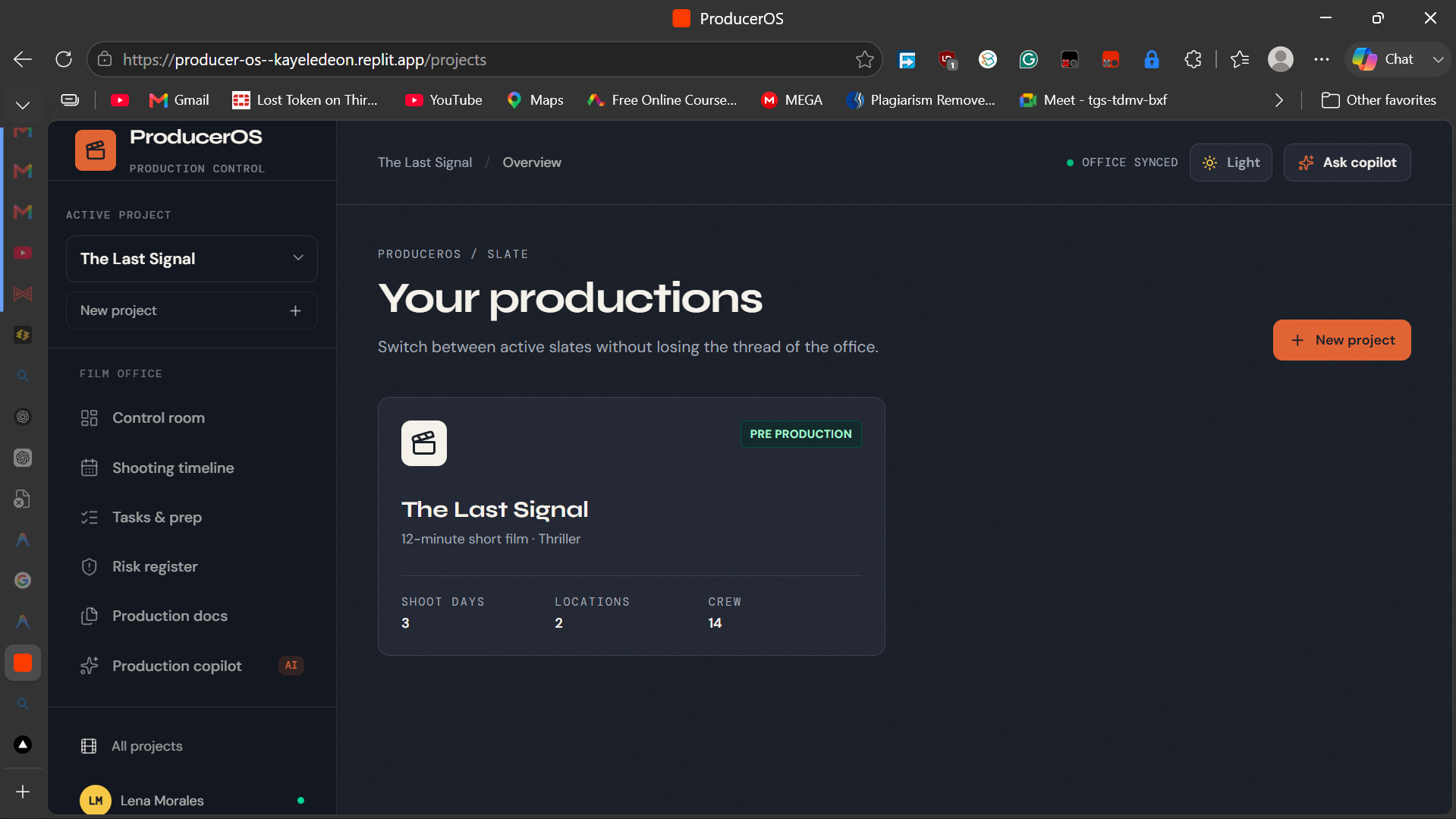
I wanted to build something that felt more like a real production control center instead of just another project management dashboard.
That idea became ProducerOS — an AI-powered workspace designed to help creative teams plan, manage, and adapt their productions from one place.
My goal was simple: make production management feel more organized, more intelligent, and less stressful.
What ProducerOS Does
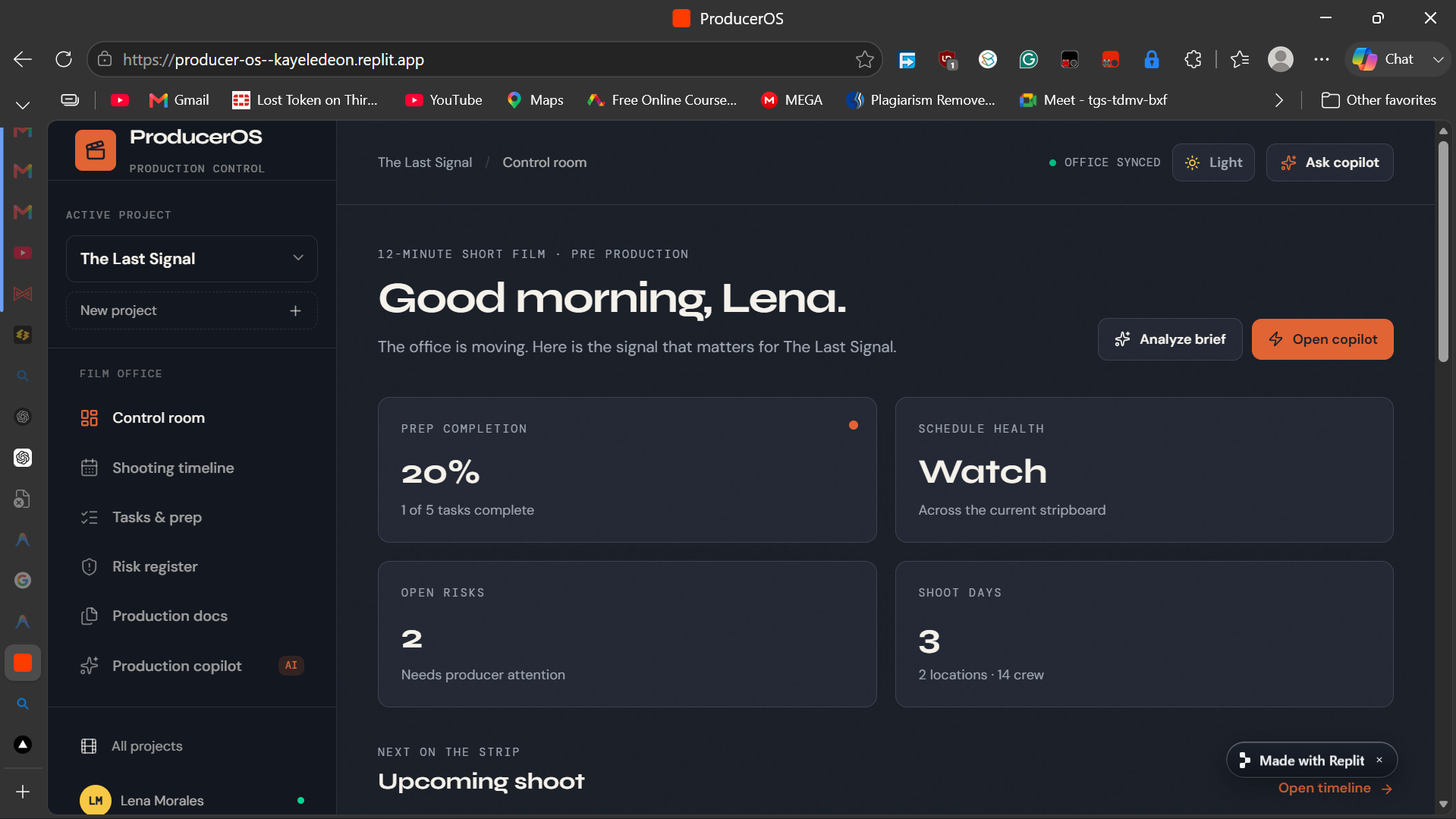
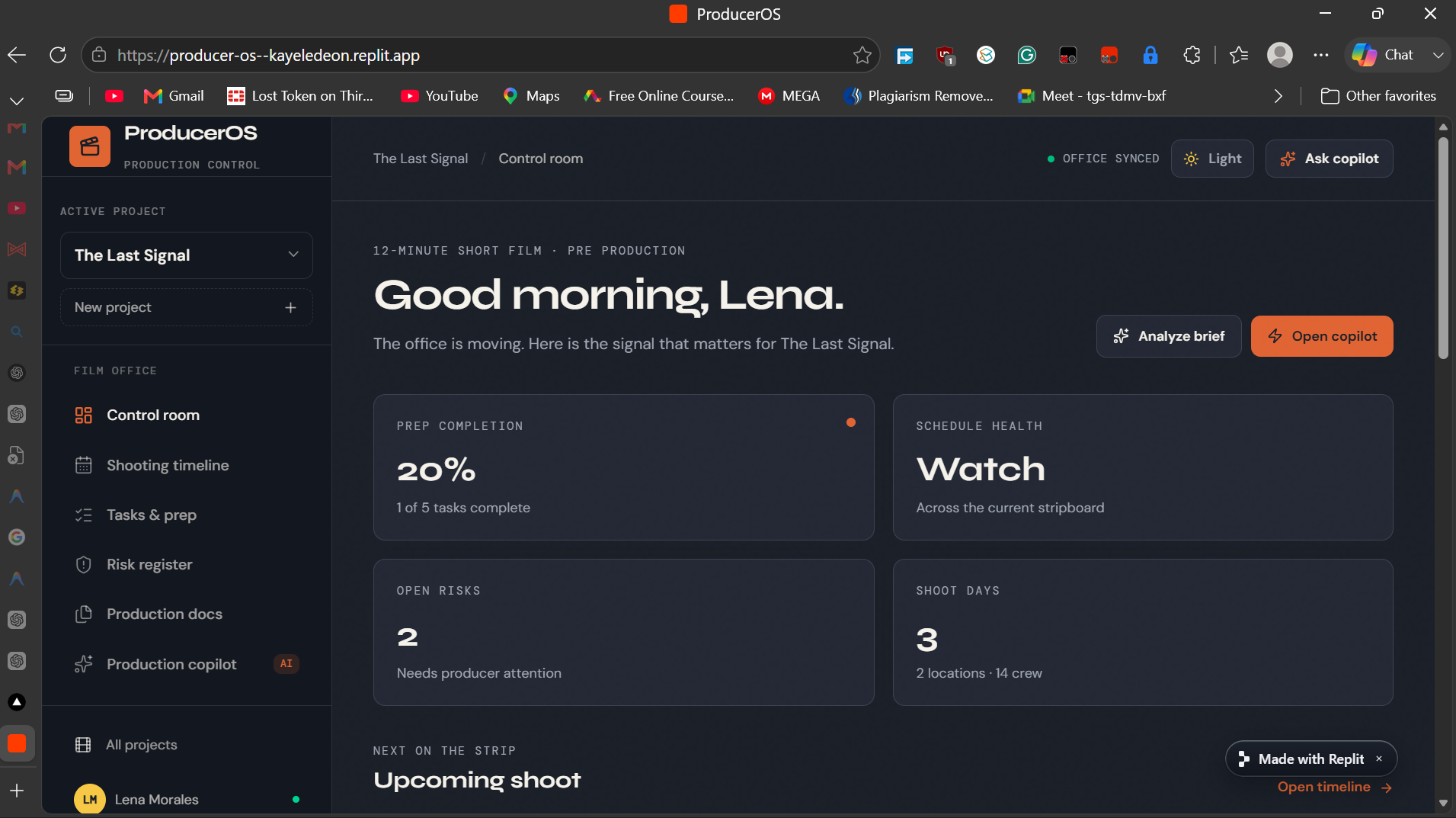
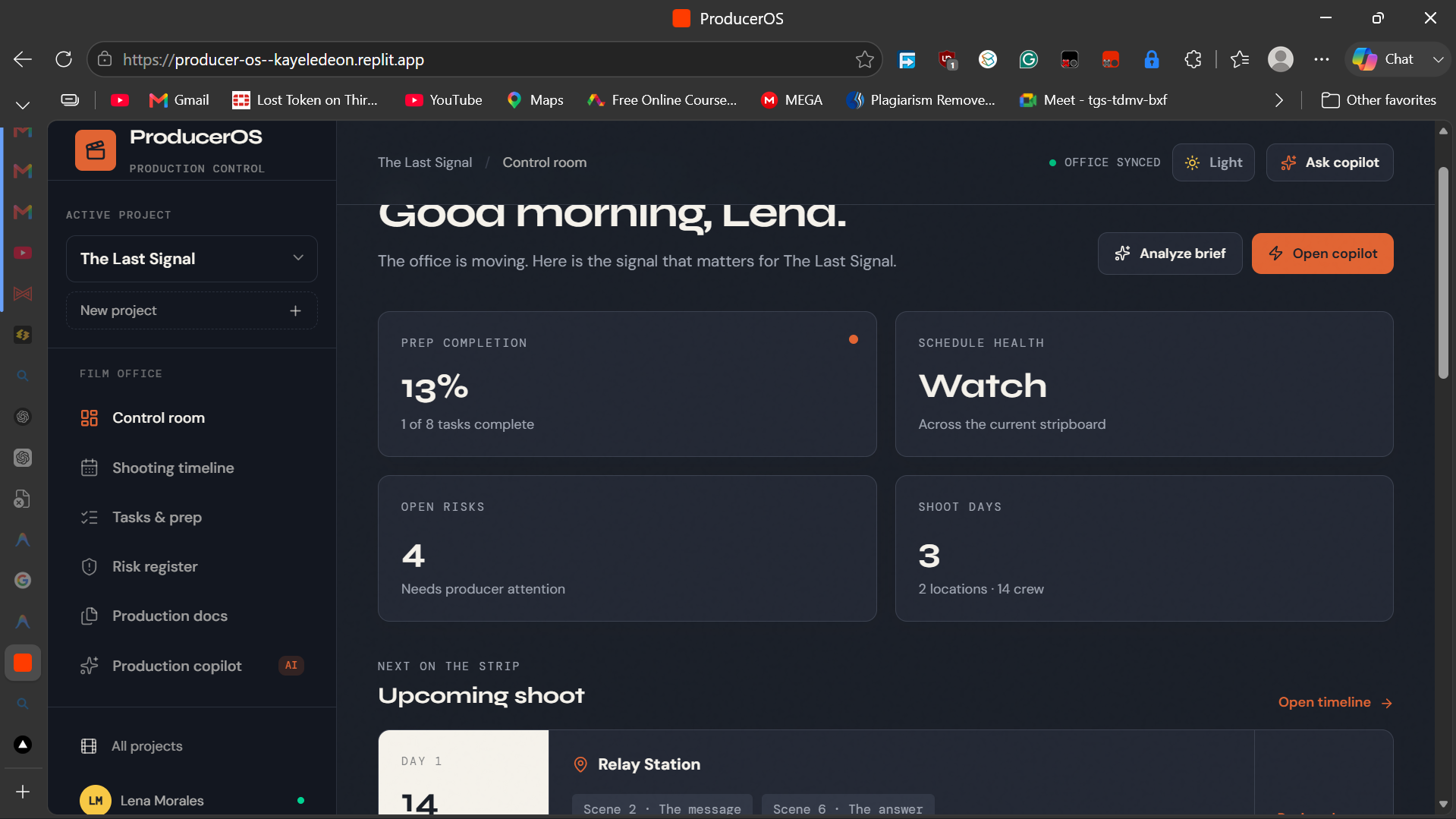
ProducerOS brings the main parts of production management together in one workspace.
Users can:
- Create and manage productions
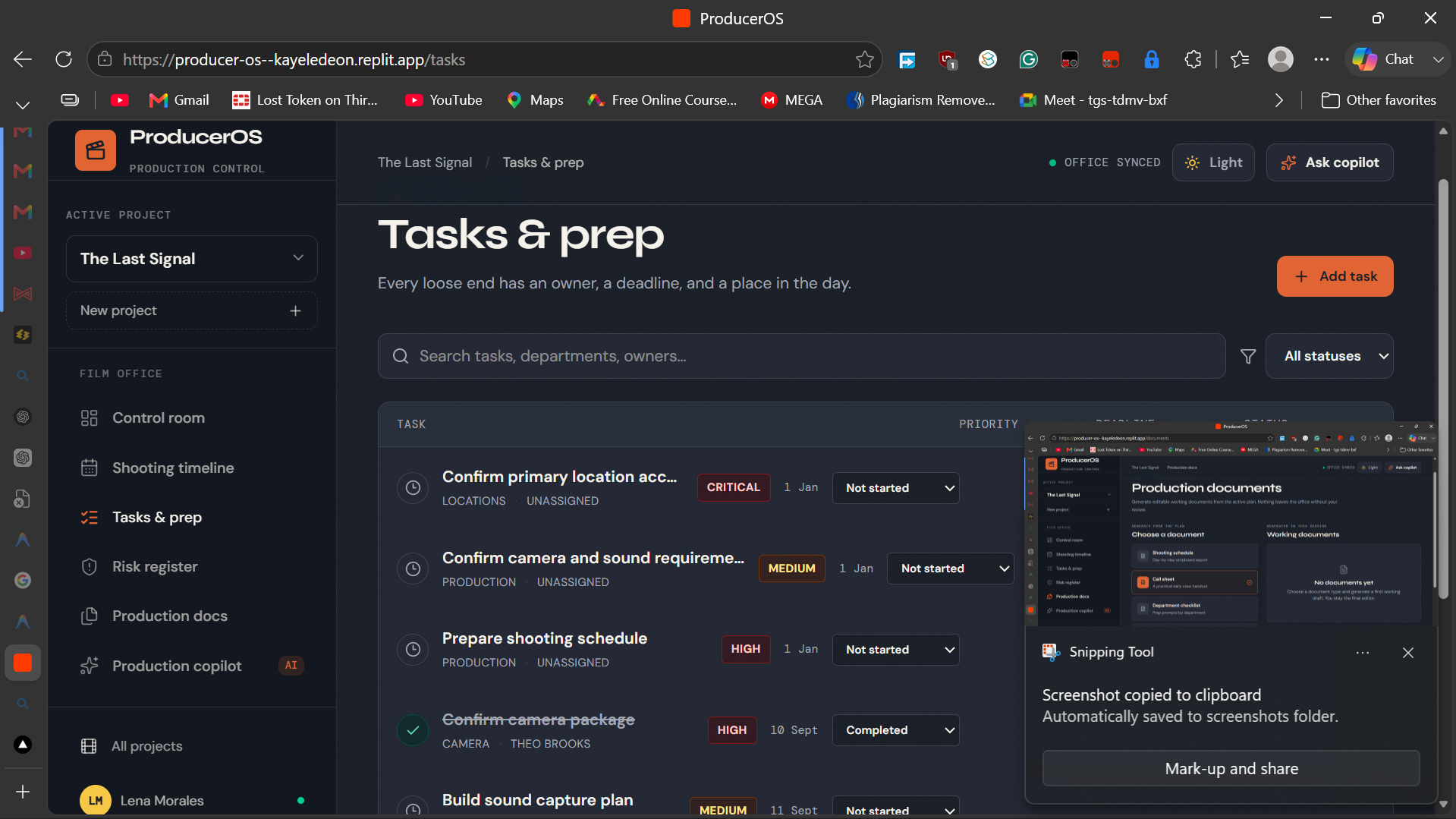
- Organize tasks
- Build and follow production timelines
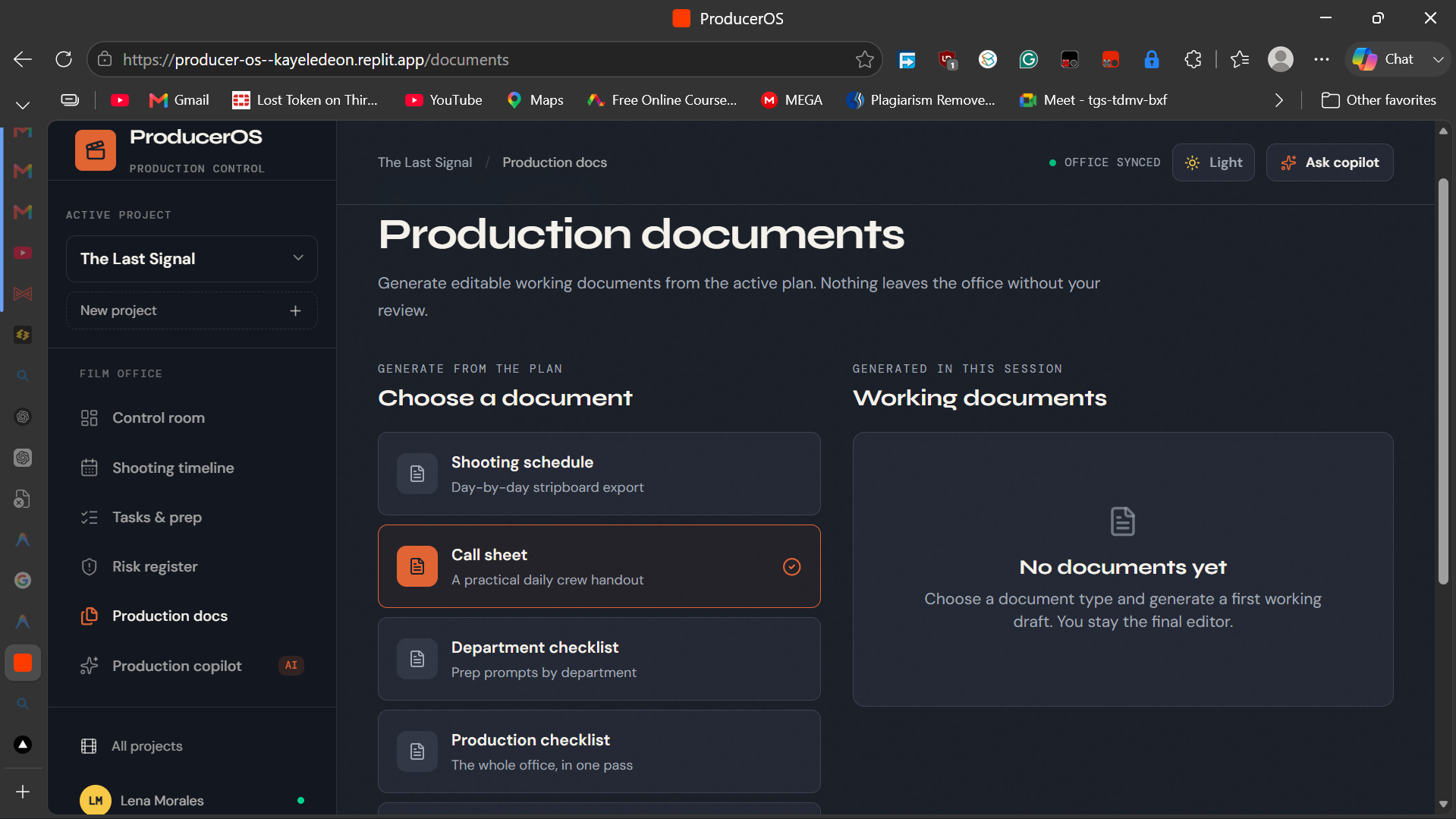
- Manage documents
- Track production risks
- Review proposed changes
- Analyze production briefs
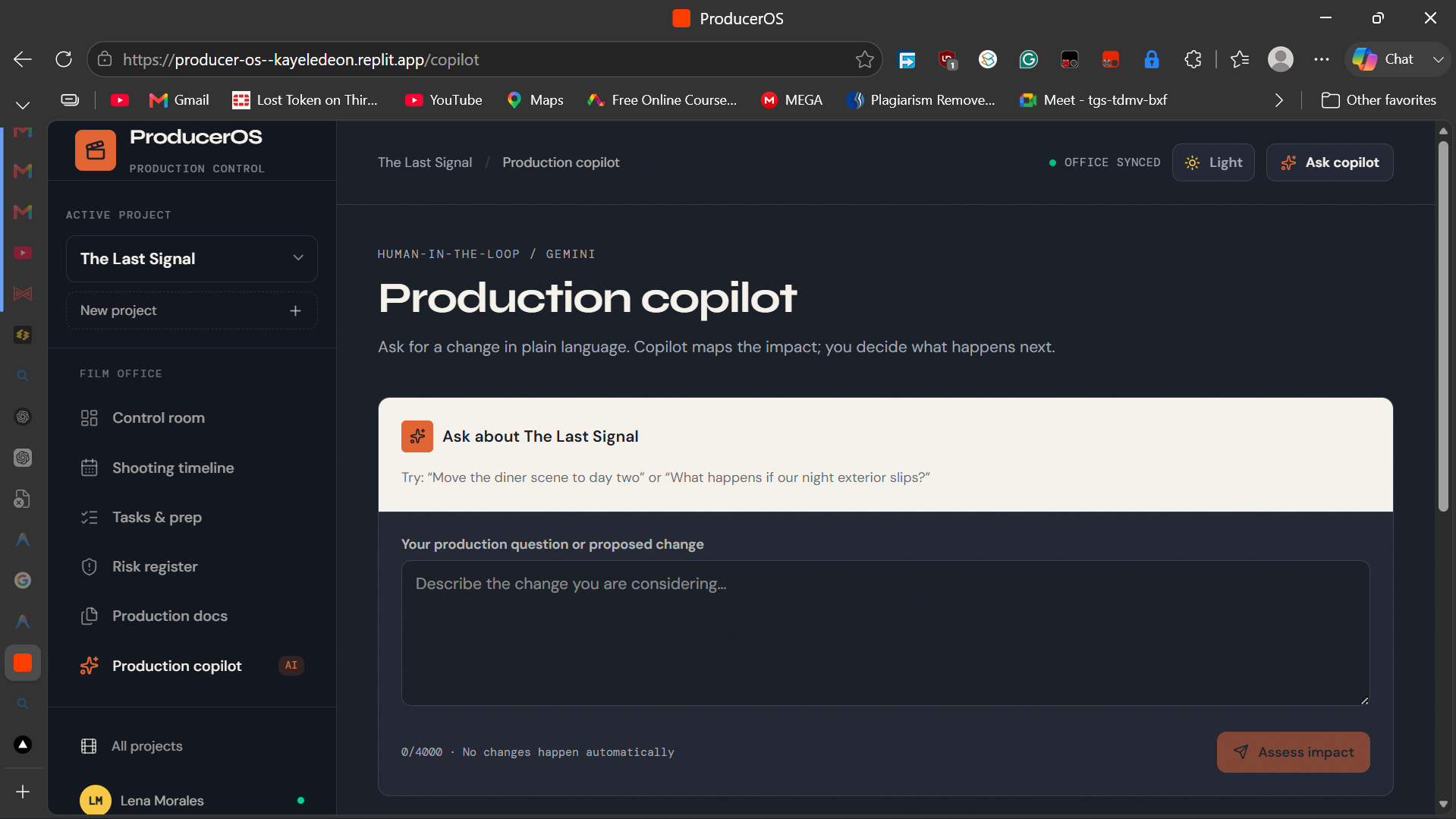
- Use AI to support production decisions
The AI side of ProducerOS is designed to work as part of the production workflow rather than just being a chatbot added to the application.
It can analyze production information, identify possible risks, assess changes, and help the user understand how decisions could affect the wider production.
How I Built It
I built ProducerOS as a full-stack web application using Replit as my main development environment.
The application includes a frontend production workspace and a backend responsible for managing:
- Projects
- Tasks
- Documents
- Risks
- Timelines
- Production changes
- AI analysis
I integrated Google Gemini as the intelligence layer of the platform.
Gemini helps ProducerOS analyze production briefs and understand information connected to risks and proposed production changes.
I also spent a lot of time working on the user interface.
I did not want ProducerOS to look like a generic AI-generated dashboard. I wanted it to feel closer to professional software that a real production team could actually use every day.
Challenges I Faced
One of the biggest challenges was balancing the number of ideas I had with the limited time available during the hackathon.
ProducerOS has many systems that need to work together. A change in a production might affect a task, timeline, risk, or other part of the project, so I had to think about how everything should connect.
I also faced several technical challenges during development, including:
- Backend errors
- Duplicate code
- API integration problems
- Debugging TypeScript
- Managing database interactions
- Fixing features without breaking existing functionality
- Connecting Gemini to the actual production workflow
The AI integration was especially important to me.
I did not want Gemini to simply sit on the side of the application as a chat window. I wanted it to have a real role inside the product and help users understand what is happening within their production.
What I Learned
Building ProducerOS taught me a lot about how AI can be used inside real workflows.
One of the biggest lessons I learned is that AI becomes much more useful when it has structured context.
Instead of only asking an AI general questions, ProducerOS can provide information about the production itself. This gives the AI more context and allows it to provide more useful analysis.
I also learned more about:
- Full-stack application development
- API integration
- Database design
- Debugging
- AI-assisted workflows
- Production management systems
- User interface design
The hackathon also taught me how important prioritization is.
I had many more ideas than I could realistically build, so I had to focus on the features that best demonstrated the core idea behind ProducerOS.
What I'm Proud Of
What I am most proud of is that ProducerOS became more than just an idea or a collection of interface designs.
It became a working application that people can actually open and use.
ProducerOS represents the direction I believe creative production software can move toward: tools that do more than store information.
They can understand what is happening inside a production and help the people behind it make better decisions.
There is still much more I would like to build, but this hackathon gave me the opportunity to create the foundation of that vision.
Built With
- ai
- express.js
- fullstack
- gemini-api
- google-gemini
- javascript
- node.js
- postgresql
- react
- replit
- typescript
- webapp

Log in or sign up for Devpost to join the conversation.