-
-
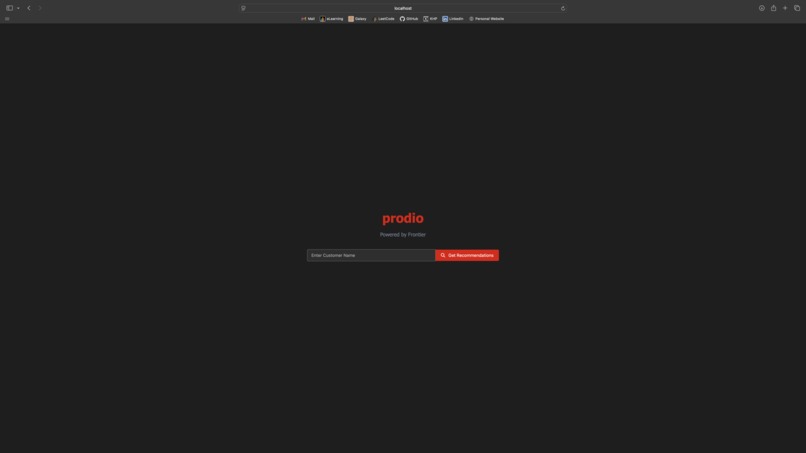
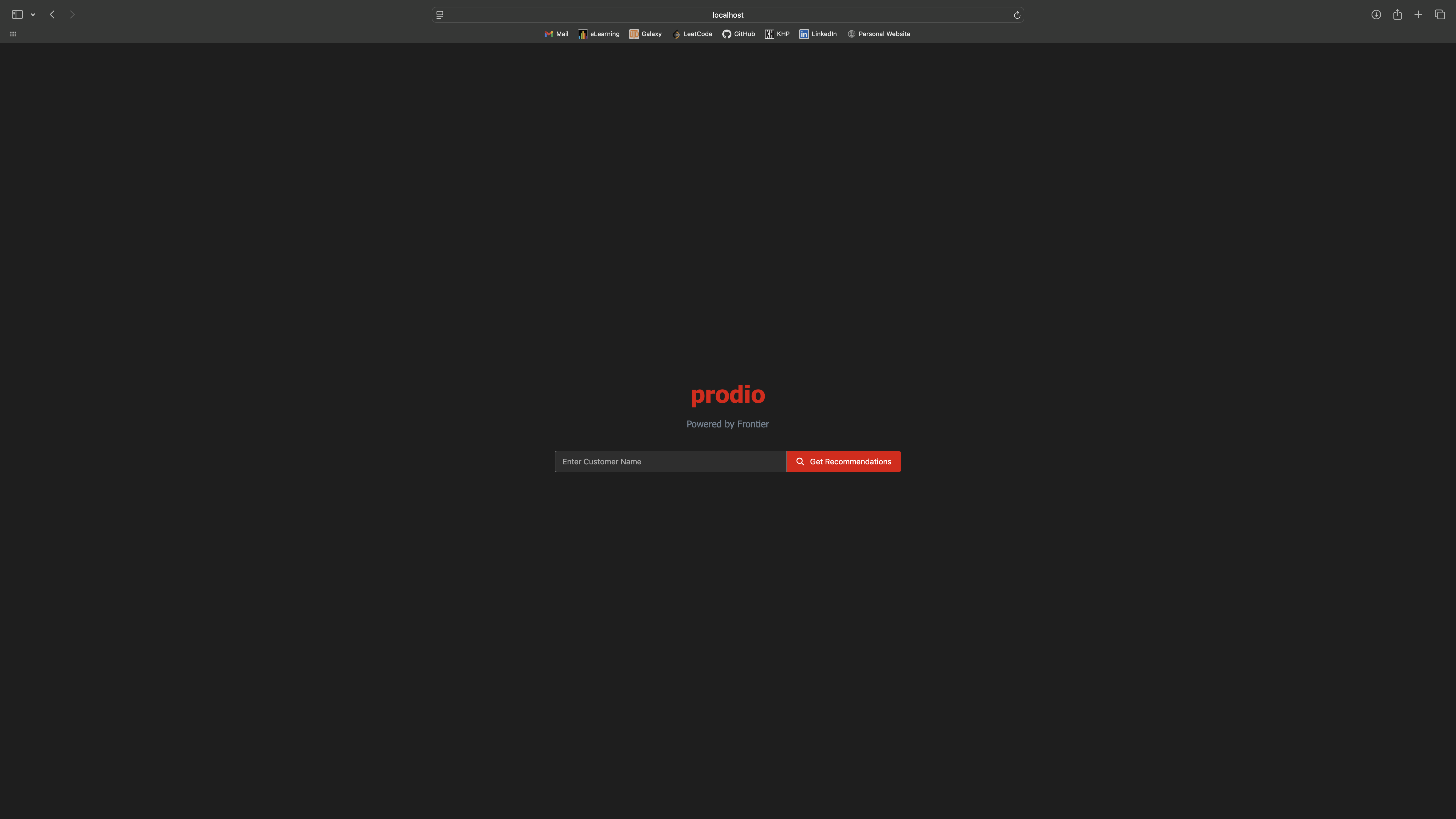
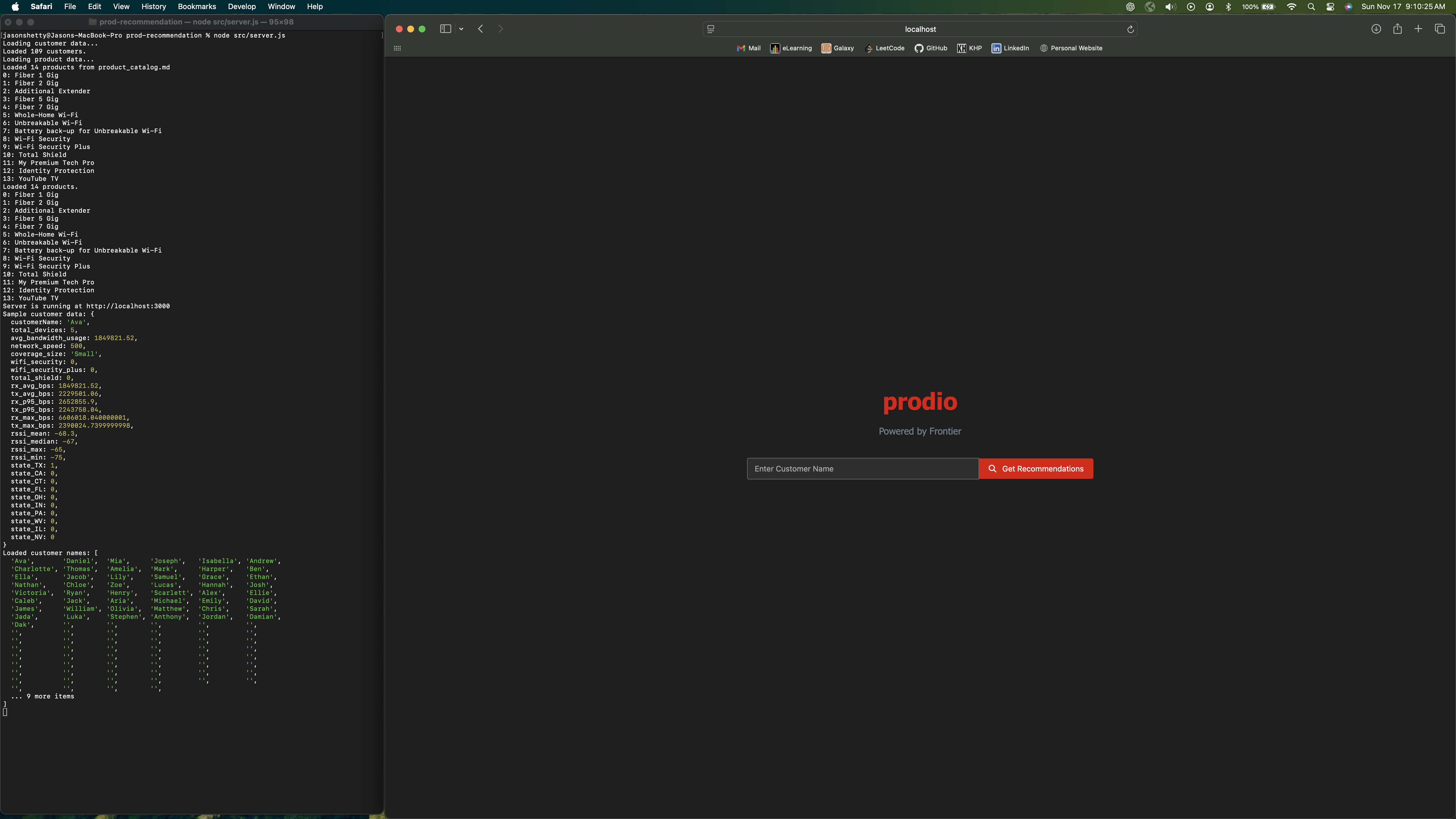
home page
-
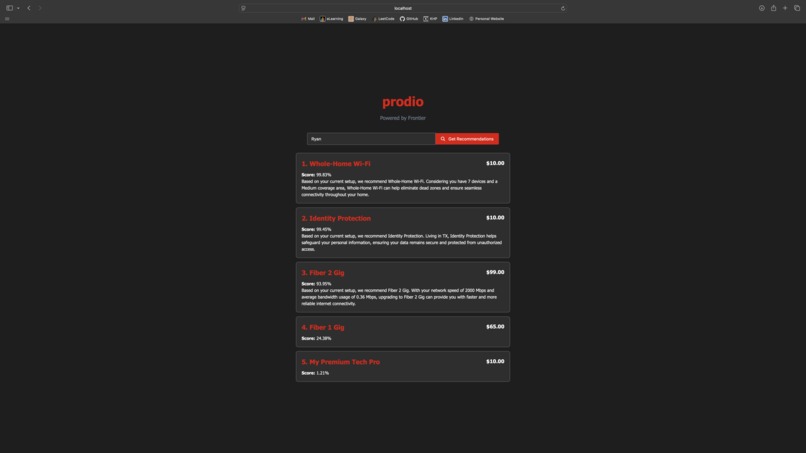
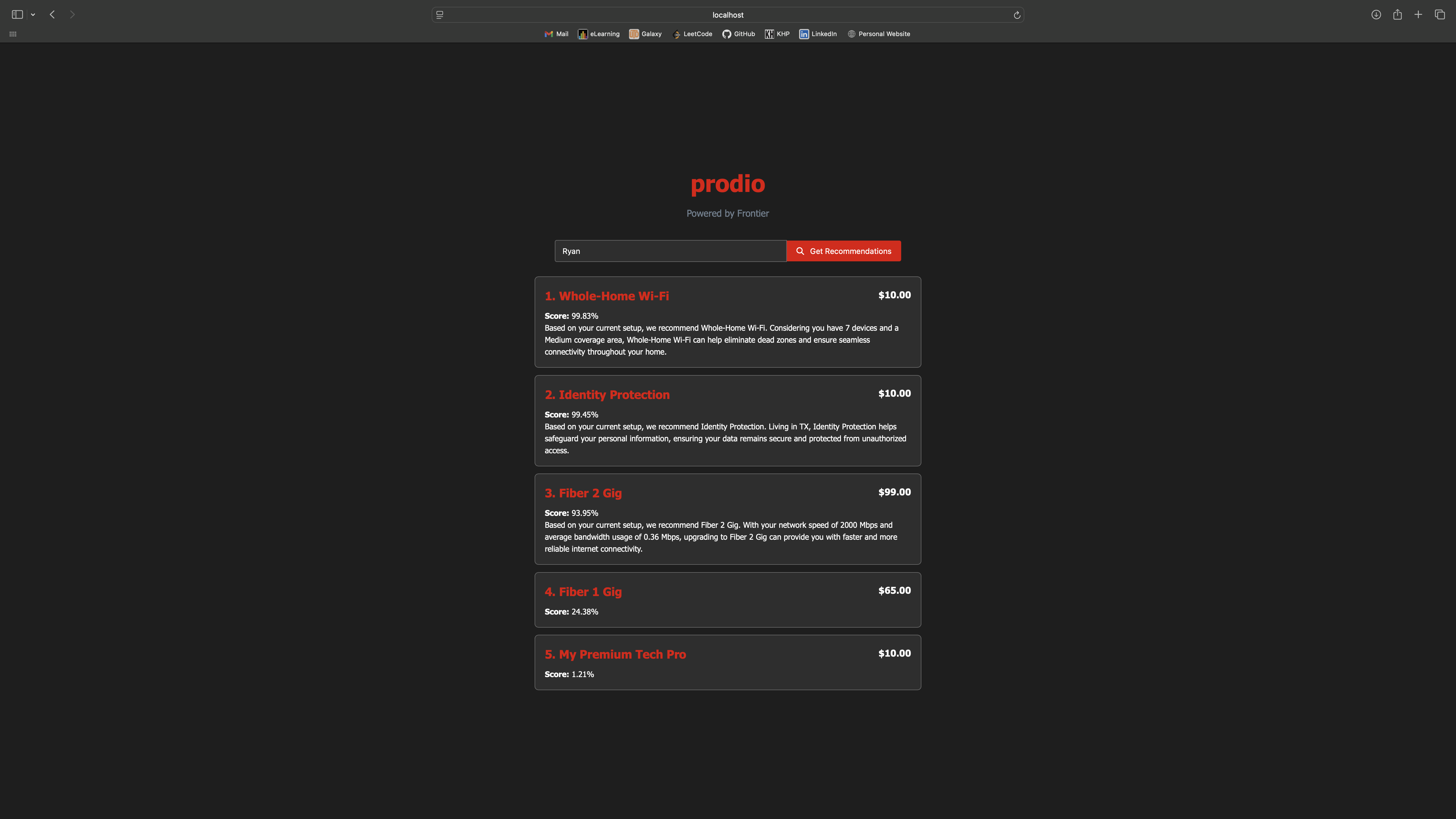
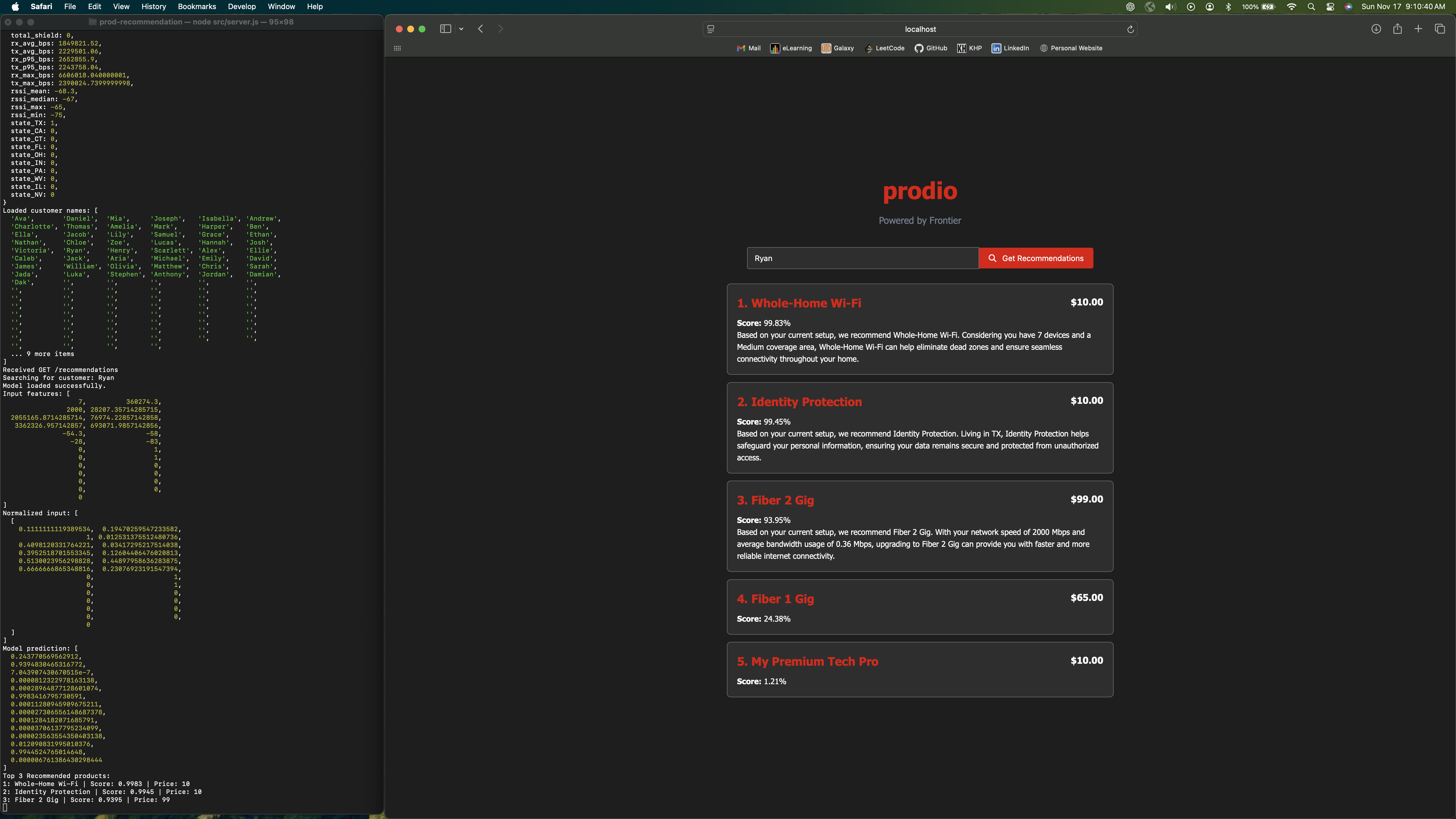
user Ryan
-
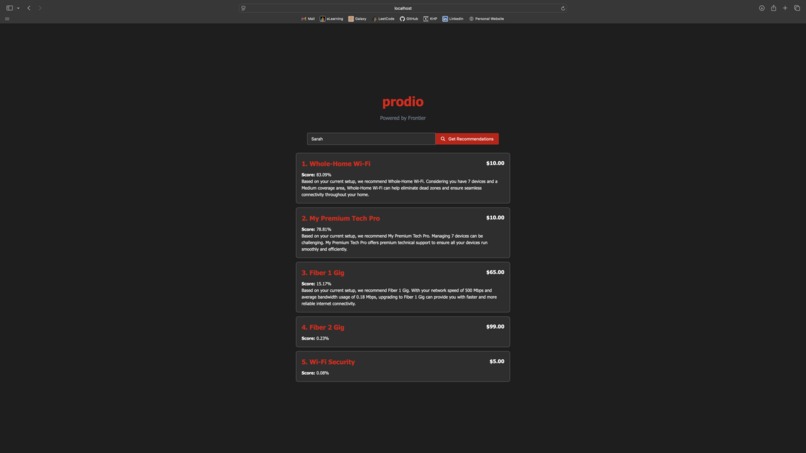
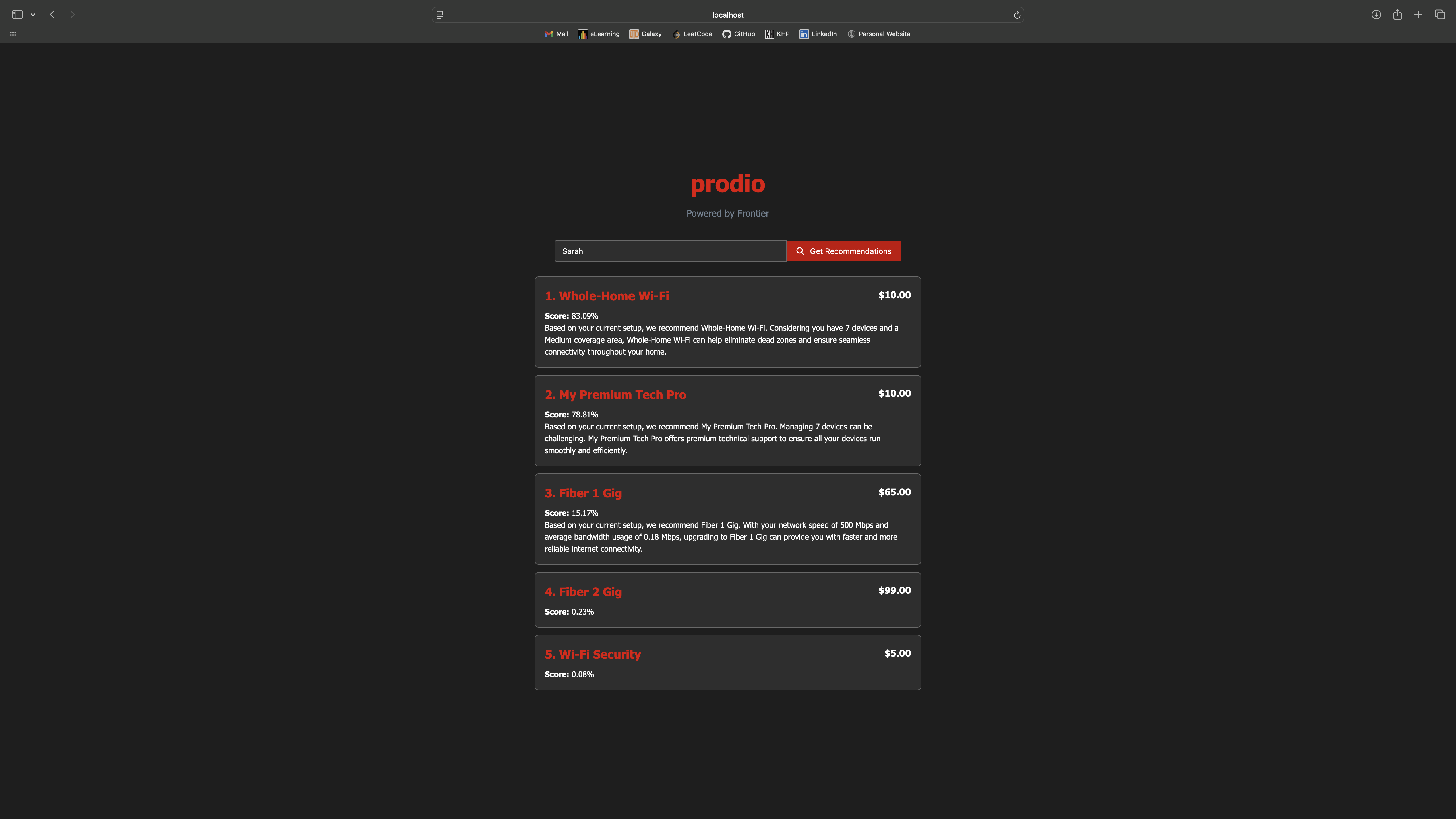
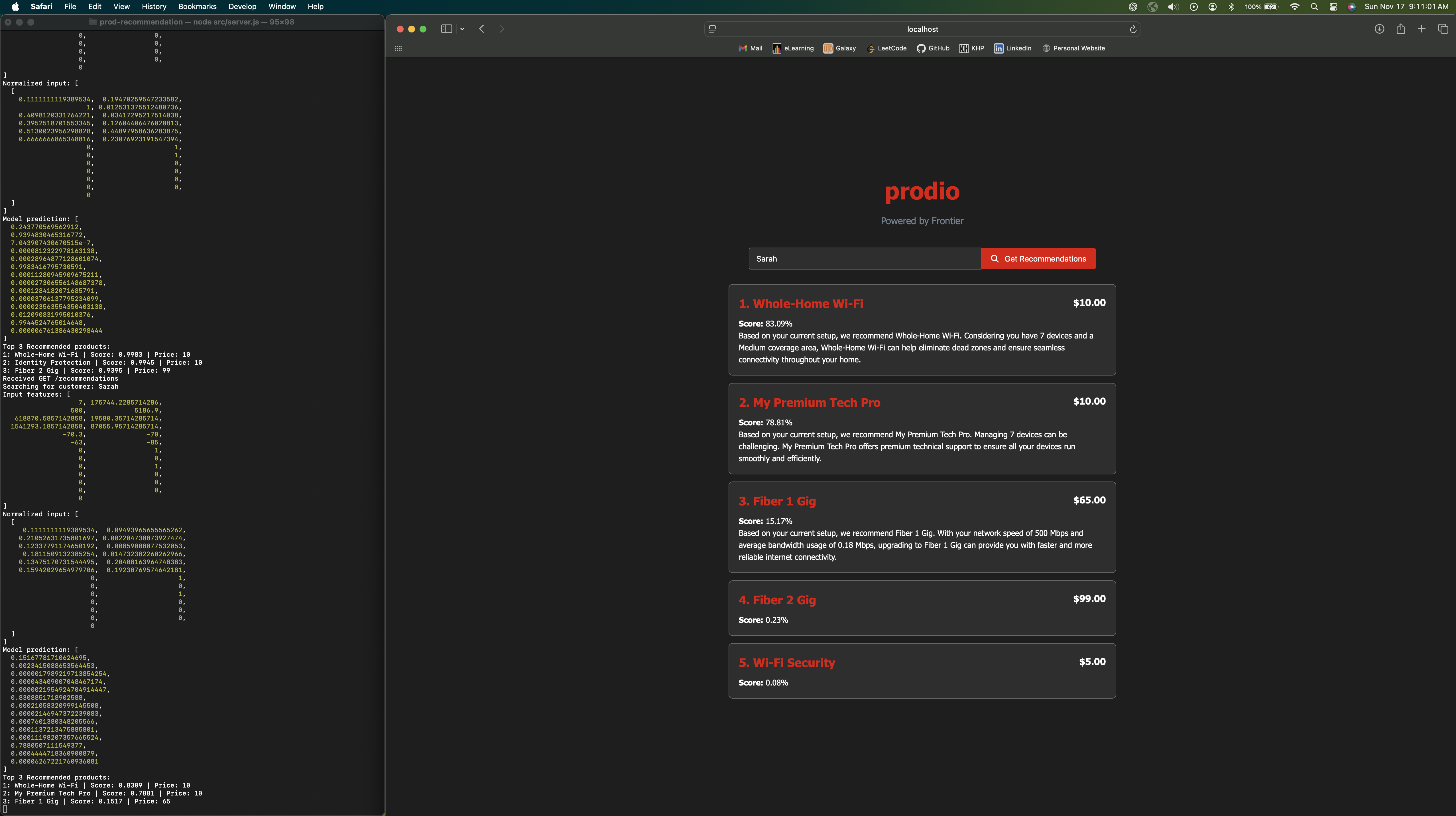
user Sarah
-
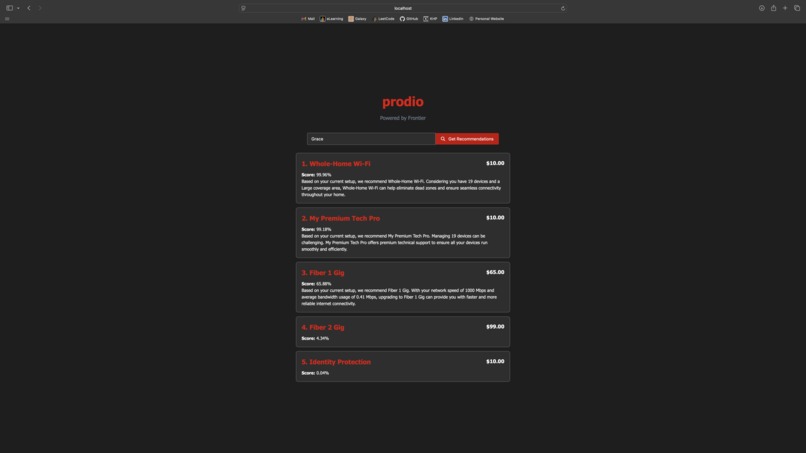
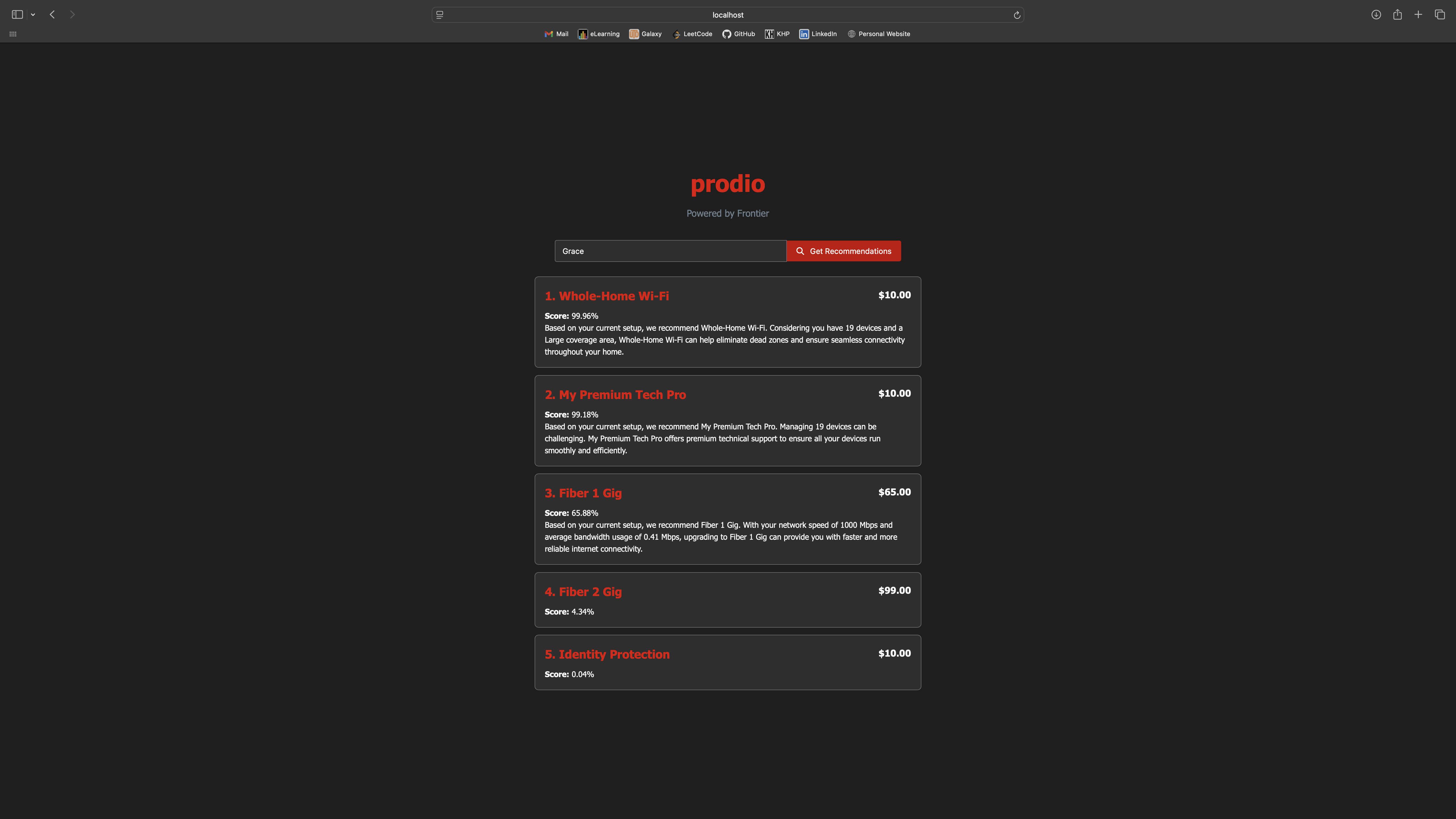
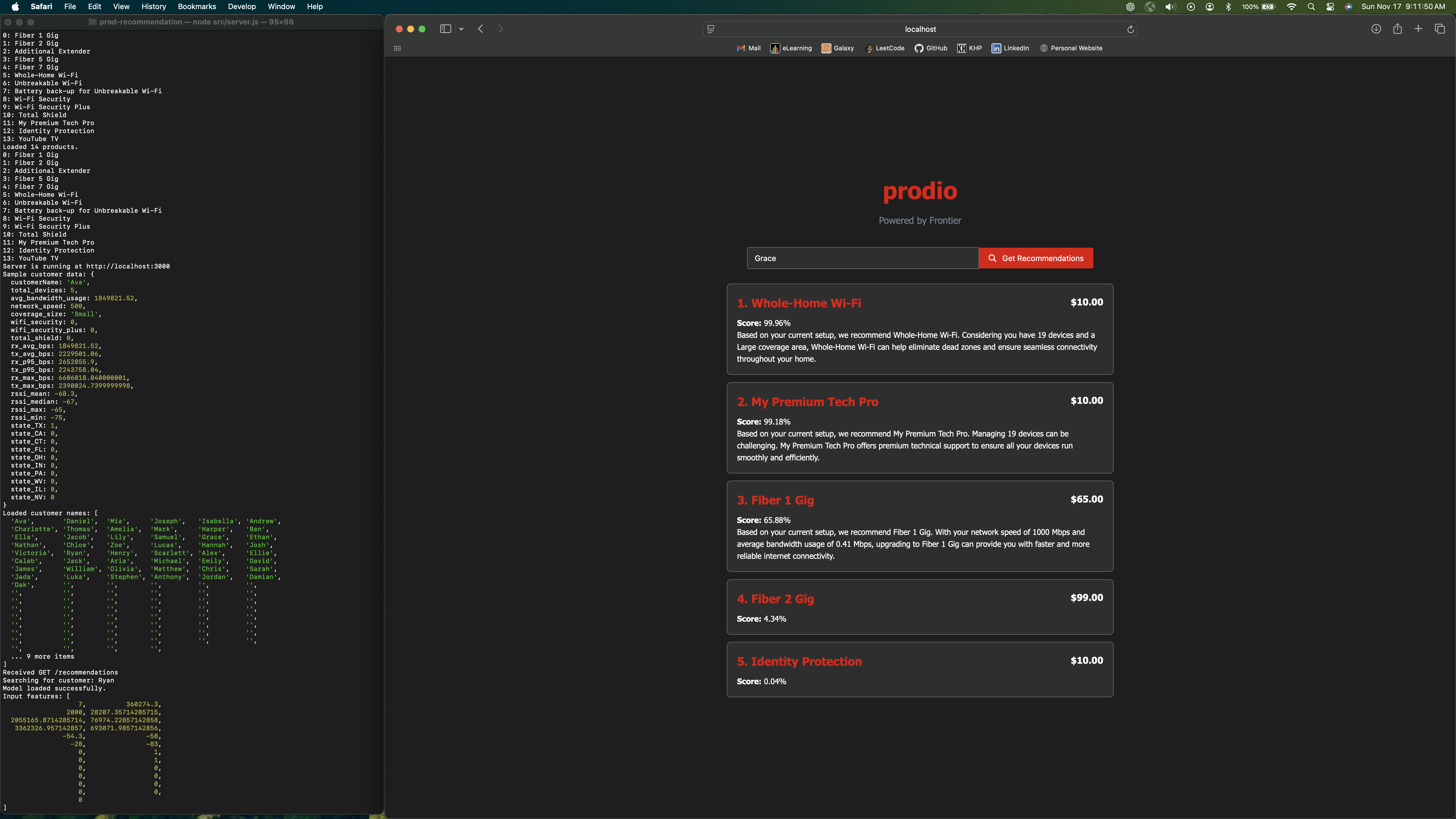
user Grace
-
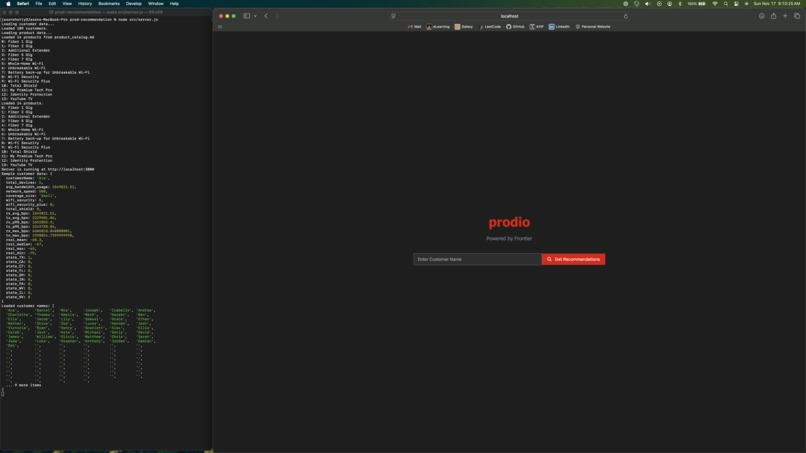
home page (with backend)
-
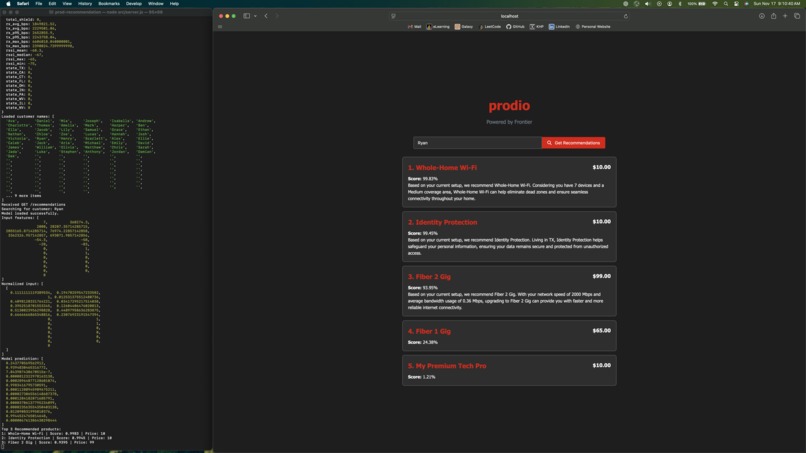
user Ryan (with backend)
-
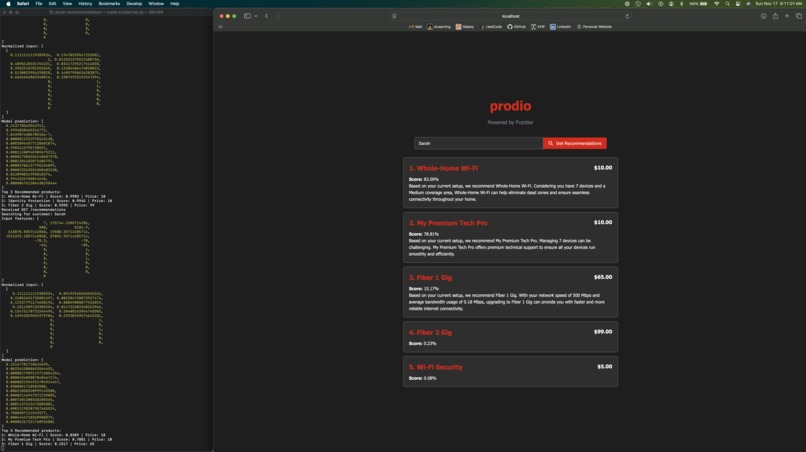
user Sarah (with backend)
-
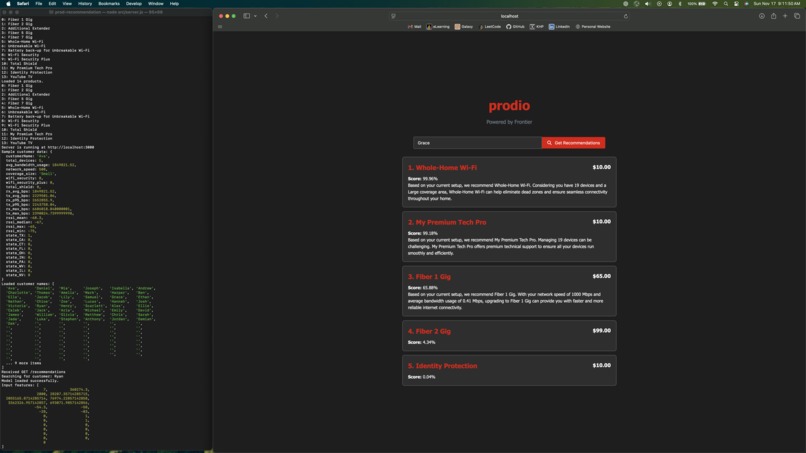
user Grace (with backend)
-
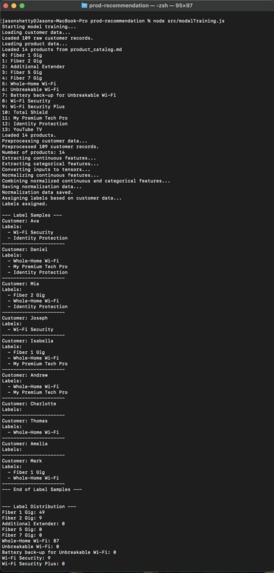
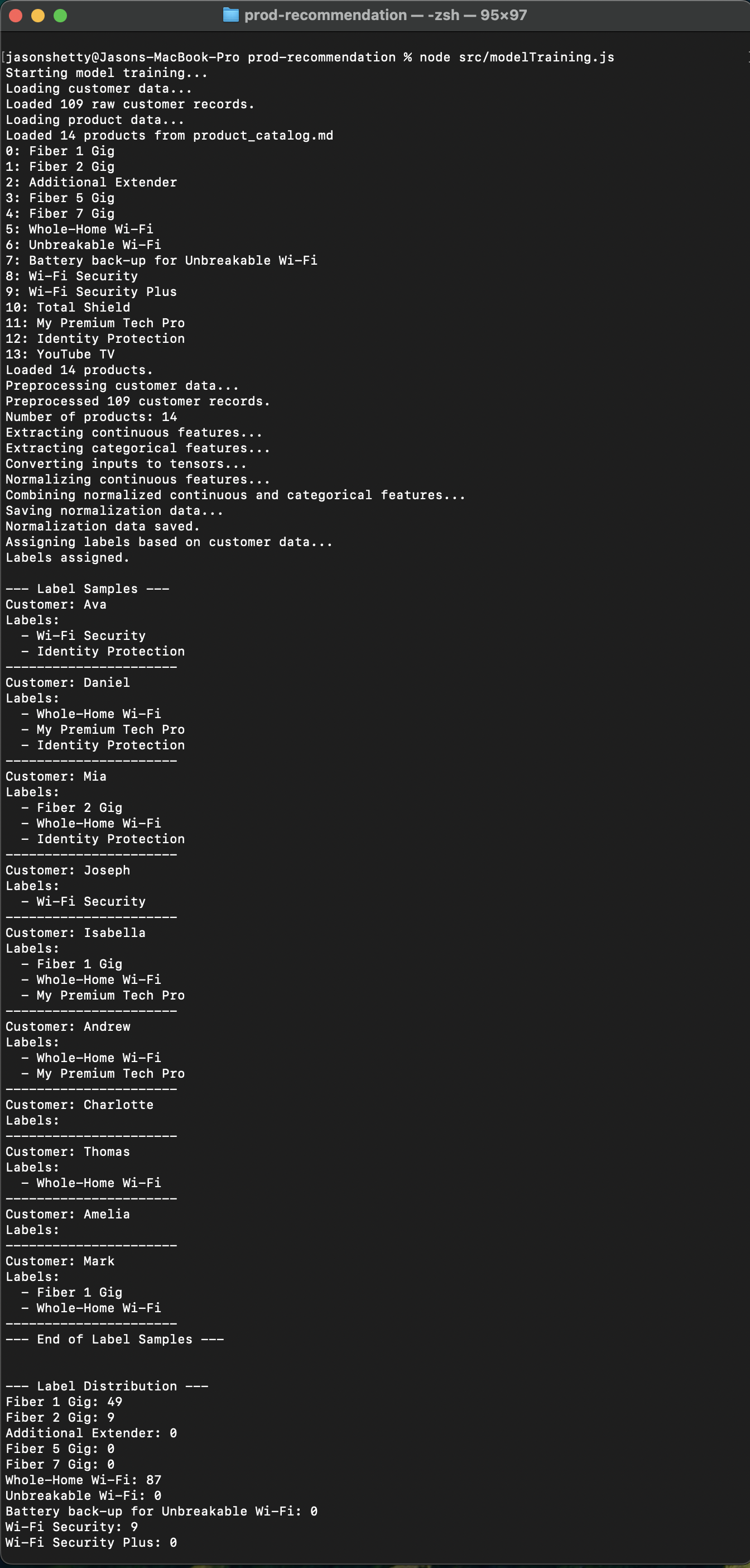
snippet of tensor flow to train model (1)
-
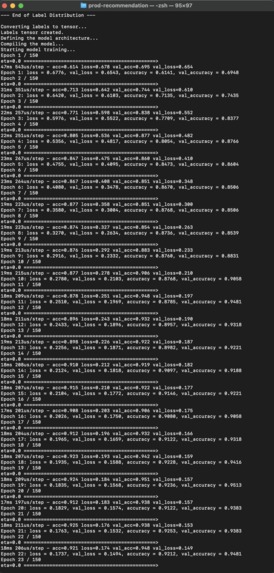
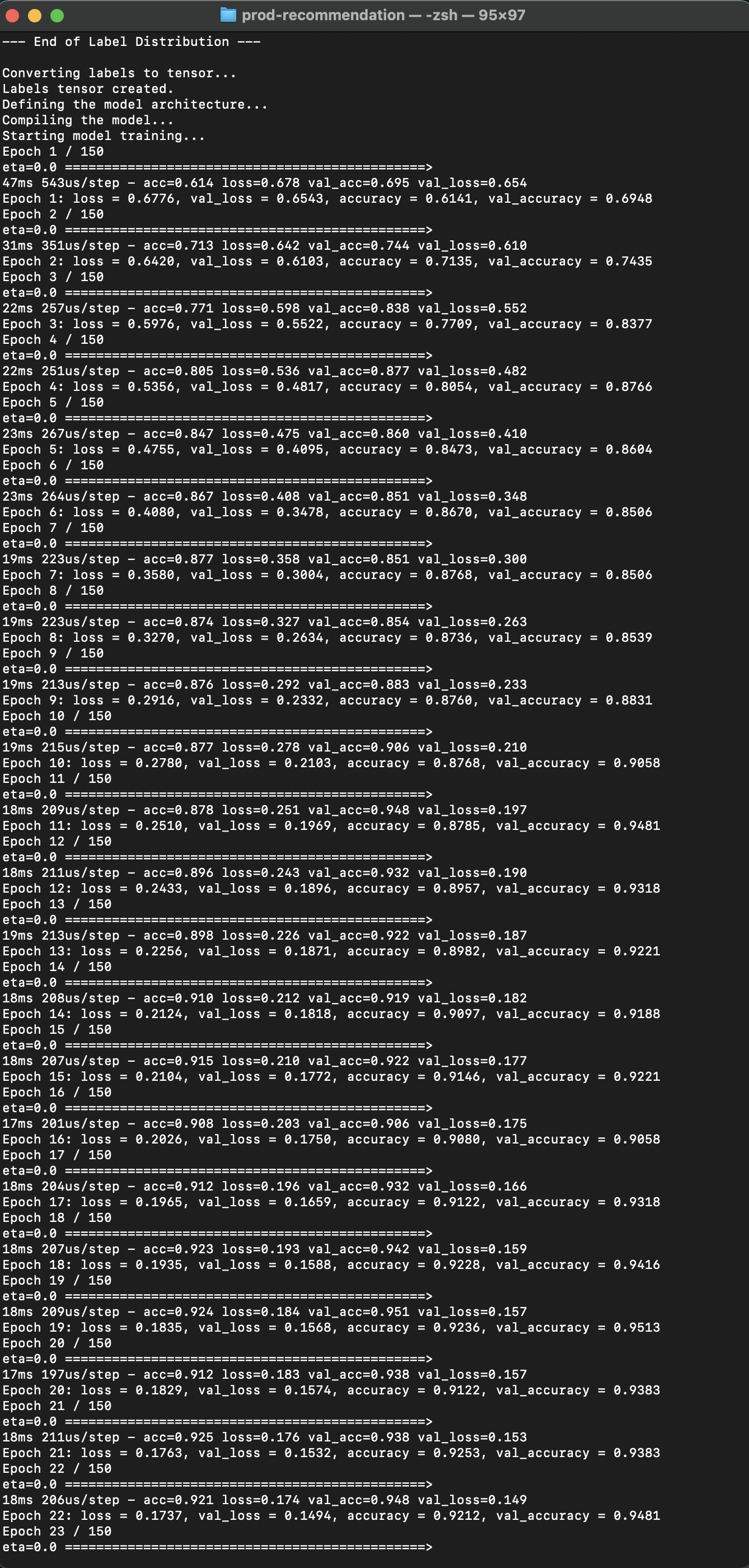
snippet of tensor flow to train model (2)
prodio: Personalized Product Insights, powered by Frontier
Inspiration
The idea for Prodio was born from a desire to simplify the customer experience. We envisioned a tool that would provide customers with personalized product recommendations based on their unique needs, much like a trusted advisor. Frontier’s focus on delivering seamless, customer-centric solutions inspired us to align our project with their brand’s mission and values.
In a world of overwhelming options, we wanted to make the decision-making process faster and more intuitive. Our goal was to create a platform that wasn’t just functional but also visually appealing and accessible to all users.
What We Learned
Throughout the development of Prodio, we expanded our knowledge in several key areas:
- Front-End Design: We gained hands-on experience with creating a visually cohesive and user-friendly interface. Implementing Frontier’s brand colors and integrating responsiveness taught us how to design for impact.
- Back-End Integration: We explored the intricacies of data handling, recommendation algorithms, and APIs to ensure the platform delivered accurate, real-time results.
- Personalization Algorithms: By applying machine learning principles, we delved into how customer attributes could be mapped to the most relevant products.
- Git and Collaboration Tools: Managing version control and ensuring smooth collaboration with Git was invaluable, especially when faced with repository conflicts.
How We Built It
Prodio was built using a modern tech stack:
- Front-End: The UI was crafted with HTML, CSS, and JavaScript. We used a Frontier-inspired design theme to reflect the company’s branding.
- Back-End: The recommendation logic was implemented using Node.js and a trained TensorFlow AI model, leveraging customer attributes to rank products.
- Database and APIs: Data about customers and products were fed from mock datasets, and the recommendation algorithm dynamically ranked the most relevant products.
- Git for Version Control: The project was managed in a GitHub repository to ensure smooth versioning and collaboration.
Challenges We Faced
Building Prodio came with its share of challenges. Here are some of the key hurdles we encountered:
1. AI Model Training
Training the TensorFlow model to provide meaningful recommendations was a technically intensive process. We had to experiment with hyperparameters like learning rate and epochs, and iteratively refine the model to achieve a balance between speed and accuracy.
2. Large File Sizes
One of the most significant hurdles was dealing with large files in the repository, particularly in the node_modules folder and TensorFlow dependencies. We implemented Git LFS to properly track large files and ensure smooth operations, but it required considerable troubleshooting to integrate.
3. Recommendation Diversity
Early in development, the recommendation system tended to prioritize the same products for all customers. Refining the algorithm to ensure diverse and personalized outputs involved creating robust data preprocessing steps and enhancing the model’s input features.
4. Feature Engineering
Defining and preprocessing customer attributes for the AI model was challenging. Ensuring that features like bandwidth usage, network speed, and product preferences were effectively encoded and normalized took significant effort.
5. UI Alignment
Achieving a visually appealing interface that adhered to Frontier’s brand theme while maintaining usability and accessibility required iterative design improvements. Balancing aesthetics with functionality was a constant challenge.
6. Repository Conflicts
Frequent changes to the codebase and handling large files led to repository conflicts during Git operations. At one point, we had to reinitialize the repository to resolve issues with large files and push limitations.
7. Front-End Behavior
Ensuring a smooth and responsive front-end experience required careful handling of asynchronous requests. Adding features like a loading spinner and error handling improved the experience but took multiple attempts to perfect.
8. Time Constraints
Balancing feature development, testing, debugging, and model training within a limited timeframe was a significant challenge. Prioritizing tasks and focusing on critical features was essential to completing the project on time.
Conclusion
Prodio represents our commitment to creating technology that puts the user first. It’s more than a product recommendation tool—it’s a platform designed to enhance customer experience and bring clarity to decision-making.
The journey of building Prodio was both rewarding and challenging. It reinforced our skills, taught us how to overcome obstacles, and solidified our passion for creating impactful, user-centered technology. We are proud of what we’ve accomplished and excited about the potential Prodio has to offer.
Built With
- css
- html
- javascript
- node.js
- tensorflow

Log in or sign up for Devpost to join the conversation.