Overview
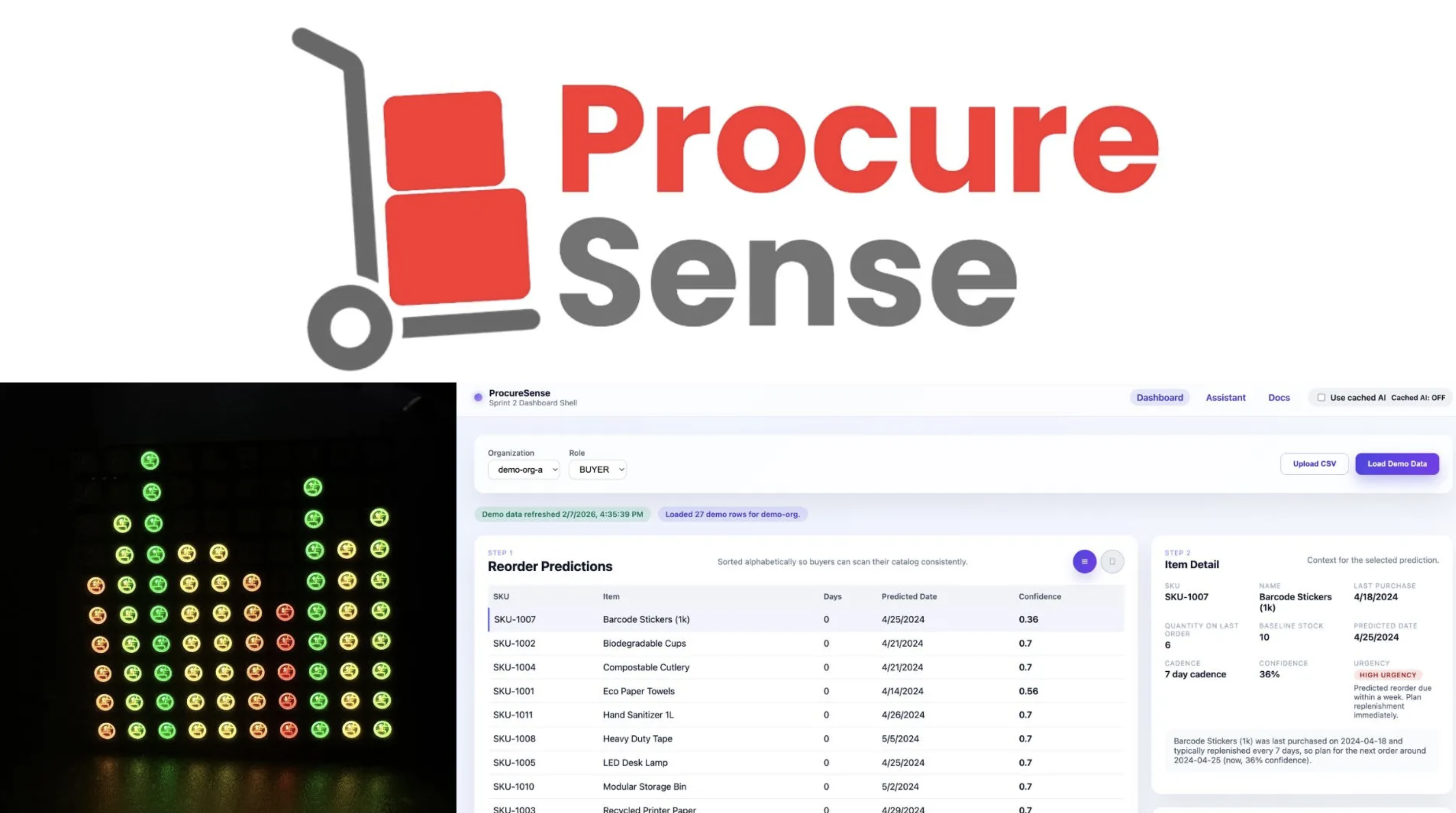
ProcureSense helps procurement teams move from reactive purchasing to proactive decision-making by turning purchase history into clear next actions. It predicts what items are likely due for reorder, surfaces “often bought together” bundles, and (optionally) provides an AI-guided assistant that outputs a structured shopping list—all while keeping the core logic deterministic and demo-reliable.
Problem Statement
Procurement teams often struggle with fragmented data and manual workflows, which leads to:
- Stockouts and missed reorder windows: reorder timing is guessed instead of derived from real buying cadence.
- Missed companion supplies: buyers reorder the main item but forget the items commonly purchased with it.
- Dashboard fatigue: even when insights exist, they’re hard to monitor without a simple, ranked view and clear explanations.
- Unreliable demos/tools: CSV formatting issues or AI latency can derail the experience.
ProcureSense focuses on a “golden path” MVP: load purchase data → see reorder predictions → click an item → see bundle recommendations → optionally generate a kit list.
Inspiration
We kept seeing buyers and warehouse managers buried in spreadsheets and purchase logs, making high-impact decisions under time pressure. We wanted something that’s fast to understand in a demo, but grounded in reality: use the organization’s actual purchase patterns to recommend what to reorder and what to buy together.
What it does
ProcureSense provides four main capabilities:
1) Purchase Data Ingestion (CSV or One-Click Demo Load)
- Upload purchase history via CSV, or click Load Demo Data to seed a known-good dataset.
- Stores purchases and products in PostgreSQL as the system of record.
- Shows a purchase summary so users can confirm what’s loaded.
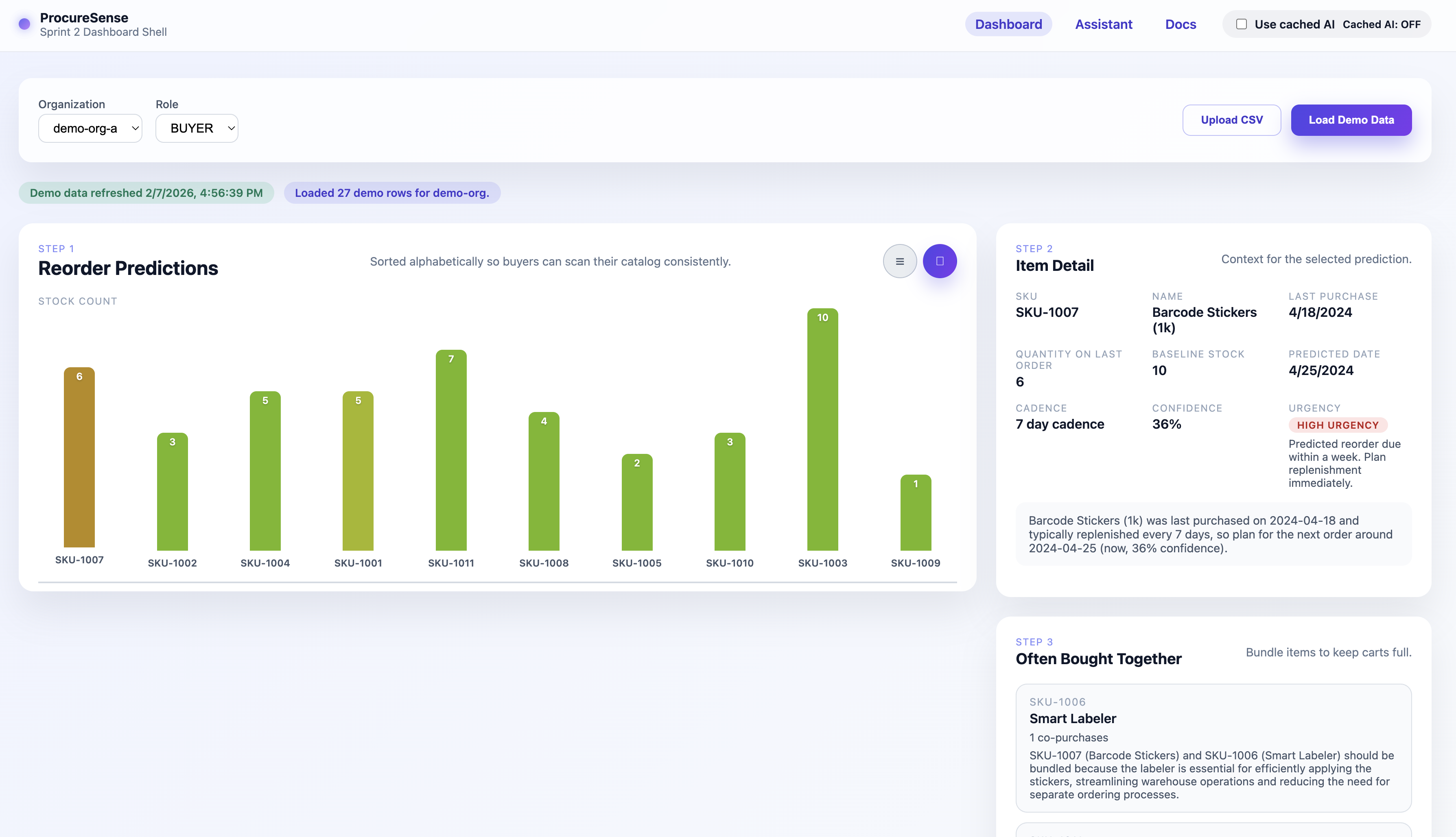
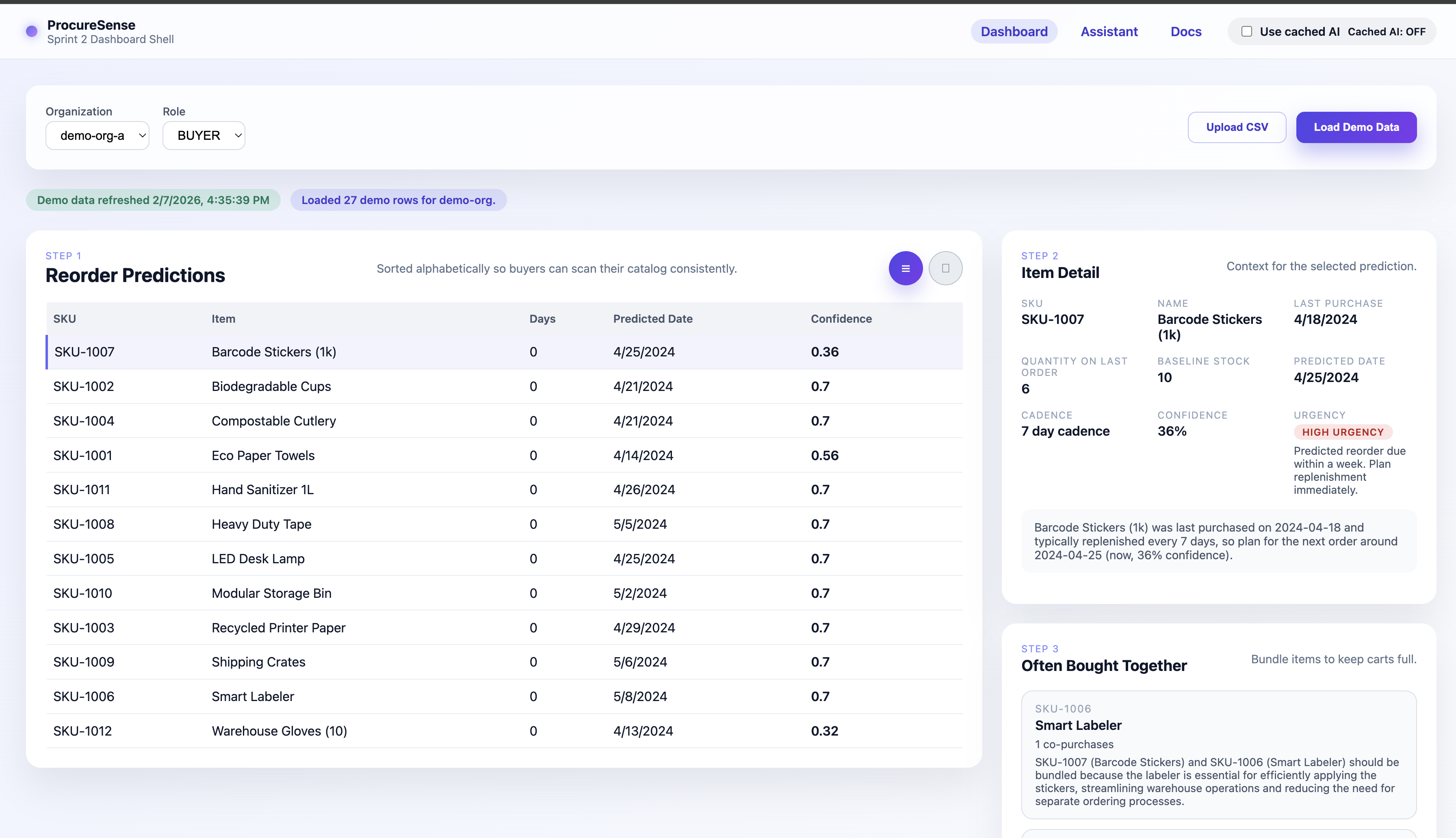
2) Deterministic Reorder Predictions (“What’s due soon?”)
For each SKU, ProcureSense:
- Groups purchases by org + SKU
- Computes intervals (days between consecutive purchases)
- Uses the median interval as the SKU’s typical cadence
- Predicts the next reorder date from lastPurchaseAt + cadence
- Calculates daysUntil and a deterministic confidence score based on how much history exists (and how stable it is)
This produces a ranked table of reorders—so buyers can immediately see what’s most urgent.
3) Deterministic Bundle Recommendations (“What should be bought together?”)
When you click a SKU, ProcureSense:
- Groups purchases by order_id (or a defined fallback grouping)
- Counts how often SKUs co-occur
- Returns the top related SKUs with their coPurchaseCount
This helps buyers avoid missing companion supplies that historically show up in the same orders.
4) Physical “Glanceable” Stock Display (ESP32 + LED Matrix)
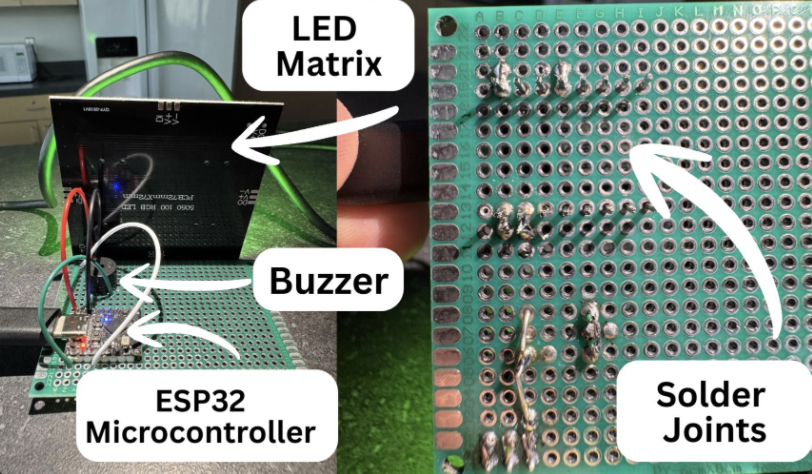
For the physical portion of the project, we used a 10×10 RGB LED matrix paired with an ESP32 microcontroller and a buzzer.
- The ESP32 periodically pings the server for a 10-integer vector (representing normalized stock levels).
- That vector is used to visualize stock status on the LED matrix.
- The device beeps whenever the matrix is updated, creating an ambient, glanceable signal without needing to stare at a dashboard tab.
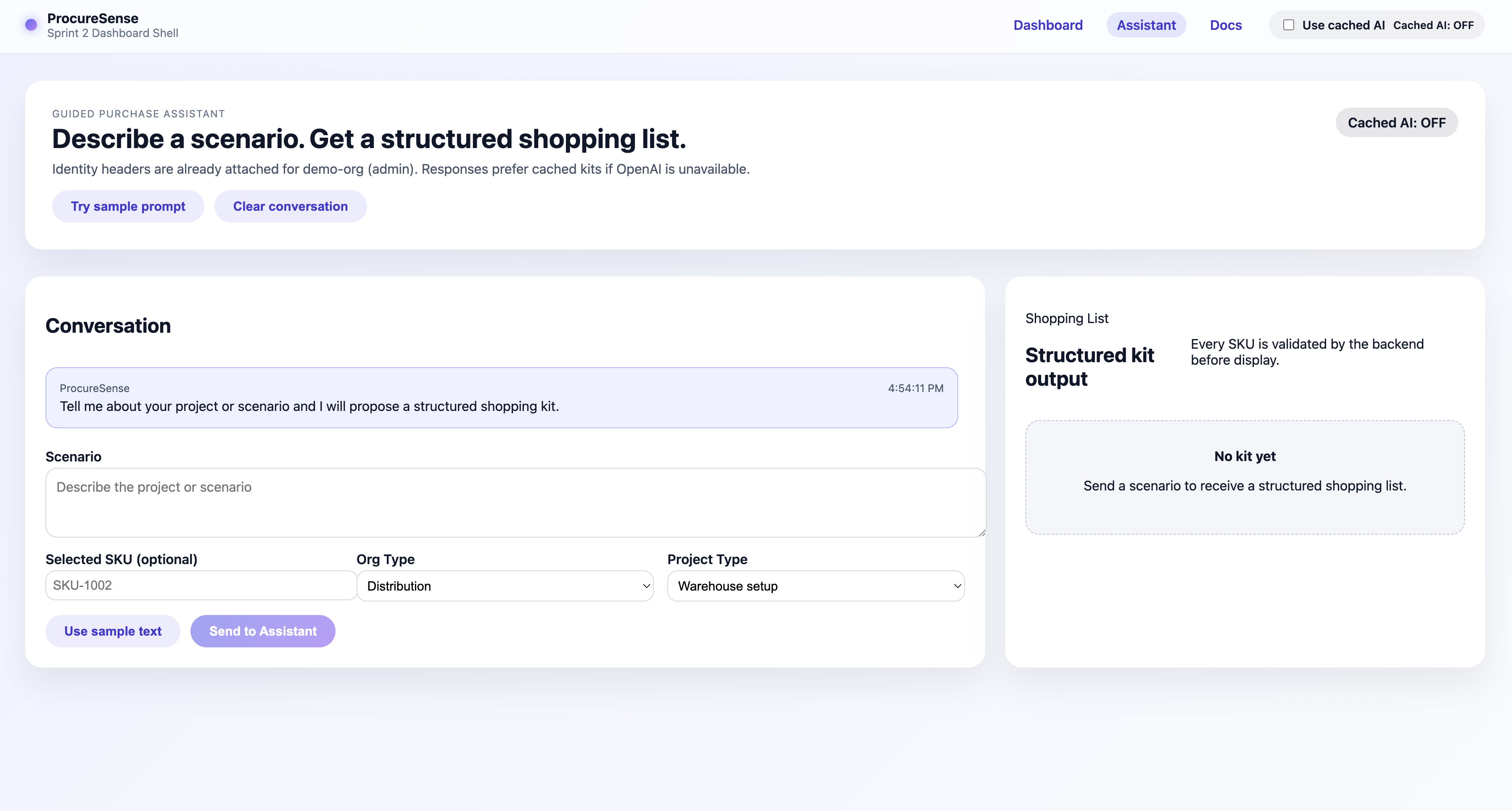
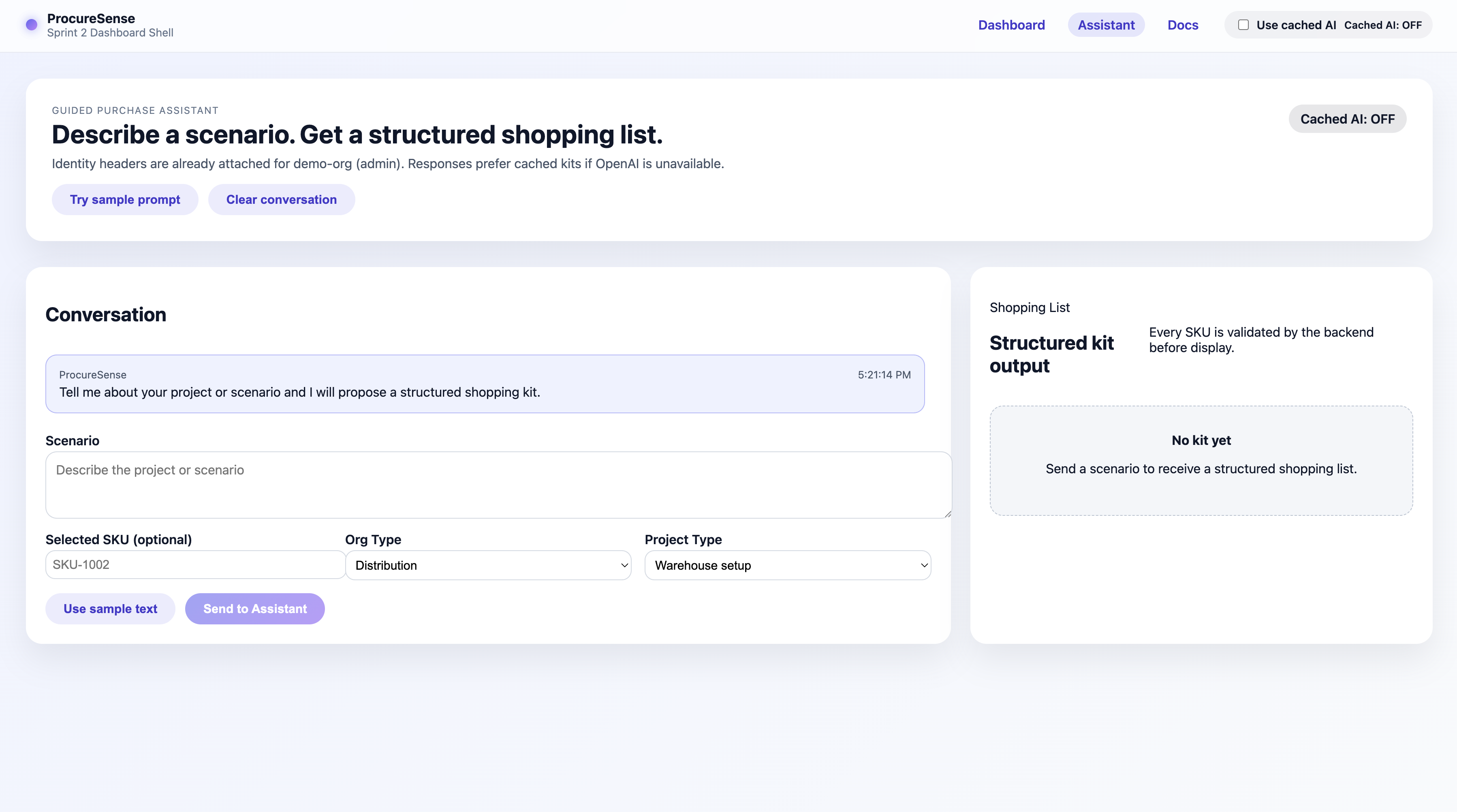
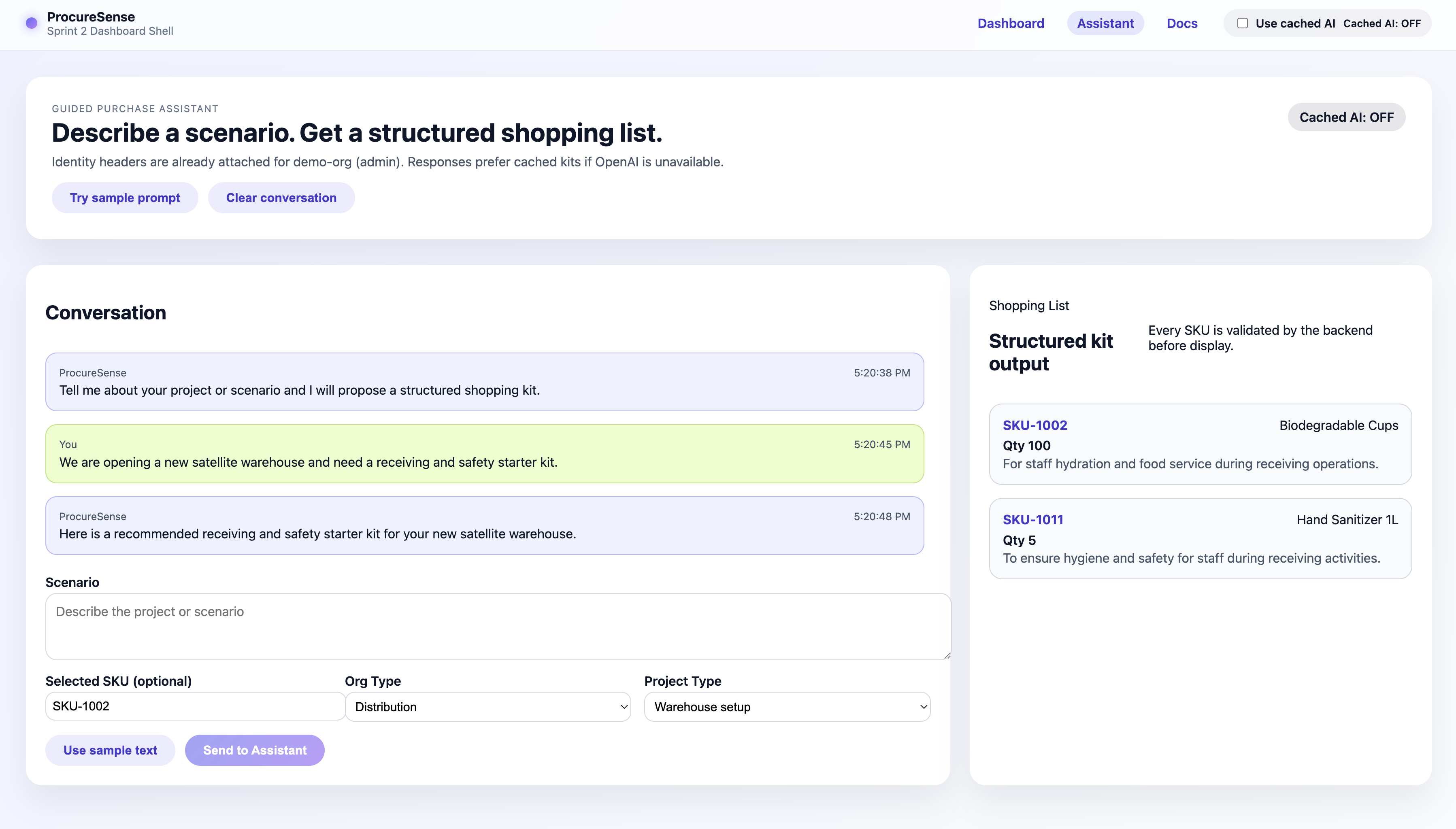
Optional: Guided Purchase Assistant (AI + Guardrails)
- A chat-style flow where users describe a scenario (e.g., “new satellite warehouse setup”).
- The assistant returns a structured shopping list (SKUs, quantities, reasons).
- Guardrails ensure it only uses SKUs from the known catalog (no invented products).
- Cached responses + deterministic fallback keep the demo reliable if the LLM is slow/unavailable.
How we built it
- Frontend: Angular (TypeScript) + Angular Material
- Dashboard with 3 regions: Reorders table → Item detail → Bundles panel
- Optional Assistant page for scenario → shopping list
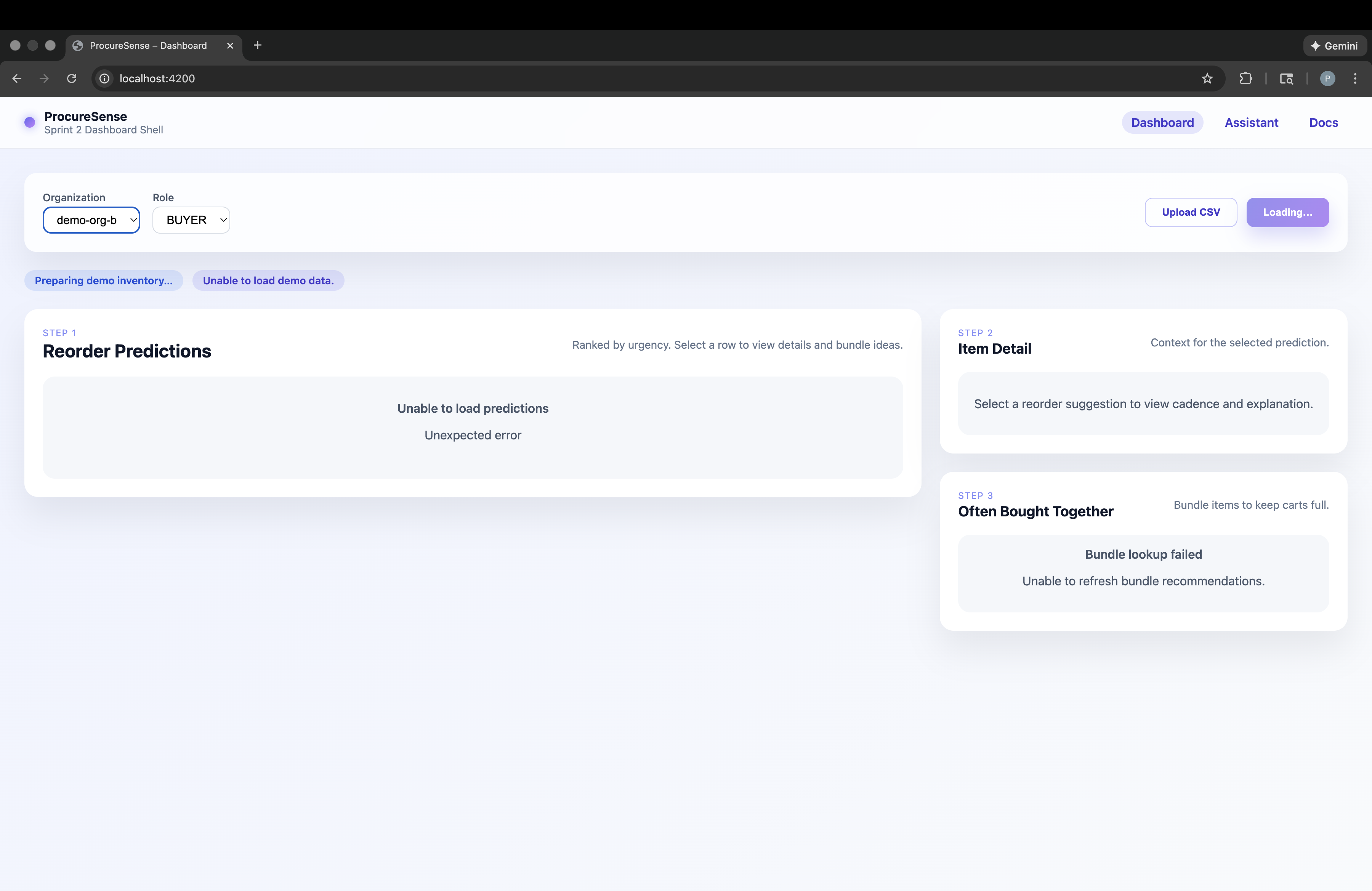
- Clear loading/error/empty states for judge clarity
- Backend: Java + Spring Boot (REST API)
- Endpoints for ingestion, summaries, reorder insights, bundle insights, assistant chat, and a hardware stock endpoint
- Deterministic services compute reorder cadence/confidence and co-purchase bundles
- Database: PostgreSQL
- Stores purchases/products
- Stores cached AI explanations/rationales for speed and resiliency
- AI Provider: OpenAI (Responses API)
- Used only for short explanations/formatting
- Never used to compute dates, confidence, or co-purchase counts
- Hardware
- ESP32 firmware polls the backend for a 10-int stock vector
- 10×10 RGB matrix renders a glanceable stock visualization
- Buzzer provides an audible update cue
- Hackathon identity approach
- “Demo-mode identity” via headers on every request:
X-Org-IdX-Role- This demonstrates multi-org/role readiness without spending hackathon time on full auth.
Challenges we ran into
- Demo reliability vs. real-world complexity: CSVs can be messy, so we prioritized a one-click demo dataset and clear validation errors.
- Keeping AI from hallucinating: we had to constrain outputs to the product catalog, validate structured responses, and provide deterministic fallbacks.
- Defining confidence and ranking: we needed reorder predictions to “feel right” and remain stable, using simple heuristics rather than opaque ML.
- End-to-end integration: aligning API contracts and UI states early prevented mismatches during wiring.
- Physical feedback loop: representing backend stock signals as a clean, stable LED visualization required choosing a simple 10-value protocol and update behavior.
Accomplishments that we’re proud of
- A true golden path: Load data → Reorders → Detail → Bundles (with optional assistant) that is easy for judges to follow.
- Deterministic, explainable insights derived from real purchase history (not AI guesswork).
- Caching + fallback modes so the demo remains usable even under LLM latency/outage.
- A “glanceable” physical companion display that brings key status out of the browser and into the workspace.
- A clean architecture that’s “hackathon-fast” but still structured: consistent headers, clear endpoints, PostgreSQL as source of truth.
What we learned
- Reliability wins hackathons: the best demo is the one that works every time.
- AI is most effective as a layer for explanations and structured formatting, not as the source of truth for business-critical calculations.
- Simple, transparent heuristics (median cadence, co-purchase counts) can deliver high value when presented clearly and consistently.
- Ambient/physical cues can reduce “dashboard fatigue” by making critical status glanceable.
What’s next for ProcureSense
- Stronger modeling: incorporate lead times, seasonality, quantity trends, and simple anomaly detection—while staying explainable.
- Real authentication: add lightweight login/JWT while preserving the same org/role context pattern internally.
- Workflow exports: generate a “ready-to-order” shopping list export (CSV/PO draft) from reorders + bundles.
- Deeper catalog integration: richer product metadata (categories/tags) to improve bundle relevance and assistant responses.
- Hardware evolution: configurable alert profiles (colors/sounds), smoother update cadence, and mapping alerts to specific high-priority SKUs.
- Production hardening: background jobs for insight refresh, observability, and multi-tenant controls.
Built With
- angular.js
- docker
- java
- postgresql
- springboot
- typescript

Log in or sign up for Devpost to join the conversation.