-
-
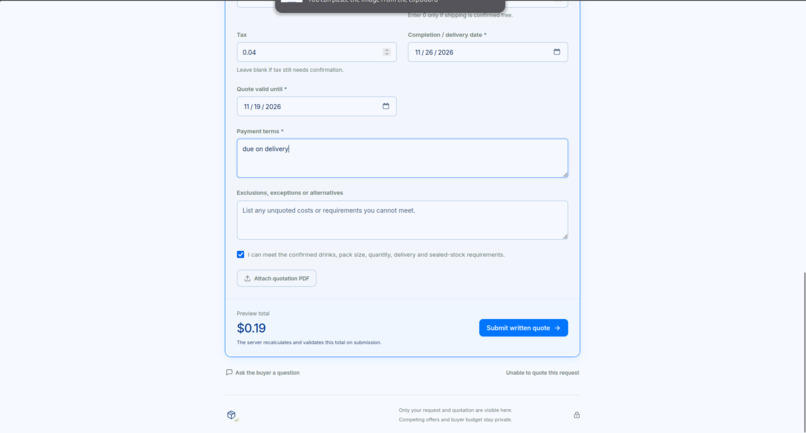
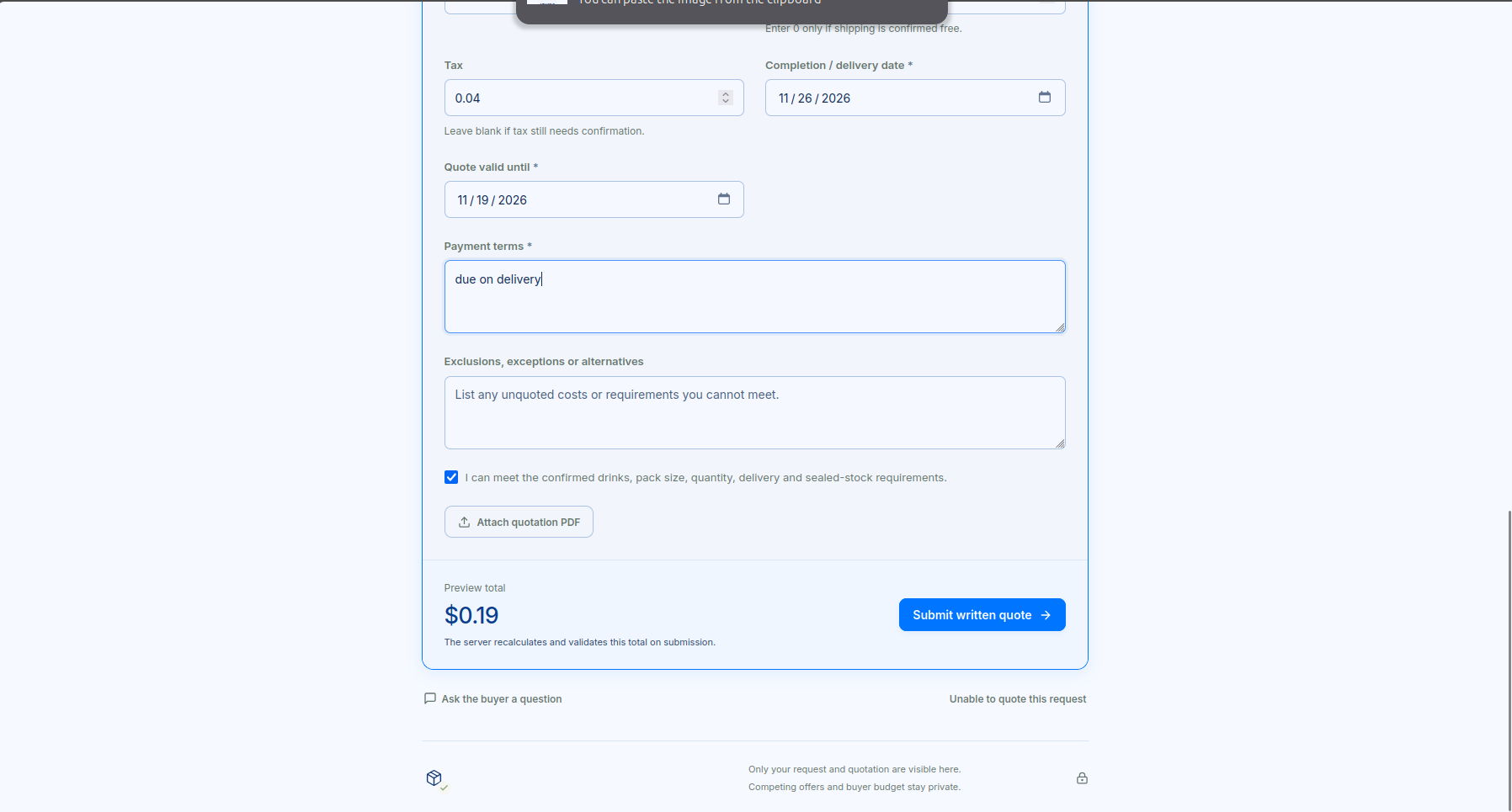
Suppliers submit written pricing, tax, delivery dates and payment terms. The server recalculates and validates the quotation total.
-
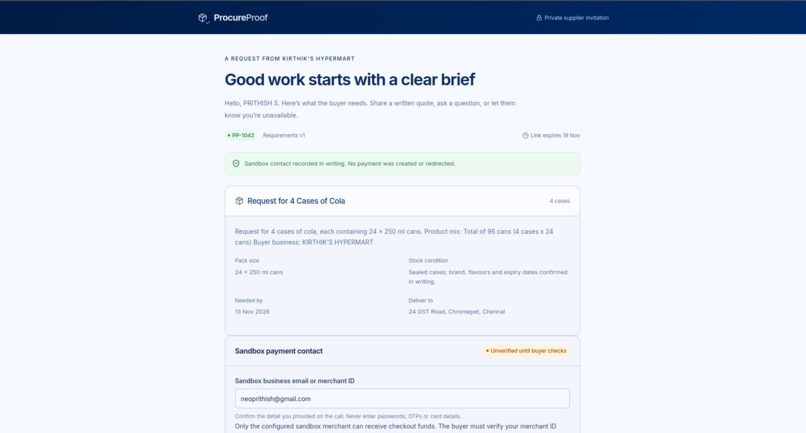
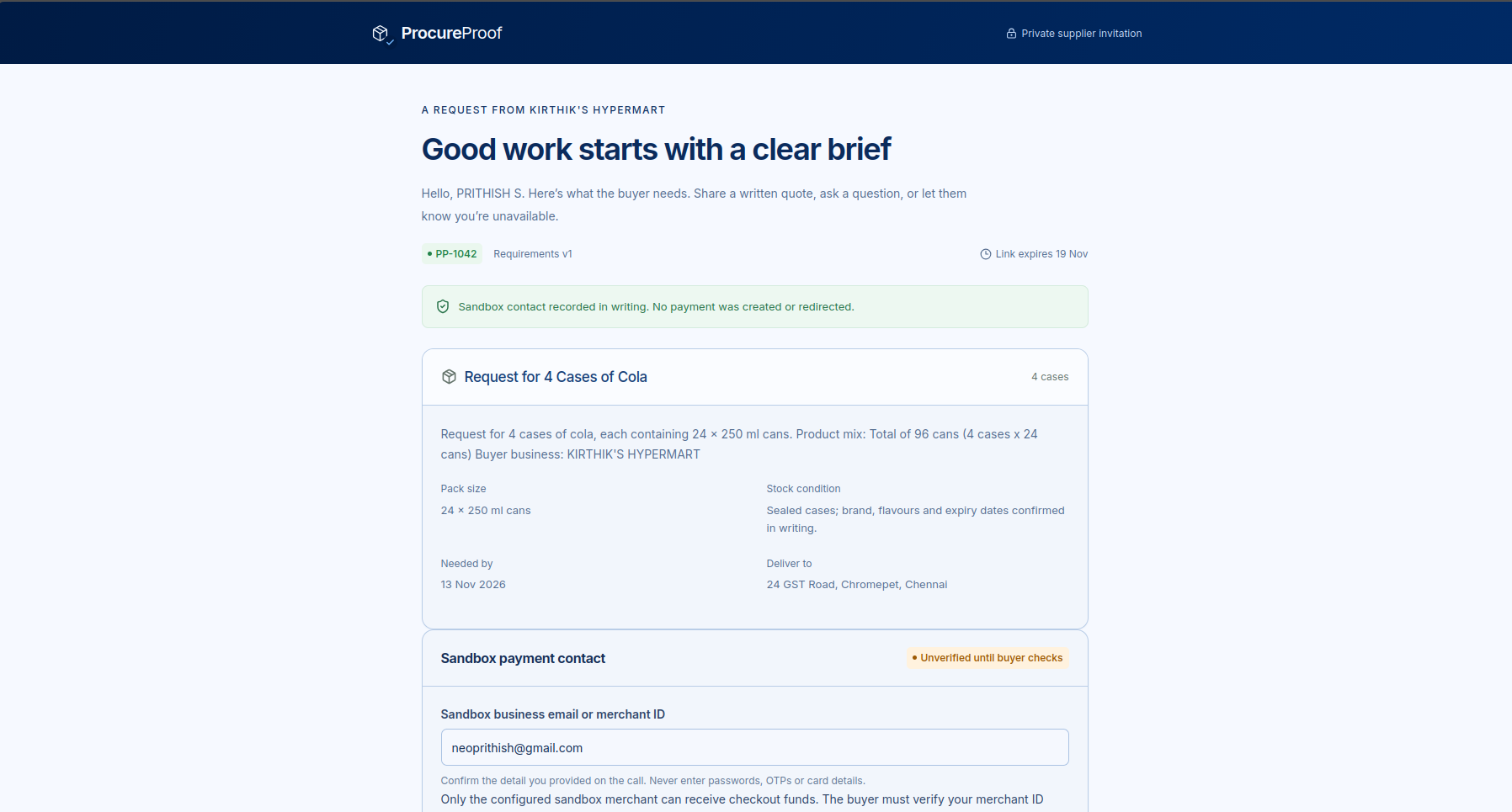
Suppliers view the confirmed purchase requirements and record sandbox payment contact details in their private portal.
-
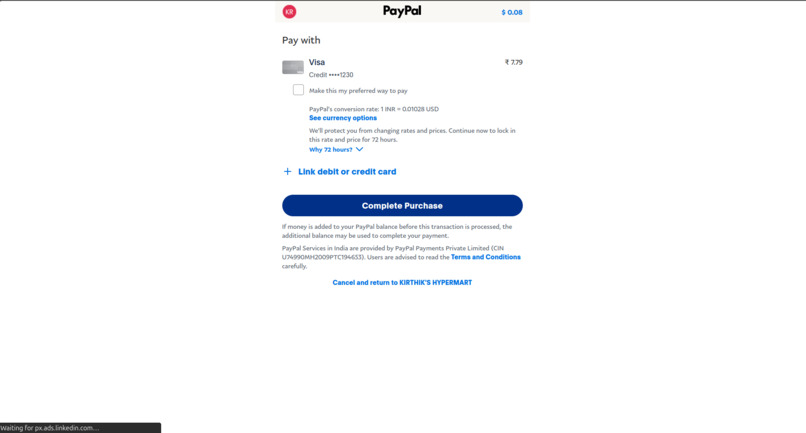
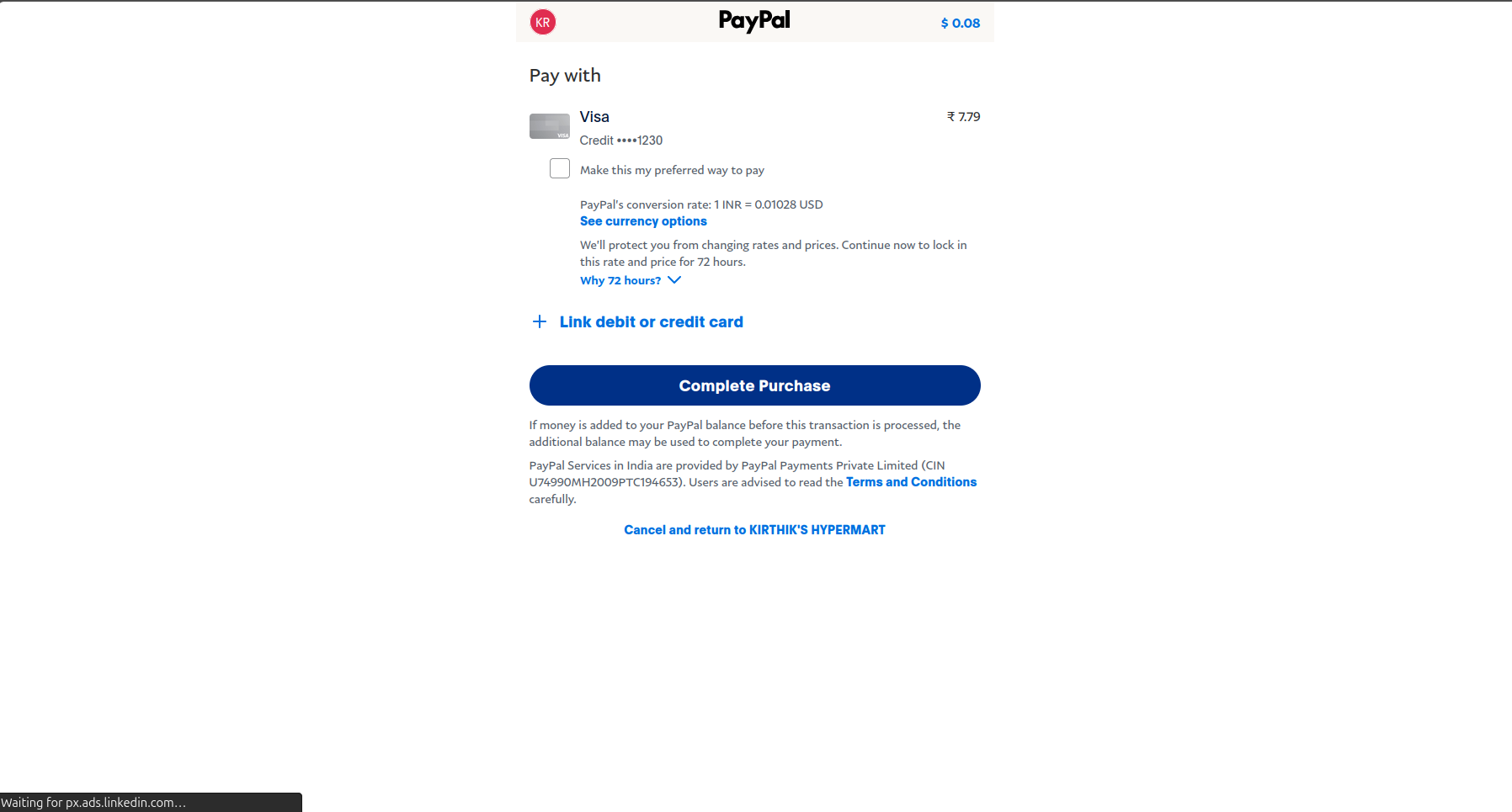
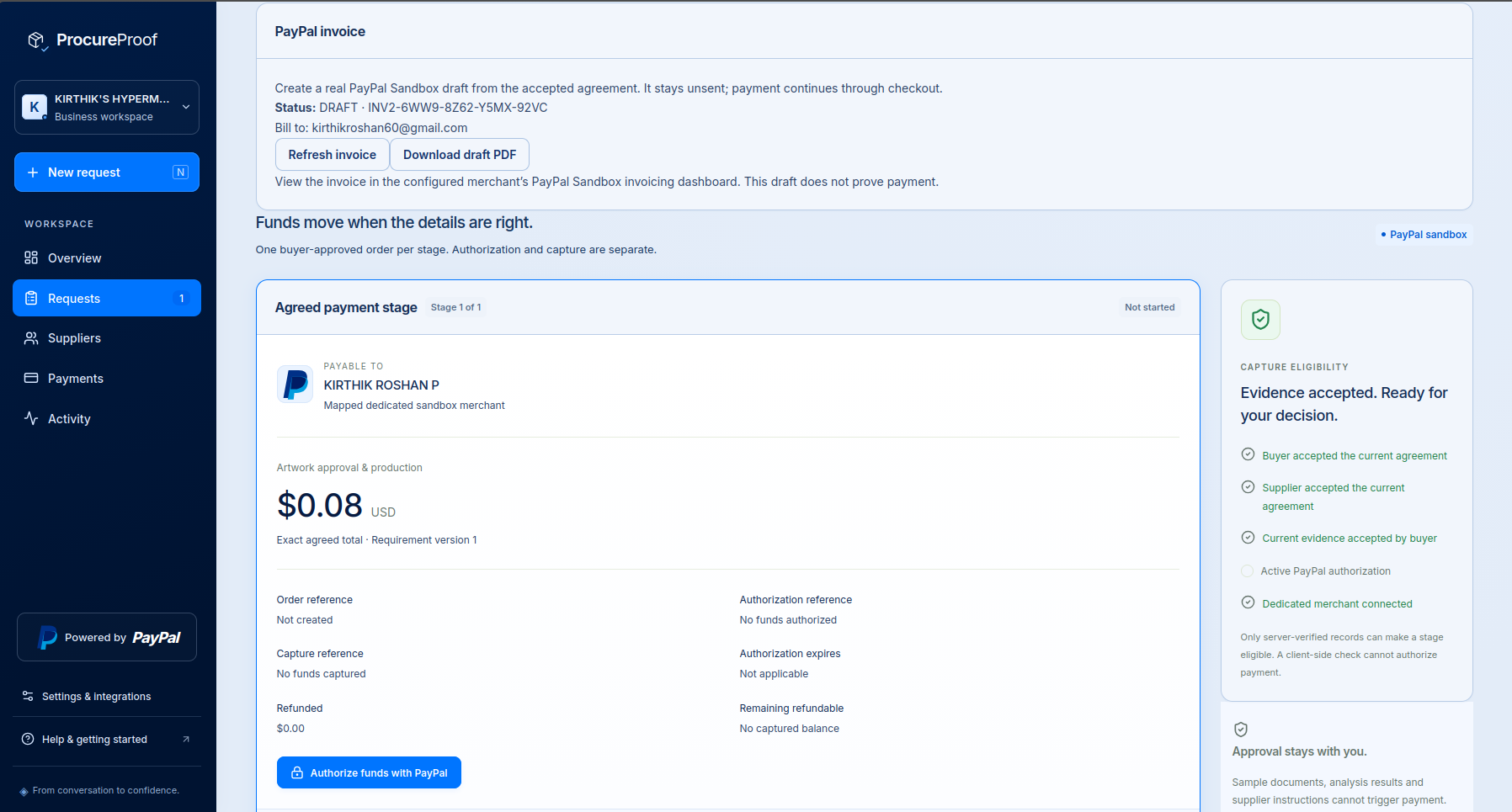
The buyer reviews the $0.08 test order in PayPal Sandbox and approves using a sandbox funding source.
-
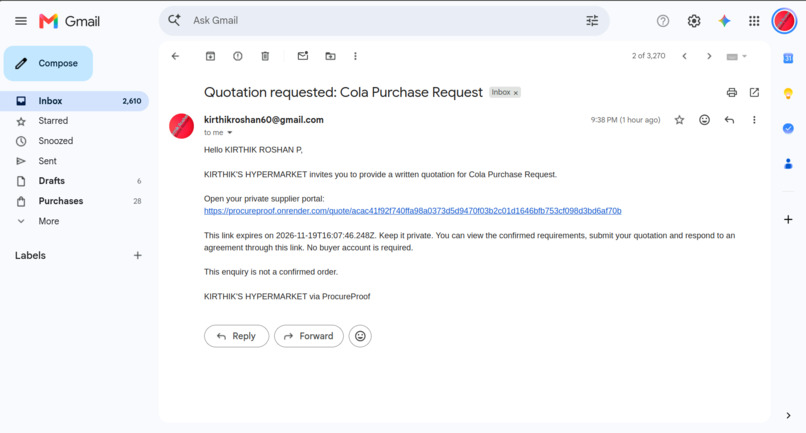
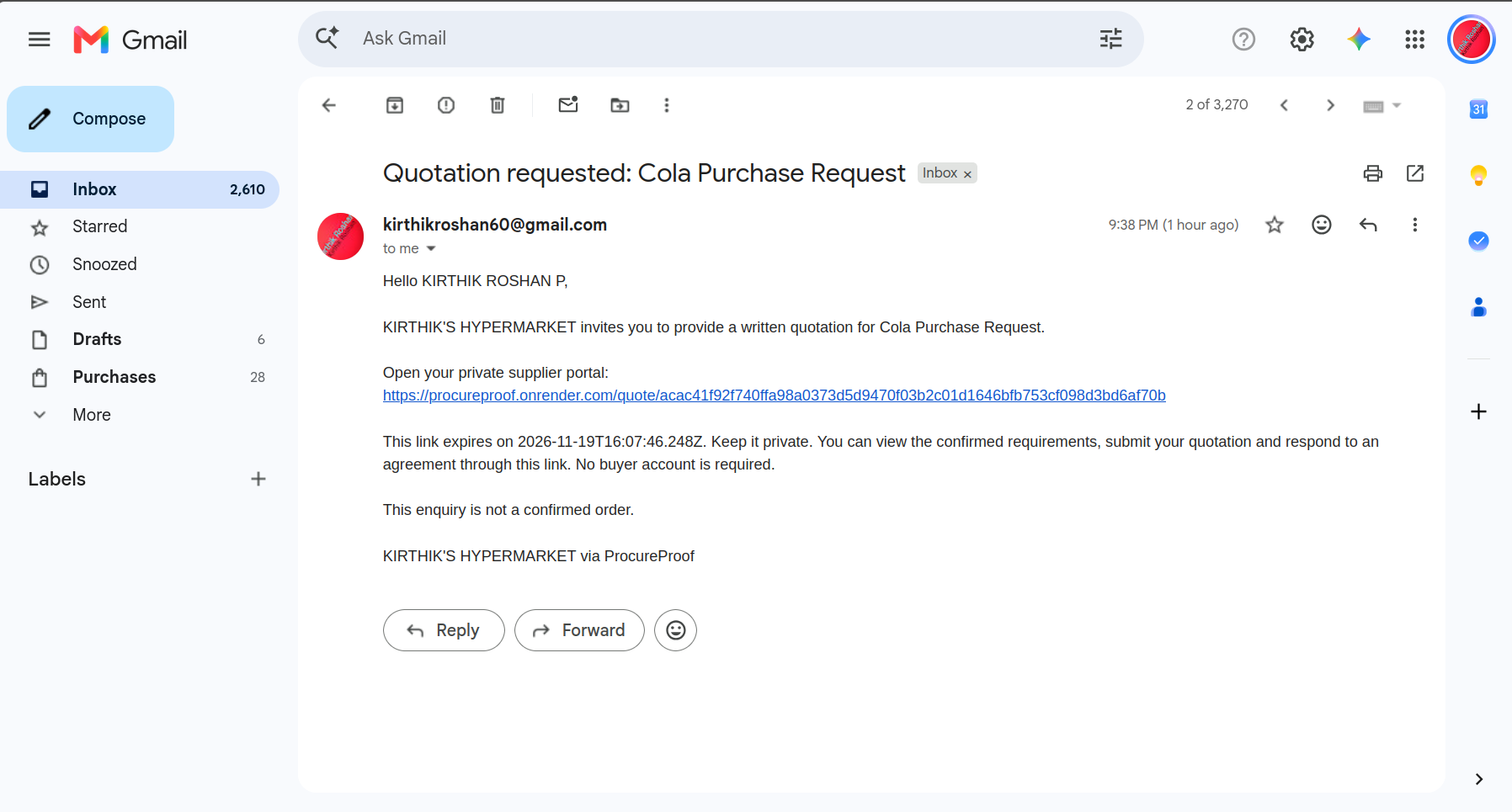
A quotation invitation arrives in Gmail with a public Render-hosted link, letting the supplier respond from their own device.
-
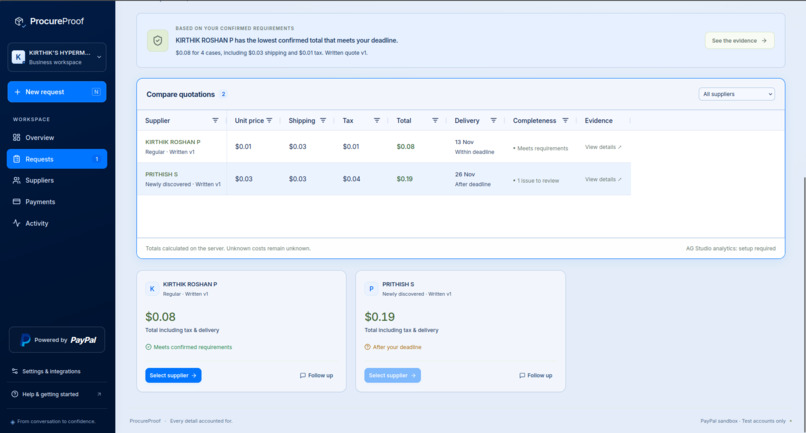
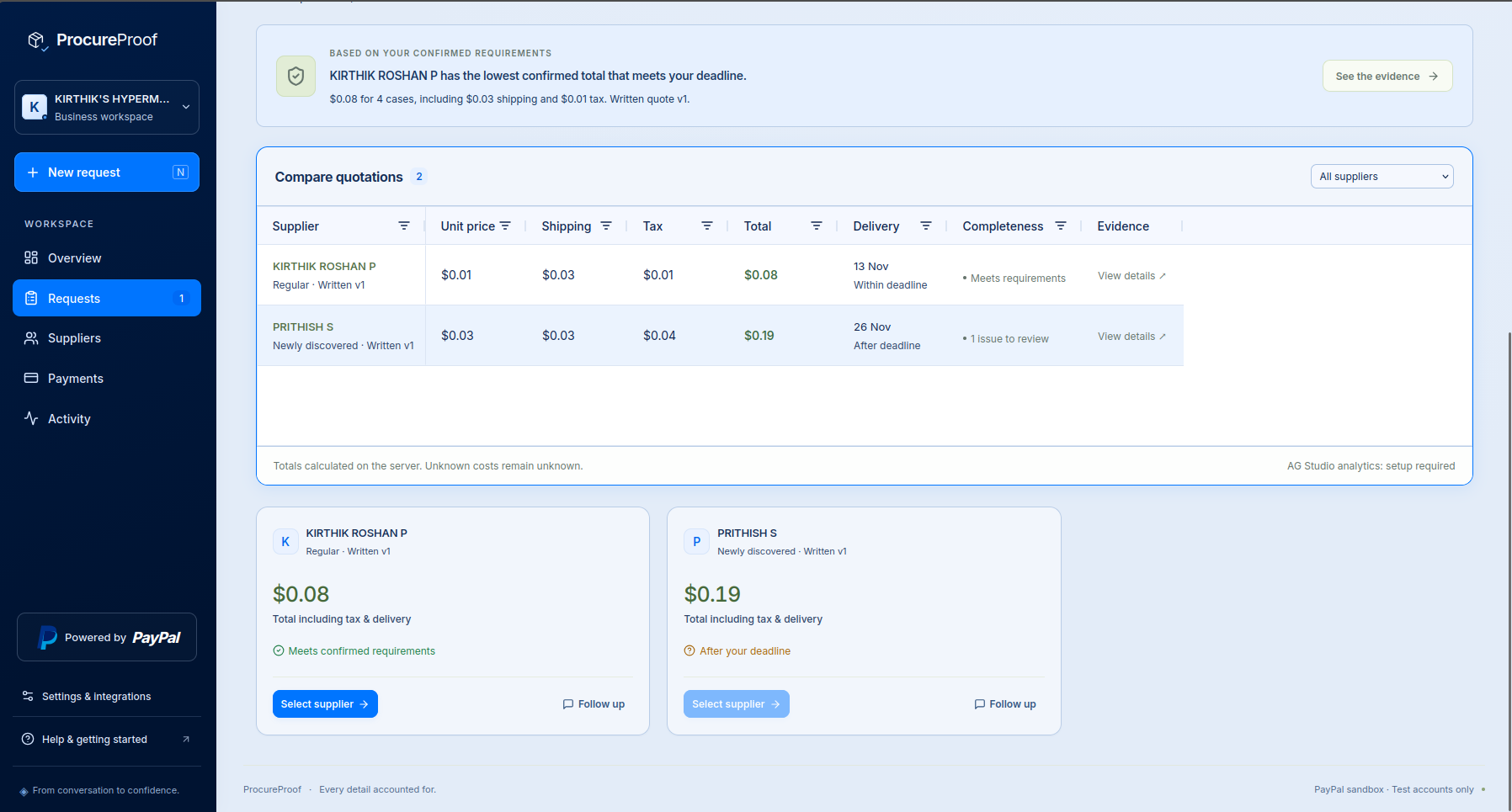
AG Grid compares written quotes by total cost, delivery and completeness, highlighting the lowest eligible offer for buyer review.
-
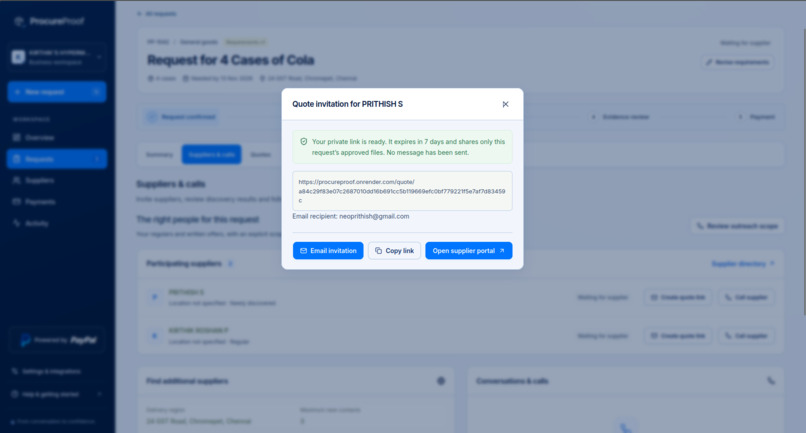
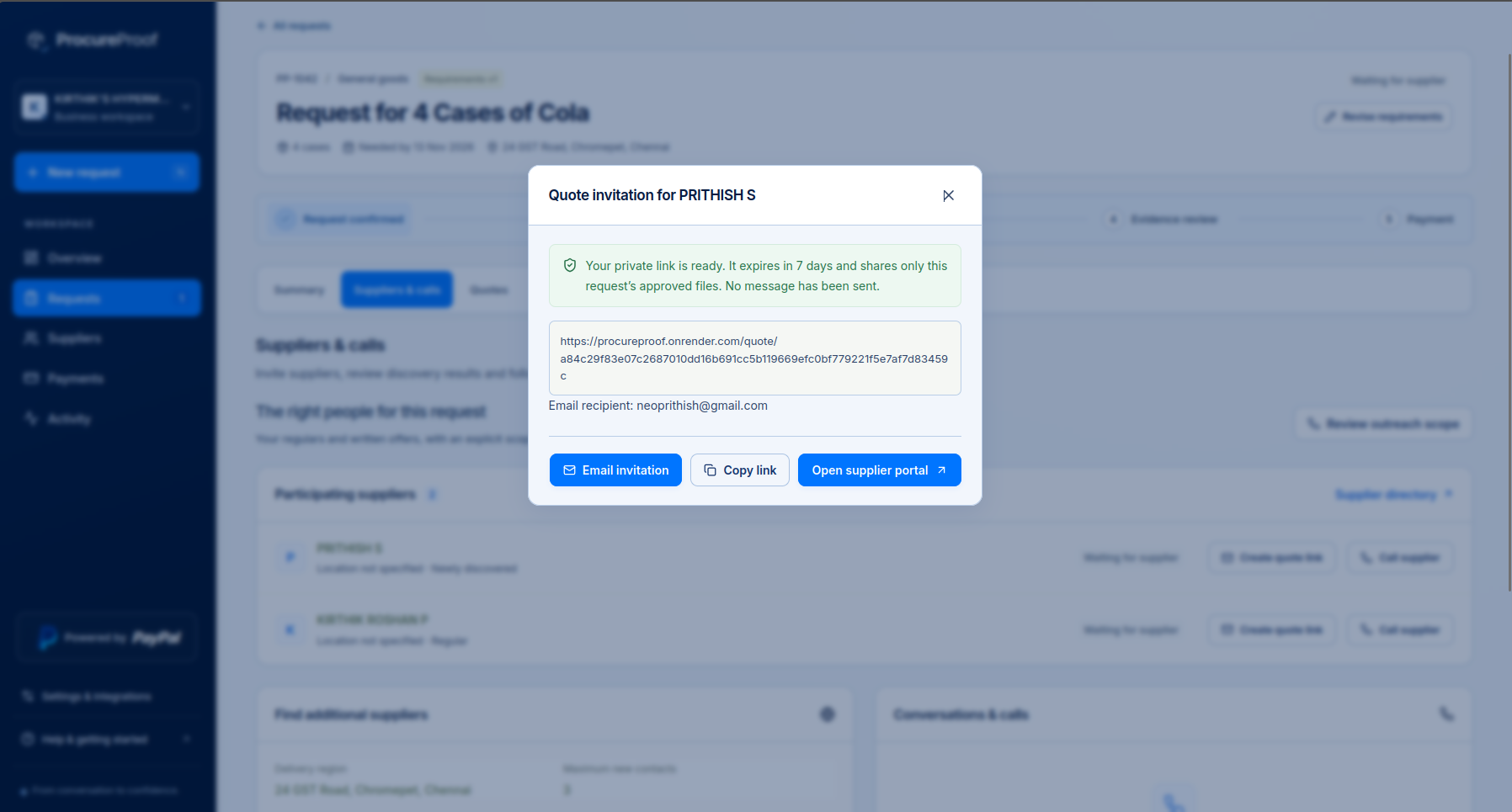
Generate an expiring supplier portal link, review the recipient and send the invitation directly through Gmail.
-
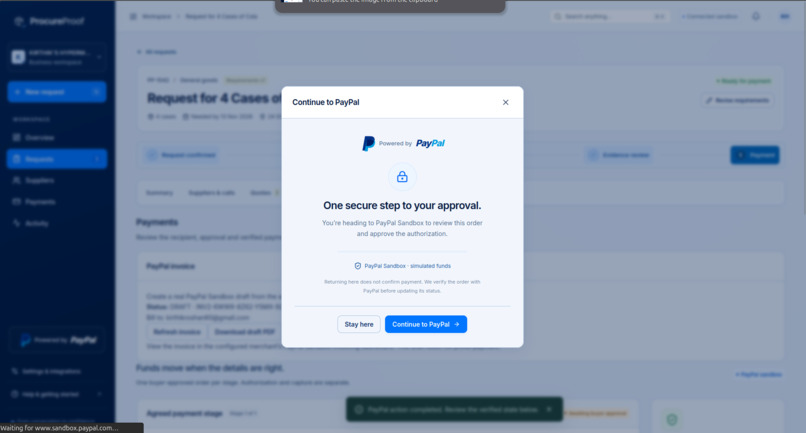
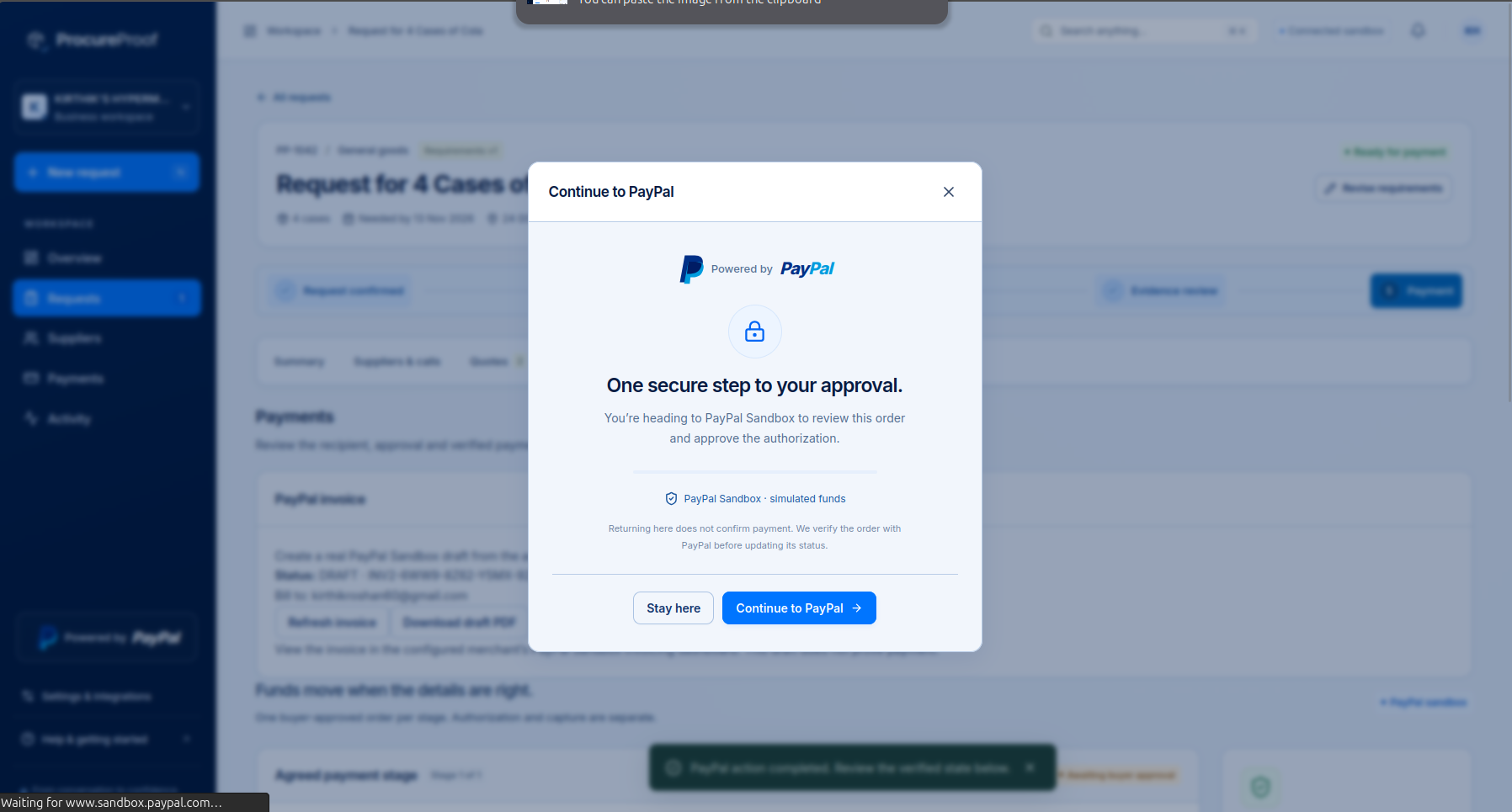
Continue to PayPal Sandbox for buyer approval. The app verifies provider state before recording authorization or payment.
-
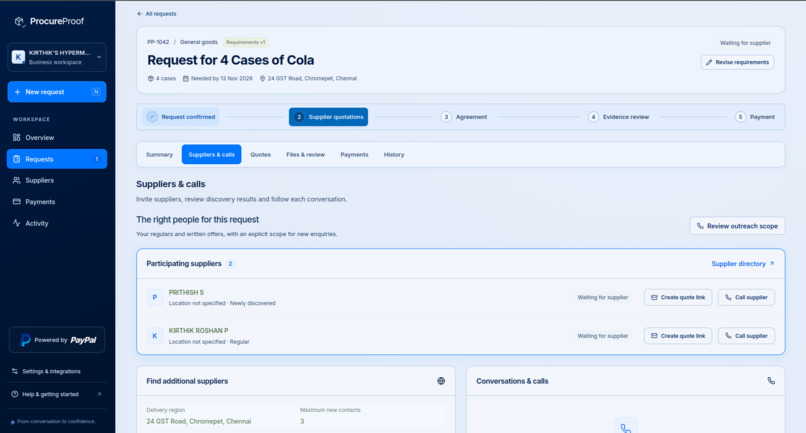
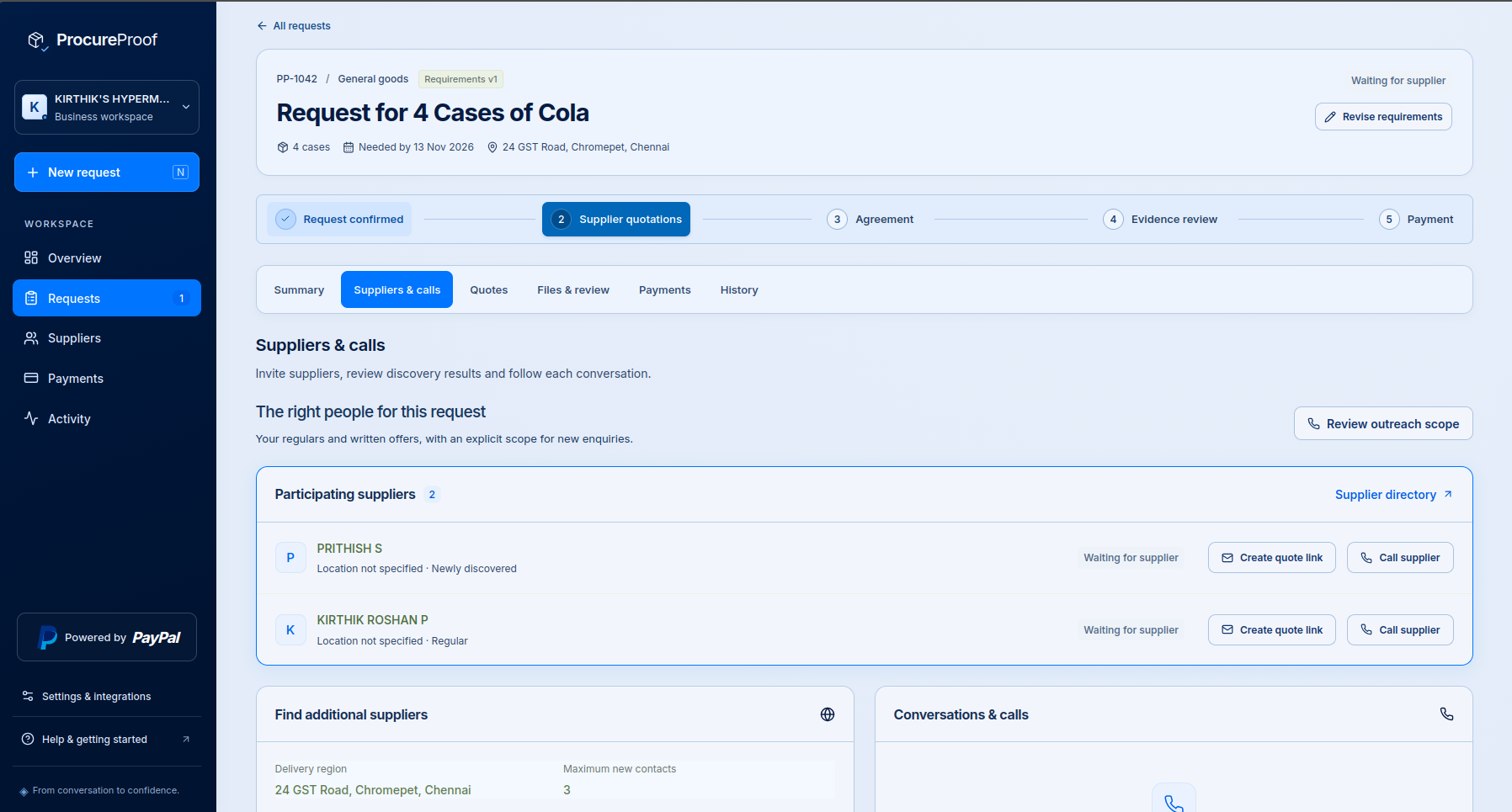
Manage participating suppliers, create private quotation links and initiate consented supplier calls from the confirmed request.
-
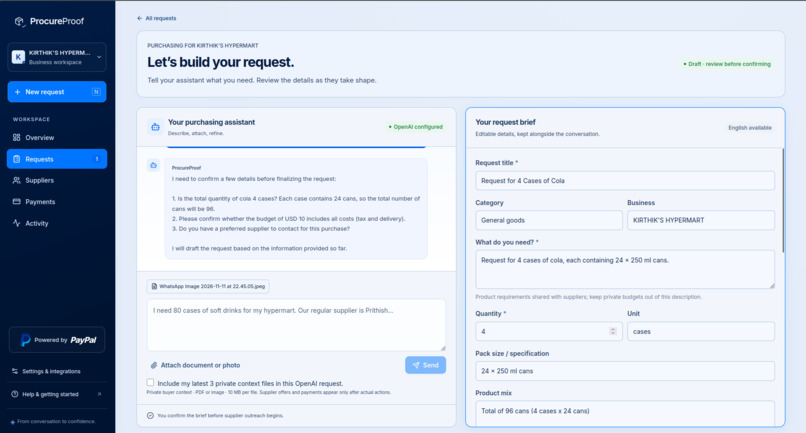
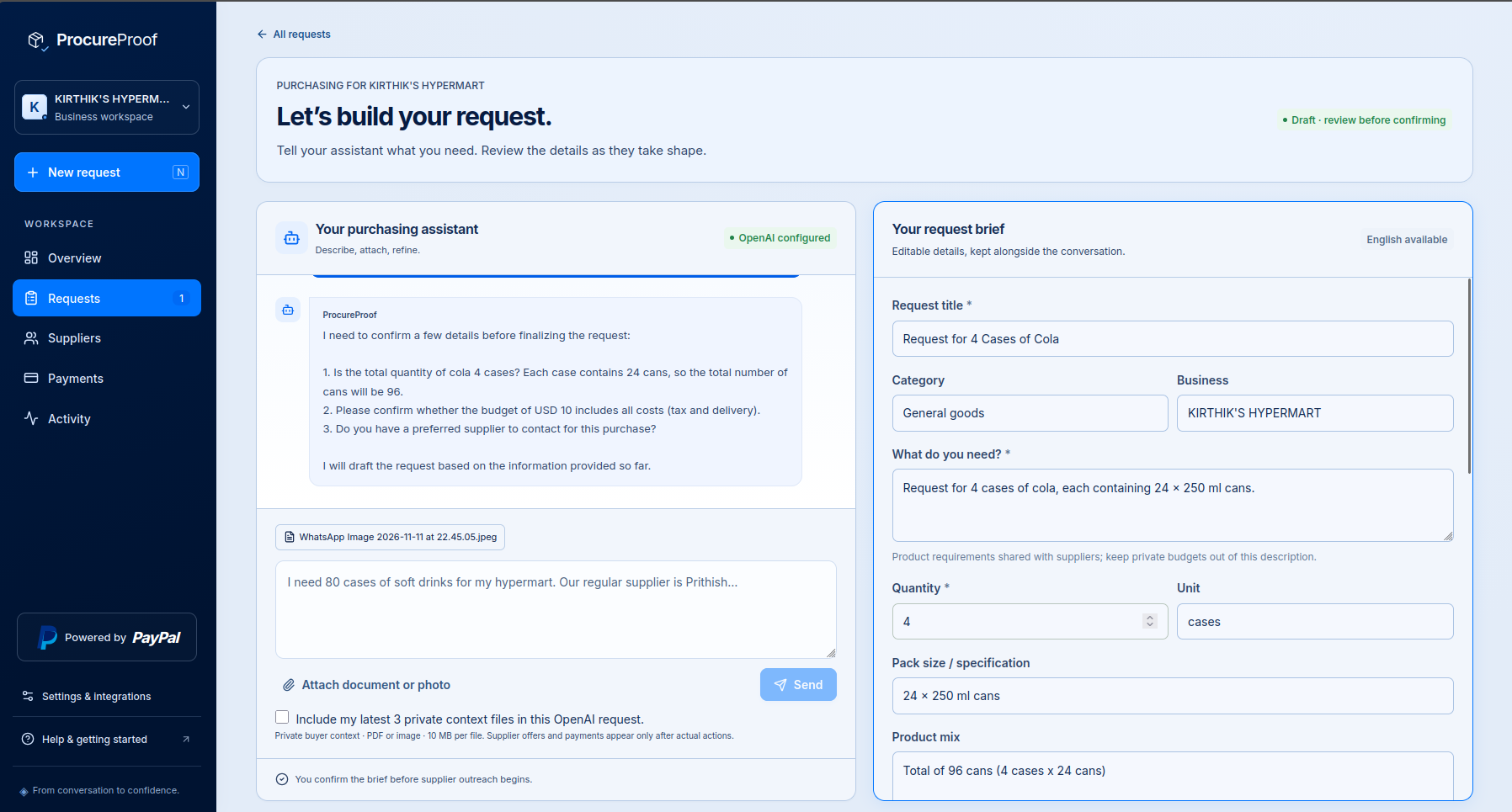
Describe your purchase and attach references. OpenAI prepares an editable brief and asks for missing details before confirmation.
-
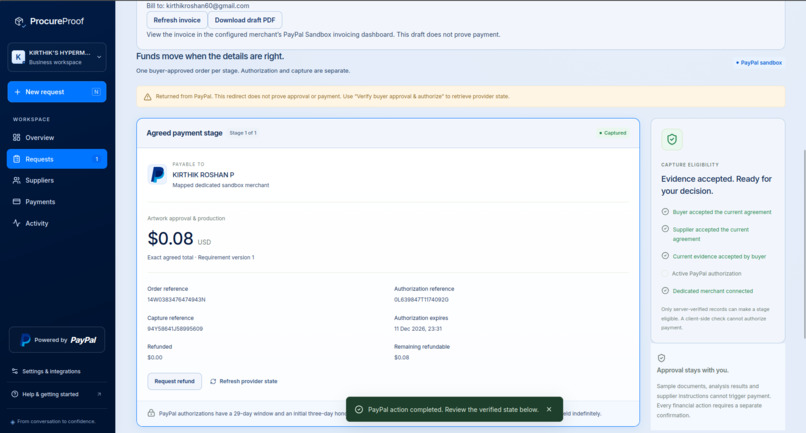
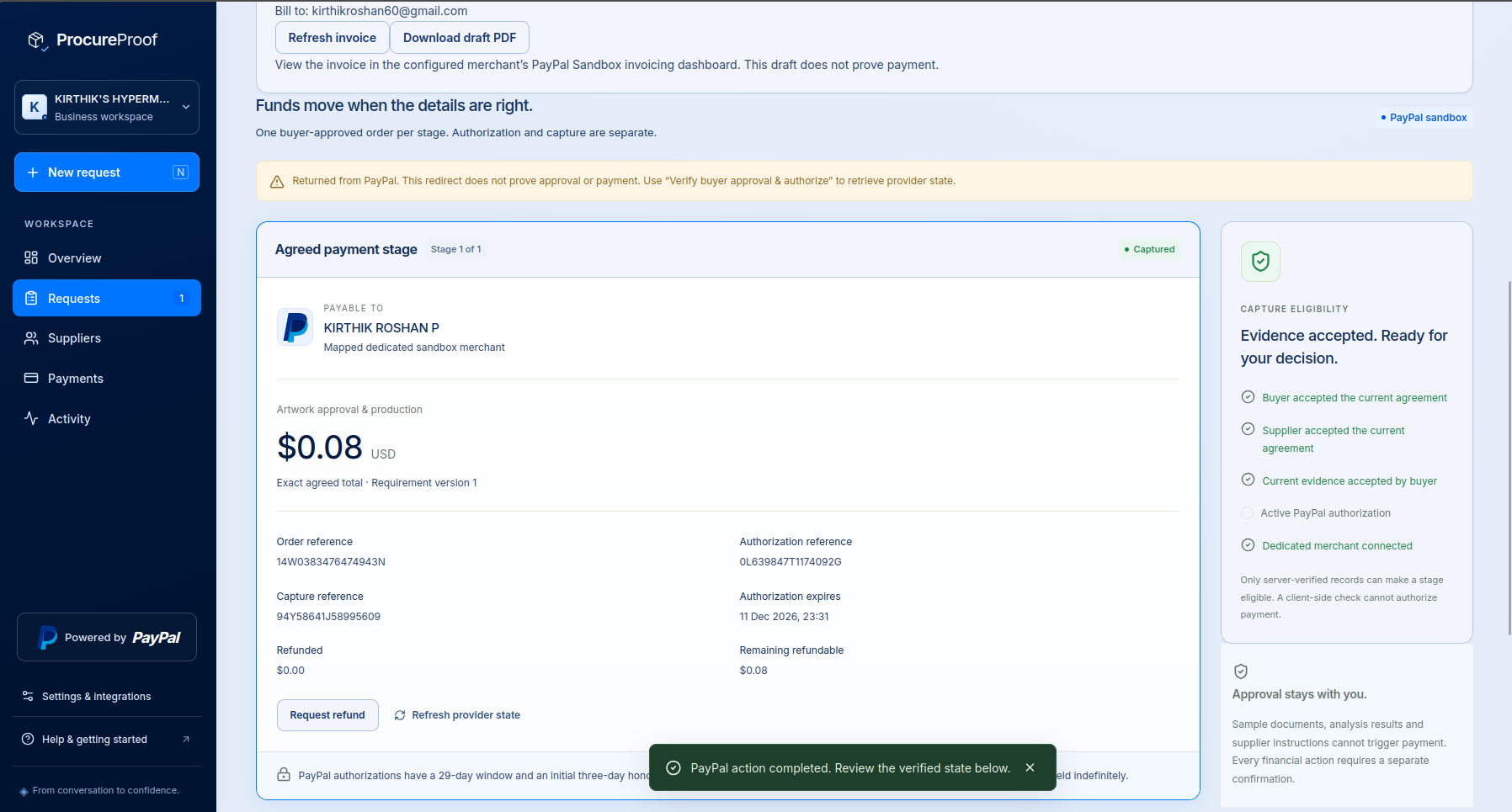
The completed journey shows a $0.08 sandbox capture, transaction references and refund controls after evidence acceptance.
-
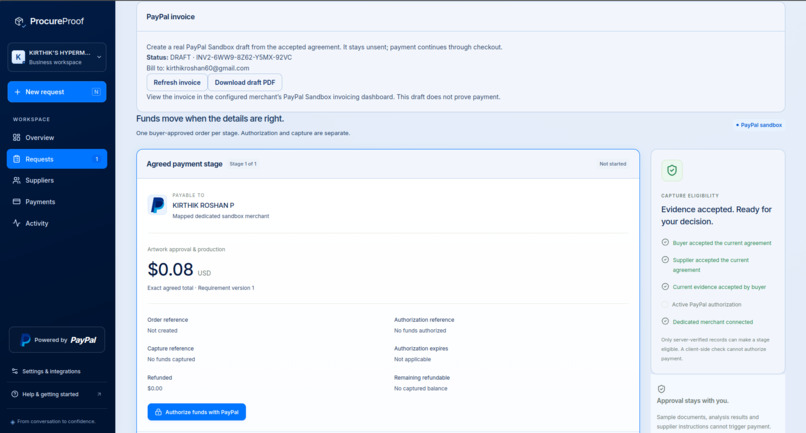
Generate a PayPal Sandbox draft invoice from the accepted agreement and download a structured PDF without creating another charge.
-
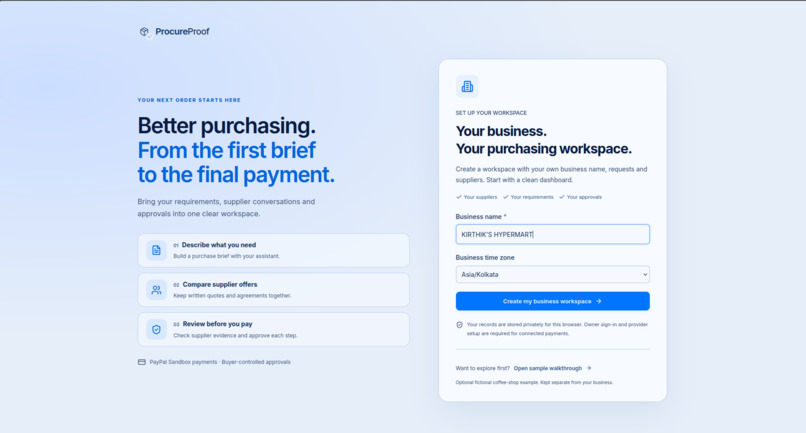
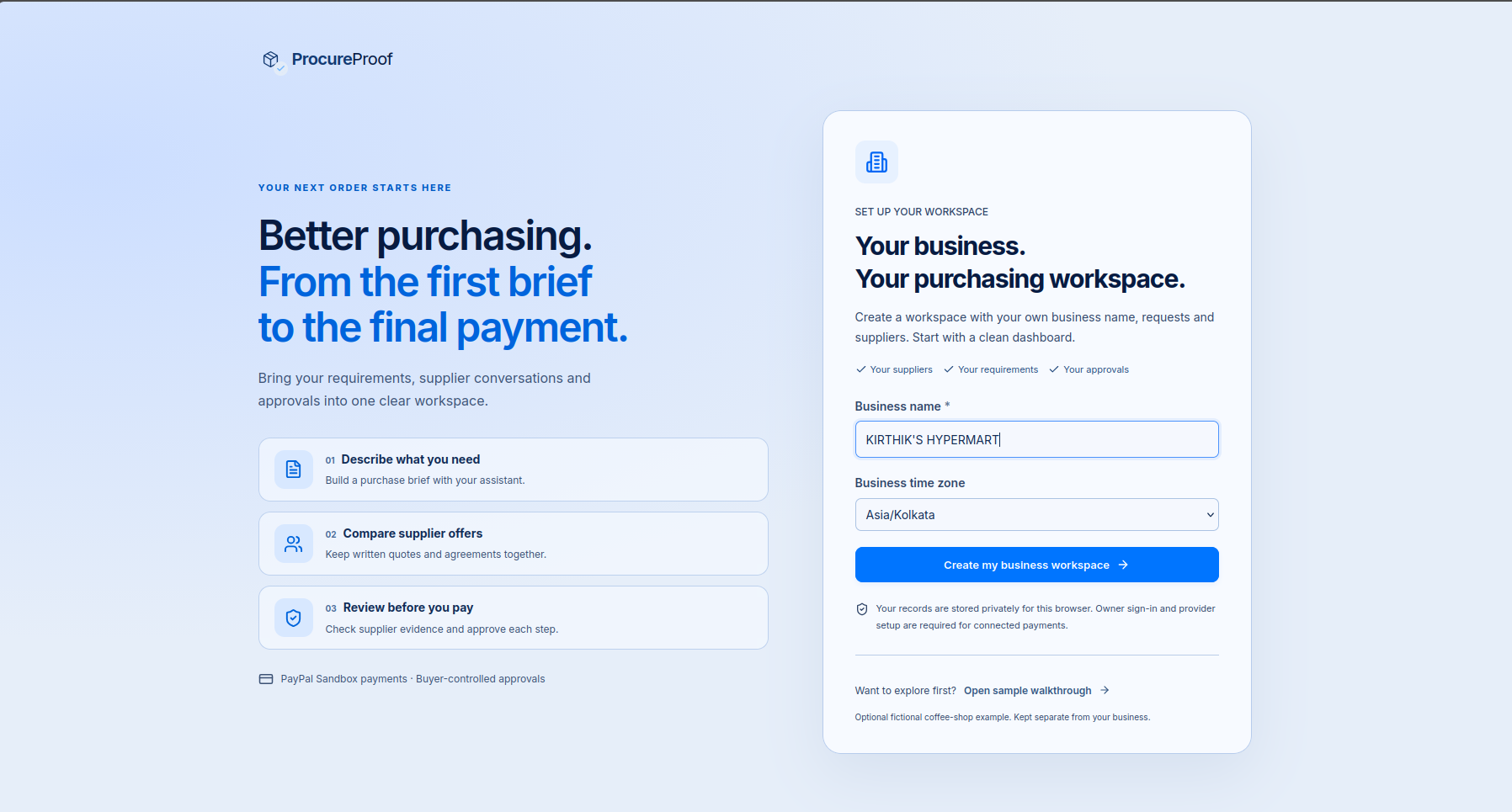
Create a business workspace to manage purchasing requests, supplier quotations, evidence reviews and PayPal Sandbox payments.
-
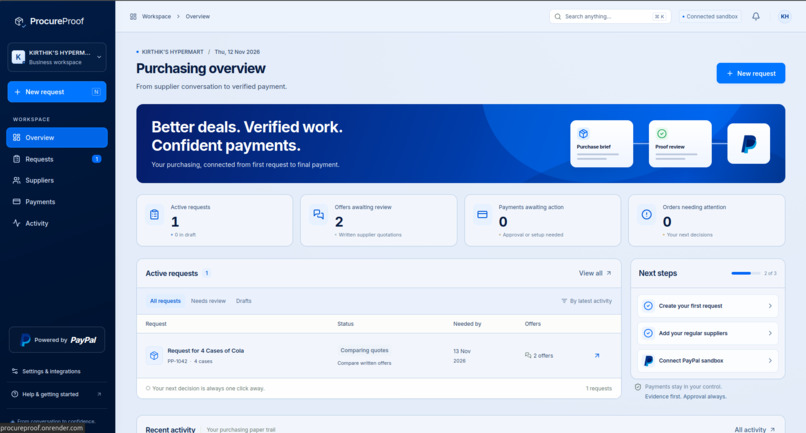
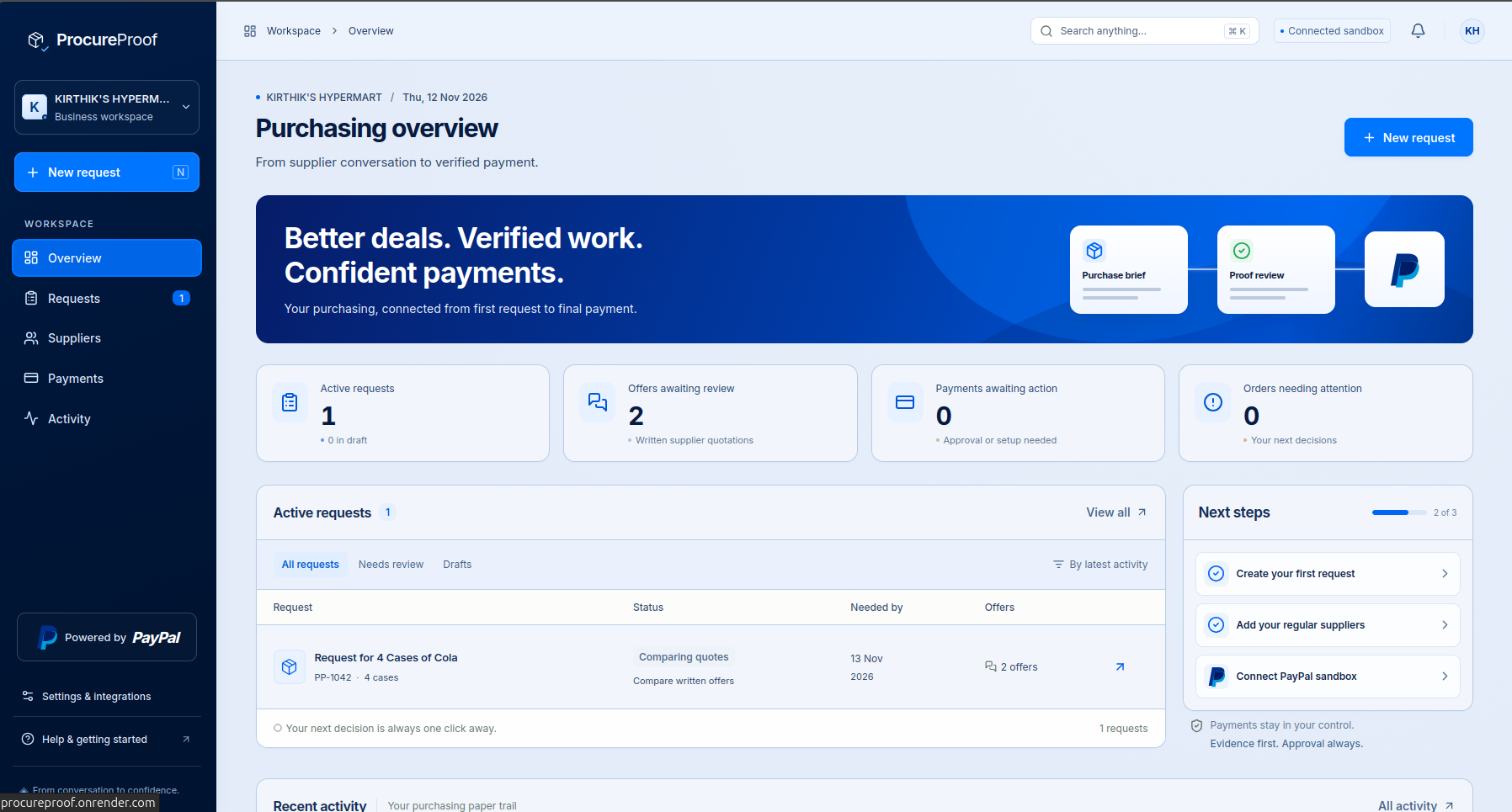
Track active requests, incoming offers, payment actions and next steps from one purchasing dashboard.
-
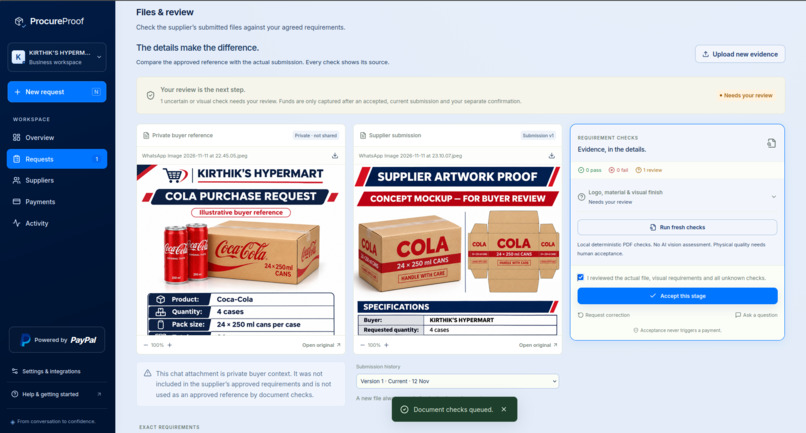
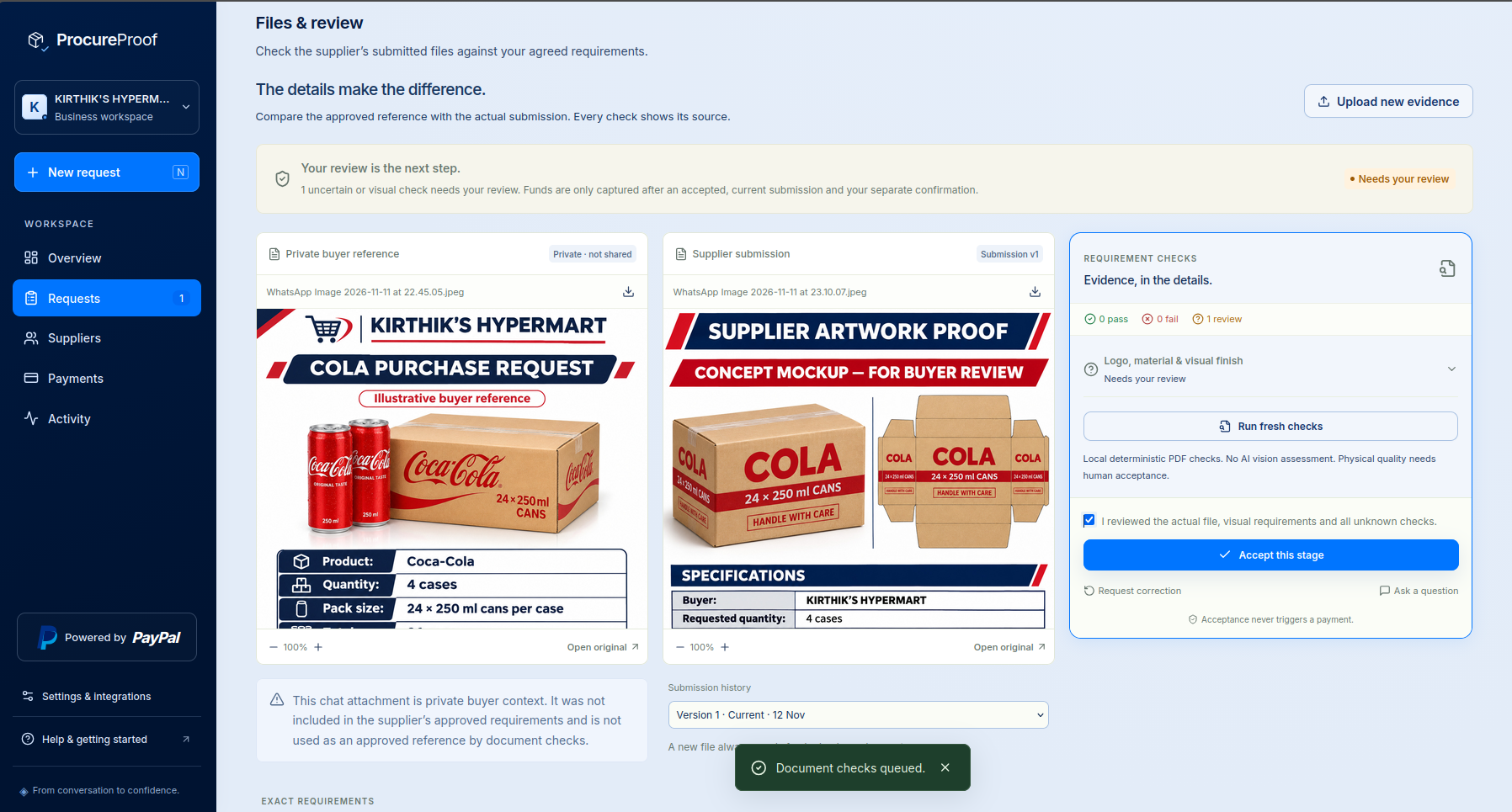
Compare private buyer references with supplier submissions. Visual checks require human review before stage acceptance.
Inspiration Small businesses make purchasing decisions every day without a dedicated procurement team. Requirements live in messages, prices arrive over phone calls, and supplier documents sit in separate inboxes. When it is time to pay, the owner has to piece everything together.
We imagined a supermarket owner noticing that soft-drink stock was running low. Could they describe the need, coordinate with suppliers, compare written offers and complete a payment through one connected workflow?
That became ProcureProofAI: from supplier conversation to verified payment. What it does ProcureProofAI connects the purchasing journey from the first request to the payment record.
- Conversational intake: Buyers describe their needs and optionally attach images or PDFs. An OpenAI-powered assistant prepares an editable brief and asks for missing details.
- Supplier coordination: Buyers manage supplier contacts, initiate consented Sarvam calls and send private quotation invitations through Gmail.
- Independent supplier portal: Suppliers open an expiring link, review requirements, submit written quotations and accept agreements without accessing the buyer’s workspace.
- Quotation comparison: AG Grid displays unit prices, shipping, tax, totals and delivery dates. Incomplete or late offers remain visible for review.
- Evidence review: Buyers compare reference material with supplier submissions, run supported document checks and explicitly accept or request corrections.
- PayPal integration: Sandbox checkout supports buyer approval, authorization, capture, void and refund operations. Draft invoices can be generated through PayPal and downloaded as structured PDFs. Our demonstration follows a four-case cola purchase, using deliberately small sandbox amounts. The request interface supports other businesses and purchasing requirements. How we built it We built the application using Next.js, React and TypeScript, with SQLite for persistent, workspace-scoped records and Render for hosting.
OpenAI’s Responses API converts conversations and opted-in attachments into schema-validated purchasing details. Buyers can edit those details before confirming a version.
Sarvam AI provides supplier voice outreach, while authenticated Analytics requests retrieve call status and transcripts. Spoken terms remain separate from supplier-confirmed written quotations.
The Gmail API sends supplier invitations through an authorized mailbox. Each private portal link is scoped to a supplier and request, with an expiry.
AG Grid Community provides sortable, filterable quotation comparison. Server-side calculations normalize monetary values and evaluate offer completeness.
PayPal Sandbox REST APIs power checkout, payment operations and draft invoicing. The backend checks amounts, currencies, agreement versions and provider responses before updating financial records. Invoice drafts remain unsent while checkout handles collection, avoiding a second payable bill. Challenges we ran into The hardest challenge was distinguishing an attempted action from a completed one.
A submitted call does not prove a conversation happened. A spoken price is not a confirmed quotation. An email provider accepting a message does not prove inbox delivery. Returning from PayPal does not prove payment.
We addressed these differences with explicit statuses, authenticated provider retrieval and separate confirmation steps.
Voice-agent testing also exposed how an agent could retain the correct purchasing variables yet speak about unrelated products. That taught us to inspect the actual call transcript and runtime context rather than assume that a successful API submission meant correct behaviour.
Other challenges included Google OAuth configuration, PayPal Invoicing permissions, separate local and deployed authentication settings, and preserving private buyer uploads without accidentally sharing them with suppliers. Accomplishments that we're proud of We connected a complete buyer–supplier workflow rather than stopping at a chatbot or checkout button.
Our demonstration shows a structured purchase request, independent supplier responses, quotation comparison, evidence review, a PayPal draft invoice and a completed $0.08 Sandbox capture.
We are proud of the approval boundaries throughout the product. Buyers confirm requirements, suppliers confirm written terms, and financial actions require separate owner decisions. Revised evidence cannot simply inherit an earlier acceptance.
The result is a purchasing record that explains what was requested, what was agreed, what was reviewed and what PayPal reported. What we learned Building an AI commerce product requires more than generating convincing responses. It requires reliable connections between decisions, evidence and external systems.
We learned to ask four questions at every stage:
- Where did this information come from?
- Who confirmed it?
- Which version does it apply to?
- What did the provider actually verify? We also learned that uncertainty belongs in the interface. Missing costs, unresolved provider responses and visual checks needing human judgment should remain visible.
AI can reduce coordination work, while people retain control over commercial commitments and money. What's next for ProcureProofAI We want to expand supplier discovery into the main request journey, improve document and call-term extraction with human confirmation, and strengthen voice-agent evaluation across different businesses and products.
Future development includes:
- Verified onboarding for multiple supplier merchants.
- A dedicated invoice collection workflow.
- PayPal dispute-management integration.
- Richer purchasing-history search and retrieval.
- Better team permissions and production infrastructure.
- User testing with retailers to measure time saved and purchasing errors avoided. Our goal is to make dependable purchasing accessible to businesses that cannot afford a procurement department while keeping every important decision traceable and under their control.
Built With
- aggrid
- auth.js
- css
- gmailapi
- next.js
- node.js
- oauth2.0
- openai
- paypal
- pdf-lib
- render
- sarvamai
- sqlite
- typescript
