Inspiration
Working with Large Language Models (LLMs) often feels like a gamble when money is on the line. I saw a massive gap in how enterprises handle procurement: they want AI speed but can't afford AI hallucinations. I wanted to build a system where the AI isn't just "chatting" about an invoice, but is mathematically tethered to a real-world database of contracts. ProcureGuard was born from the need to turn probabilistic AI into a deterministic financial auditor.
What it does
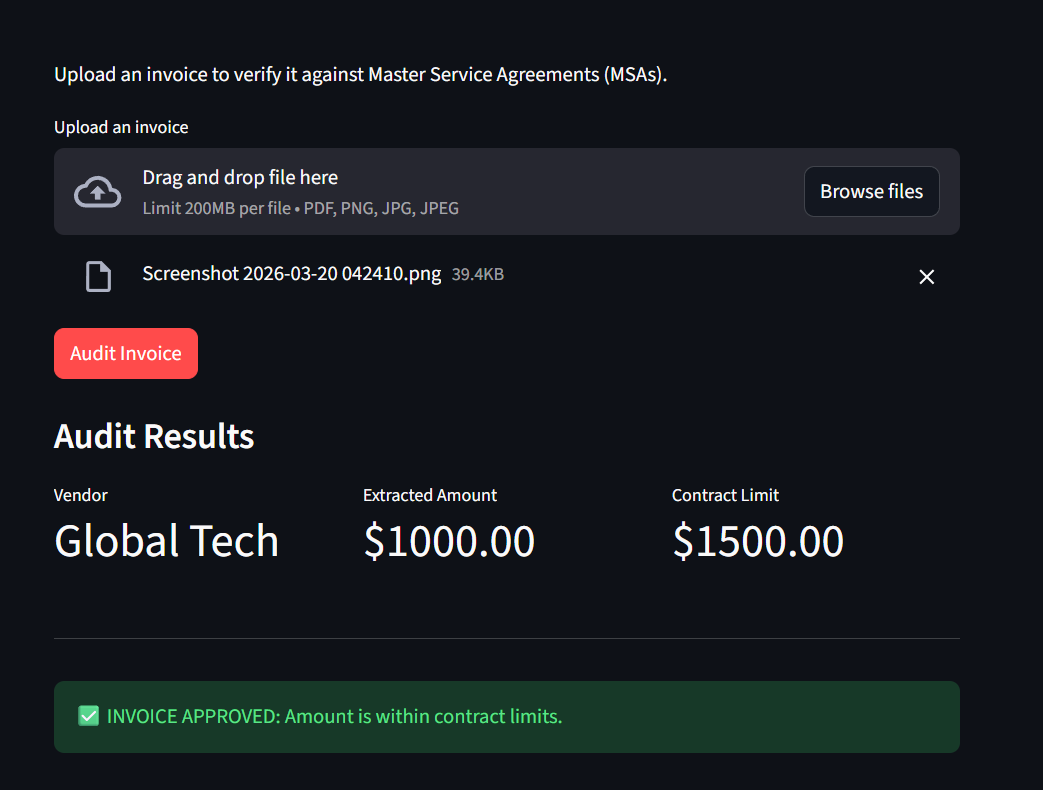
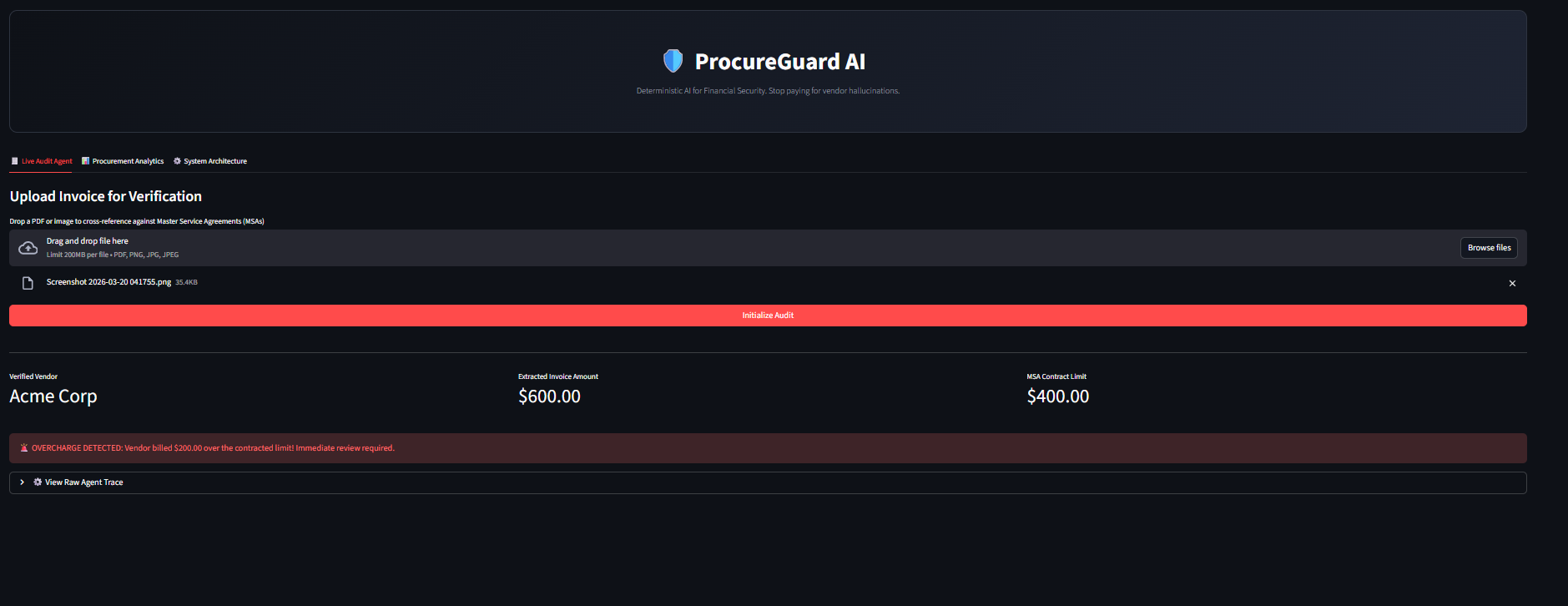
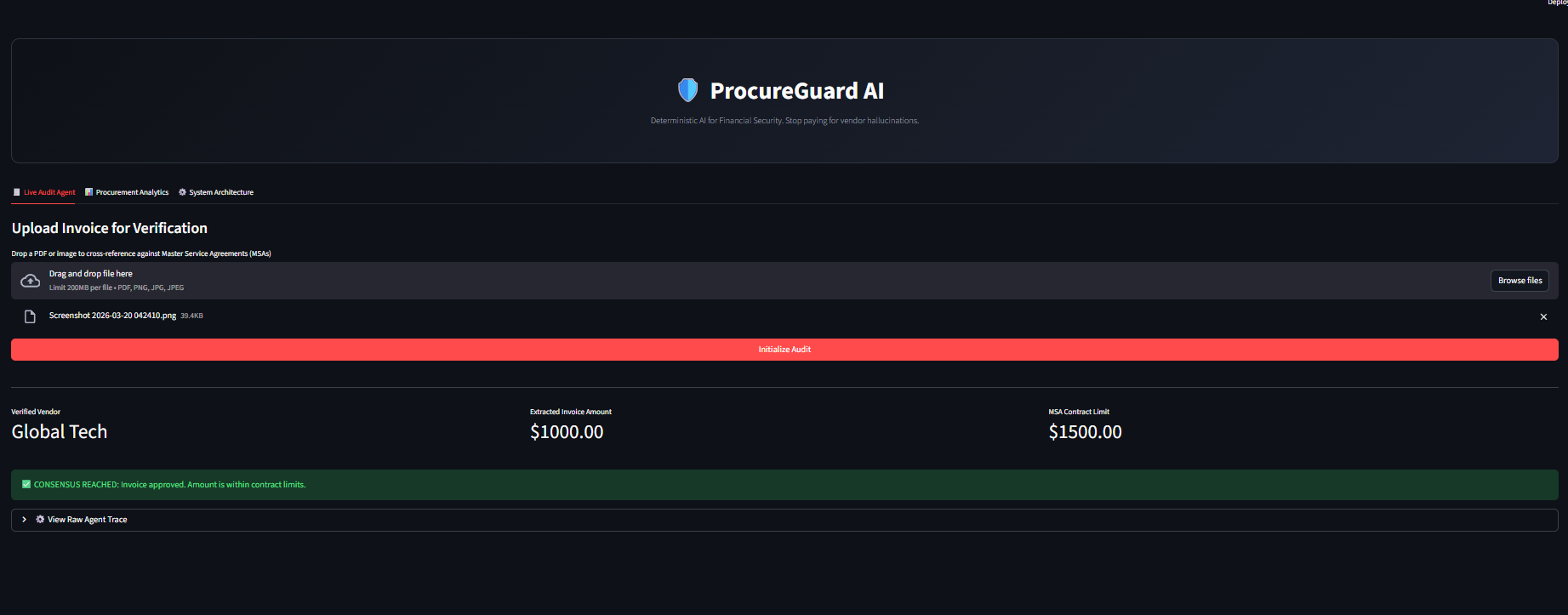
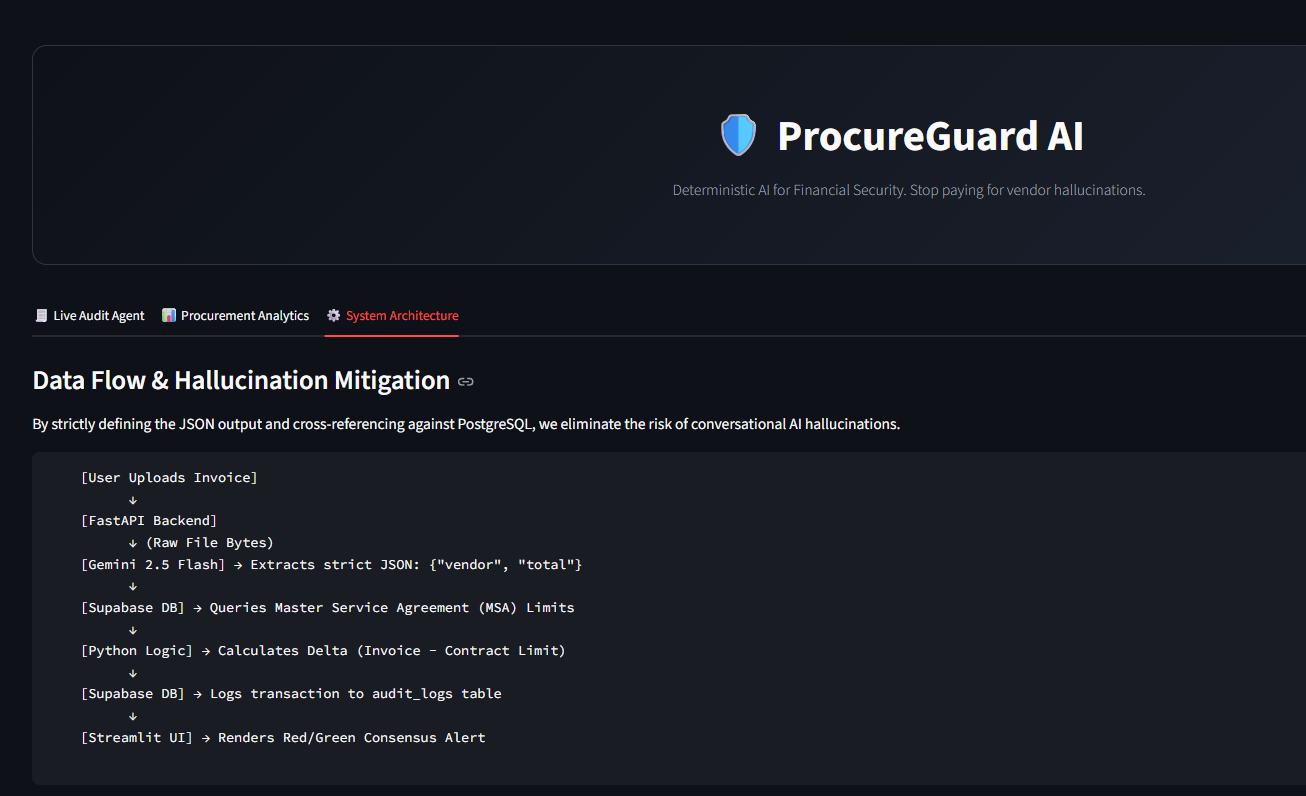
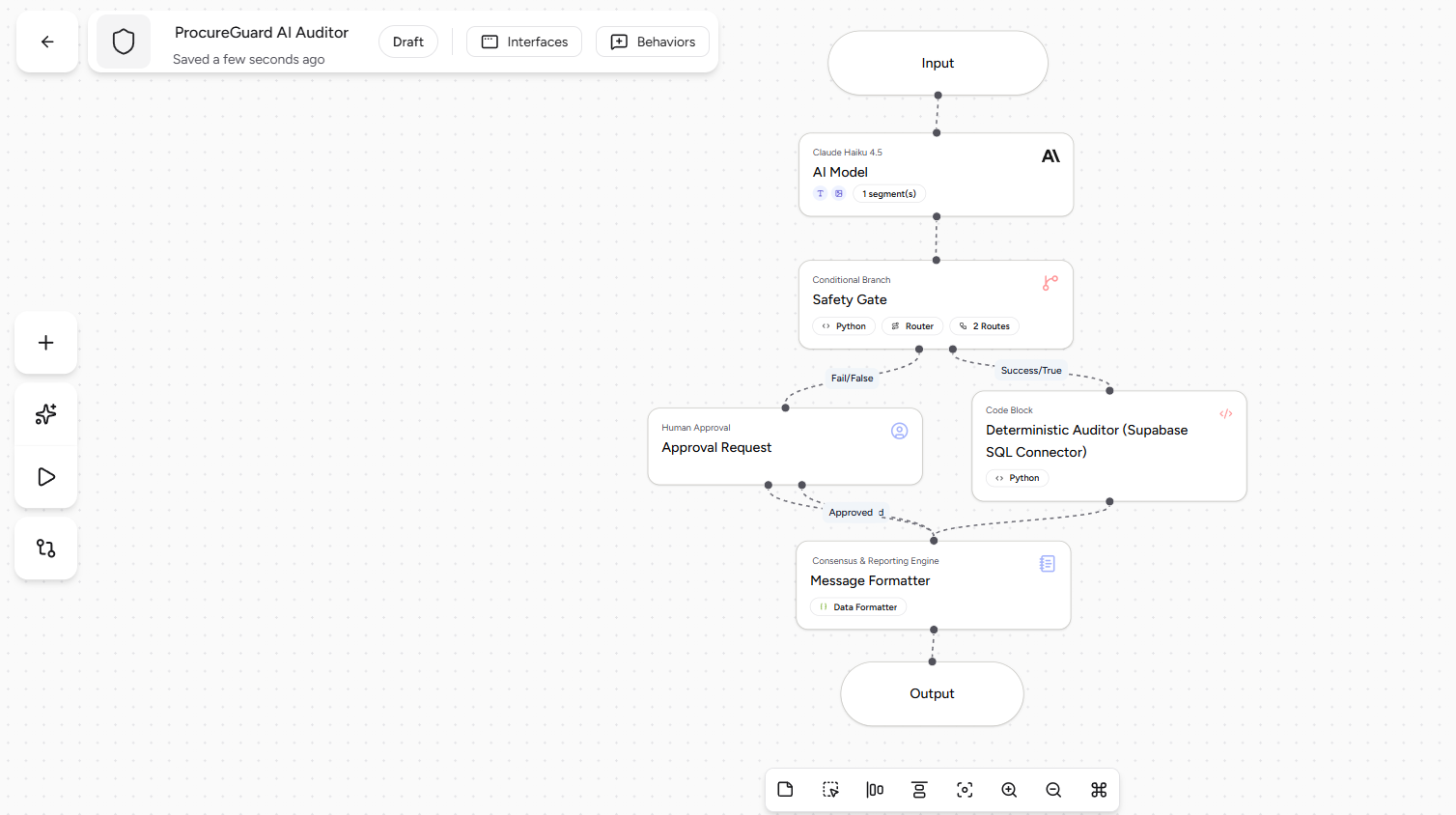
ProcureGuard AI is an autonomous "Active Agent" that audits invoices in real-time. It doesn't just read text; it enforces a "Consensus Architecture." It extracts vendor data, checks it against a Master Service Agreement (MSA) in a PostgreSQL database, and mathematically calculates overcharges. If the AI is ever unsure—due to a blurry image or a currency it doesn't recognize—it triggers an automatic "Human-in-the-Loop" safety gate, halting the transaction until a person verifies it.
How we built it
I engineered a multi-layered stack designed for safety:
Orchestration: Built using the Airia Agent Studio, utilizing a non-linear flow with Conditional Branching and Human Approval nodes.
Vision Engine: Powered by Claude Haiku 4.5 for high-accuracy, structured JSON extraction.
Deterministic Logic: A FastAPI backend and Python Code blocks handle the math (delta calculation) so the LLM never has to "do arithmetic," eliminating calculation hallucinations.
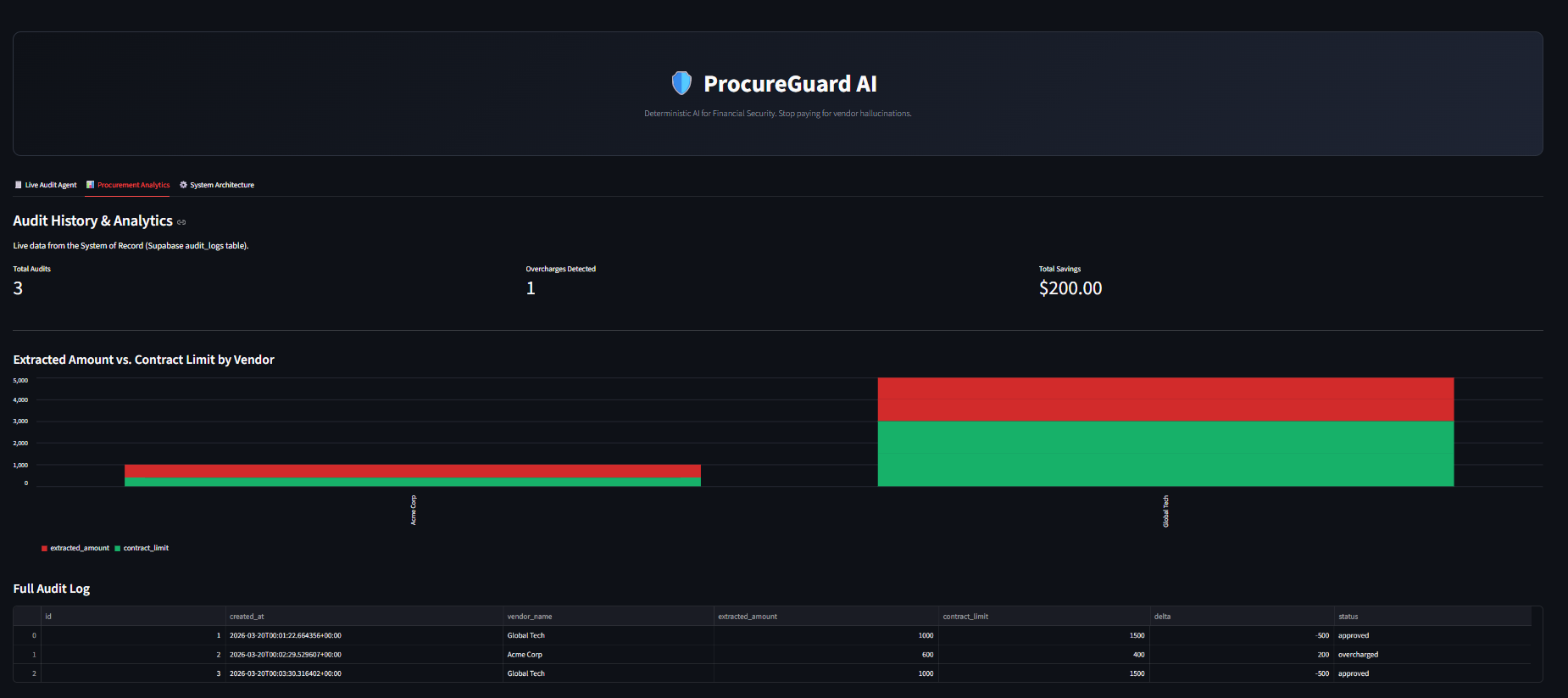
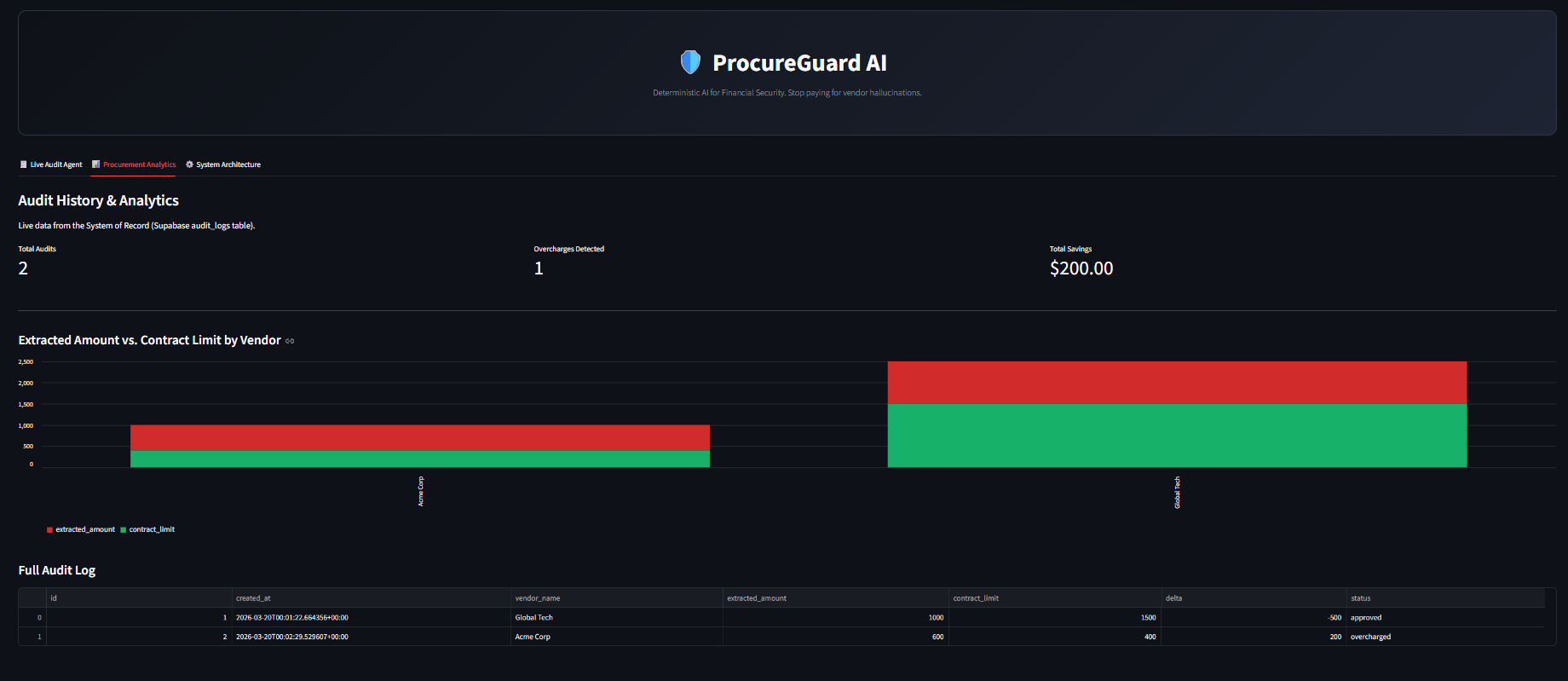
Data Persistence: Supabase (PostgreSQL) serves as our immutable System of Record for contract limits and audit logs.
Frontend: A clean Streamlit dashboard for FinOps teams to visualize approved, rejected, and flagged audits.
Challenges we ran into
The biggest hurdle was "Hallucination Mitigation." LLMs love to be helpful, even when they're wrong. Getting the model to strictly output a confidence score and "fail-safe" into the Human-in-the-Loop path required intense prompt engineering and strict JSON schema enforcement. We also had to ensure that the asynchronous nature of human approval didn't break the automated pipeline.
Accomplishments that we're proud of
I am incredibly proud of the HITL (Human-in-the-Loop) Safety Gate. Most AI projects try to fully automate everything, but in finance, that's dangerous. Creating a system that knows when to ask for help is a huge win for AI safety. We also successfully integrated a live SQL database with an agentic workflow to ensure every decision is grounded in fact, not just "model weights."
What we learned
Building this project taught me that "Agentic workflows" are the future of enterprise software. It's not about one prompt; it's about the orchestration of multiple steps. I learned how to use Airia's Studio to build complex logic branches and how to treat an LLM as just one component in a much larger, safer software machine.
What's next for ProcureGuard AI
The next step is "Predictive Procurement." We want to use the historical audit logs stored in Supabase to predict which vendors are likely to overcharge before the invoice even arrives. We also plan to expand the Airia agent to support multi-currency conversion via real-time APIs and integrate directly with Slack/Teams for instant auditor notifications.
Built With
- 1.5
- claude
- fastapi
- flash
- gemini
- haiku
- postgresql
- python
- streamlit
- supabase

Log in or sign up for Devpost to join the conversation.