-
-
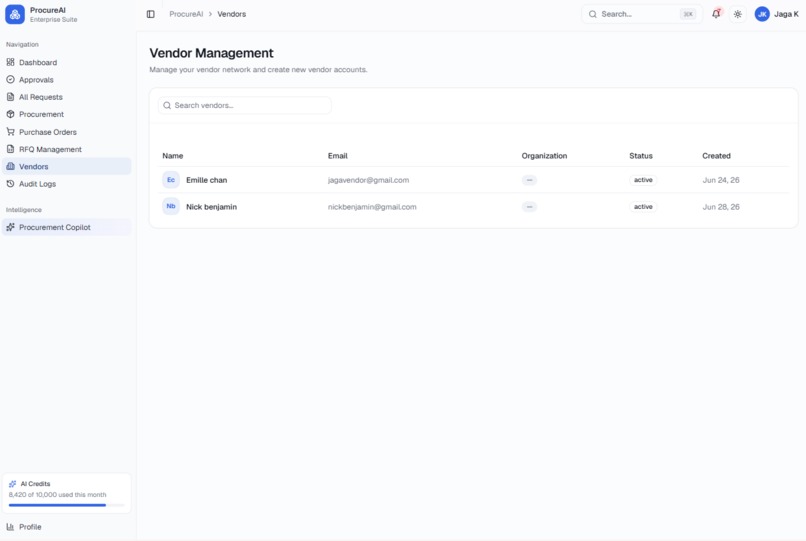
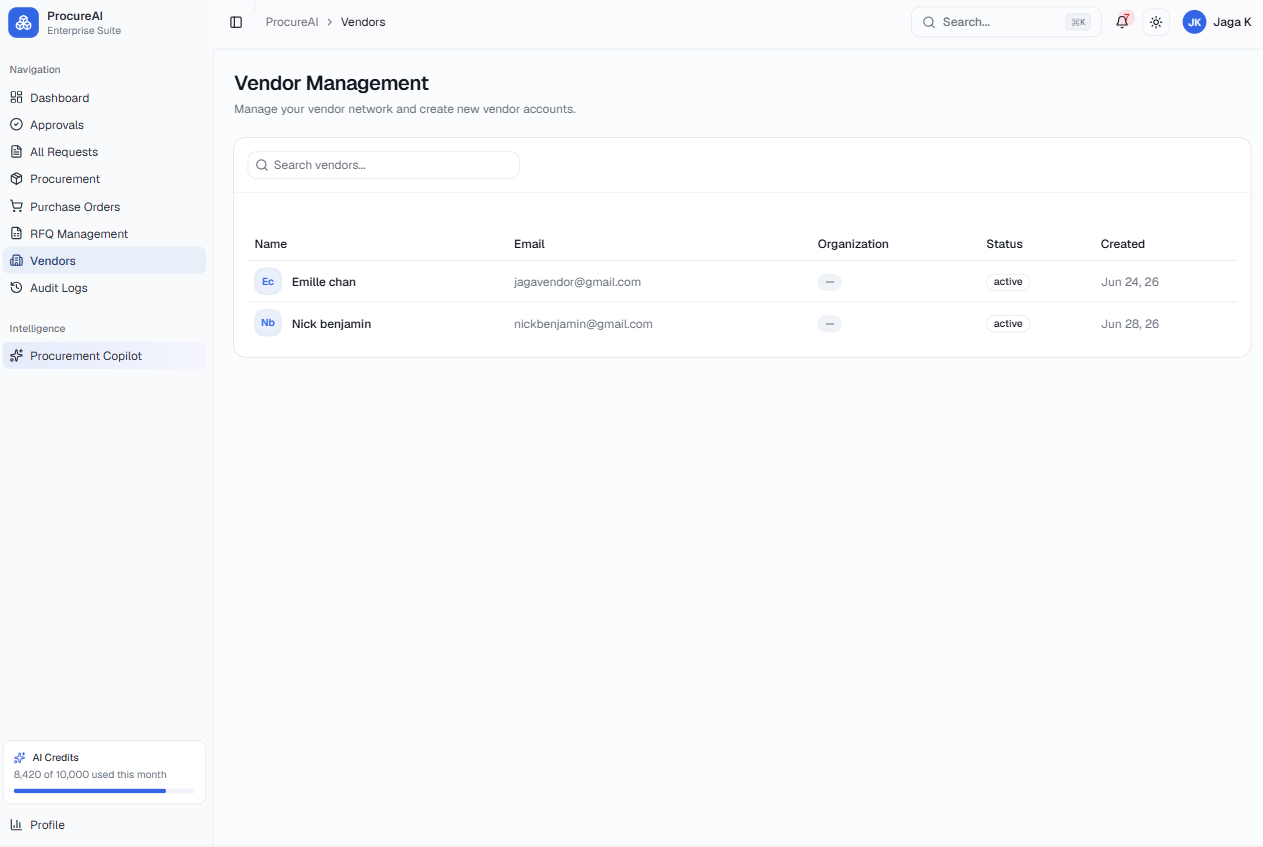
Vendor page
-
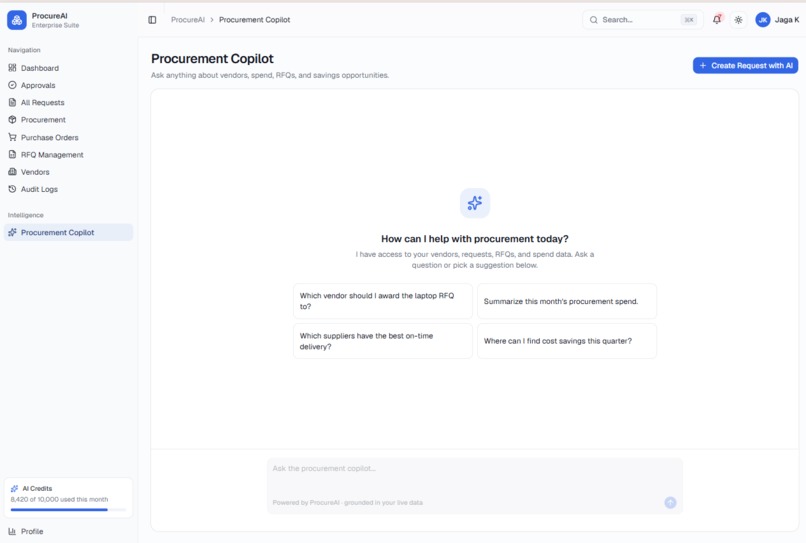
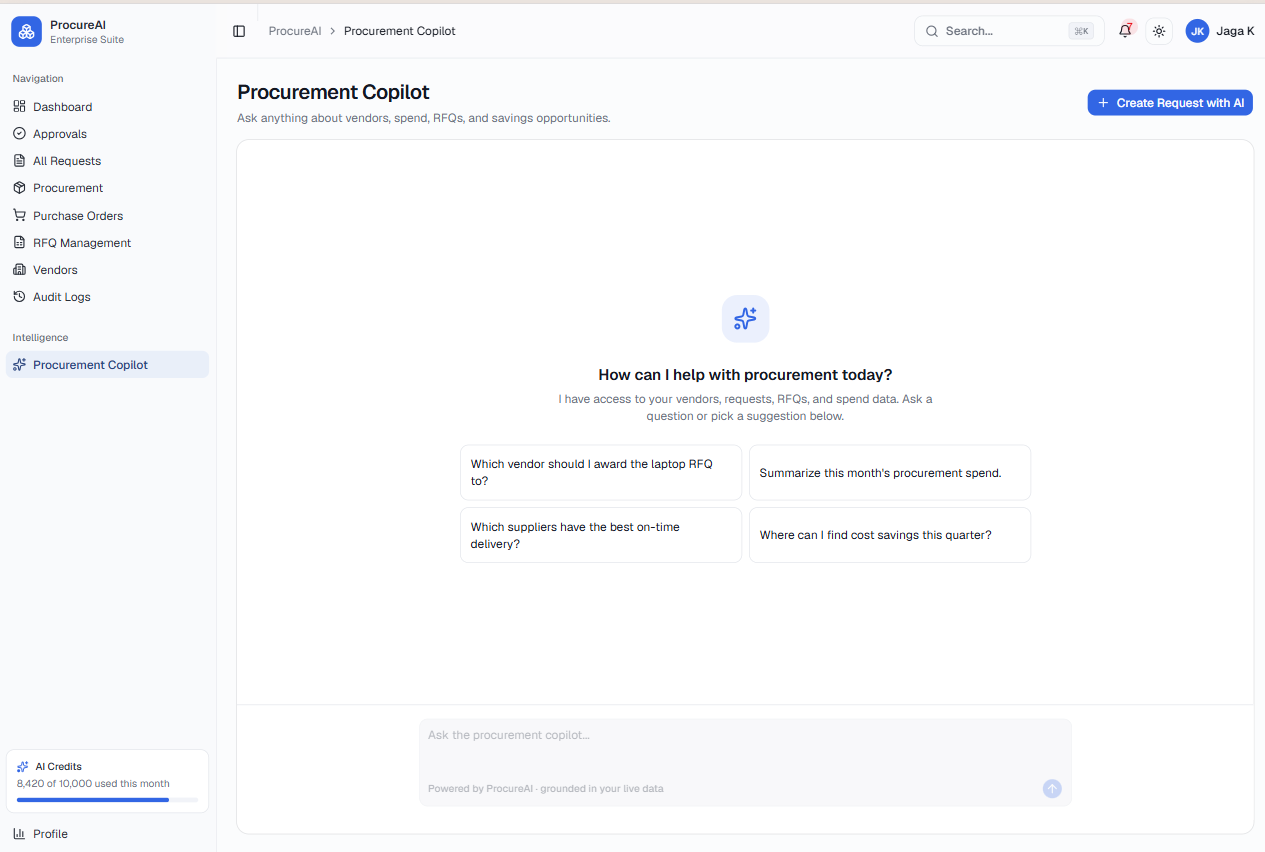
copilot chat page
-
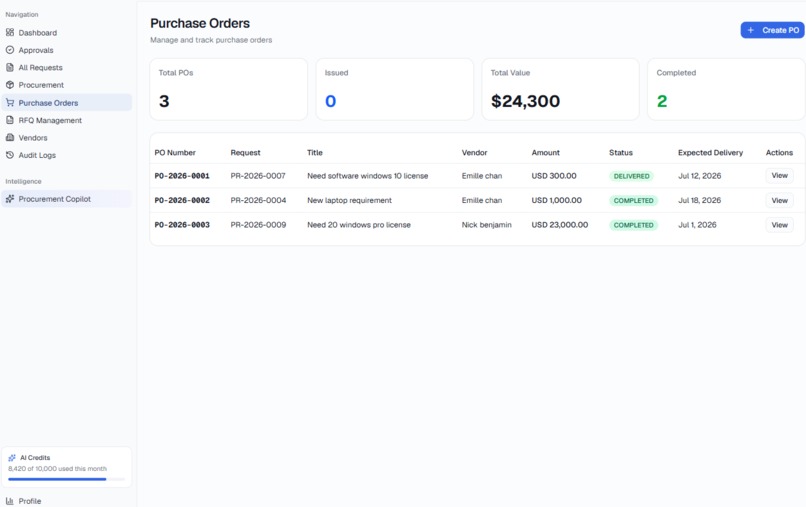
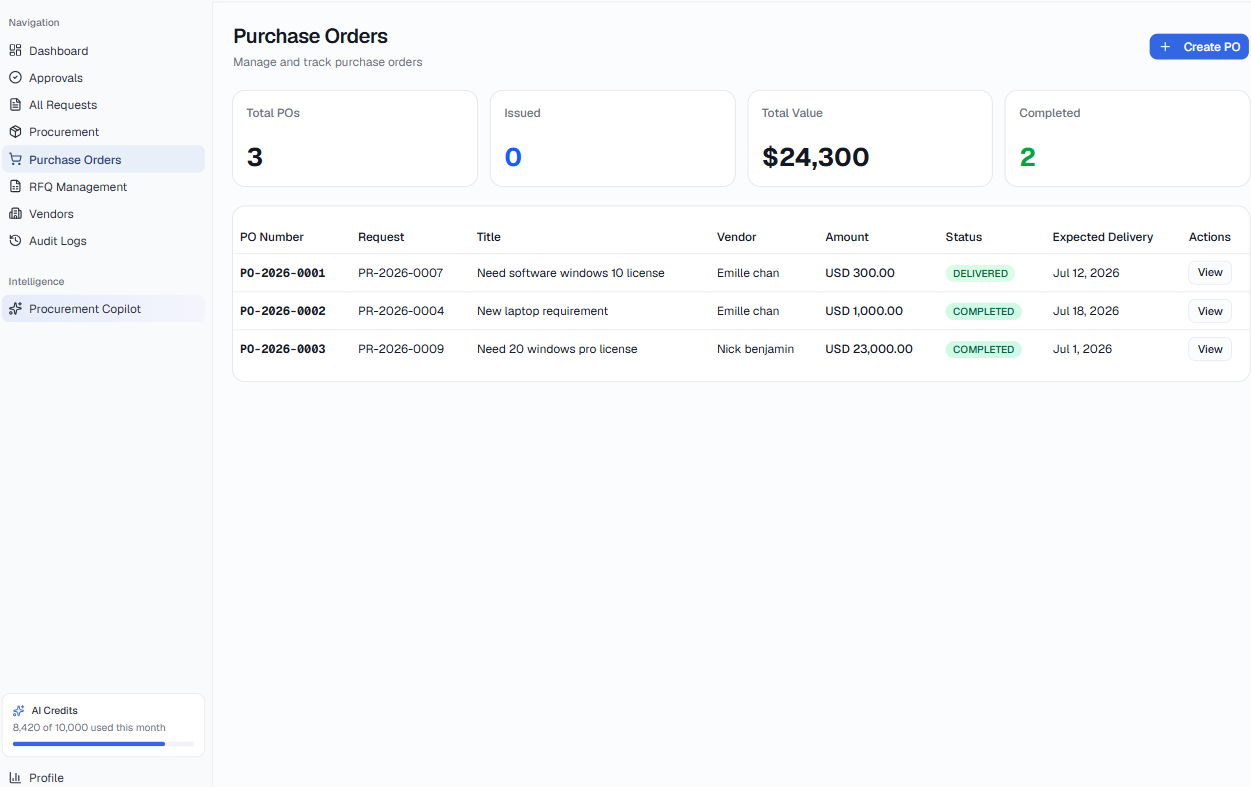
purchase order page
-
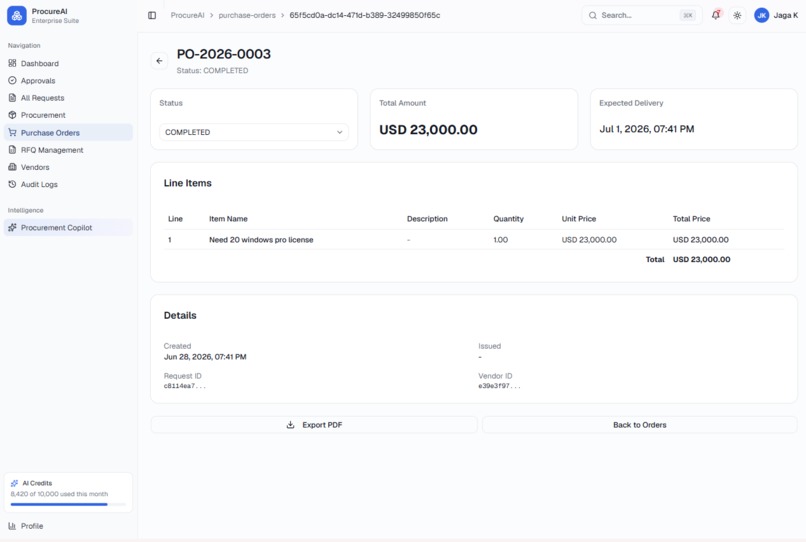
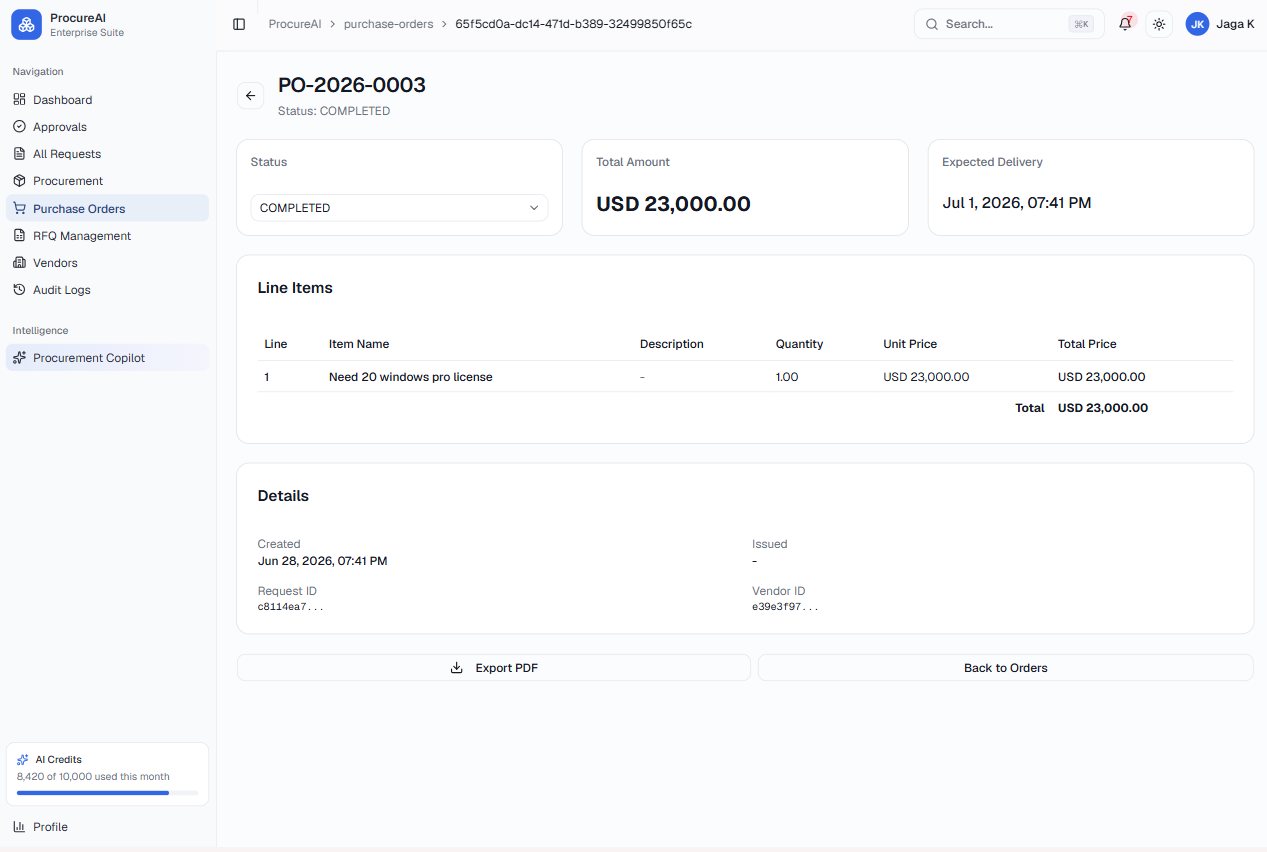
purchase order view page
-
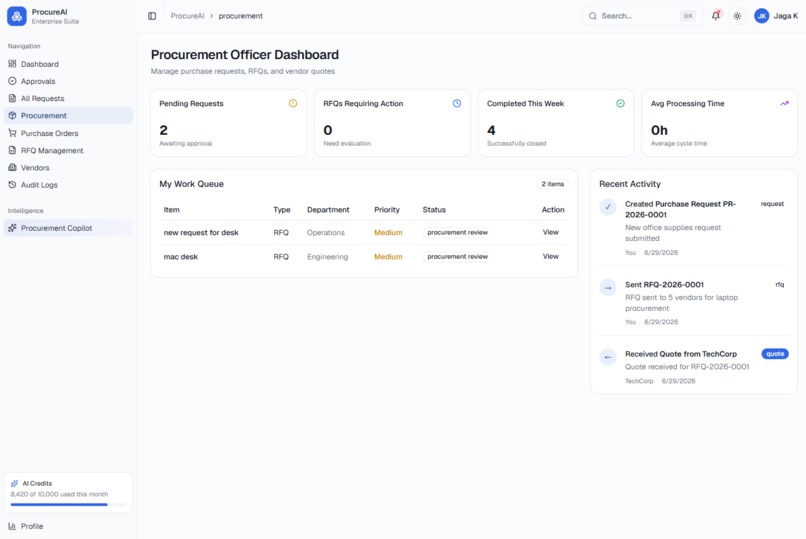
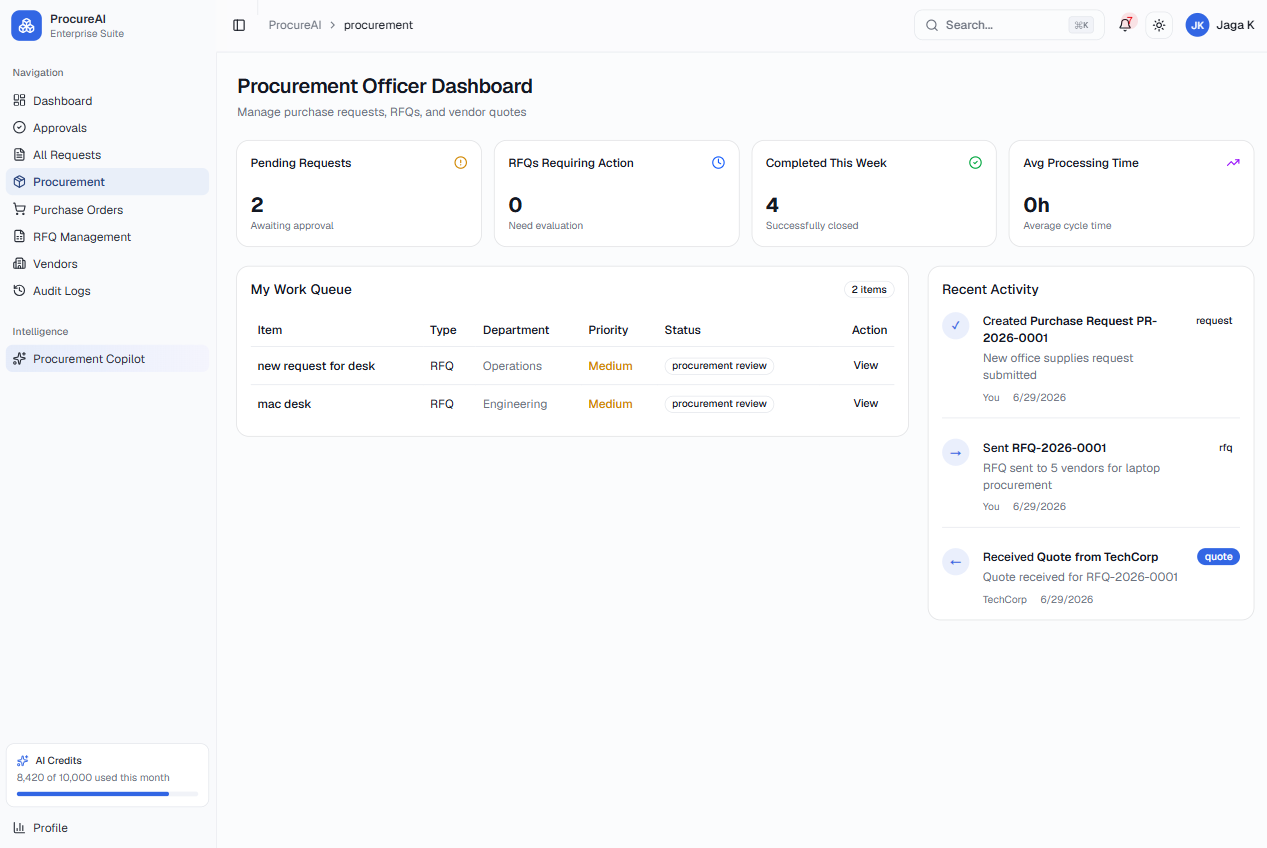
procurement page
-
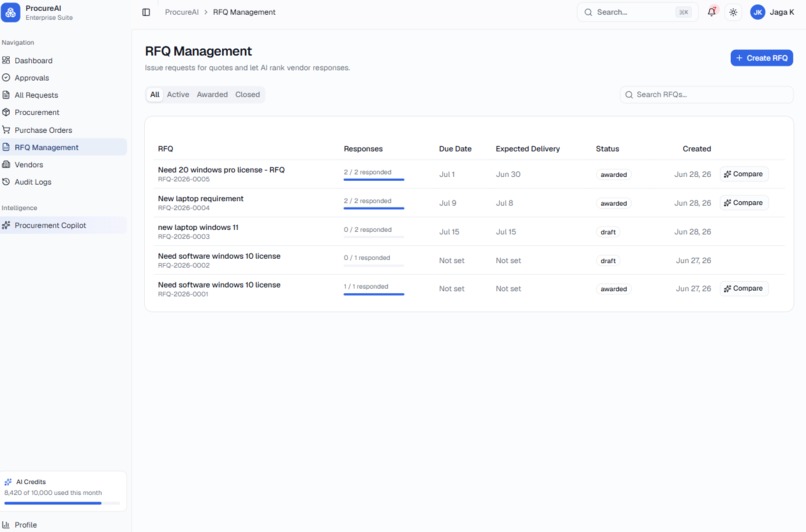
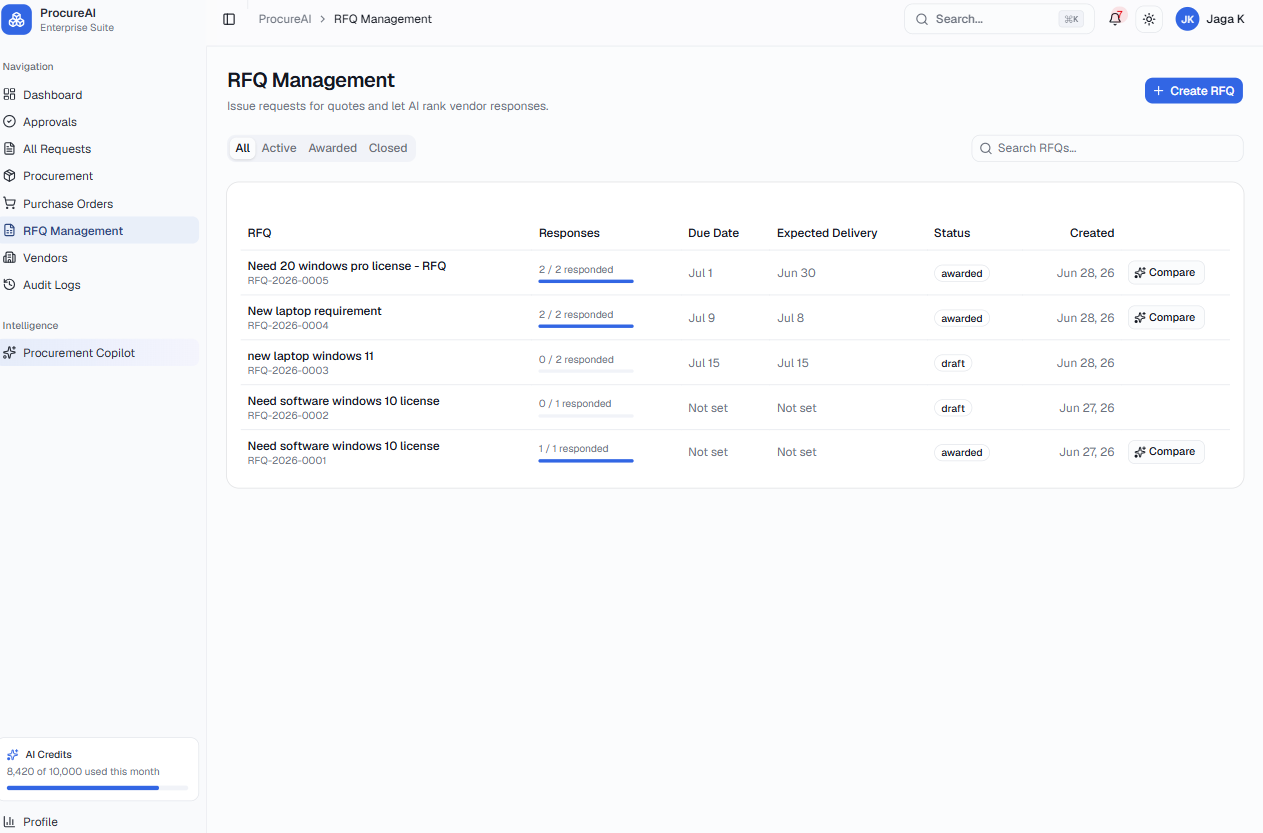
RFQ table page
-
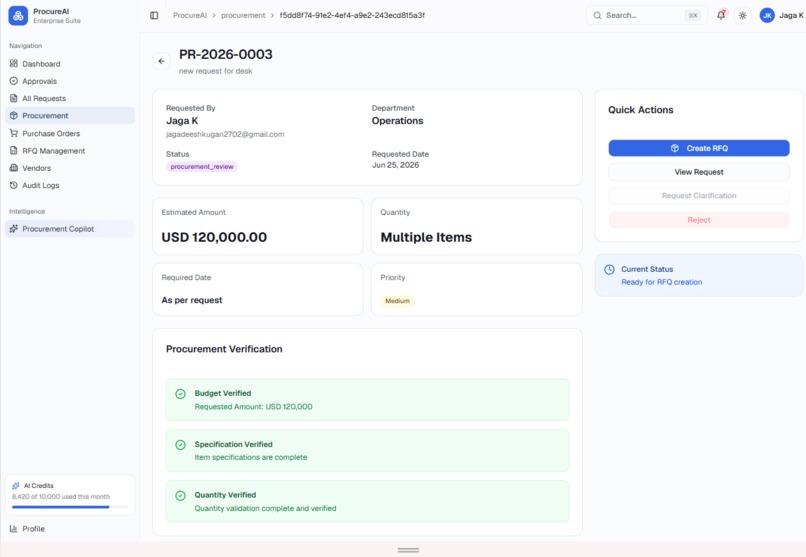
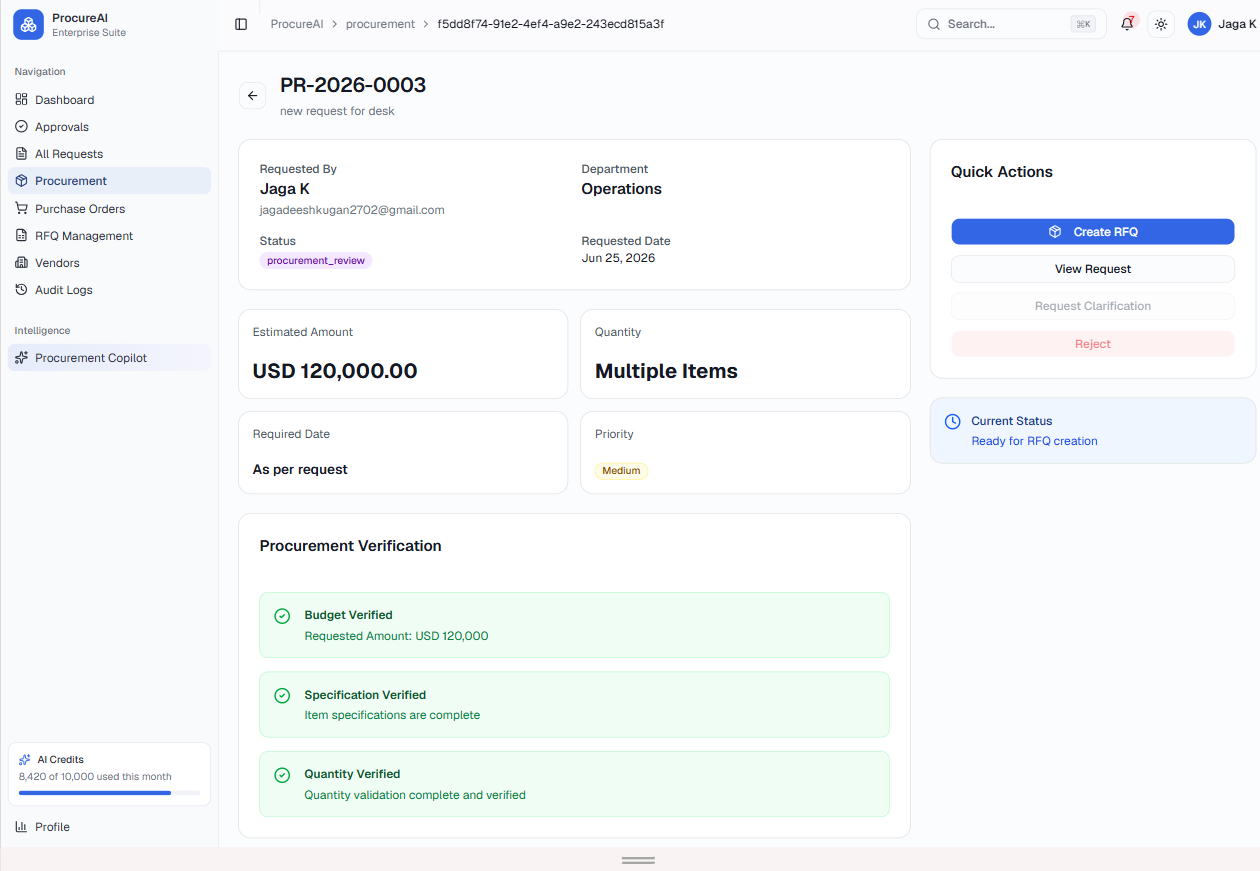
procurement view page
-
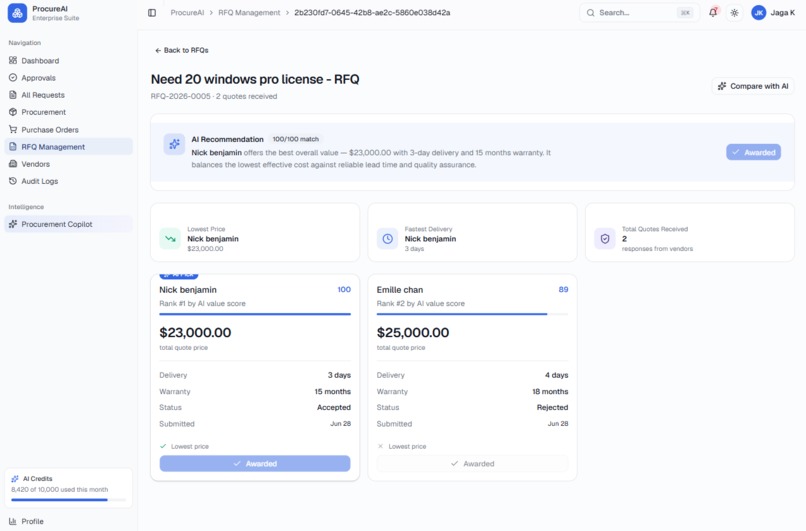
RFQ view page
-
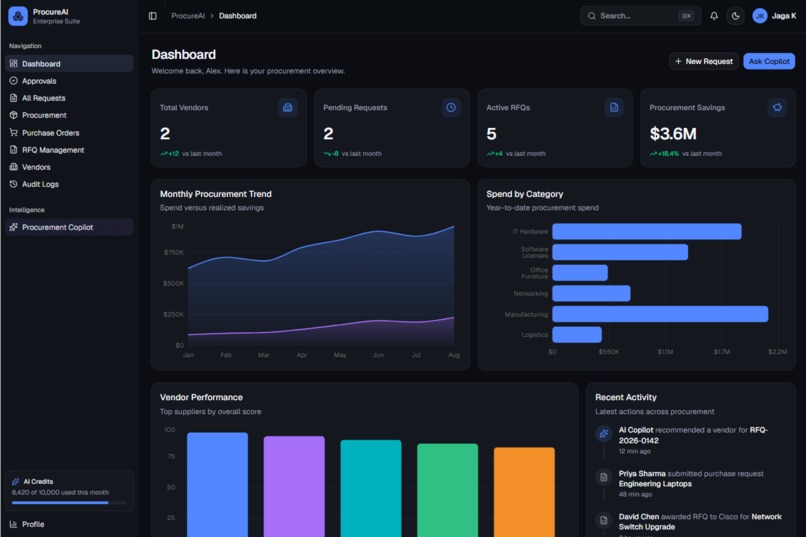
dashboard in dark mode
-
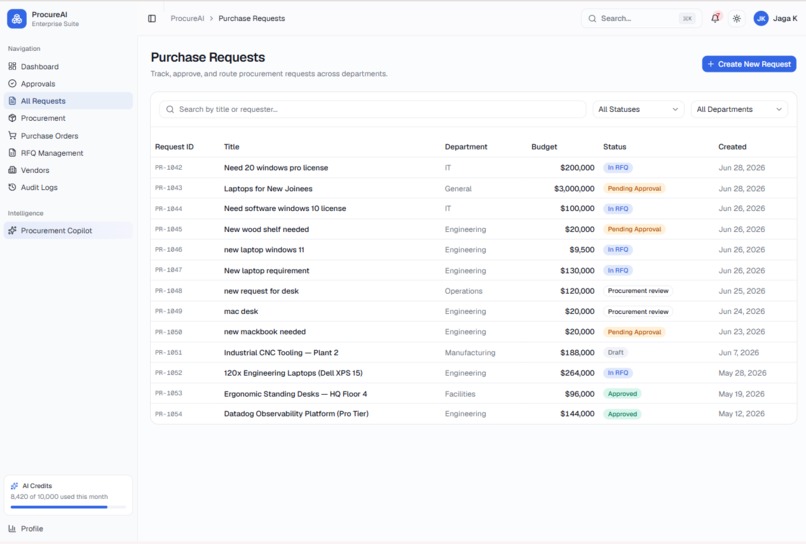
All request page
-
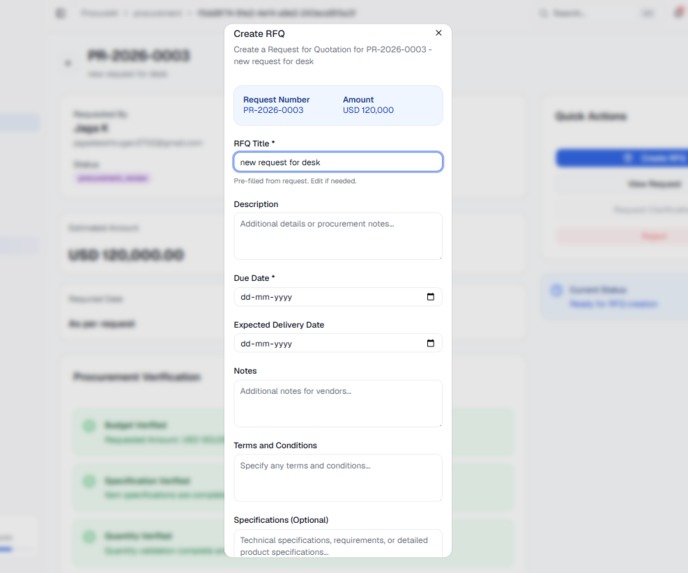
Create RFQ page
-
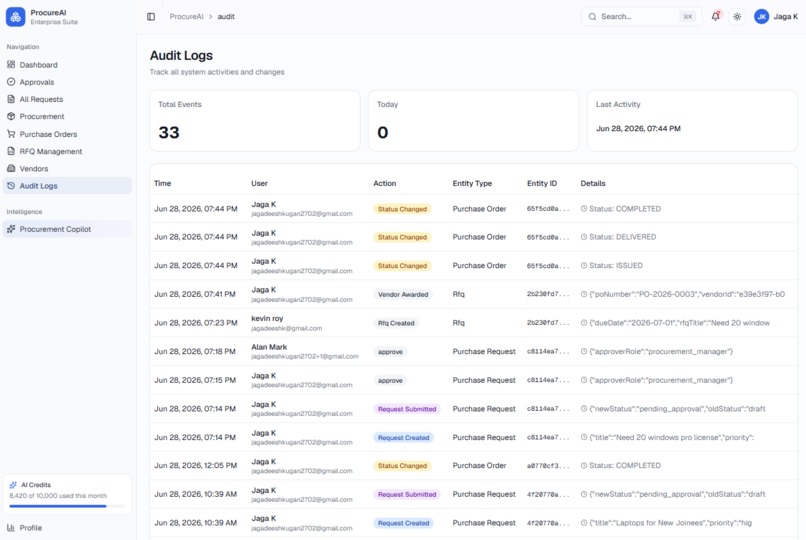
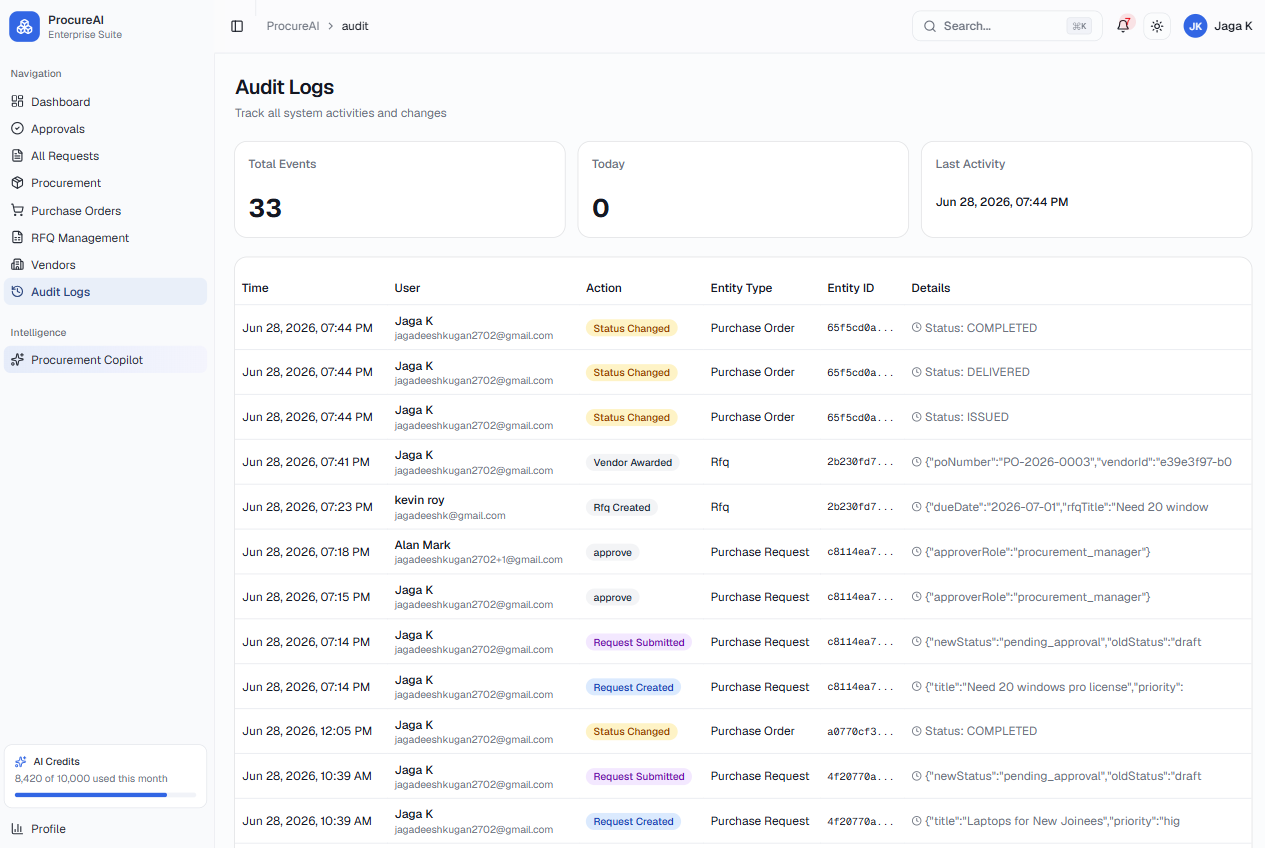
audit logs page
-
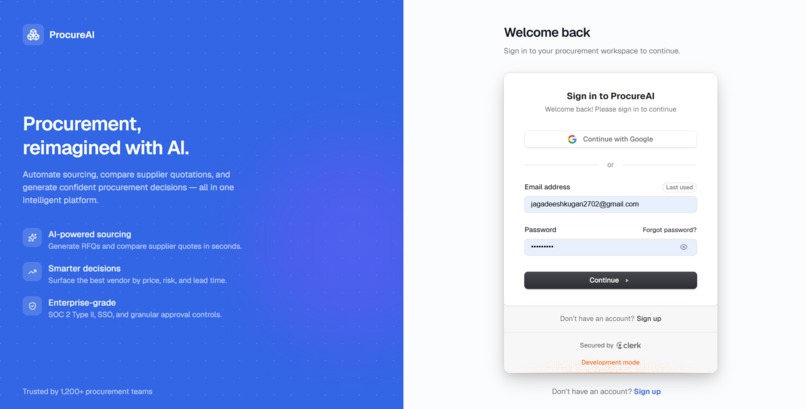
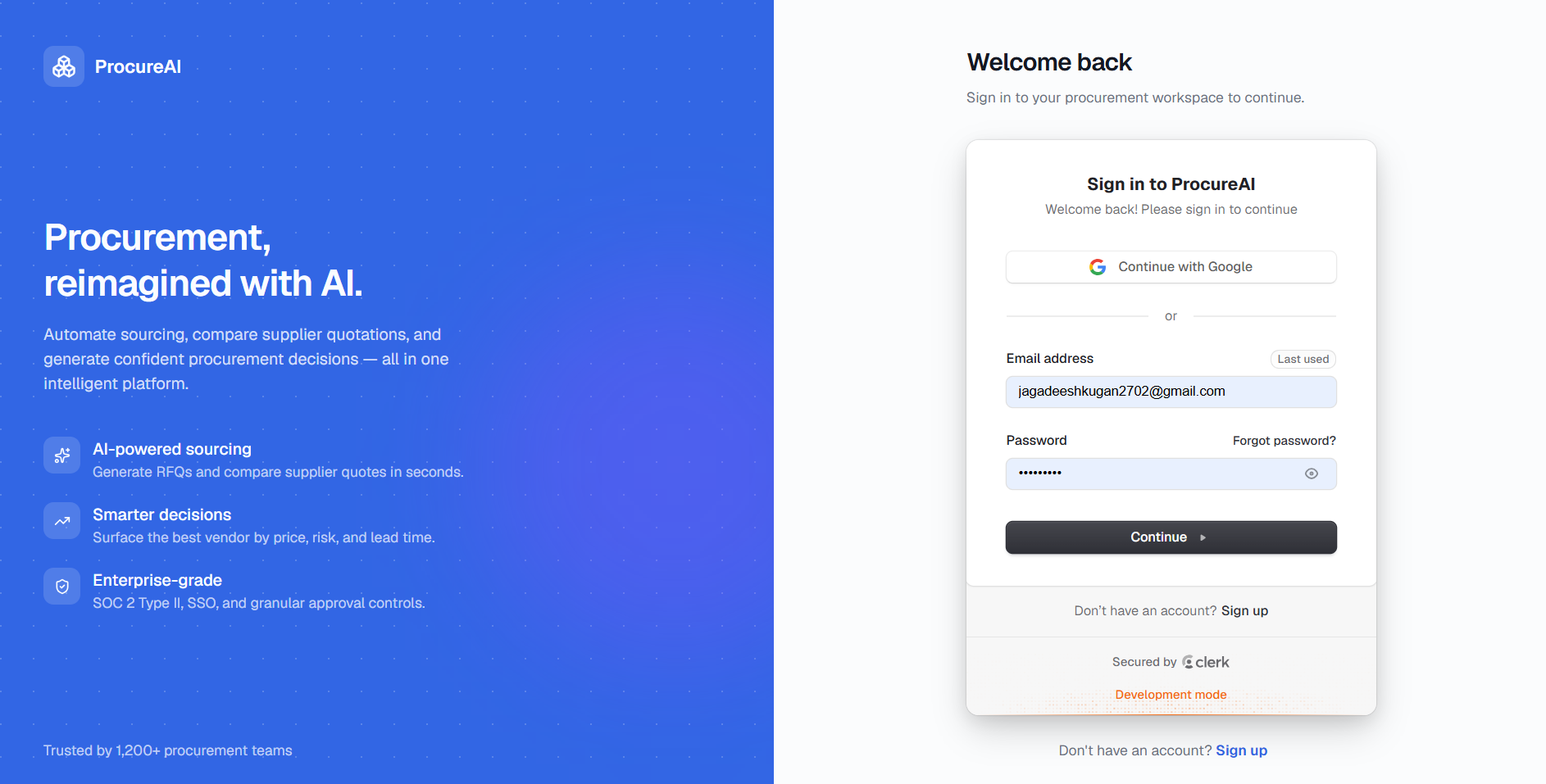
login page
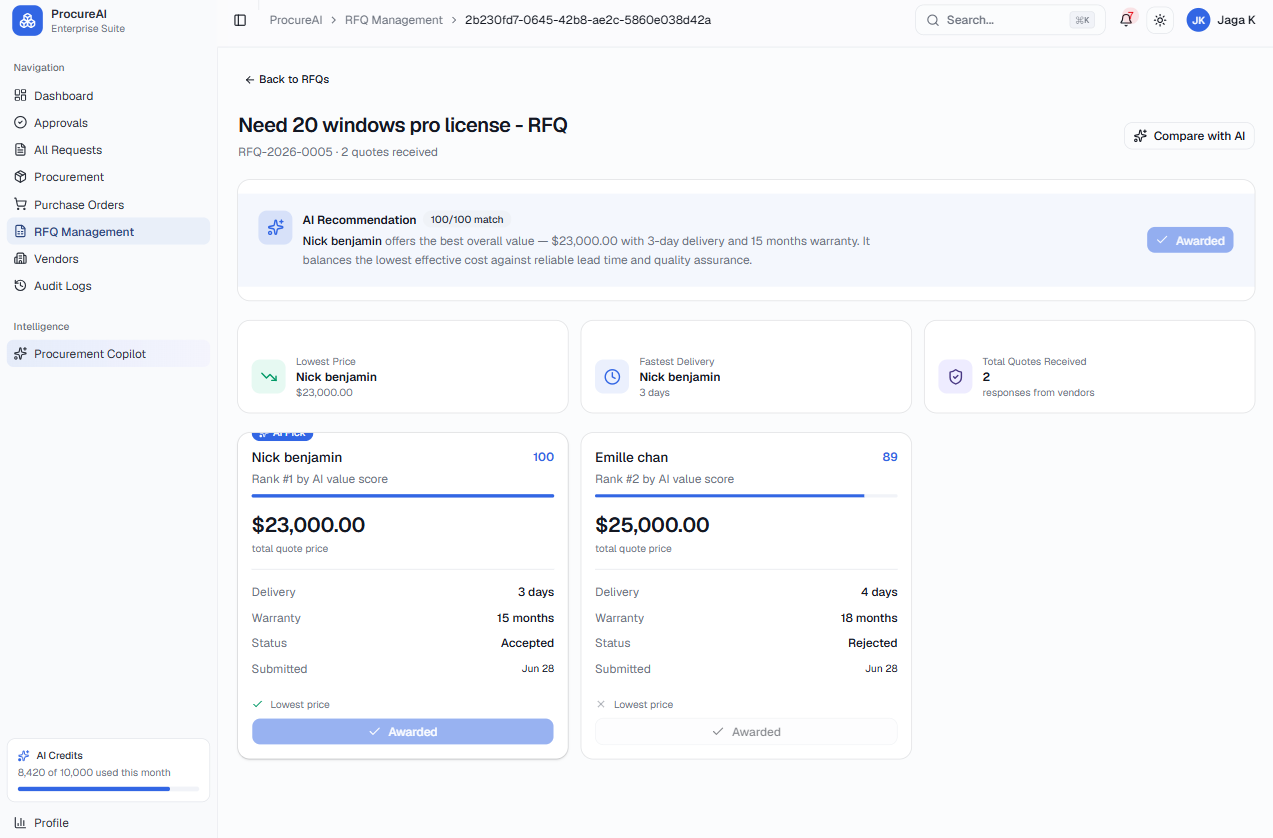
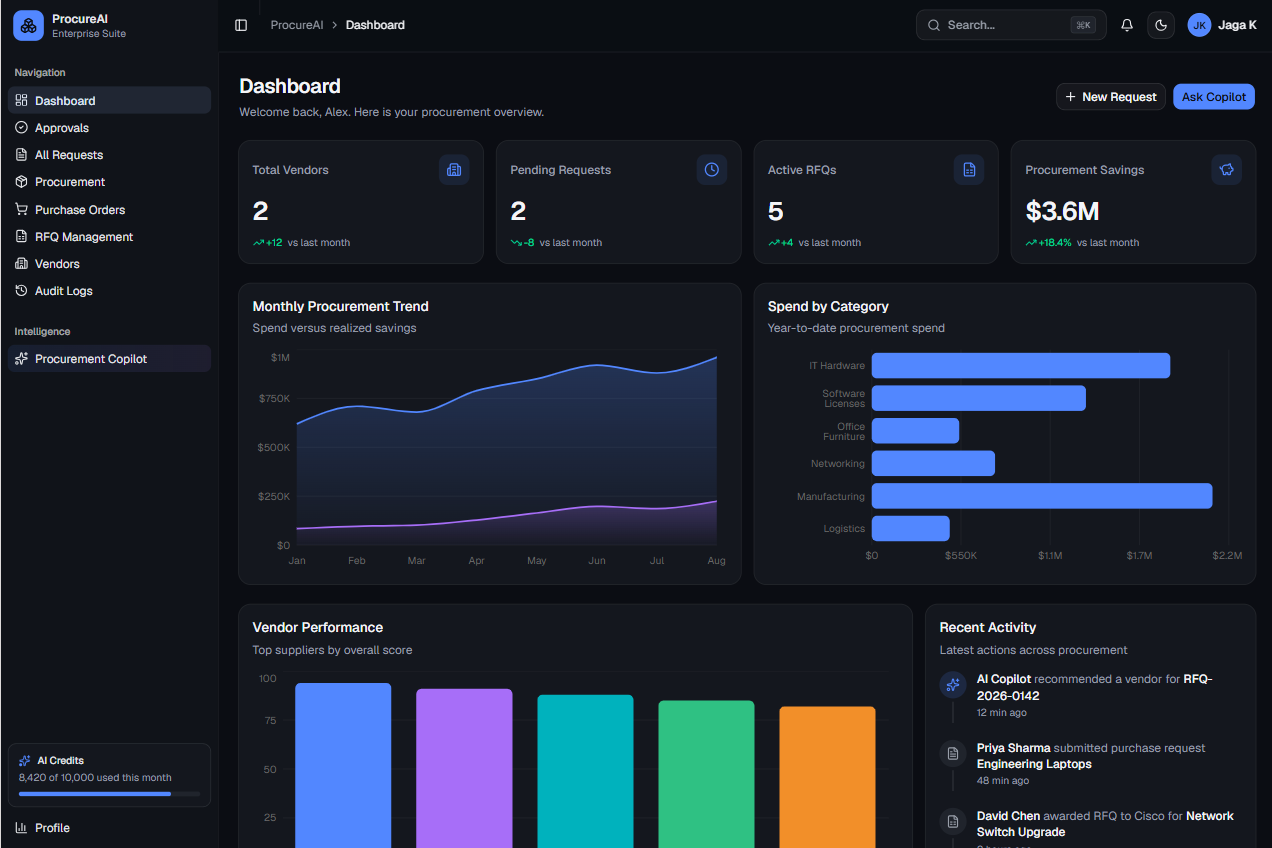
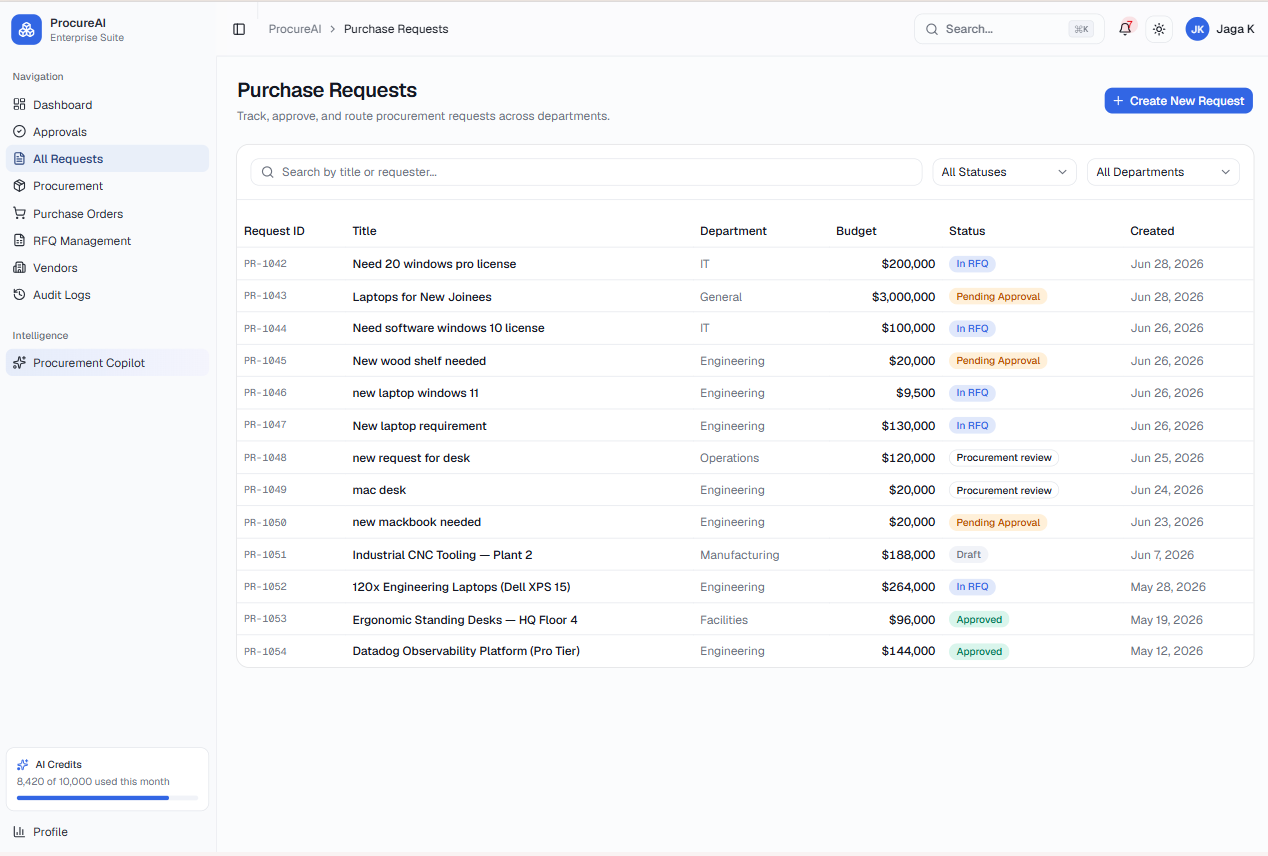
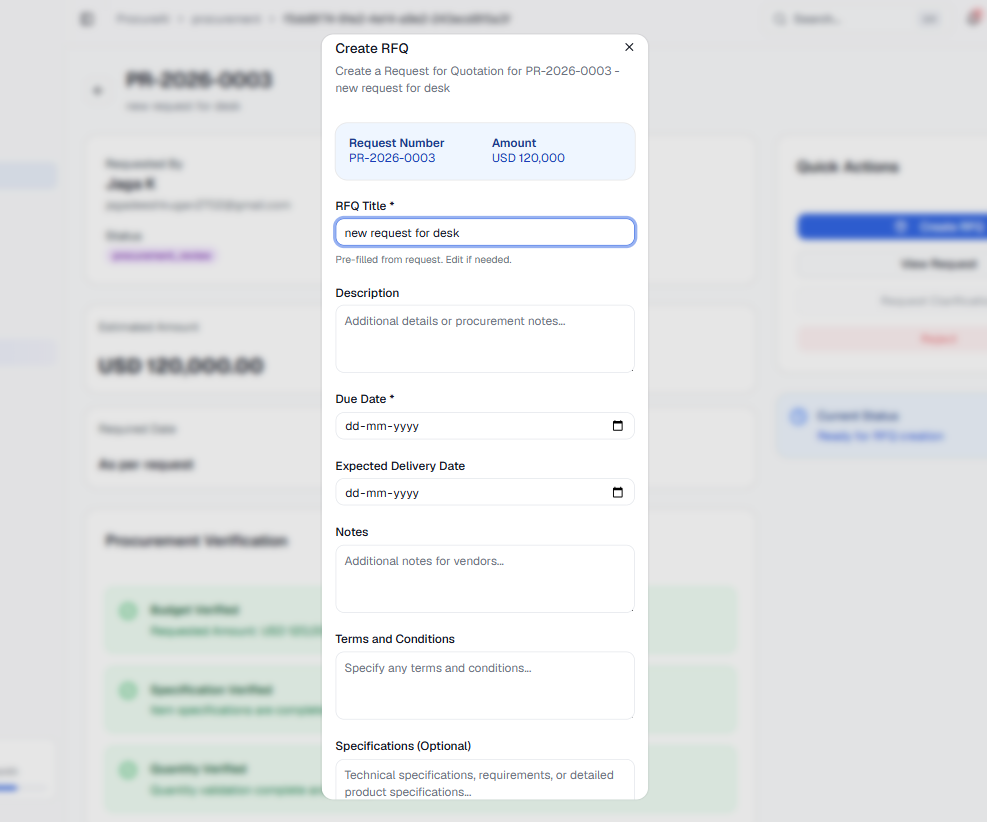
Inspiration
As a developer, I noticed that many small and medium businesses still manage procurement through emails, spreadsheets, and manual follow-ups. Comparing vendor quotations and keeping track of approvals becomes increasingly difficult as the business grows.
I wanted to build something that could simplify this process and demonstrate how modern databases and AI can solve real business problems. That idea led to the creation of ProcureAI, an AI-powered procurement platform that manages the entire procurement lifecycle.
What I Built
ProcureAI provides a centralized workflow for:
- Purchase Requests
- Approval Management
- Request for Quotations (RFQs)
- Vendor Quotation Collection
- AI-Powered Vendor Analysis
- Purchase Order Generation
The goal was to make procurement workflows faster, more organized, and easier to manage.
What it does
How we built it
Initially, right after selecting the ProcureAI idea, I focused on understanding the procurement domain itself. Before writing any code, I explored how businesses handle purchase requests, vendor quotations, approvals, and purchasing workflows to better understand the real problems faced by procurement teams. The application was built using: Next.js and React for the frontend Aurora PostgreSQL Serverless as the primary database Drizzle ORM for database access Gemini AI for vendor analysis and recommendations
I chose Aurora PostgreSQL because procurement data is highly relational. Purchase requests, RFQs, vendors, quotations, and purchase orders are all interconnected entities that require transactional consistency and reliable relationships.
Challenges we ran into
One of the biggest challenges was designing the database schema. The Procurement workflows involve many connected entities and multiple states, and modeling these relationships correctly took several iterations and the connection between drizzle to aurora postgresql was quite difficult in the creation and integration flow.
Another challenge was integrating AI into the procurement process in a meaningful way. We didn't want AI to be just another feature; we wanted it to genuinely help users compare vendors and make better purchasing decisions.
We also spent significant time ensuring that the application remained simple to use while supporting complex procurement workflows behind the scenes.
Why Aurora PostgreSQL
One of the most important decisions in this project was selecting Aurora PostgreSQL. Procurement data is highly relational. Purchase requests, vendors, quotations, RFQs, approvals, and purchase orders are all connected entities that require transactional consistency.
Aurora PostgreSQL provided:
- Relational data modeling
- ACID transactions
- Complex querying capabilities
- Serverless scalability
This made it a suitable choice for implementing real-world procurement workflows.
Accomplishments that we're proud of
The first thing that i am proud of is building a complete procurement workflow from purchase requests to purchase orders instead of implementing only a single feature. Also, Designing a relational data model that connects requests, RFQs, vendors, quotations, approvals, and purchase orders using Aurora PostgreSQL. I personally felt it as a great challenge in making the relations among tables. Integrating AI-powered vendor analysis to help procurement teams compare quotations and make better supplier decisions. Implementing a multi-step business workflow that closely resembles real procurement processes used by organizations. Learning and using Aurora PostgreSQL Serverless for a transactional business application. Delivering an end-to-end application, including the frontend, backend, database design, and AI integration as a solo developer. Transforming a real business problem into a practical solution that could be used by small and medium businesses.
What i have learned
This project reinforced the importance of choosing the right database for the problem. Building ProcureAI gave us a deeper understanding of relational data modeling, transactional workflows, and how AI can be integrated into business applications to provide real value.
Most importantly, we learned that many real-world business problems can be solved by combining thoughtful system design, modern cloud databases, and practical AI capabilities.
What's next for ProcureAI
These are my lookaheads in the procureAI, which i wish to integrate into existing modules. In the future, we would like to add supplier performance analytics, predictive procurement insights, and deeper AI-assisted decision making.
Building ProcureAI was an exciting opportunity to explore how Aurora PostgreSQL and AI can modernize procurement workflows and help businesses make smarter purchasing decisions.
Implementation of s3 and aws bedrock for custom chatbot and textract in the procurement flow for text , table and data extraction in files can be done in the near future.
Built With
- amazon-rds-relational-database-service
- amazon-web-services
- drizzle
- nextjs
- pgadmin
- react
- typescript

Log in or sign up for Devpost to join the conversation.