-
-
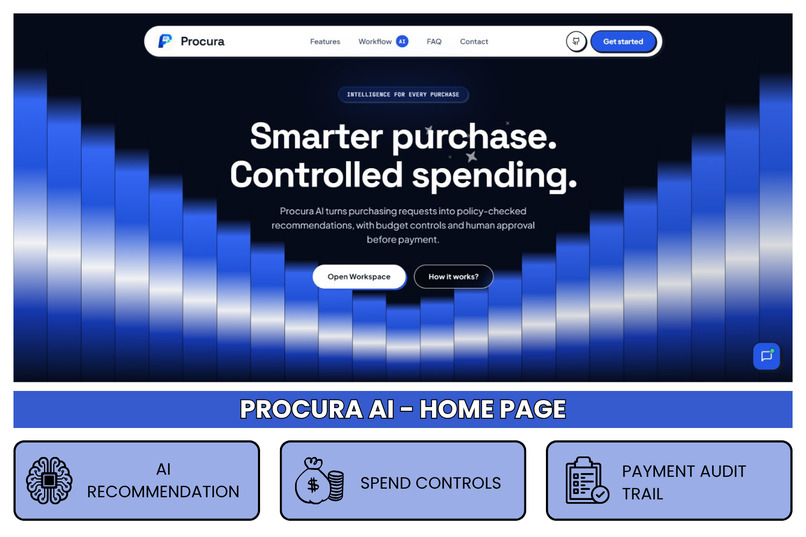
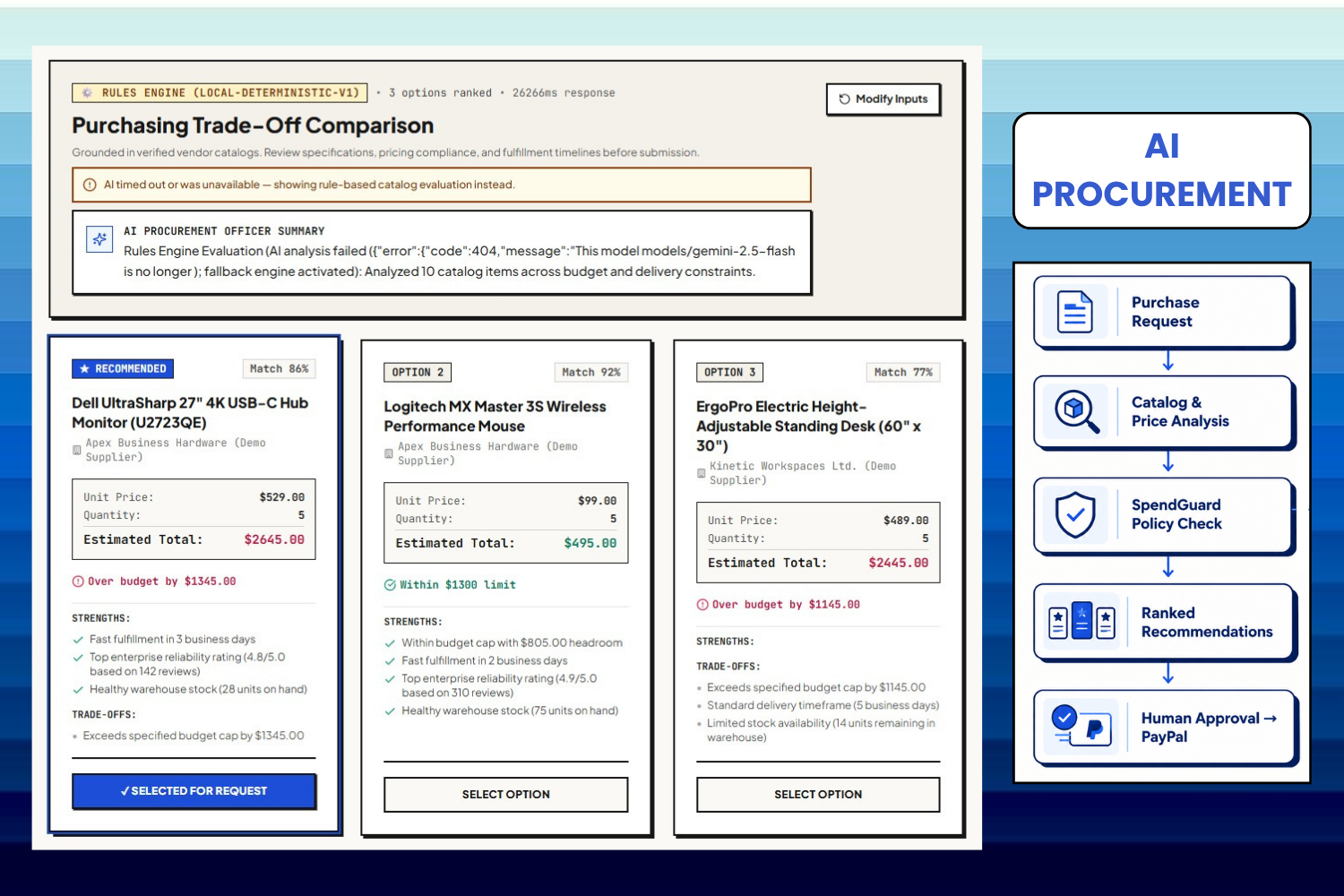
Procura AI turns a purchasing need into a clear workflow, with AI-assisted recommendations and spending controls built in from the start.
-
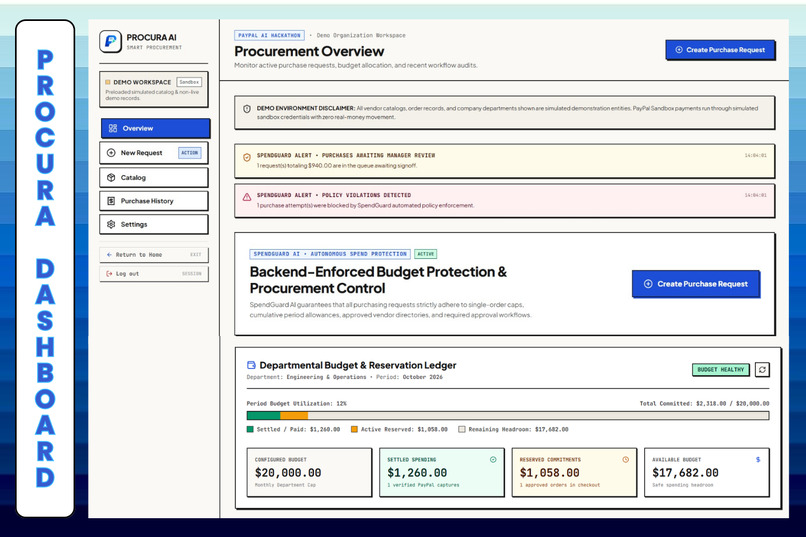
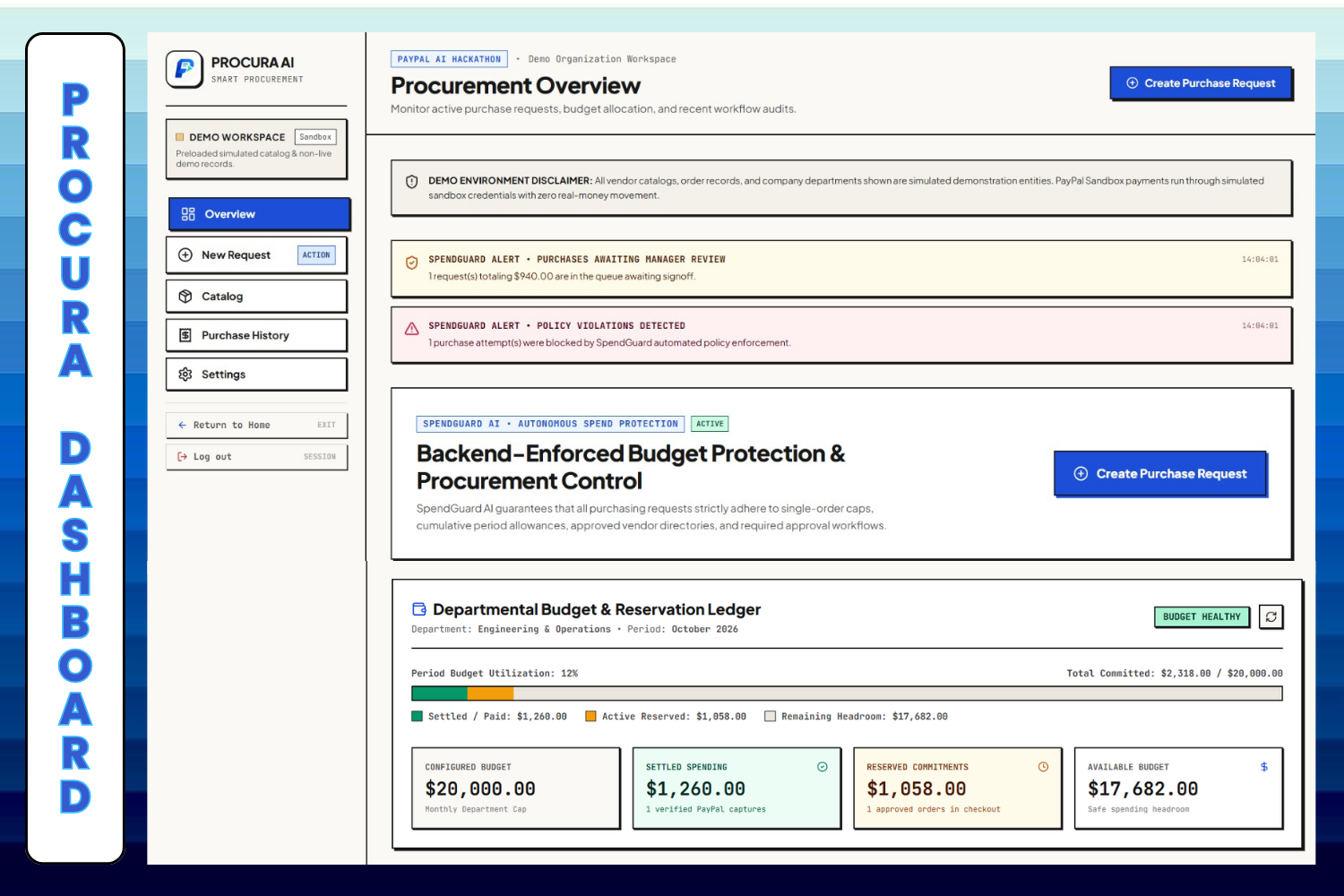
The dashboard brings purchase requests, budget utilization, pending approvals, and SpendGuard alerts together in one workspace.
-
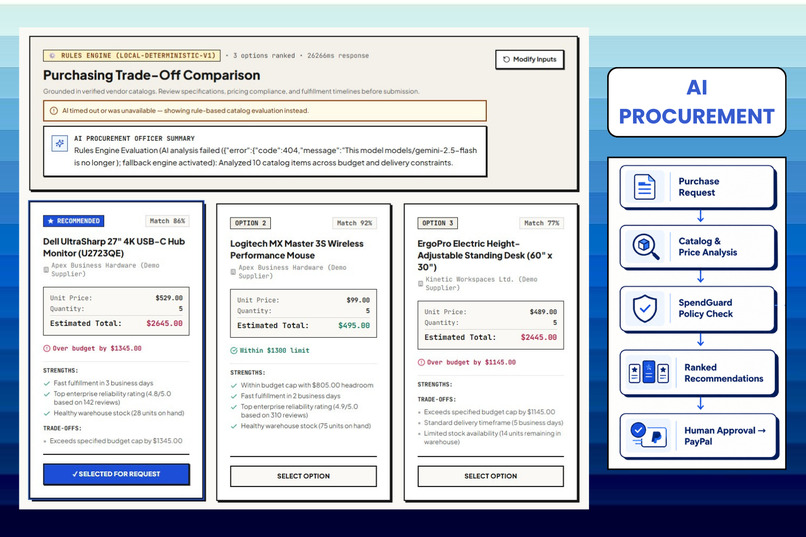
Procura AI compares products on price, delivery, stock, and budget fit, helping users weigh trade-offs before choosing what to buy.
-
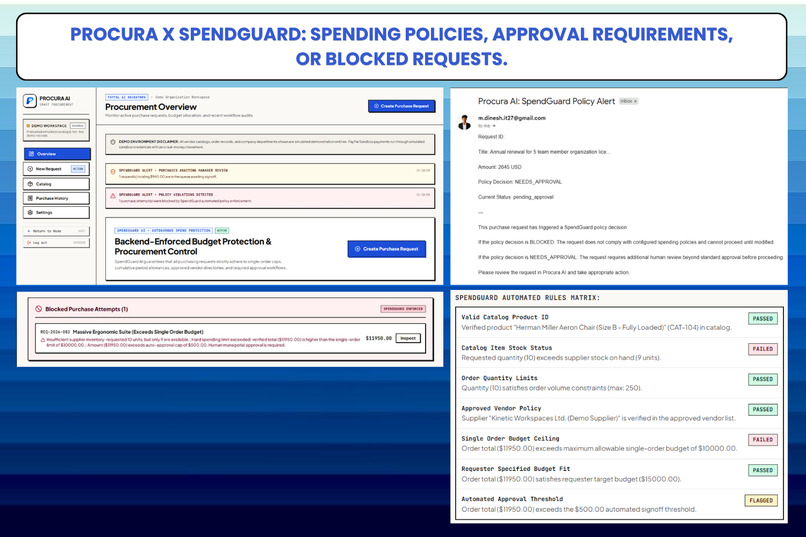
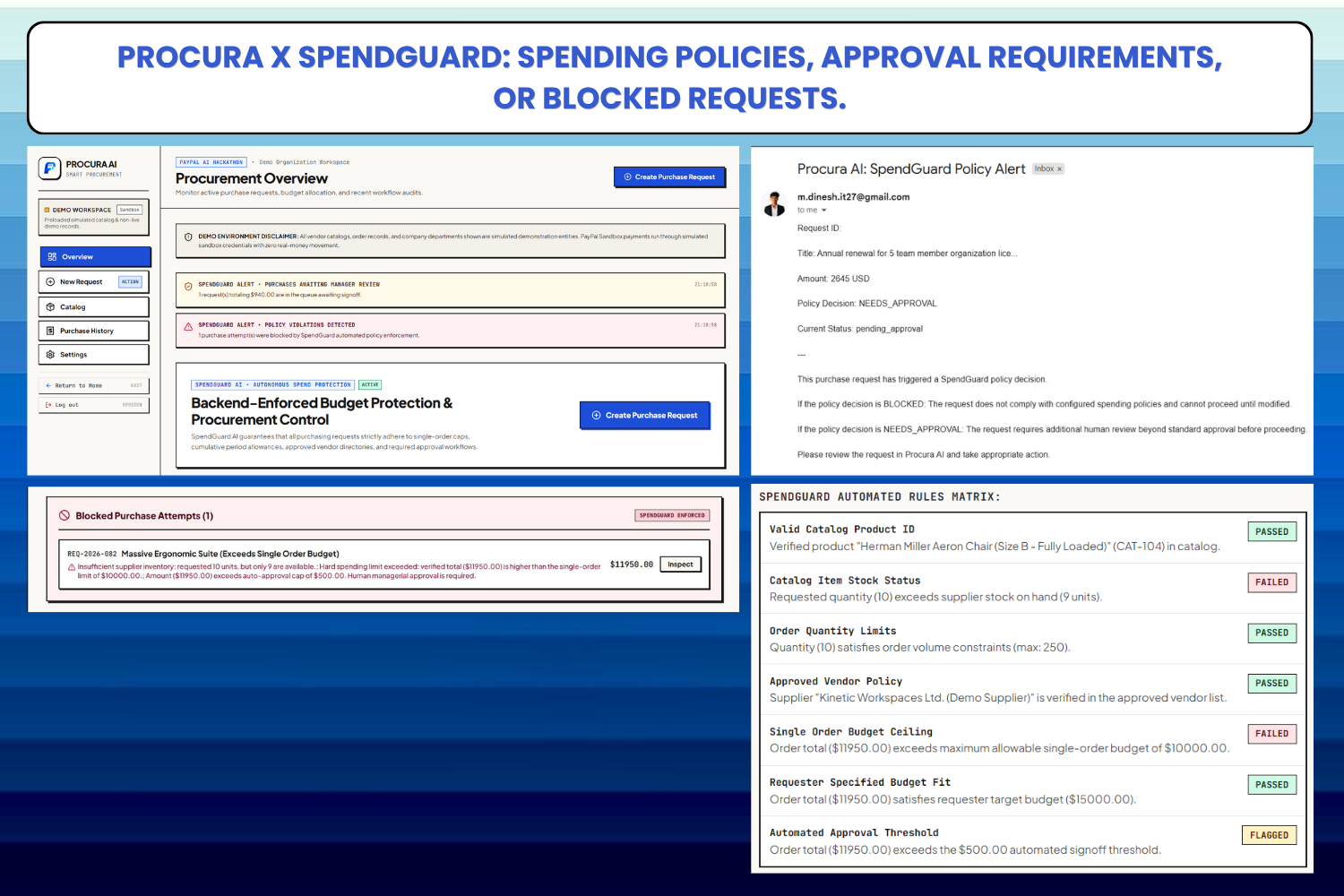
SpendGuard checks purchasing rules, flags budget violations, and routes requests for human review when approval is needed.
-
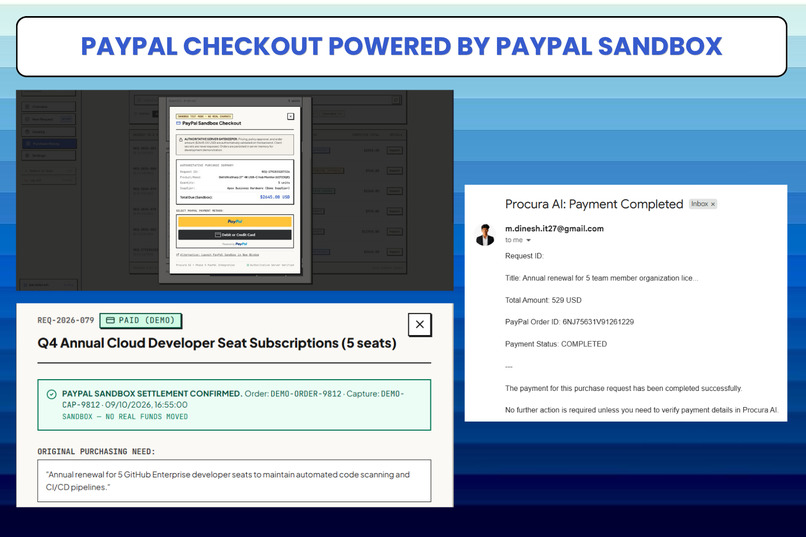
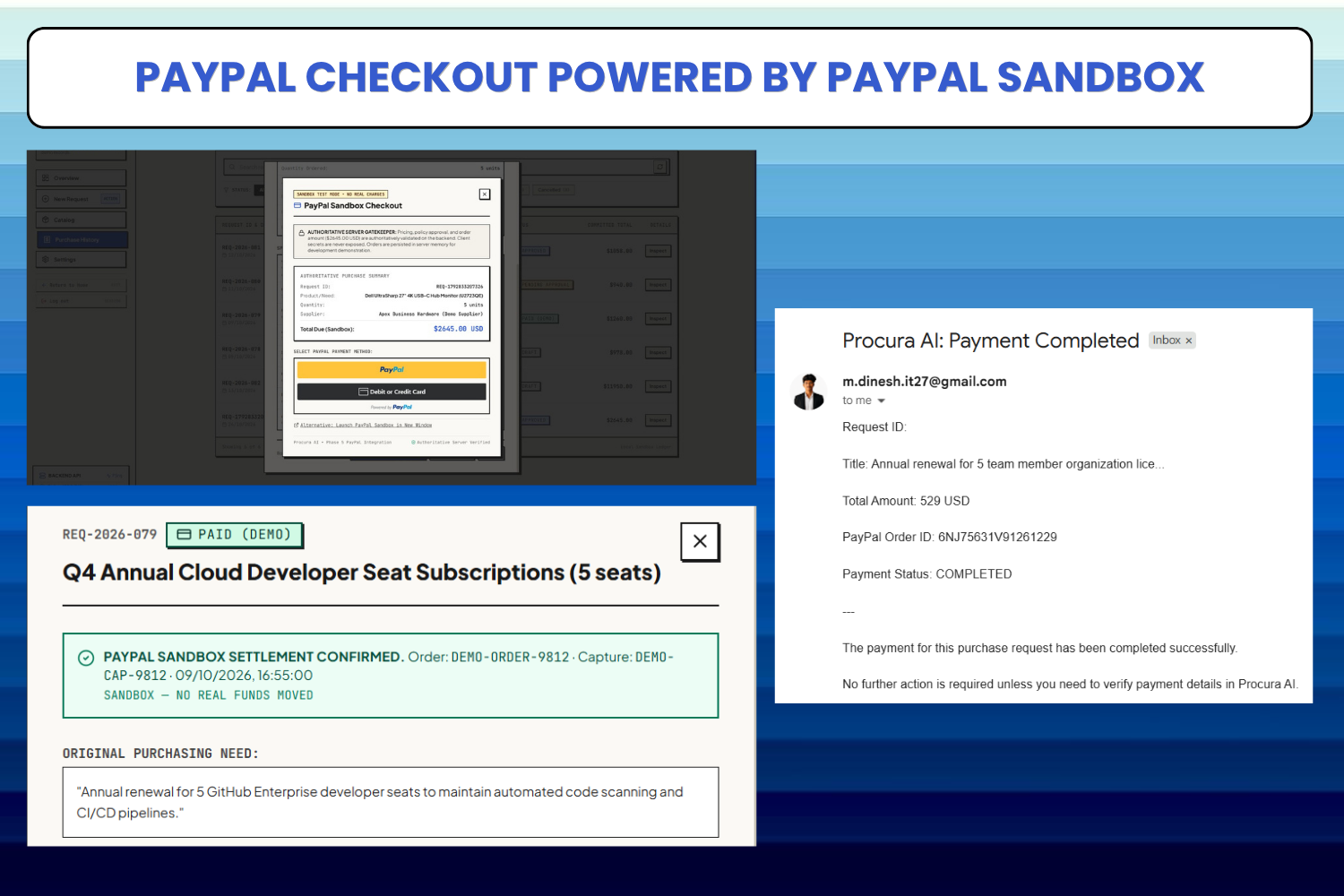
PayPal Sandbox checkout completes the purchasing flow, while payment status and confirmation notifications keep the outcome traceable.
-
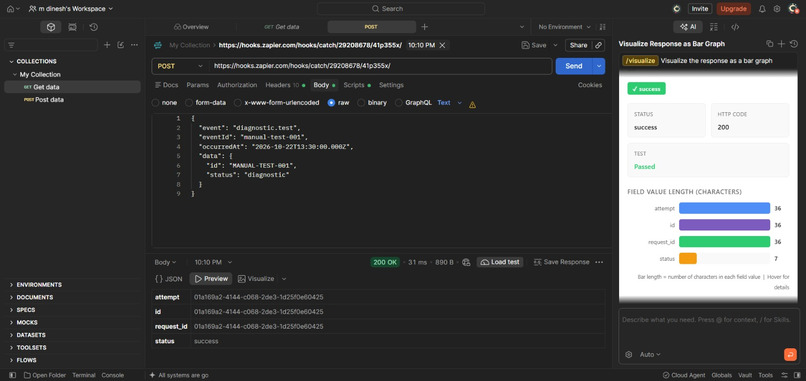
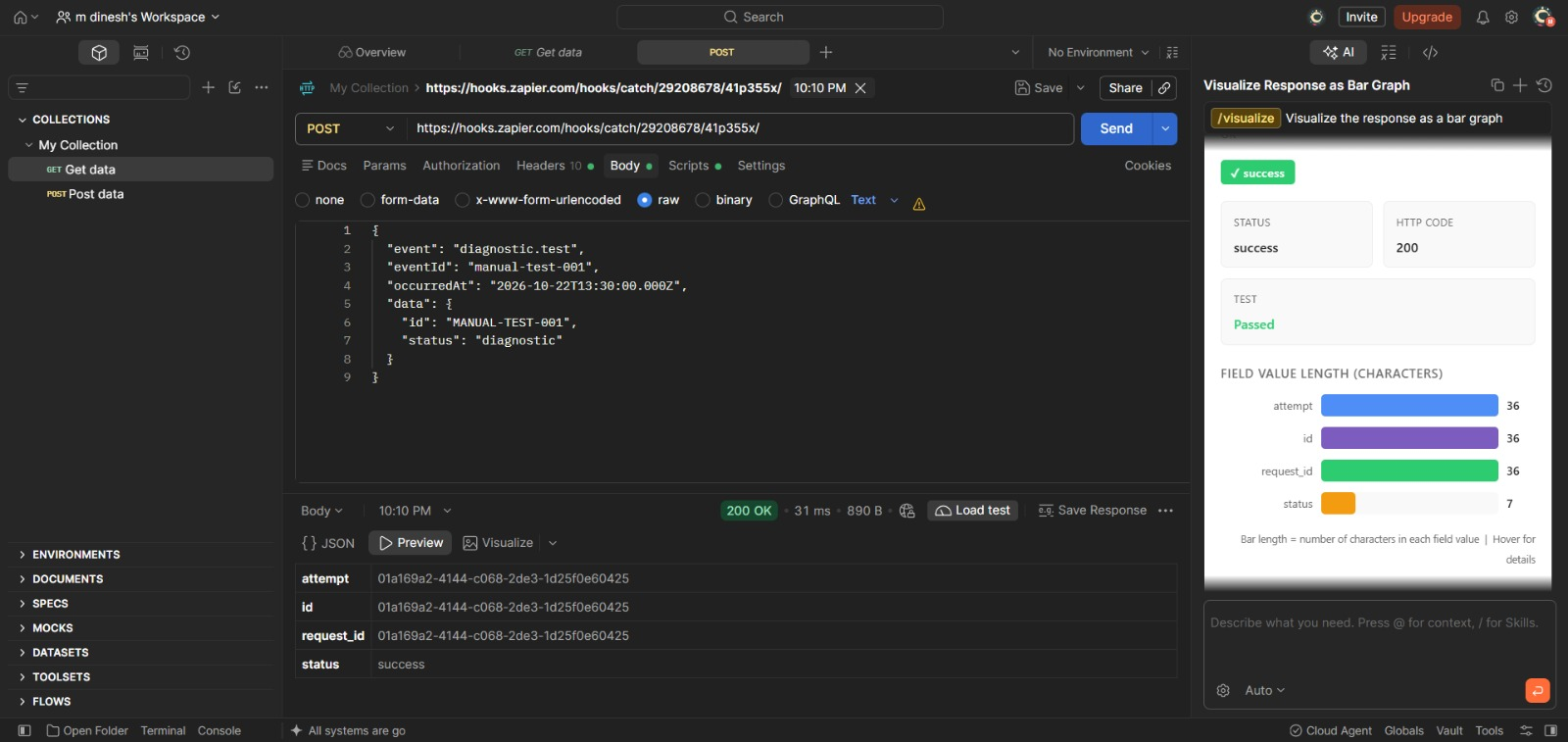
Postman helps test Procura AI backend endpoints, verify API responses, and check integration behavior.
-
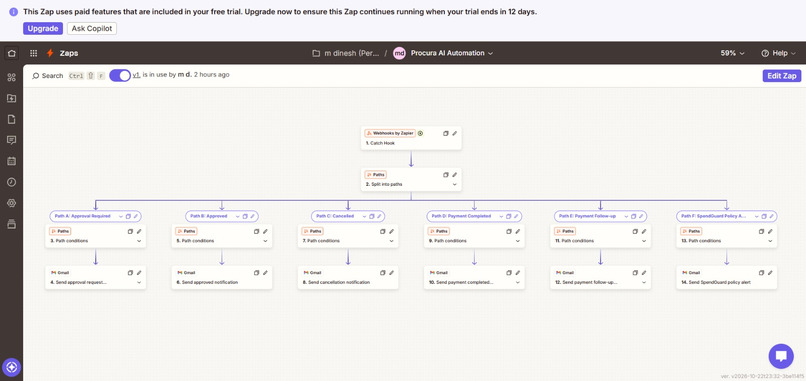
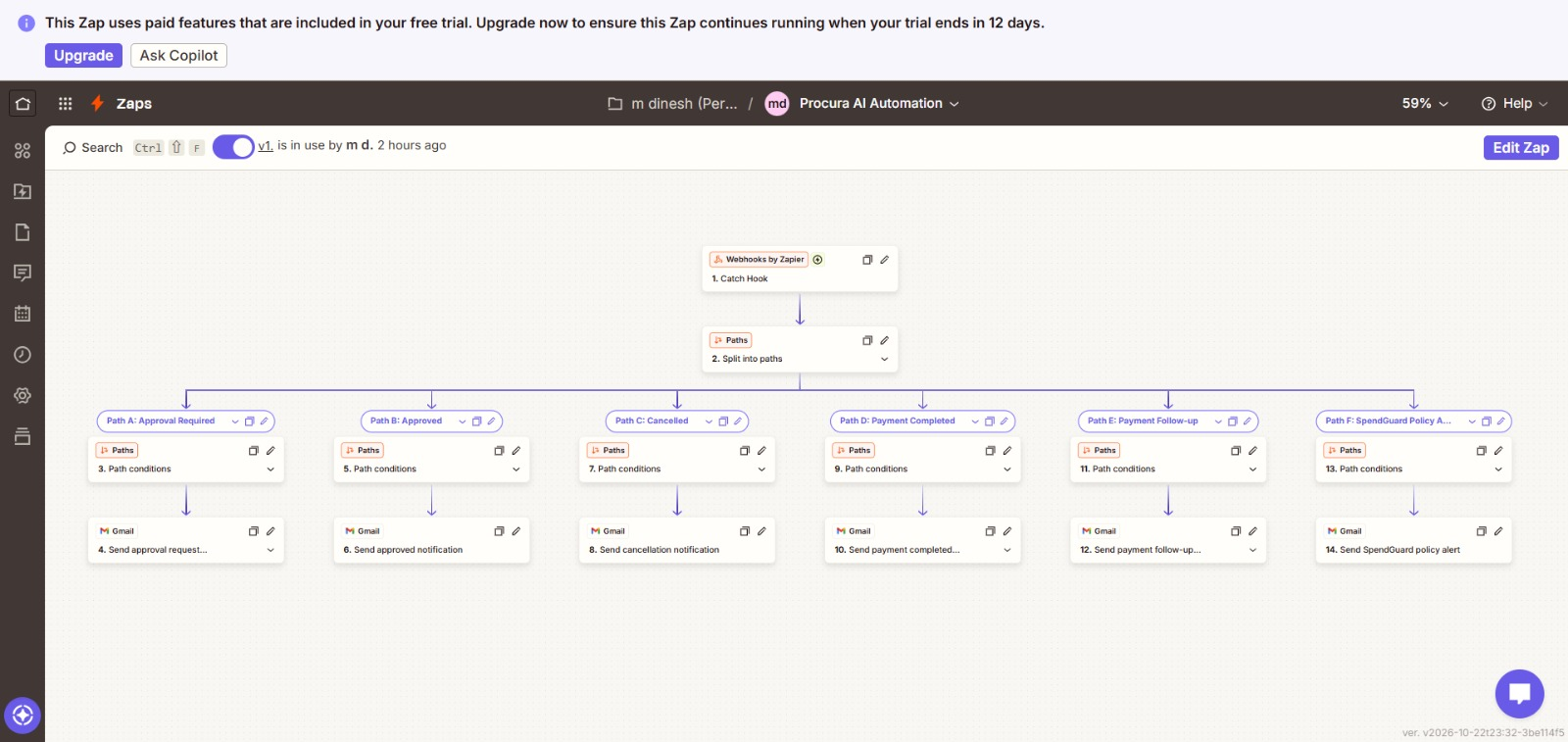
Zapier sends email alerts for Procura AI purchase approvals, policy violations, and payment updates.
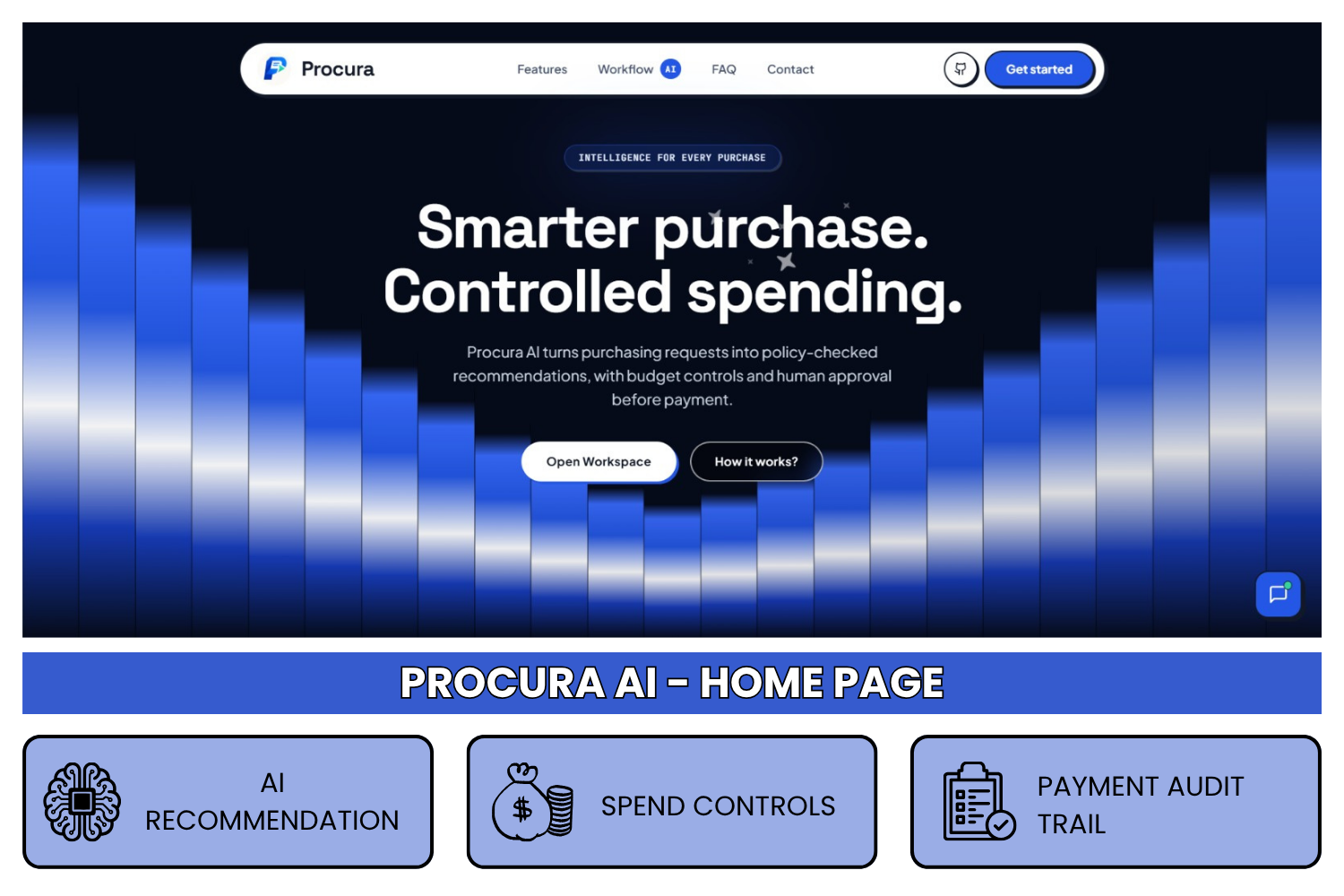
Procura AI - Smarter Purchasing. Controlled Spending. Trusted Payments.
Inspiration
Every business makes purchasing decisions. A team needs equipment, an office needs supplies, or a growing company needs to replenish inventory. But behind every purchase are questions that traditional workflows often leave scattered across different tools:
Is this purchase necessary? Is the price reasonable? Does the supplier meet company policy? Is there enough budget left? Who needs to approve it? And what happens after payment?
For small businesses, managing these decisions manually can mean repetitive work, limited spending visibility, and unnecessary delays. Adding AI to the process is not enough if an intelligent recommendation can still lead to an uncontrolled purchase.
We built Procura AI around one fundamental idea: an AI agent should not only help decide what to buy; it should help businesses control how purchasing decisions become financial commitments.
Our goal was to connect natural-language procurement, financial guardrails, human approval, and digital payments into one coherent workflow.
What It Does
Procura AI is an AI-powered procurement assistant designed to help small businesses make purchasing decisions with greater control and visibility.
Instead of navigating a disconnected purchasing process, users can describe their needs in natural language and move through a structured workflow.
1. Natural-Language Procurement
Users describe what they need in everyday language. Procura AI interprets the request and generates structured purchase information, including the requested item and quantity, with recommendations grounded in the available demo catalog.
The goal is to make procurement more accessible without requiring users to understand complex purchasing forms or workflows.
2. SpendGuard AI - Financial Guardrails for AI-Assisted Purchasing
An AI recommendation should never have unrestricted authority over a business budget.
SpendGuard applies configurable procurement policies, including spending limits, quantity restrictions, approval thresholds, cumulative budget monitoring, and budget alerts. It tracks relevant spending and reserved commitments to help users understand their available budget.
Rather than treating budget control as an afterthought, Procura AI integrates it into the purchasing workflow.
3. Human-in-the-Loop Approval
Automation should not eliminate accountability.
Purchases that require approval are routed through the configured approval workflow before payment can proceed. This keeps people involved in important financial decisions while allowing eligible purchases to move through the process more efficiently.
4. PayPal-Powered Sandbox Checkout
Procura AI connects approved purchases to PayPal checkout using the PayPal REST APIs and JavaScript SDK.
The backend verifies the payment result against the authoritative purchase amount and currency before recording a completed payment. This creates a clear connection between a procurement decision and its payment outcome.
The current implementation uses PayPal Sandbox, allowing the workflow to be demonstrated without processing real money.
5. Procurement Dashboard and Audit Visibility
The dashboard brings purchase requests, approval statuses, payment activity, and spending information together. Users can follow a request through the workflow and inspect its outcome instead of losing track across disconnected steps.
6. Resilient AI-Assisted Workflow
Procura AI integrates Gemini for AI-powered request interpretation and includes a deterministic rules-engine fallback for supported operations when the AI provider is unavailable.
The design separates AI assistance from financial enforcement: procurement policies and authoritative pricing are handled by backend logic rather than blindly trusting generated text.
What Makes Procura AI Different?
Many AI assistants stop after recommending a product or generating a purchasing plan. Procura AI focuses on what happens next.
Its central differentiator is the connection between AI-assisted purchasing and policy-controlled payment execution.
- From conversation to action: Natural-language requests become structured procurement workflows.
- From recommendations to guardrails: Configurable policies help prevent purchases that violate spending rules.
- From approval to payment: PayPal Sandbox checkout connects approved requests to a verifiable payment workflow.
- From isolated transactions to visibility: SpendGuard and the dashboard help track spending, commitments, and request outcomes.
The value is not simply adding a chatbot to a checkout page. It is exploring how AI can participate in business operations while financial controls remain explicit and enforceable.
How We Built It
We built Procura AI using a modular full-stack architecture.
Frontend
- React
- TypeScript
- Vite
Backend
- Node.js
- Express
- TypeScript
AI
- Gemini API
- Deterministic rules-engine fallback
Payments
- PayPal REST APIs
- PayPal JavaScript SDK
- PayPal Sandbox
Development and Quality
- Git and GitHub
- Automated backend tests
- Type checking and production builds
The frontend handles the user experience, while the backend coordinates procurement requests, applies business policies, calculates authoritative purchase totals, and communicates with PayPal.
The prototype persists purchase requests and policy settings locally. The repository includes environment templates and an open-source MIT license.
Challenges We Faced
Balancing AI Flexibility with Deterministic Rules
Natural language is flexible, but financial decisions require consistency. We had to separate the interpretation of a user's purchasing needs from the enforcement of budget and approval policies.
Our approach was to use AI for supported language-driven tasks while retaining server-side policy checks and authoritative pricing.
Connecting Procurement to Payments
A purchase request and a successful payment are not the same thing. Payment can be cancelled, remain pending, or fail verification.
This made payment-state handling an important part of the design. The backend checks the payment status, amount, and currency before recording a completed payment.
Handling AI Provider Limitations
AI services can become unavailable or return errors. We incorporated a deterministic fallback for supported operations so that the application does not have to depend entirely on a live model response.
Making Spending Visible
Budget limits alone are not enough if users cannot understand their remaining capacity. SpendGuard brings together spending, reserved commitments, configured limits, and alerts to provide more useful financial visibility.
These challenges helped shape Procura AI into a workflow-oriented prototype rather than an isolated AI feature.
What We Learned
Building Procura AI reinforced an important lesson: a useful AI agent needs more than intelligence; it needs boundaries, reliable tools, and accountability.
We learned to distinguish generated recommendations from authoritative business decisions, to validate payment outcomes on the backend, and to design for failures rather than assuming every AI request or checkout will succeed.
We also learned that the quality of an AI product depends on the complete user journey. A request must be understood, evaluated against policy, approved when necessary, paid for through the intended workflow, and reflected accurately in the dashboard.
Potential Impact
Small businesses need practical ways to make purchasing decisions without losing control of their finances.
Procura AI explores how AI-assisted procurement can reduce repetitive administrative work, make spending policies more visible, and create a more traceable path from purchasing intent to payment.
The current prototype uses a demo catalog and PayPal Sandbox, so its real-world impact has not yet been measured. The next step is to validate the workflow with small-business users and evaluate its effectiveness in realistic procurement scenarios.
What's Next?
Our roadmap focuses on making the existing workflow more robust before expanding its capabilities:
- Strengthen verified authentication and authorization.
- Improve concurrency safety for budget reservations and approvals.
- Expand payment retry and reconciliation handling.
- Integrate real supplier catalogs and pricing sources.
- Improve deployment readiness, monitoring, and auditability.
- Evaluate the experience with real procurement use cases.
Closing
Procura AI is our exploration of a more responsible way to bring AI into business purchasing.
We believe the next generation of AI agents should do more than answer questions. They should help people take meaningful action while respecting the rules, budgets, and approval boundaries that matter.
Procura AI - Smarter purchasing. Controlled spending. Trusted payments.
Built With
- apimatic
- channel3
- css3
- express.js
- gemini-api
- git
- github
- html5
- node.js
- paypal-javascript-sdk
- paypal-rest-api
- paypal-sandbox
- postman
- react
- render
- typescript
- vite
- zapier

Log in or sign up for Devpost to join the conversation.