-
start
-
-
-
-
-
Inspiration
Every productivity tool assumes procrastination has one cause and hands out one fix — "just break it into smaller steps," "just use a timer." But avoidance isn't one disease with one cure. Someone stuck on a task might be afraid of doing it badly, genuinely unsure what the first step even is, running on the wrong kind of energy for it, bored because the stakes feel far away, or quietly convinced the task doesn't matter at all. Generic advice keeps failing because it's treating the wrong cause. We wanted to build something that actually diagnoses why a person is stuck before it tells them what to do about it — closer to how a doctor works than how a productivity app works.
What it does
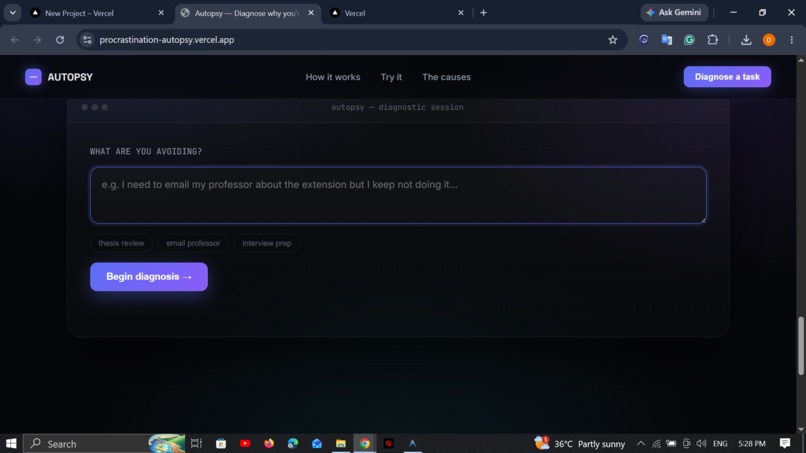
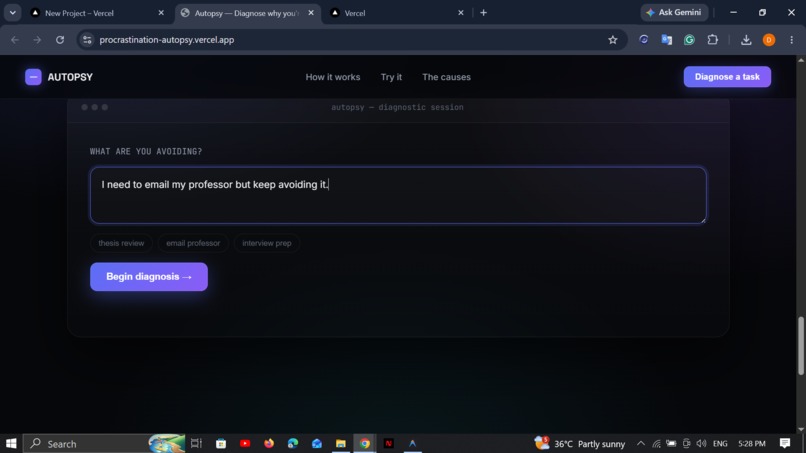
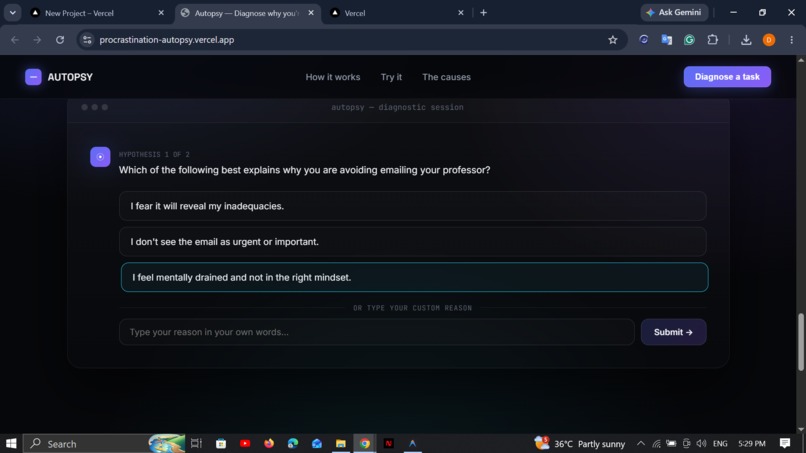
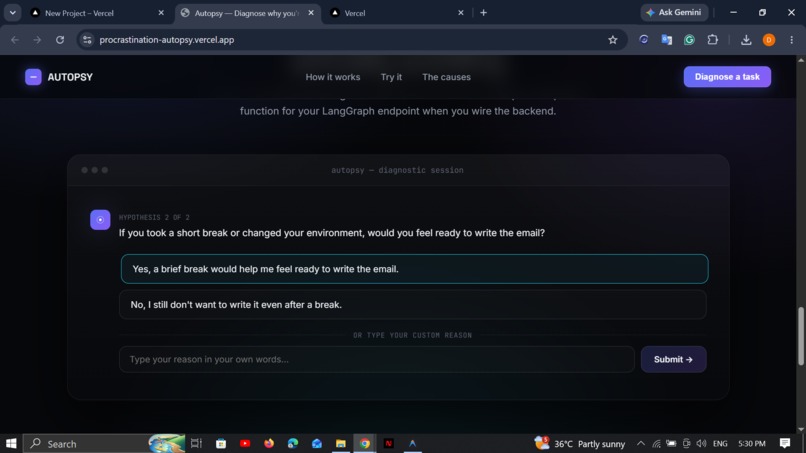
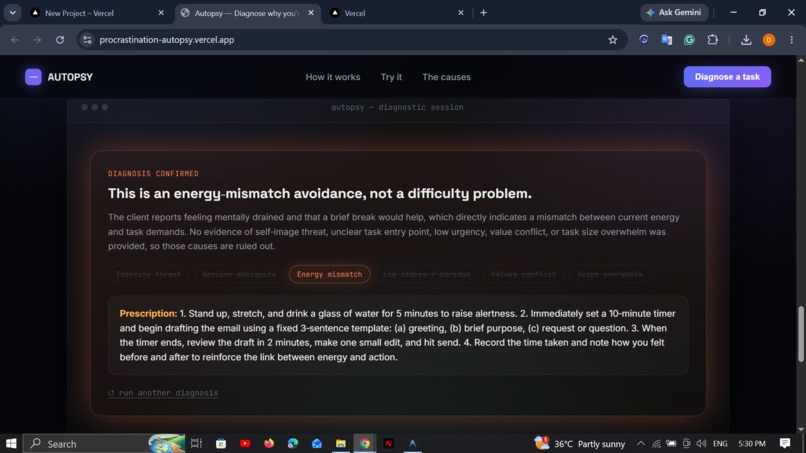
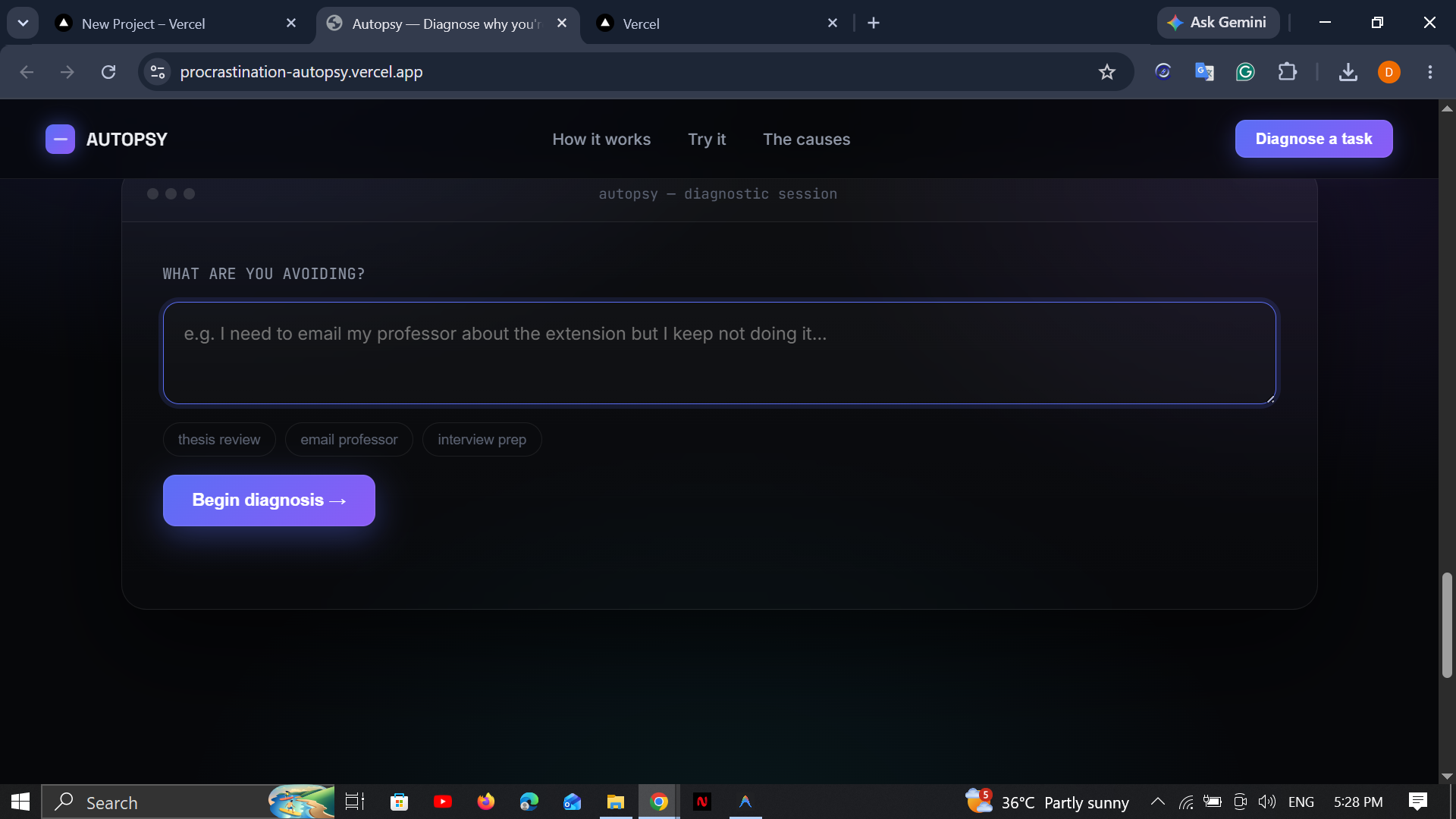
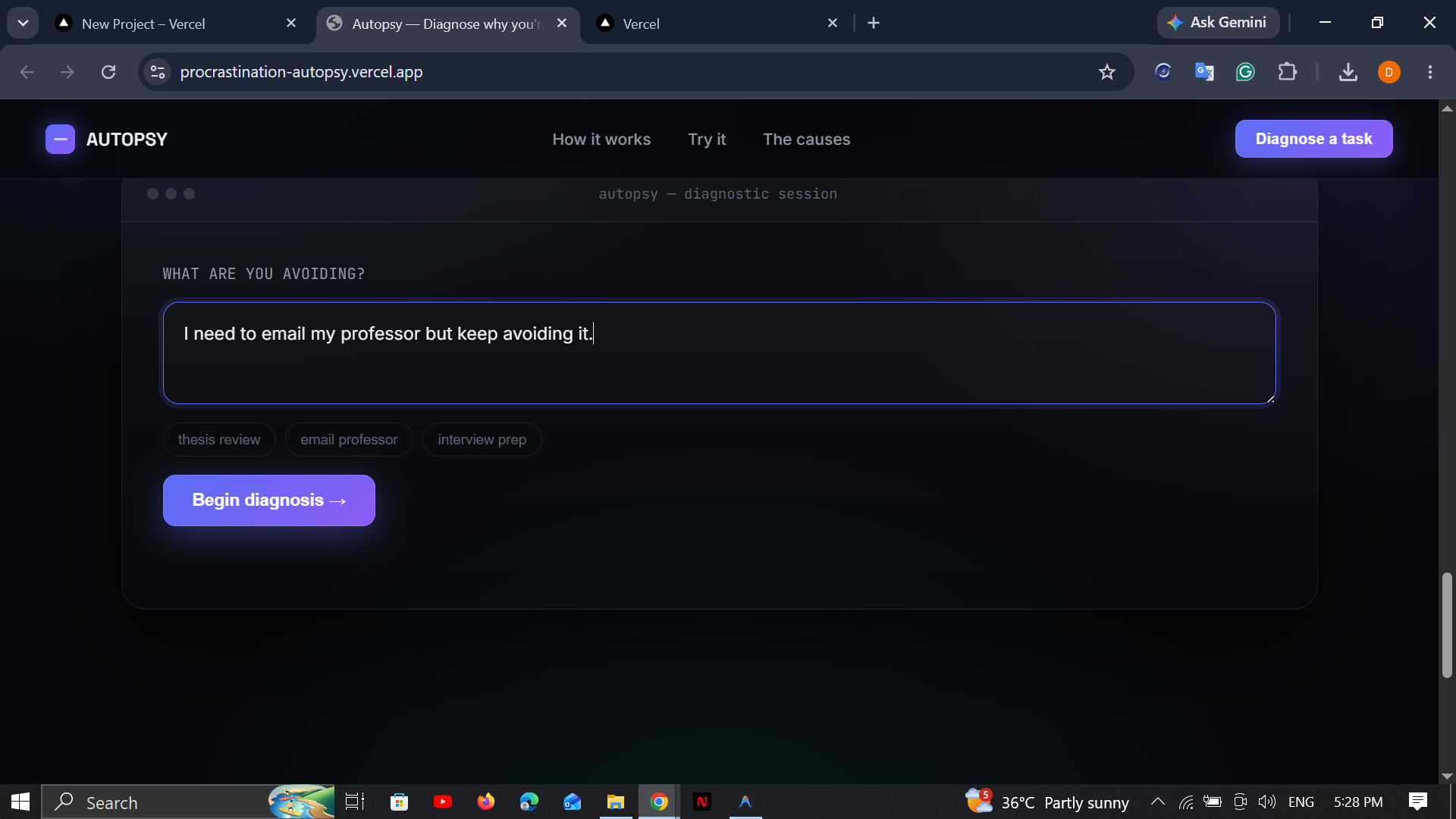
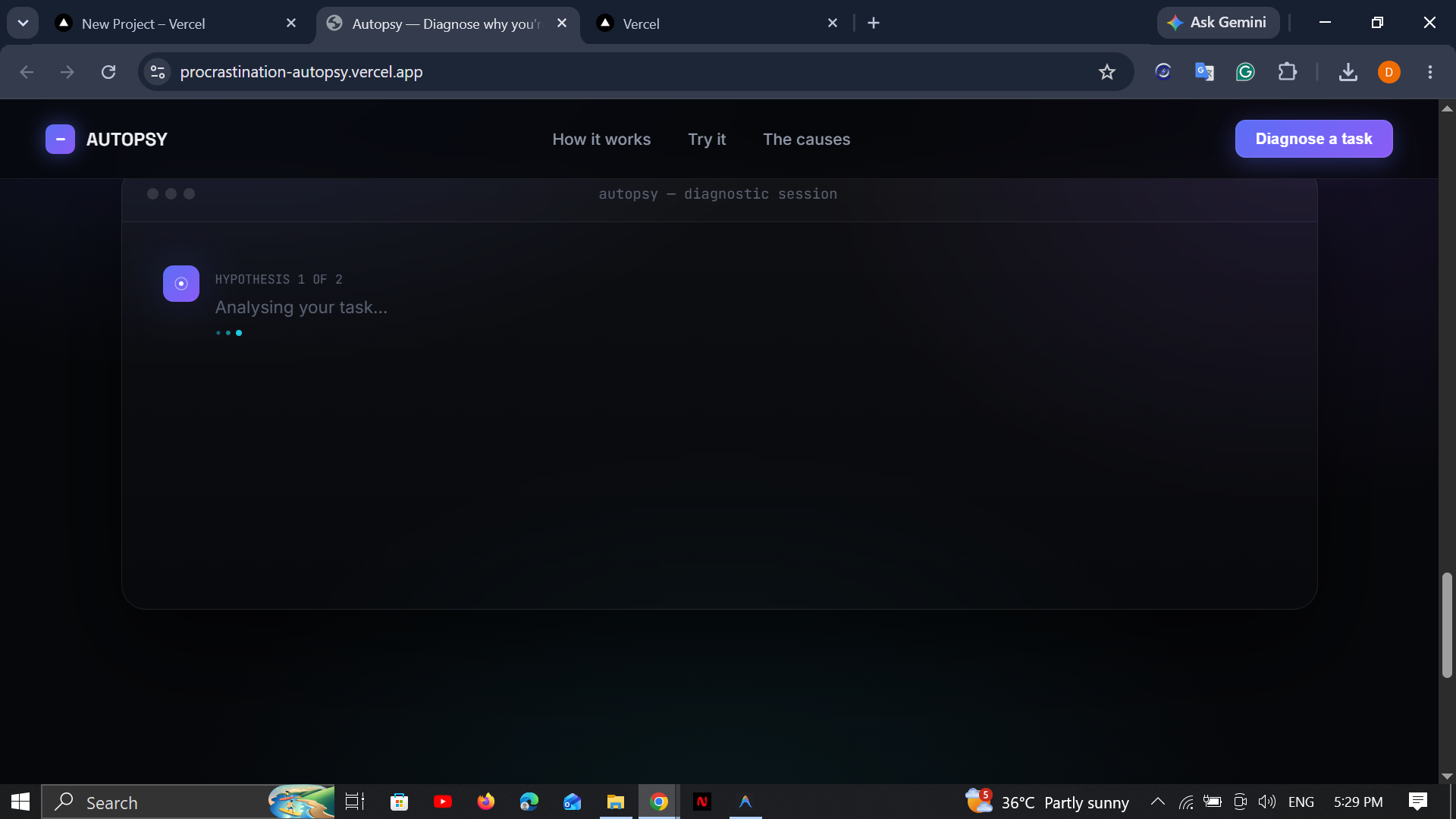
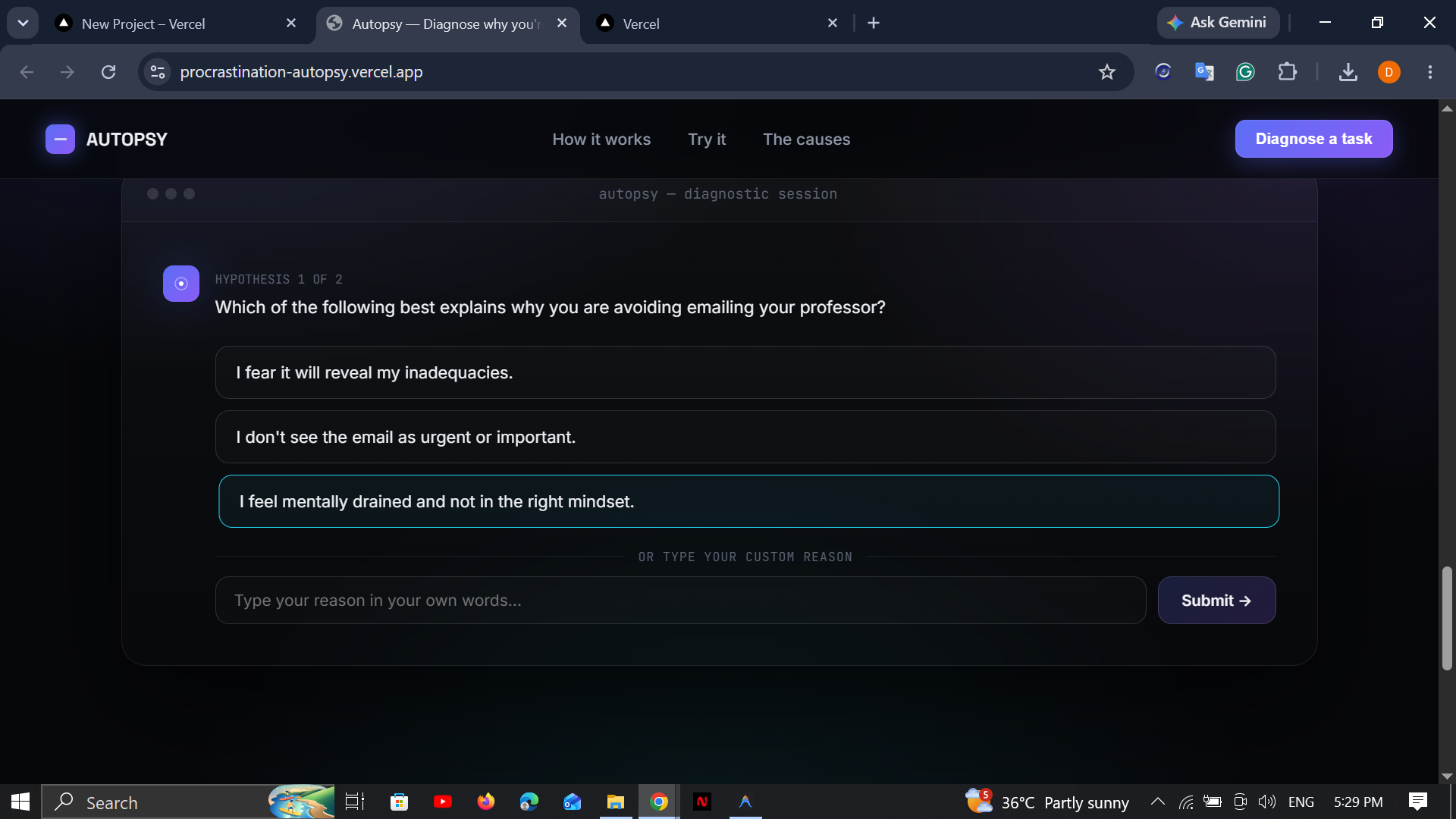
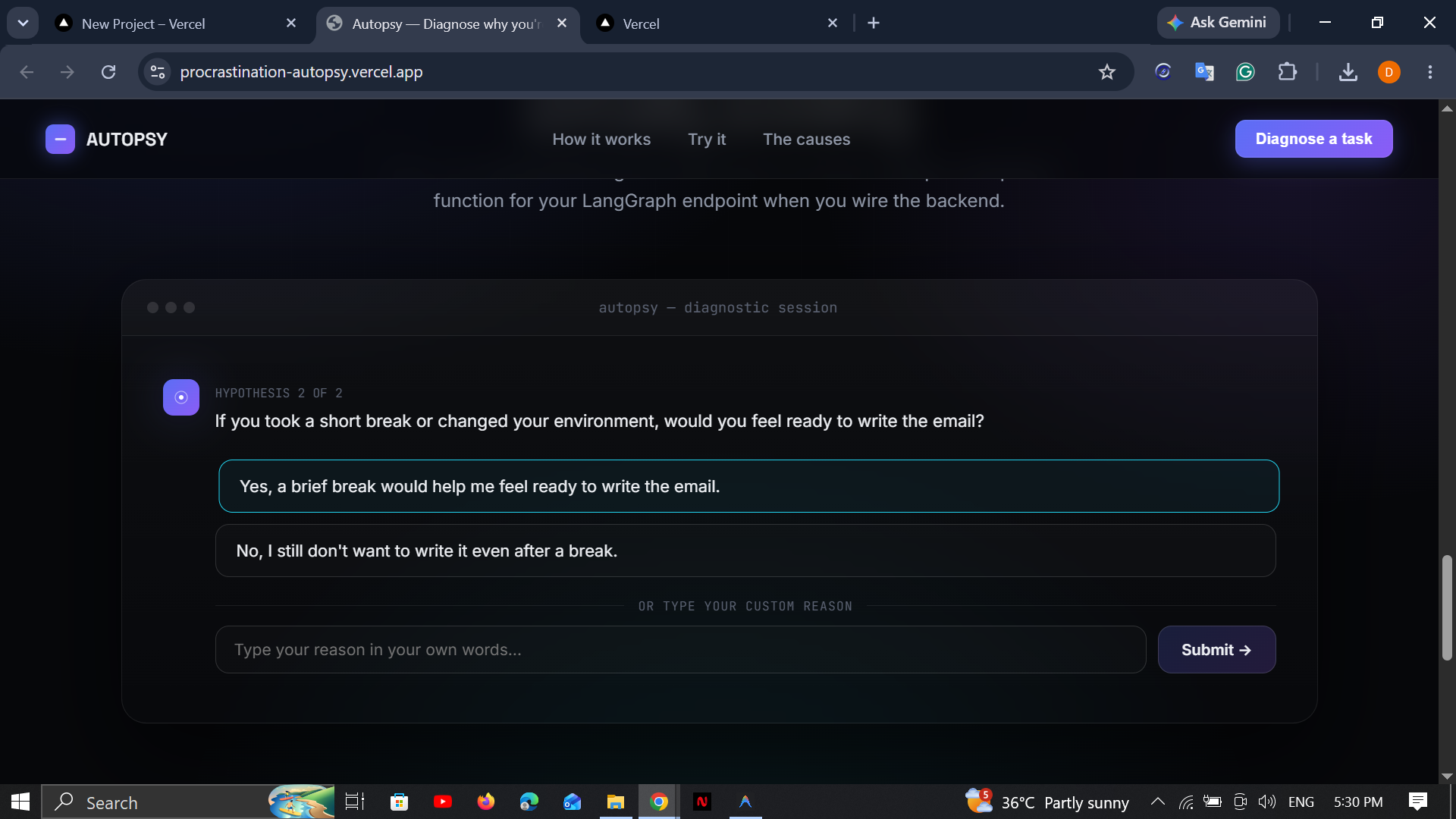
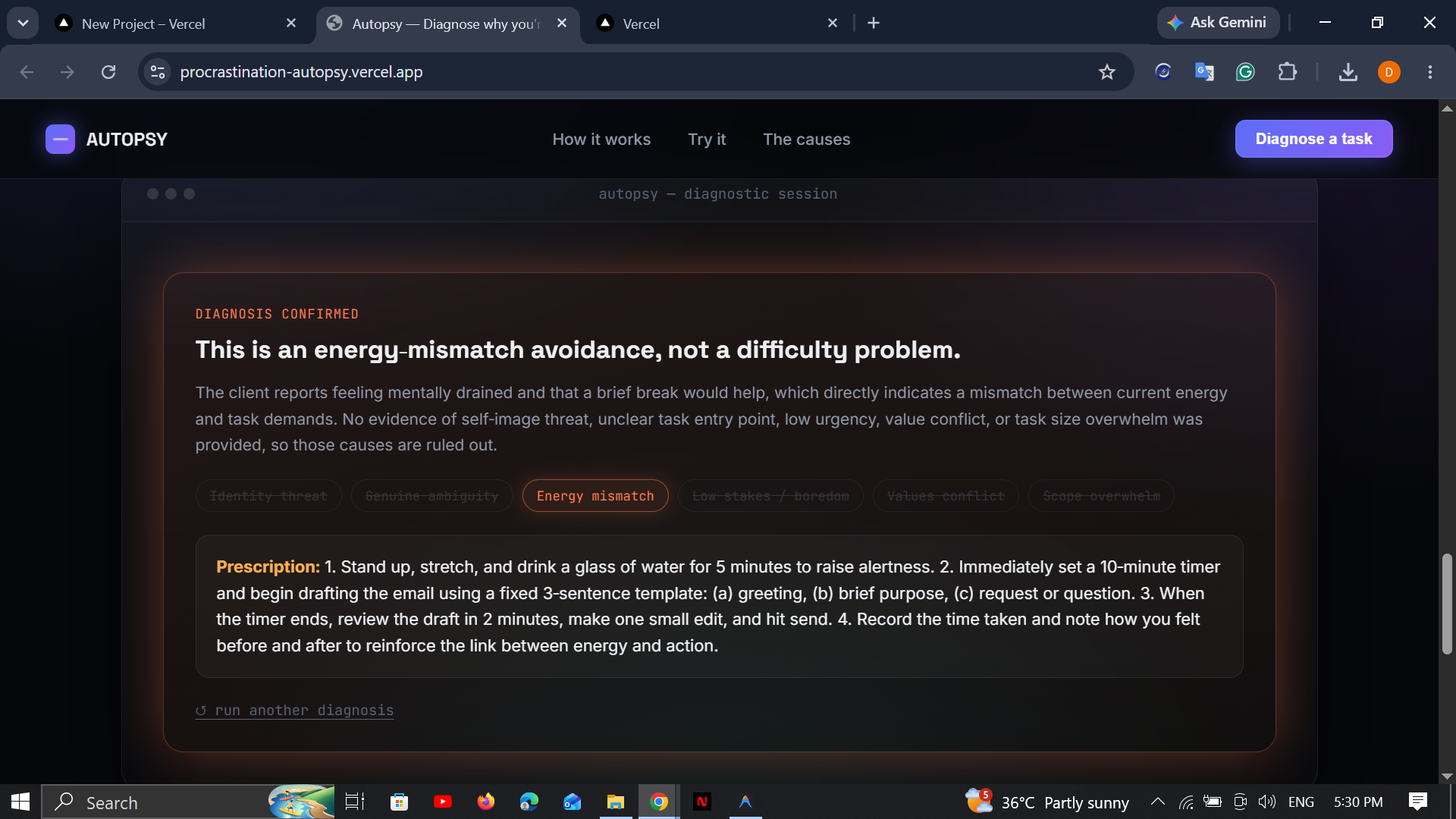
Autopsy runs a real differential diagnosis on procrastination. You describe a task you're avoiding, in your own messy words, and instead of jumping straight to advice, it asks a small number of sharp, targeted questions — each one picked specifically to separate the remaining possible causes, not just to gather more information. It holds six root causes in play at once (identity threat, ambiguity, energy mismatch, boredom, values conflict, and scope overwhelm), rules them out one by one based on your answers, and lands on a single diagnosis with a prescription matched to that specific cause. It also shows its full reasoning trail — which causes got ruled out, and why — so the diagnosis feels earned instead of guessed.
How we built it
We started by writing the taxonomy before writing a single prompt. Fixing the six causes up front was the key decision — without that constraint, the model kept sliding into vague, one-size-fits-all reassurance that could plausibly apply to anyone ("you're probably just afraid of failure"), which defeats the entire point of a diagnostic tool. Constraining the model to pick from a closed set of real, distinguishable causes is what keeps the output sharp.
The diagnostic flow itself is structured as sequential hypothesis elimination — each question exists to separate two or more of the remaining candidate causes, not to gather general context. That mirrors how differential diagnosis actually works in medicine, and it let us design a reasoning chain instead of a single prompt-and-response.
On the frontend, we built the whole experience around that diagnostic framing rather than defaulting to a generic AI chat UI. The centerpiece is a live signal visualization — erratic and cool-toned while the system is investigating, then locking into a clean waveform and shifting warm the moment a diagnosis is confirmed — so the visual state mirrors the reasoning state instead of just decorating the page.
Challenges we ran into
The hardest part wasn't the AI logic, it was keeping the diagnoses from collapsing into generic advice. Early attempts at the prompt chain kept producing answers vague enough to fit almost any task, which felt technically correct but useless. Locking the model to the fixed six-cause taxonomy — and forcing the follow-up questions to actively rule causes out rather than just explore the situation — is what finally made the diagnoses feel specific instead of astrology-vague. Building the whole thing inside a hard time window also meant making fast calls on scope: we prioritized getting the diagnostic reasoning genuinely sharp over adding more causes or more polish elsewhere.
Accomplishments that we're proud of
Getting the reasoning trail to actually build trust, not just look interesting — showing which causes were ruled out and why is what turns "here's some advice" into something that feels like it actually understood the specific situation. We're also proud that the visual design isn't decorative; the signal visualization directly represents the diagnostic state of the system, which is a detail most hackathon UIs skip in favor of generic AI-orb visuals.
What we learned
Constraining an AI system to a fixed set of hypotheses produces sharper, more trustworthy output than leaving it open-ended — the taxonomy did more work than any amount of prompt tweaking could have. We also learned that showing reasoning, not just conclusions, is often what makes an AI tool feel intelligent to a user, rather than the polish of the final answer alone.
What's next for Autopsy
Wiring the diagnostic engine to real usage patterns to see which causes actually show up most often, expanding the taxonomy where real inputs don't fit cleanly into the current six, and letting the model ask a variable number of questions instead of a fixed two when a diagnosis needs more evidence.


Log in or sign up for Devpost to join the conversation.