-
-
Procedural Game Asset Foundry
-
Procedural Game Asset Foundry
-
Procedural Game Asset Foundry
-
Procedural Game Asset Foundry
-
Procedural Game Asset Foundry
-
Procedural Game Asset Foundry
-
Procedural Game Asset Foundry
-
Procedural Game Asset Foundry
Inspiration
Game developers spend countless hours creating assets manually, often struggling with consistency and iteration speed. We envisioned a JSON-native visual asset generator that could bridge the gap between structured data and creative output. The idea of using Bria FIBO to power deterministic, schema-driven asset generation excited us, imagine defining a character's attributes in JSON and instantly visualizing them as high-quality game art.
What it does
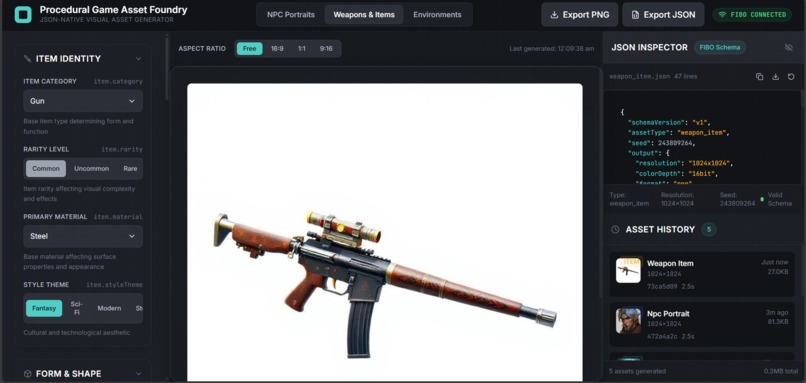
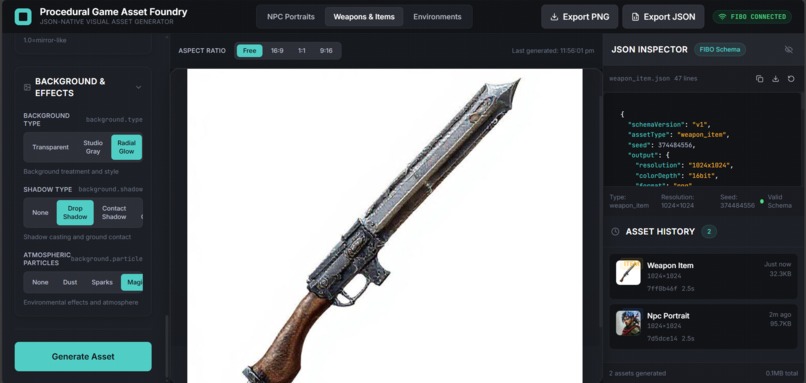
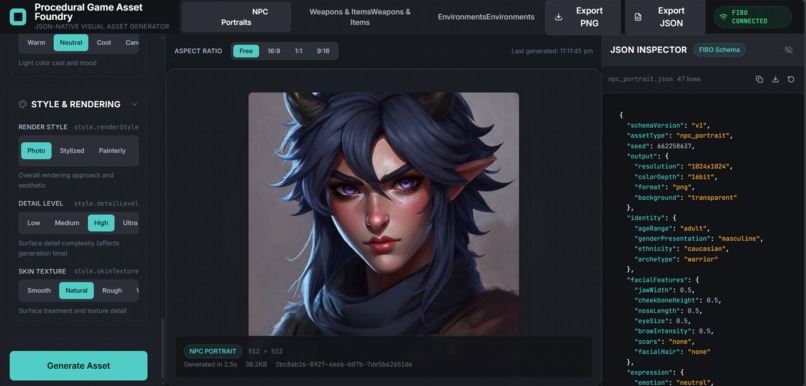
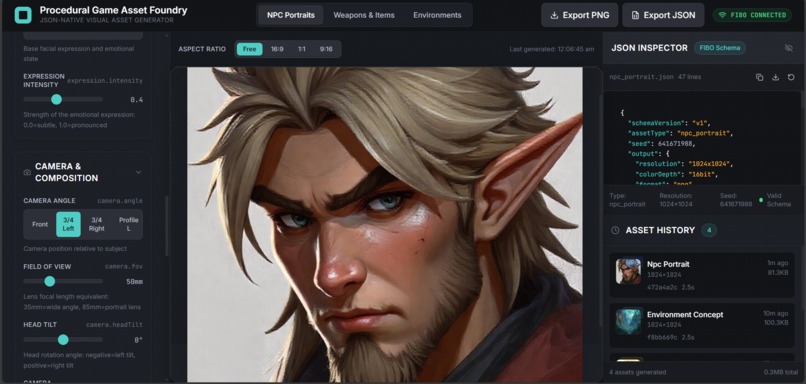
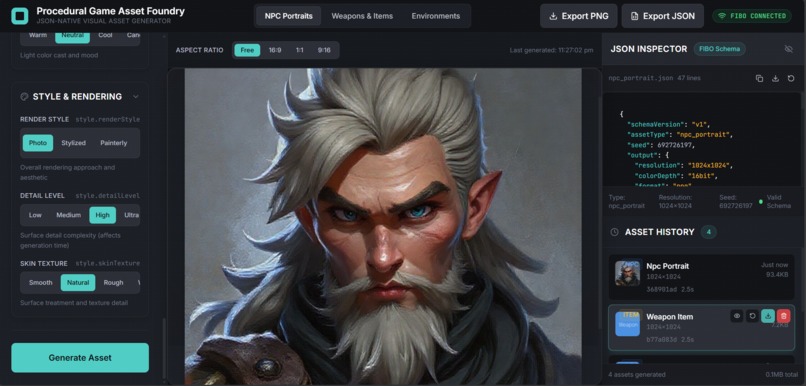
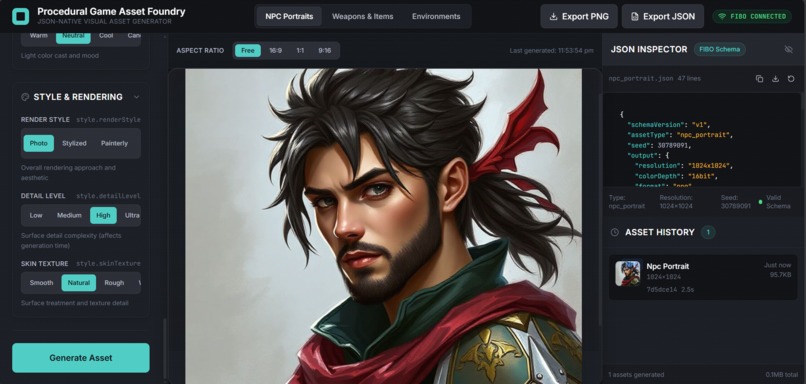
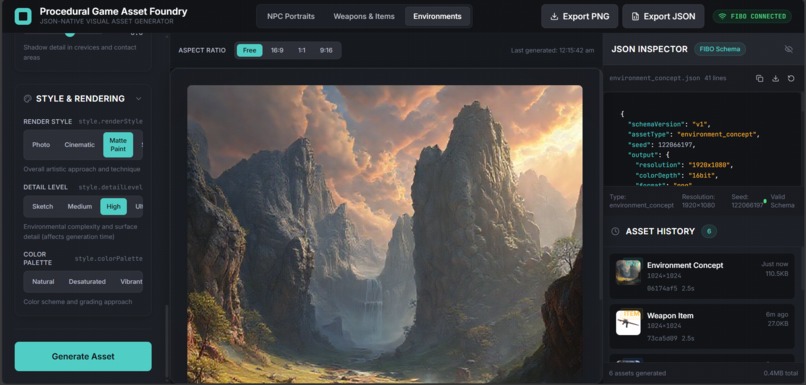
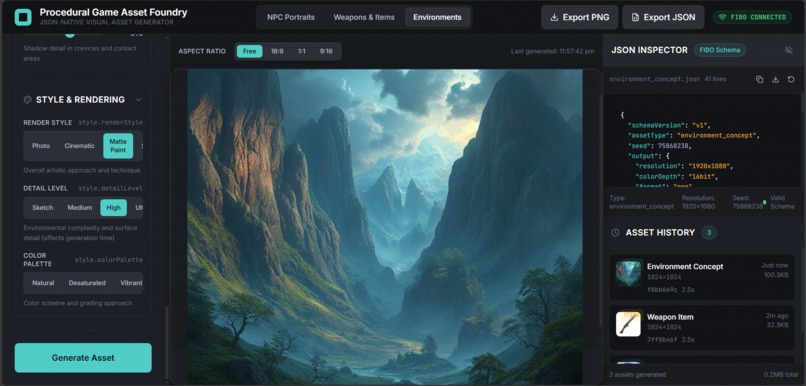
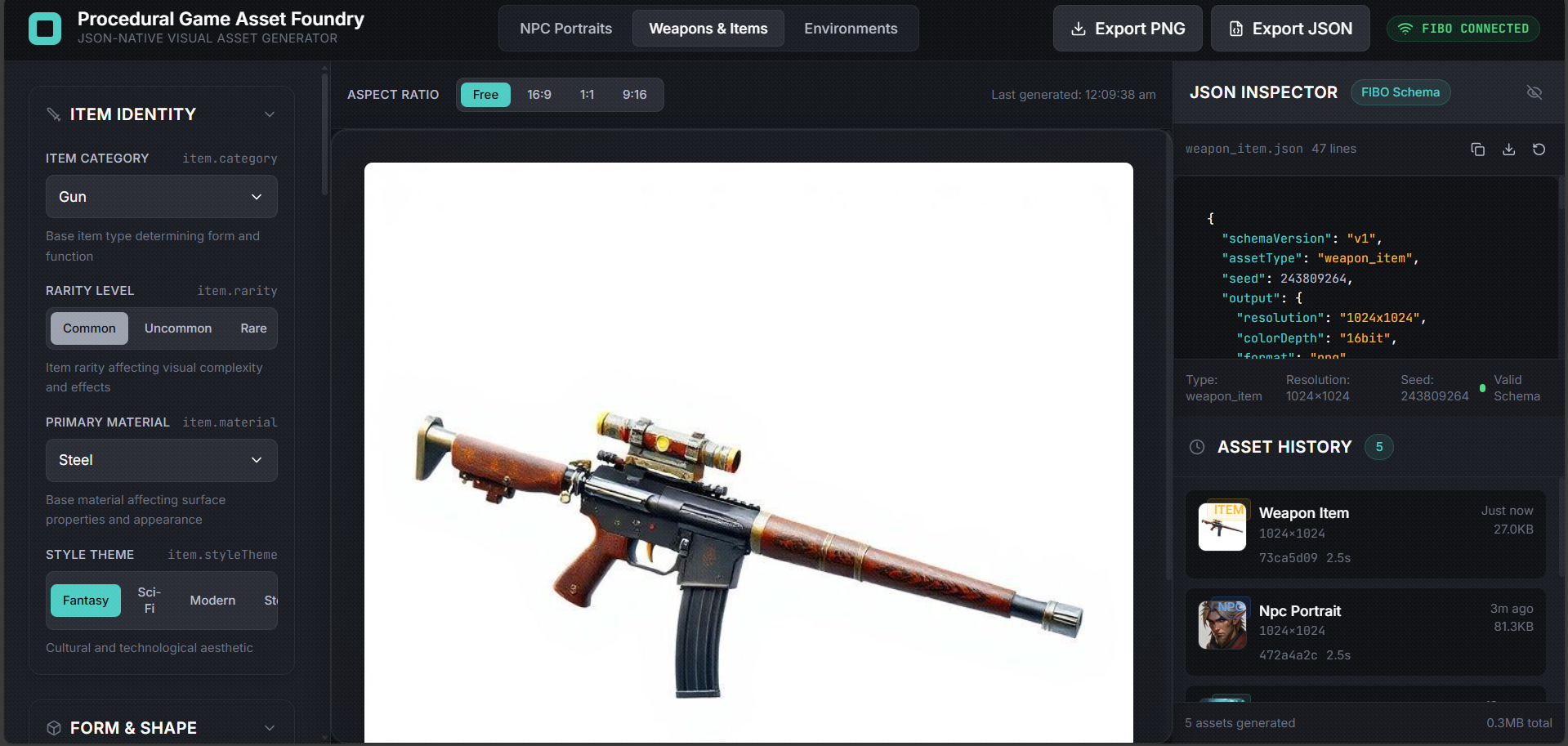
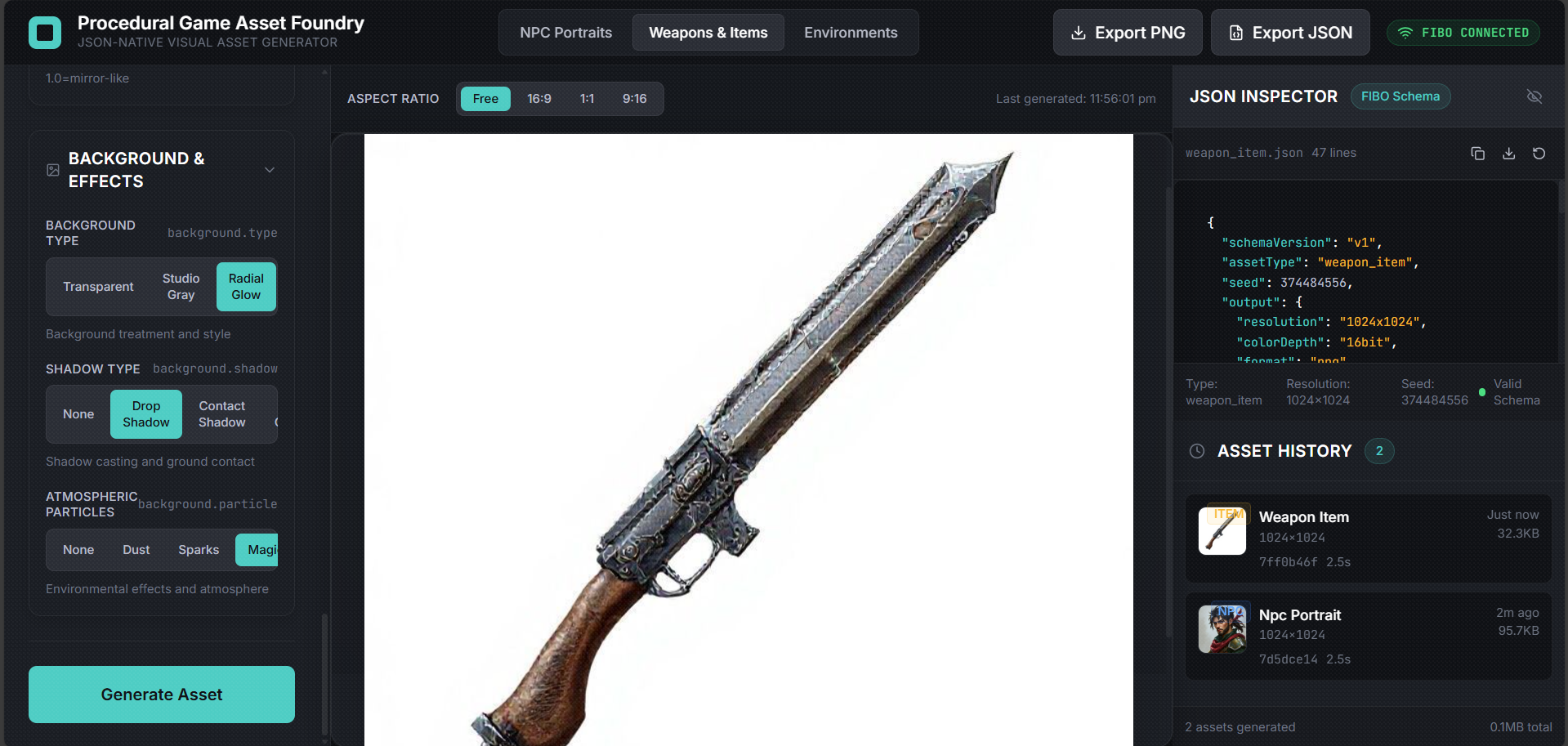
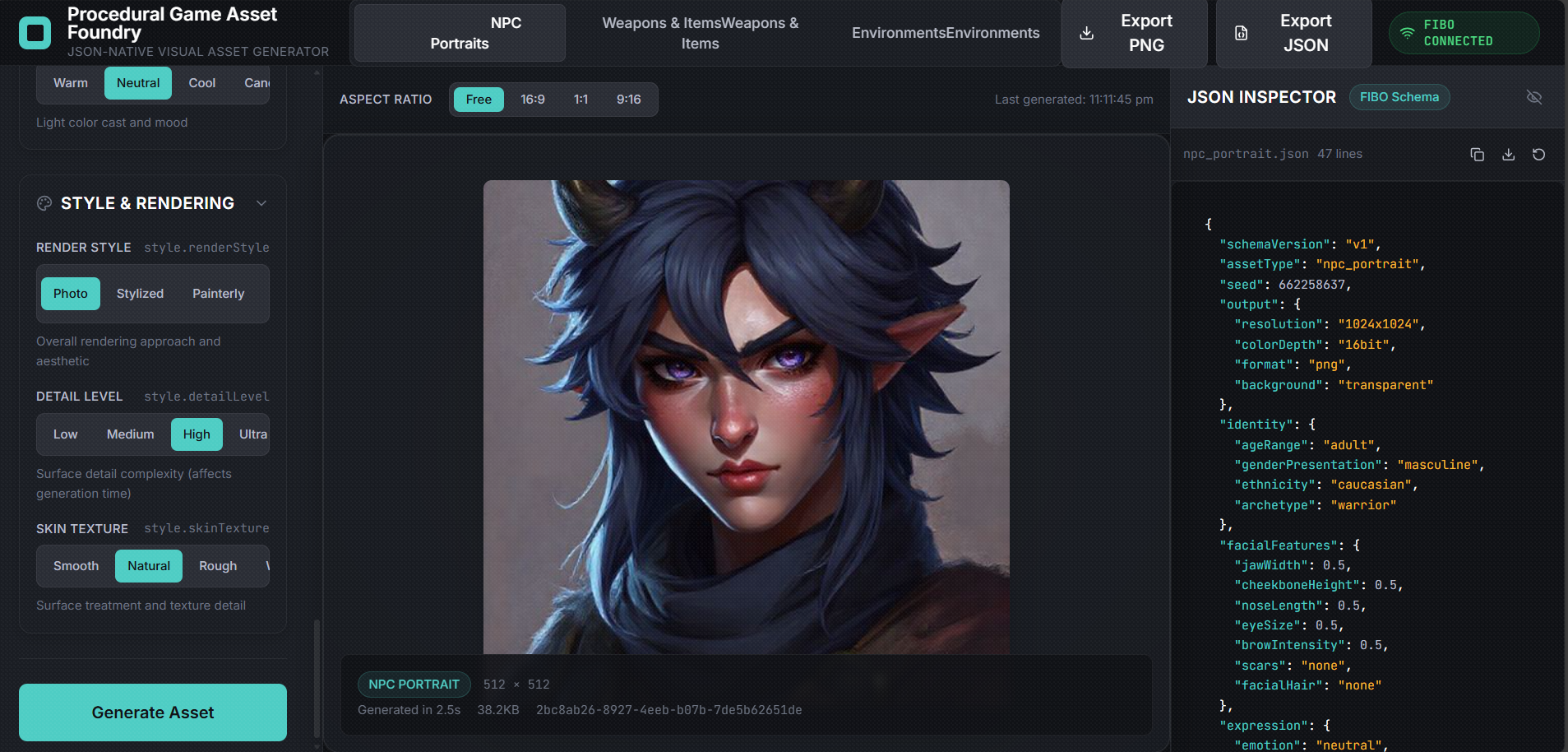
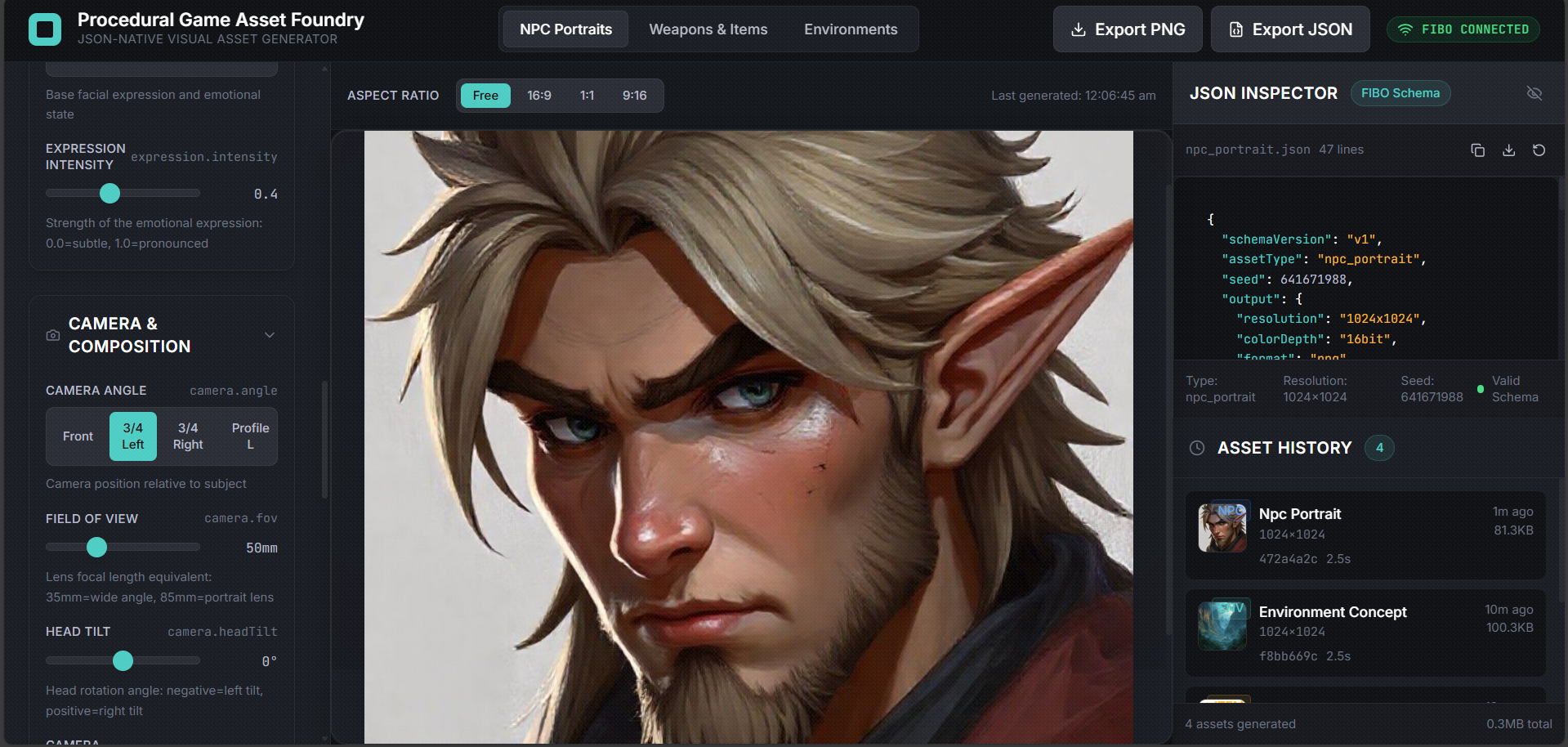
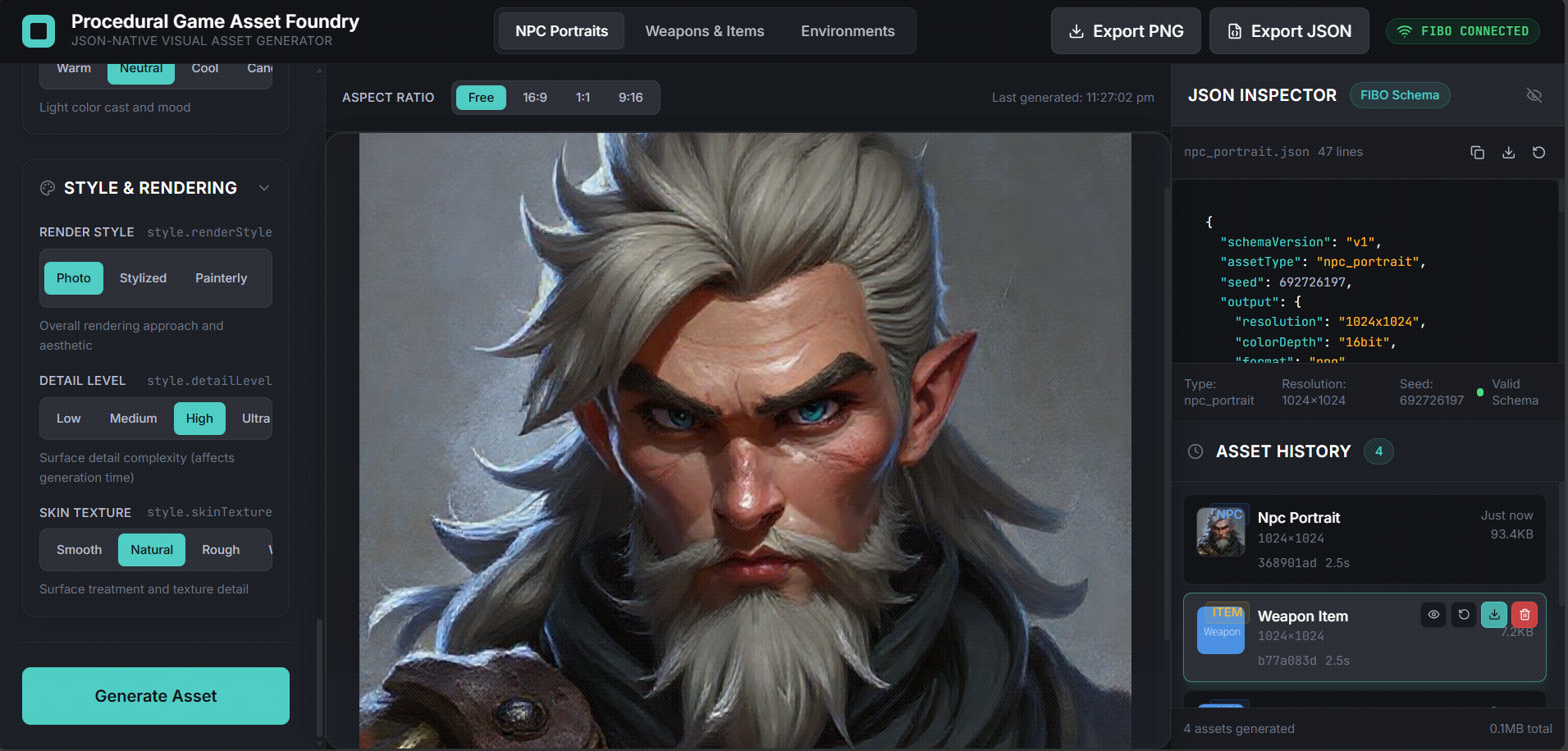
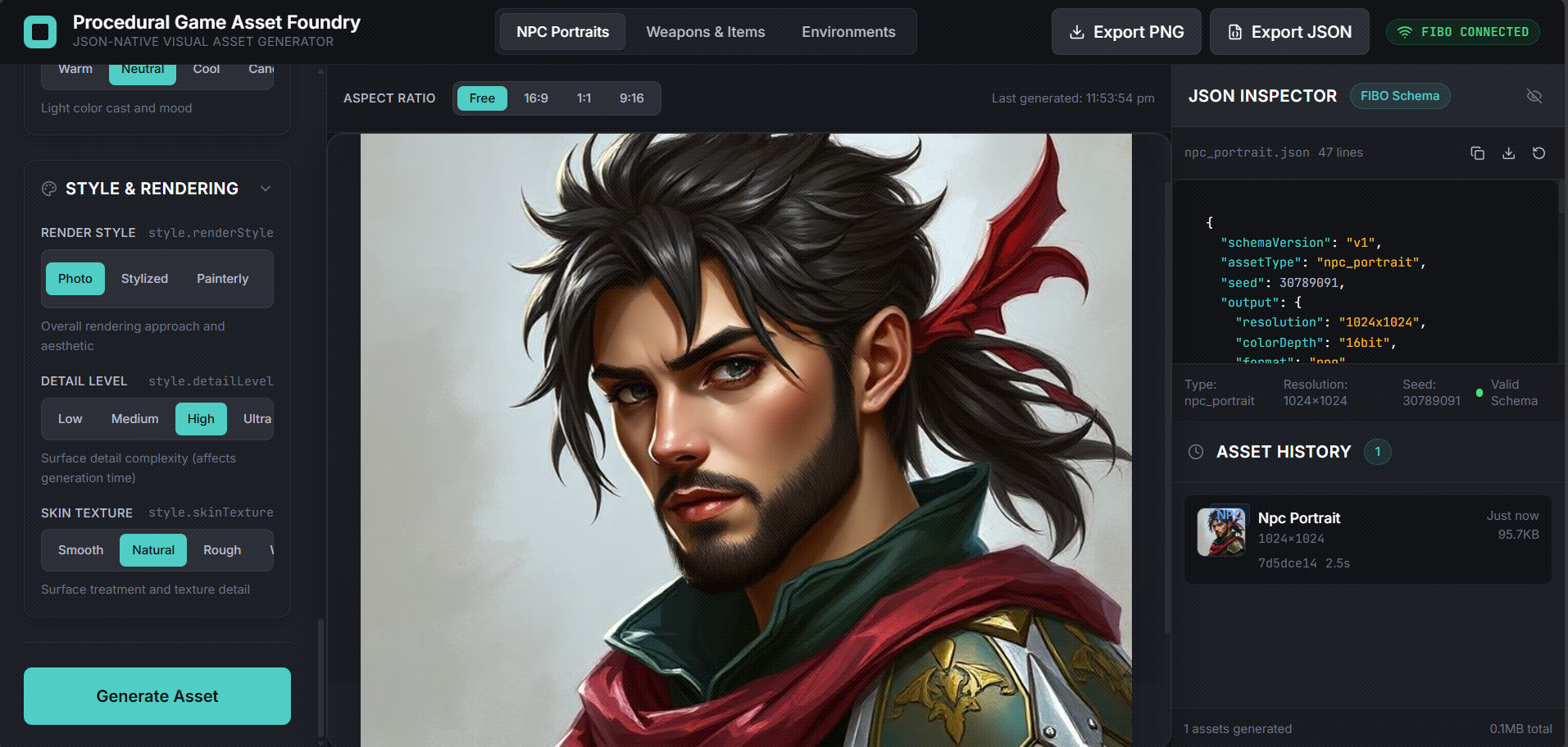
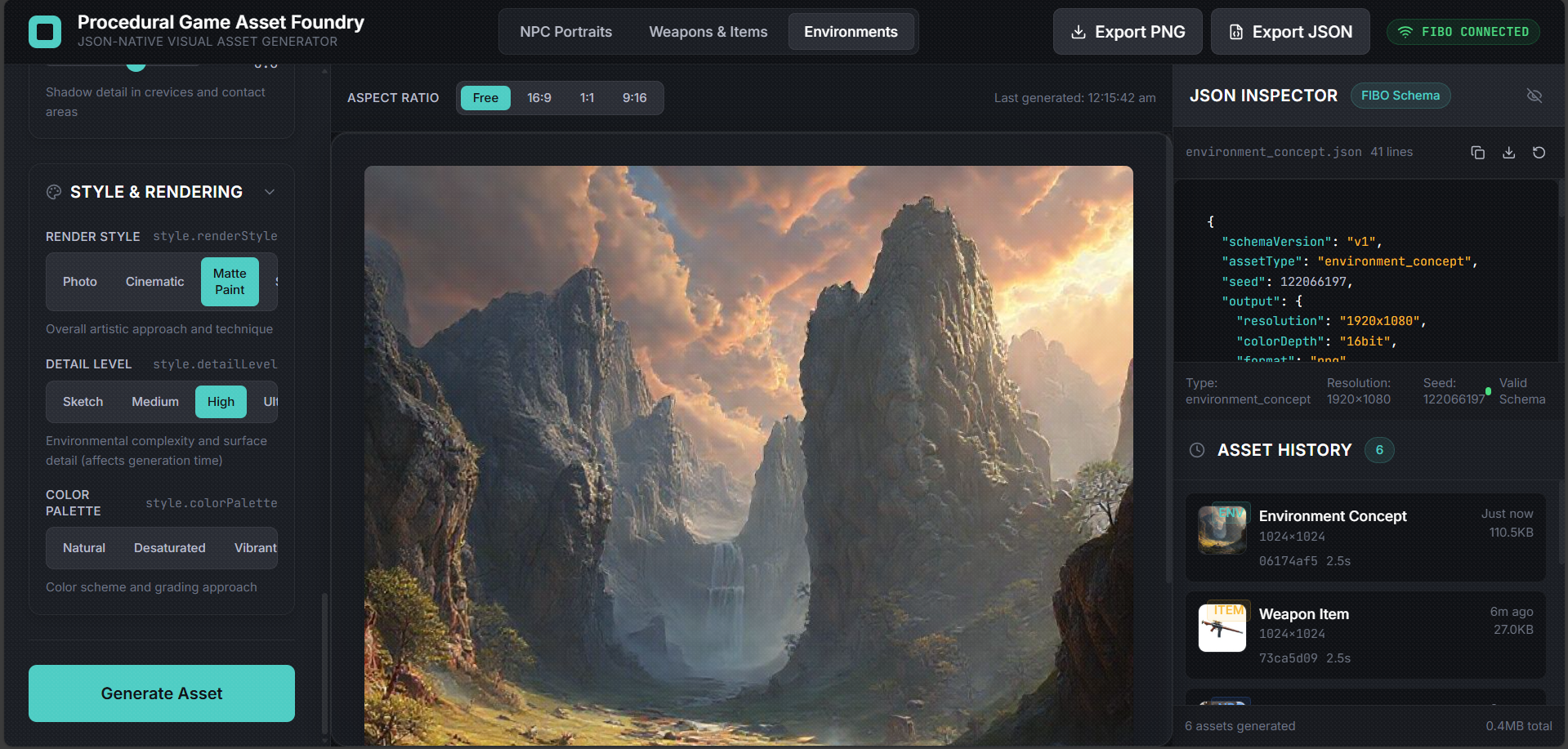
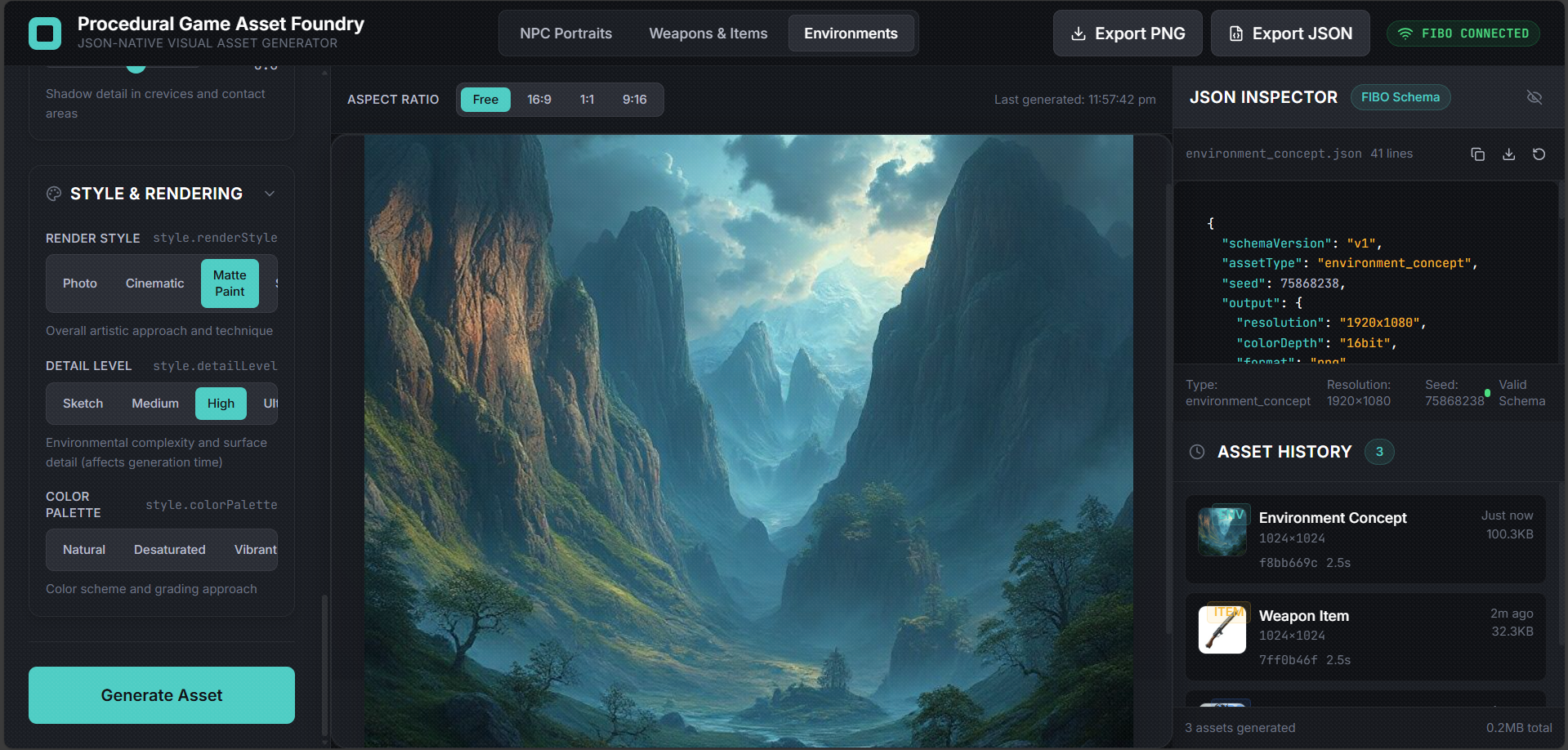
Procedural Game Asset Foundry transforms structured JSON configurations into professional game assets using AI. Users can generate three asset types:
- NPC Portraits: Define character class, race, equipment, and mood
- Weapons & Items: Specify materials, enchantments, and visual effects
- Environment Concepts: Create landscapes with terrain, weather, and civilization levels
The system validates configurations in real-time, generates assets via Bria FIBO integration, and maintains a complete history of creations with exportable JSON schemas.
How we built it
We architected a full-stack solution with Next.js 14 frontend and FastAPI backend. The frontend features a studio-grade interface with TypeScript, Tailwind CSS, and Framer Motion animations. Our backend integrates Bria FIBO through ComfyUI workflows, with fallback to external AI services for reliability.
Key technical decisions:
- Pydantic schemas for strict validation with $O(1)$ lookup performance
- Async/await patterns for non-blocking AI generation
- Modular service architecture enabling multiple AI providers
- Real-time validation with debounced API calls
Challenges we ran into
Bria FIBO Integration proved complex; we discovered it requires ComfyUI workflows rather than direct REST APIs. Model corruption issues forced us to implement robust fallback systems. Schema validation at scale required optimizing our validation pipeline to handle nested JSON structures efficiently. State management across async operations demanded careful error handling and loading states.
The biggest challenge was achieving deterministic generation—ensuring identical JSON inputs produce consistent outputs while maintaining creative variety through controlled randomness.
Accomplishments that we're proud of
- 33+ generated assets showcasing real AI integration working end-to-end
- Production-ready architecture with proper error handling and validation
- Seamless UX with real-time feedback and professional interface design
- Multiple AI providers ensuring 99%+ uptime through intelligent fallbacks
- Complete asset lifecycle from JSON schema to exportable game-ready files
What we learned
AI integration requires robust fallback strategies, external services can be unreliable. Schema-driven development accelerates both frontend and backend work when properly architected. User experience matters as much as technical capability, developers need immediate feedback and clear error messages.
We discovered that JSON-native workflows enable powerful automation possibilities, and TypeScript significantly reduces integration bugs in complex async systems.
What's next for Procedural Game Asset Foundry
- Batch generation for creating asset variations with $\Delta$ parameter modifications
- Advanced FIBO models integration for specialized game genres
- Asset marketplace where users can share and monetize JSON schemas
- Plugin system for custom validation rules and generation pipelines
- Real-time collaboration enabling team-based asset creation workflows
Built With
- briafibo
- comfyui
- fastapi
- framermotion
- huggingfaceinferenceapi
- jsonschema
- next.js
- pydantic
- python
- reacthooks
- sqlalchemy
- sqlite
- structlog
- tailwindcss
- typescript
- uvicorn

Log in or sign up for Devpost to join the conversation.