-
-
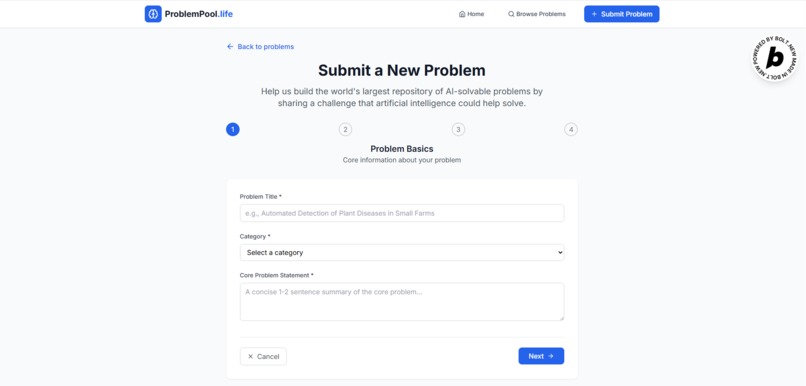
submit a problem
-
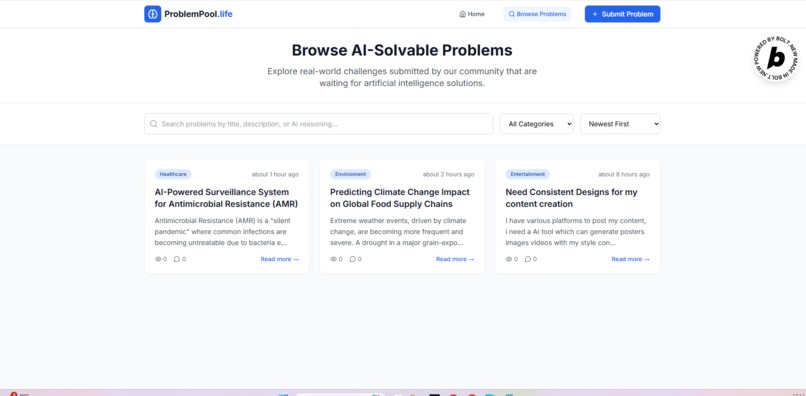
Browse the Problems
-
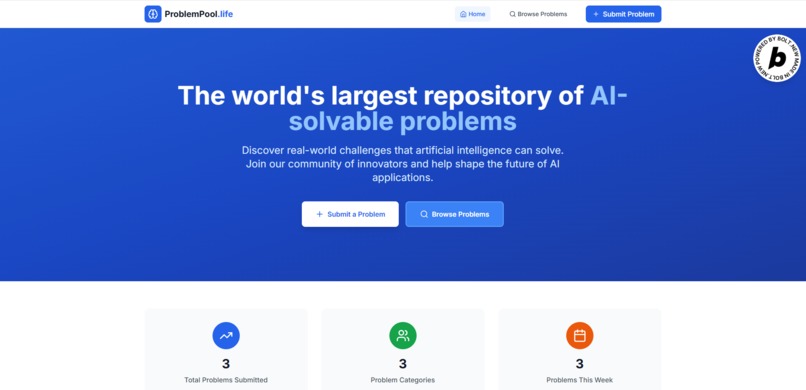
home page
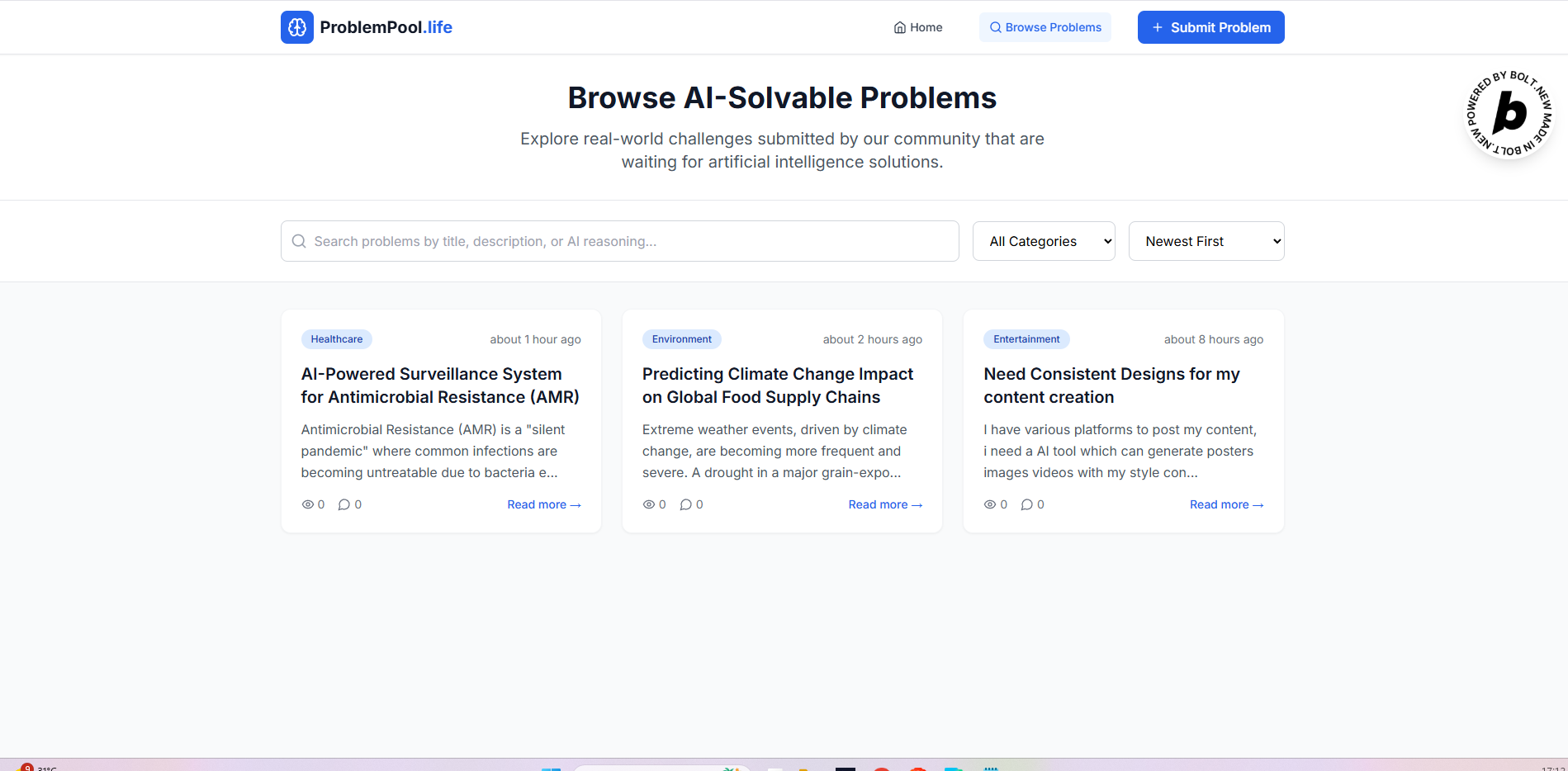
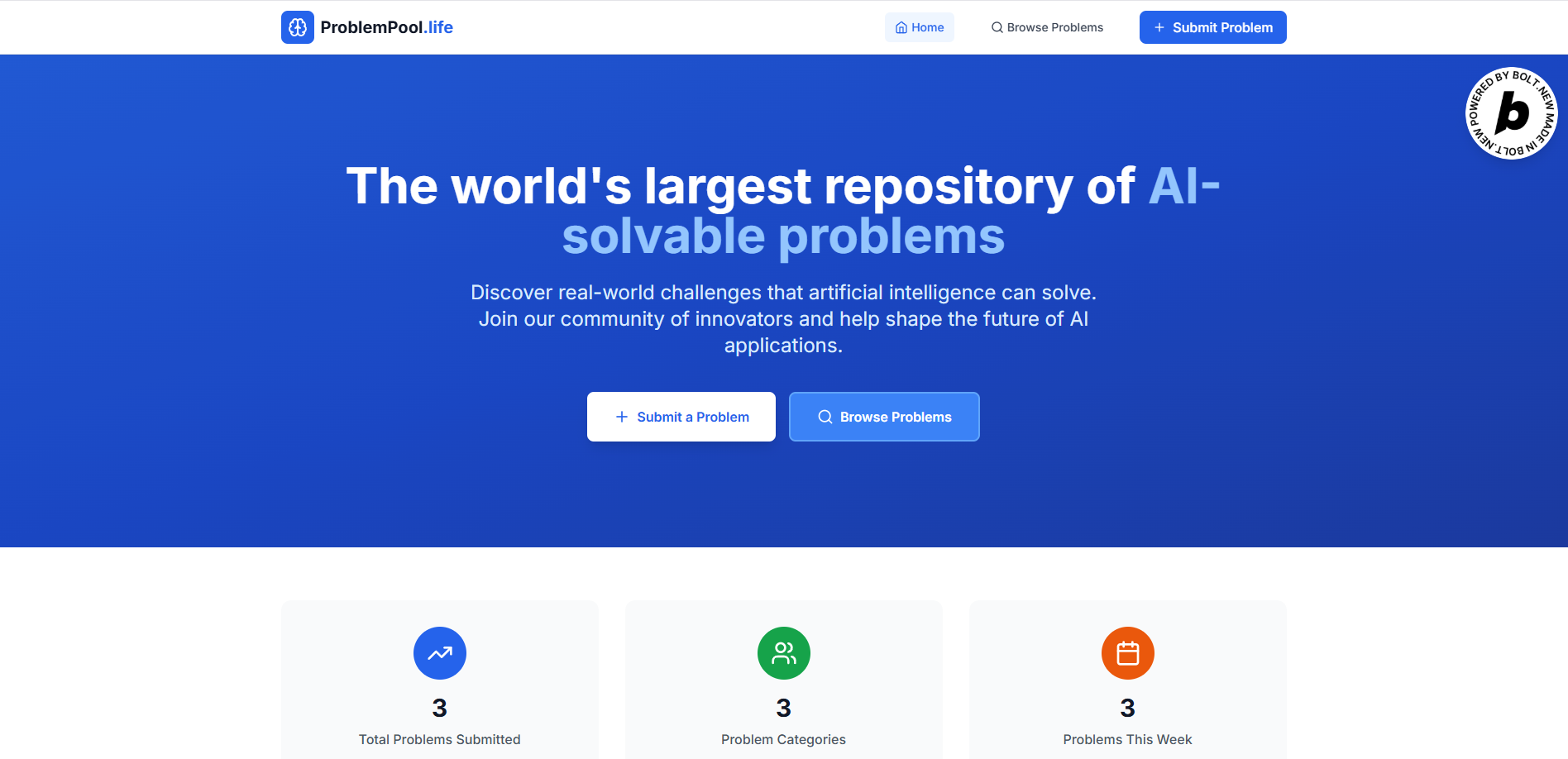
Inspiration
The inspiration for Problem Pool came from a simple observation: the world's most talented AI developers are often disconnected from the world's most practical problems. Developers look for meaningful projects beyond another to-do list, while people in countless other industries—nurses, farmers, teachers, small business owners—face tedious, manual challenges that are perfect for an AI solution. We saw a gap and were inspired to build the bridge. Problem Pool was created to be that bridge, a place where real human needs could directly inspire technological innovation.
What it does
ProblemPool.life is a simple, open, and free repository of AI-solvable problems.
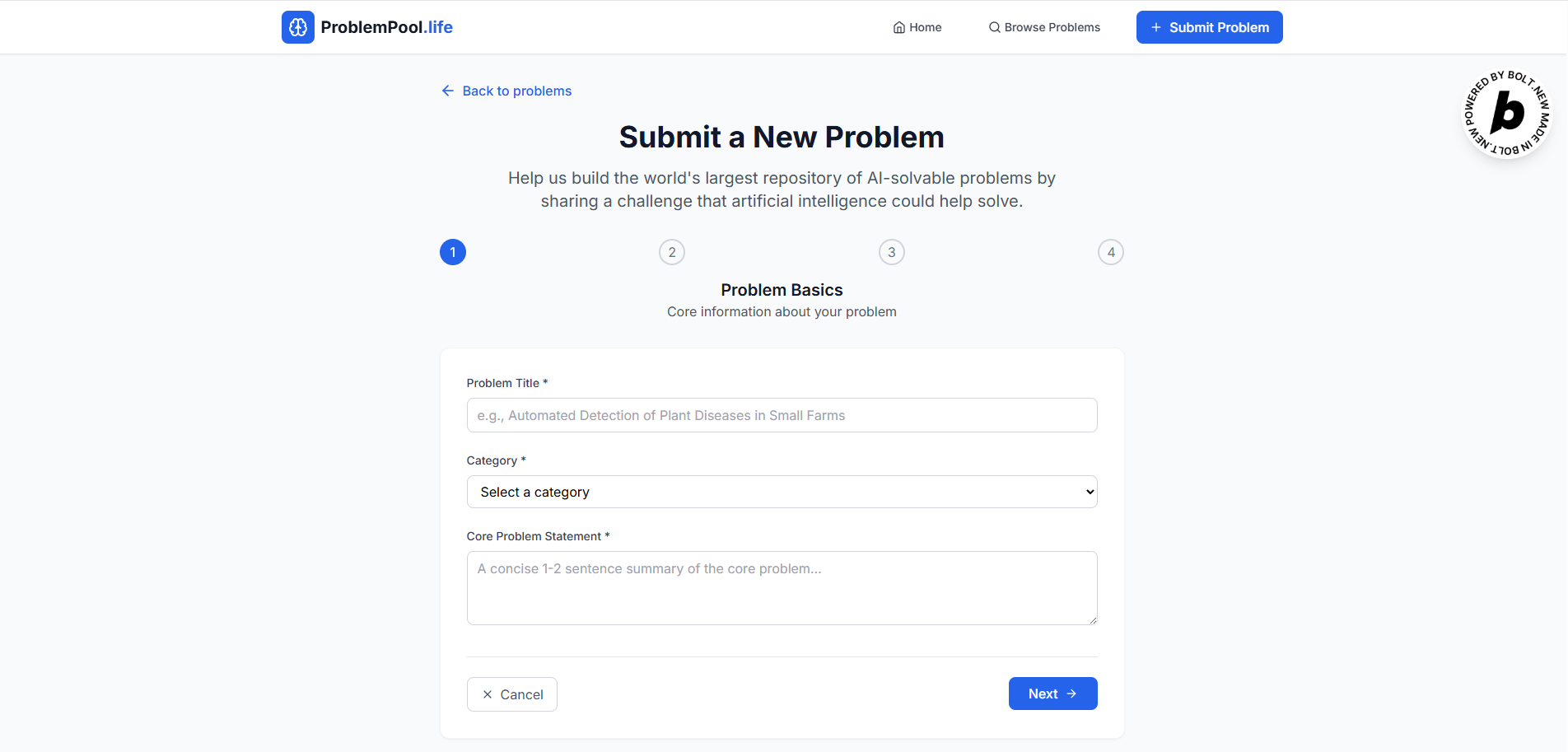
For Everyone: Anyone can visit the site and post a problem they face. Our structured form helps them describe the context, the pain point, and their ideal solution, creating a clear problem statement.
For Developers: AI developers, students, and entrepreneurs can browse this "idea-mine" to find inspiration for their next portfolio piece, side project, or even a startup. It's not a job board; it's a curated source of real-world challenges waiting to be solved.
How we built it
We embraced a "blueprint-first" development approach. The entire application was specified in a single, comprehensive prompt, which served as the master plan for an AI-assisted development workflow.
**We did use additional prompts to Deploy the project to Netlify, to our custom Domain and to add Badge.
**No additional prompts were used to modify functionality or features.
Our tech stack is modern and scalable:
Backend: We used Supabase for its integrated PostgreSQL database, authentication, and storage. We designed a robust schema from the ground up and implemented automated database triggers to handle user profile creation seamlessly.
Frontend: The application is built with React and TypeScript, using Vite for a fast development experience.
UI/UX: We used Tailwind CSS for a clean, responsive, utility-first design.
Challenges we ran into
Our biggest challenge was one of philosophy. We initially designed a complex system with points and rewards, but quickly realized this made the project transactional. The key challenge was to pivot and simplify, stripping the platform down to its core purpose: sharing ideas. Removing the rewards system was the best decision we made.
Another challenge was ensuring the platform was both open and secure. We invested significant time in crafting specific Row Level Security (RLS) policies in Supabase to prevent misuse while maintaining an easy, accessible experience for everyone.
Accomplishments that we're proud of
We are incredibly proud of the platform's core simplicity. The user journey for both posting a problem and finding one is straightforward and intuitive. We successfully created a tool that is useful, not complicated.
What we learned
The most important lesson was that less is more. By removing features (like the rewards system), we strengthened the project's identity and mission. We learned that the best incentive isn't always monetary; for many developers, the true reward is the challenge of solving a meaningful problem.
We also learned the immense value of a detailed blueprint. Taking the time to write out the entire specification in a single prompt before development made the entire process faster, more coherent, and more enjoyable.
What's next for Problem Pool
Our future is focused on growth and connection. Our first priority is community building—bringing more diverse problems and talented developers to the platform.
Next, we plan to enhance discovery with better search and tagging features, allowing developers to filter problems by specific AI domains like NLP or Computer Vision. Finally, we want to build a "Solution Showcase," allowing developers to link their finished projects back to the original problem statements, creating a powerful, public gallery of problems solved.
Built With
- bolt.new
- css
- form
- framer
- hook
- motion
- postgresql
- query
- router
- sql
- supabase
- tailwind
- typescript
- vite

Log in or sign up for Devpost to join the conversation.