-
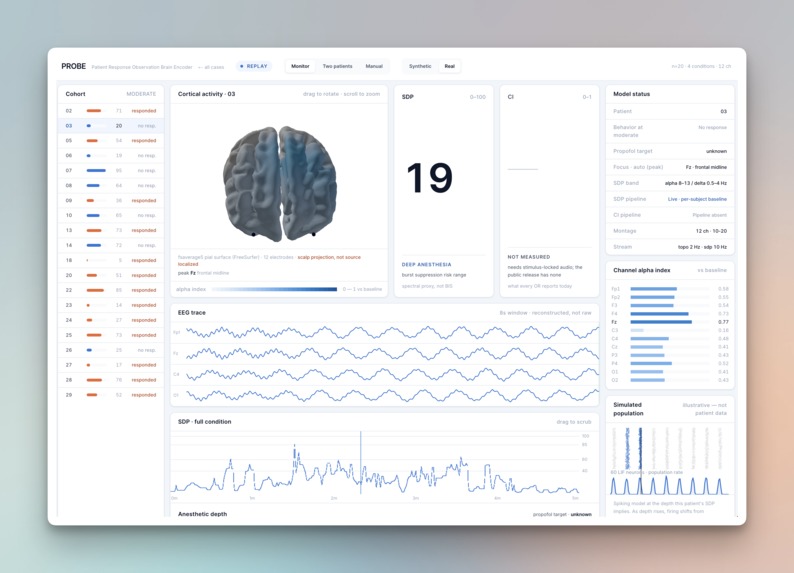
Probe Dashboard
-
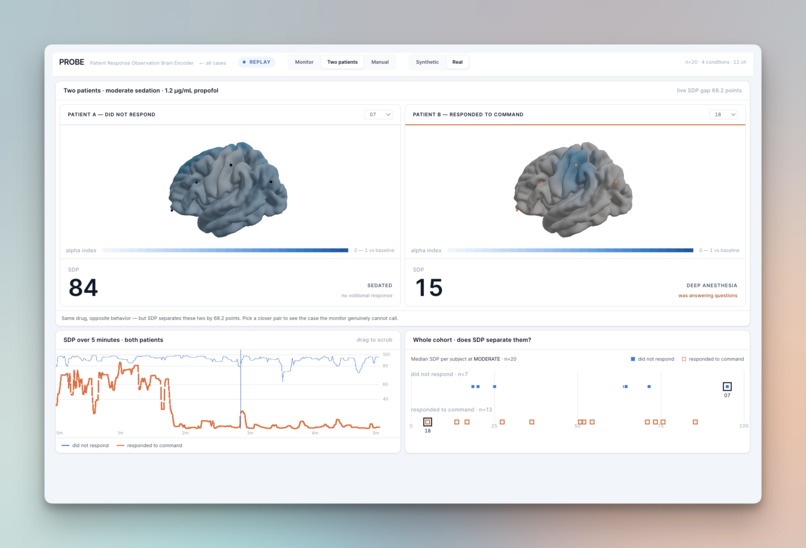
Patient Comparision
-
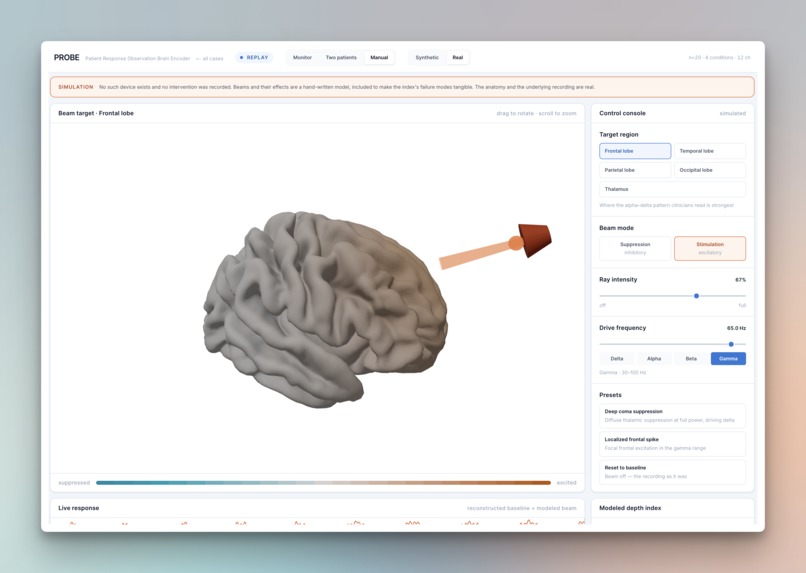
Simulation + Manual Testing
-
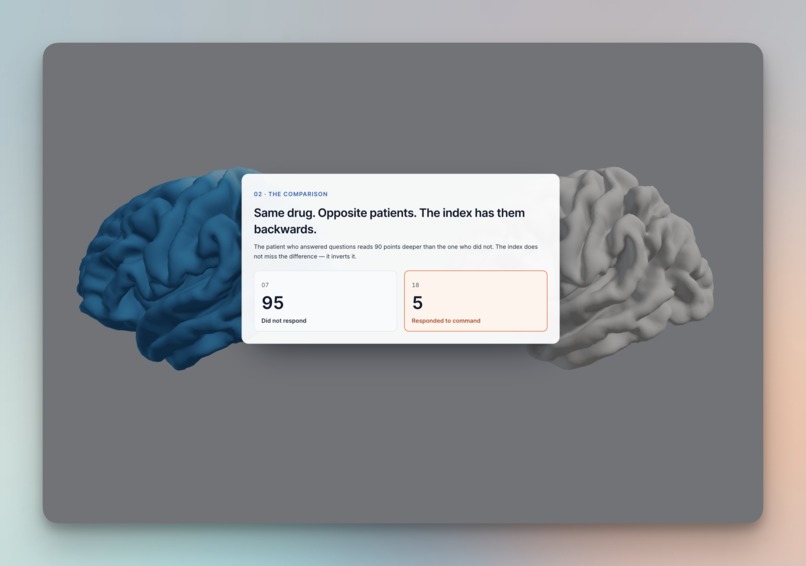
SDP Significance
-
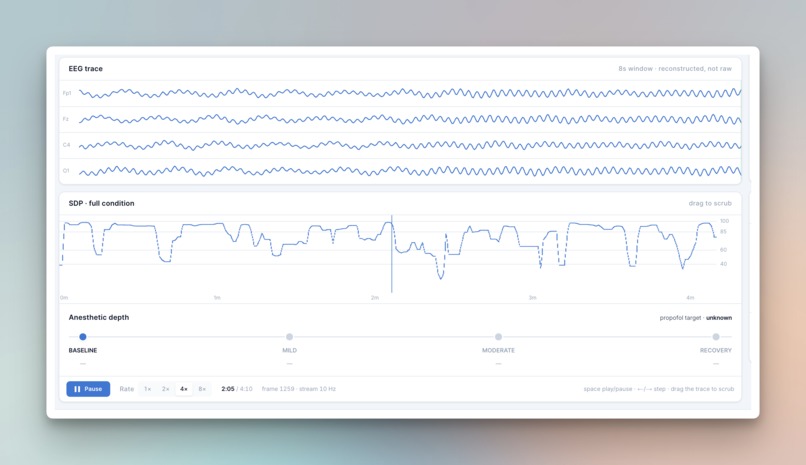
EEG & SDP Readings
-
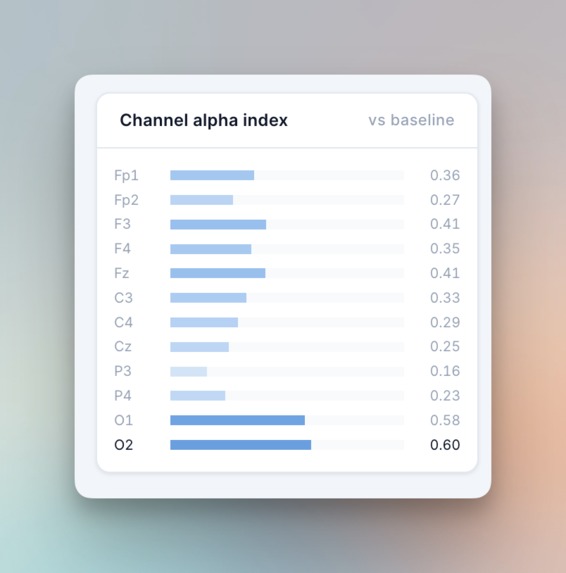
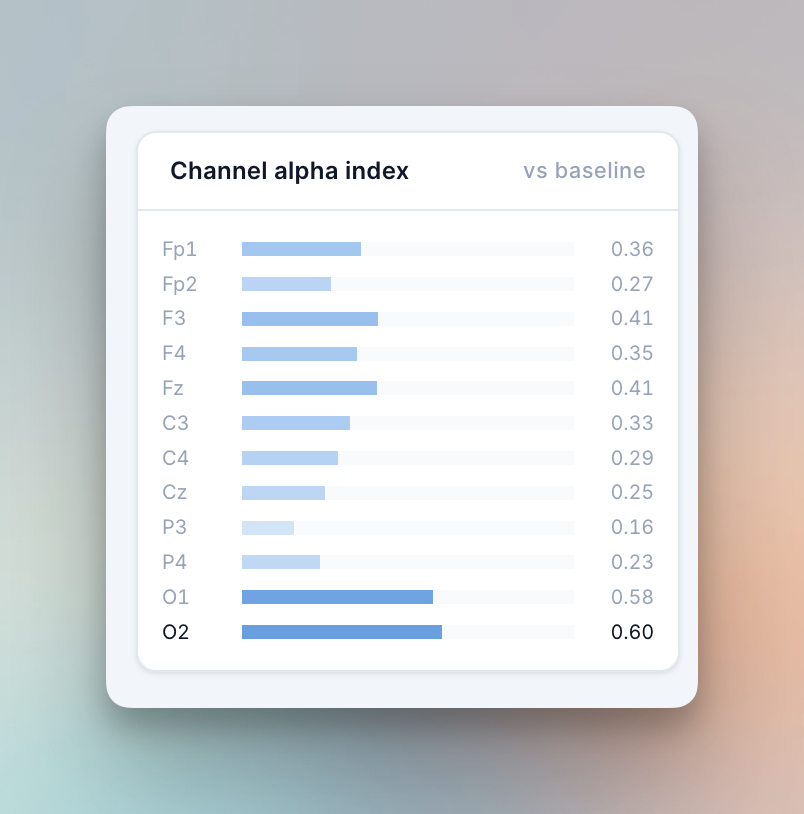
Alpha Index Readings
-
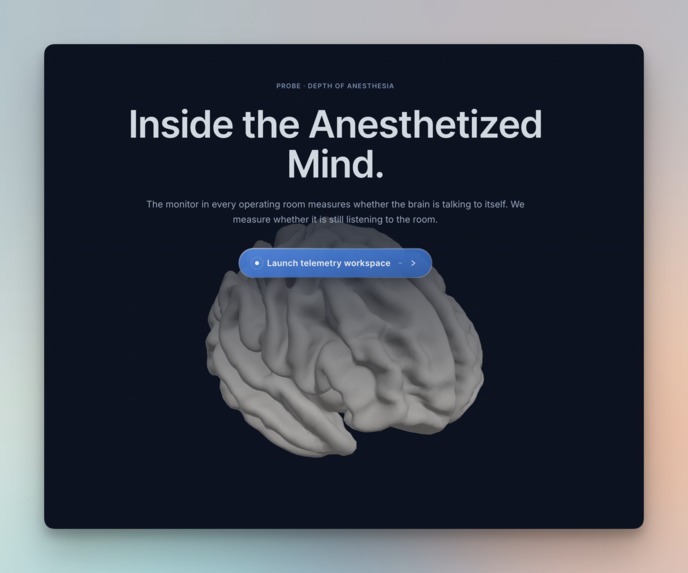
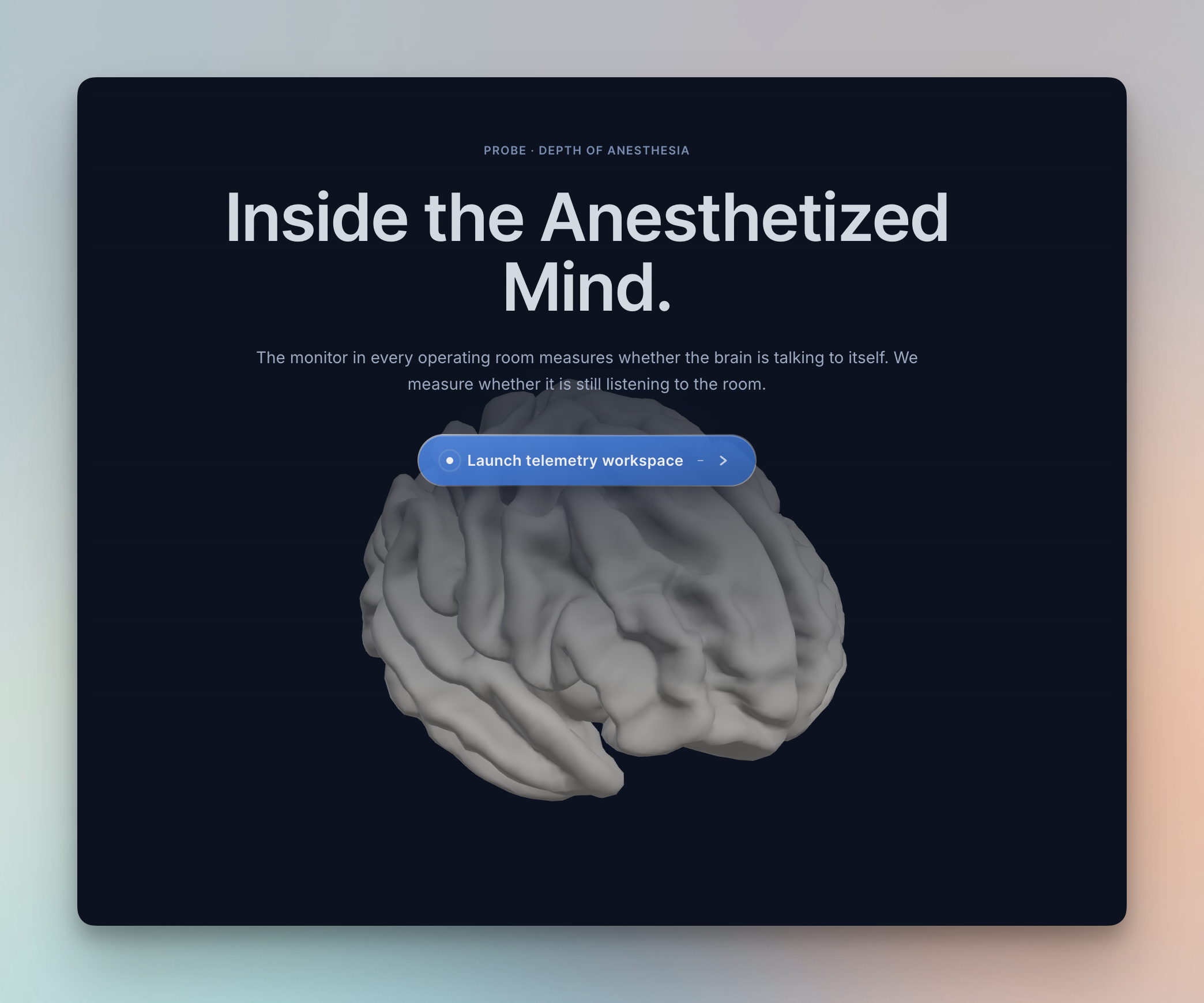
Landing Screen
Inspiration
Every year, hundreds of millions of people go under general anesthesia with the idea that they won’t feel any pain and that they won’t remember the experience. A monitor sits beside the bed reading brainwaves and telling the anesthesiologist the patient is safely unconscious.
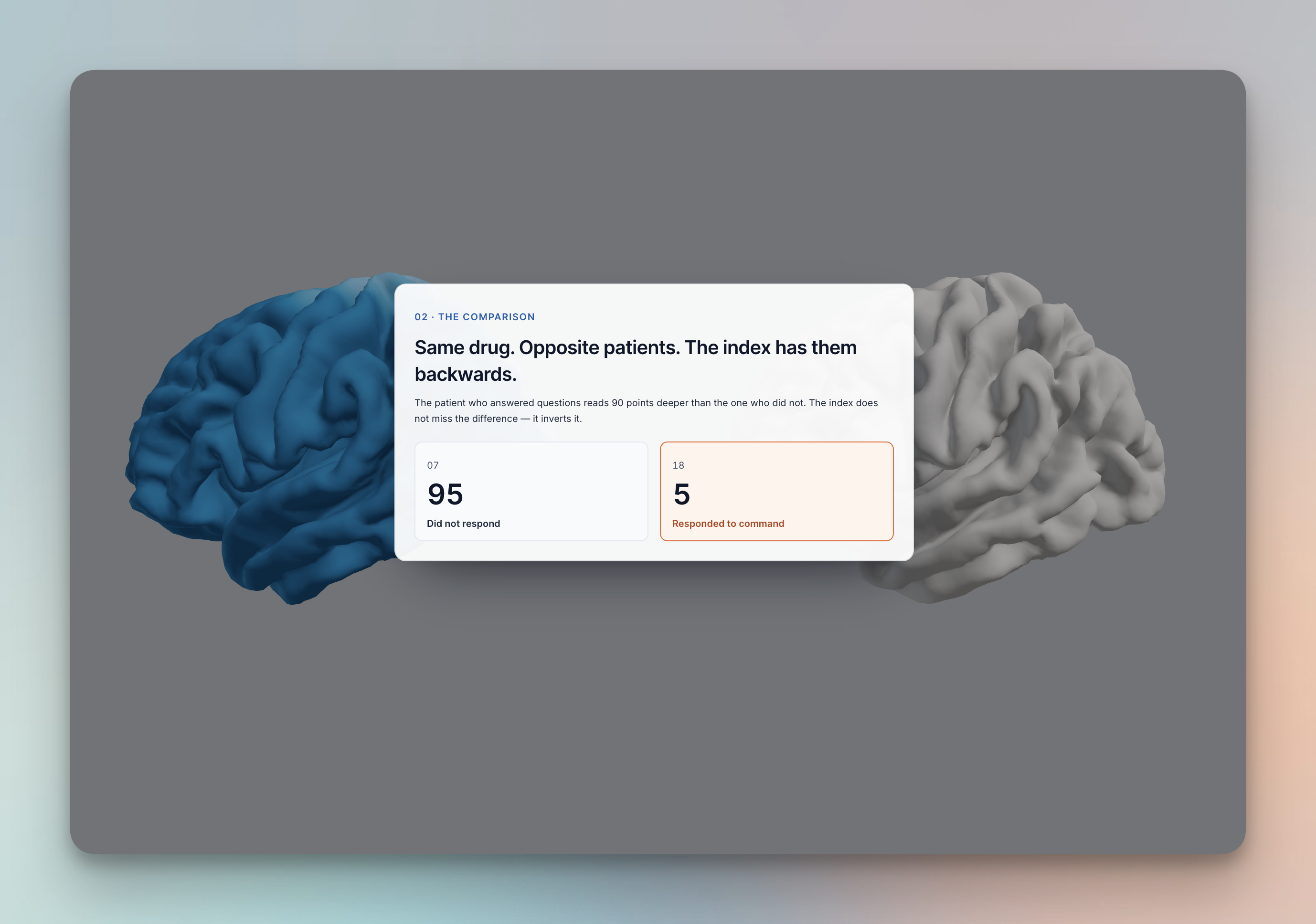
But when researchers actually check by using a technique where one arm is left unparalyzed so an unconscious patient can still squeeze a hand on command, about a third of patients respond. Some squeeze twice, which is the signal for pain. Almost none of them remember it afterward. And a 2017 study found the exact brainwave pattern doctors read as proof of unconsciousness present in the patients who were responding. The monitor said asleep, but they weren't.
Current depth-of-anesthesia monitors on the market measure the brain talking to itself. Nothing measures whether the brain is still listening to the room. The machine may say a patient was asleep, but the patient may still be there.
What it does
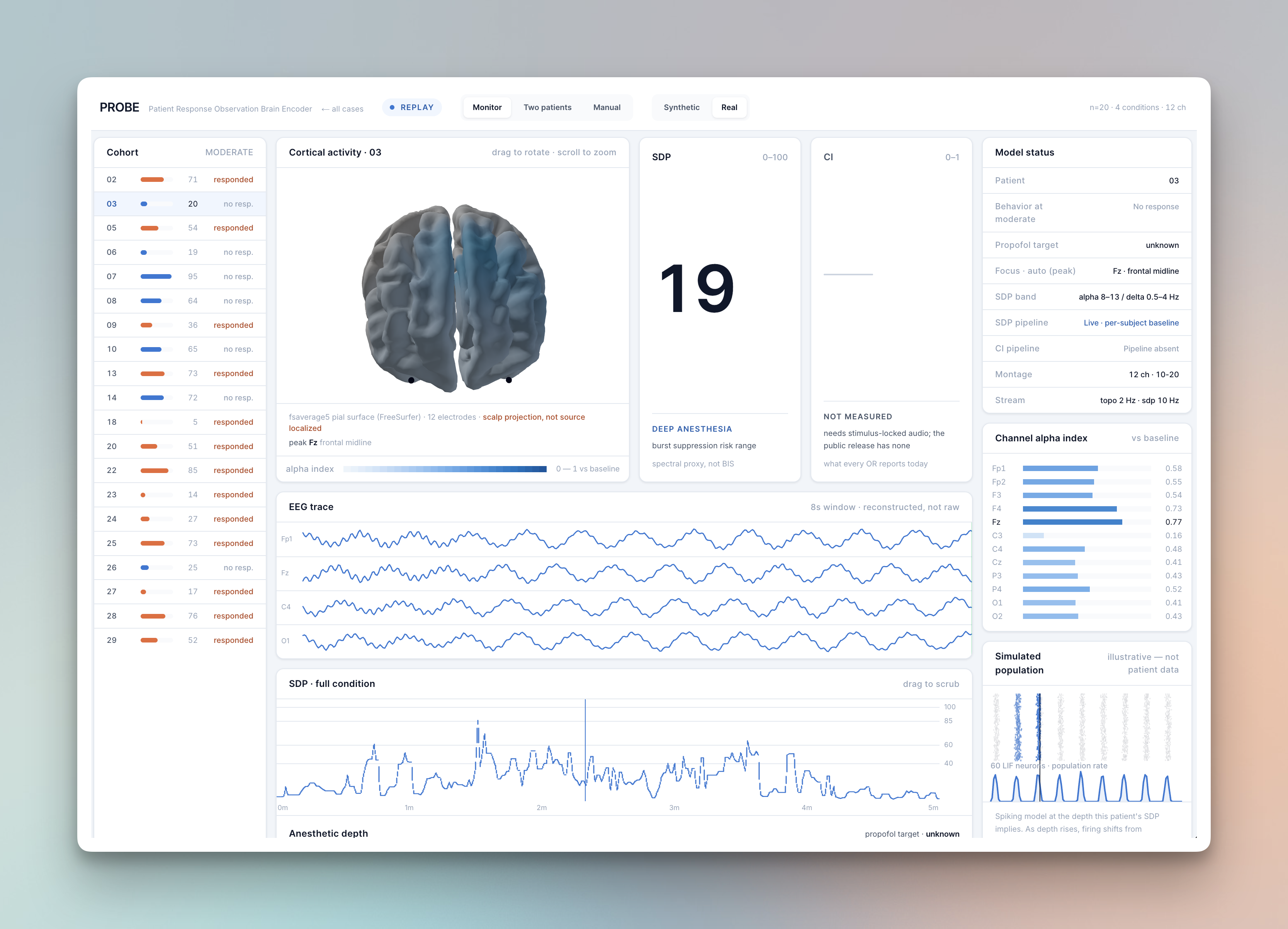
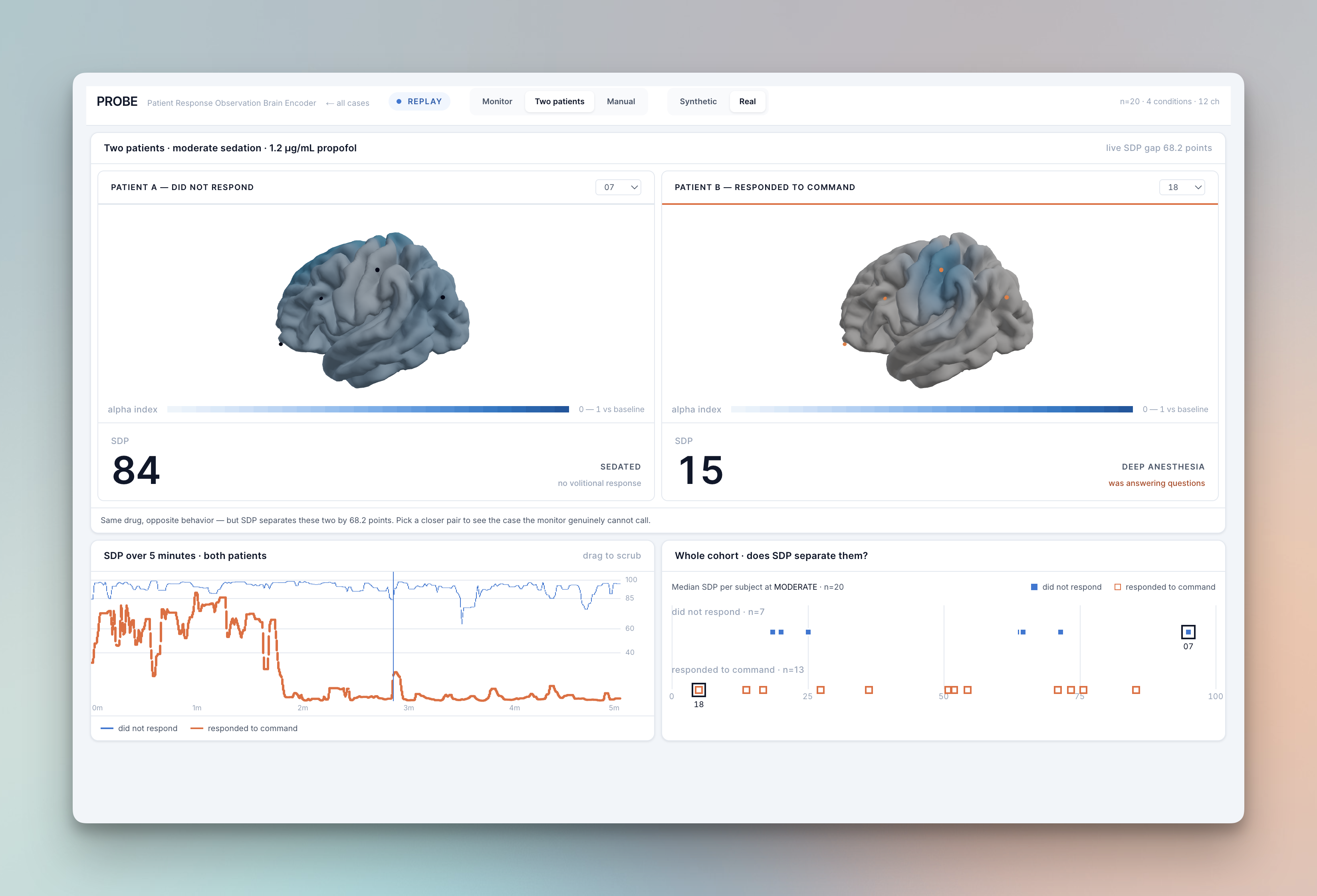
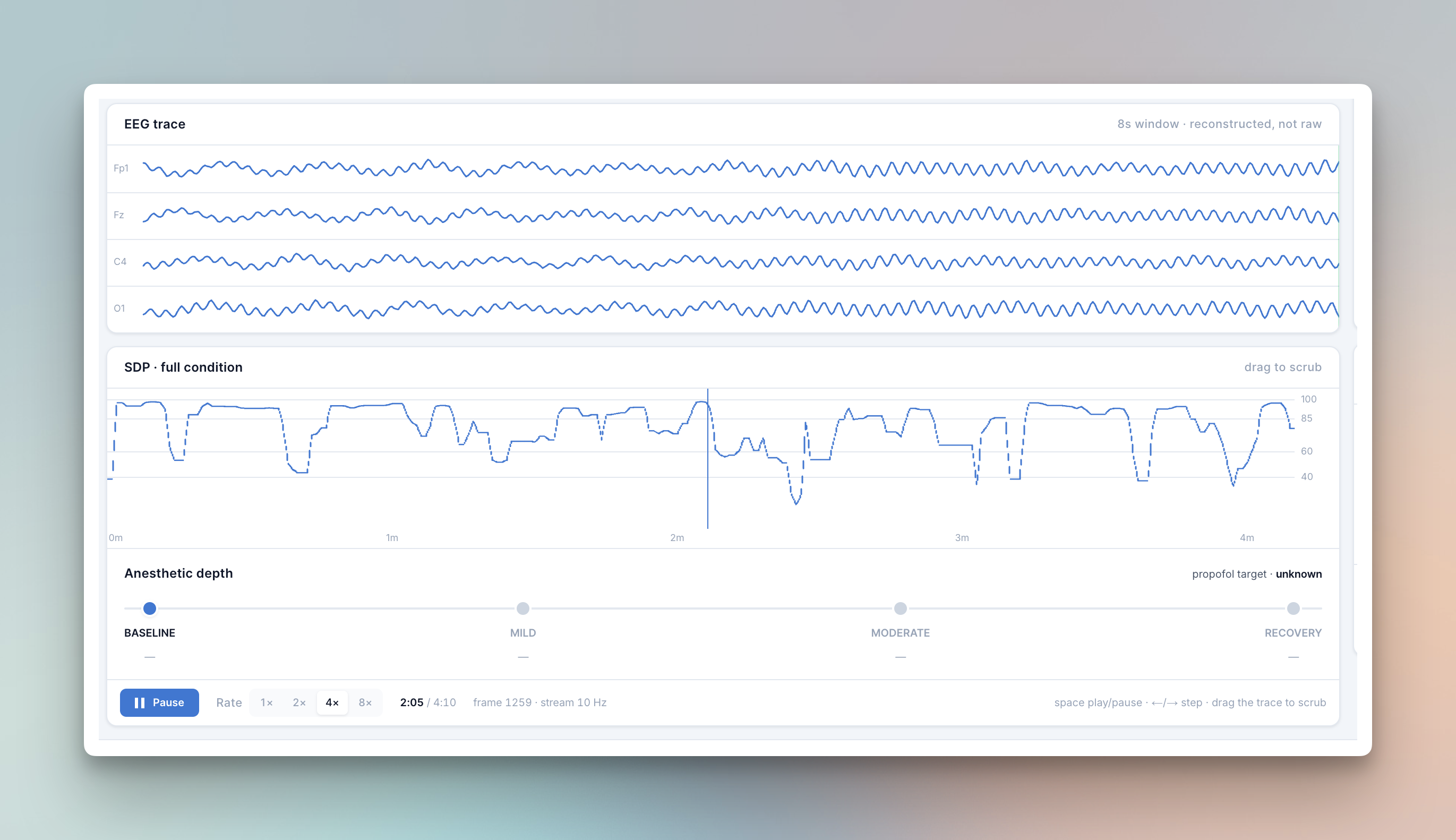
PROBE shows two numbers side by side for a real patient's EEG. The first is a spectral depth score, the same kind of thing today's monitors compute, rebuilt from scratch and calibrated to each patient's own awake baseline. The second is a coupling score, meant to measure whether the brain is still responding to the room and used without the EEG electrodes as signs of consciousness.
The demo runs on real EEG from 20 patients under propofol sedation at four dosage levels, with actual behavioral responsiveness data attached. You can watch the recording play out over a real MRI-derived brain surface, or put two patients side by side at the same dose with opposite outcomes, where one didn't respond, and one was answering questions, and their monitor readings look almost identical.
The idea underneath it is instead of comparing a patient to population norms, compare them to their own awake baseline, recorded minutes earlier in pre-op. That sidesteps the biggest problem in this space, which is that people vary wildly in how their brain responds to anesthetic drugs.
How we built it
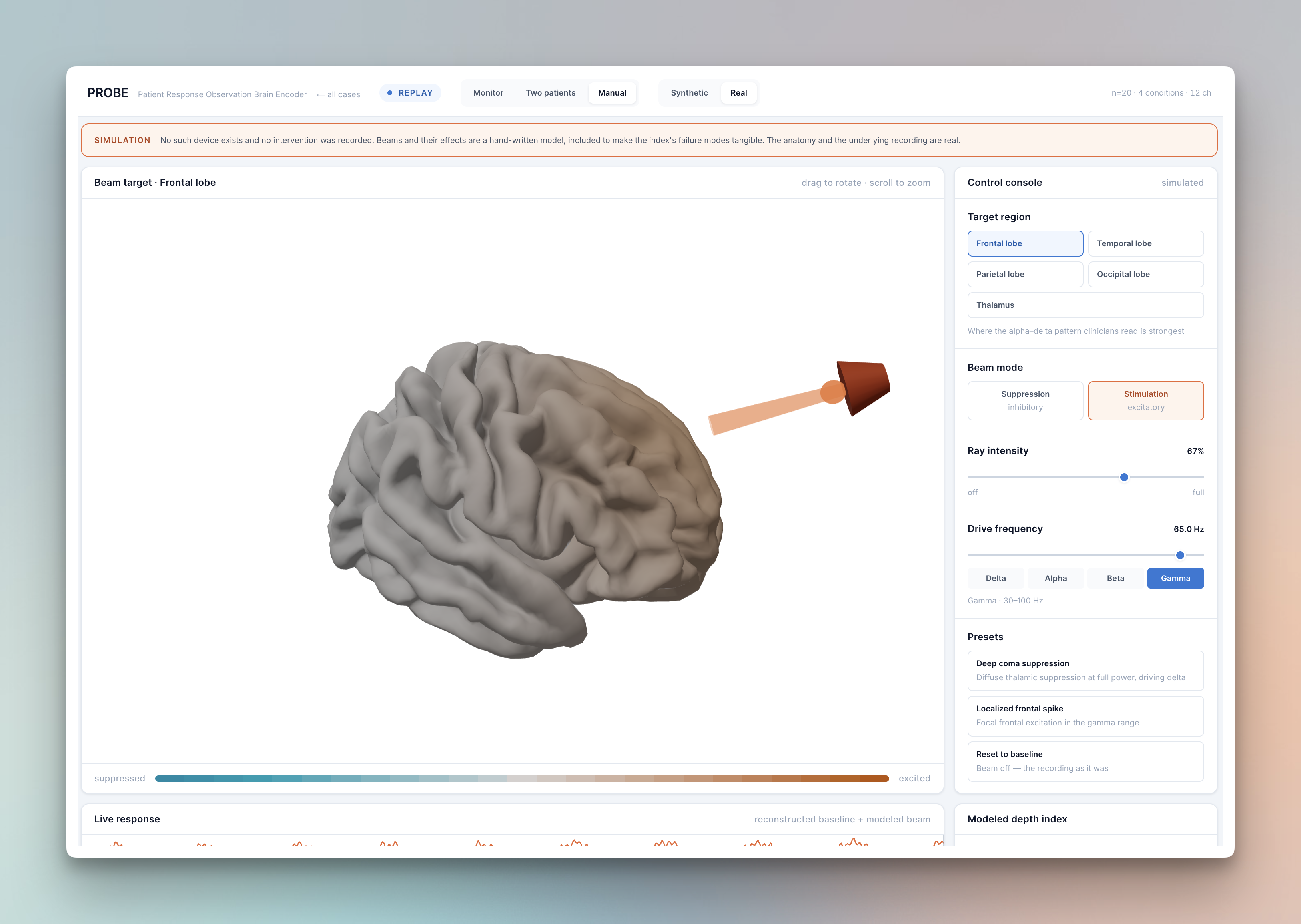
The core is a Python signal processing pipeline with Welch power spectra, an alpha-to-delta ratio, baseline-anchored per patient. We ran it first on synthetic EEG to make sure the math worked, then pointed the same code at real recordings loaded through MNE. On top of that, we built a real cortical brain mesh from FreeSurfer data, colored live by EEG activity, and a small spiking neural network showing the same story one layer down.
The frontend is Next.js and three.js with everything hand-drawn to canvas, tuned so scrubbing through five minutes of playback doesn't lag.
Challenges we ran into
The formula we pulled from the literature uses frontal electrodes, and it completely failed on real data, as baseline and moderate sedation looked almost the same. It turns out propofol increases frontal alpha as people lose consciousness, the opposite of what the normal version assumes
Accomplishments that we're proud of
We're proud that this actually runs on real patient data, not just a simulation, and that the result held up when we pointed it at that data instead of falling apart, because we started with using our own data before we had access to the real dataset.
What we learned
We learned a lot about moving fast without cutting corners. We built the pipeline first on synthetic data before touching anything real and tested pieces in isolation so we could actually tell what broke. We also got a lot better at working as a team under pressure by splitting up cleanly so nobody was blocked waiting on someone else,
What's next for Probe
The real coupling score still needs to be built, which means finding a dataset where the exact timing of sounds during surgery was recorded alongside the EEG. We'd also like to validate the depth score against a second, independent dataset of sleep stages, since falling asleep and going under anesthesia should look similar in this kind of measure.


Log in or sign up for Devpost to join the conversation.