-
-
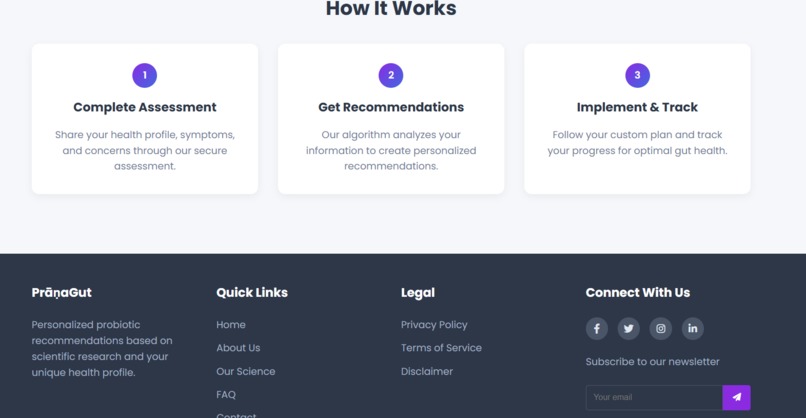
Landing Page view
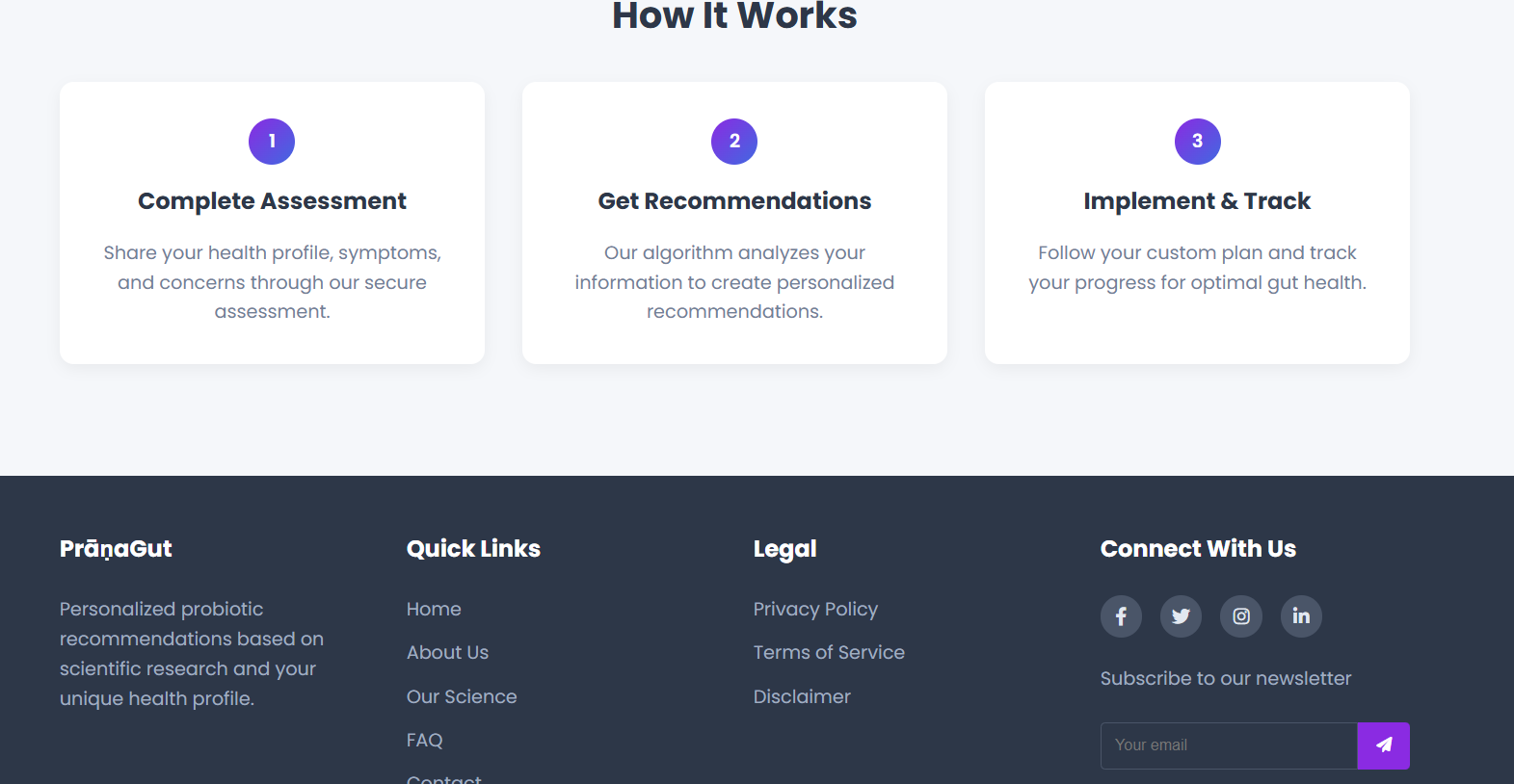
PrāṇaGut personalized prebiotic and probiotic supplement app
Inspiration: PrāṇaGut was born from a personal struggle with digestive health issues and the overwhelming confusion in navigating the world of probiotics. The clinical data exists, but most people don't have the expertise to match their specific conditions to the right probiotic strains. This project emerged as a solution to bridge this gap using artificial intelligence to democratize access to evidence-based probiotic recommendations.
What We Learned:
- The complexity of the gut microbiome and how specific probiotic strains target different health conditions
- The importance of evidence-based recommendations in healthcare applications
- How to effectively integrate large language models (LLMs) like Claude with structured clinical data
- The significance of creating accessible health interfaces that translate complex medical information into actionable recommendations
- Careful data processing by reducing repeated data to maintain the integrity of clinical information
How We Built It:
- Data Collection & Structuring: Extracted data from US Clinical Guide to Probiotic Products, converting the PDF tables into a structured database that captured strain specifics, applications, evidence levels, and dosing recommendations.
- User Assessment Design: Designed a comprehensive assessment form that captures relevant health information including symptoms, medical conditions, medications, lifestyle factors, and dietary habits.
- AI Integration: Implemented a specialized AI by taking Claude's AI model through API and fine tuning by training in the dataset to analyze the user's health profile against the structured database. Identified relevant health conditions and matching them with appropriate probiotic strains.
- Recommendation Engine: Developed an algorithm that prioritizes matches based on evidence strength, strain specificity for the user's conditions, and dosage considerations.
- Frontend Development: Created a responsive, user-friendly interface that guides users through the assessment process and presents recommendations in an accessible format with scientific explanations.
Challenges Faced
- Data Extraction: Converting the PDF clinical guide into structured data required significant refinement of parsing techniques to maintain data integrity.
- Health Condition Mapping: Creating accurate mappings between user-reported symptoms and standardized health condition codes required extensive cross-referencing with medical literature.
- AI Prompt Engineering: Designing prompts that would yield consistent, scientifically accurate recommendations took multiple iterations and validation against known cases.
- Balancing Simplicity and Depth: Making the interface accessible to non-medical users while maintaining scientific rigor was a constant challenge.
- Scientific Validation: Ensuring recommendations aligned with current research required consultation with healthcare professionals and extensive testing


Log in or sign up for Devpost to join the conversation.