Inspiration
The inspiration behind PrivyReveal came from a universal frustration: almost everyone clicks “I Agree” without reading or understanding the terms.
Privacy policies are: • long (30–45 minutes to read) • filled with legal jargon • intentionally complex • nearly impossible for everyday users to evaluate
I experienced this myself, and I’ve seen many people unknowingly consent to risky or harmful clauses. The gap between what users think they’re agreeing to and what’s actually written inspired us to create PrivyReveal — an AI tool built to restore transparency, comprehension, and digital autonomy.
What it does
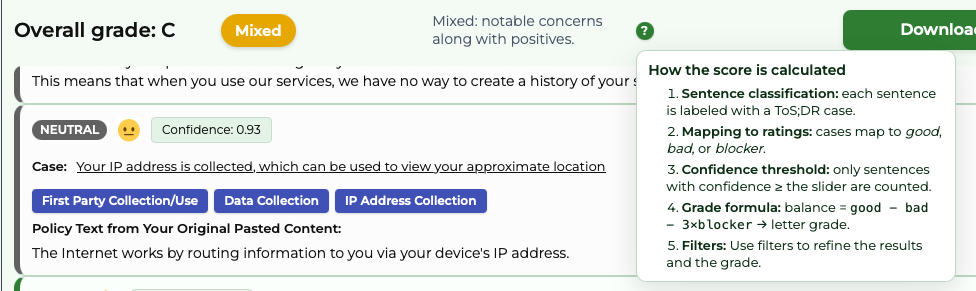
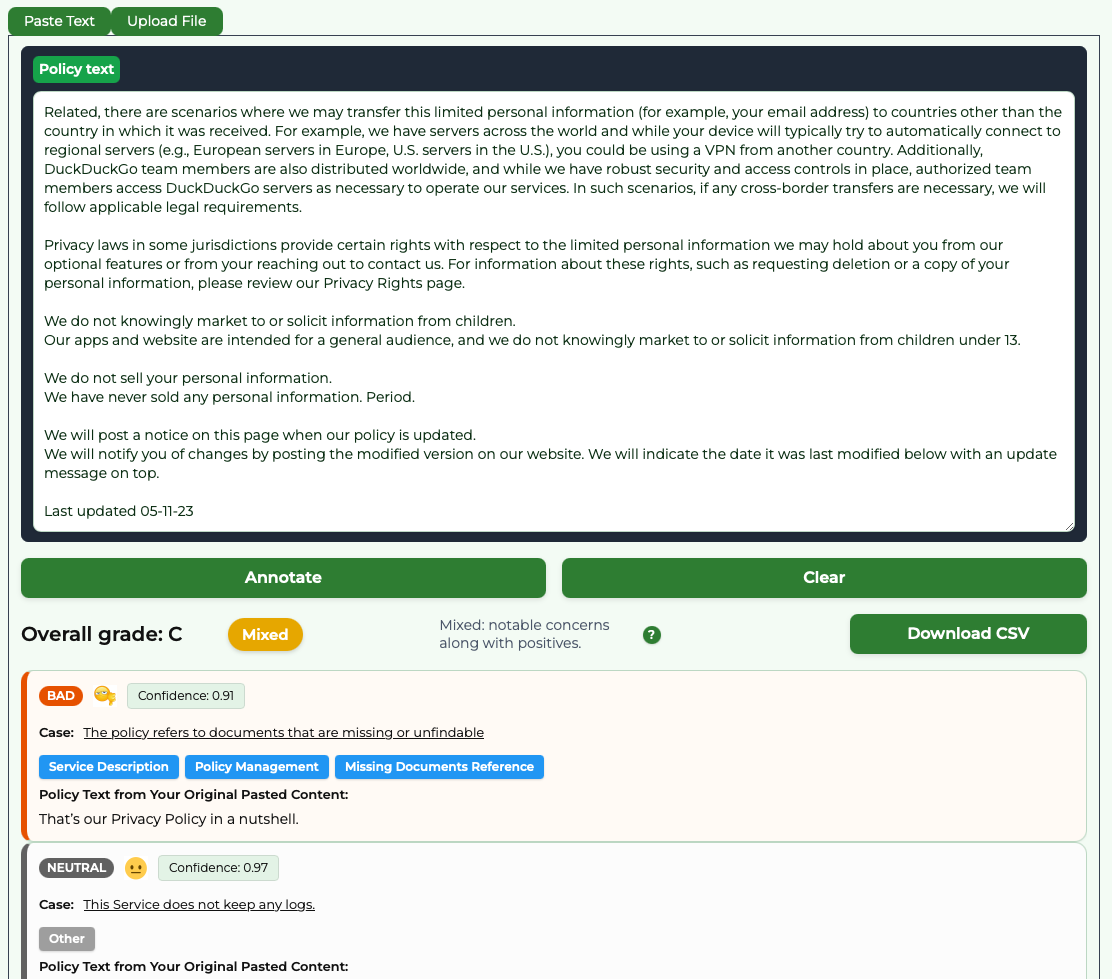
PrivyReveal is an AI-powered policy analysis and explanation tool that helps users instantly understand any Terms of Service or Privacy Policy.
It provides:
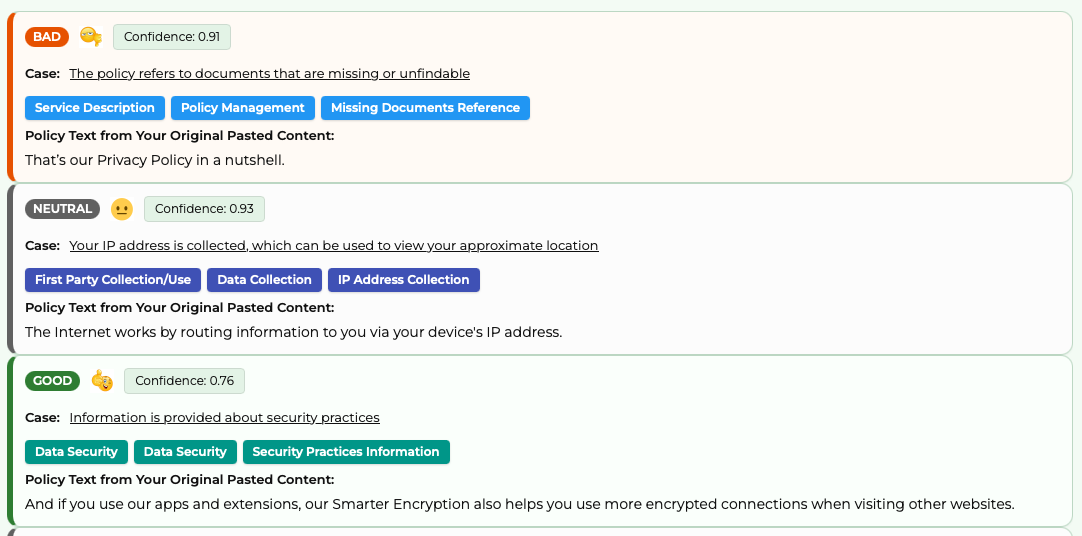
Clear, human-readable summaries
Automatically simplifies complex legal clauses.
Risk detection
Highlights risky, harmful, or concerning statements.
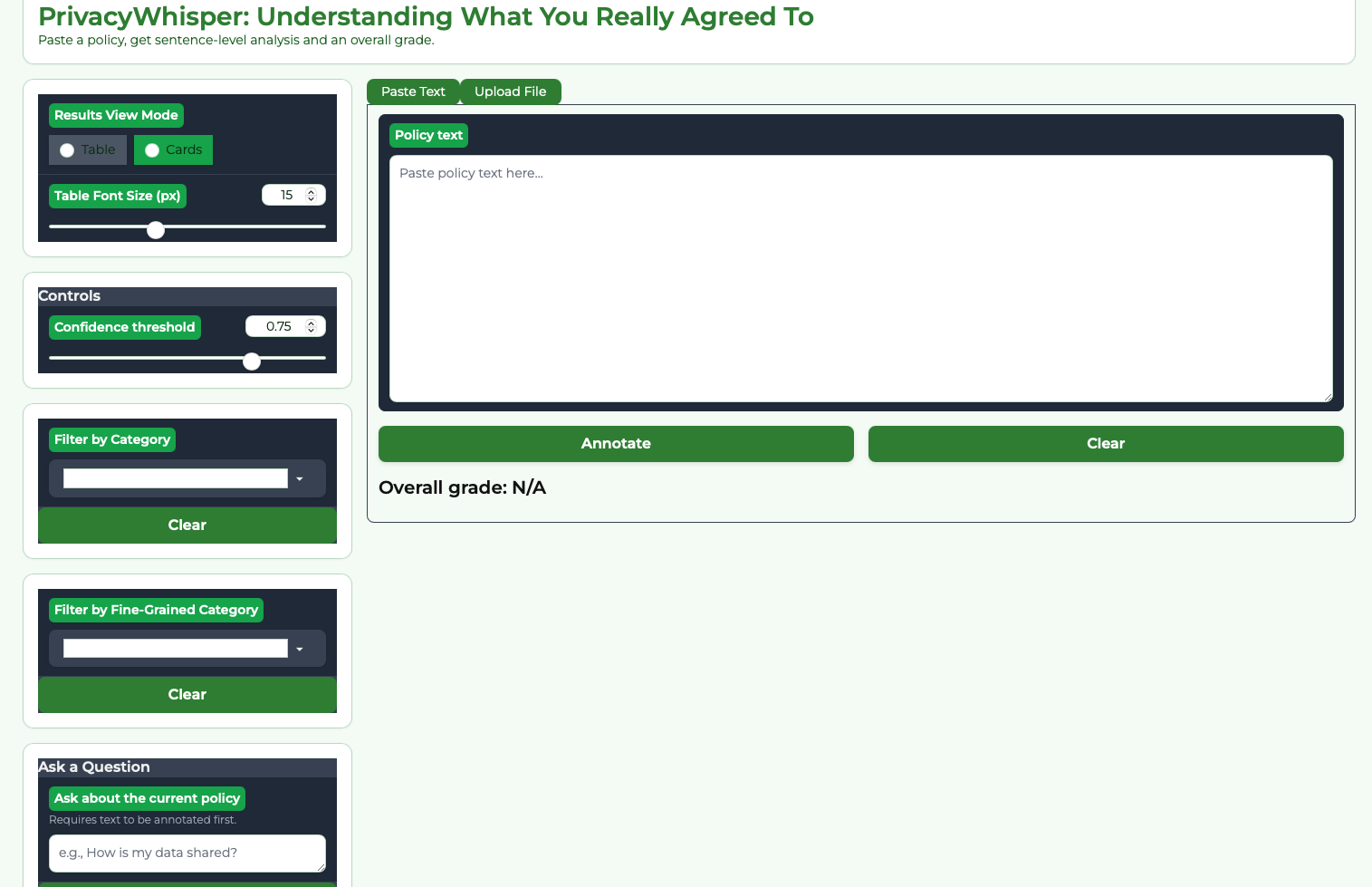
Topic-based filtering
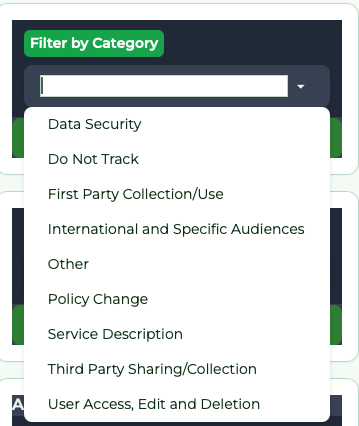
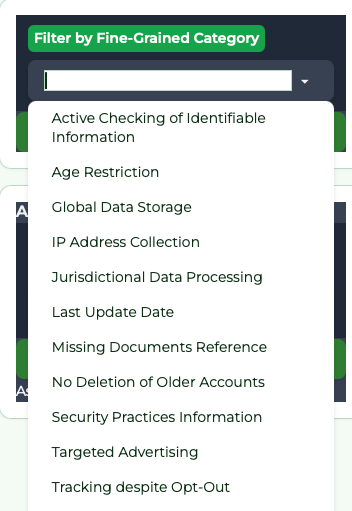
Lets users explore data collection, sharing, security, retention, cookies, dispute resolution, and more.
XAI Explainability
Shows how the AI made decisions using SHAP/LIME visual explanations.
Voice interaction
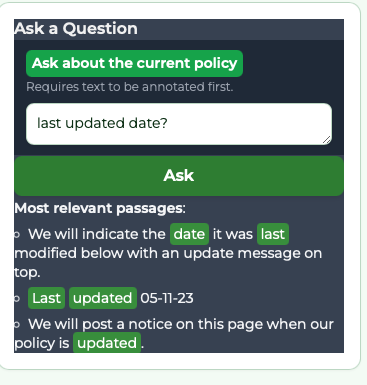
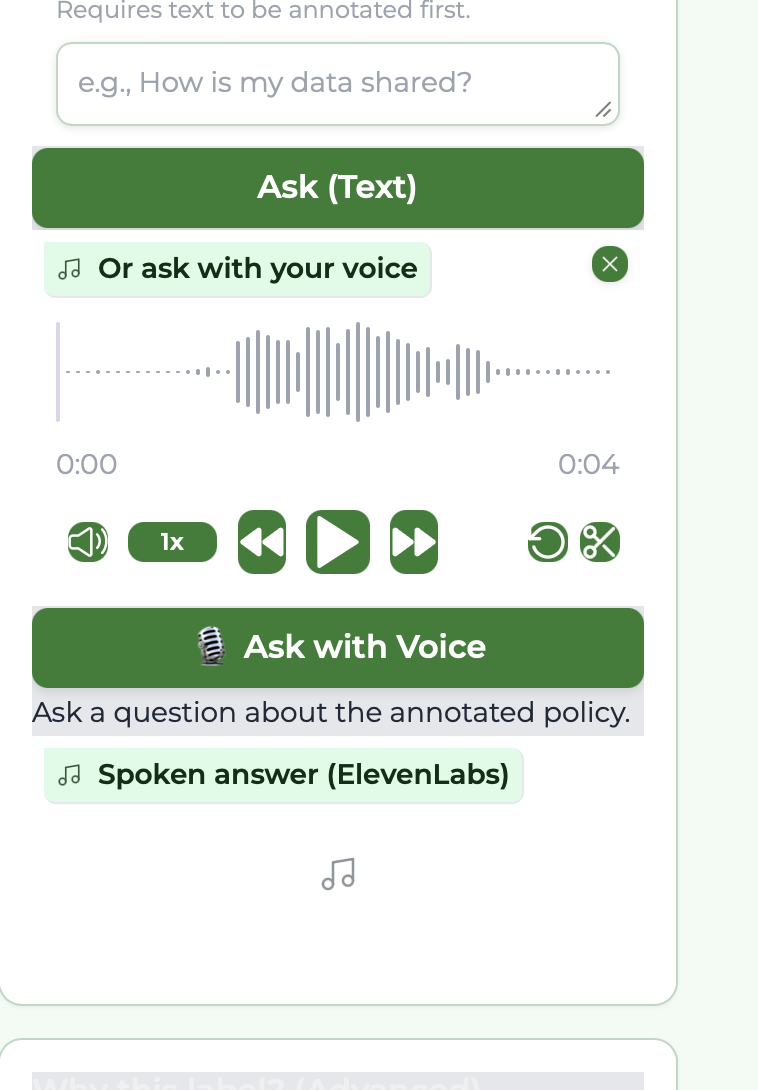
Users can ask questions about the document via text or voice, powered by Claude on Amazon Bedrock + Deepgram.
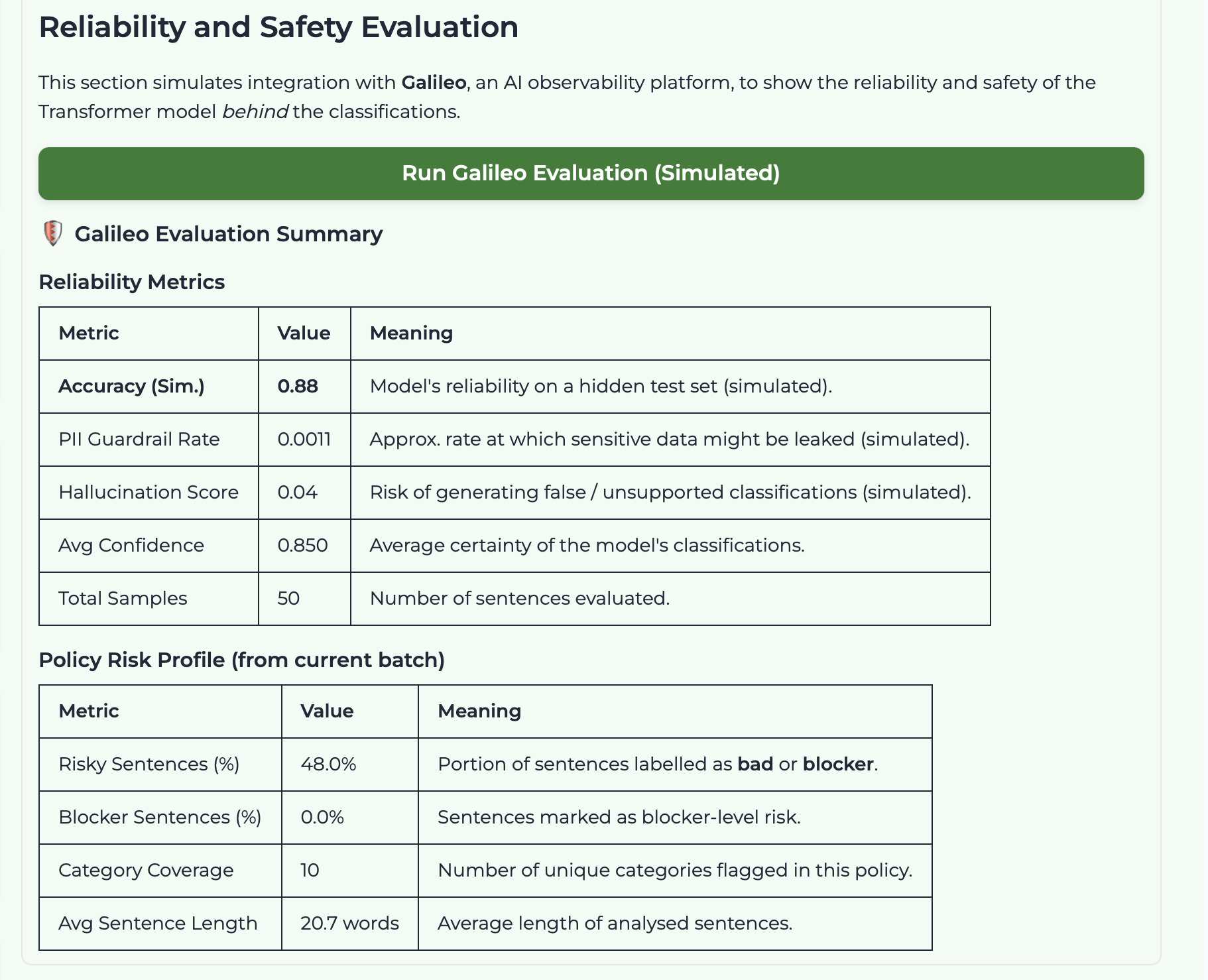
Evaluation transparency
Uses Galileo traces to show model behavior and build user trust.
The result: A fast, accessible, trustworthy way to understand what you’re really agreeing to.
⸻
How we built it
PrivyReveal was developed using: • Python • Gradio for the interactive UI • Transformer models (RoBERTa/ToS;DR-based classification) • Deepgram for speech-to-text • ElevenLabs for text-to-speech • SHAP & LIME for explainability • Galileo for evaluation and trace analysis • Custom privacy ontology for hierarchical categorization
This allowed us to deliver a full-stack AI product within a single sprint.
Challenges we ran into
Building PrivyReveal came with several challenges:
Daytona environment compatibility
Model dependencies, Bedrock authentication, and SDK versions needed careful setup.
UI rendering issues
Coordinating tables, filters, charts, and voice components inside Gradio required multiple fixes.
XAI formatting
LIME charts and SHAP outputs needed custom patches to avoid overlapping text and improve readability.
Bedrock model errors
Switching between bearer-token authentication, region mismatches, and Converse vs. Invoke APIs caused repeated failures.
Despite this, we achieved a stable, polished system.
Accomplishments that we're proud of
A complete end-to-end AI tool built in a one-day sprint
• Successful integration of Claude, Deepgram, ElevenLabs, Galileo, Daytona
• A polished UI that makes privacy understandable and accessible
• Voice → AI → voice loop working seamlessly
• A system with real-world social impact potential
• Built-in evaluation and explainability for trustworthy AI
• A tool that genuinely empowers users to understand digital consent
What we learned
Throughout this build, we learned: • How to integrate LLMs through Amazon Bedrock’s Converse API • Real-world application of explainable AI techniques • How to build fast, reliable voice pipelines • Advanced Gradio UI design under constraints • Managing multi-agent toolchains and debugging complex systems • Designing AI tools for trust, transparency, and safety
What's next for PrivyReveal
Future plans for PrivyReveal include: • Browser extension for instant on-page analysis • Multi-language support • Comparative scoring across websites and apps • User persona–based risk alerts • Policy change detection • Enterprise compliance dashboards • Mobile app with conversational guidance
Our long-term vision is simple: Make digital consent honest, transparent, and user-centric.
Built With
- claude
- deepgram
- elevenlabs
- gradio
- huggingface
- intel-galileo
- lime
- python
- transformermodel

Log in or sign up for Devpost to join the conversation.