-

About page
-
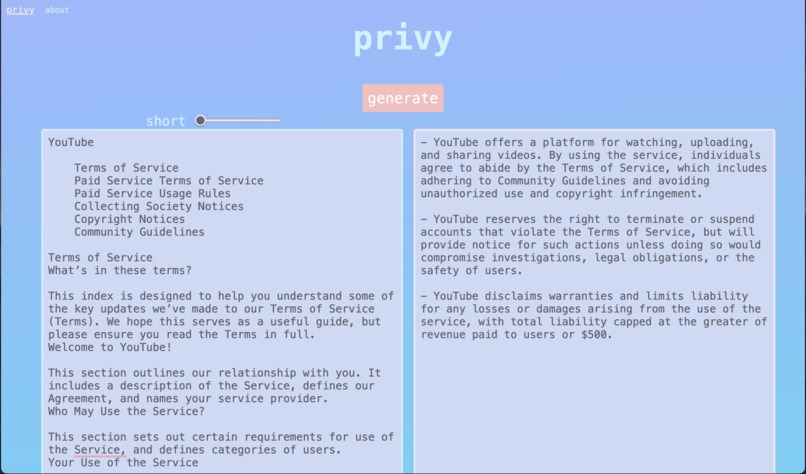
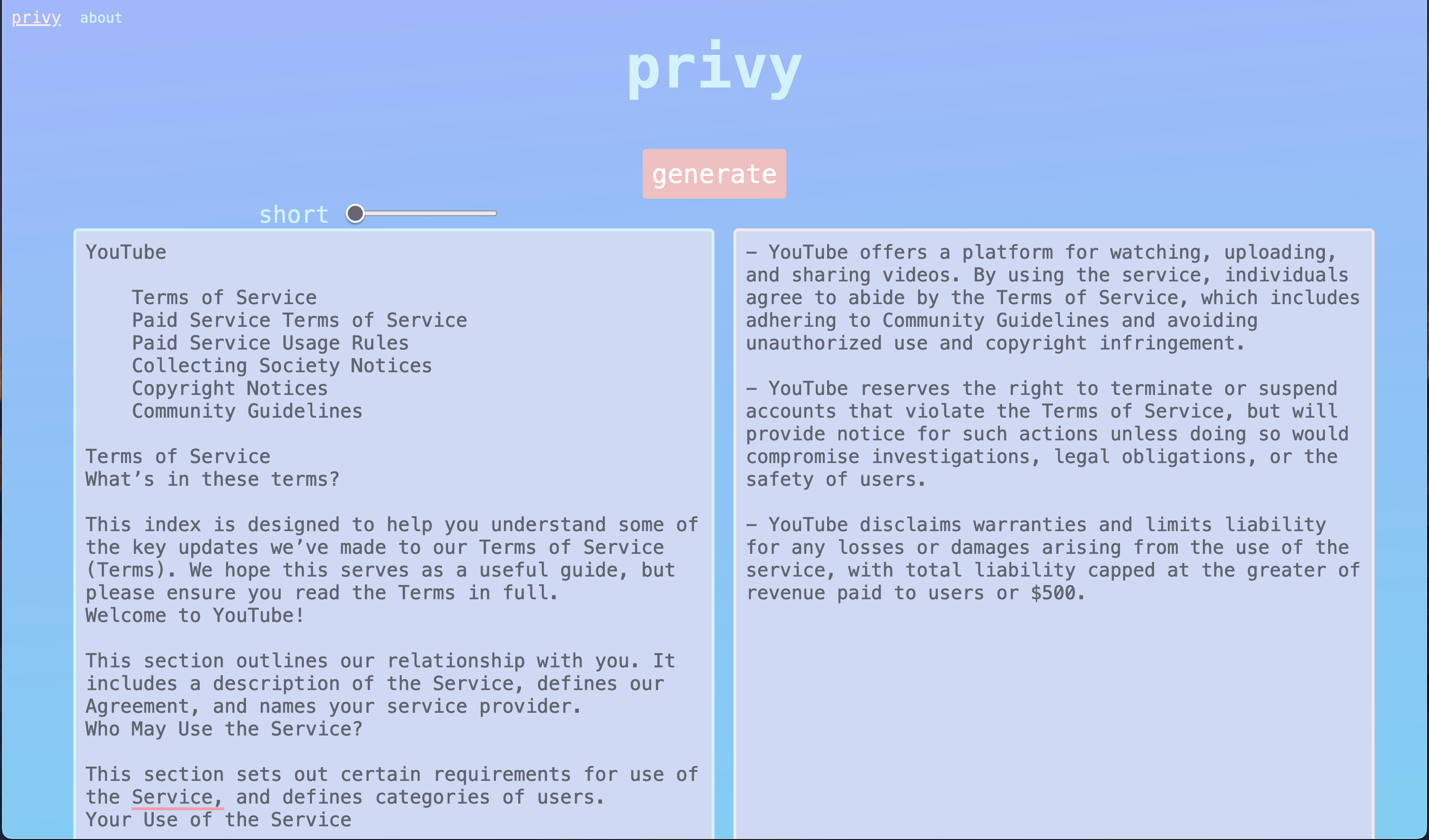
Demo with short output
-
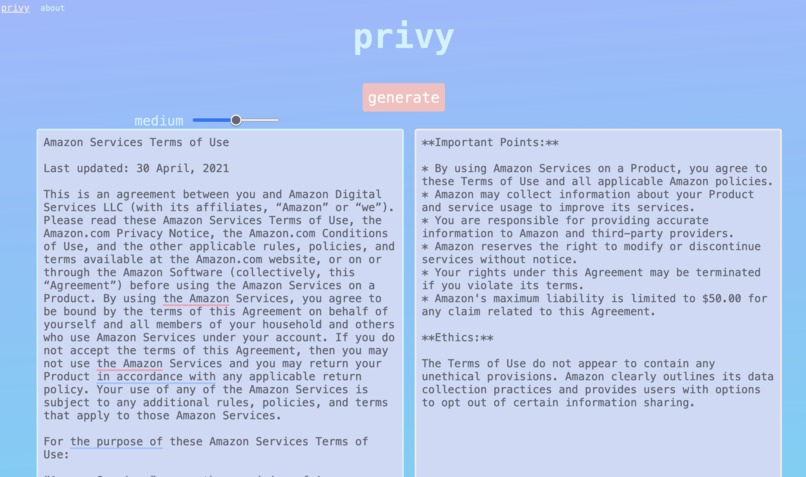
Demo with medium output
-
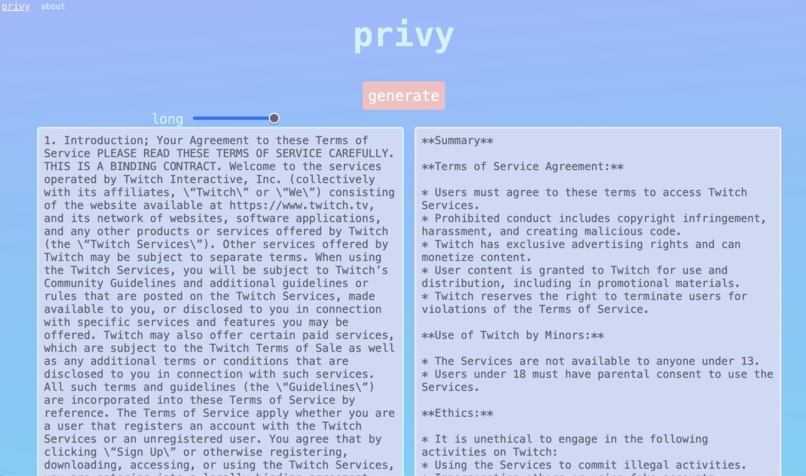
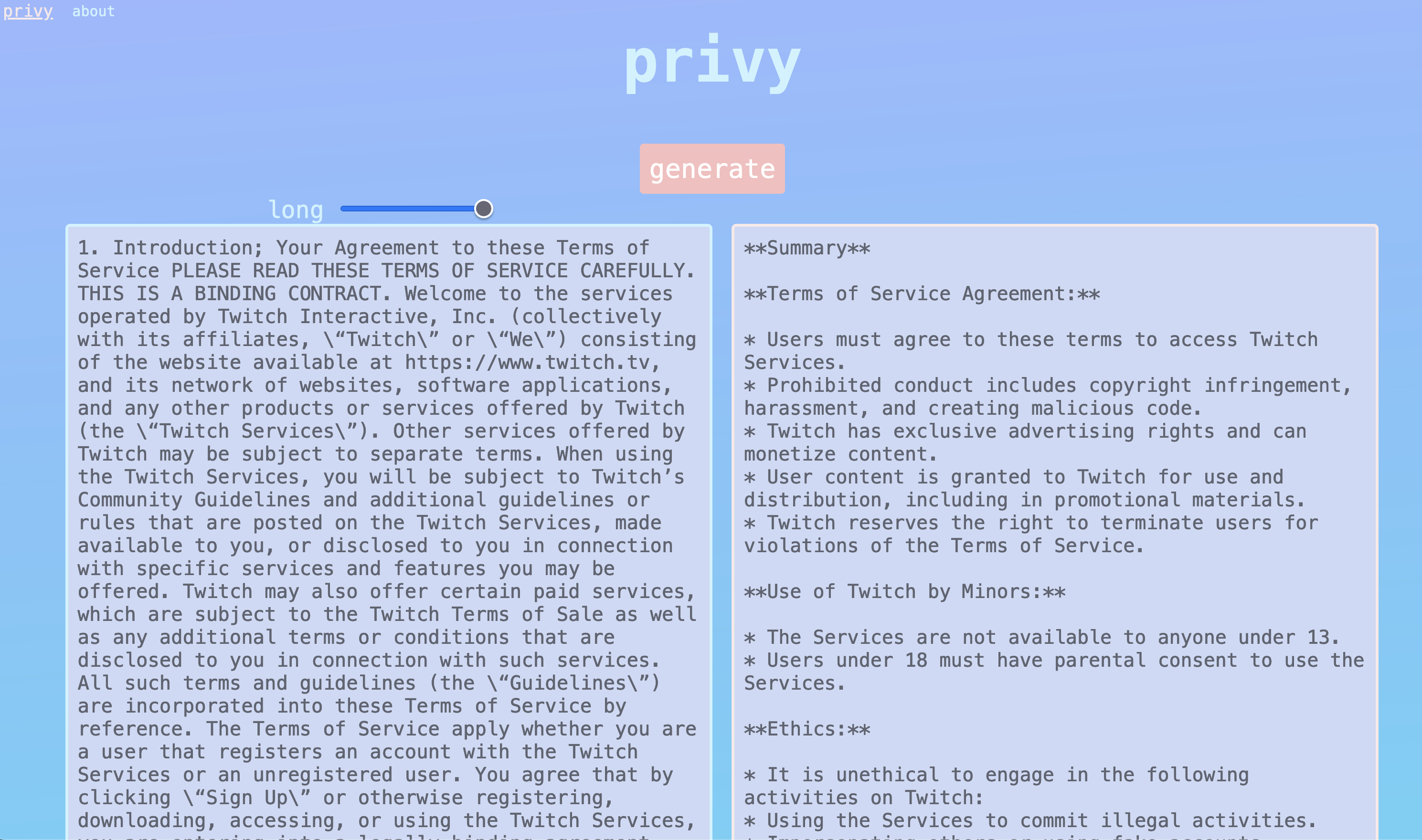
Demo with long output

Inspiration
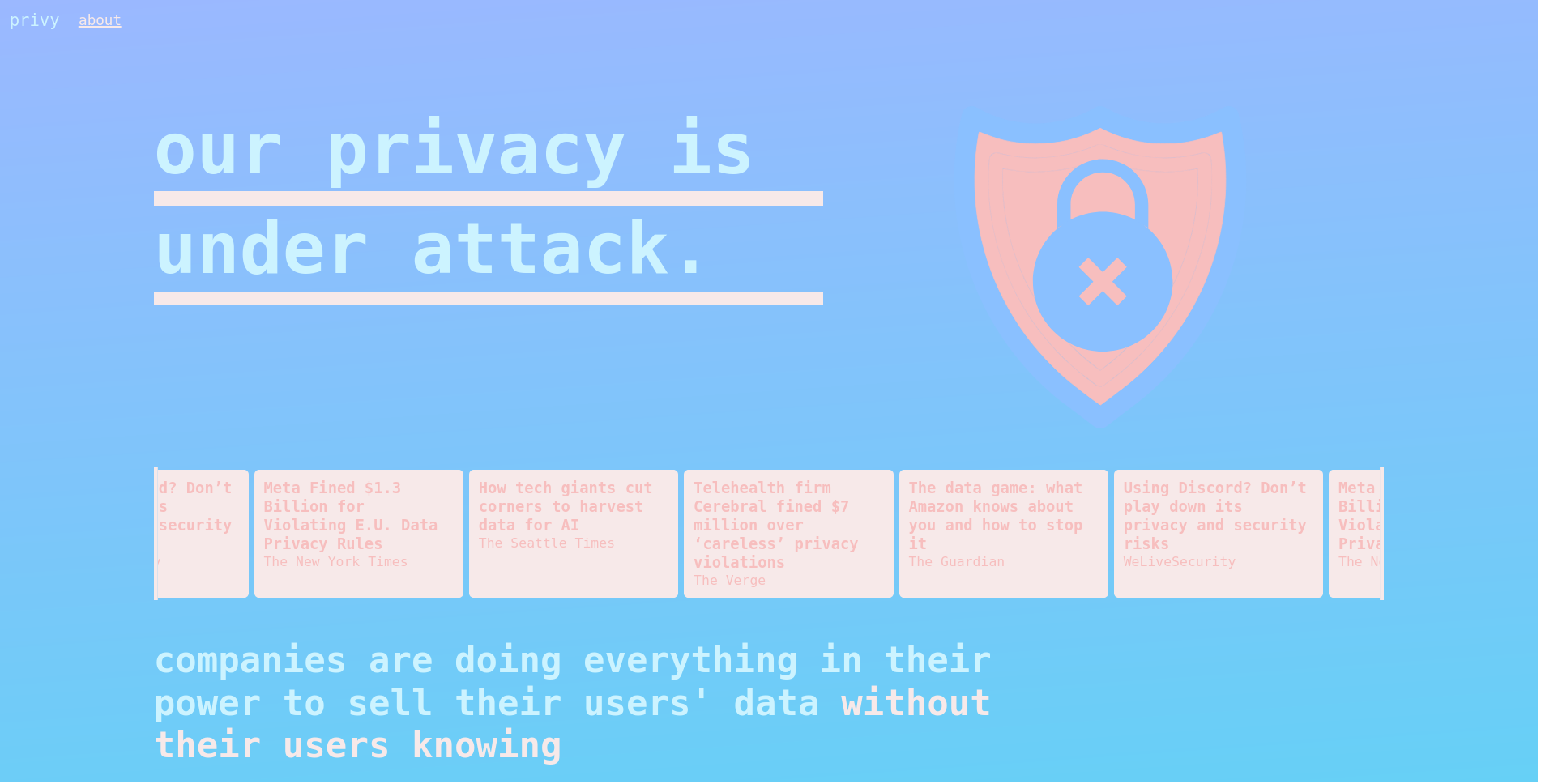
In the news, we read a lot about companies experiencing data breaches, and if users knew what data companies stored, they could be more cautious when creating accounts on new websites.
What it does
Our webapp takes in a privacy policy as input, and summarizes it into distilled, understandable information. It includes a slider that lets you choose how concise your output is.
How we built it
We built our frontend using HTML/CSS. Our backend is built using Node.JS and Express.JS. The frontend can send a POST request to the backend, which then makes an API call to Google Gemini. The backend receives data (in the form of JSON) and responds to the frontend by sending this data.
Challenges we ran into
We struggled with building our backend Node.JS server and creating POST requests, as it was our first time working with these technologies.
Accomplishments that we're proud of
We created a finished, polished product with added user customization and gained valuable knowledge on creating full-stack infrastructure.
What we learned
This hackathon was a great learning experience for us all as it was our first hackathon. We learned technical skills, such as how to build node servers, communicate between the front-end application and back-end server, use other developed products through API calls, and navigate git and deal with merge conflicts. We also learned how to work in a cross-functional team of designers, front-end developers, and back-end engineers, as well as working under extreme time pressure to create a product we are proud of.
What's next for privy
We want to make it easier for users to quickly find out how safe a company is, and giving bullets may not always be the best way to do that. For that reason, we hope to assign each website a score by identifying 10 key features of a good and bad privacy policy, which will make it easier for users to understand at a glance the trustworthiness of a company.

Log in or sign up for Devpost to join the conversation.