-
-

home page
-

features
-

how it works
-

faq's
-
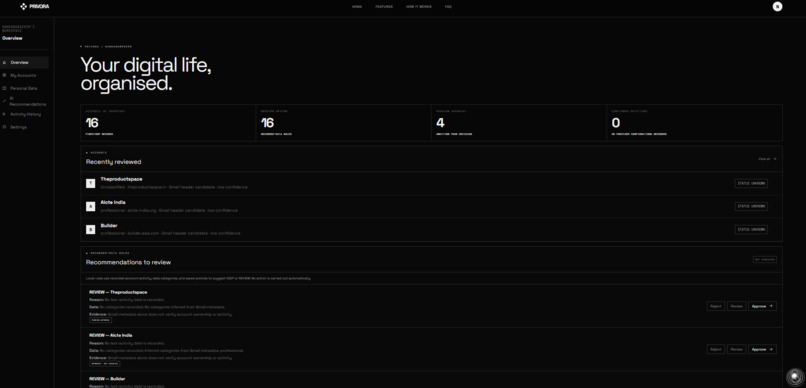
overview
-

AI Recommendations
-
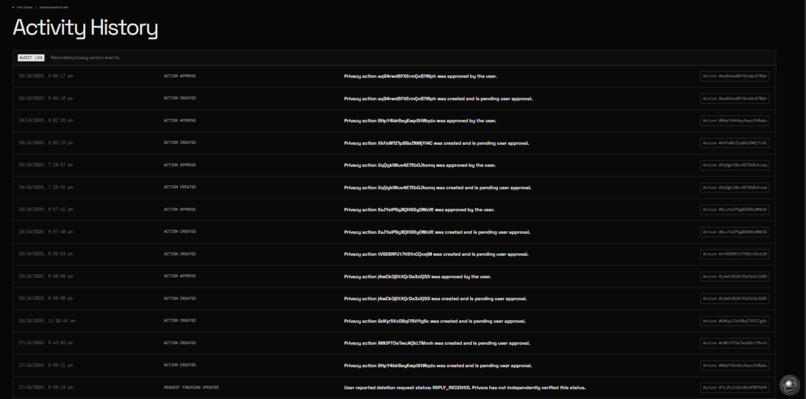
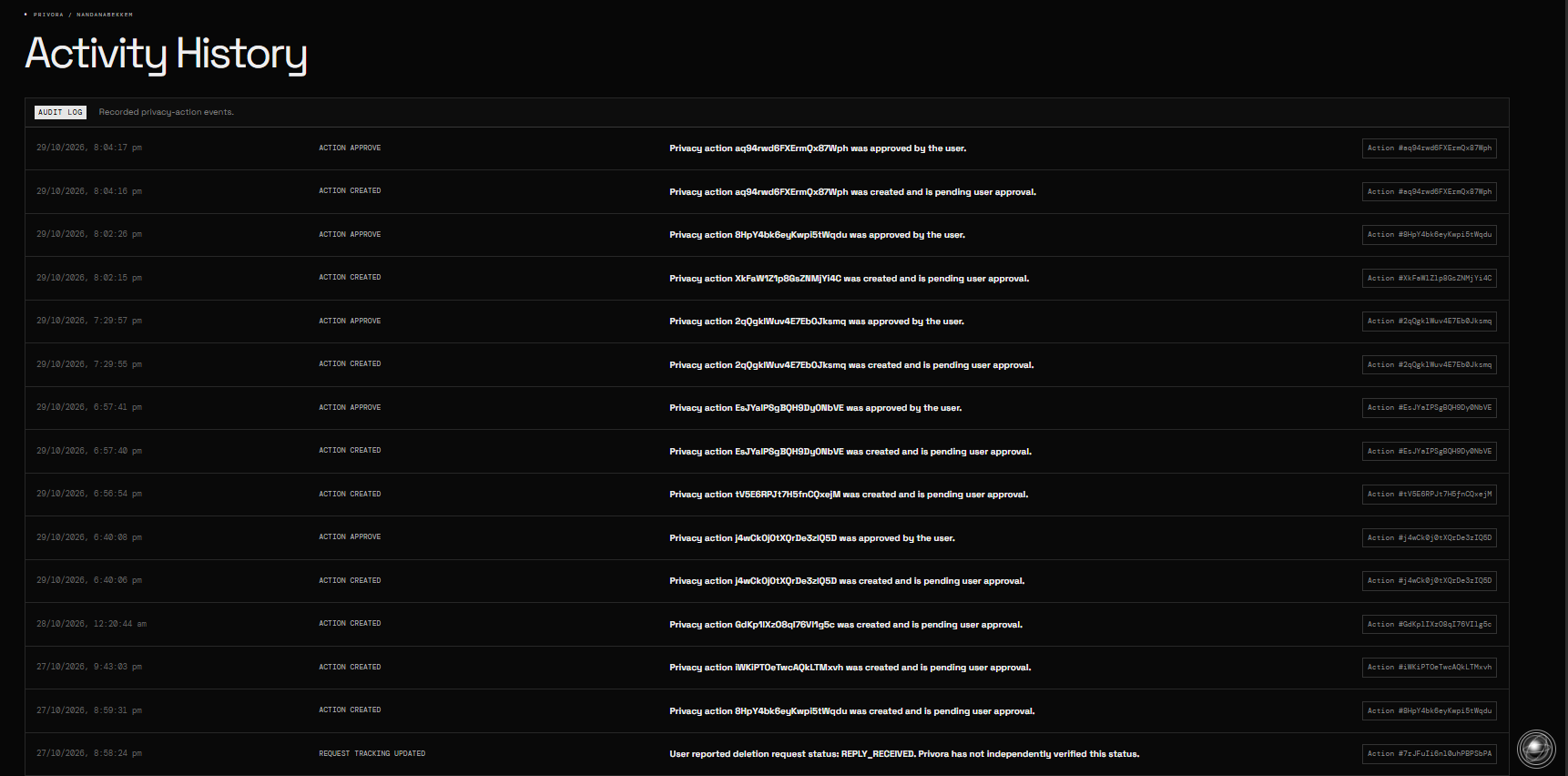
activity history
-
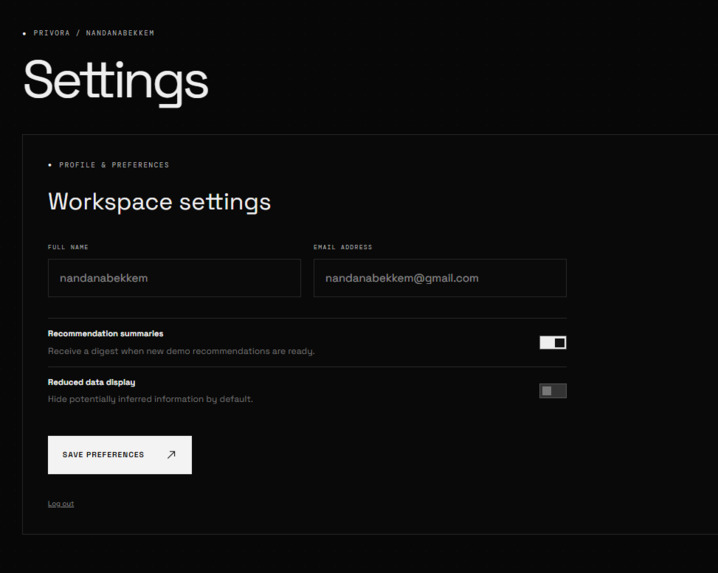
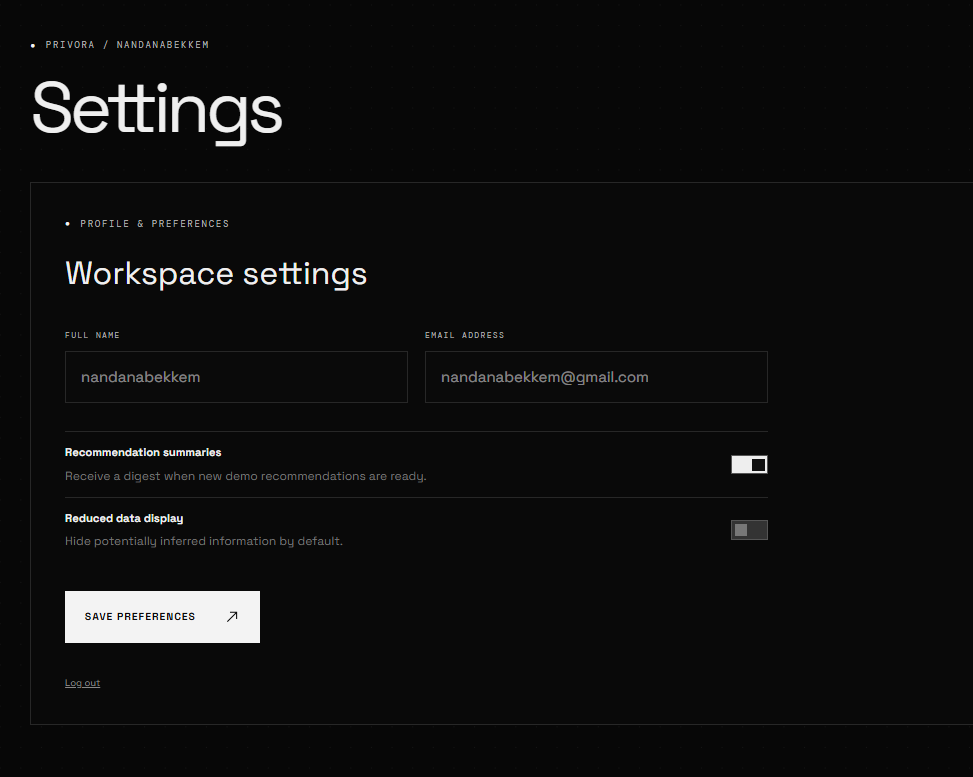
Settings
-
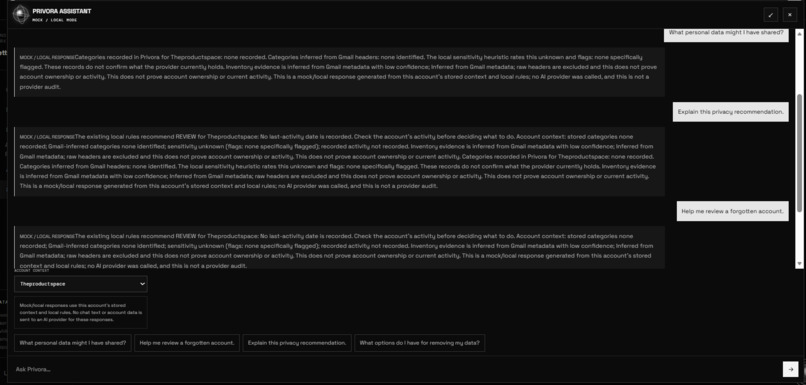
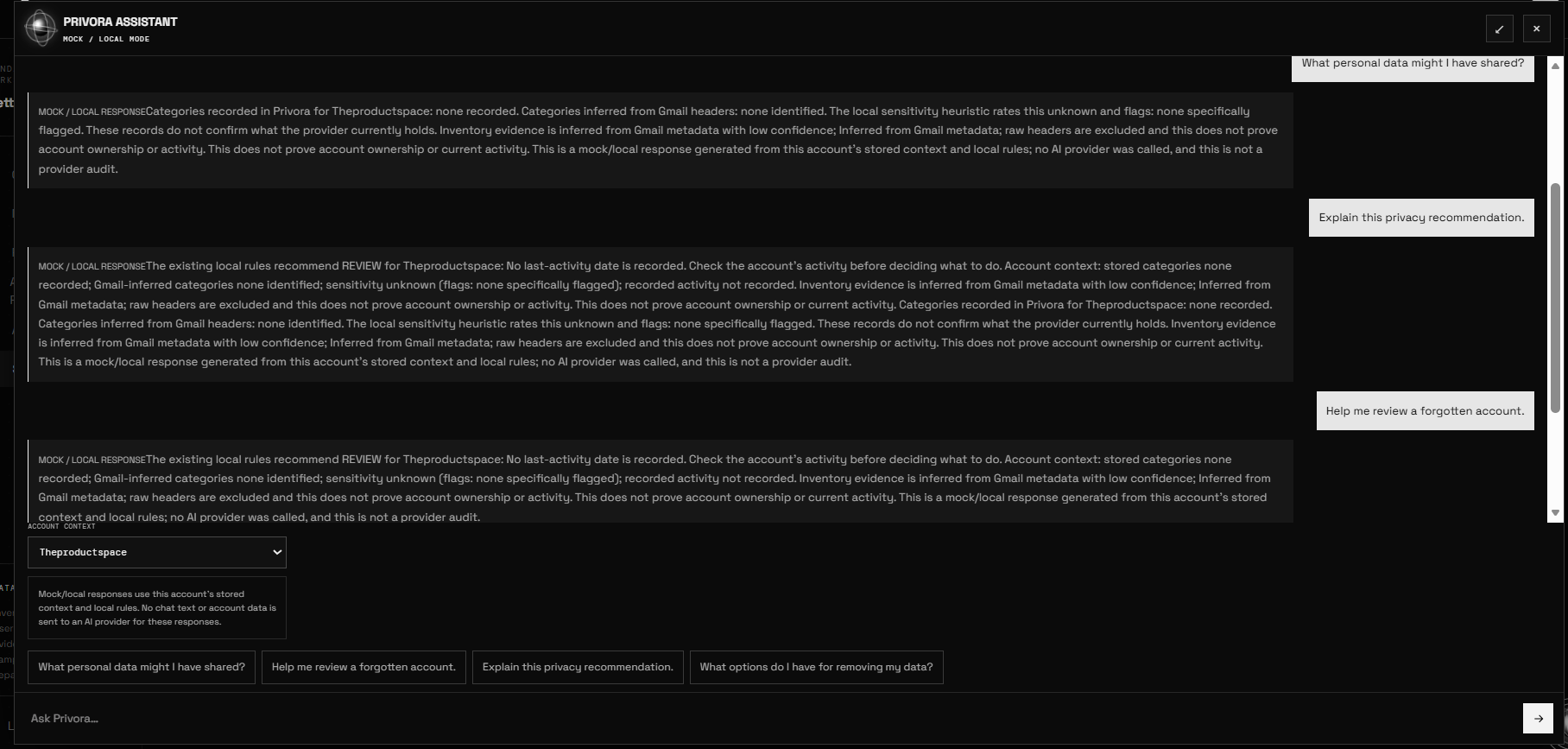
AI assistant
-
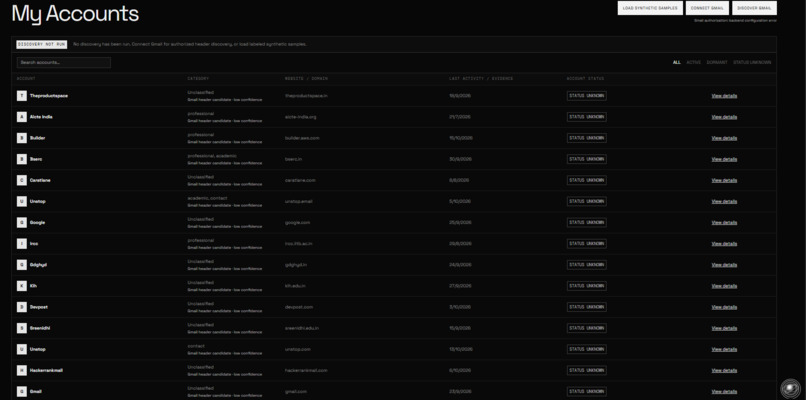
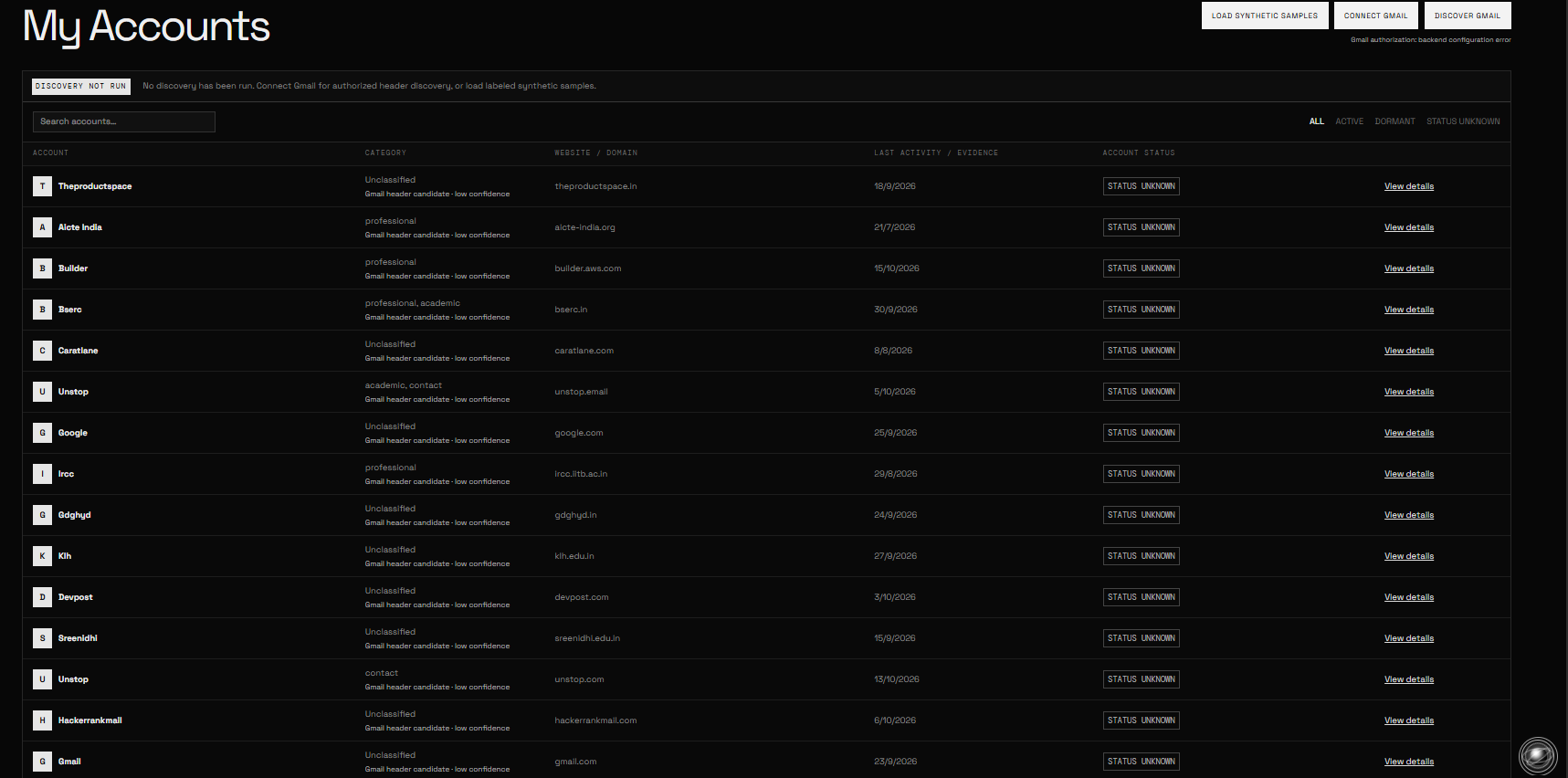
My Accounts
-
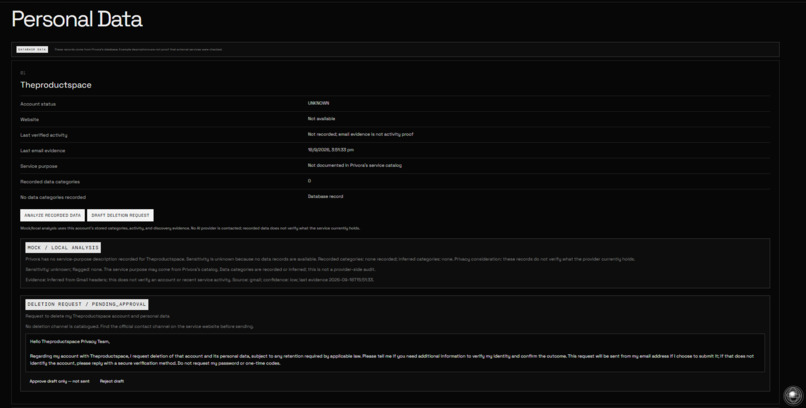
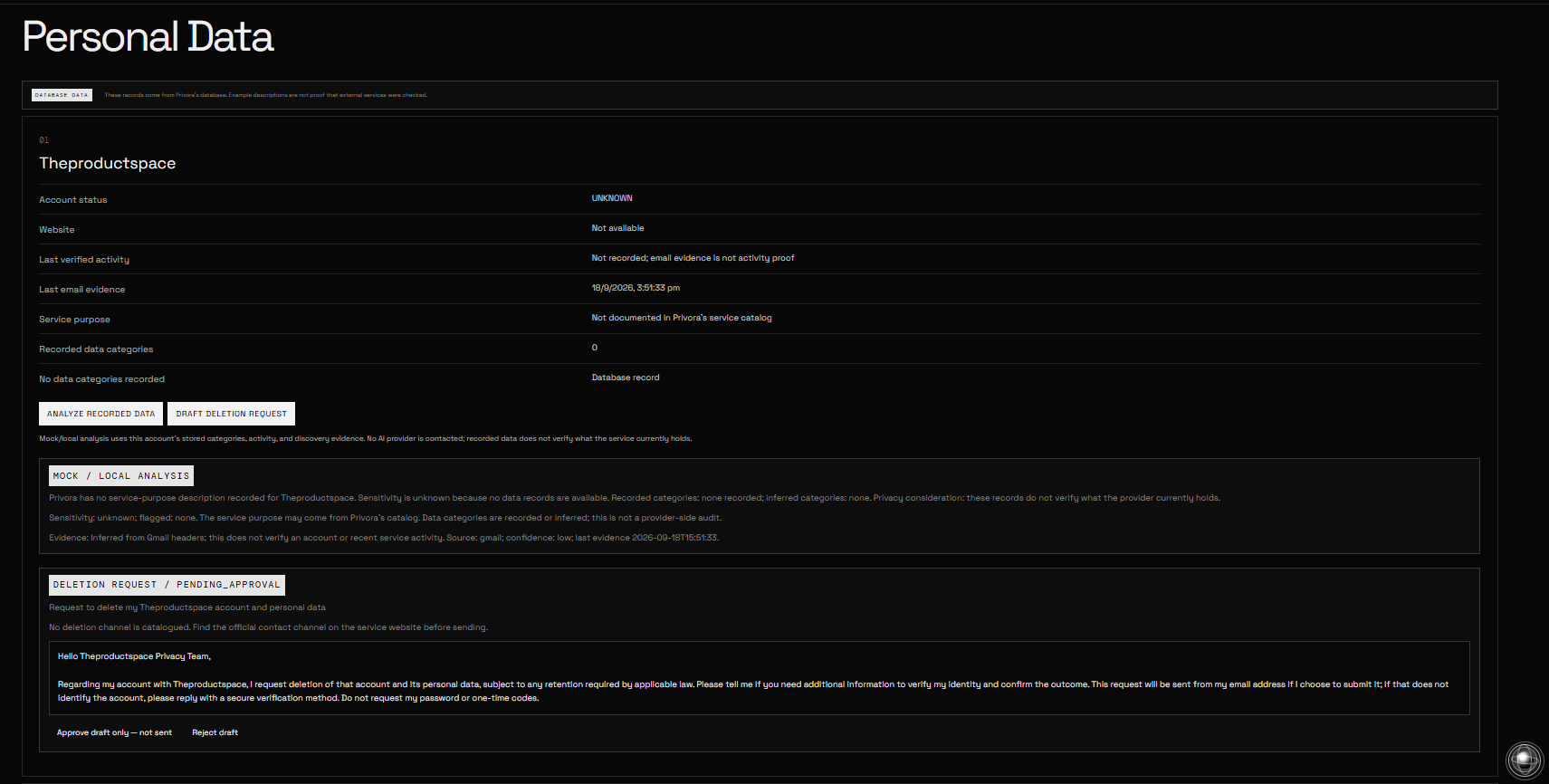
Personal Data
-

get started/caution(NOTE)
-
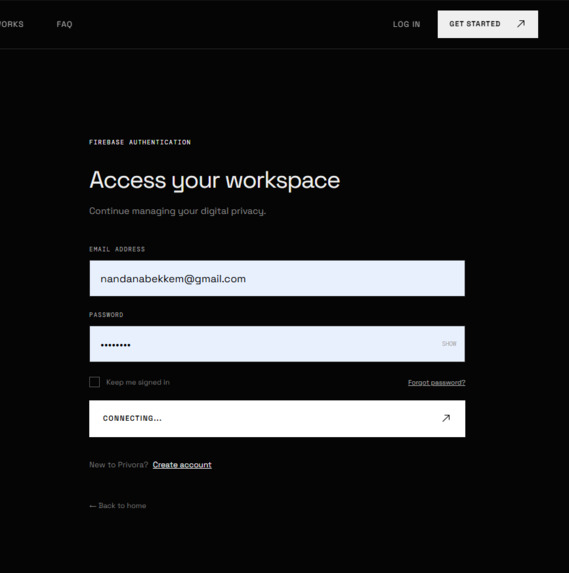
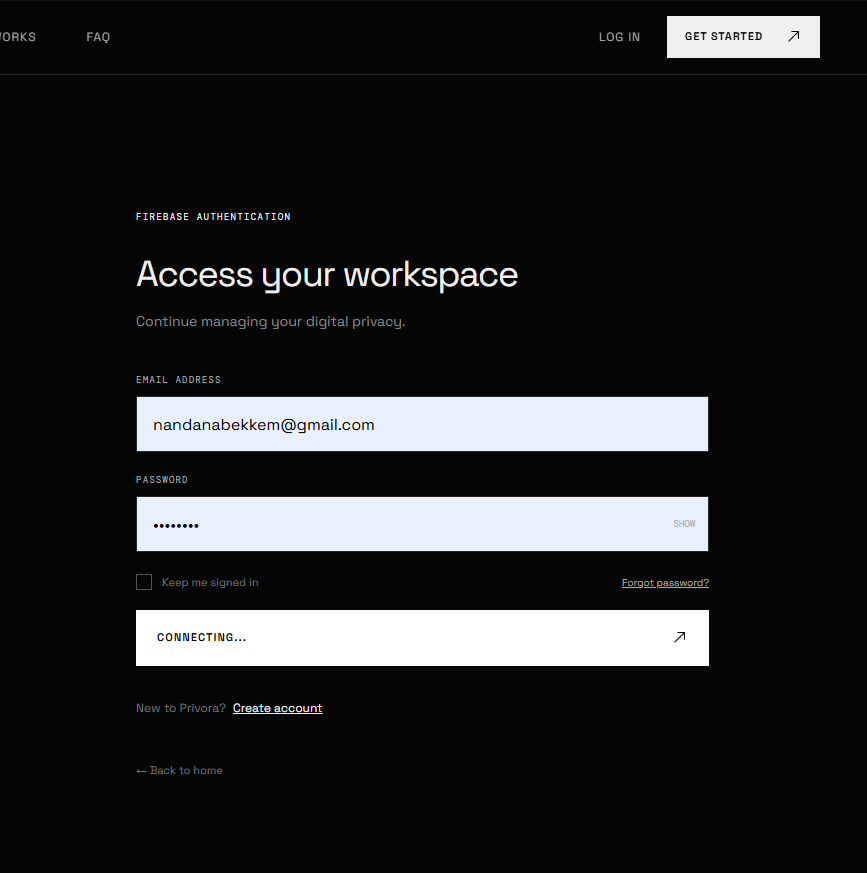
log in /sign in page






Inspiration
Our digital lives are spread across countless online services. We sign up for platforms, share personal information, and move on, often forgetting where our data might still exist. Understanding this digital footprint and taking action to protect personal information can be difficult and time-consuming.
This inspired us to build Privora, a personal data lifecycle and digital-footprint management assistant that helps users investigate their online presence and make more informed privacy decisions.
What It Does
Privora helps users discover potential online services using available Gmail evidence, organize account information, review recorded and inferred data categories, and assess potential privacy risks. It also helps users prepare privacy and data deletion requests for review and approval.
Its main capabilities include:
- Digital Footprint Discovery: Identify potential online services using Gmail metadata or clearly labelled synthetic data.
- Account Inventory: Organize discovered services, available evidence, and account-related information.
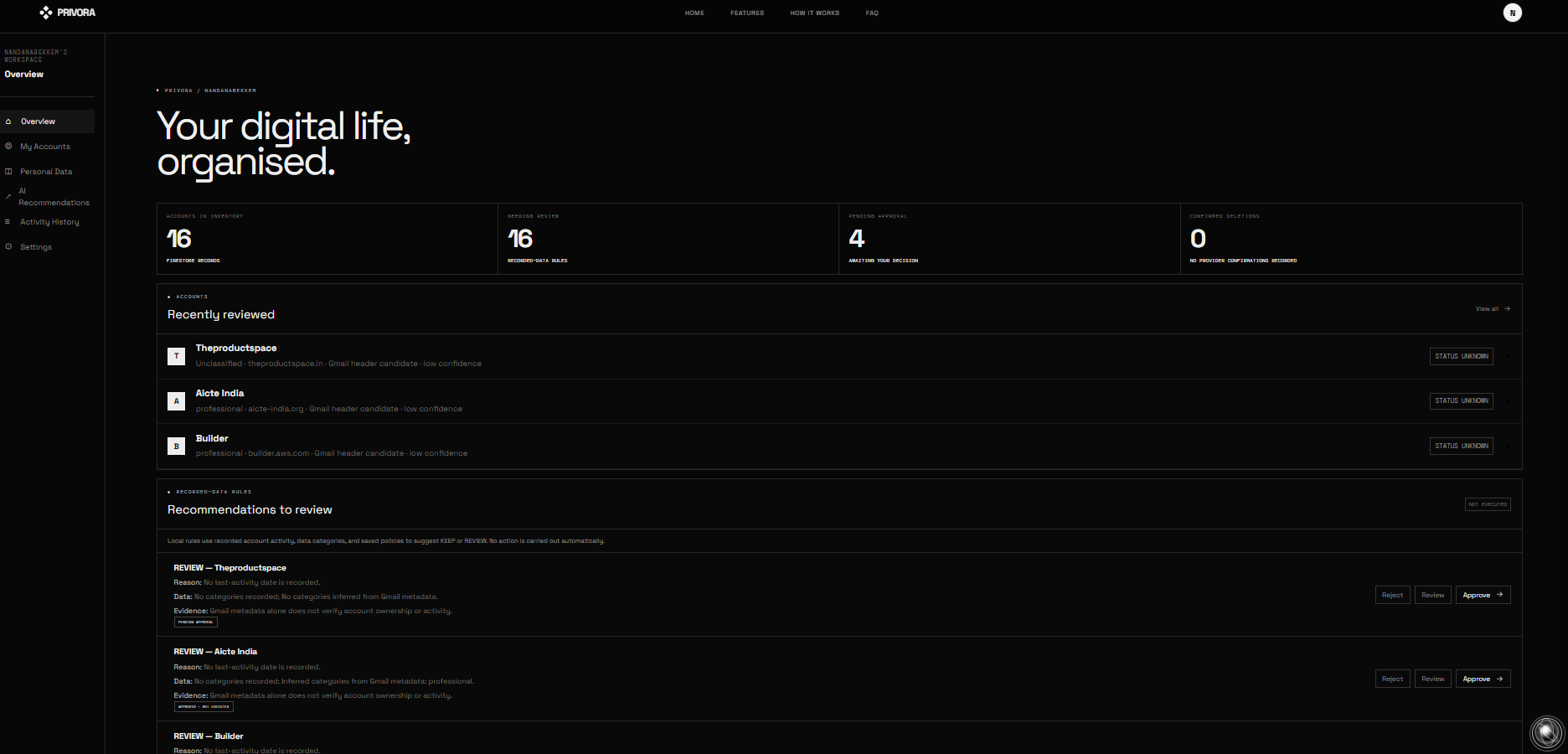
- Privacy Analysis: Apply local rules and heuristics to assess data sensitivity and generate KEEP/REVIEW recommendations.
- Account-Aware Assistant: Provide account-specific responses using stored context and local rules.
- Privacy Request Management: Prepare requests, support approval workflows, and track request statuses for supported channels.
- User-Controlled Actions: Require explicit confirmation before sending supported email requests.
Privora is designed to help users understand their digital footprint rather than promise complete discovery or automatic removal of personal data.
How We Built It
We built Privora using a frontend–backend architecture.
- Frontend: React, TypeScript, Vite, and Tailwind CSS provide the user interface.
- Backend: Python and FastAPI handle API requests and application logic.
- Authentication: Firebase Authentication supports user sign-in, while the backend verifies Firebase ID tokens.
- Data Storage: Google Cloud Firestore stores application records and account-specific conversation history.
- Gmail Integration: Google OAuth and the Gmail API support bounded email-metadata discovery and supported email submissions.
- Privacy Analysis: Local rules and heuristics assess available information and generate recommendations.
We also deployed the frontend on Vercel and the backend on Render, connecting the two through the application's API configuration.
Challenges We Faced
One of our key challenges was integrating multiple services while keeping authentication and user-specific data secure. Connecting the frontend to the backend required careful configuration of API URLs, CORS, Firebase credentials, and authentication.
Gmail integration introduced additional challenges involving OAuth consent, redirect URIs, permissions, and secure credential storage. We also had to distinguish between evidence suggesting a possible account and evidence that actually proves account ownership.
Another important challenge was defining realistic boundaries for privacy automation. Sending a deletion request does not guarantee that a provider received, processed, or completed it. We designed Privora's workflows around user approval and transparent request tracking rather than claiming that deletion had been verified.
What We Learned
Building Privora helped us understand how frontend and backend systems work together, how authentication and third-party APIs are integrated, and how deployment differs from local development.
We also learned that privacy-focused automation requires more than discovering information. It requires careful handling of permissions, secure credential management, transparent evidence, and realistic expectations about what Inspiration
Accomplishments That We're Proud Of
We are proud to have built Privora into a working web application that brings digital-footprint discovery and privacy management together in one platform.
Some of our key accomplishments include:
- Building a full-stack application using React, TypeScript, Python, and FastAPI.
- Integrating Firebase Authentication and Firestore for user authentication and data persistence.
- Implementing Gmail integration to discover potential online services using email metadata.
- Developing local privacy analysis and recommendation workflows to help users review their account information.
- Creating user-approval workflows for supported privacy requests, with explicit confirmation before email submission.
- Deploying the frontend and backend using Vercel and Render.
- Addressing the challenges of authentication, API integration, deployment configuration, and secure credential handling.
Most importantly, we are proud of the transparency at the heart of Privora. Rather than promising complete digital-footprint discovery or guaranteed data deletion, we focus on helping users understand available evidence and make informed privacy decisions.
What's Next for Privora?
Our next step is to make Privora's digital-footprint discovery more reliable, strengthen its privacy and security workflows, and improve the accuracy of its evidence-based recommendations. We aim to expand service coverage, improve account and data-category verification, and make privacy-request tracking more transparent.
We also plan to explore more capable AI-driven analysis while maintaining user consent, secure handling of personal information, and clear distinctions between inferred evidence and verified facts. Our long-term vision is to help users gain greater visibility into their digital footprint and make informed decisions about their personal data.

Log in or sign up for Devpost to join the conversation.