-
-
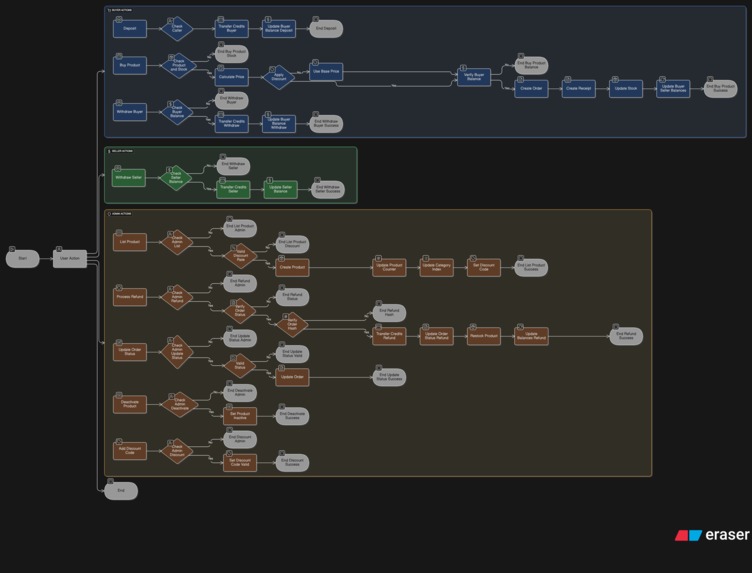
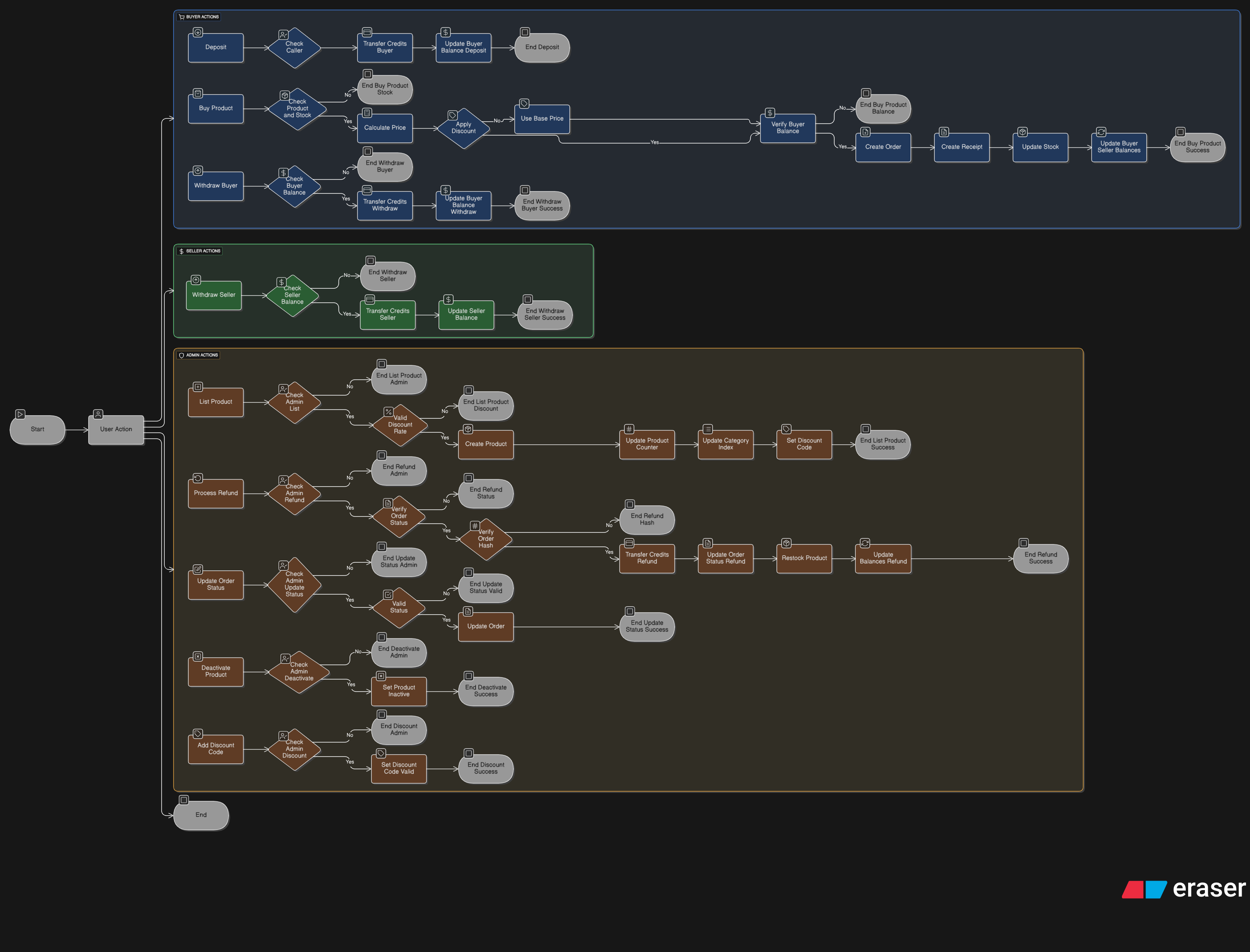
flowchart design
-
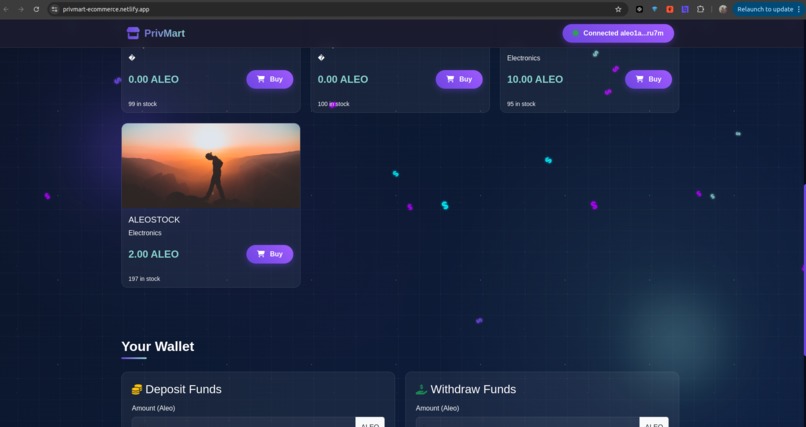
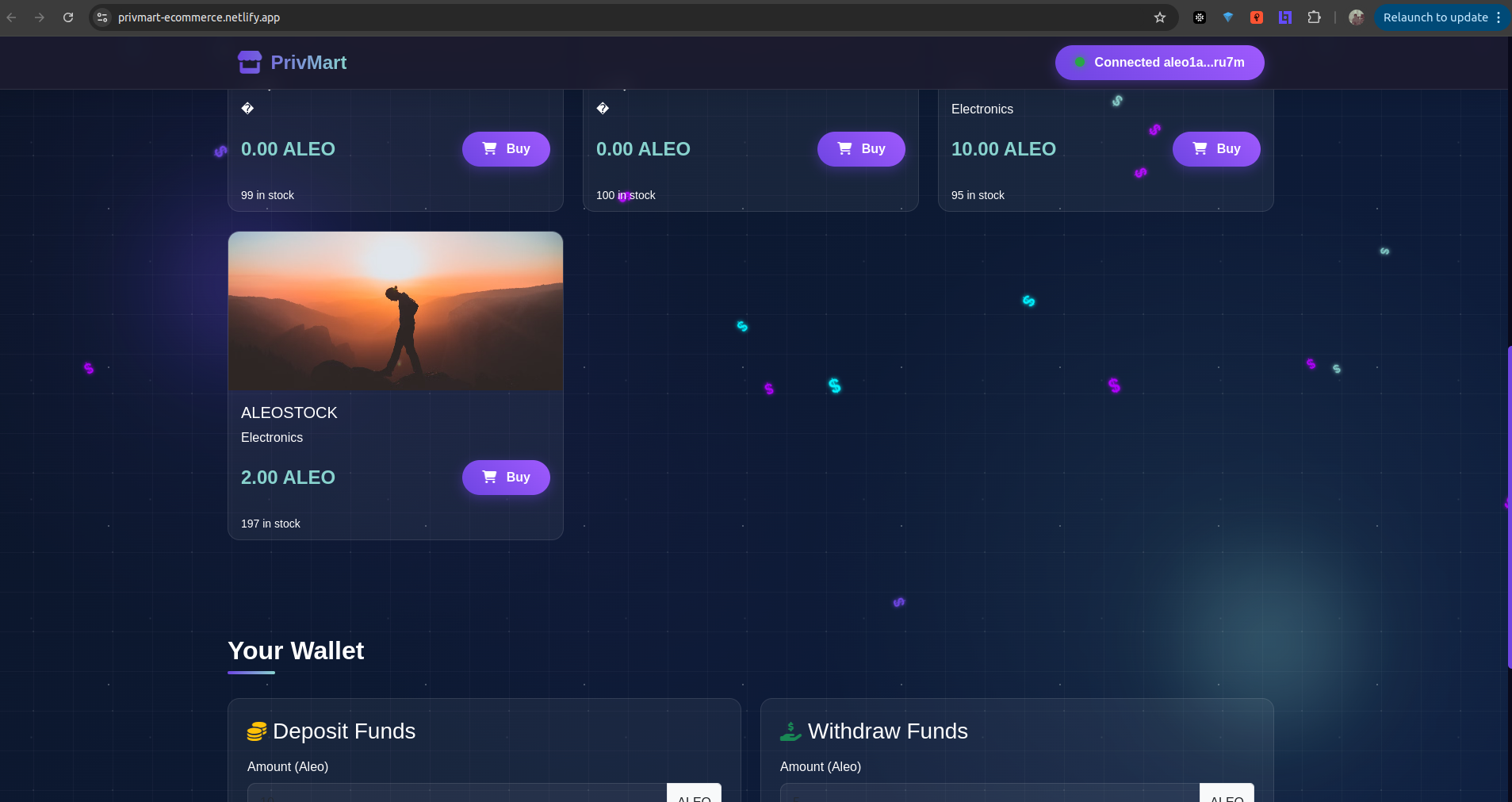
Inspiration
The spark for PrivMart came from my frustration with the lack of privacy in e-commerce. Every time you buy something online whether it is a phone from Amazon or a shirt from Etsy, your personal data is at risk. In 2021, over 1.5 billion user records were exposed in e-commerce breaches, from payment details to home addresses. As someone who values control over my data, I could not accept that shopping online meant sacrificing privacy. Enter Aleo, a blockchain that uses ZKPs to prove computations without revealing the data behind them. I thought: what if buyers could purchase products without exposing their identity, and sellers could list inventory without publicizing their stock? Inspired by privacy-focused projects like Zcash and Aleo’s vision for programmable privacy, I set out to build PrivMart (A marketplace where trust is enforced by cryptography, not centralized servers)
What it does
Private Transactions: Buyers deposit funds, purchase products, and withdraw balances without revealing their identity or transaction details, thanks to Aleo ZKPs.
Product Listings: Sellers (via an admin) list products with details like price, stock, and discounts (%), all stored privately in mappings.
Atomic Purchases: Buyers can purchase products with a discount applied, while sellers receive the full amount, ensuring fairness.
Refunds & Updates: Admins can process refunds (restocking products and updating balances) and update order statuses ("paid" to "shipped"), all verified with cryptographic hashes.
Seller Earnings: Sellers withdraw earnings privately, with balances tracked securely.
How we built it
As a Leo developer, I use the Leo programming language to build PrivMart iteratively. Here’s how it came together:
Foundation: I started by importing credits.aleo for token transfers and defined structs: (a) Product: Includes id, price, stock, category, and discount_rate for flexible listings. (b) Order: Tracks buyer, quantity, total_paid, and a verification_hash for integrity. (c) Receipt: Logs payments with timestamps for transparency.
Storage Design: Used mappings for efficient data access. counters to ensure unique IDs without collisions.
Core Transitions: (a) Deposit/Withdraw: Buyers fund their balance via credits.aleo/transfer_public, with finalize functions updating buyer_balance. (b) Buy Product: Validates stock, applies discounts, creates orders/receipts, and updates stock atomically. (c) Process Refund: Verifies order status and hash, restocks products, and refunds buyers. (d) Admin-only functions [list_product, deactivate_product] - use assert(caller == ADMIN) for security.
Testing: Deployed on Aleo’s testnet, simulating scenarios like a buyer purchasing with a 20% discount or a seller withdrawing earnings. I used Leo’s CLI to compile ZKP circuits, ensuring privacy holds.
Privacy Focus: Ensured sensitive fields (buyer, total_paid) are private, using ZKPs to prove computations without leaks. For example, the verification_hash ensures order integrity without exposing details.
I coded in VS Code, leaning on Leo’s documentation and Aleo community forums for guidance. The process felt like assembling a cryptographic puzzle where every piece had to fit perfectly.
Challenges we ran into
Balancing Privacy and Functionality: Applying discounts privately was tricky. I needed to validate discount_code without exposing it, using valid_discounts mapping. Ensuring atomicity (i.e deducting balance and updating stock in one go) required multiple rewrites to avoid partial states.
Storage Efficiency: Mappings can grow large, so I optimized with get_or_use for default values, reducing gas costs. But early versions had redundant writes, inflating costs.
Learning Curve: Aleo upgrade model (@noupgrade) were initially confusing. I spent time studying Aleo’s docs to get it right, since I could not deploy my program without inserting the constructor function
Accomplishments that we're proud of
Privacy-First Shopping: Built a fully functional e-commerce contract where buyers and sellers transact without exposing sensitive data, a first step toward a real-world private marketplace.
Robust Discount System: Implemented a discount mechanism that is fair to both parties where buyers save, sellers get full payment.
Atomic Transactions: Ensured purchases and refunds are all-or-nothing, preventing partial failures.
Clean Code: Structured the contract with clear structs, mappings, and transitions, making it maintainable and extensible.
What we learned
Leo & Aleo: Mastered Leo’s syntax for structs, mappings, and async transitions. Understood how Aleo’s ZKPs compile to circuits, balancing on-chain and off-chain logic.
E-Commerce Logic: Gained insights into stock management, discount calculations, and refund workflows, all while keeping data private.
User-Centric Design: Realized that privacy isn’t just technical—it’s about giving users control and peace of mind.
What's next for PrivMart
Multi-Seller Support: Extend the contract to allow any verified seller to list products, not just an admin, using a permissioned system.
Advanced Discounts: Add time-based or quantity-based discounts to make PrivMart competitive with traditional platforms.
Scalability: Optimize mappings and explore Aleo’s storage solutions to handle thousands of products and users.
Real-World Deployment: Partner with Aleo ecosystem to deploy PrivMart on mainnet, targeting privacy-conscious shoppers and sellers.
Community Growth: Open-source PrivMart on GitHub, inviting other Leo developers to contribute features like reviews or escrow.
Built With
- aleo
- css
- html
- javascript
- leo
- vscode

Log in or sign up for Devpost to join the conversation.