Inspiration
Stroke is one of the leading causes of death and long-term disability worldwide, and in many cases, delayed identification becomes the biggest barrier to survival. We were inspired by how a few minutes can completely change a patient’s outcome during a medical emergency. Existing healthcare systems are often overloaded, and many people fail to recognize early warning signs quickly enough.
We wanted to explore how AI could assist in rapid preliminary stroke screening and make emergency triage more accessible, especially in situations where immediate medical expertise may not be available.
What it does
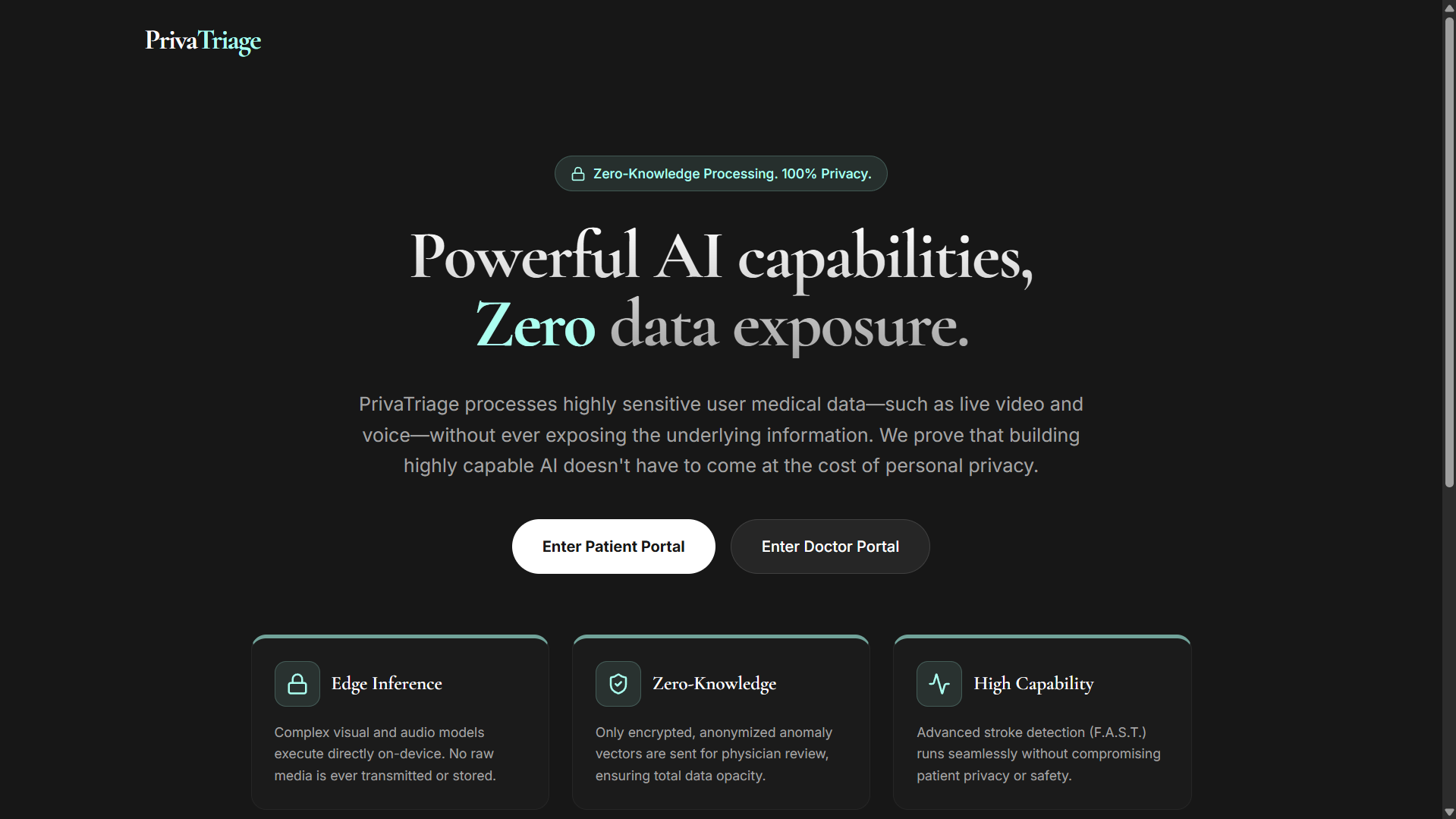
PrivateTriage is an AI-powered rapid stroke detection and triage platform that analyzes symptoms and patient inputs to assess potential stroke risk in under 10 seconds. The platform provides quick preliminary insights that can encourage faster medical attention and decision-making during critical moments.
Our goal was not to replace doctors, but to create an accessible first-response support system that helps reduce delays in recognizing possible stroke symptoms.
How we built it
We built PrivateTriage using a modern web-based architecture focused on speed, accessibility, and usability.
Tech Stack Frontend: HTML, CSS, JavaScript / React Backend: Python / Flask AI & ML: Machine Learning models for symptom-based prediction Deployment: Cloud hosting with responsive web support
The workflow involves:
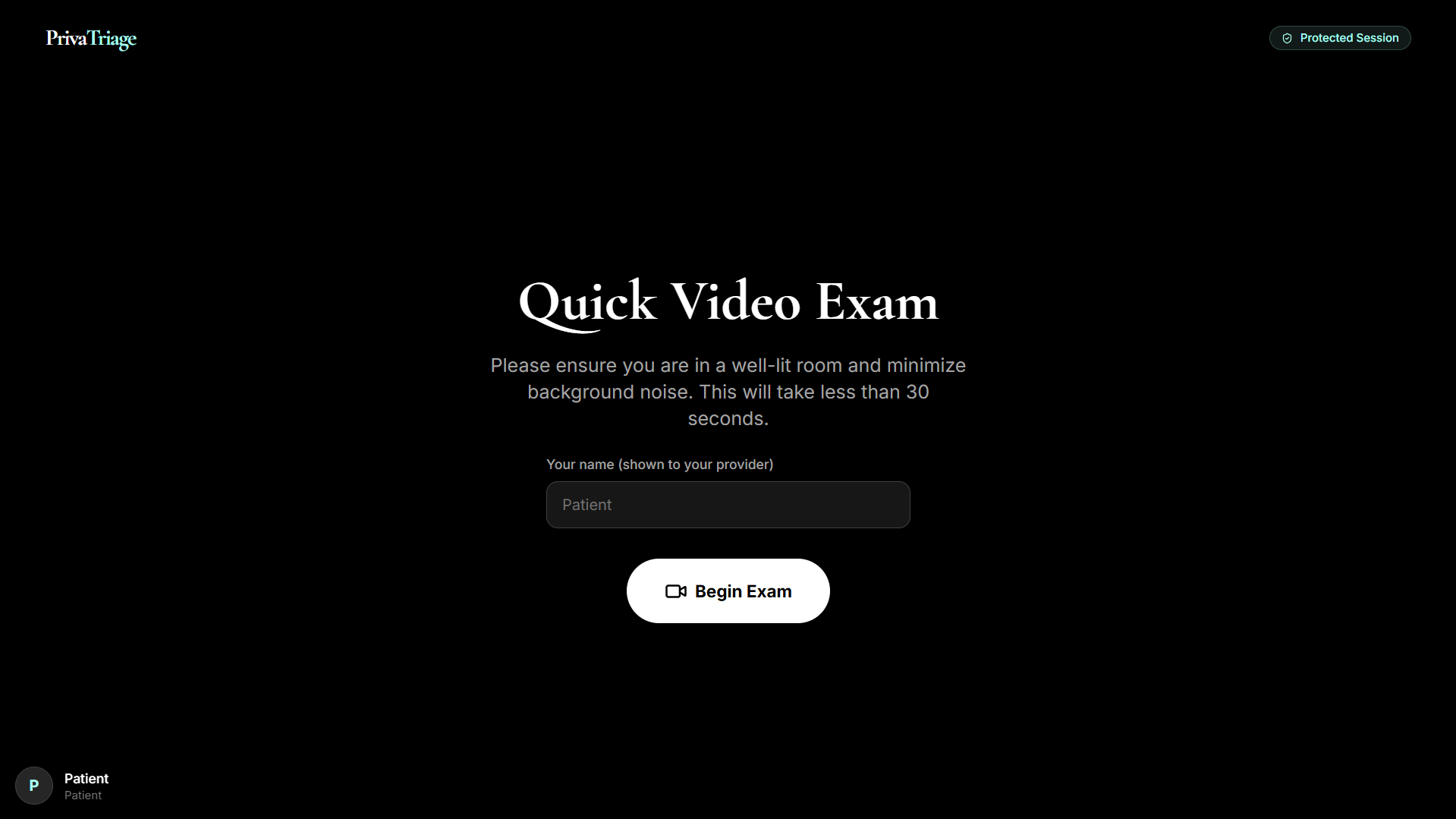
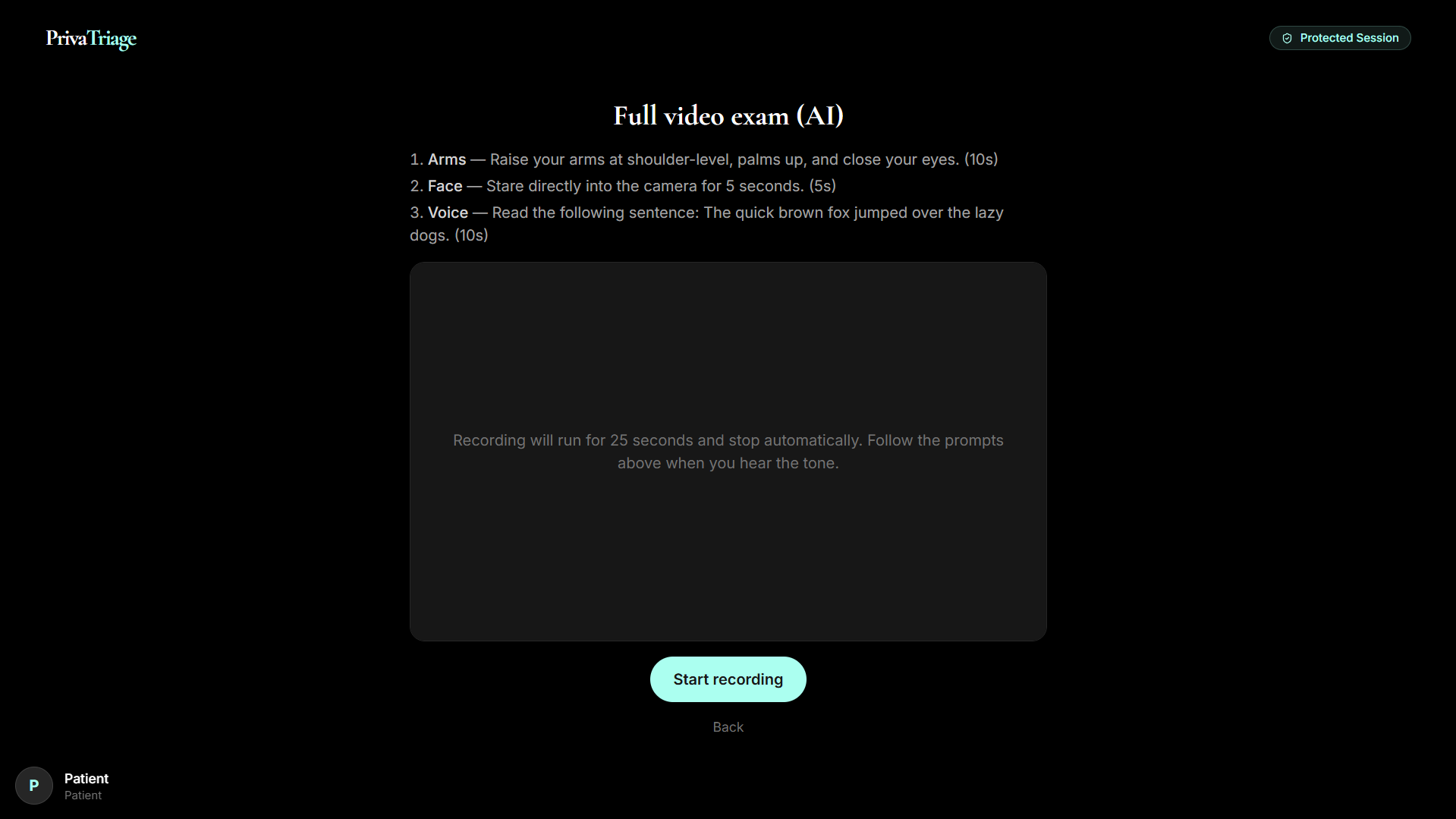
Collecting symptom-related inputs from the user Processing the inputs through an AI-based prediction pipeline Generating a rapid stroke risk assessment Presenting the result in a clean and easy-to-understand interface
We also focused heavily on reducing response latency so the system could provide near real-time results during testing.
Challenges we ran into
One of the biggest challenges was balancing speed with accuracy. Medical-related AI systems require careful handling because even small prediction errors can significantly affect trust and usability.
Another challenge was designing a simple user experience for stressful emergency scenarios. We had to ensure the interface remained intuitive, minimal, and accessible even for non-technical users.
Integrating the prediction pipeline with a responsive frontend while maintaining fast response times also required multiple rounds of optimization and debugging.
Accomplishments that we're proud of
Built a working AI-powered stroke detection prototype with rapid response time. Created a simple and accessible interface for quick emergency screening. Successfully integrated AI prediction with a full-stack web application. Learned how to balance speed, usability, and reliability in healthcare-focused technology. Developed and deployed the project within a limited timeframe.
What we learned
Through this project, we learned:
How AI can be applied in healthcare-oriented problem solving The importance of user-centered design in emergency applications Model integration and real-time prediction workflows The ethical responsibility involved in building healthcare technology
We also gained hands-on experience in deploying full-stack AI applications and collaborating under tight development timelines.
What's next for PrivaTriage
In the future, we want to:
Improve prediction accuracy with larger medical datasets Add multilingual accessibility support Integrate voice-based symptom input Include hospital and emergency contact recommendations Expand the platform to support other emergency health conditions
PrivateTriage represents our step toward making AI-assisted healthcare support faster, more accessible, and more responsive when every second matters.
Built With
- css
- flask
- html
- javascript
- learning
- machine
- python
- react
- scikit-learn
- tensorflow
- vercel


Log in or sign up for Devpost to join the conversation.