-
-
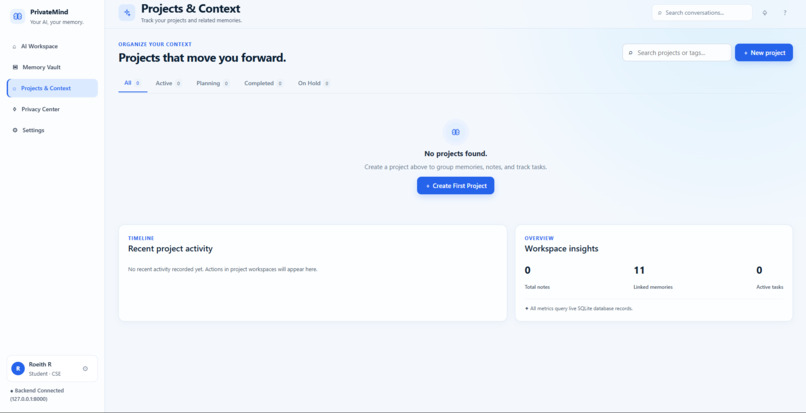
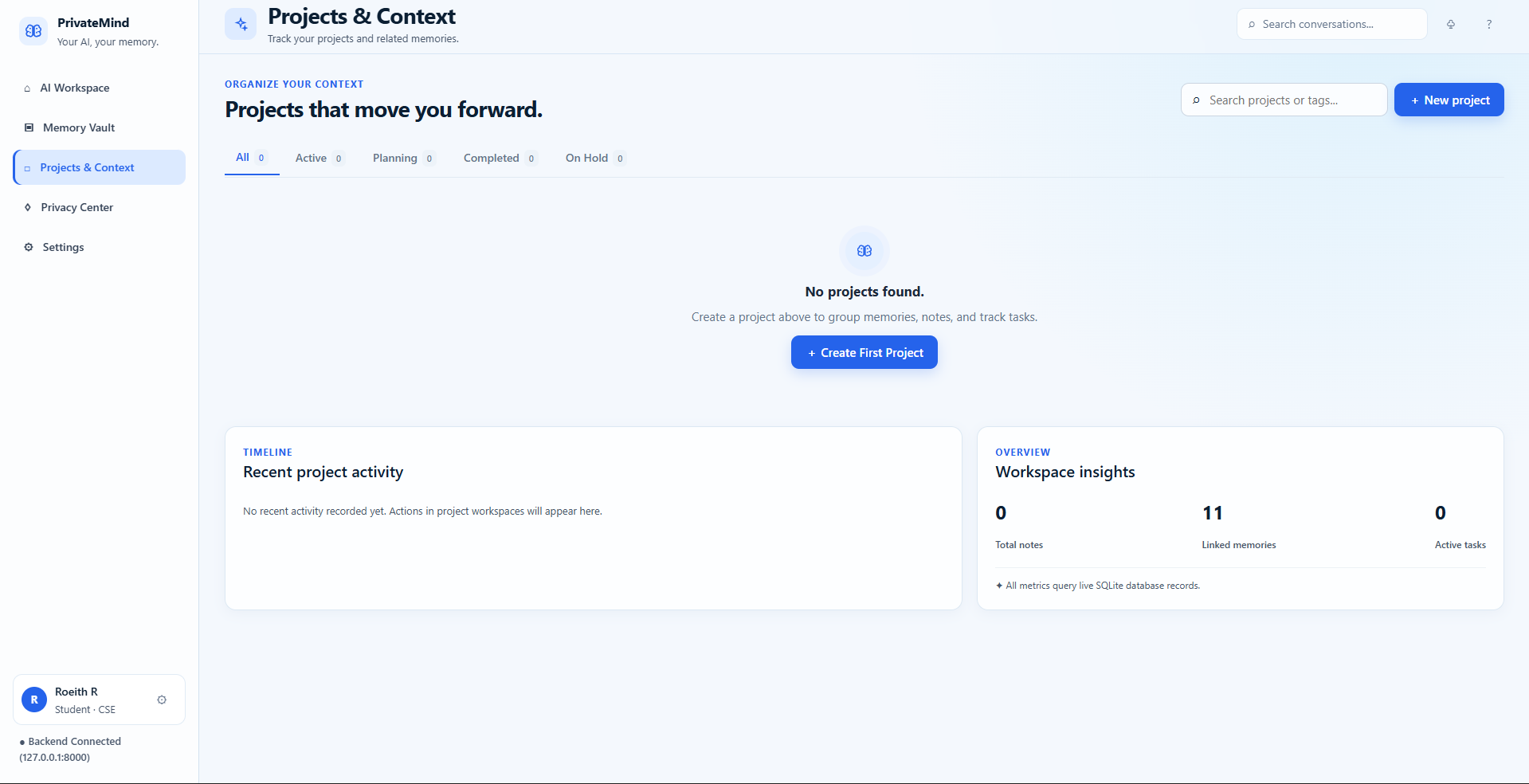
Projects & Context — project organization.
-
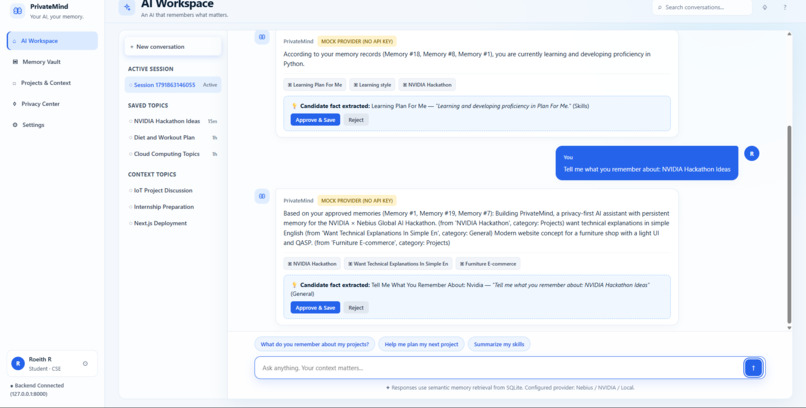
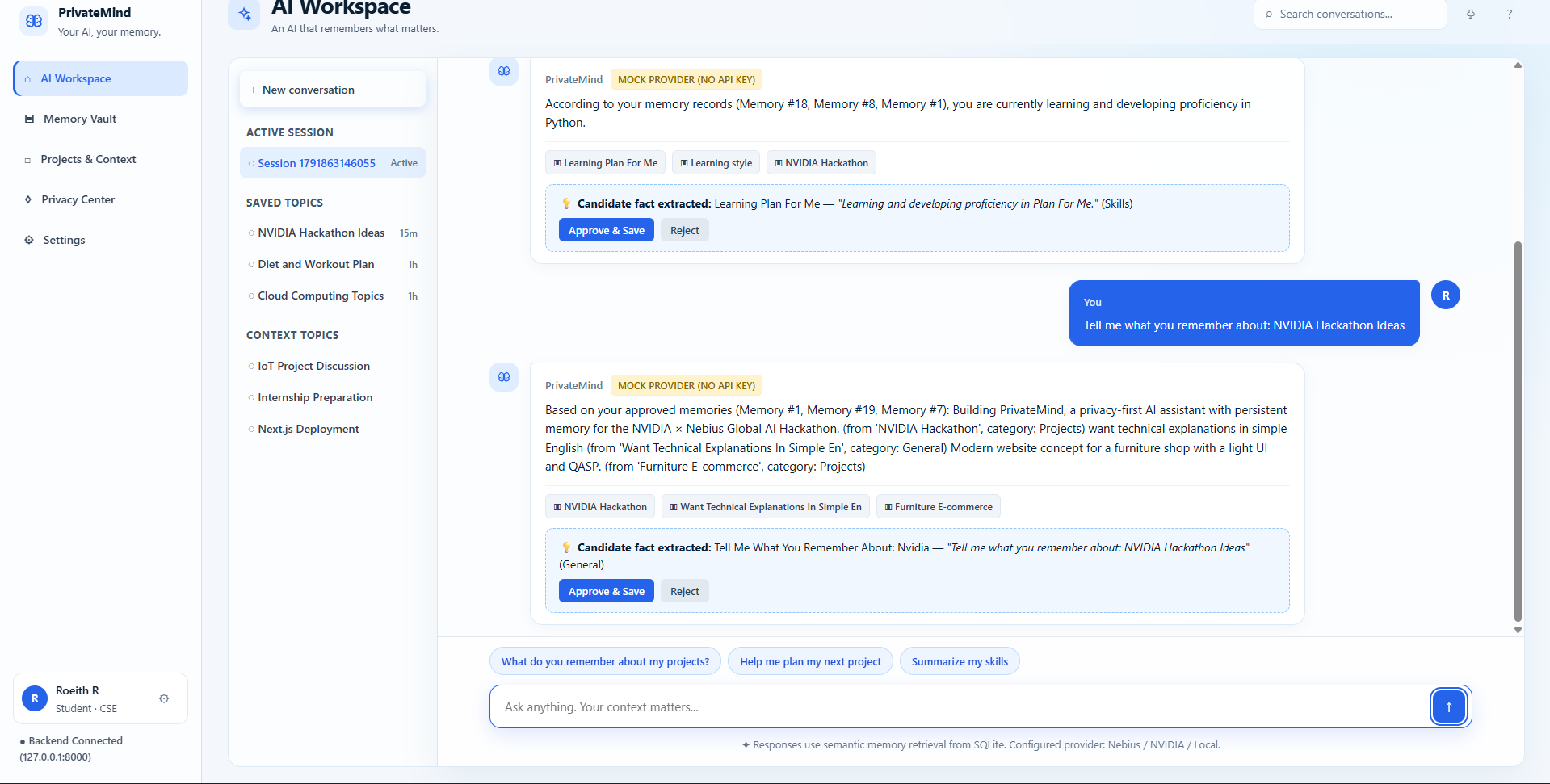
AI Workspace — main project overview.
-
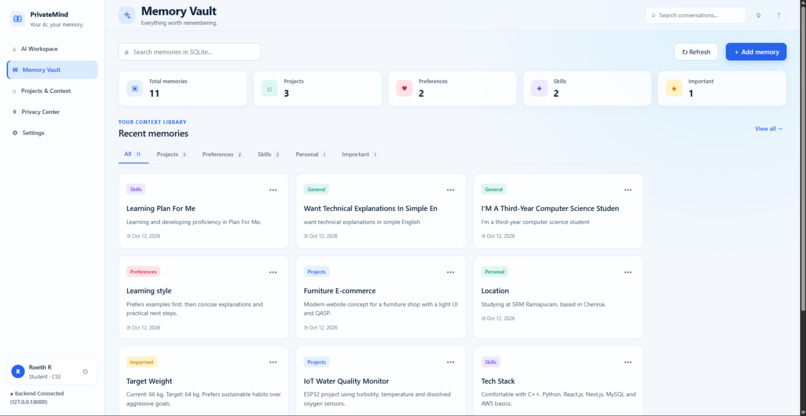
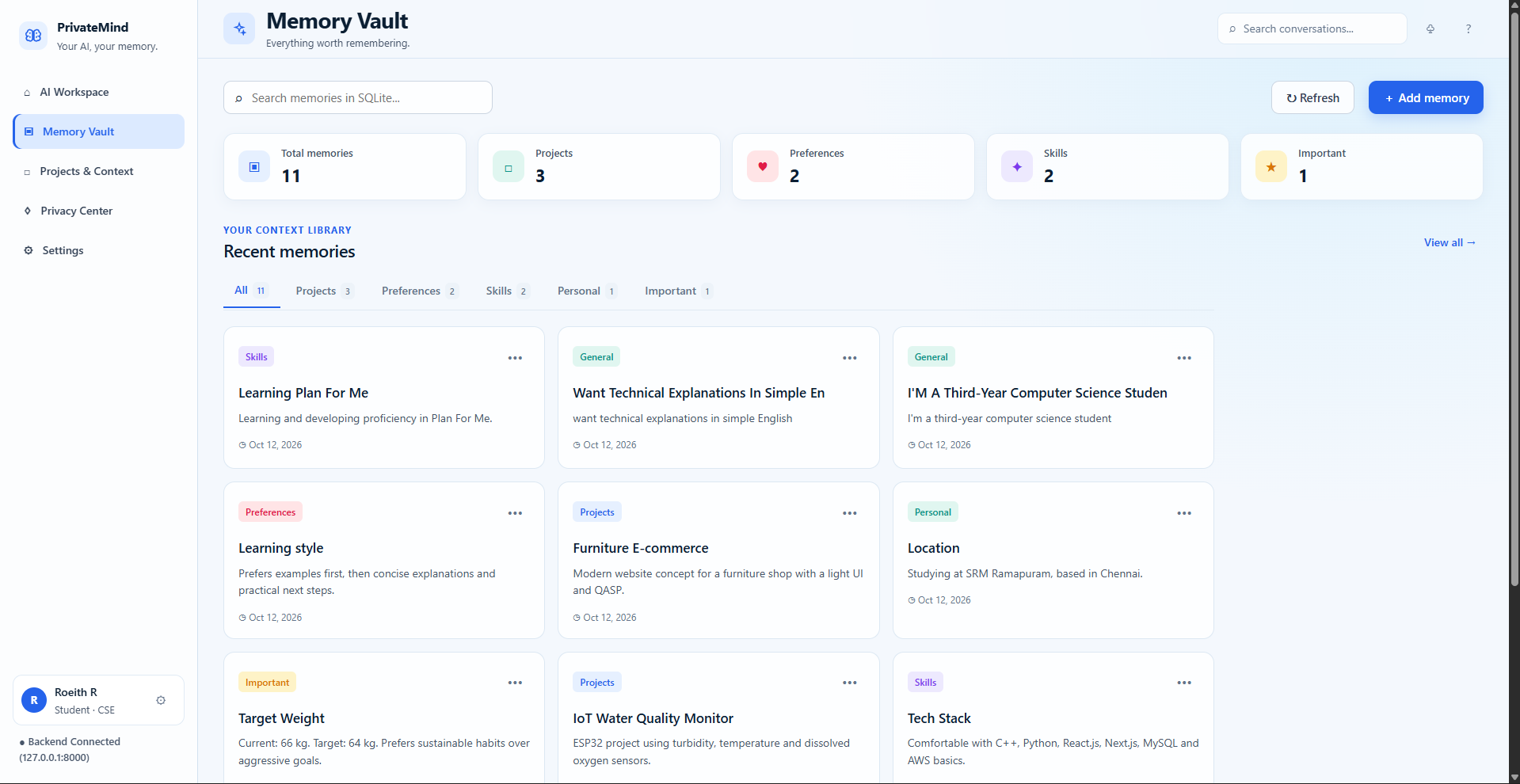
Memory Vault — persistent memory management.
-
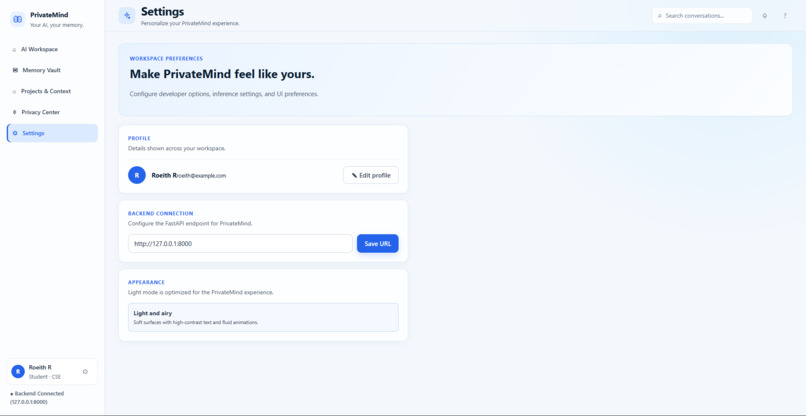
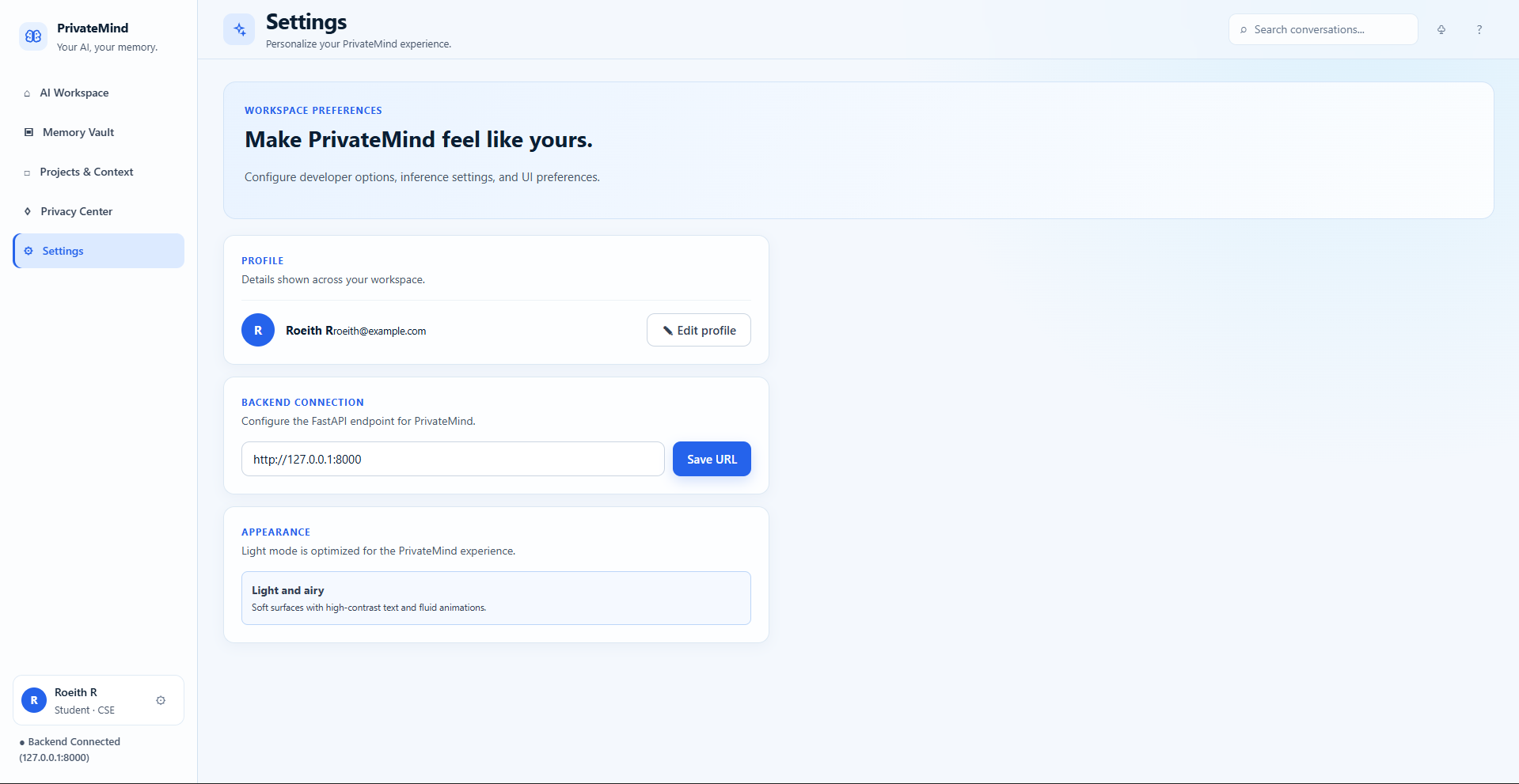
Settings — application configuration.
-
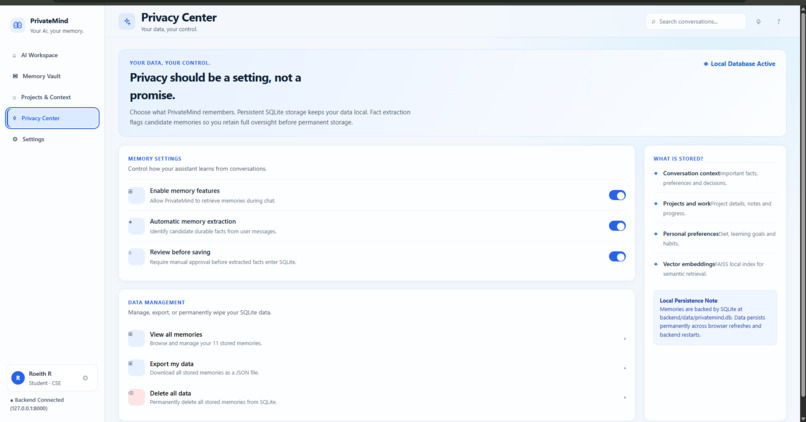
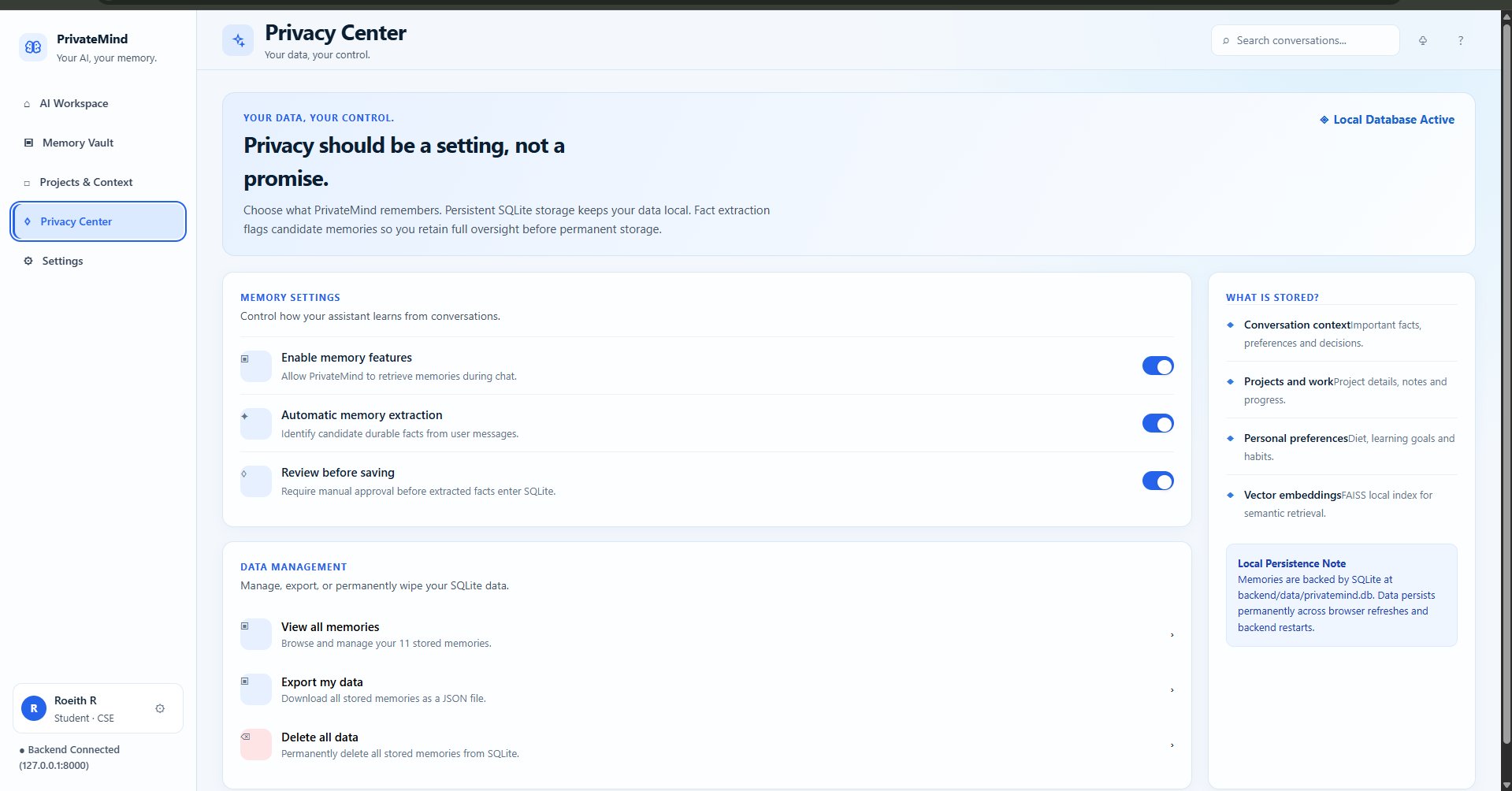
Privacy Center — privacy controls.
- About the project Be sure to write what inspired you, what you learned, how you built your project, and the challenges you faced. Format your story in Markdown, with LaTeX support for math.
Inspiration
AI assistants are useful, but they often lack continuity between conversations. Users repeatedly explain their goals, preferences, skills, and project details. We wanted to explore a better approach: an AI assistant that remembers useful context and lets users control what it stores.
This inspired us to build PrivateMind — Your AI, Your Memory, a privacy-focused AI workspace built around persistent memory and project context.
What it does
PrivateMind is designed to help users maintain useful context across conversations through a unified workspace.
Key features include:
- Persistent Memory: Store and organize useful facts, preferences, skills, and project details.
- Context-Aware Conversations: Retrieve relevant stored memories to help personalize responses.
- Memory Approval: Review candidate memories before saving them.
- Projects & Context: Organize information around projects and goals.
- Memory Vault: Browse and manage saved information.
- Privacy Center: Provide controls for memory settings, data export, and deletion.
How we built it
We built a web-based interface using HTML, CSS, and JavaScript, with a Python FastAPI backend and SQLite for persistent storage.
The application separates the user interface, API layer, and persistent data store. The intended workflow is to identify useful information, let users review memory candidates, store approved memories, and retrieve relevant context when answering future questions.
Our architecture is designed to support AI model integration, with NVIDIA and Nebius as the target inference ecosystem for the hackathon.
Challenges we faced
One major challenge was connecting the frontend to the backend while keeping data persistent across refreshes and conversations. We also worked through issues involving API connectivity, memory approval, project creation, and presenting complex memory-management features in a clear interface.
These challenges reinforced the importance of testing real database operations and API responses rather than relying only on a polished interface.
What we learned
We learned that building a personalized AI assistant involves more than a chat interface. Persistent storage, relevant memory retrieval, transparent user controls, and reliable model integration all contribute to a useful experience.
We also learned to distinguish between a feature's visual implementation and its verified functionality.
What's next
Our next priorities are to validate memory and project workflows end to end, improve memory retrieval quality, strengthen privacy controls, and complete and test the qualifying NVIDIA/Nebius model integration.
Our long-term goal is to make PrivateMind a trustworthy AI workspace that remembers what matters while keeping users in control.
Built With
- artificial
- css
- fastapi
- html
- javascript
- ml
- python
- rest-api
- sqlite

Log in or sign up for Devpost to join the conversation.