Inspiration
This started from something I noticed, not from a film. Smart people, people who pass every exam, still walk around with completely broken ideas about how the world works. They just never get caught, because a test only checks the answer, never the model underneath.
While I was digging into why that happens, I found this old Harvard film from 1987 called A Private Universe. They stopped graduating seniors and asked them why we have seasons, and almost all of them got it wrong, confidently. Watching that, I realized the problem is forty years old and we still fix it the same broken way. We just explain the right answer again and hope it lands. It doesn't, because nobody ever sees the wrong idea the student is actually carrying. So I stopped trying to build a better explanation and built the opposite of a tutor.
What it does
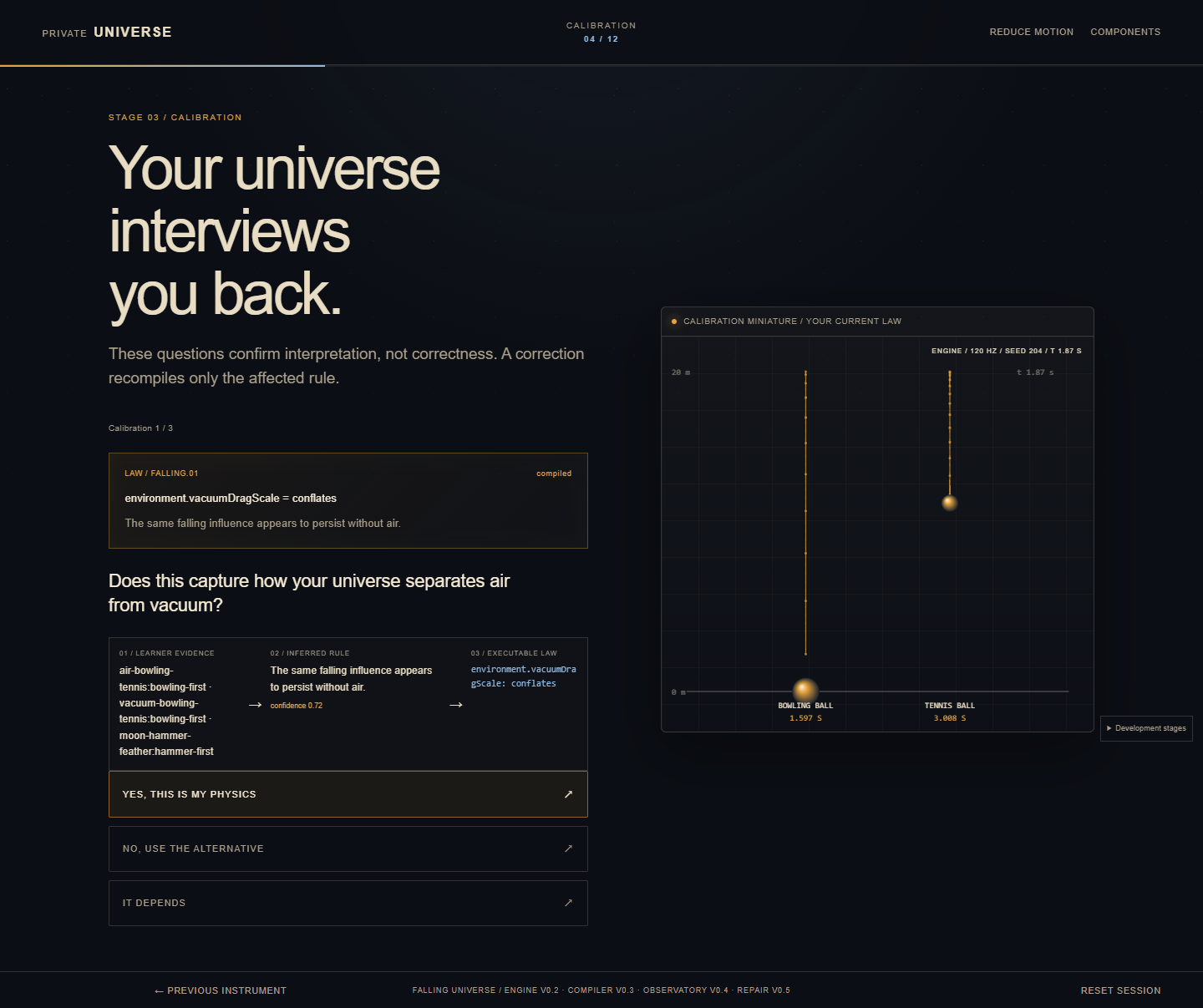
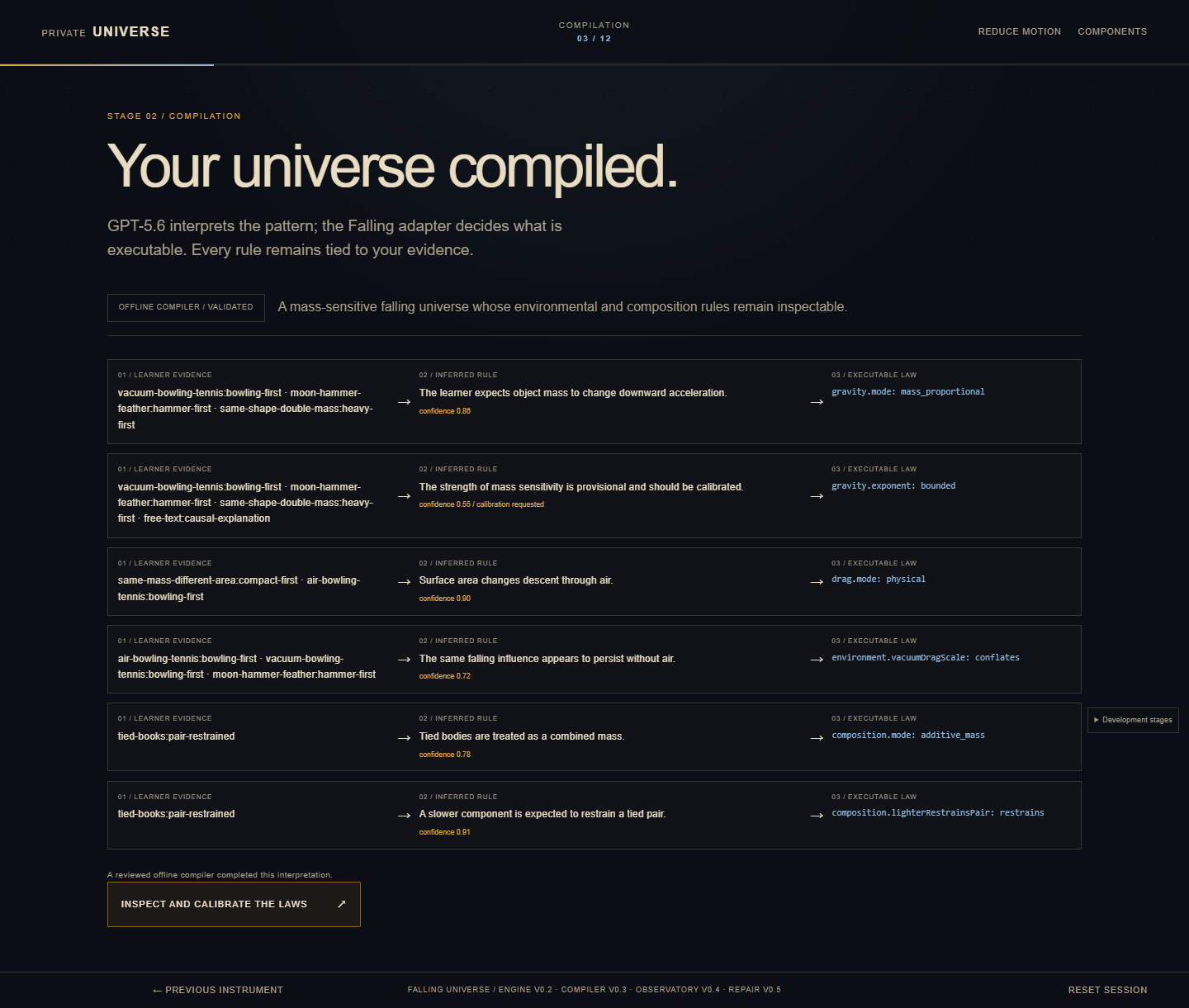
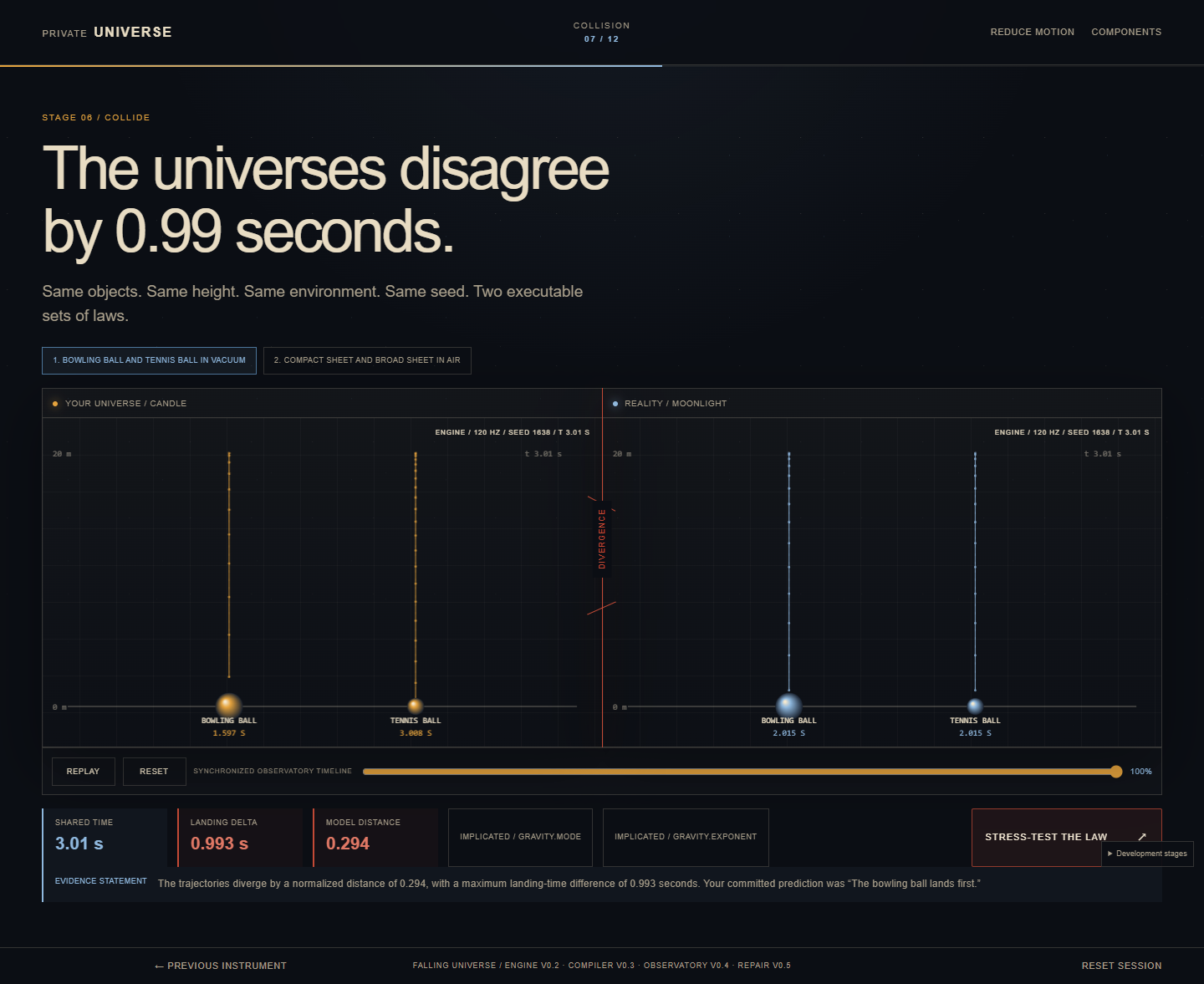
You tell it what you believe about falling. It takes that belief and turns it into a small universe that actually runs, six real physics laws compiled from your own answers. Then you get to live in it for a second before anything goes wrong. You run your universe next to reality on the same clock, and you watch them come apart. There's no red X anywhere. Just a number showing how far your world sits from the real one.
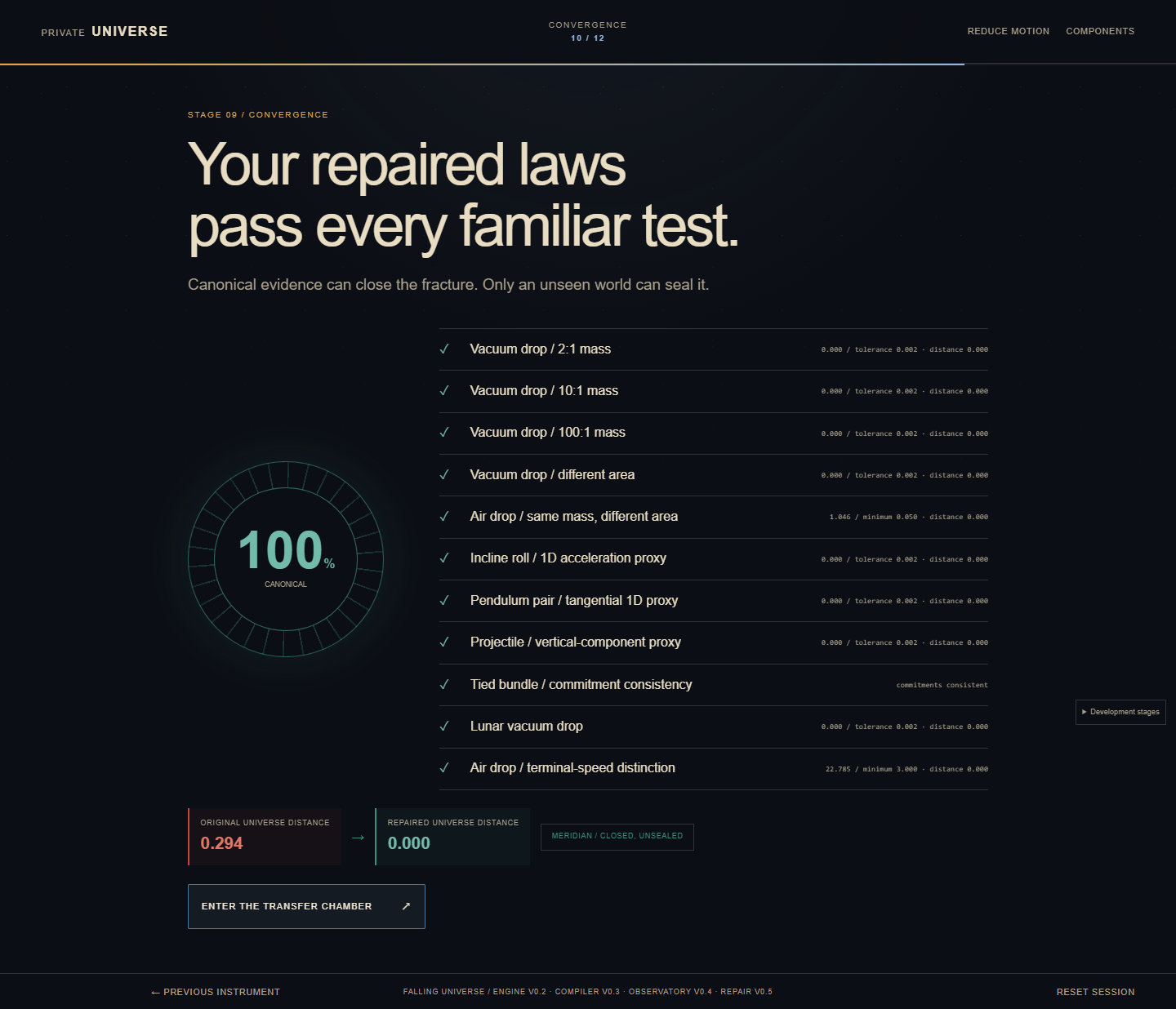
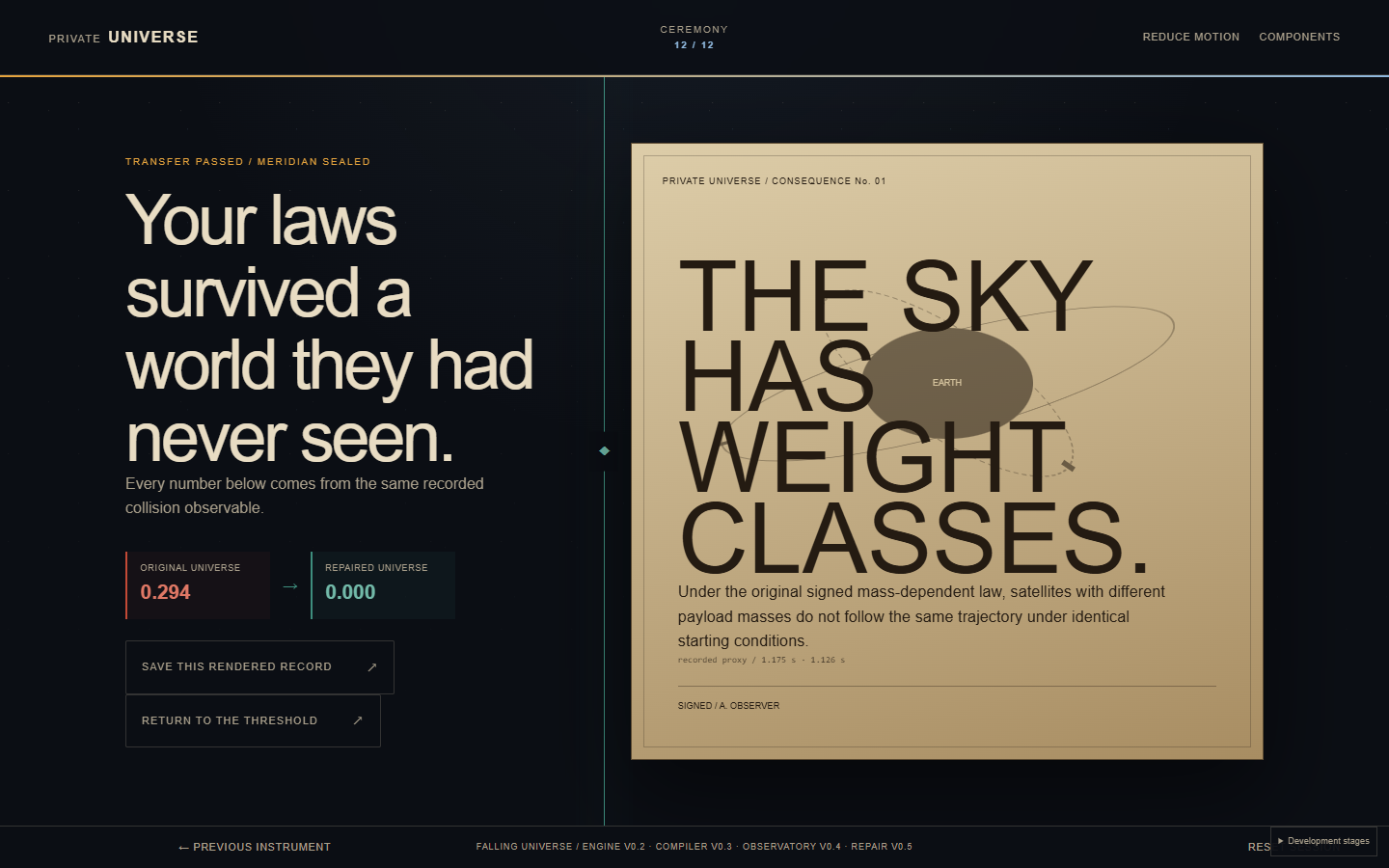
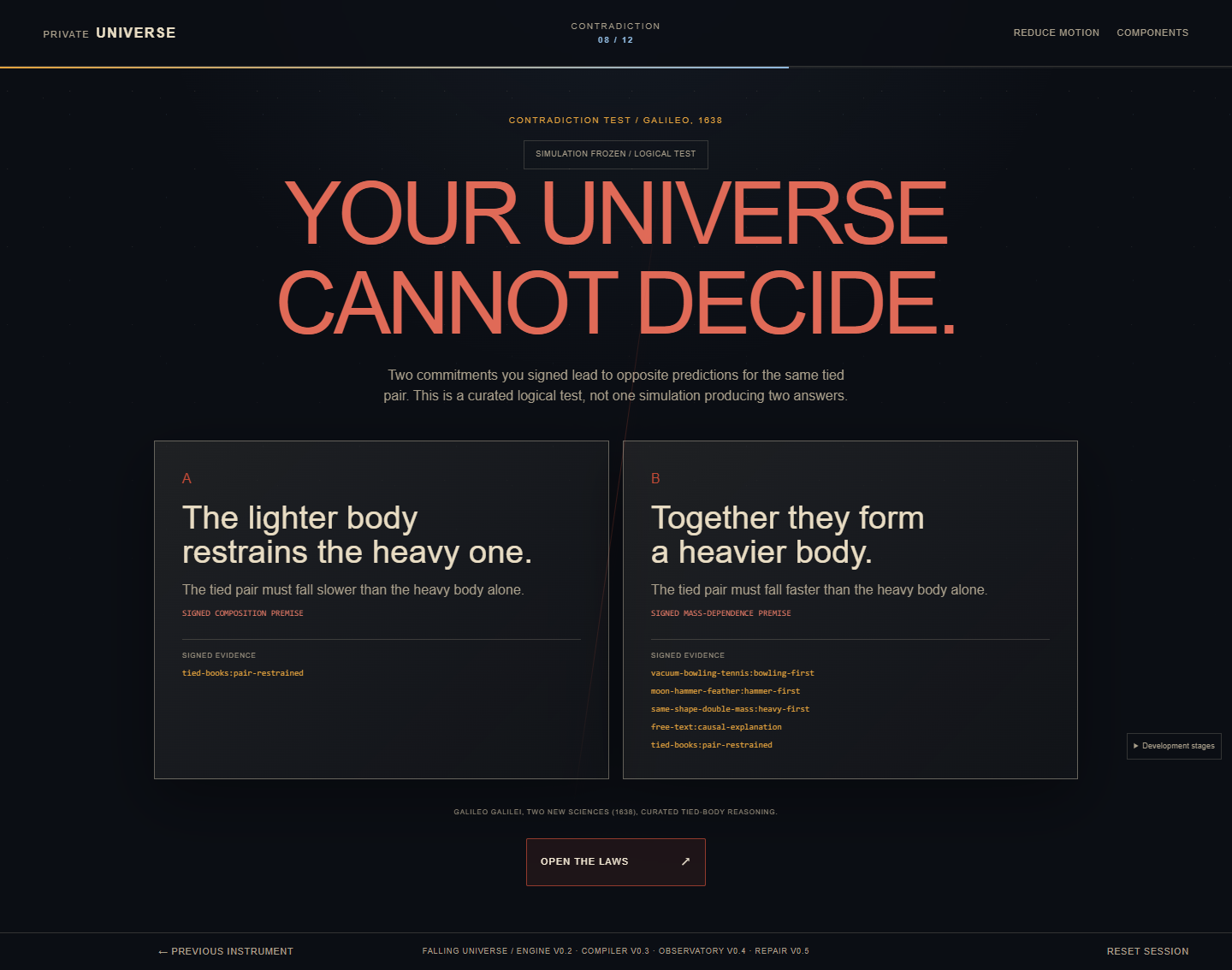
Then it gets uncomfortable in a good way. Two things you signed turn out to contradict each other, the old Galileo tied-rope problem, except it's built from your own words. So you fix one law, in plain English, and you have to say what you think will happen before it runs. Last step is a situation your universe has never seen. If your repaired law survives that, it's sealed. You can talk a tutor in circles. You can't talk a falling ball into anything.
How we built it
GPT-5.6 does the language part. It reads what you believe and turns a repair you type into one clean change. It never gets to decide what's true.
Everything that decides truth is plain deterministic code. The physics, the measurements, the scoring, whether you passed. Fixed timestep, recorded results, no guessing.
Codex was where it got built, in six phases. Nothing moved to the next phase until typecheck, lint, and every test passed on the current one.
Challenges we ran into
The physics was never the hard part. The hard part was drawing a line the model is not allowed to cross. If GPT ever decides whether you're right, the whole thing quietly stops being honest. So every single number you see on screen traces back to something the simulation actually recorded, and the model only ever hands you your own words back.
Accomplishments that we're proud of
The whole loop works, start to finish, and it's real the whole way down. Believe, compile, collide, contradict, repair, transfer. 52 unit tests and 36 browser tests, all green. The part I'm proudest of is the moment the two universes crack apart on a shared clock. That isn't a canned animation. It's two real simulations disagreeing.
What we learned
Letting someone run their wrong idea beats explaining it away, every time. When you debug your own universe, the fix belongs to you, and it sticks. The thing that actually changes a mind is getting quietly unhappy with your own model, and it turns out you can build a machine that walks someone straight into that moment.
What's next for Private Universe
More subjects next, motion and seasons, through the adapter setup that's already in there. A shorter five minute version for people who won't sit through the full thing. And a teacher view that shows which universe a kid is actually living in instead of which answer they memorized. The two numbers it tracks, Model Distance and how often a repair survives transfer, are meant to become things you can actually study.
Built With
- codex
- gpt-5.6
- playwright
- react
- typescript
- vite
- zod
- zustand


Log in or sign up for Devpost to join the conversation.