Inspiration
Private Stay was inspired by growing concerns surrounding surveillance, data privacy, and the illusion of control over personal information. I wanted to explore how easily people can trust reassuring promises about privacy without knowing what information is actually being collected. Through a psychological VR experience, I aimed to turn an abstract issue into something players could experience firsthand.
What it does
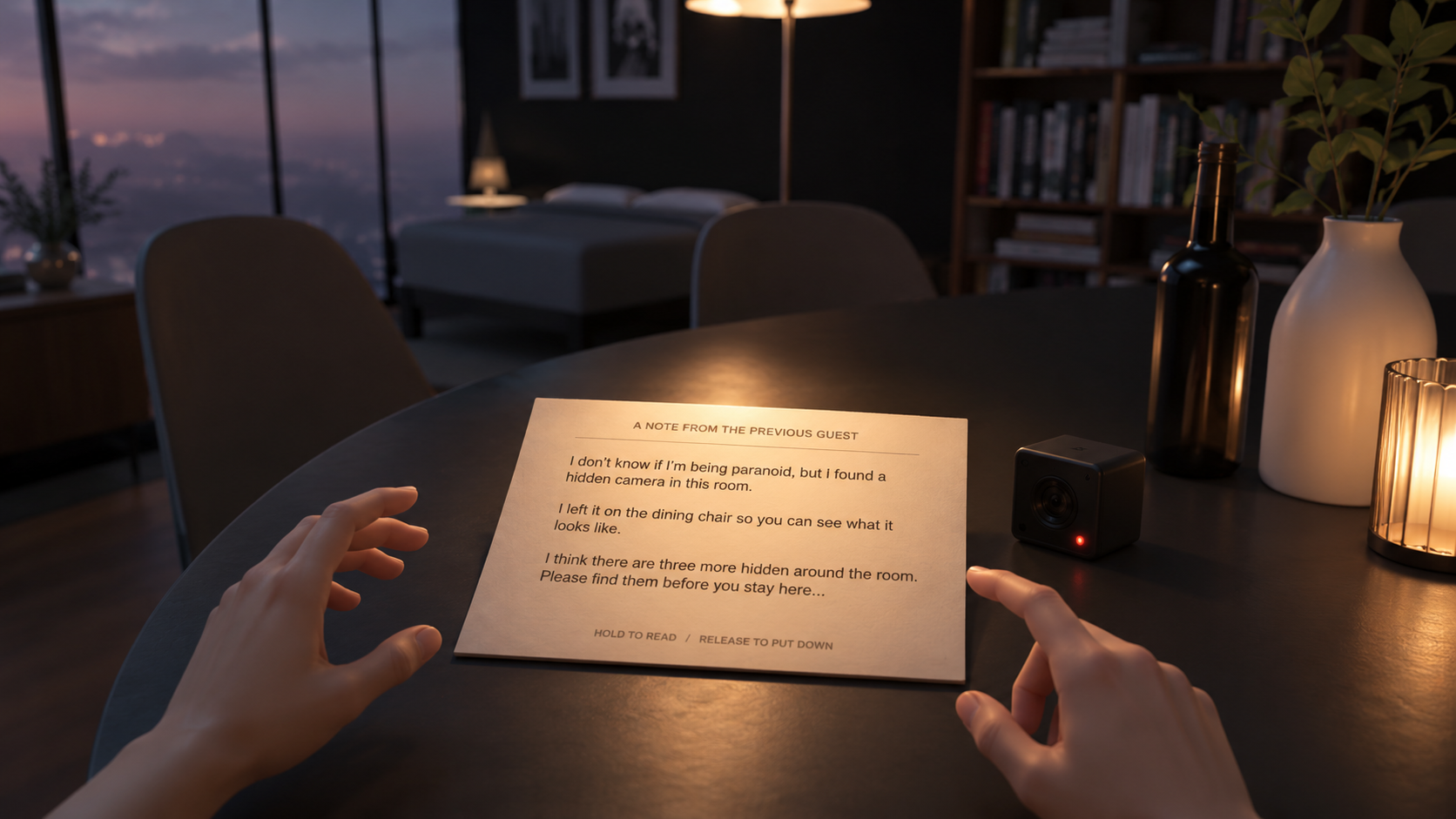
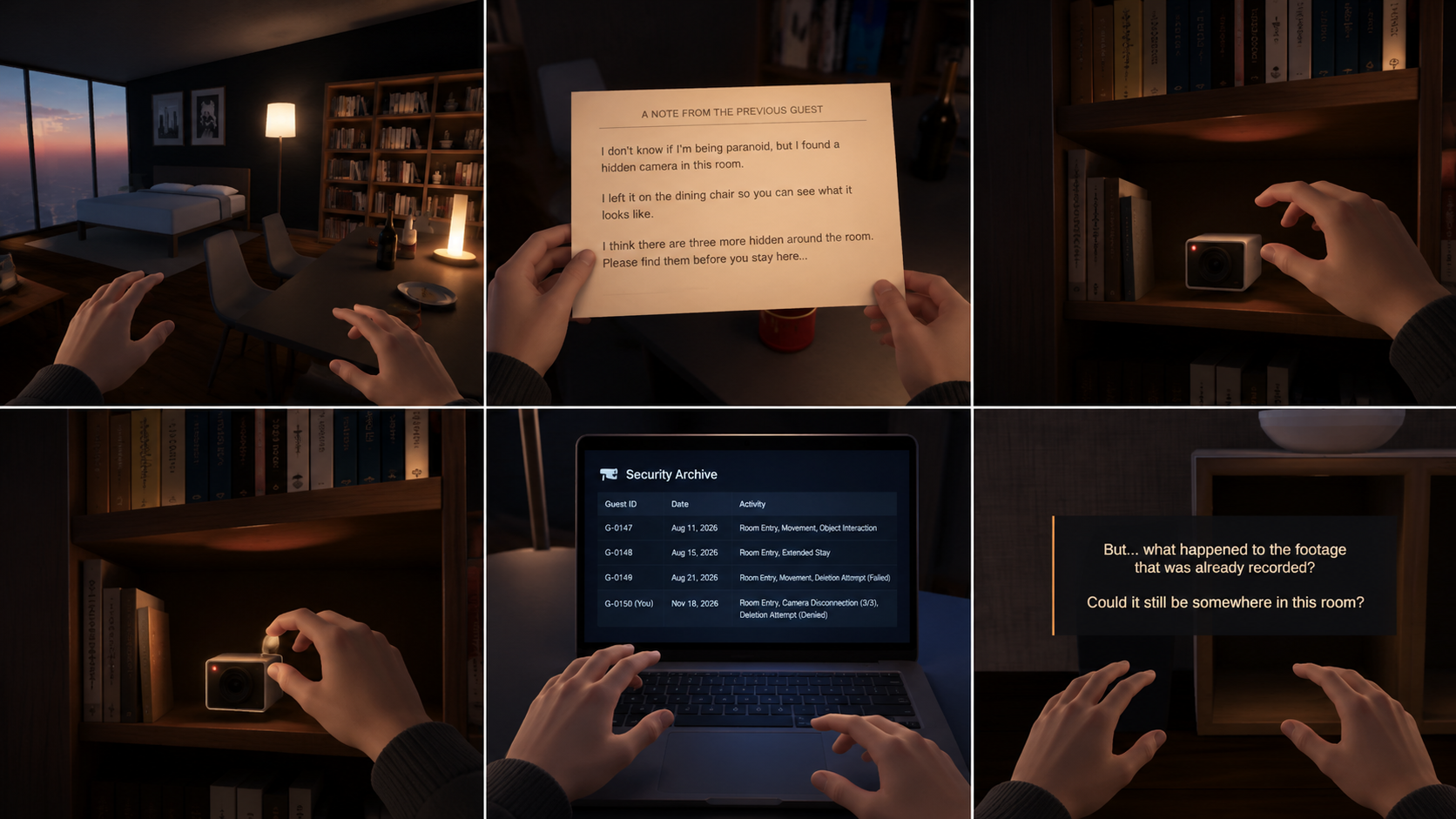
Players enter a seemingly ordinary rental room and discover a warning note left by a previous guest. The note reveals that hidden surveillance cameras are scattered throughout the room.
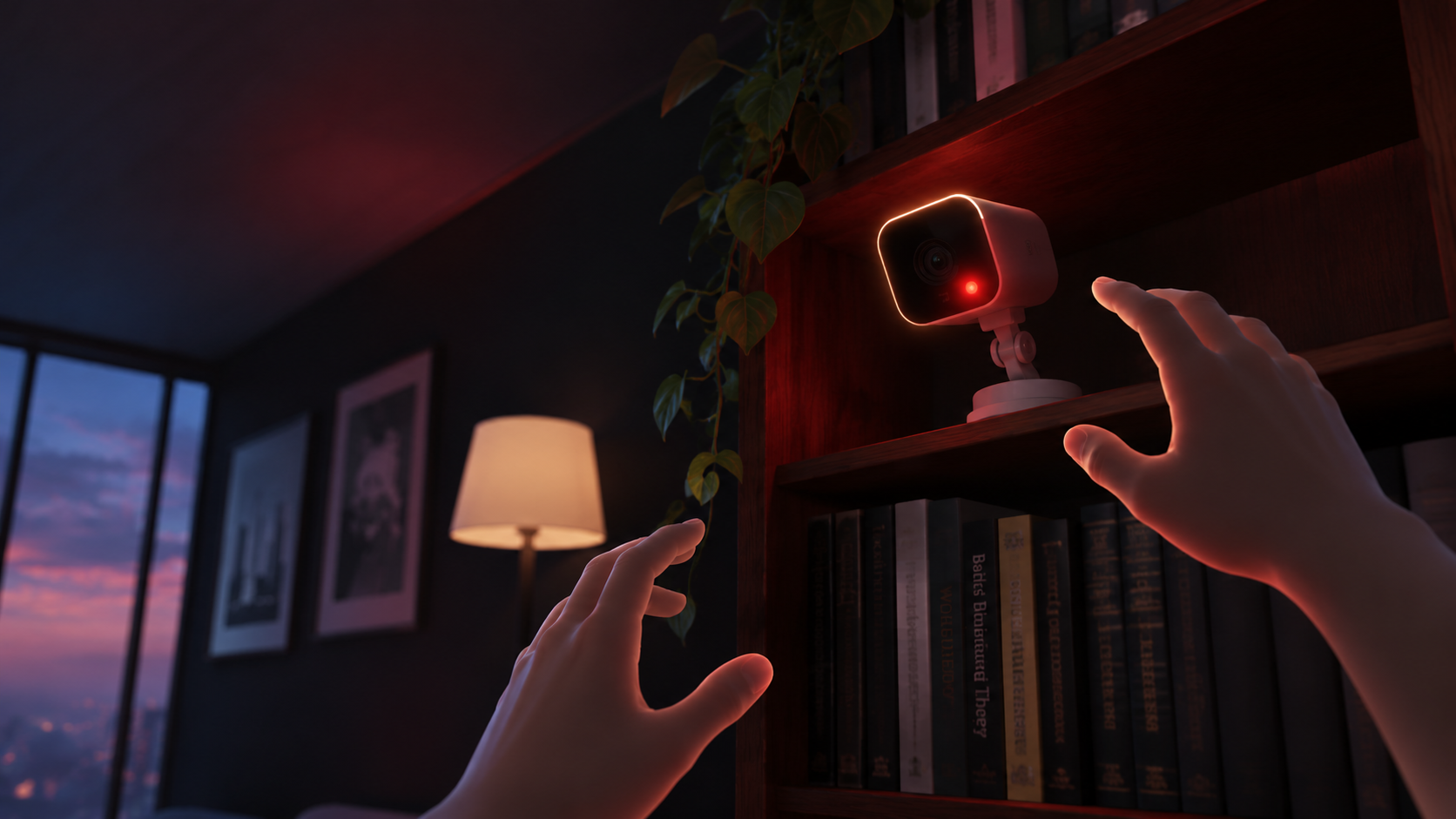
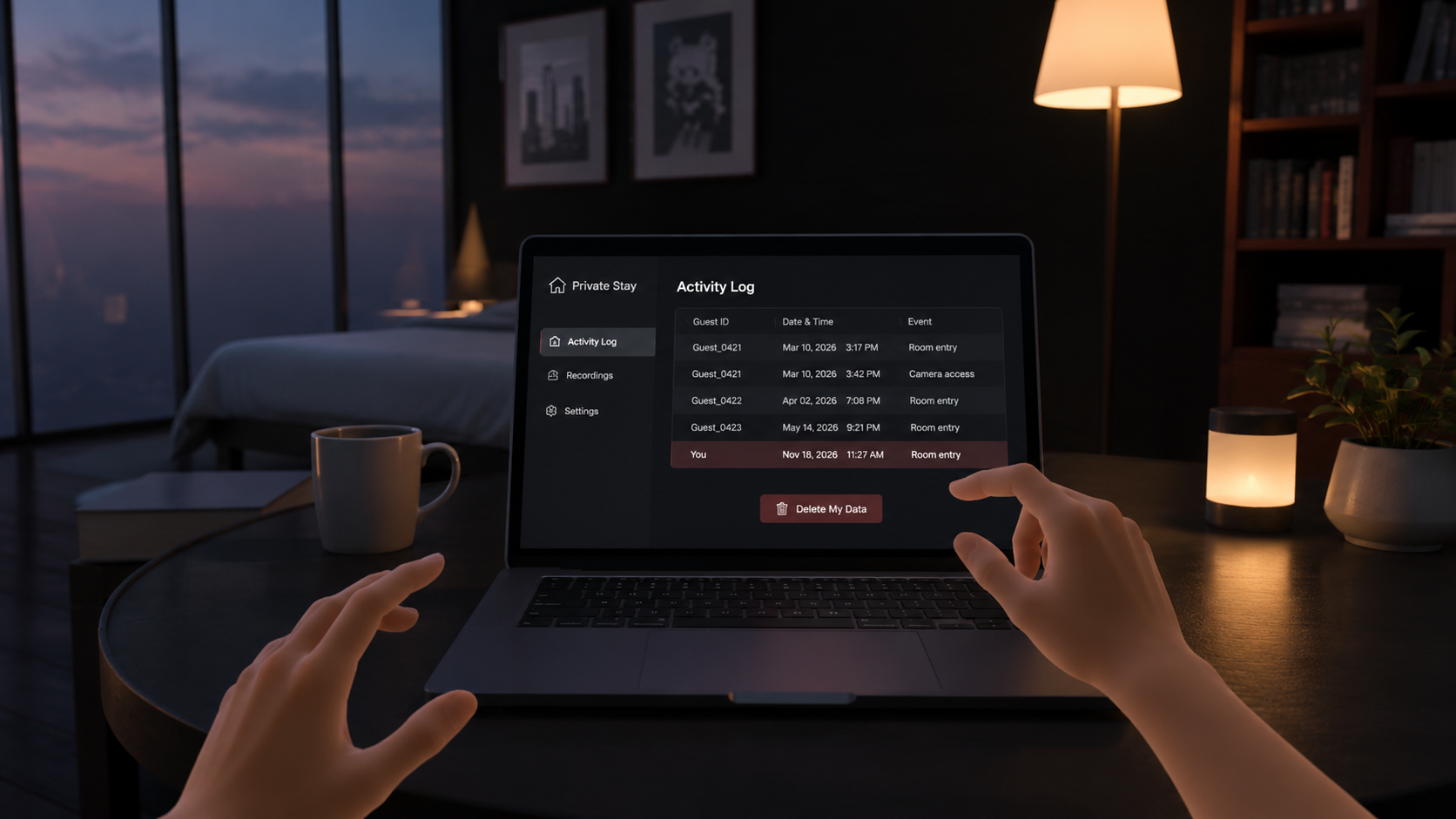
Players must locate and disconnect three cameras before discovering a security archive on a laptop. Although the cameras have been disconnected, the archive reveals that the recordings have already been stored. When players attempt to delete their activity records, access is denied.
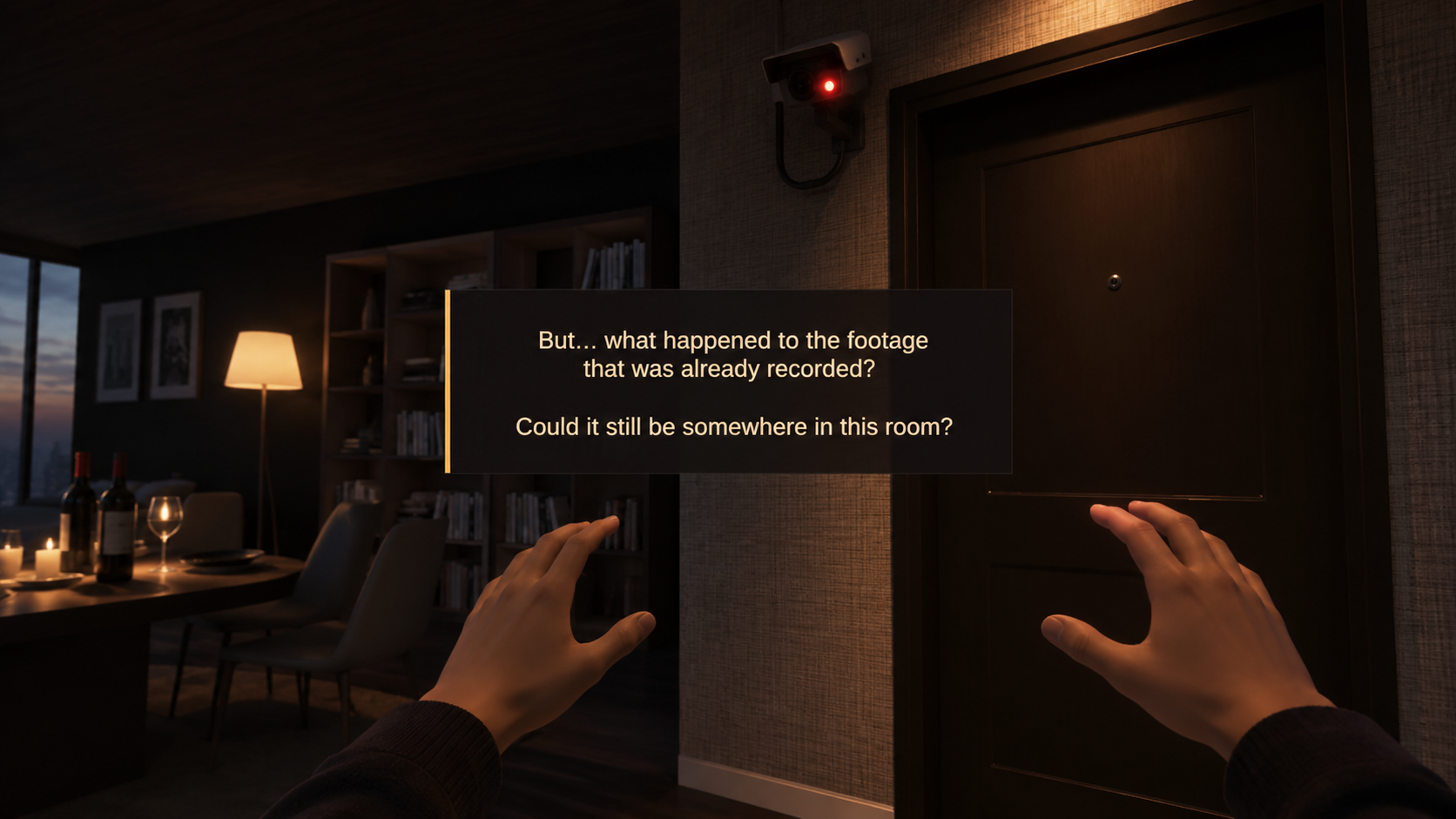
The experience builds toward a suspenseful confrontation at the door, followed by an automated checkout message revealing that the recordings remain stored even after the guest's stay ends.
How I built it
I developed Private Stay using Unity 6, C#, XR Interaction Toolkit, and OpenXR for Meta Quest.
I created an interactive rental environment with object interactions, hidden-camera detection, a fictional surveillance archive, and a branching sequence of narrative events. I also incorporated spatial audio, atmospheric lighting, and sound effects to build suspense throughout the experience.
The game was designed around immersive VR interactions, allowing players to discover the story through exploration rather than traditional exposition.
Challenges I ran into
One of my biggest challenges was connecting multiple interactive objects into a coherent narrative. I needed the warning note, hidden cameras, laptop archive, and final door confrontation to activate in the correct sequence without interrupting the player's freedom to explore.
I also worked through challenges involving VR interactions, scene geometry, collisions, user interface readability, and deployment to Meta Quest.
Accomplishments that I am proud of
I created a playable VR experience that combines environmental storytelling with interactive mystery and psychological horror. Rather than simply explaining the dangers of surveillance, Private Stay allows players to experience the unsettling realization that disconnecting a device does not necessarily restore control over previously collected data.
I am especially proud of the final confrontation and epilogue, which bring the experience back to its central message about privacy and control.
What I learned
I gained hands-on experience building immersive environments, implementing XR interactions, designing VR interfaces, and developing for Meta Quest. I also learned how sound, lighting, timing, and player agency can significantly influence storytelling and emotional impact in VR.
What's next for Private Stay
I hope to further improve hand-tracking interactions, polish the game's atmosphere and accessibility, and expand the surveillance archive with personalized activity logs that reflect each player's actions.
In the future, I'd also like to explore additional narrative choices that encourage players to think critically about digital privacy and informed consent.


