-
-
web extension
-

Logo
-

game
-


Inspiration
Our project PrivaSearch was inspired by the number of words as well as the confusing languages used in the term of services in most websites and apps. After learning about the internet safety, we decided to help people –especially children and students—to fully understand what they are agreeing to, we made a keyword scanner to highlight important information and terms as well as a fun educational game to teach younger users about data privacy in a simple way.
What it does
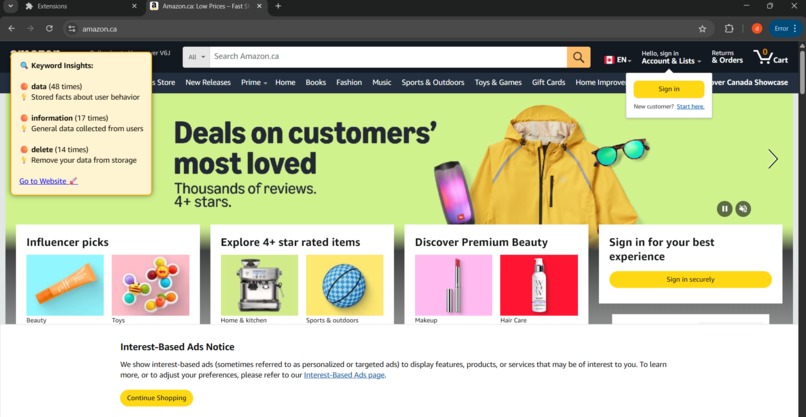
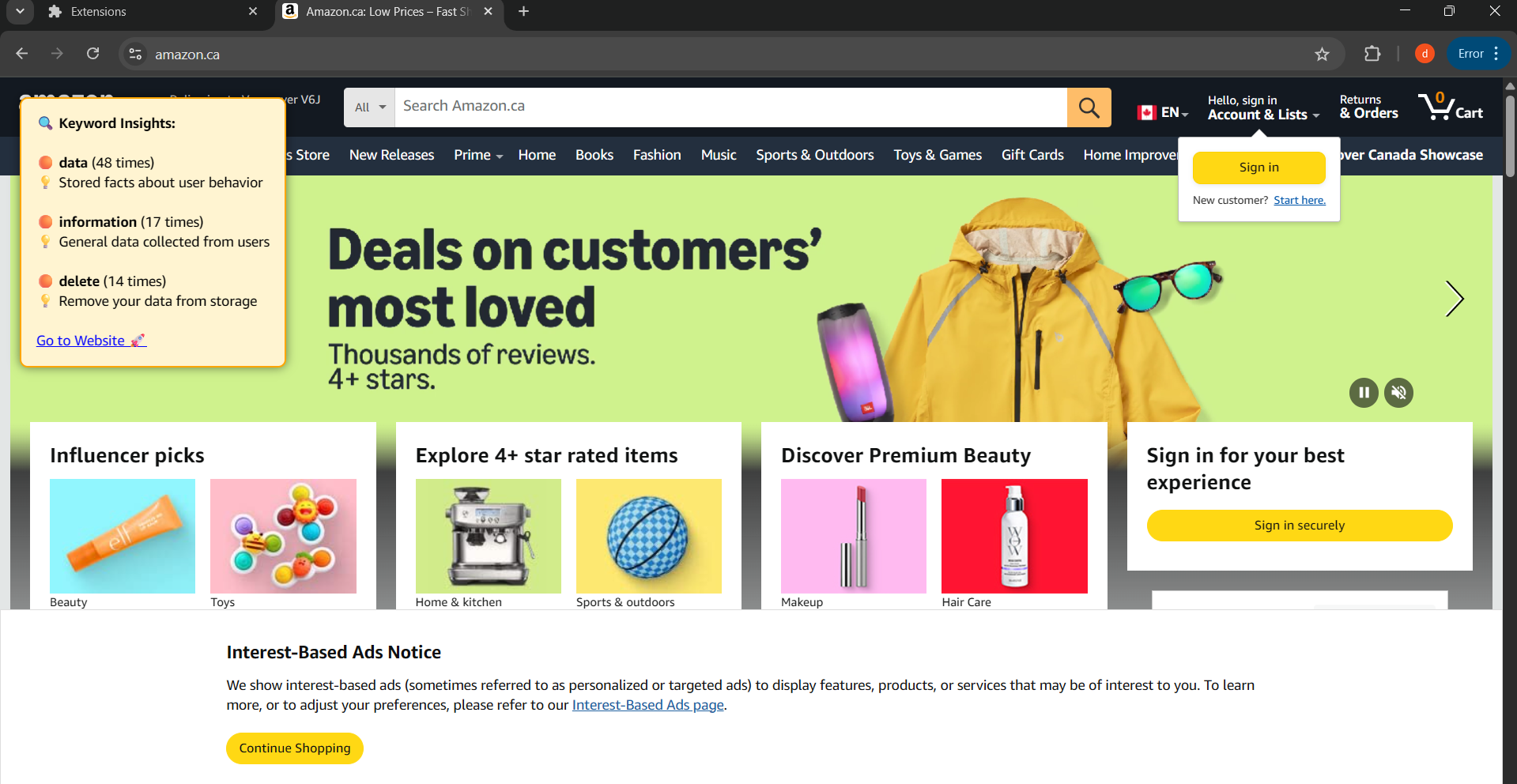
When accessing common social media sites such as Instagram, our extension does a thorough scan of the sites terms of service to find ‘soft’ phrases and keywords, that relate to pieces of information that each social media sites collect. This information is displayed in 3-5 bullet points and creates a blunt and honest message of the key terms commonly mentioned on each term of service, and what types of personal information they collect.
How we built it
To build Privasearch, we combined what we already knew with what we learned along the way. We used Java for the keyword scanner tool, and JavaScript and HTML to build and design the website and game. Some of us had experience from before, but a lot of it came from learning as we went—trying things out, searching up bugs, and figuring out how to connect everything together.
Challenges we ran into
During the development of PrivaSearch, we encountered several challenges that impacted the project's progress. Our coding abilities were limited, which made implementing more complex features difficult and slowed down troubleshooting efforts. Due to time constraints of just 1.5 days, we were unable to fully develop all aspects of the platform to our desired level of completion. Currently, the extension's code cannot be fully integrated with the website, requiring users to access them separately for the time being. The educational game built in Scratch functions but lacks visual polish and contains limited content, reducing its engagement potential. Additionally, the website's informational sections, particularly the “About” page, need more detailed explanations and resources to properly educate users.
Moving forward, we plan to expand the extension's database to cover more websites and implement a new feature that automatically summarizes privacy statements whenever a user encounters them, making privacy policies more accessible in more situations. These challenges have provided valuable learning experiences that will guide our future improvements to the platform.
Accomplishments that we're proud of
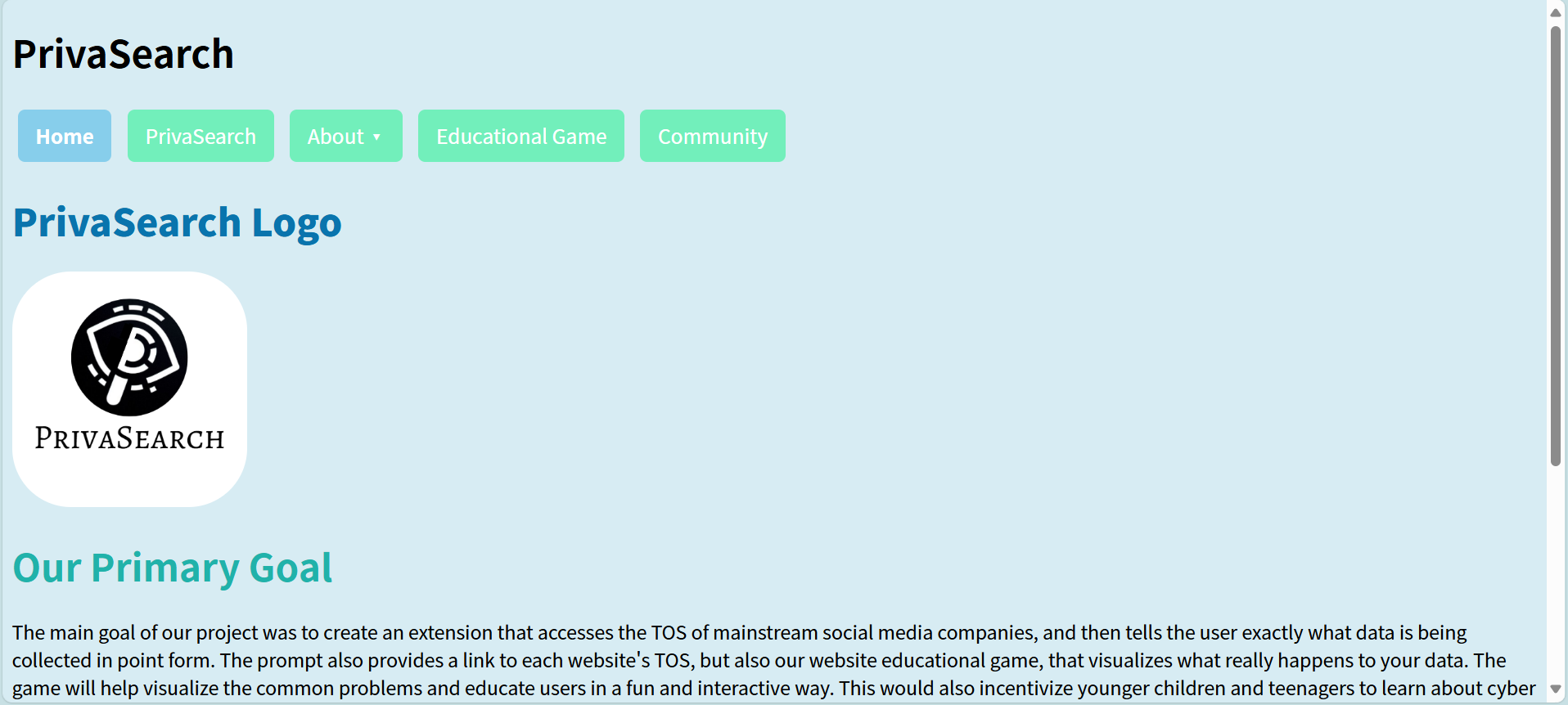
We also made our own educational game that’s meant for all ages and embedded it directly into the site. On top of that, we created a fun and lighthearted advertisement video to show what our project is about in a more engaging way. Lastly, we used Java to build the keyword scanning extension that helps highlight important terms in long privacy policies.
What we learned
To make our vision come to life, we dedicated ourselves towards being more familiar with coding languages Java, Javascript, and HTML. We also learned specific skills such as how to make an extension on different platforms. Technical skill learning aside, this hackathon was also a lesson to us about teamwork-effectively dividing tasks to work under a time restriction and knowledge limitation pressure. This was especially true to our group, in which none of us has ever entered a hackathon before. As a group of 5, communication also proved to be a challenge. With so many aspect of the project we needed to decide on, our best bet was to trust each other with our respective tasks and combine all of our work for the finish product, which we are still struggling with in this very moment. As a team, we’ve had our rough patches for this event, we’re proud to say it’s ending with a fully functional project.
For coding language, we learned Html, java, java script, C++, more complicated scratch game coding. We learned specific skills such as how to make an extension on different platforms. Additionally, we learned about teamwork, effectively dividing tasks and working under time and resource pressure. Also, we encountered a lot of challenges such as communication and people having different ideas, but we finally resolved it and created the satisfying project.
What's next for PrivaSearch
For the extension, we will expand our keyword scanning tool to include more platforms, helping users understand even more companies' data practices. For the mini game, we are going to improve it by adding voice overs to make the game more accessible, beginner-friendly, and alive. We will also publish and deploy the full version of our game online so anyone can play and learn. Potentially, we can make it into a 3d game using blender if we have more fundings. We can also expand the website and add more user-friendly guides and functions.


Log in or sign up for Devpost to join the conversation.