-
-
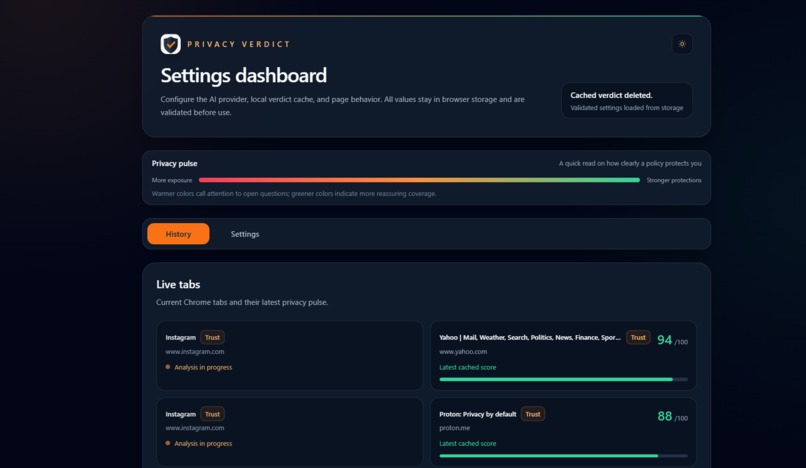
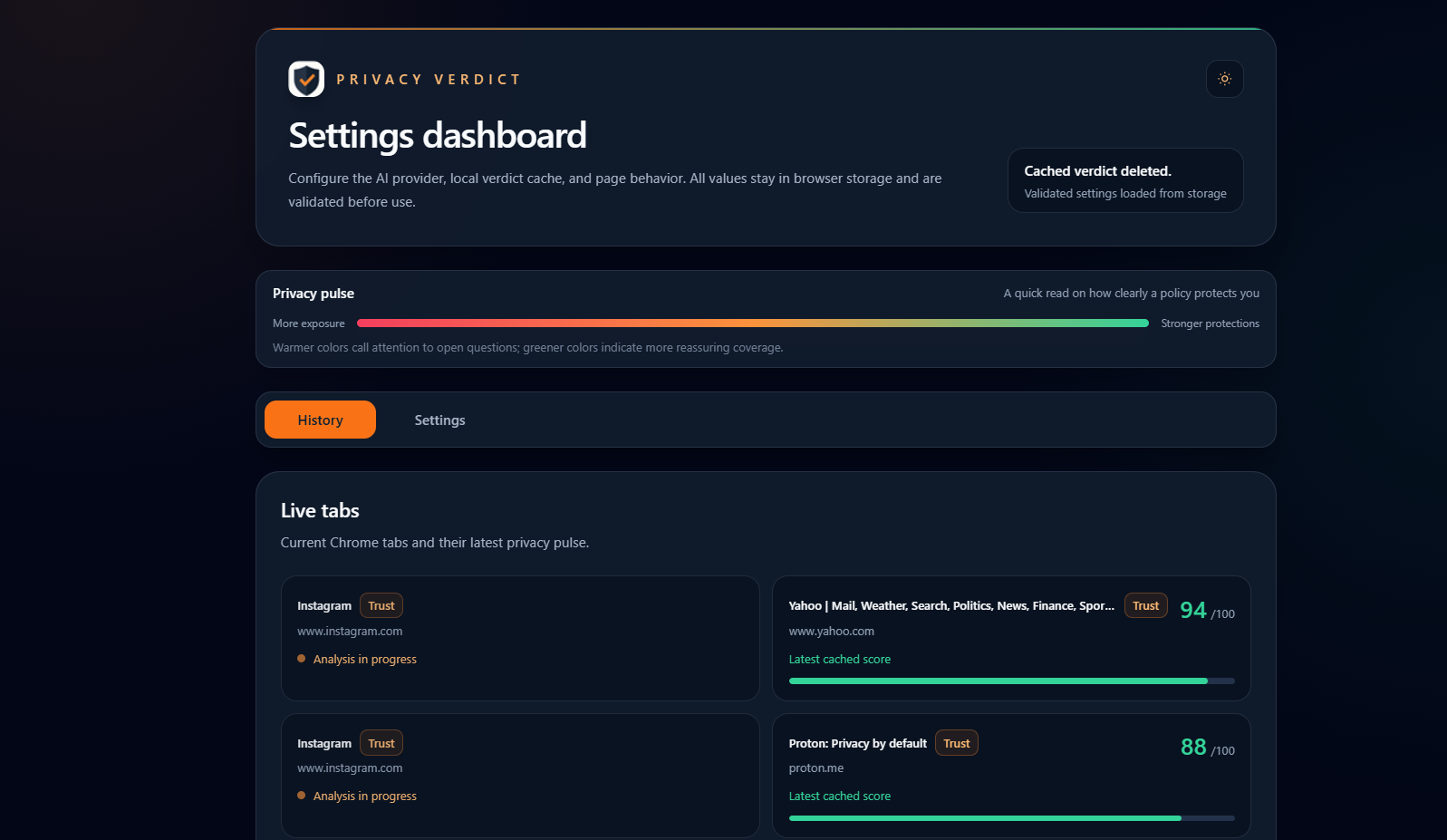
Dashboard
-
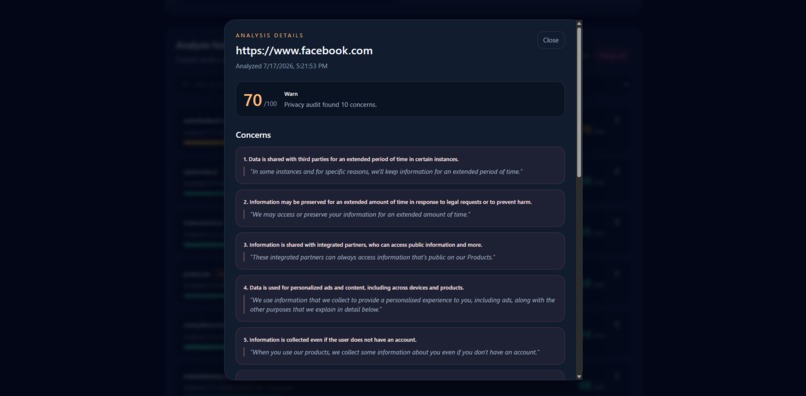
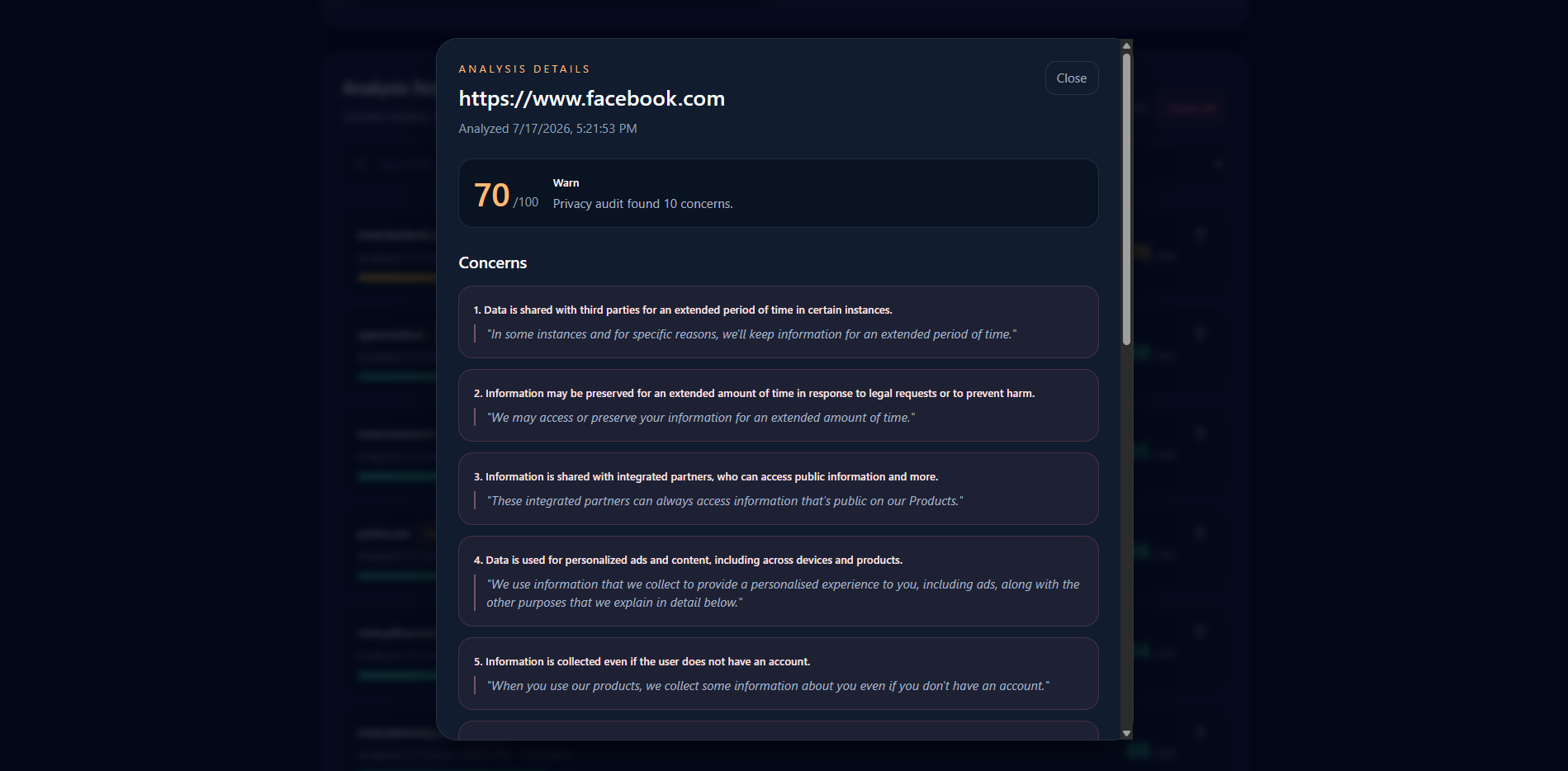
Analysis
-
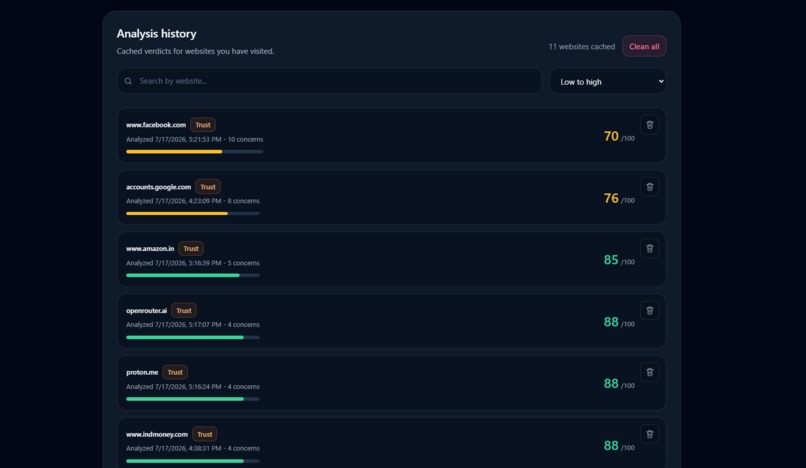
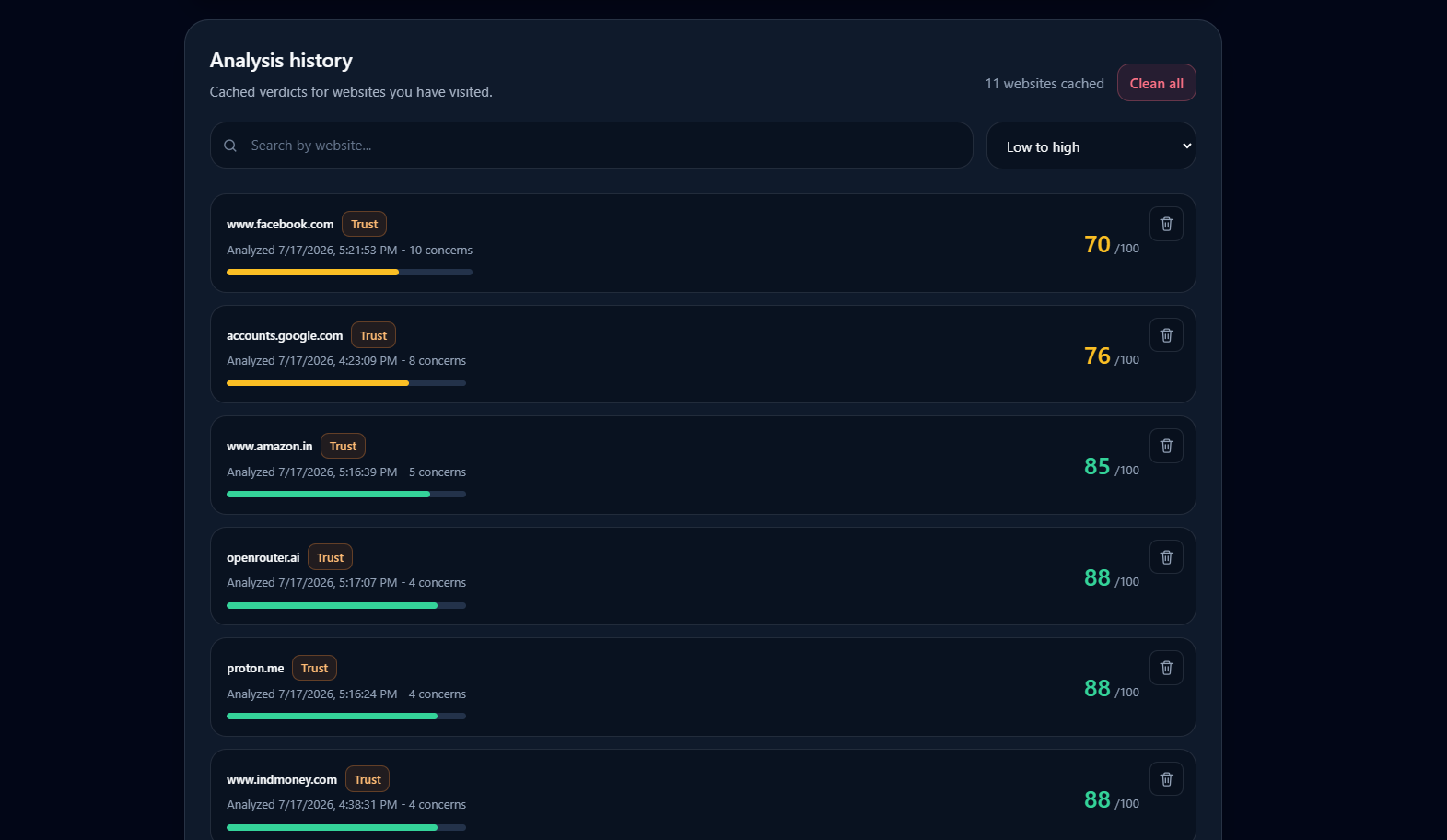
Historical data
-
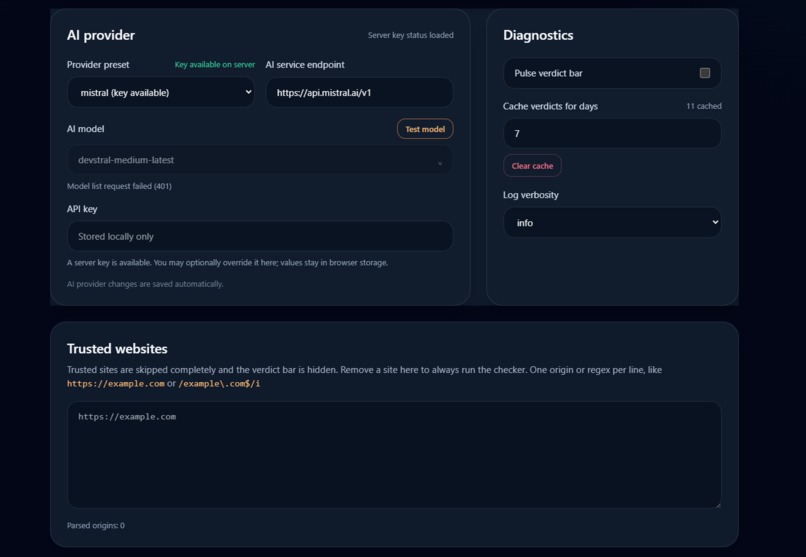
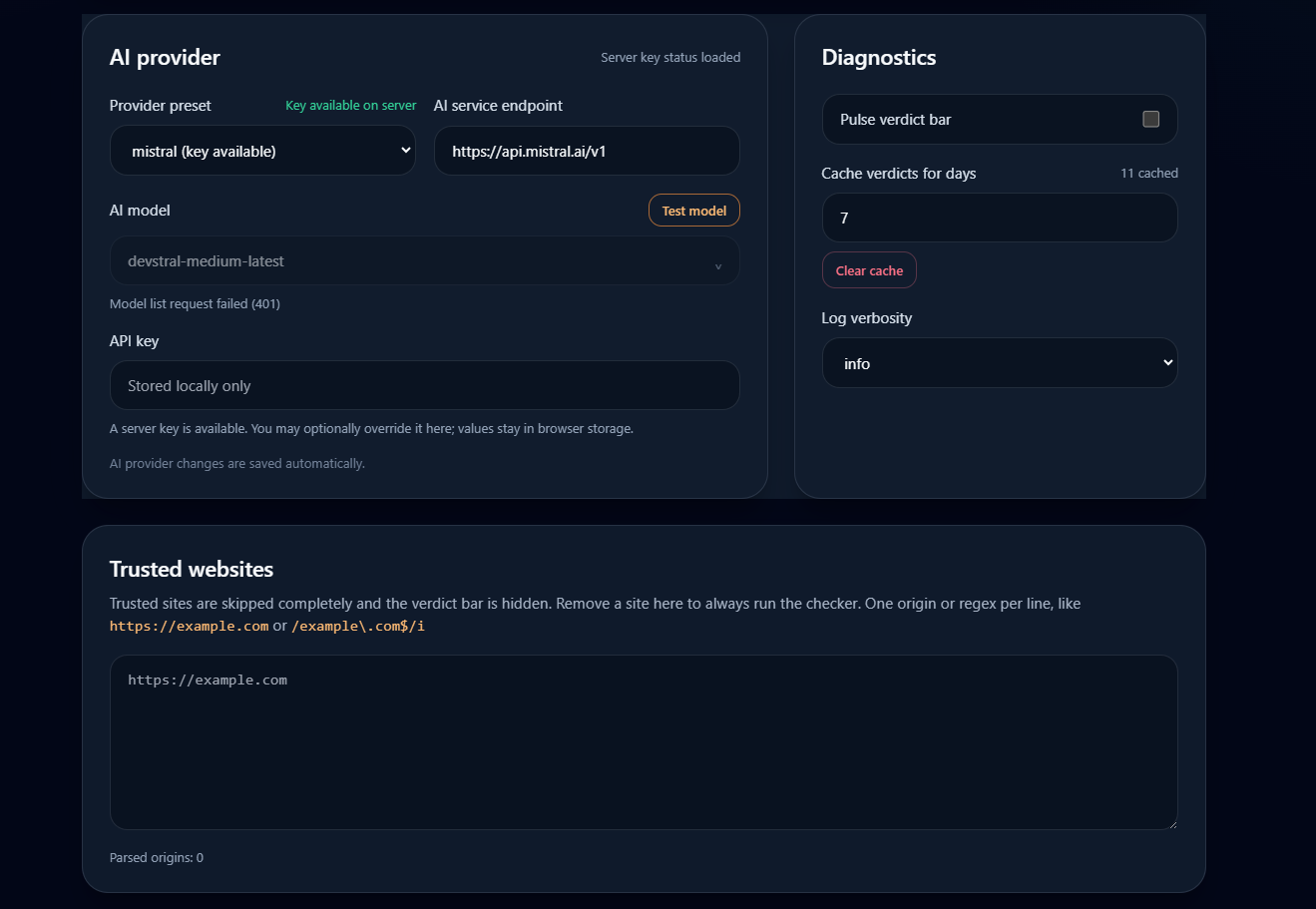
Settings page
Inspiration
Privacy policies are long, dense, and easy to ignore and mostly we don't read it . I wanted to turn them into a clear, actionable signal while people browse.
What it does
Privacy Verdict finds a website’s privacy policy, analyzes it with AI, and gives the site a simple privacy score and verdict: Good, Mixed or Poor
How we built it
I built a Chrome extension with TypeScript, React and Tailwind. It discovers privacy-policy links, extracts policy text—including dynamic pages—and uses a configurable AI provider to identify privacy concerns.
Challenges we ran into
Finding privacy policies reliably on the webpage as on all websites we don't have same URL so if directly found else various permutation and combinations to find the URL , handling JavaScript-rendered when webpages are non SSR and keeping AI findings grounded in the actual policy text and making sure malicious privacy with prompt injected to fool AI crawl is not getting faked by that and we get proper analysis.
Accomplishments that we're proud of
- A lightweight in-browser privacy indicator
- Clear, scored privacy verdicts
- Evidence-based concern summaries
- Automatic privacy-policy discovery and caching
- Safeguards against prompt-injection-style content
What we learned
Privacy policies vary widely across the web, so dependable analysis needs both strong page extraction and careful AI guardrails.
What's next for Privacy Verdict
Improve analysis accuracy, add richer explanations and comparisons, support more AI providers, and give users more control over their privacy preferences with possibility to have user login so out of box AI providers can be given with proper security.
Built With
- css
- tailwind
- typescript
- vite

Log in or sign up for Devpost to join the conversation.