-
-
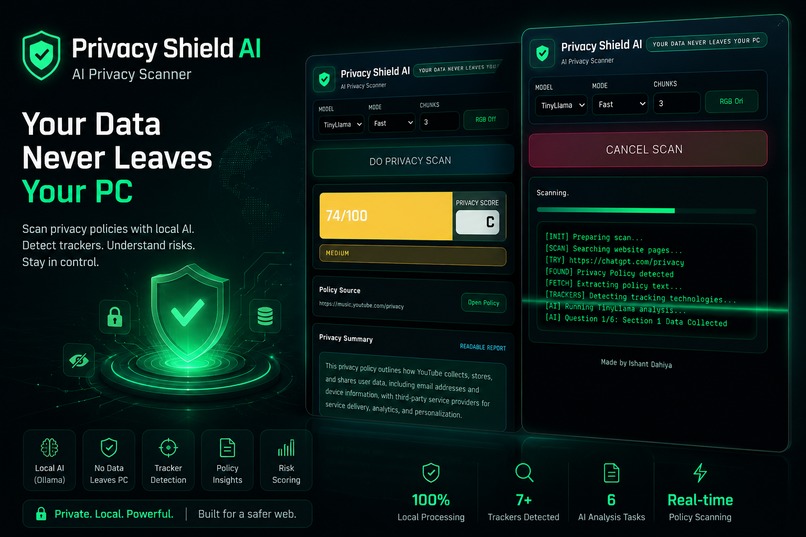
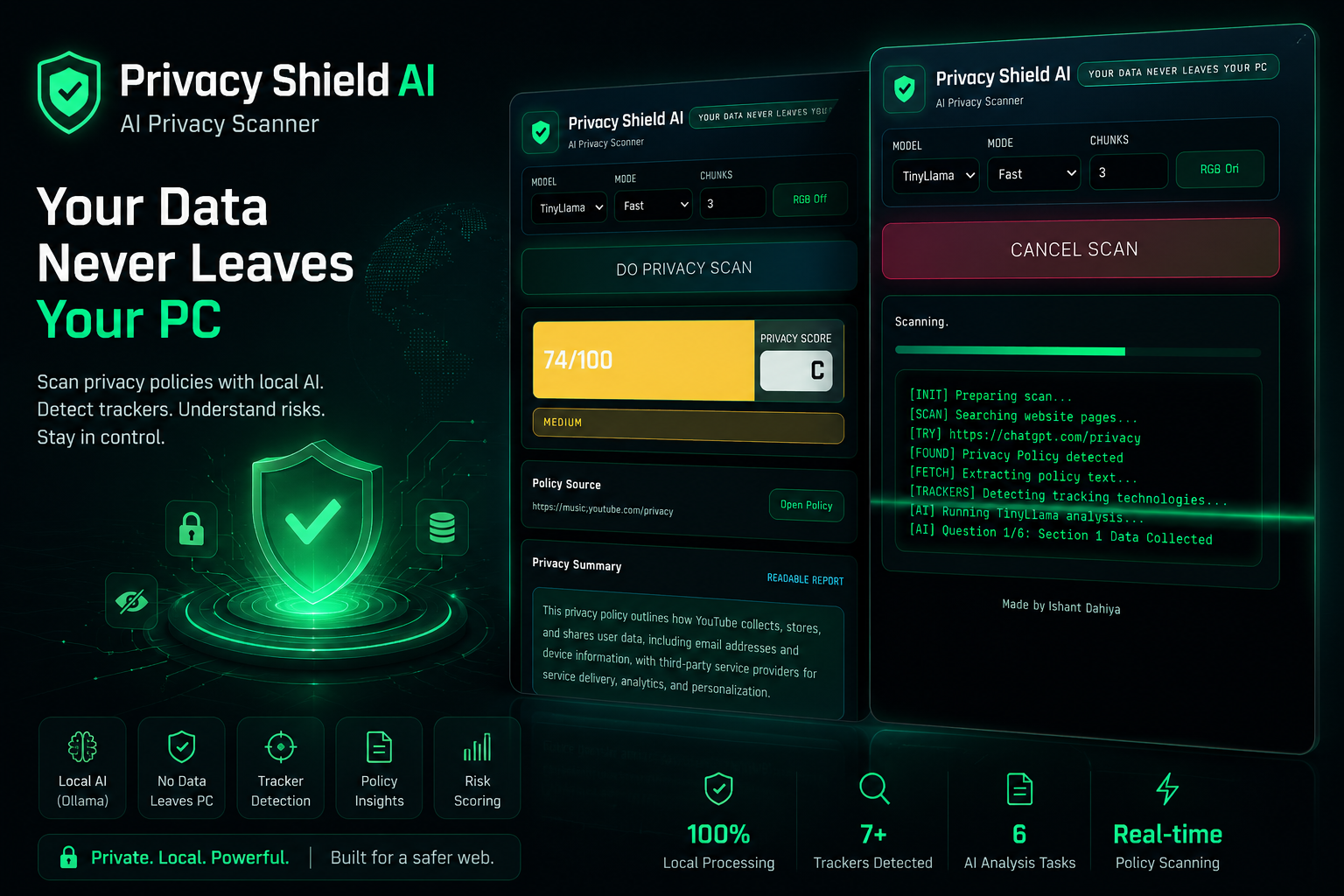
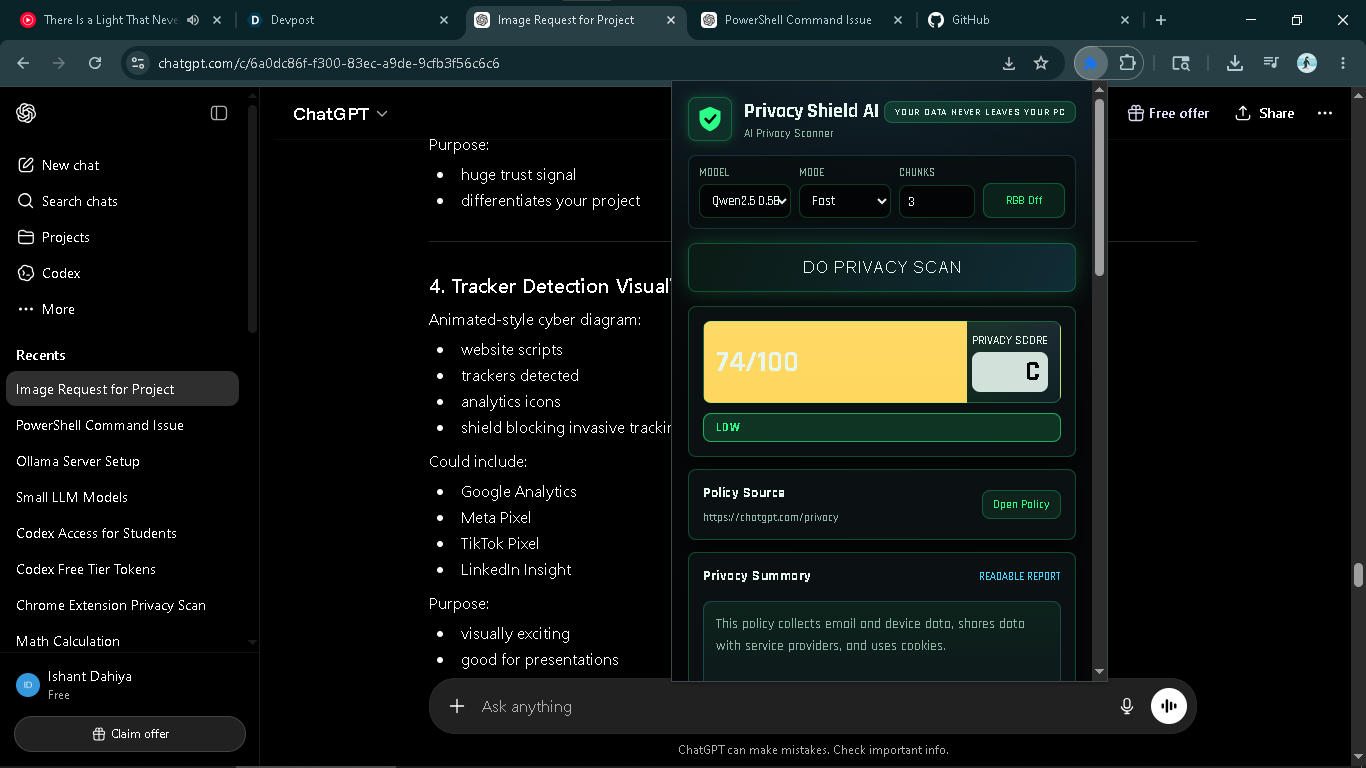
overall image
-
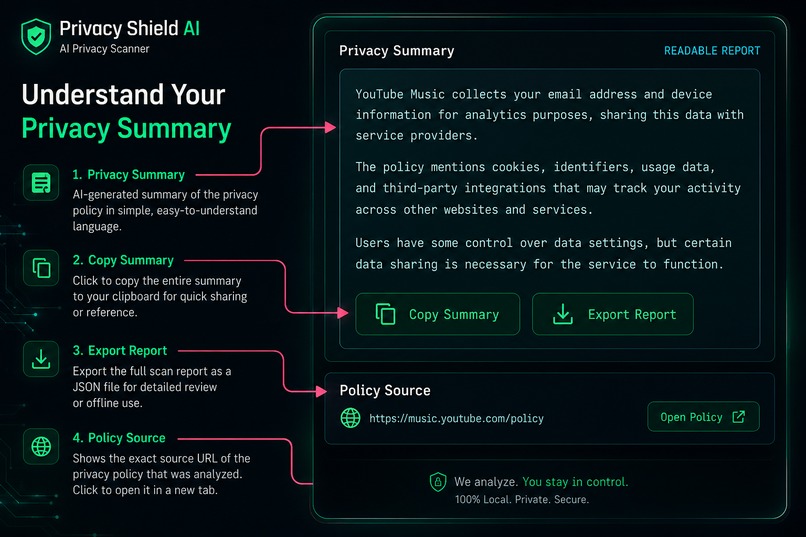
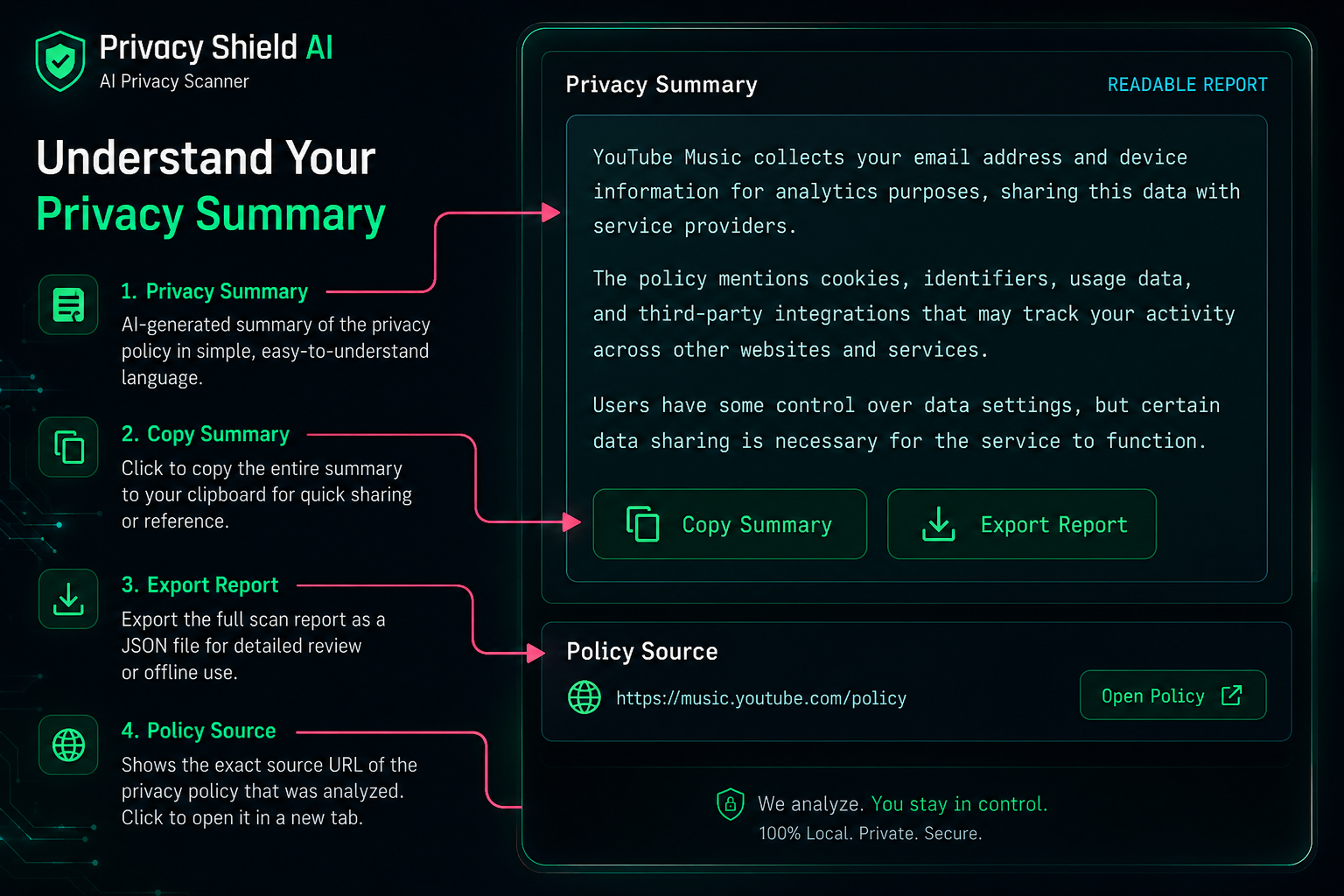
Privacy Summary / Privacy source
-
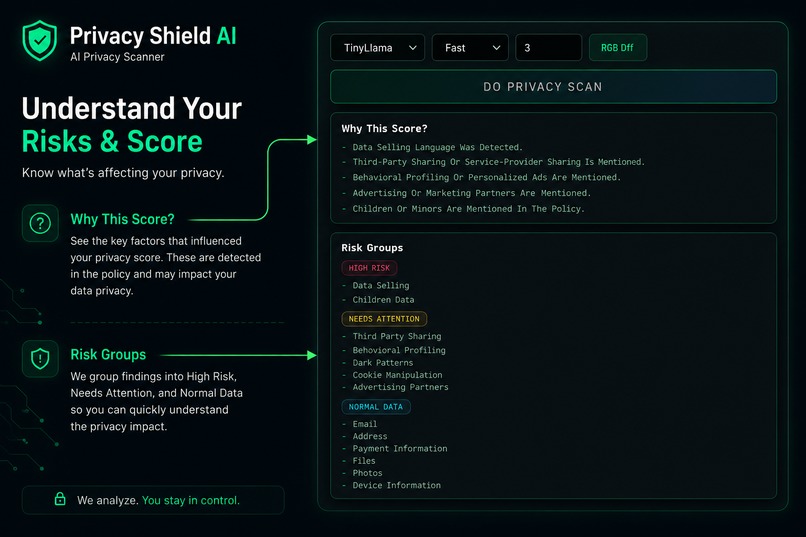
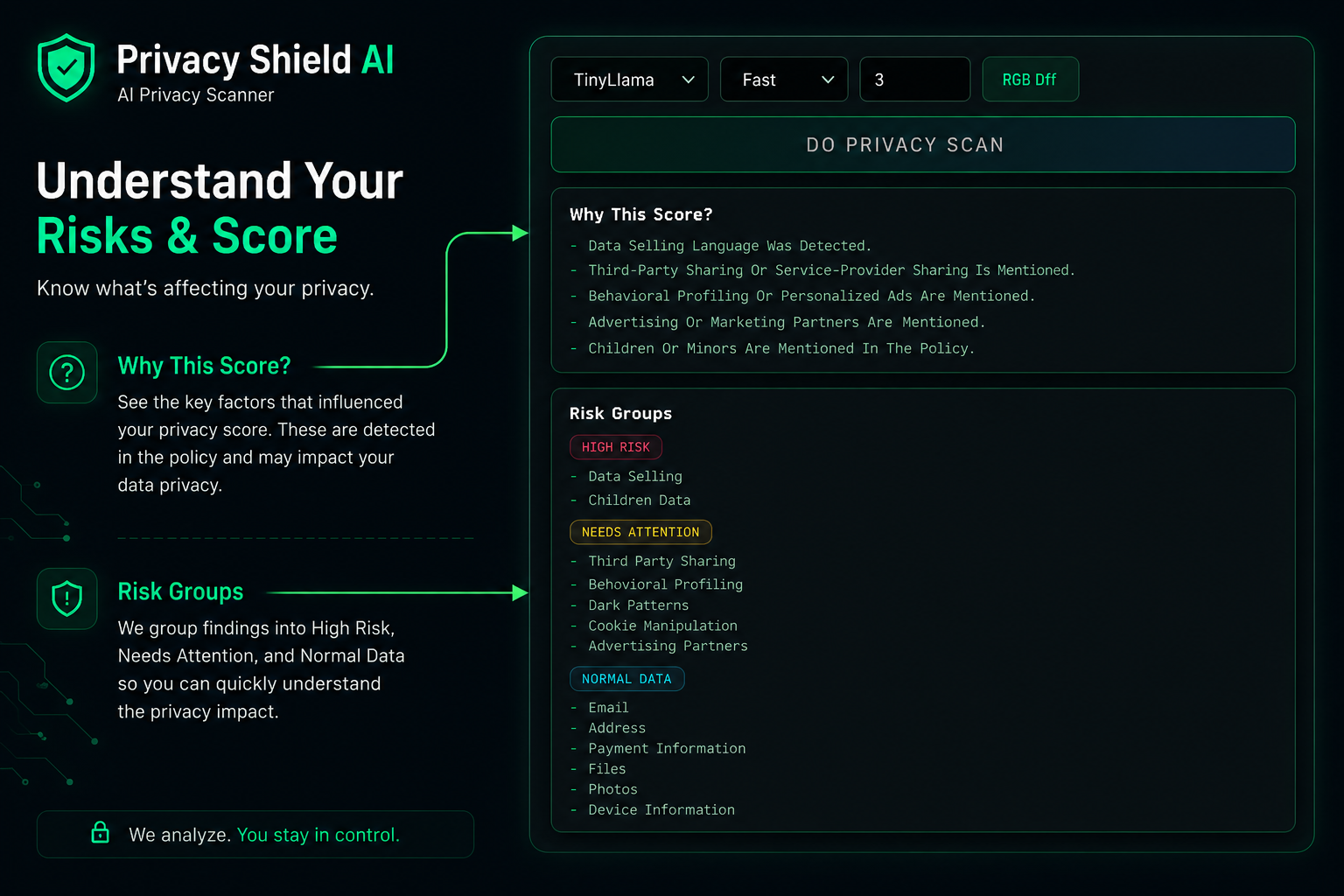
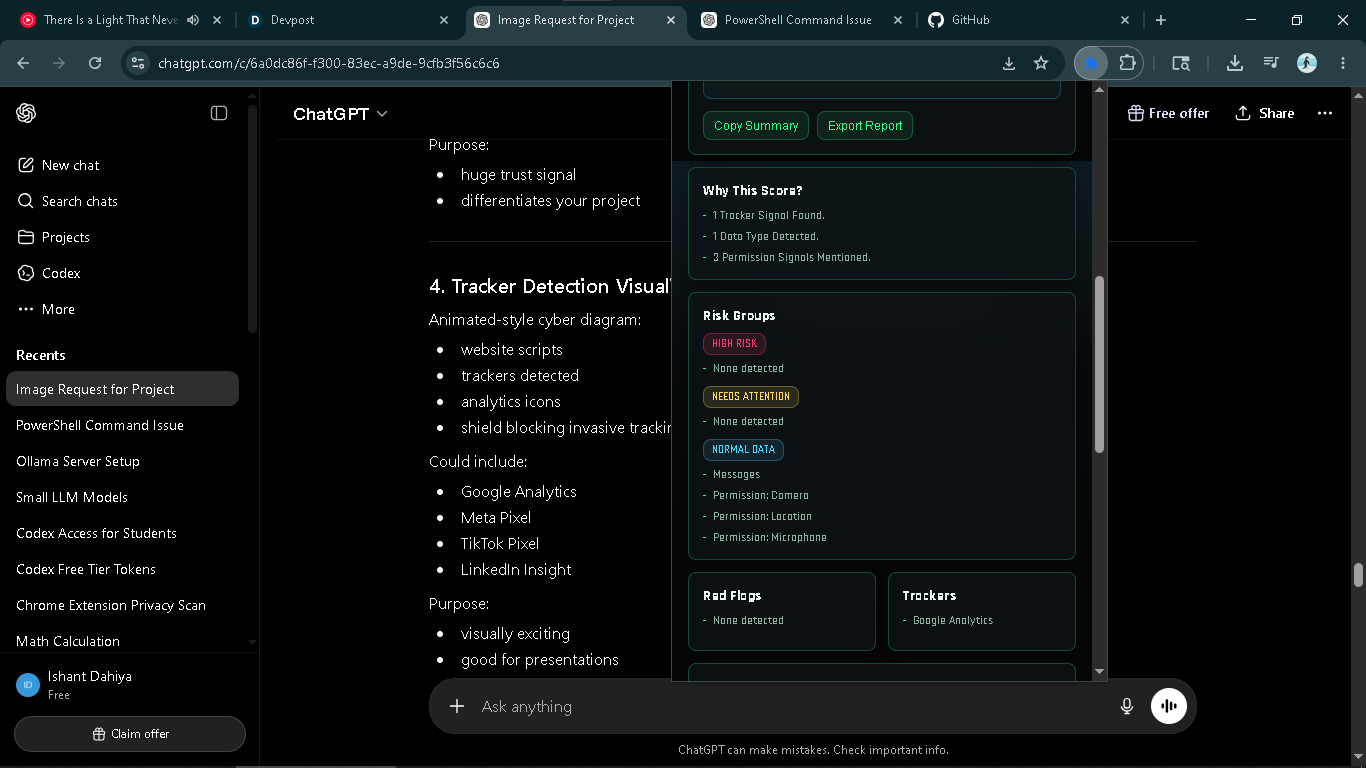
Risk Groups / Why This Score?
-
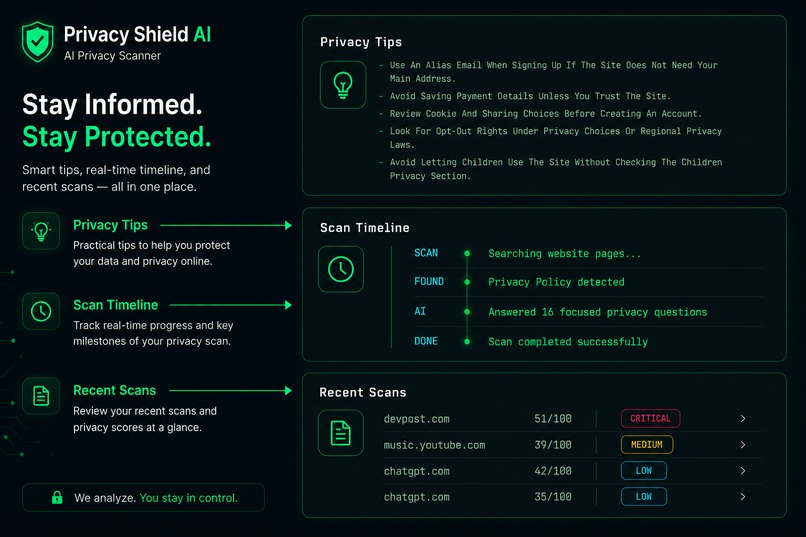
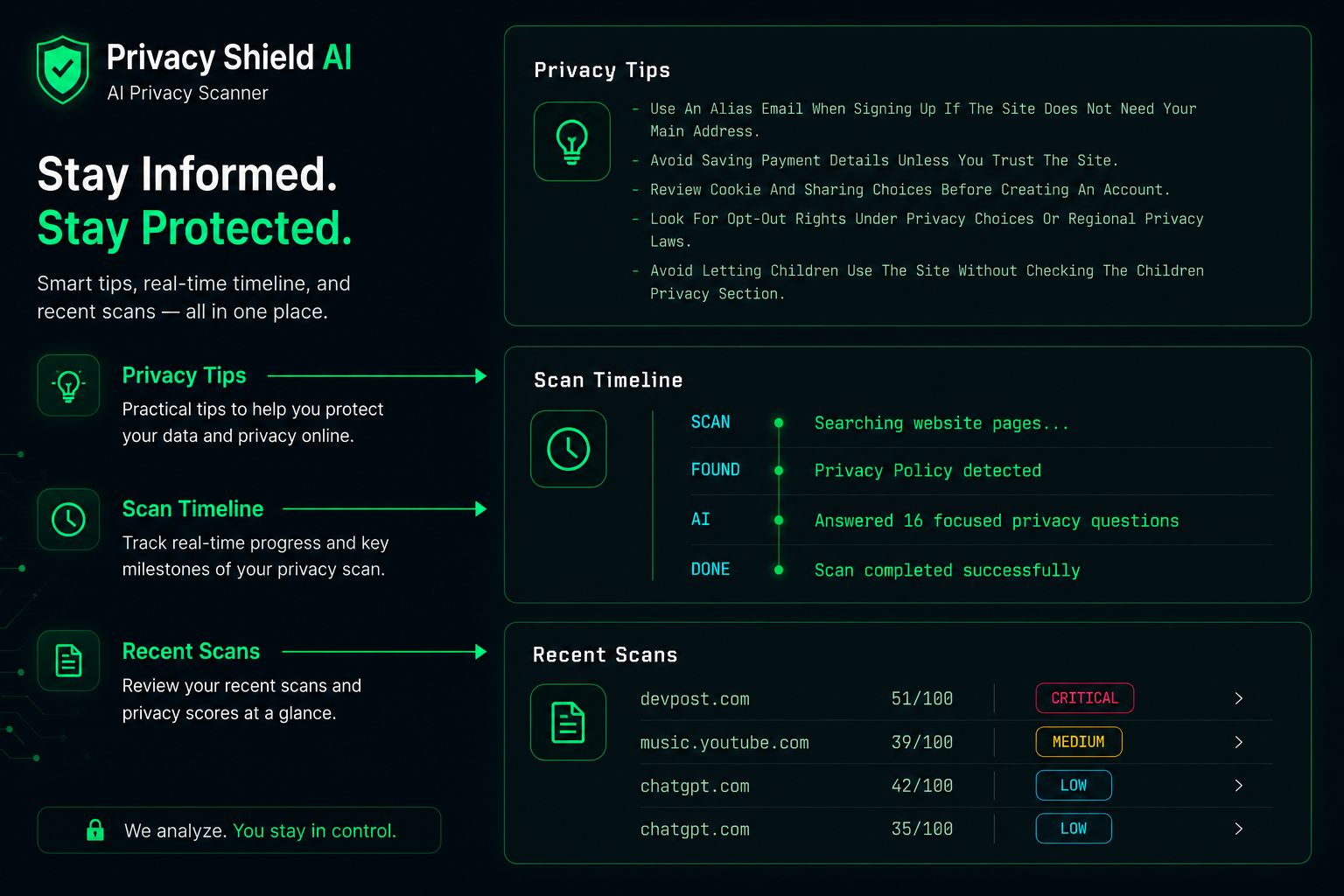
Privacy Tips / Scan Timeline / Recent Scans
-
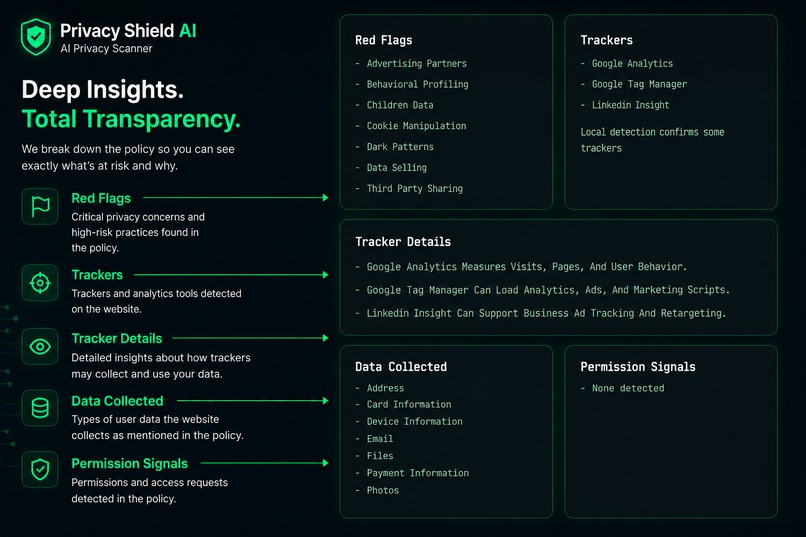
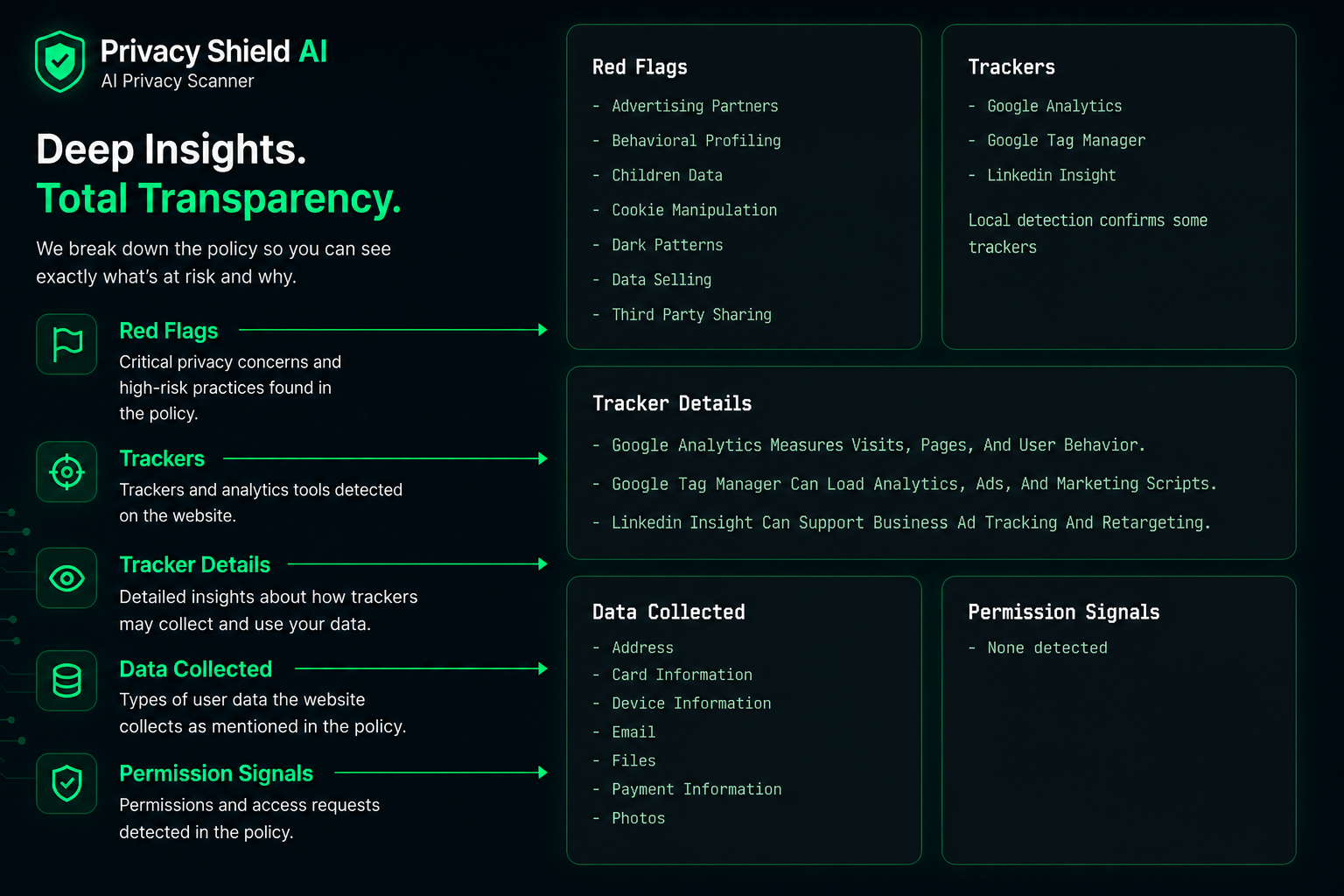
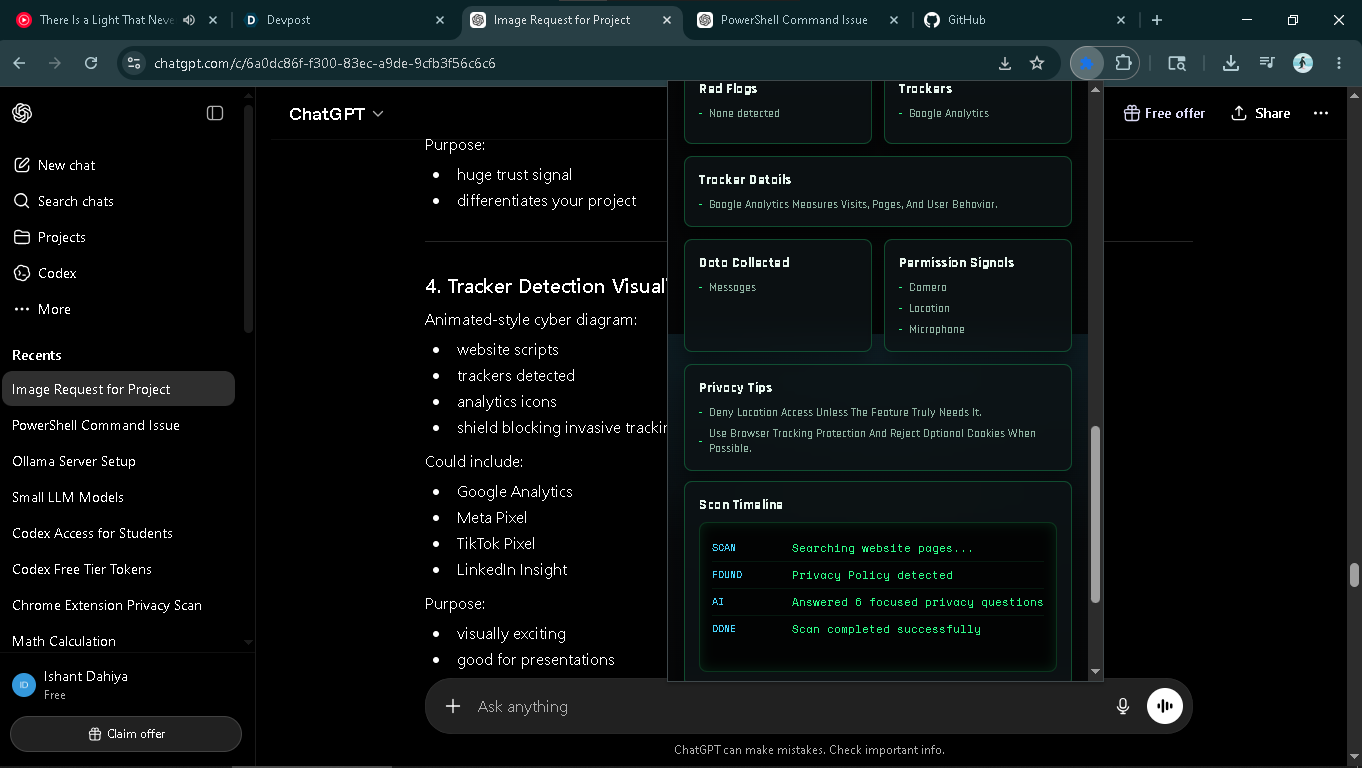
Red Flags / Trackers / Tracker Details / Data Collected / Permission Signals
-
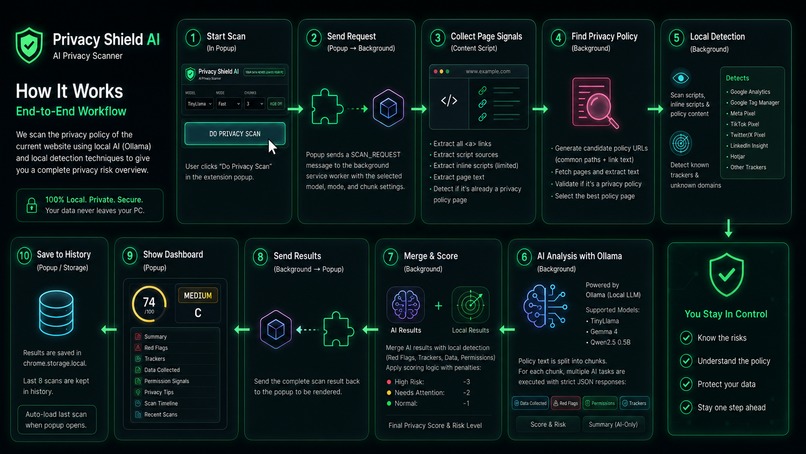
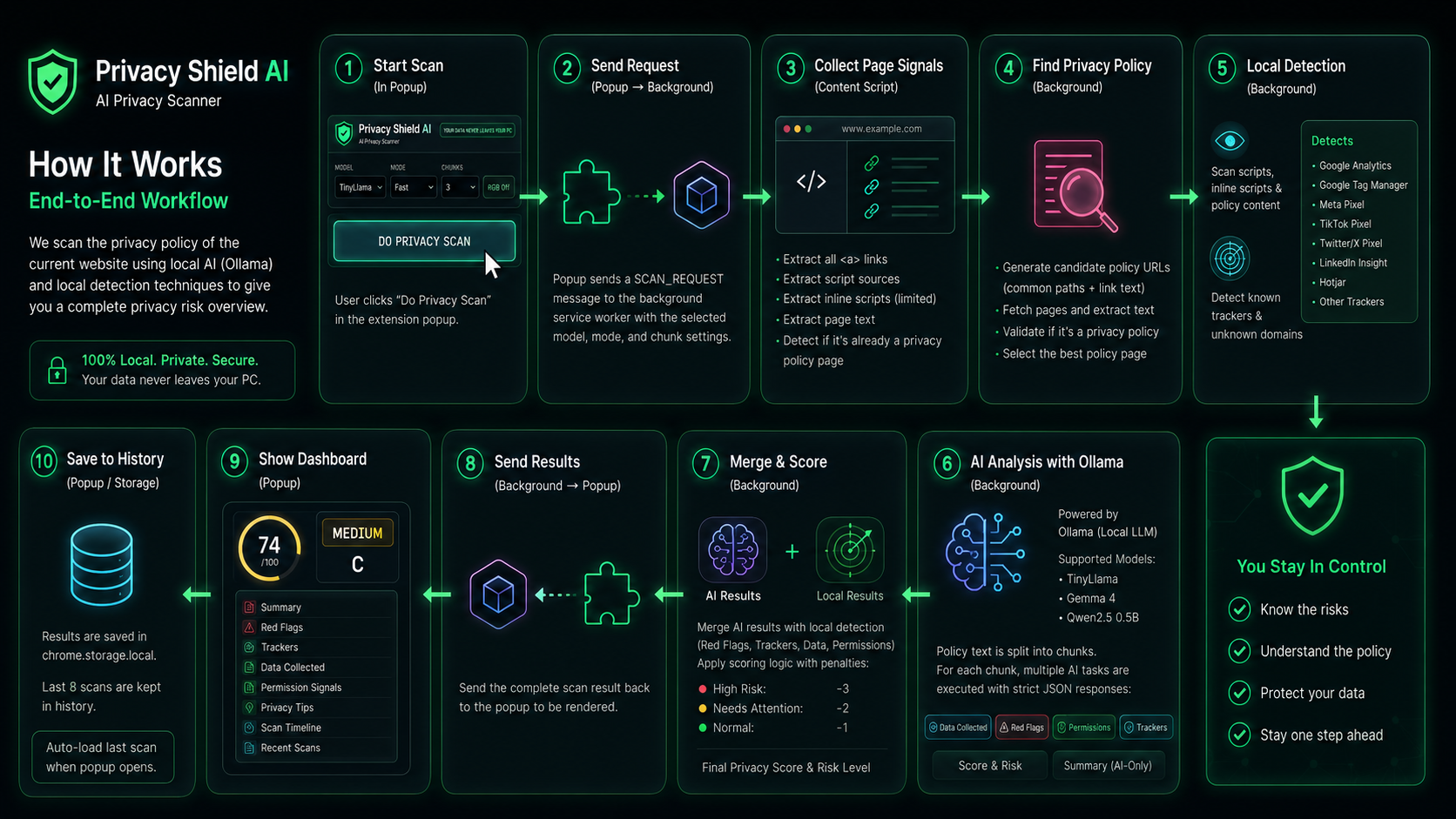
Workflow
-
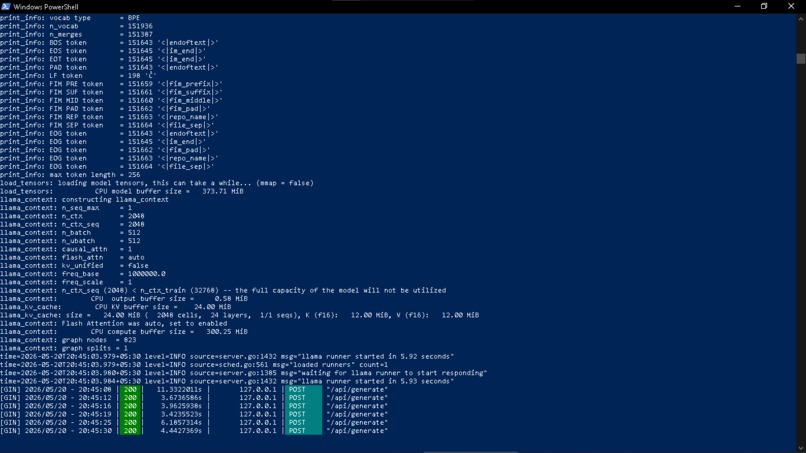
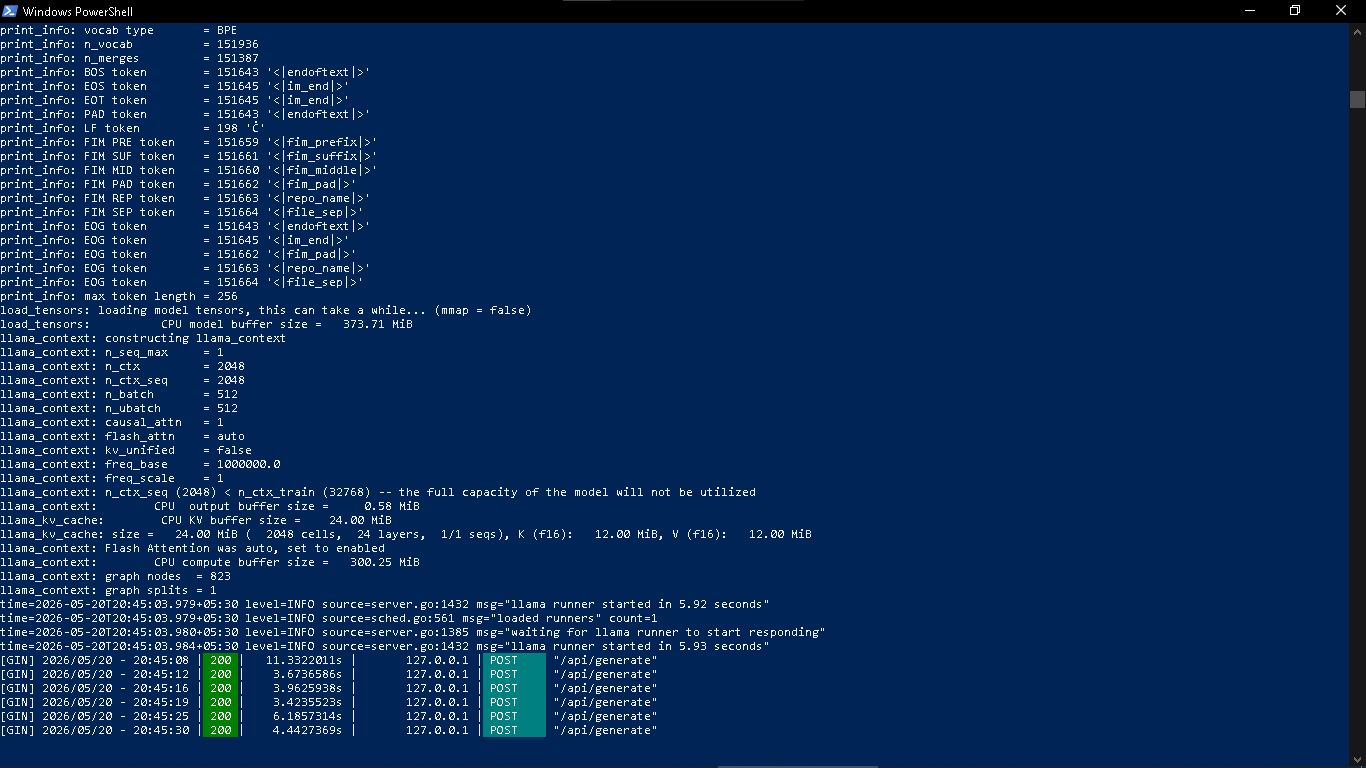
LLM running on powershell
-
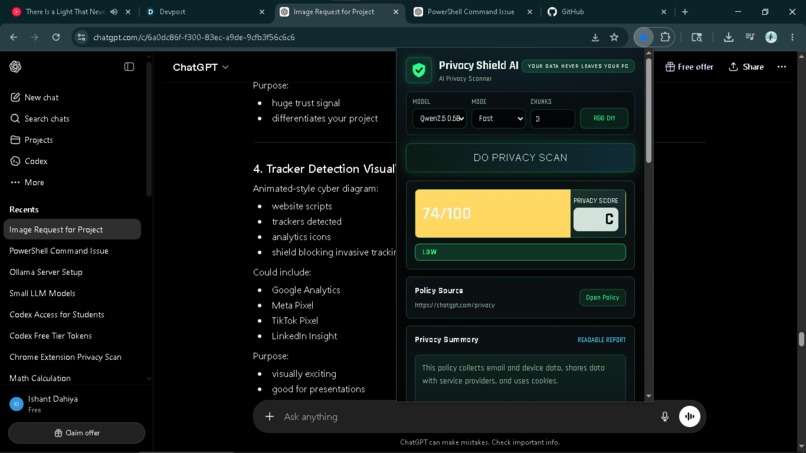
Actual image 1
-
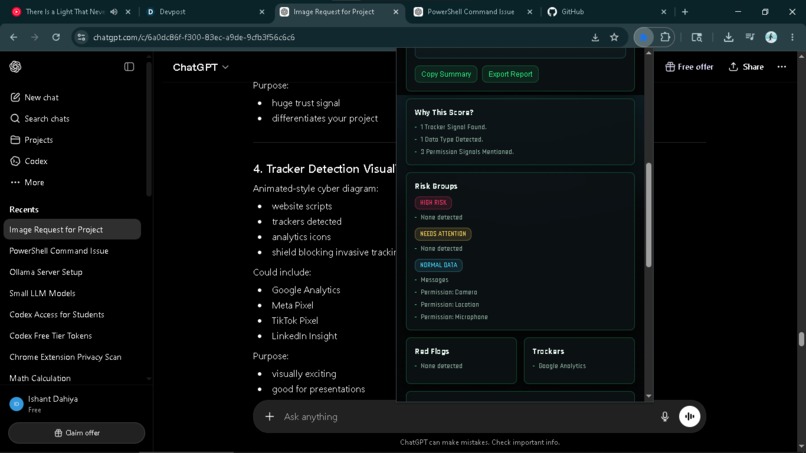
Actual image 2
-
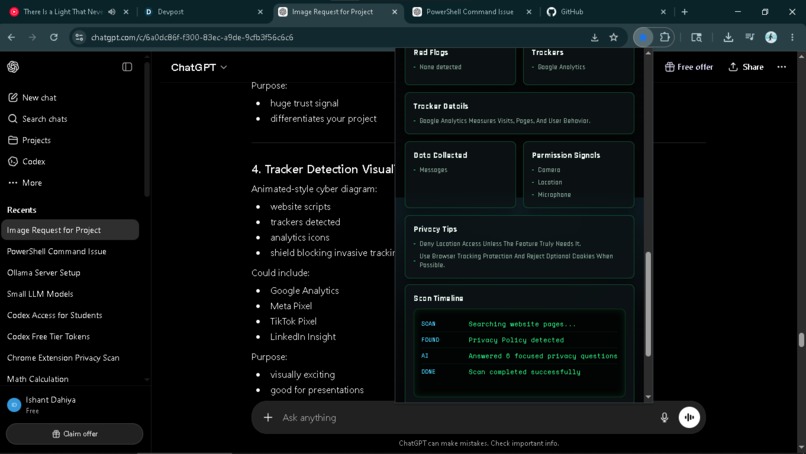
Actual image 3
-
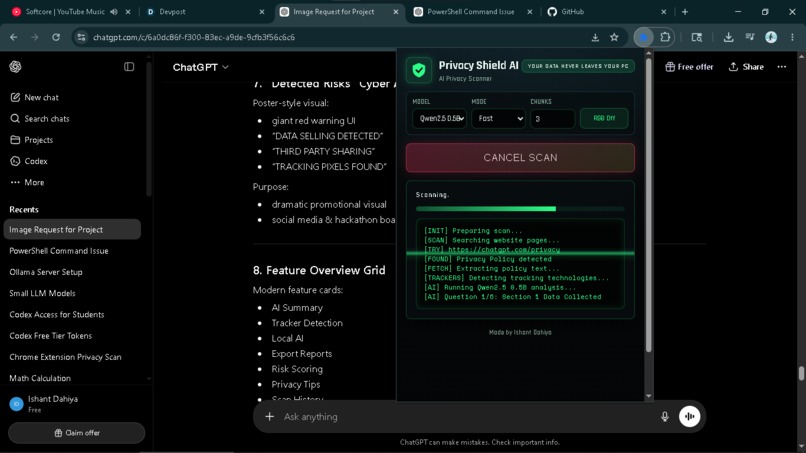
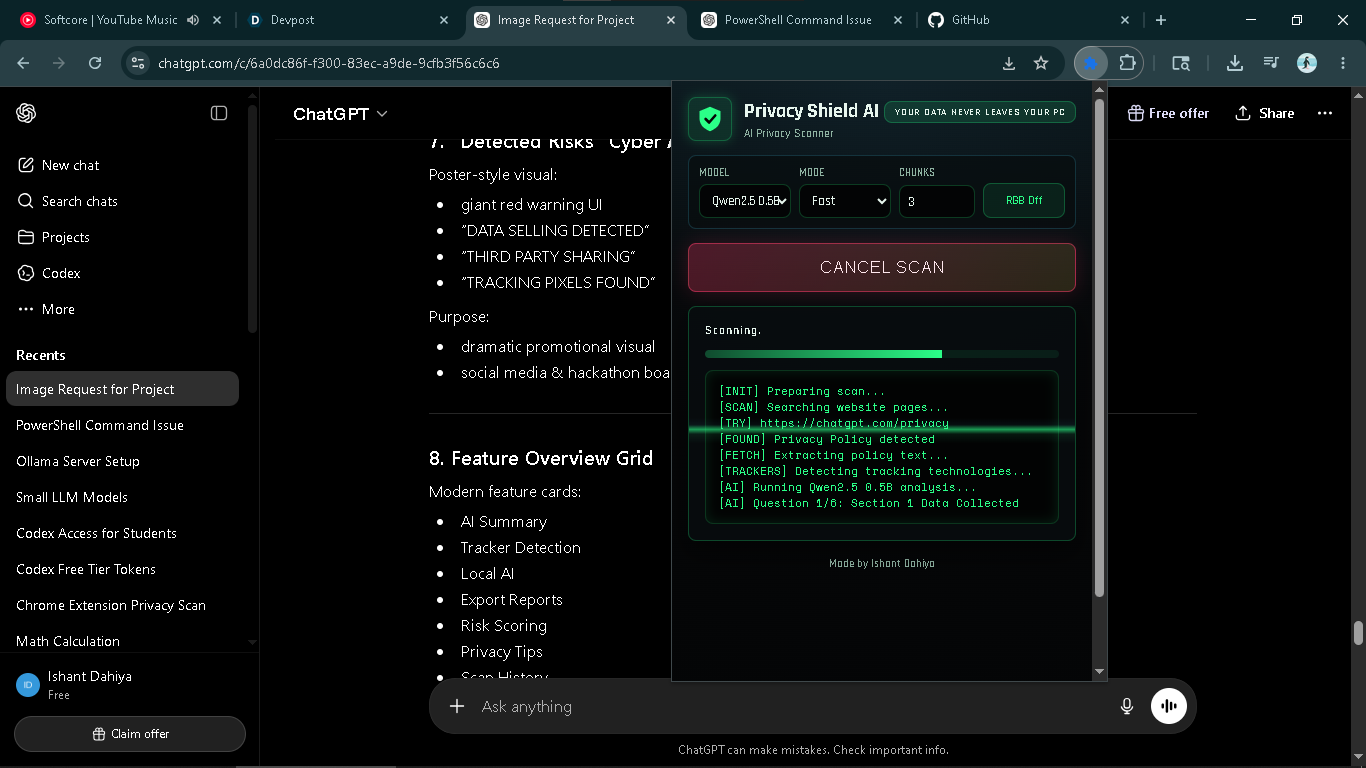
Actual Scanning image
Inspiration : Every day, millions of users blindly accept privacy policies without understanding how their personal data is collected, shared, or sold. Privacy Shield AI was inspired by the idea that privacy should be understandable and accessible to everyone, not hidden behind pages of complex legal language.
What it does : Privacy Shield AI is a Chrome extension that automatically analyzes website privacy policies using a local AI model running through Ollama. It detects dangerous data practices such as third-party data sharing, tracking, and hidden privacy risks, then translates complex legal language into simple human-readable explanations. The extension provides real-time privacy warnings, risk scores, tracker detection, and clear recommendations before users sign up, log in, or share personal information online.
How we built it : We built Privacy Shield AI using Visual Studio Code as the main development environment, along with Chrome Extension Manifest V3, React, and Tailwind CSS for the frontend interface. The extension detects privacy policy pages, extracts and cleans policy text from the DOM, and sends relevant sections to a locally running AI model through Ollama for analysis. A custom rule engine scans for risky keywords such as third-party sharing, tracking, and data selling to generate privacy scores and warnings. The local LLM then translates complex legal language into simple human-readable explanations. We also implemented tracker detection, real-time signup alerts, and a modern cybersecurity-inspired dashboard to create a fast, privacy-focused, and fully local AI-powered experience.
Challenges we ran into : During development, we faced several technical and design challenges. One of the biggest issues was extracting clean and relevant text from privacy policy pages because every website structures its content differently, often with popups, hidden elements, or dynamically loaded sections. Running a local LLM efficiently was another challenge, as large privacy policies could slow down inference and consume significant memory, so we had to optimize prompts, chunk text, and pre-filter risky sections before analysis. We also struggled with balancing accurate privacy scoring while avoiding false positives from simple keyword detection. Detecting trackers and dark patterns reliably across different websites required extensive DOM inspection and network analysis. On the frontend side, integrating real-time warnings without disrupting the browsing experience was difficult, and we spent time improving performance, animations, and responsive UI behavior. Additionally, configuring communication between the Chrome extension, the local backend server, and Ollama introduced CORS, permission, and local networking challenges during development.
Accomplishments that we're proud of : We are proud of building a fully functional local-first AI privacy analysis system that works directly inside the browser without relying on external AI APIs. One of our biggest accomplishments was successfully integrating a Chrome extension with a locally running LLM through Ollama to analyze complex privacy policies in real time. We also developed a custom privacy risk scoring engine capable of detecting dangerous clauses, third-party data sharing, trackers, and suspicious privacy practices. Another achievement was creating the “Truth Translator” feature, which converts complicated legal jargon into simple human-readable explanations. Beyond the backend intelligence, we are proud of designing a polished cybersecurity-inspired UI with real-time warnings, animated dashboards, and a smooth user experience that makes privacy information understandable and accessible to everyday users.
What we learned : Through building Privacy Shield AI, we learned a lot about browser extension development, local AI integration, and real-world privacy challenges on the modern web. We gained hands-on experience with Chrome Extension Manifest V3, DOM scraping, React-based UI development, and communication between extensions and local backend services. We also learned how to optimize local LLM workflows using Ollama by chunking large inputs, filtering relevant text, and balancing performance with accuracy. On the security side, we explored how websites use trackers, third-party scripts, and complex legal language to handle user data. Beyond the technical aspects, we learned the importance of user experience and clear communication when presenting complex privacy information in a way that everyday users can quickly understand and act upon.
What's next for Privacy Shield AI : Our next step for Privacy Shield AI is to turn it into a fully polished, free, and open-source privacy tool that anyone can use and contribute to. We plan to improve the accuracy and speed of the local AI analysis, expand tracker and dark pattern detection, and make the extension more accessible across different browsers and platforms. By open-sourcing the project, we hope to build a community around transparent and privacy-focused technology, allowing developers to improve the system, contribute new detection methods, and help create a safer and more understandable web experience for everyone.
Built With
- chromedevelopertools
- chromeextensionmanifestv3
- css3
- express.js
- git
- html5
- javascript
- json
- ollama
- react
- tailwindcss
- vscode

Log in or sign up for Devpost to join the conversation.