-
-
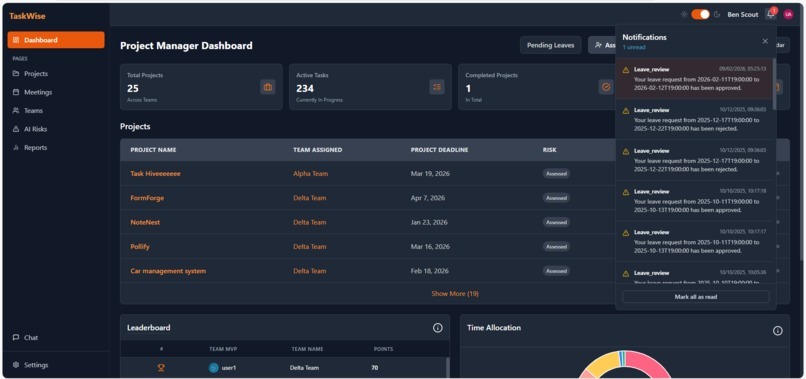
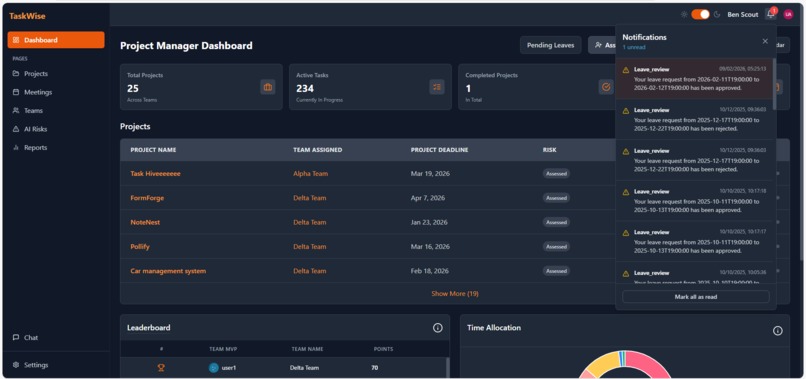
PM DASHBOARD
-
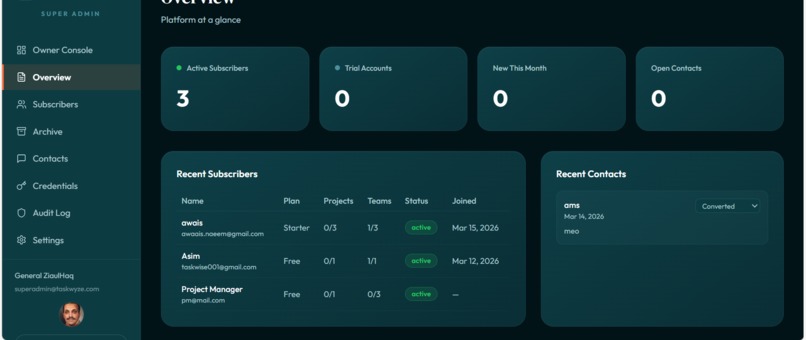
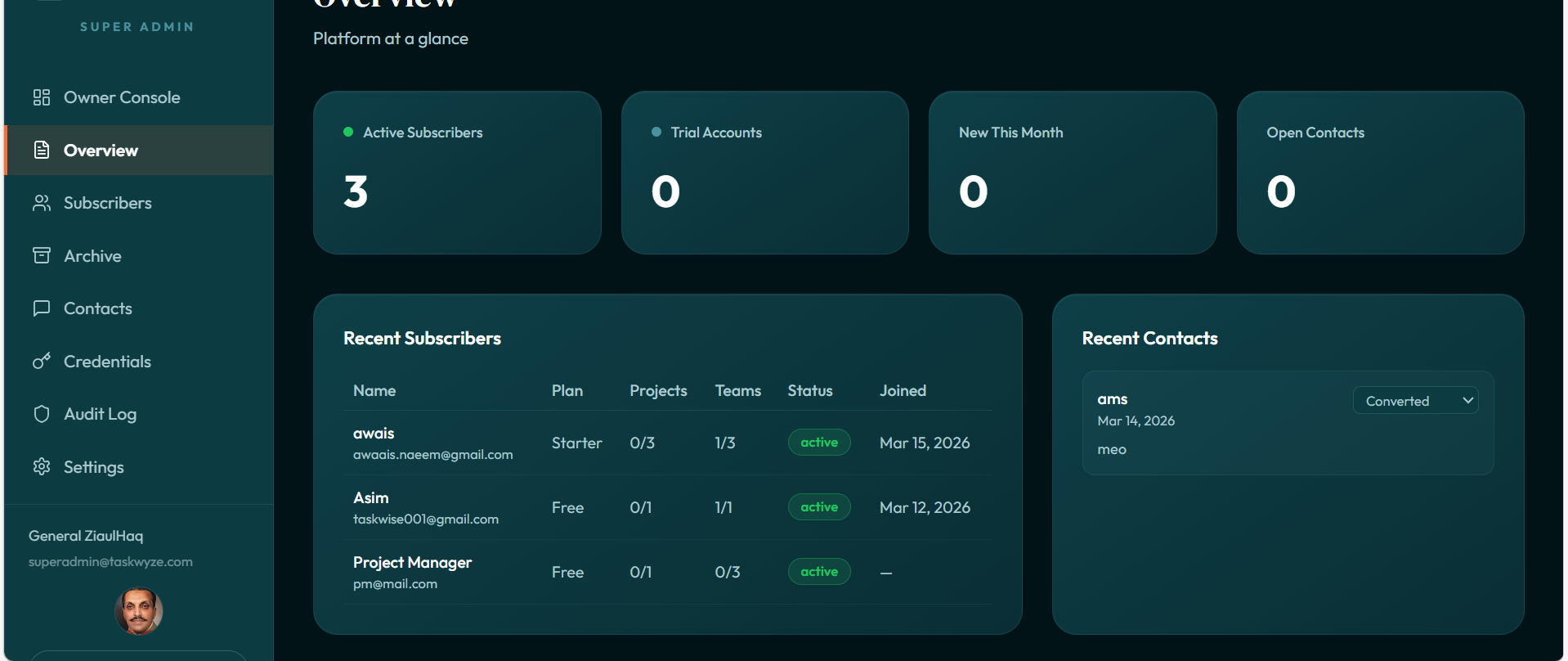
superadmin
-
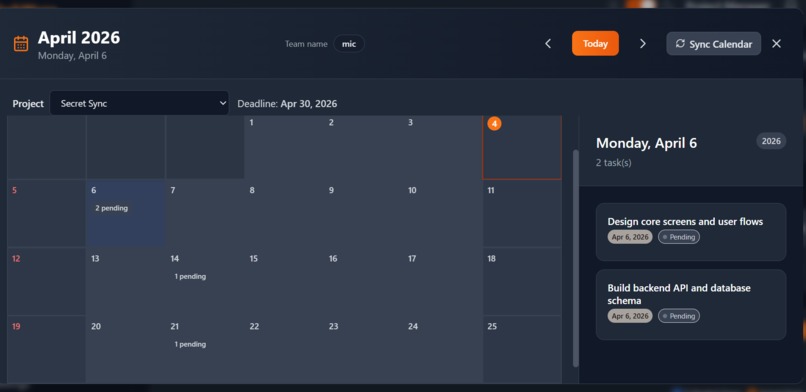
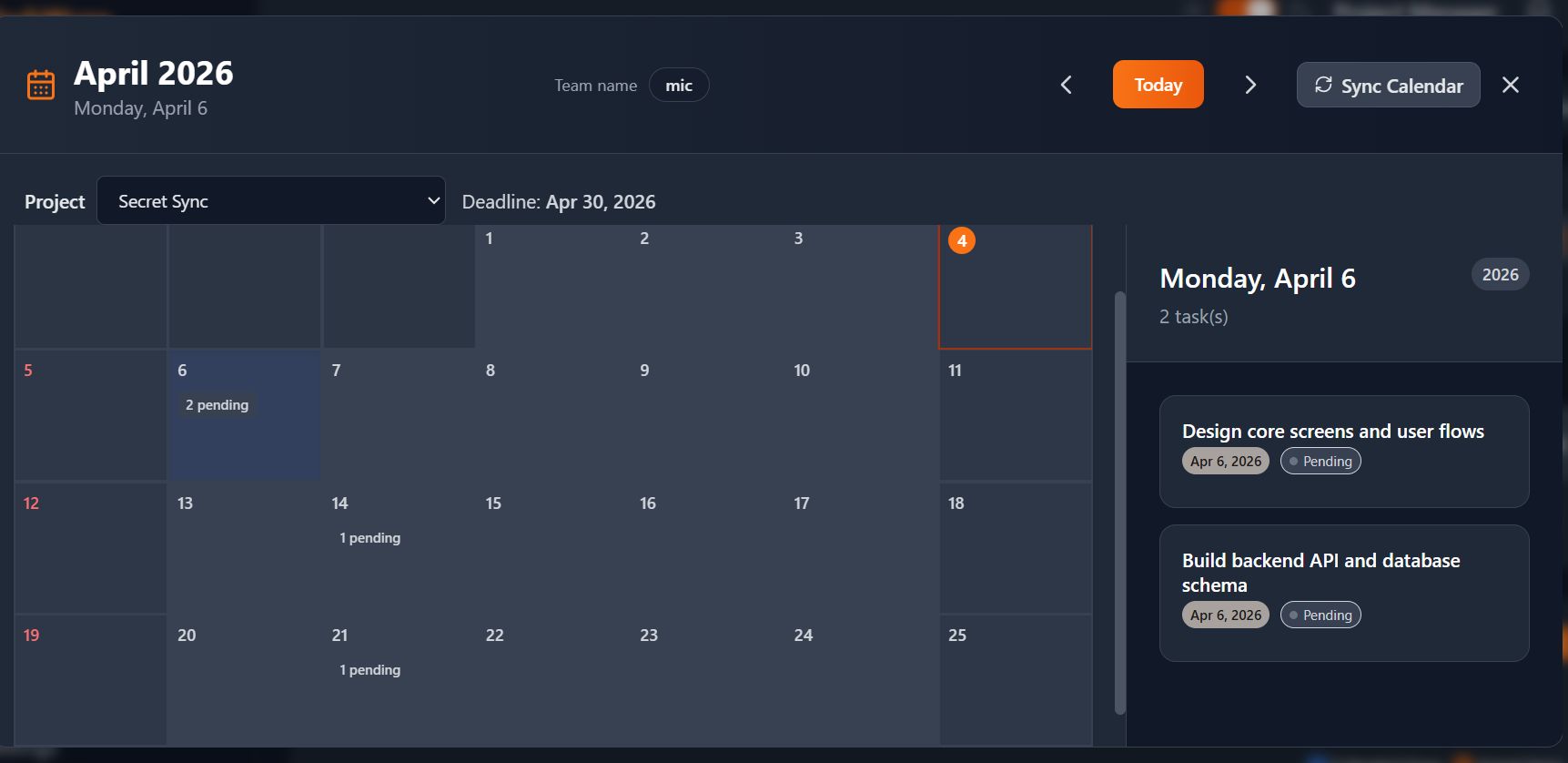
calendar
-
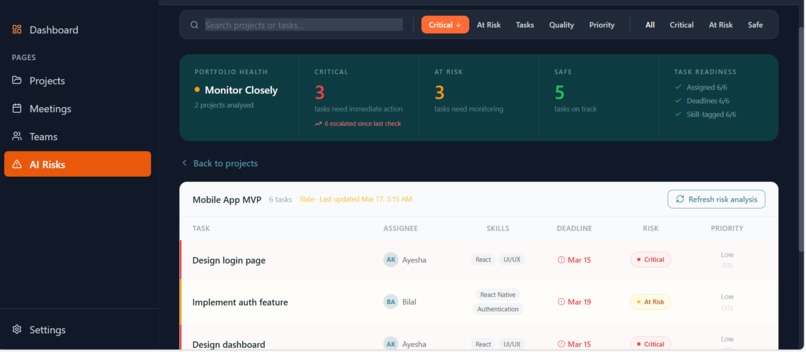
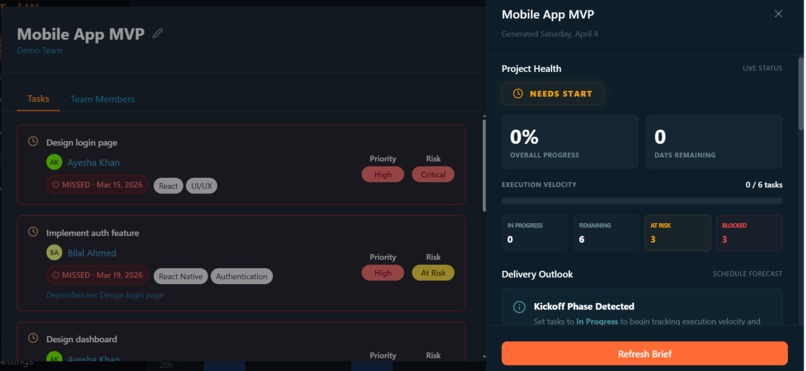
risk
-
Project Brief
Prismly — The AI Backbone of TaskWySe
"Traditional tools show what already happened. Prismly predicts what will happen."
🔥 Inspiration
Project management is broken. Not slightly broken. Fundamentally broken. Teams spend 40% of their time firefighting problems they never saw coming. We watched brilliant engineers miss critical deadlines , not from lack of effort, not from lack of talent .... but from lack of foresight. Every tool on the market is a rearview mirror. Jira shows you what's overdue. Asana shows you what's assigned. Monday shows you what's stuck.
None of them see what's coming.
We asked one question: what if your project management tool could warn you 72 hours before a deadline becomes impossible?
That question became Prismly — the predictive AI backbone that powers every intelligent feature inside TaskWySe. This is the story of how we transformed project management from reactive chaos into predictive clarity.
What It Does
Prismly is AI that thinks ahead.
Speak your project vision in plain language. Our Gemini-powered engine instantly generates professional specifications — tasks, dependencies, realistic timelines — in under 10 seconds. No templates. No manual entry. Just intent, transformed into an execution plan.
Semantic skill matching assigns work to the right person based on actual capabilities, not org charts. Not job titles. Not who's available. Who can actually do this, right now, given their current load.
Every task auto-syncs across Google Calendar, Trello, GitHub, and Google Meet the moment it's created — no copy-paste, no manual updates across five tabs.
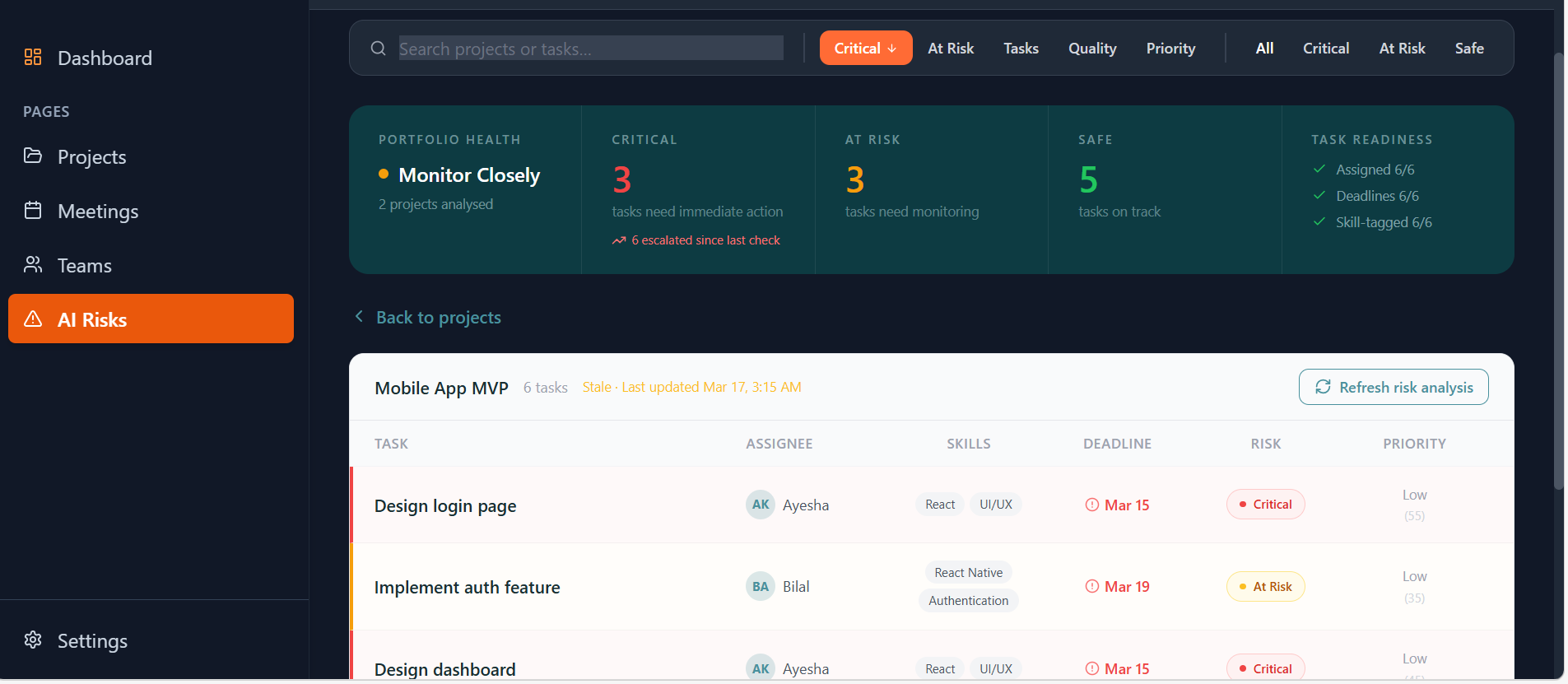
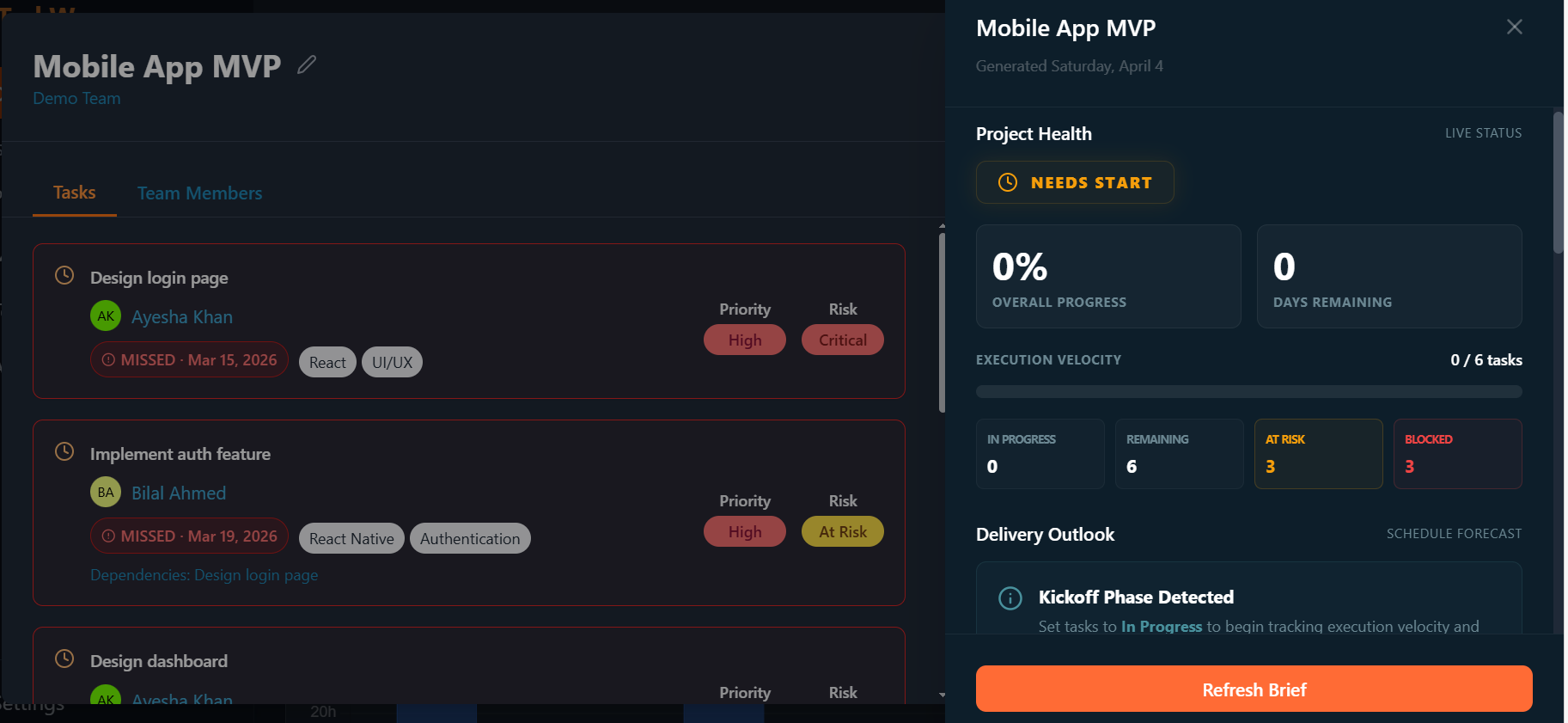
Most critically: predictive risk analysis fires a warning 72 hours before a deadline becomes mathematically impossible to hit. Not when it's already failed. Before.
While competitors manage tasks, Prismly illuminates risk before it destroys your timeline.
🛠️ How We Built It
Four Gemini pillars form the intelligent core:
Text Generation     →  Converts casual project input into detailed structured breakdowns
Embeddings          →  Semantic skill matching via vector similarity (0.75 threshold)
Analysis            →  Evaluates capacity, task complexity, and full dependency chains
Narrative Intelligence →  Translates raw metrics into plain-language recommendations
                         executives actually read and act on
Event sourcing with unique transaction IDs was our answer to a real distributed systems problem — cross-platform sync without infinite loops. Every event is stamped, tracked, and idempotent across Google, Trello, and GitHub simultaneously.
Challenges We Ran Into
Prompt engineering is system architecture. We ran 47 iterations before achieving consistent, structured output from Gemini that downstream services could reliably parse. Each iteration wasn't a tweak — it was a redesign of how we framed context, constraints, and output contracts.
Embedding threshold calibration required systematic testing across 200 ground-truth assignments before landing at 0.75 as the semantic similarity threshold that balanced precision with recall.
Real-time performance vs. AI depth is a genuine tension. Gemini's analytical power wants time. Users want speed. Our three-tier caching strategy — hot cache, warm cache, cold computation — resolved this without sacrificing intelligence.
Cross-platform synchronization introduced circular event risks. An update in Trello triggers GitHub triggers Calendar triggers Trello. We killed this with event sourcing before it killed us.
Accomplishments
47 actionable tasks generated        →  in 8 seconds
91% skill-matching accuracy          →  vs. 61% keyword baseline
$120,000 in missed deadlines         →  prevented during beta
99.7% uptime                         →  across all integrations
Sub-second response                  →  for 95% of all operations
91% accuracy on skill matching isn't a benchmark number. It's the difference between shipping on time and a 3-week delay because the wrong developer got assigned a task they technically could do but practically couldn't.
$120K in prevented deadline failures during beta. Real projects. Real teams. Real money.
What We Learned
Embeddings unlock semantic magic that keyword matching cannot touch. "Experienced in distributed systems" and "built microservices at scale" are the same thing. Only vectors know that.
Narrative AI drives 6x more executive action than dashboards. A chart showing 78% capacity utilization gets ignored. A sentence saying "Dmitry is overloaded and will cause a bottleneck on the mobile module by Thursday" gets acted on immediately.
Prompt engineering is not a feature — it is the architecture. How you structure context for an LLM is as consequential as how you structure a database schema.
Caching multiplies performance. The difference between 8 seconds and 800ms is not a better GPU. It's knowing what not to recompute.
Users want augmentation, not automation. Every Prismly output is reviewable, editable, and overridable. The AI recommends. The human decides. That trust boundary is what makes people actually use it.
🚀 What's Next
Multimodal expansion — extract tasks directly from meeting recordings, whiteboard photos, and voice memos. Your standup becomes a task plan automatically.
Autonomous agents — Prismly agents that don't just flag blockers but resolve them. Reassign tasks. Reschedule dependencies. Update stakeholders. While you sleep.
Cross-project intelligence — benchmark your project against thousands of anonymized historical projects. "Teams with this stack and this scope typically hit risk at week 6. Here's what they did."
Prismly doesn't just manage projects. It sees through them.
to get credentials of dashboard , contact us
Every intelligent feature in TaskWySe runs on Prismly. TaskWySe is the product. Prismly is the mind behind it.

Log in or sign up for Devpost to join the conversation.