-
-
-
-
-
-
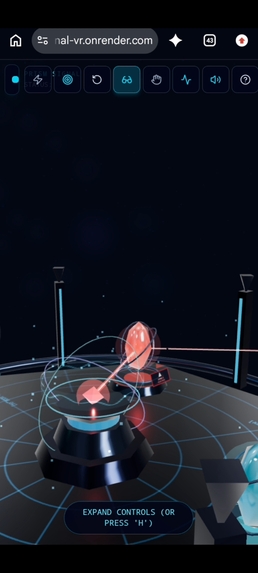
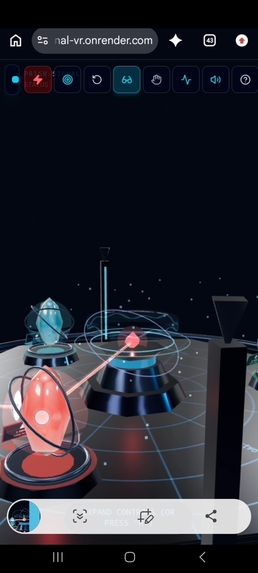
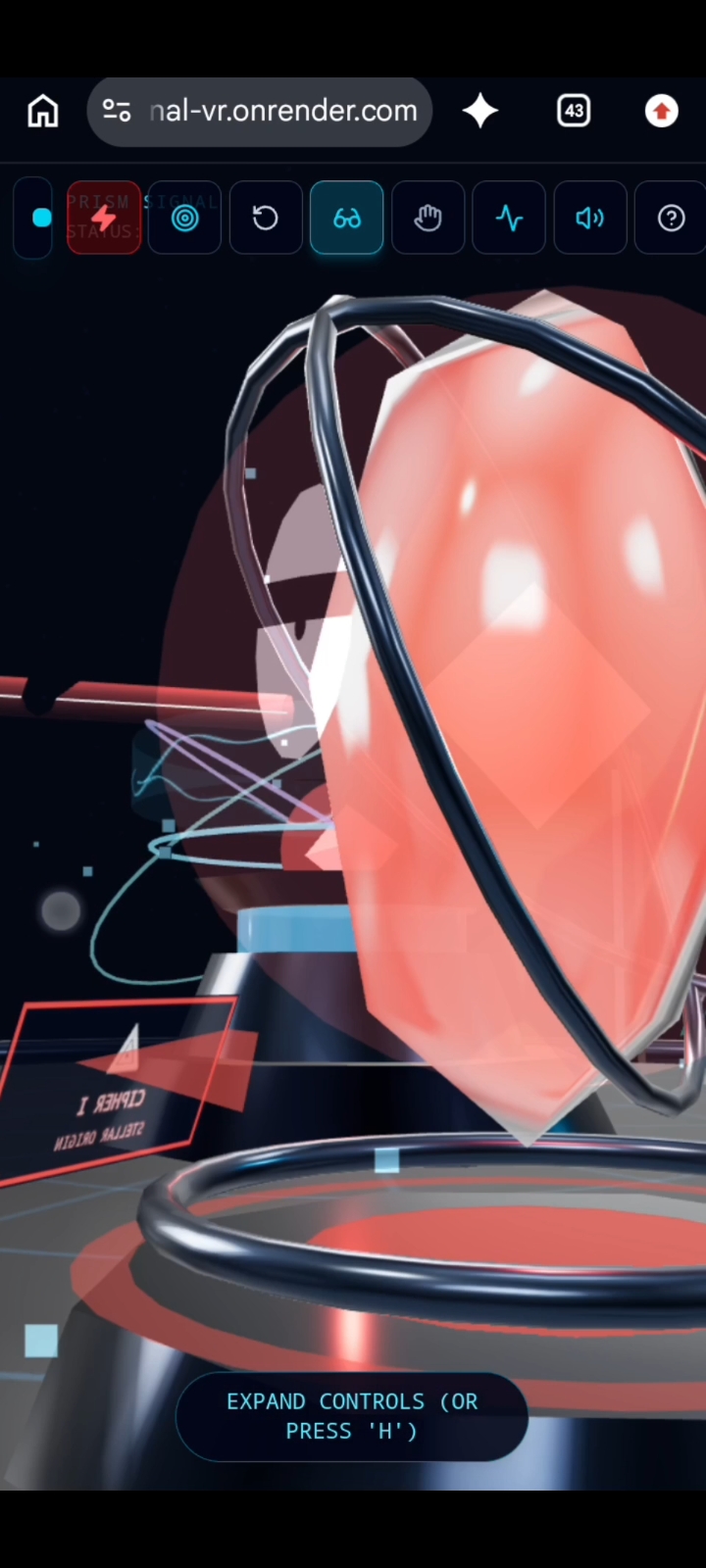
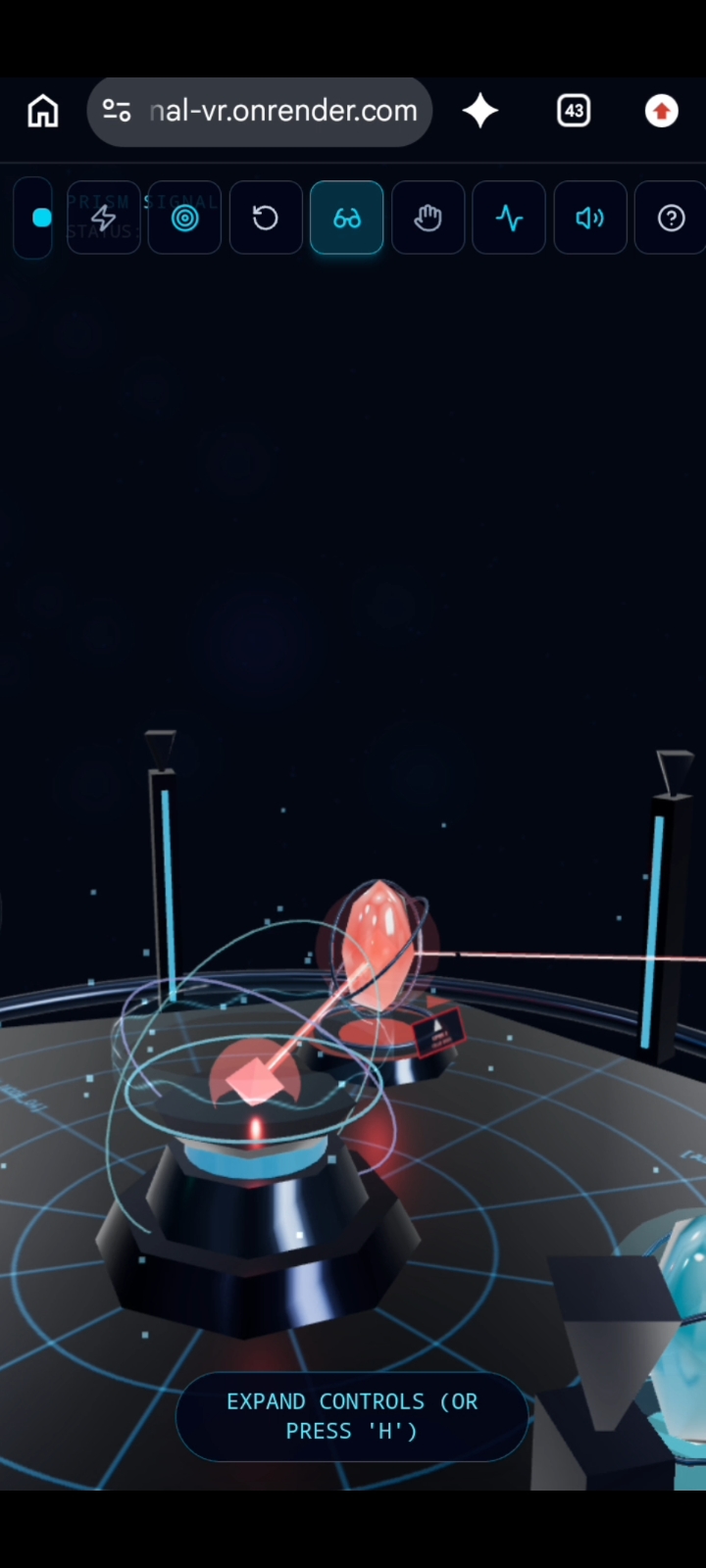
Main menu and controls view
Inspiration ## Inspiration
I wanted to create an immersive, atmospheric space puzzle experience that takes full advantage of WebXR. The idea was to combine the mystery of deep space exploration with tactile, hands-on mechanical puzzles that feel satisfying to solve in Virtual Reality.
What it does
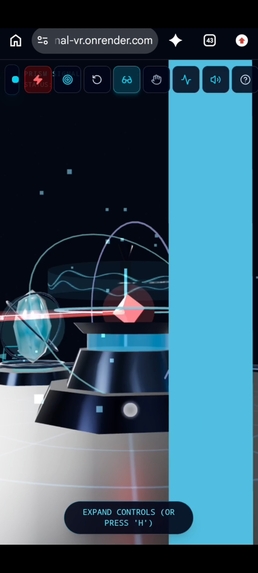
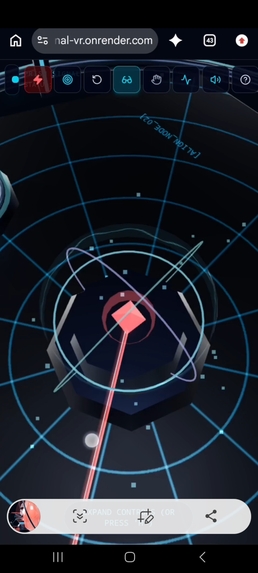
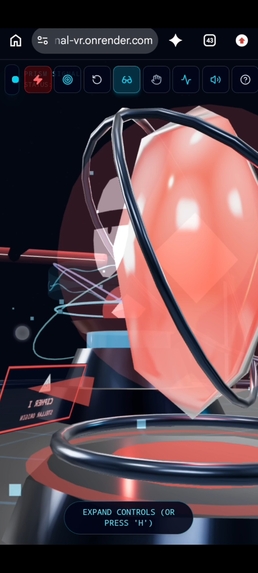
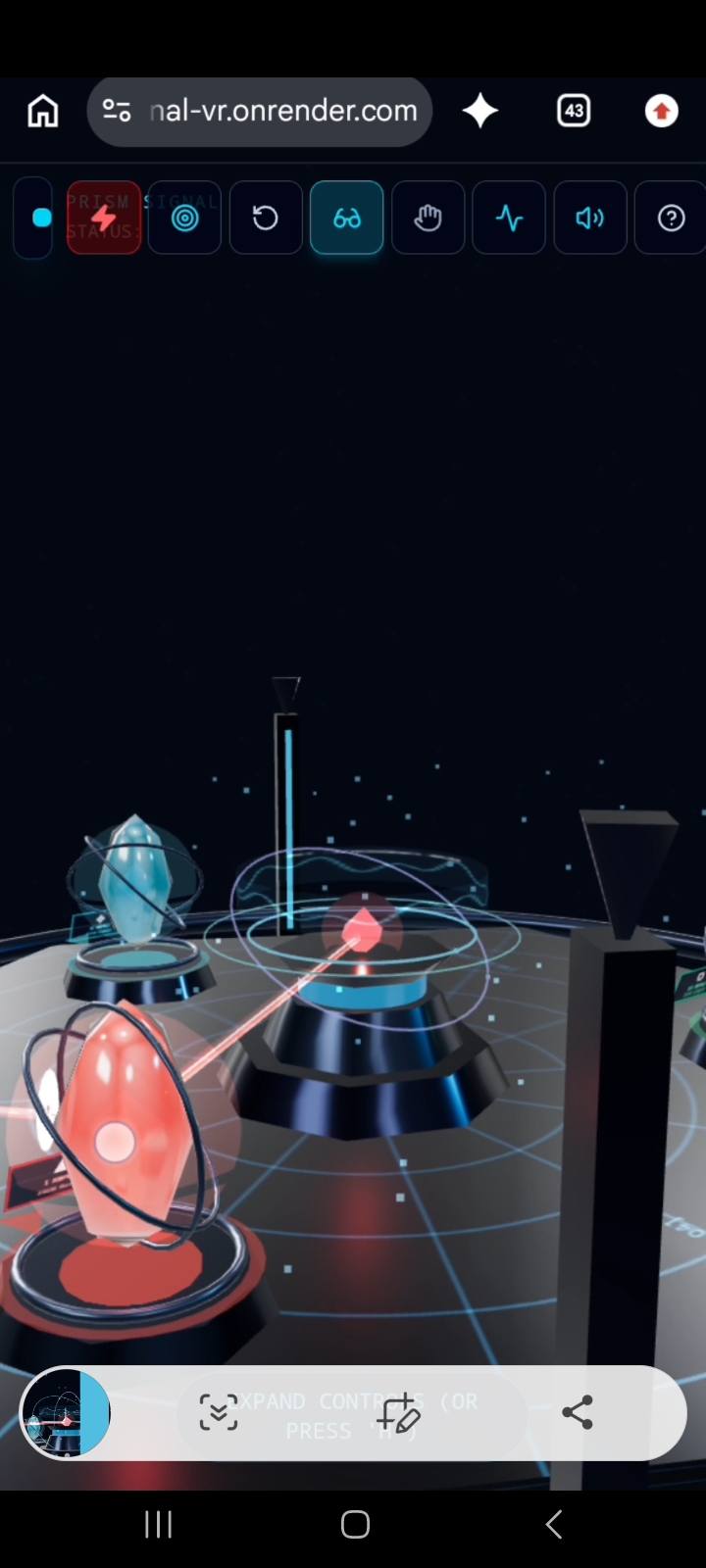
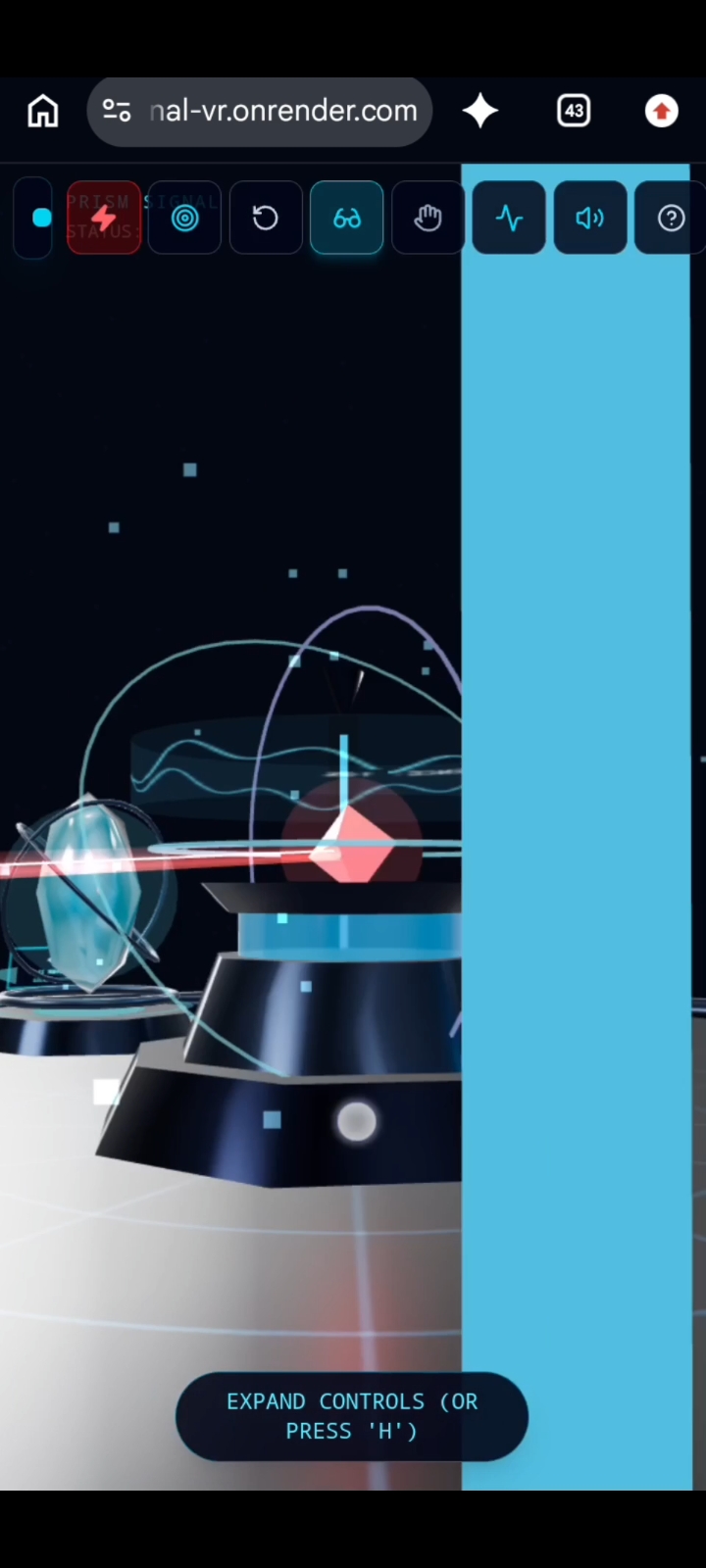
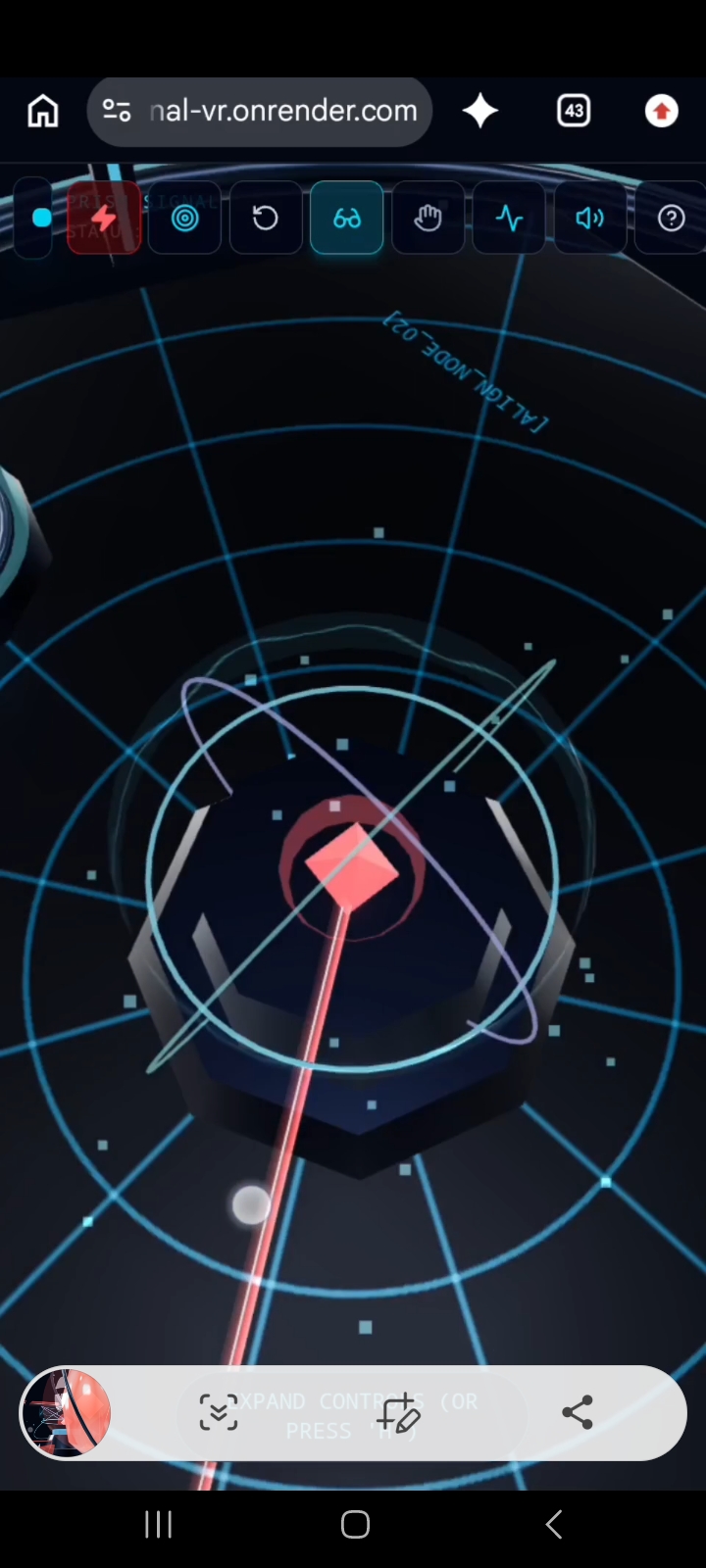
"Prism Signal: Beyond the Void" is a sci-fi puzzle game where players find themselves in a forgotten relay chamber in deep space. To progress, they must physically align three floating resonance crystals (Ruby Core, Azure Array, and Emerald) to refocus a holographic carrier beam and decode a mysterious harmonic beacon from an unknown alien civilization.
How we built it
The project was built from scratch specifically for the web using modern WebXR standards. I utilized standard web development tools along with frameworks compliant with seated VR setups to ensure smooth performance directly inside a mobile or standalone VR browser (like Meta Quest Browser) without needing any external installations.
Challenges we ran into
One of the biggest challenges was optimizing the performance of the holographic effects and floating crystal physics to run seamlessly at high frame rates within a mobile browser. Fine-tuning the multi-touch and mouse fallback controls to feel just as intuitive as spatial VR controllers also took a lot of testing.
Accomplishments that we're proud of
I am incredibly proud of the visual aesthetic and atmospheric sound design that successfully makes players feel isolated in a vast, mysterious cosmic station. Building a fully compliant WebXR application that works smoothly across both flat screens and VR headsets was a major milestone.
What we learned
I learned a massive amount about optimization techniques for web-based VR applications and how to design UI/UX that adapts gracefully between mouse, touch, and immersive VR controller inputs.
Inspiration
I wanted to create an immersive, atmospheric space puzzle experience that takes full advantage of WebXR. The idea was to combine the mystery of deep space exploration with tactile, hands-on mechanical puzzles that feel satisfying to solve in Virtual Reality.
What it does
"Prism Signal: Beyond the Void" is a sci-fi puzzle game where players find themselves in a forgotten relay chamber in deep space. To progress, they must physically align three floating resonance crystals (Ruby Core, Azure Array, and Emerald) to refocus a holographic carrier beam and decode a mysterious harmonic beacon from an unknown alien civilization.
How we built it
The project was built from scratch specifically for the web using modern WebXR standards. I utilized standard web development tools along with frameworks compliant with seated VR setups to ensure smooth performance directly inside a mobile or standalone VR browser (like Meta Quest Browser) without needing any external installations.
Challenges we ran into
One of the biggest challenges was optimizing the performance of the holographic effects and floating crystal physics to run seamlessly at high frame rates within a mobile browser. Fine-tuning the multi-touch and mouse fallback controls to feel just as intuitive as spatial VR controllers also took a lot of testing.
Accomplishments that we're proud of
I am incredibly proud of the visual aesthetic and atmospheric sound design that successfully makes players feel isolated in a vast, mysterious cosmic station. Building a fully compliant WebXR application that works smoothly across both flat screens and VR headsets was a major milestone.
What we learned
I learned a massive amount about optimization techniques for web-based VR applications and how to design UI/UX that adapts gracefully between mouse, touch, and immersive VR controller inputs.
What's next for Prism Signal: Beyond the Void
I plan to expand the game by adding more complex multi-layered puzzle rooms, introducing diverse crystal types with unique frequency behaviors, and implementing spatial 3D audio to deepen the immersion. I also look forward to publishing it as a standalone progressive web app (PWA).
Built With
- css3
- html5
- javascript
- webxr

Log in or sign up for Devpost to join the conversation.