-
-
landing
-
demo-dashboard-understanding-map
-
demo-dashboard-reasoning&pattern
-
login-page
-
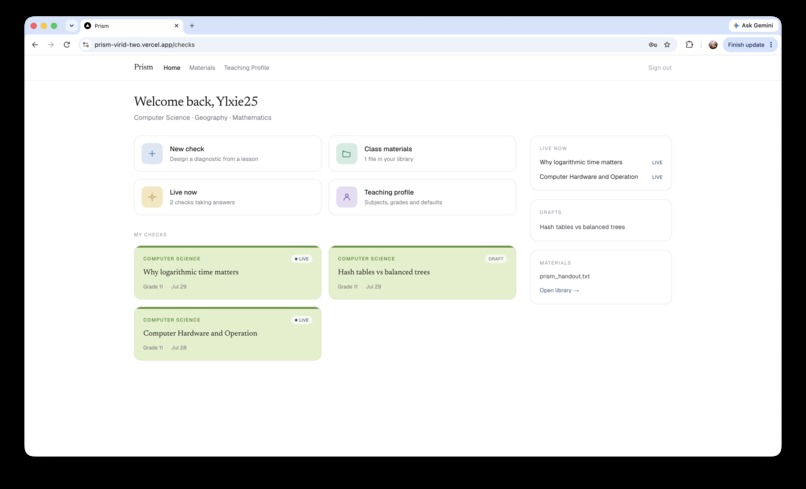
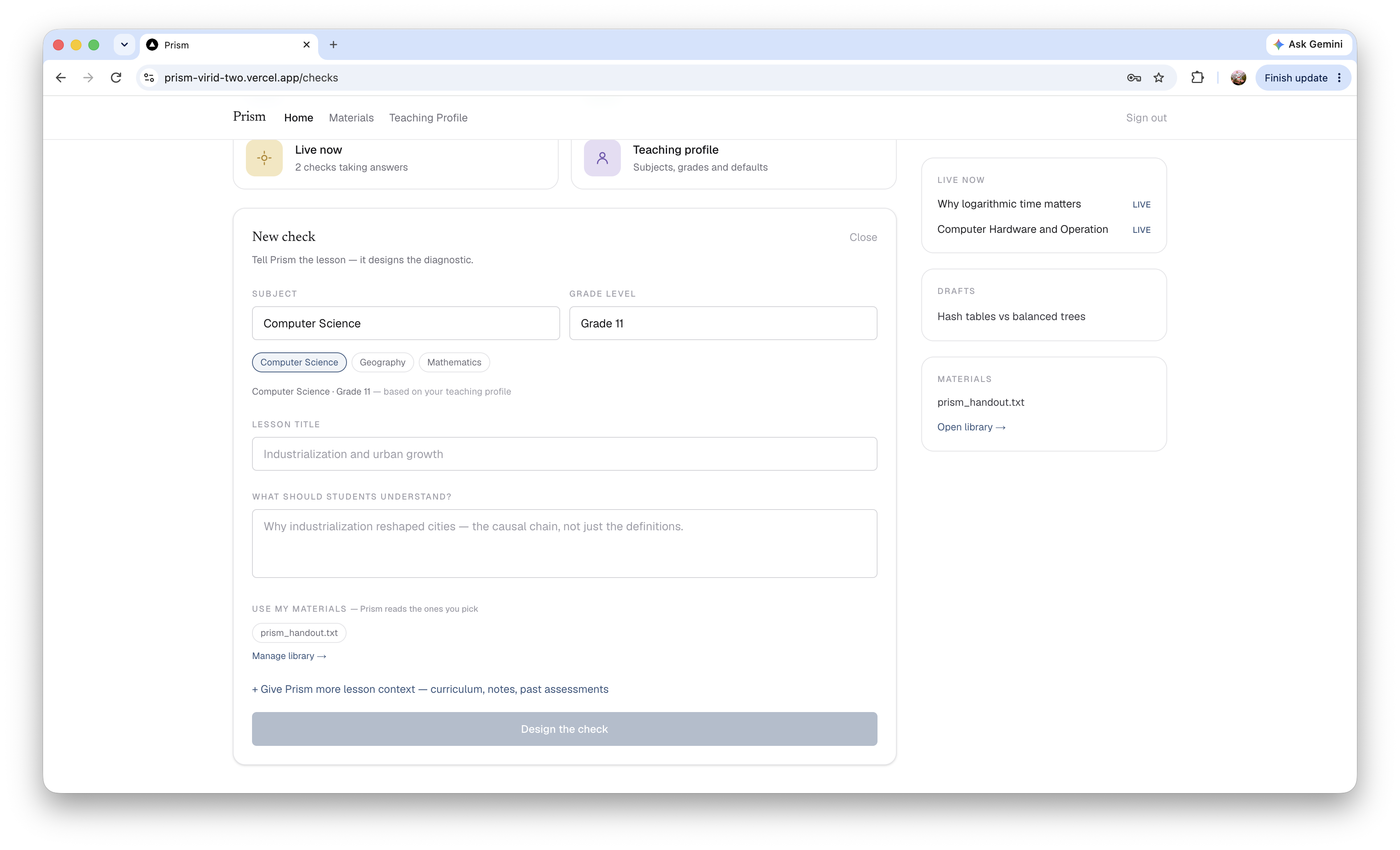
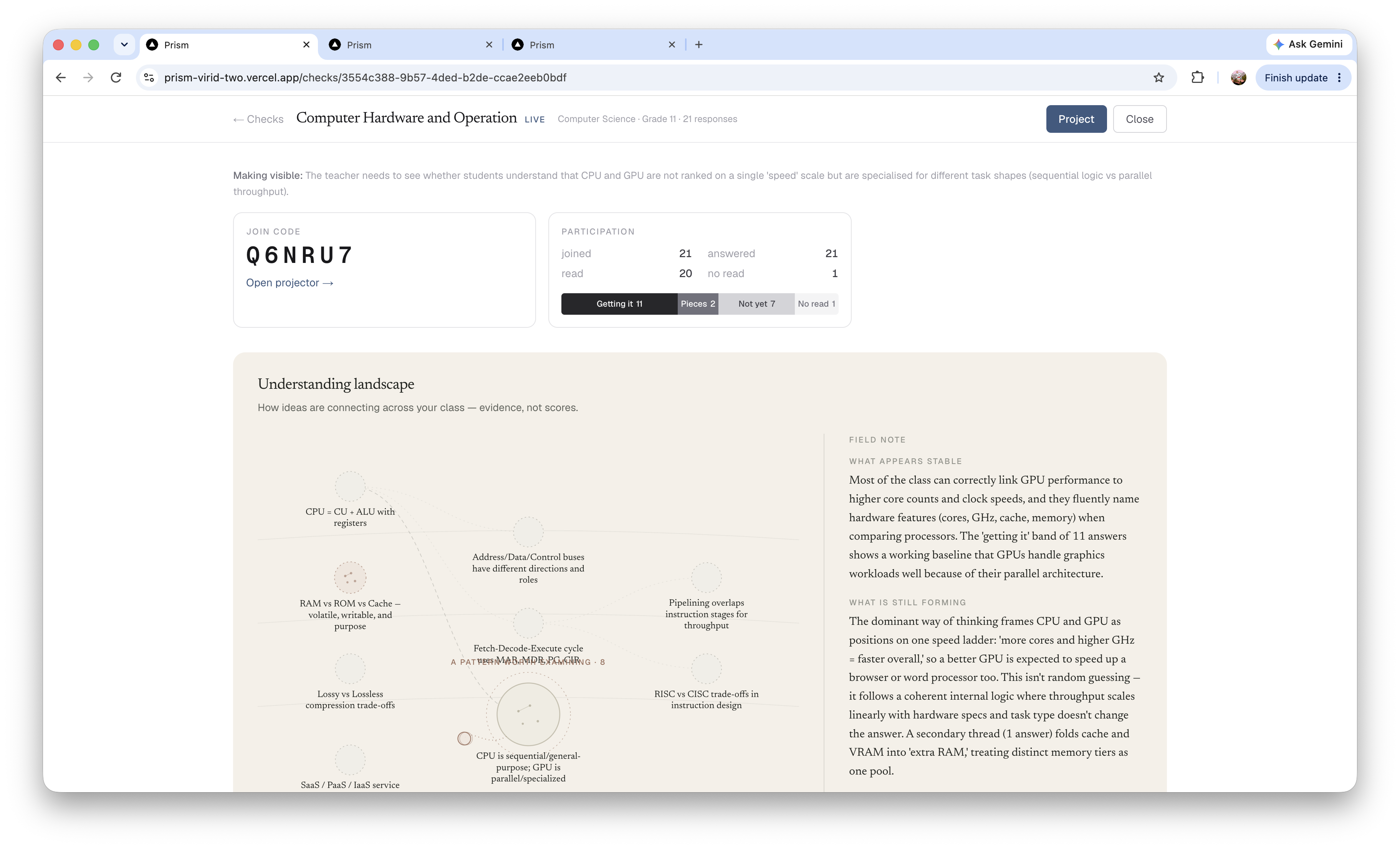
teacher-dashboard
-
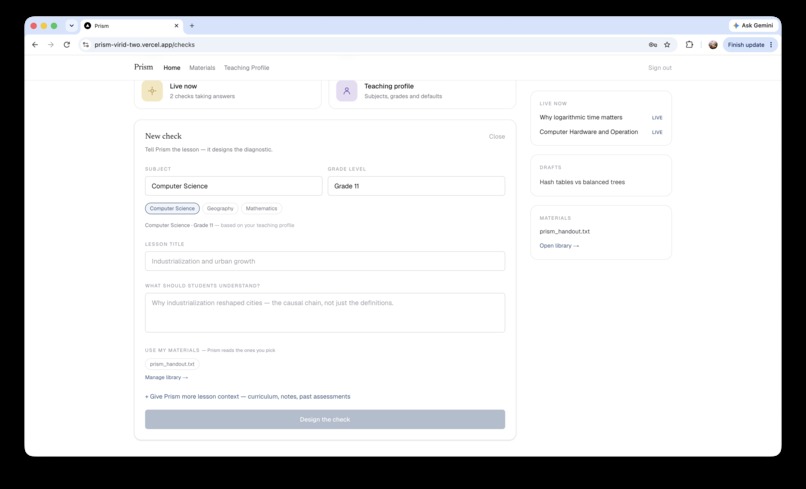
check-launch
-
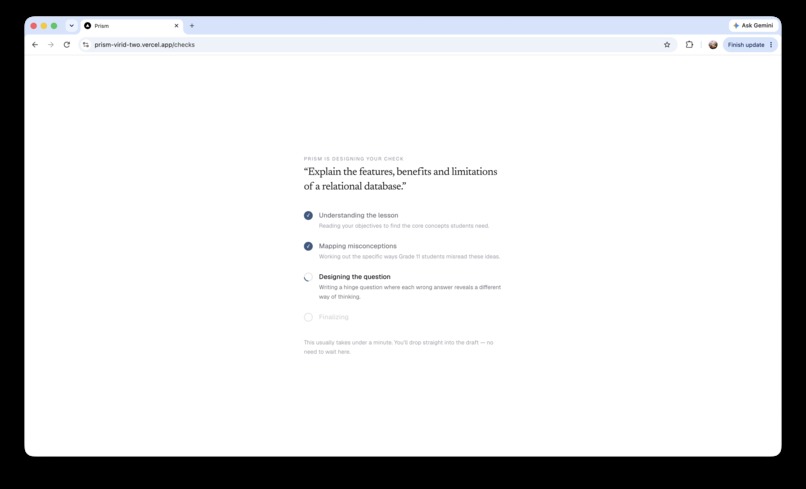
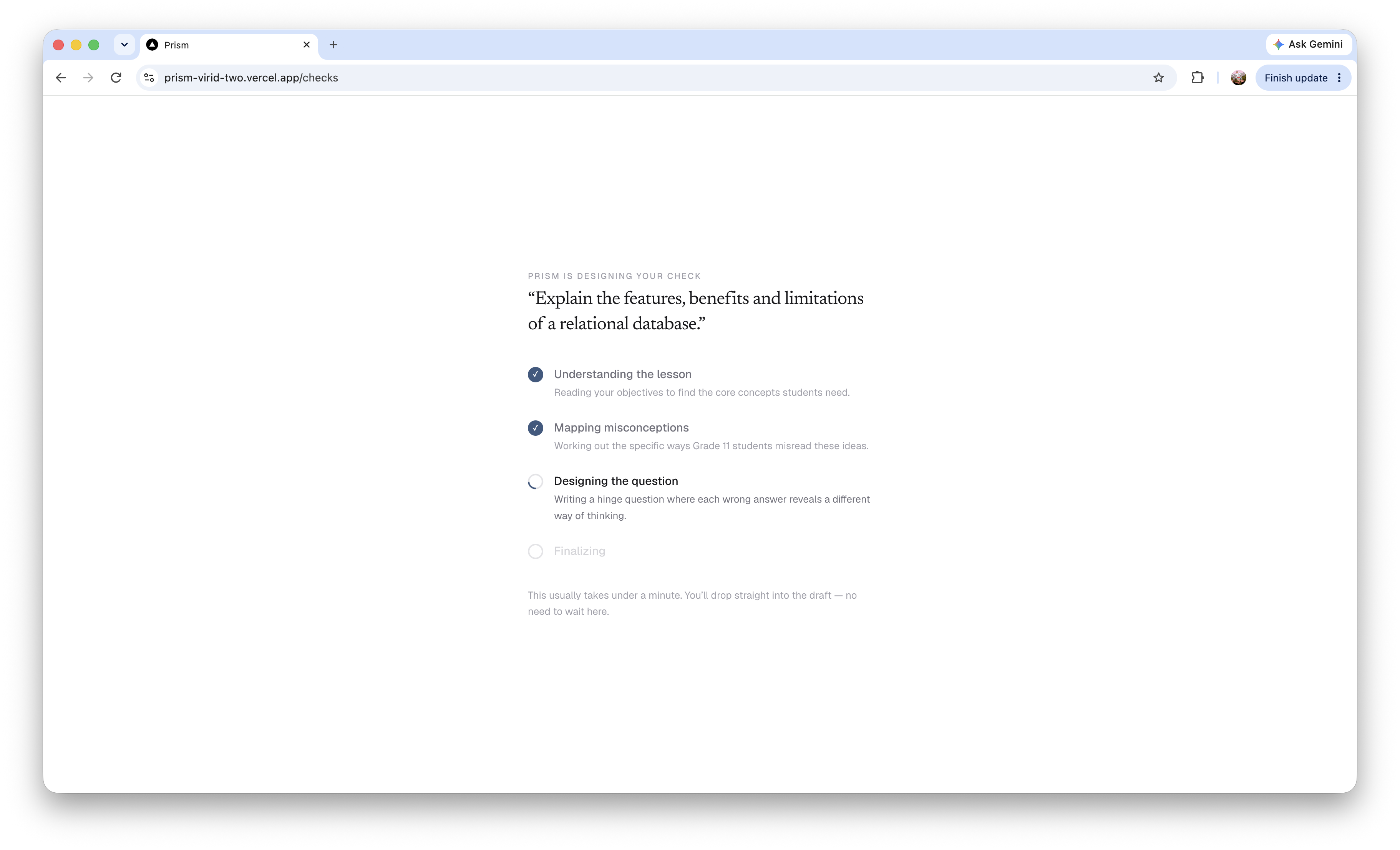
check-designing
-
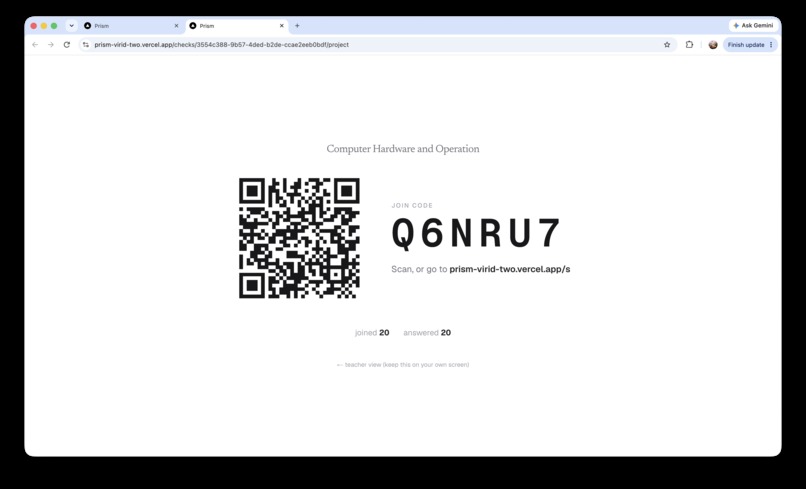
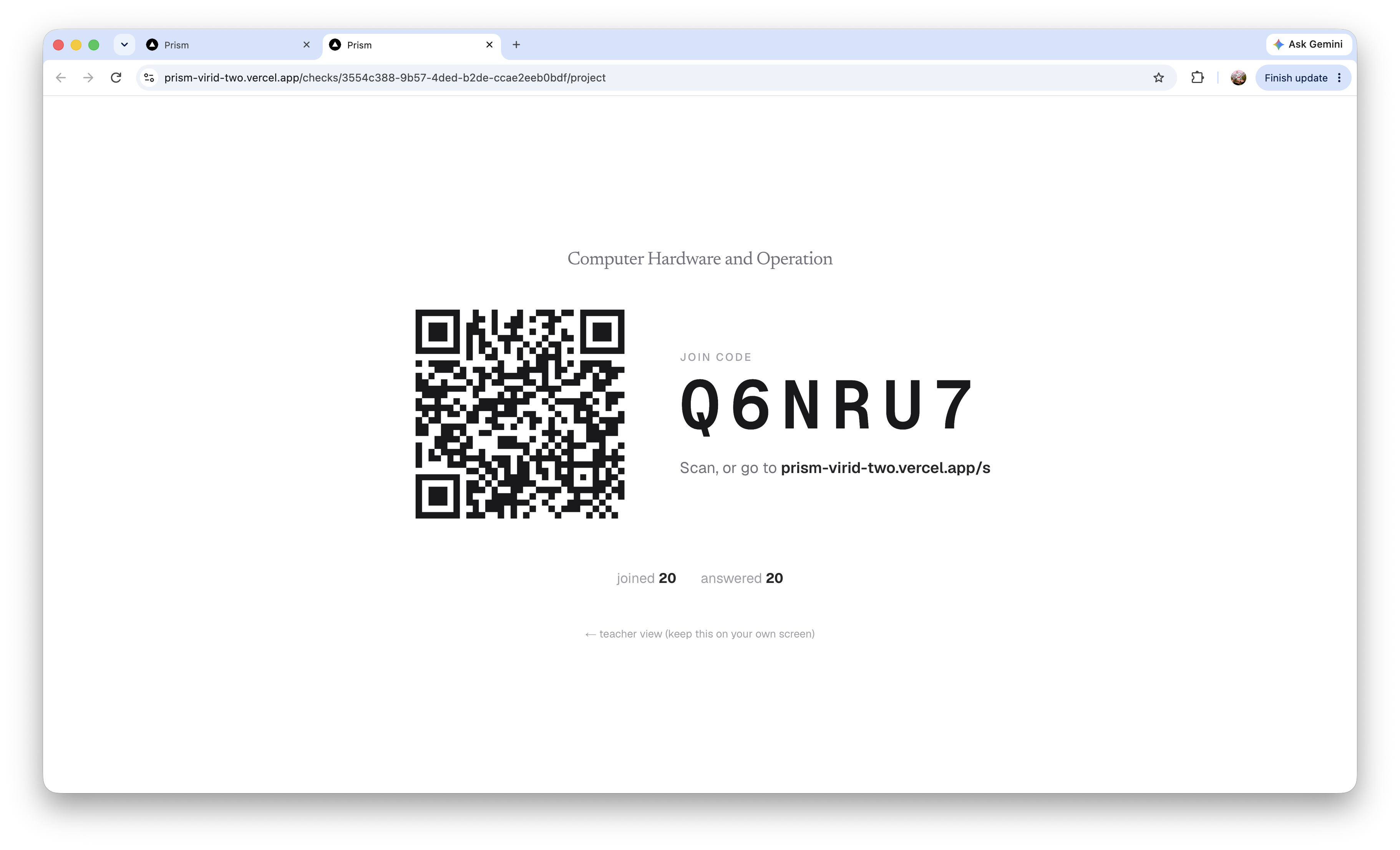
check-project
-
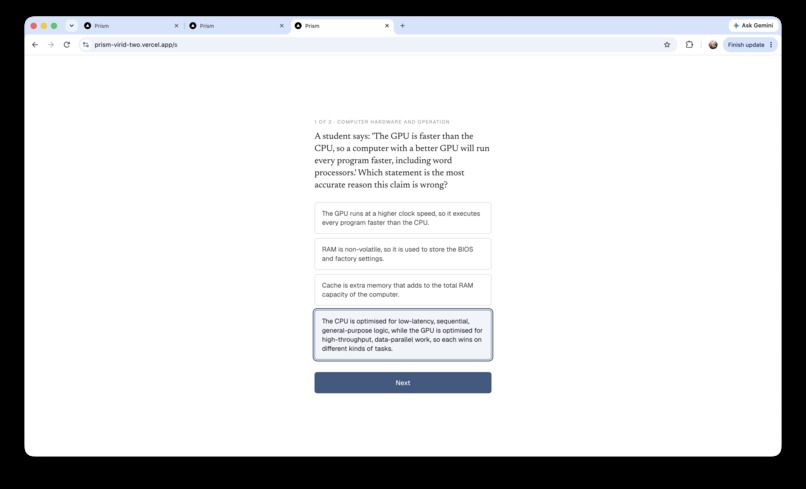
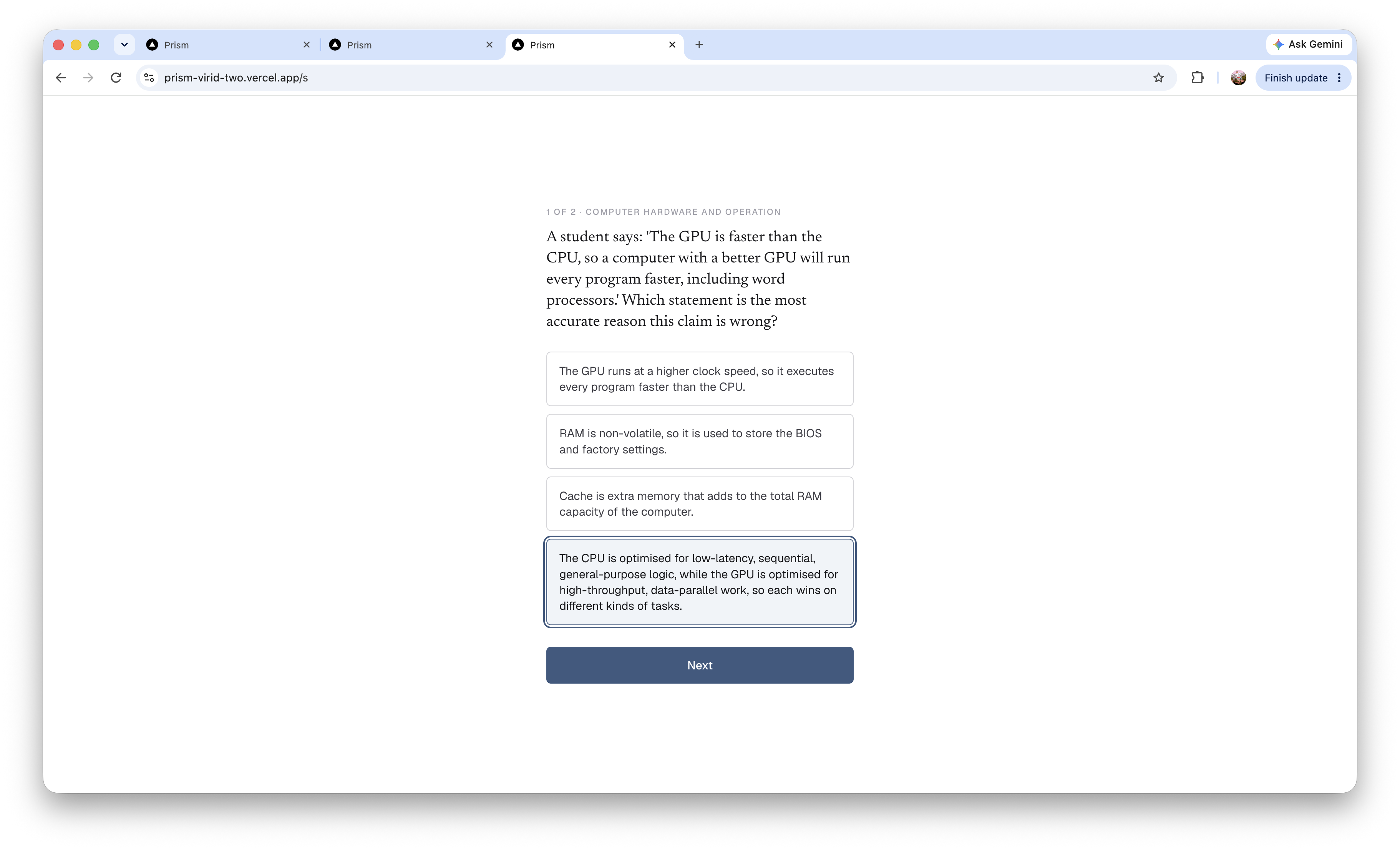
student-answering
-
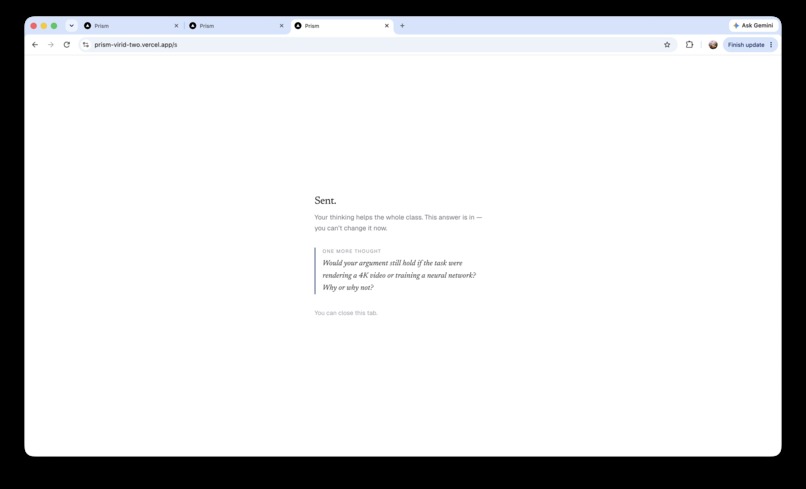
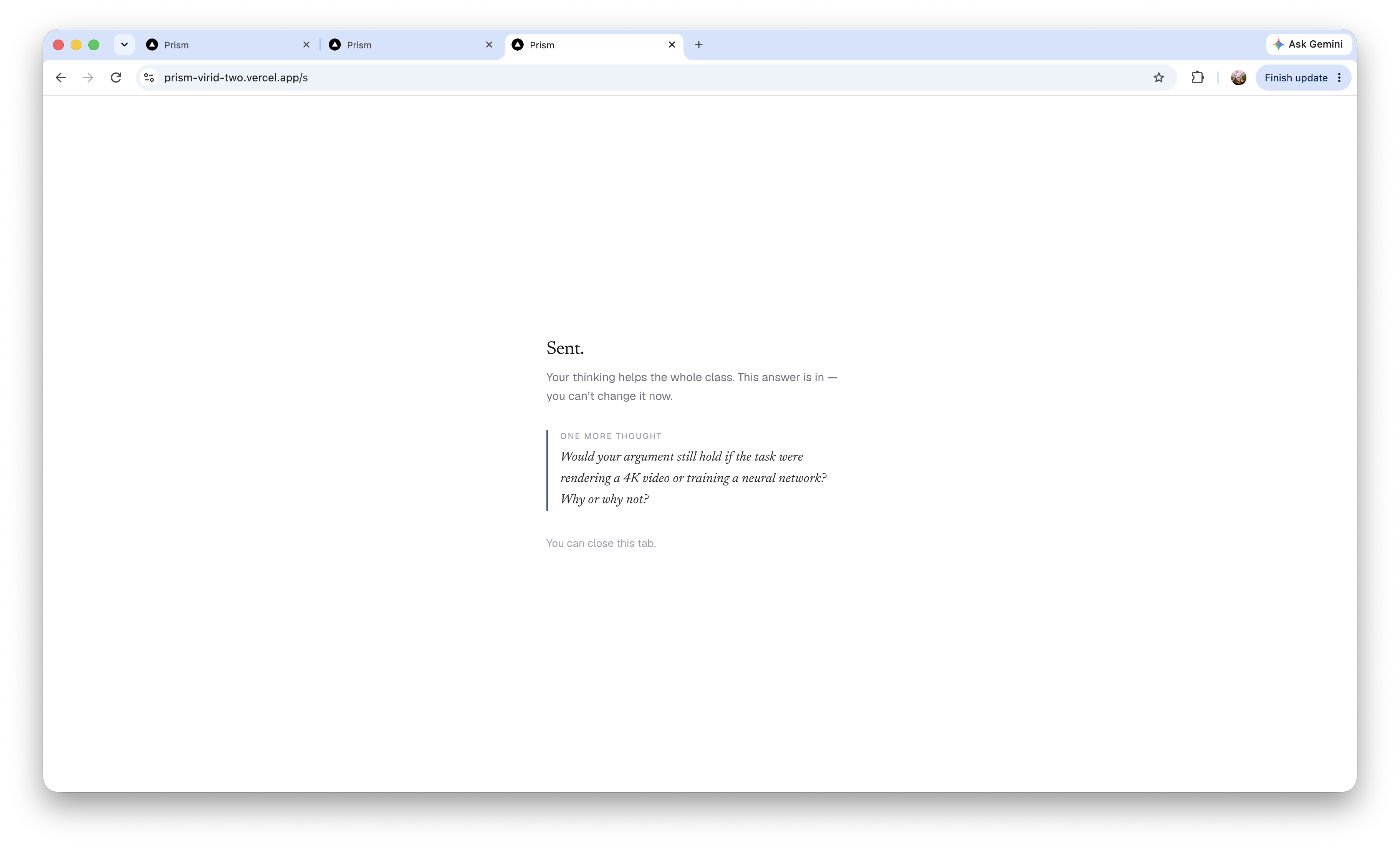
student-sent
-
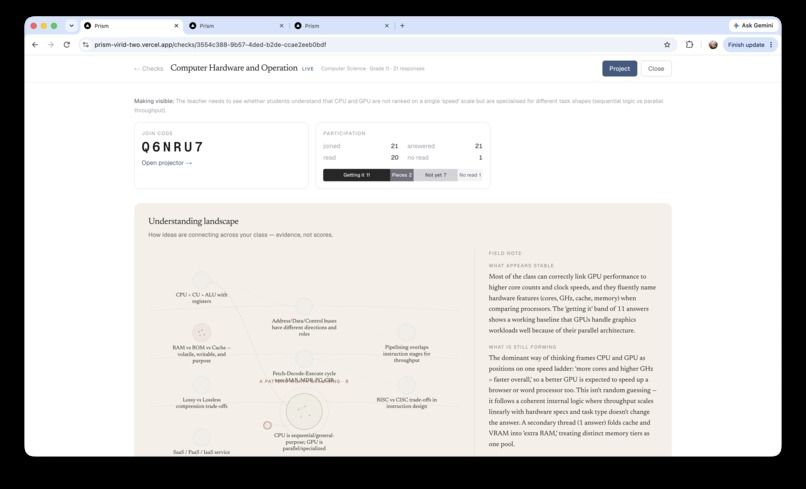
check-update
Inspiration
Every teacher knows the quiet dread of an exit ticket: 30 answers, five minutes before the next class, and the same useless signal every time — a score.
“18 of 30 got it right” tells you how many were wrong. It never tells you how they were thinking.
The moment that started Prism was a fraction question. Ask a class whether ( \frac{4}{5} ) or ( \frac{5}{6} ) is bigger, and a huge number will confidently say:
“They’re equal — both are one piece away from a whole.”
That’s not a careless mistake. It’s a coherent, well-structured wrong idea — the student is reasoning, just from a rule that quietly breaks. A grade throws that reasoning away. A teacher who could see it would know exactly what to do next.
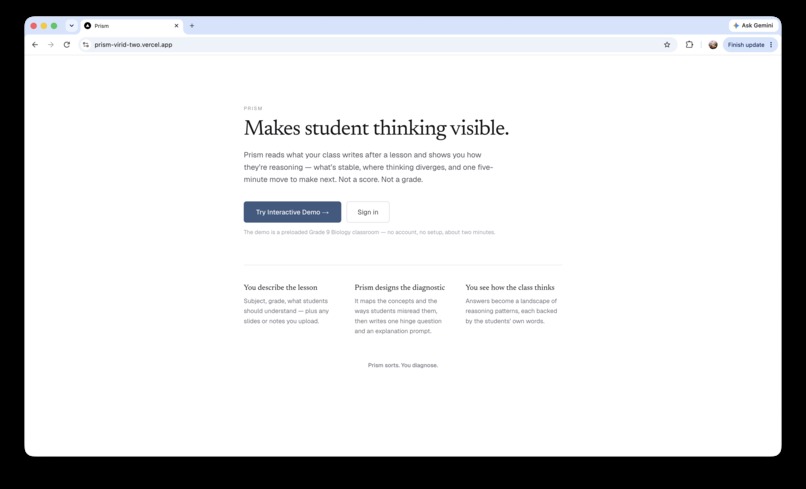
I wanted to build the instrument that makes that thinking visible — not another quiz generator, not an AI grader, but something that answers the question teachers actually ask:
“How is my class thinking right now?”
What It Does
Prism turns a two-minute written answer into a live map of how a class reasons.
The teacher describes the lesson — subject, grade, learning objectives, and optionally curriculum context, pasted slides/notes, and what a previous assessment revealed.
An Assessment Design Agent reasons about the lesson before writing anything. It works out:
- the core concepts;
- the specific ways real students in that grade misunderstand them, classified into seven pedagogical archetypes;
- a single hinge question;
- a “convince a skeptic” explanation prompt where each wrong answer reveals a different way of thinking.
- Students join by QR code or a six-letter code. They:
- answer the multiple-choice hinge question;
- write 2–4 sentences of reasoning;
- indicate how sure they are;
- optionally answer: “What made you think this?”
- An analysis engine reads every explanation — not for correctness, but for structure. It:
- charitably parses answers across typos, slang, and other languages;
- extracts verbatim claims;
- rates the depth of reasoning;
- matches reasoning against the lesson’s misconception set;
- abstains when the evidence is genuinely ambiguous.
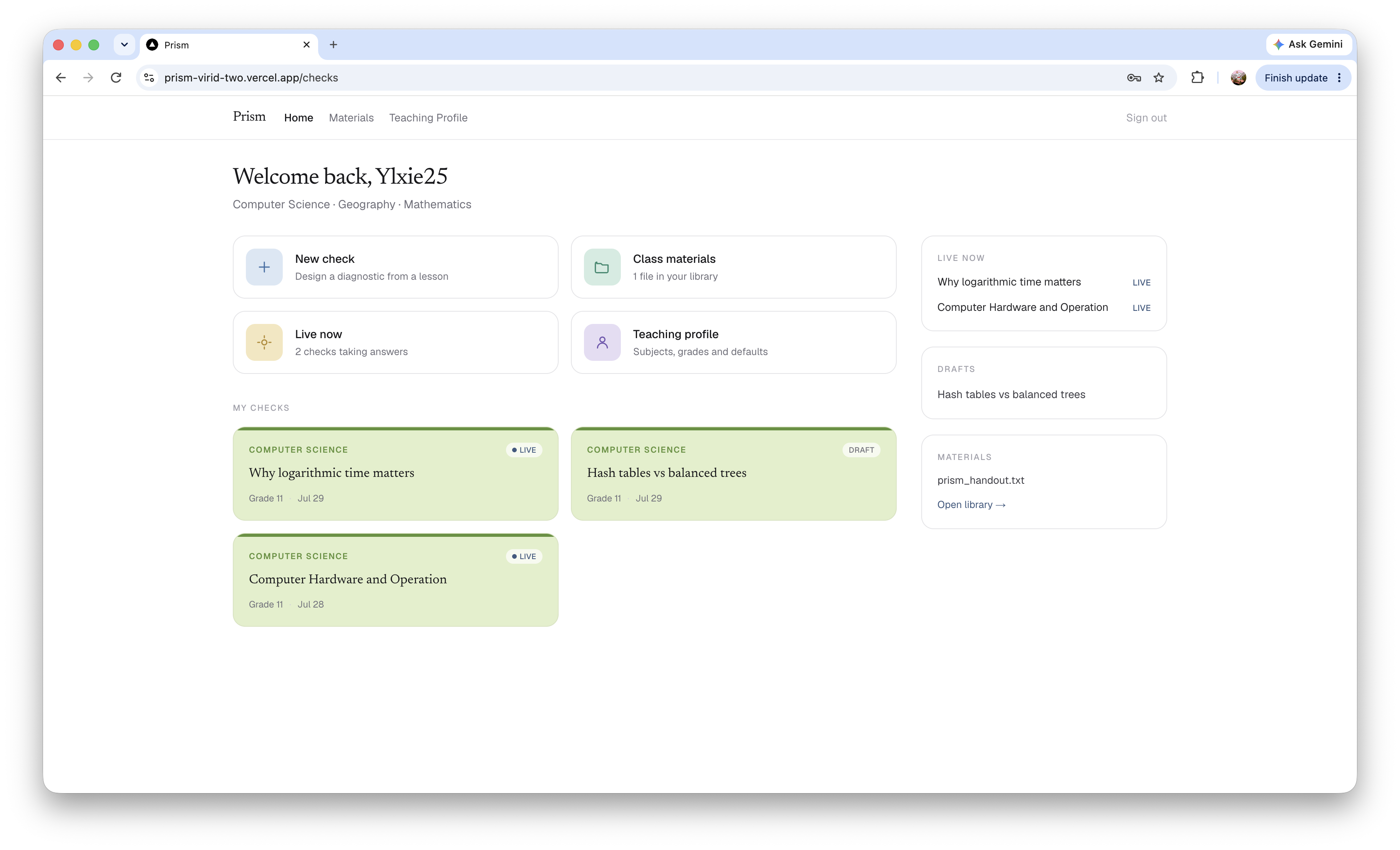
- The teacher dashboard becomes an observatory, featuring:
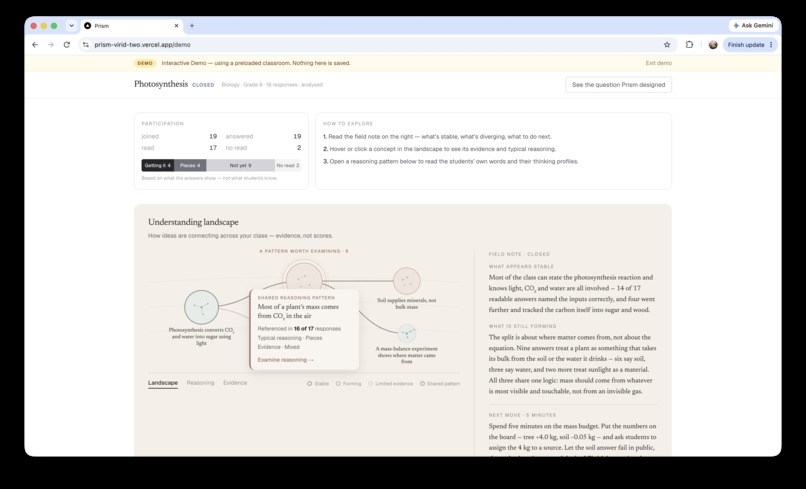
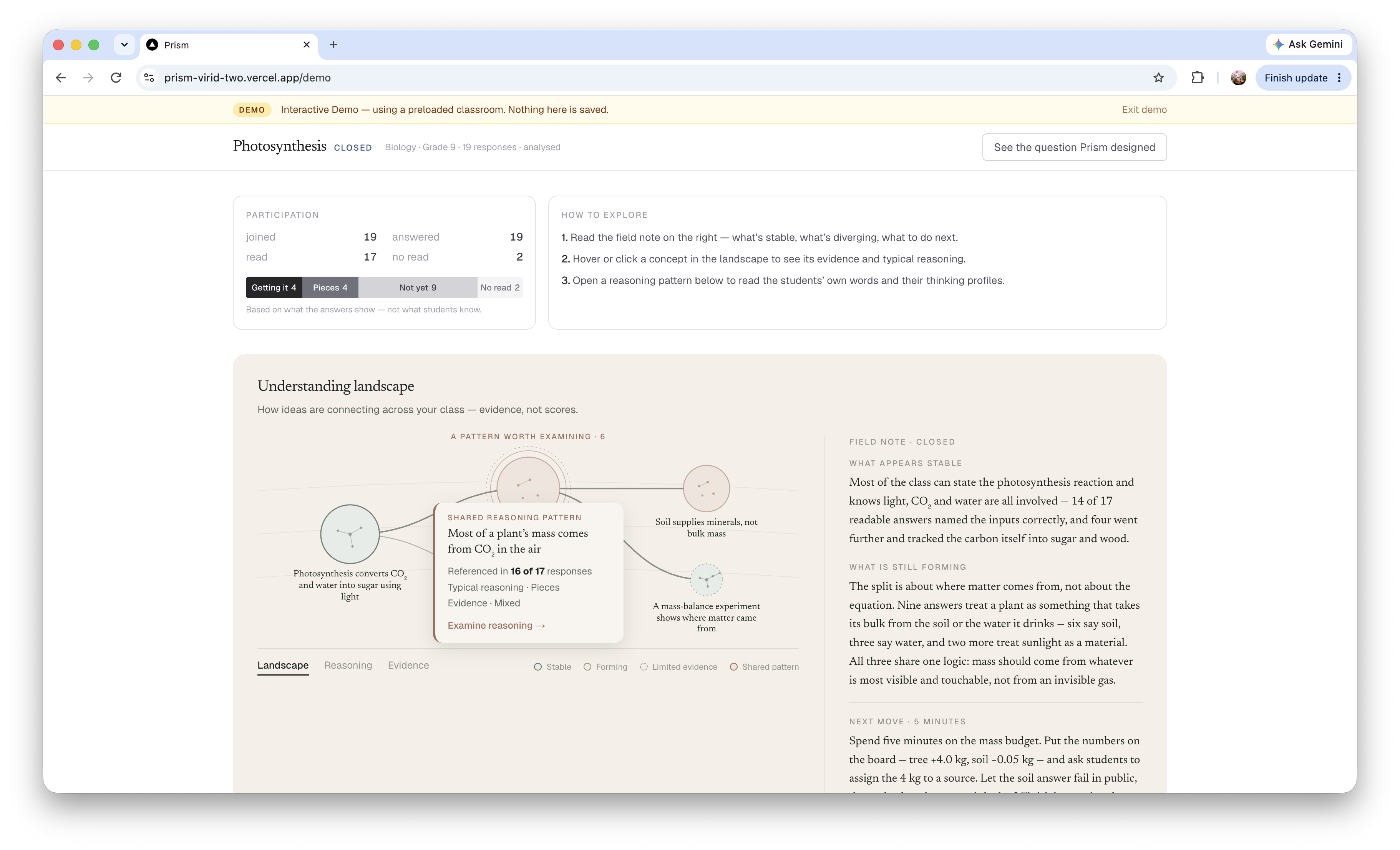
- Learning Landscape — a constellation of the lesson’s concepts, glowing according to how the class understands each one;
- Teacher Insight — three grounded paragraphs:
- What does my class understand?
- What is confusing them?
- What should I do next?
- a concrete five-minute teaching move;
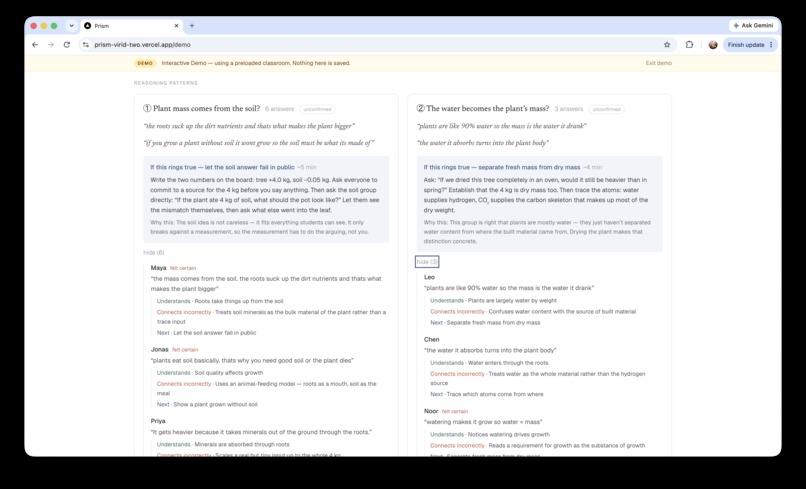
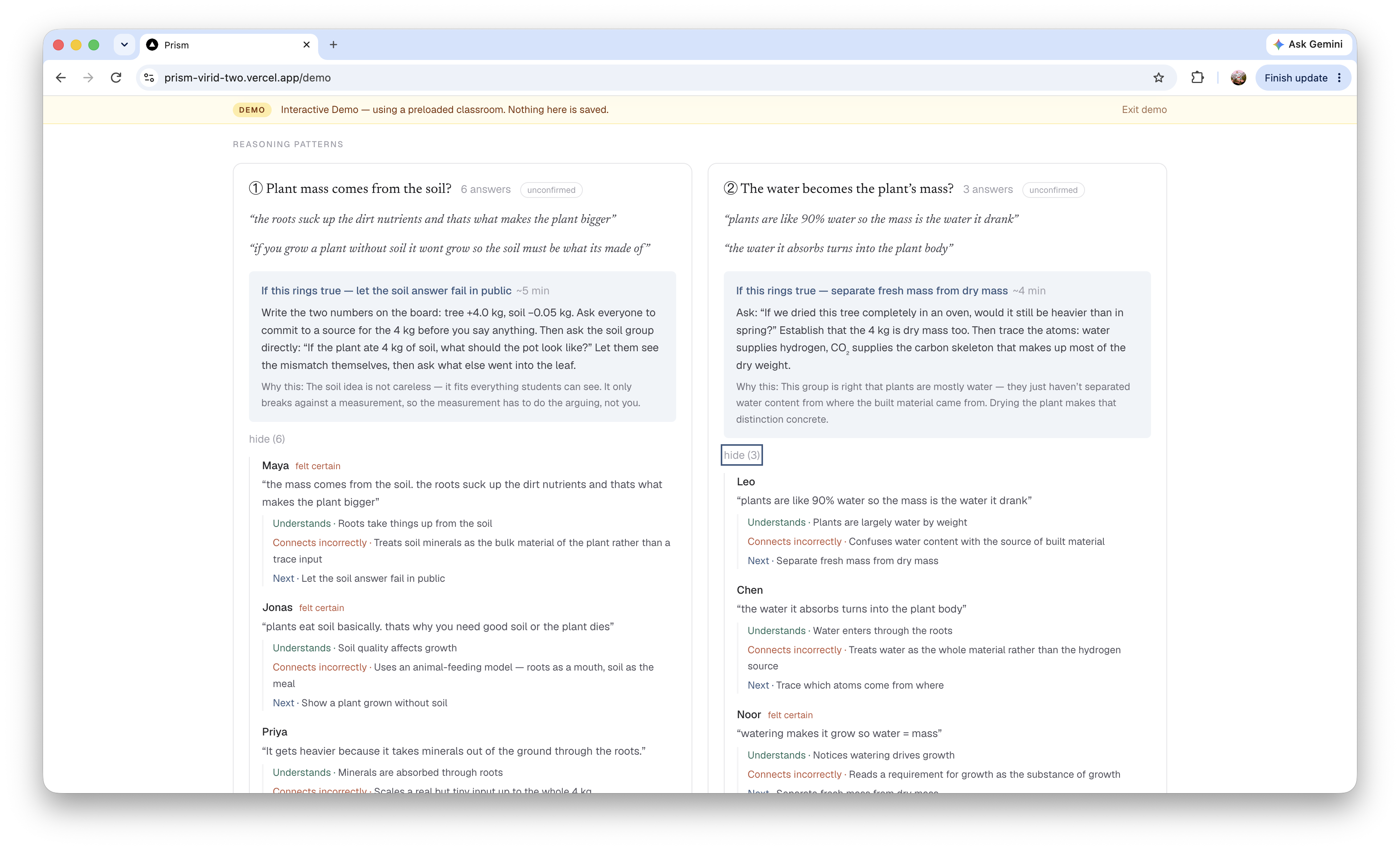
- reasoning-pattern clusters, each containing:
- students’ own words;
- a per-student thinking profile:
- understands X;
- connects Y incorrectly;
- recommended next step.
The guiding principle appears at the bottom of every dashboard:
“Prism sorts. You diagnose.”
Prism never claims to know a student’s mind. It surfaces patterns with the evidence attached and leaves the judgment to the teacher.
How We Built It
Frontend & App
- Next.js 16
- App Router
after()for background analysis
- React 19
- Tailwind CSS v4
- Deployed on Vercel
Data & Authentication
- Supabase
- PostgreSQL
- Authentication
- Row-Level Security (RLS)
Teachers receive owner-scoped isolation through RLS:
owner_id = auth.uid()
Built With
- anthropic-sdk
- llm
- minimax-m3
- next.js
- node.js
- postgresql
- react
- row-level-security
- supabase
- svg
- tailwindcss
- typescript
- vercel
- vitest
- zod

