Inspiration
Prism was inspired by a family friend who struggled to market his business. He knew his products, but creating posters and figuring out what to post wasn’t something he knew how to do.
That made me think about small café owners who put so much effort into their business but don’t have the time, design skills, or budget for a creative agency. I built Prism to help bridge that gap.
What it does
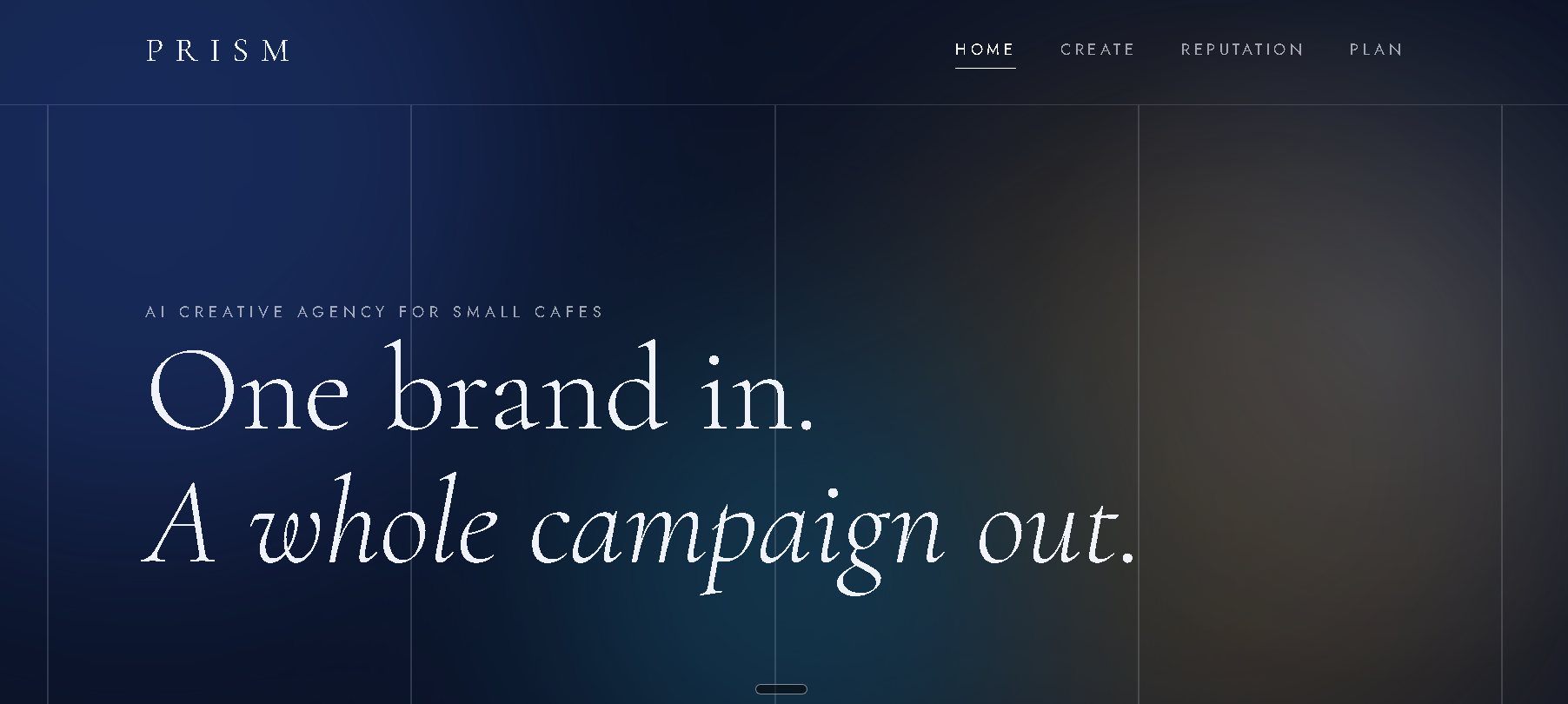
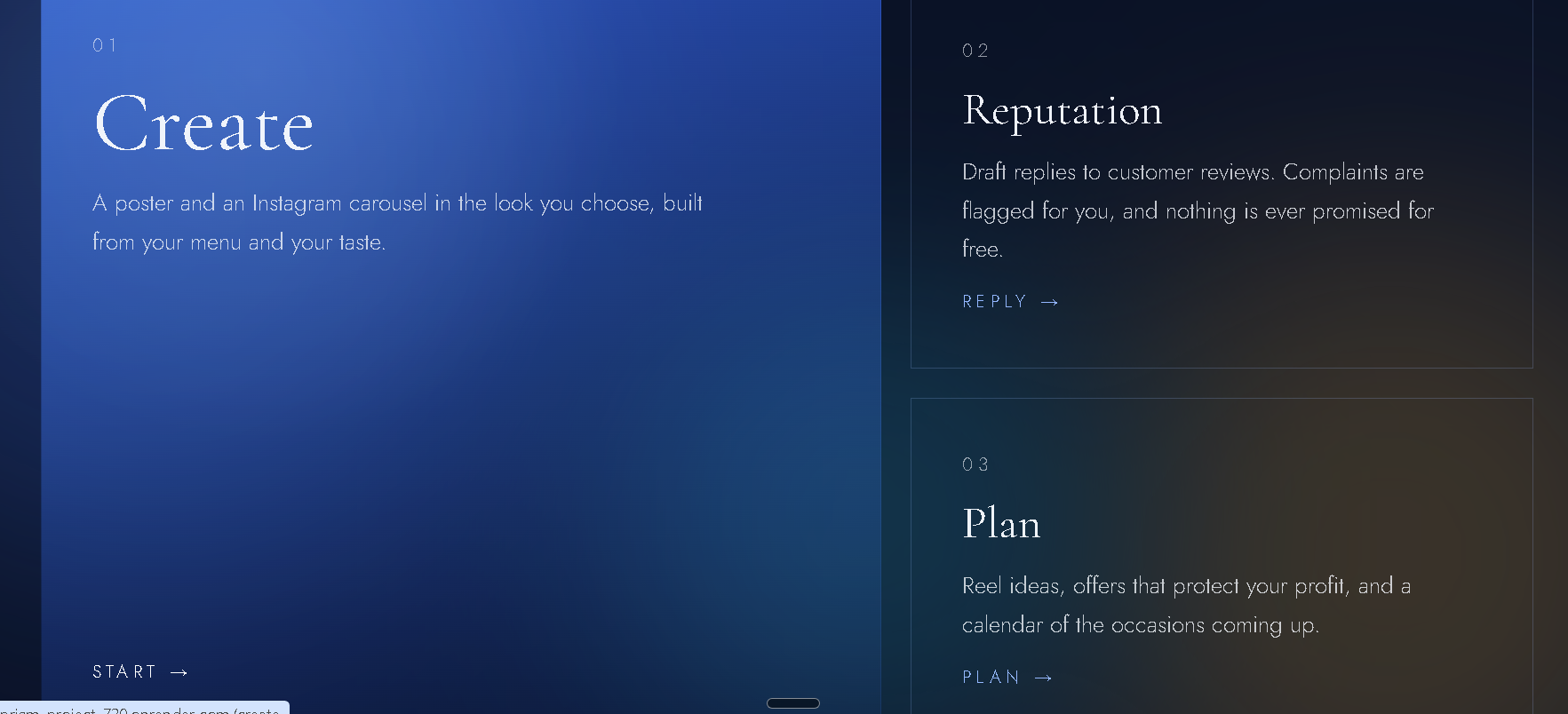
Prism turns a café’s menu, brand details, and visual preferences into marketing content through three workspaces:
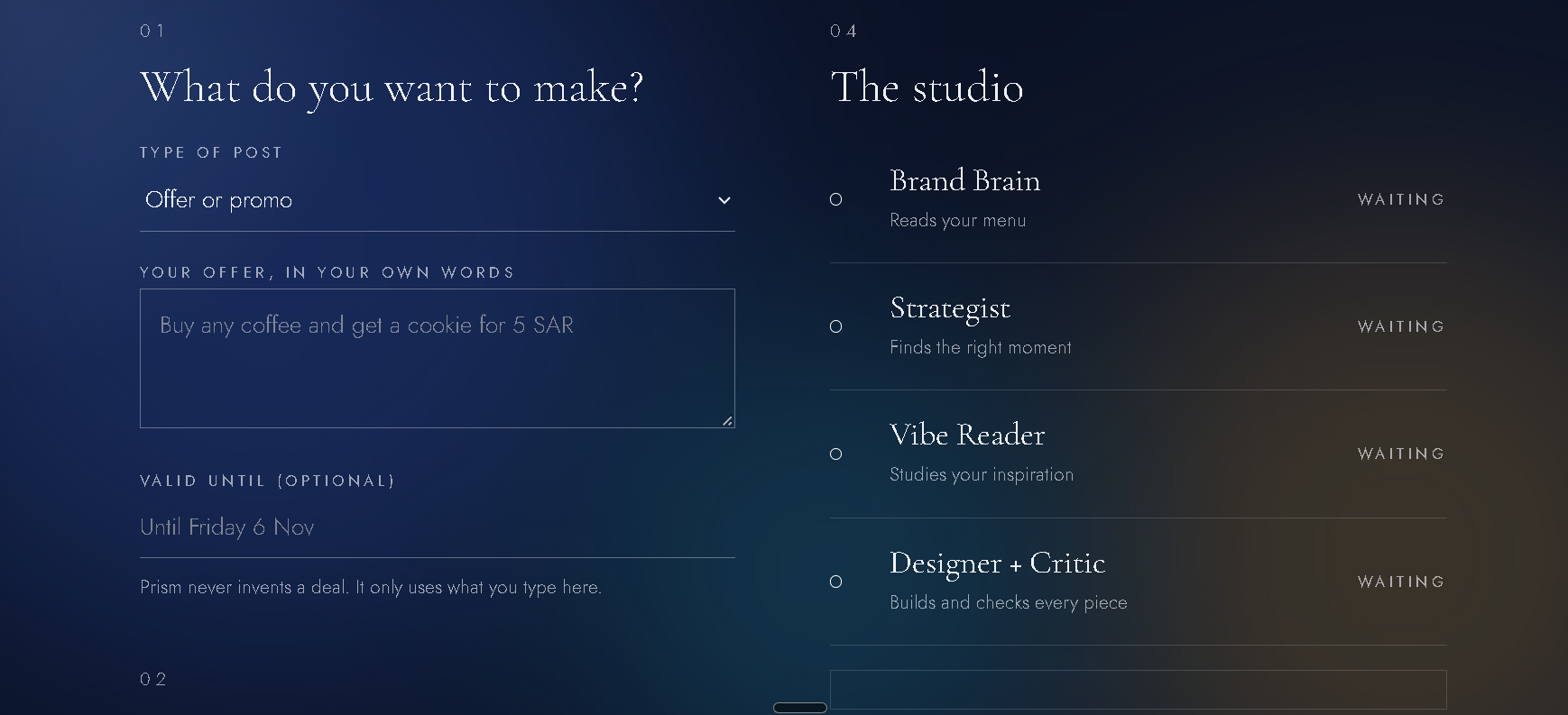
- Create: Produces posters and Instagram carousels for promotions, new items, and occasions.
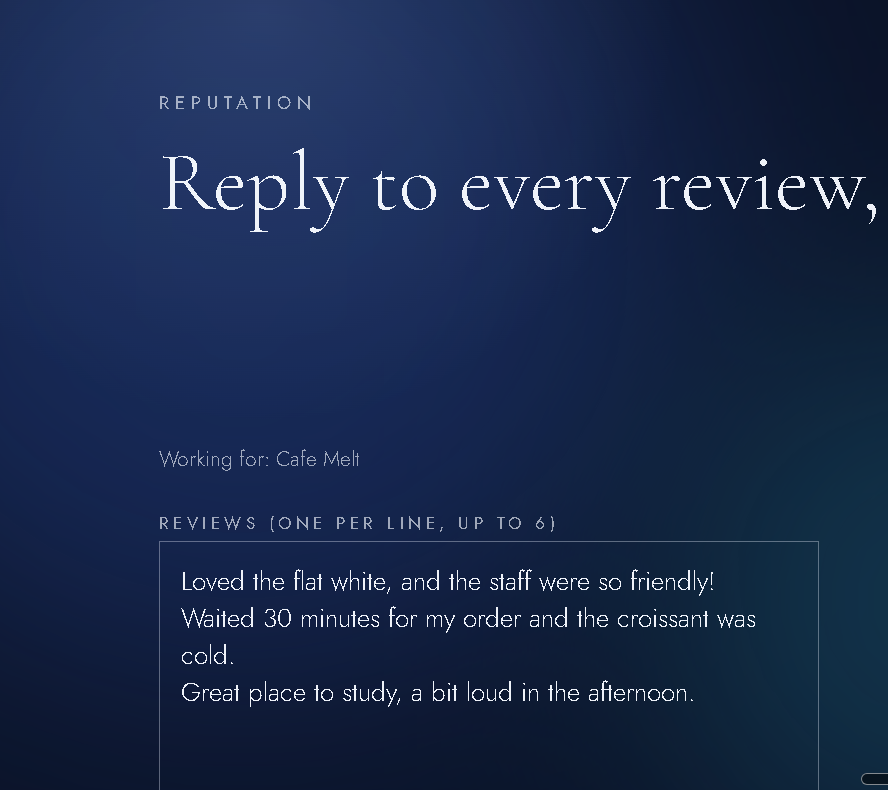
- Reputation: Drafts English and Arabic review replies, with owner approval before posting.
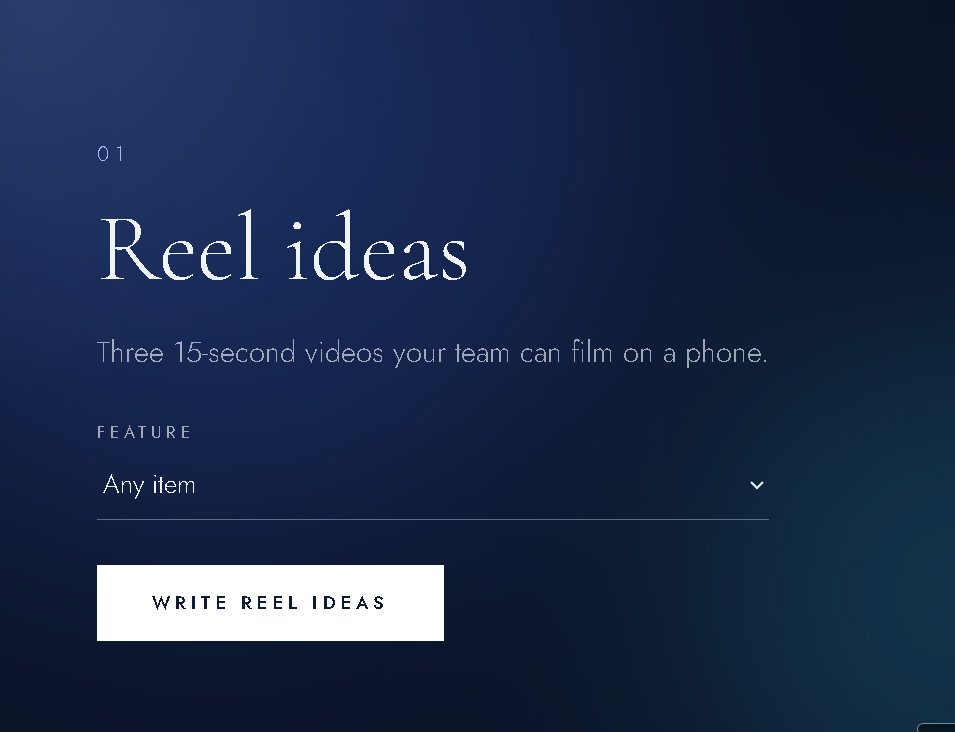
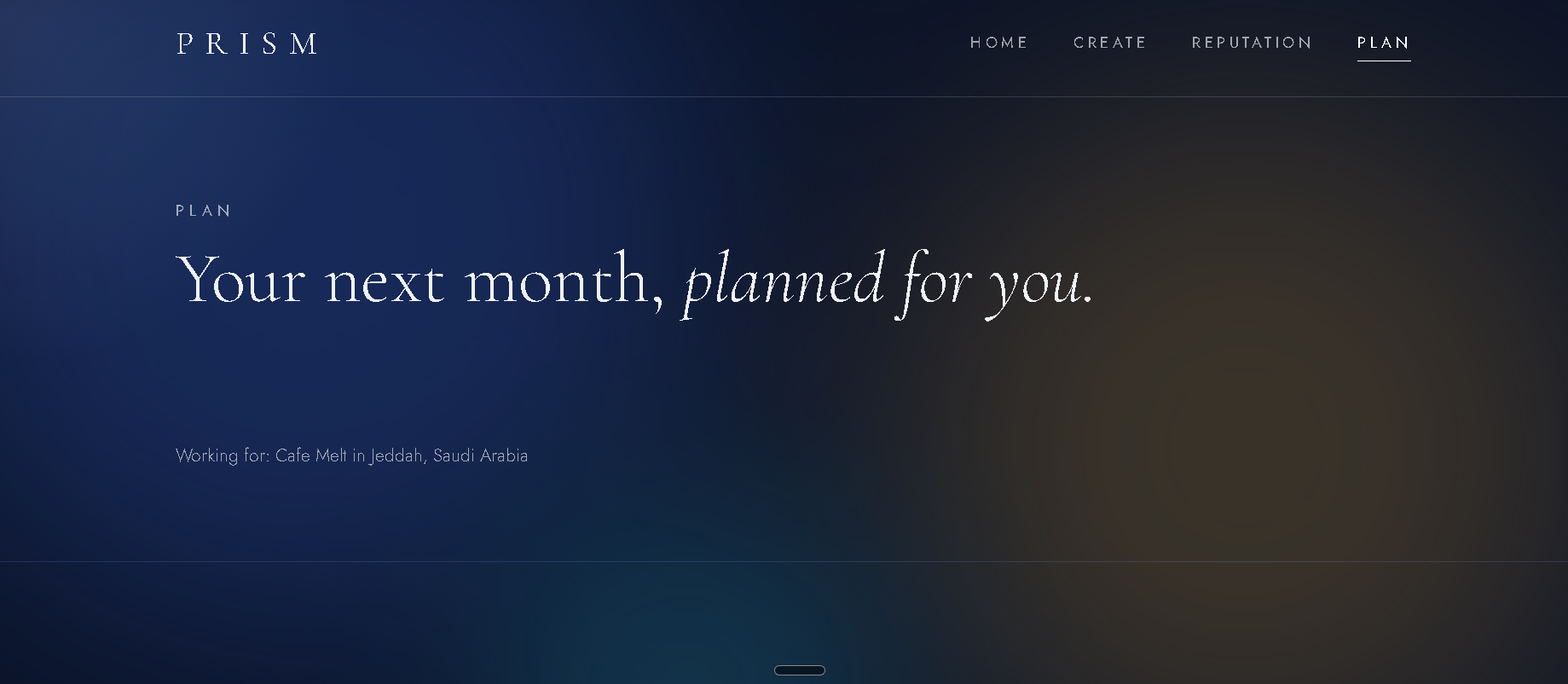
- Plan: Helps with reel ideas, profit-conscious offers, Saudi occasions, and sourced competitor research.
The focus is creative content grounded in the café’s actual menu and owner-approved offers.
How I built it
I built Prism with HTML, CSS, JavaScript, and a Node.js backend, using NVIDIA Nemotron for AI tasks and Tavily for research. The code is hosted on GitLab, and the app is deployed on Render.
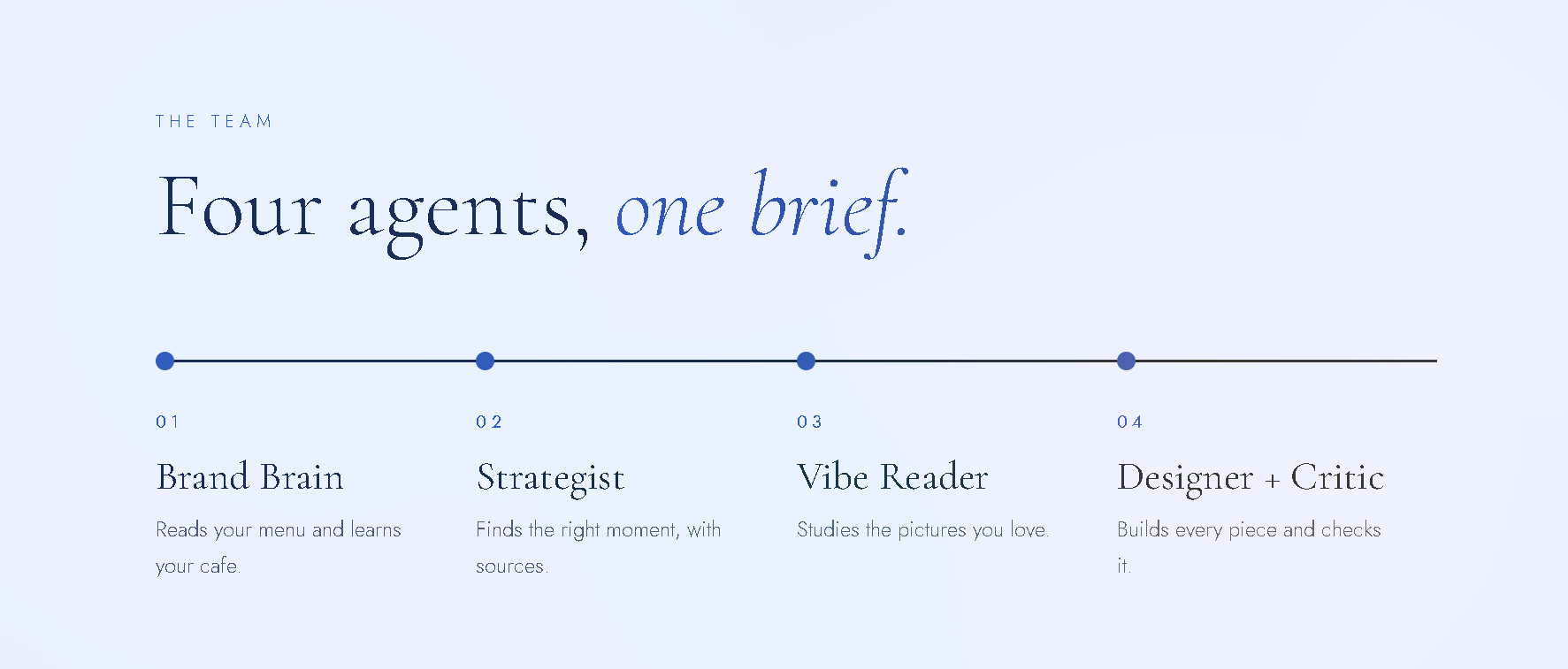
The campaign workflow has four stages: Brand Brain, Strategist, Vibe Reader, and Designer + Critic. Together, they interpret the café brief, research context, understand visual preferences, and create and check campaign materials.
Challenges I ran into
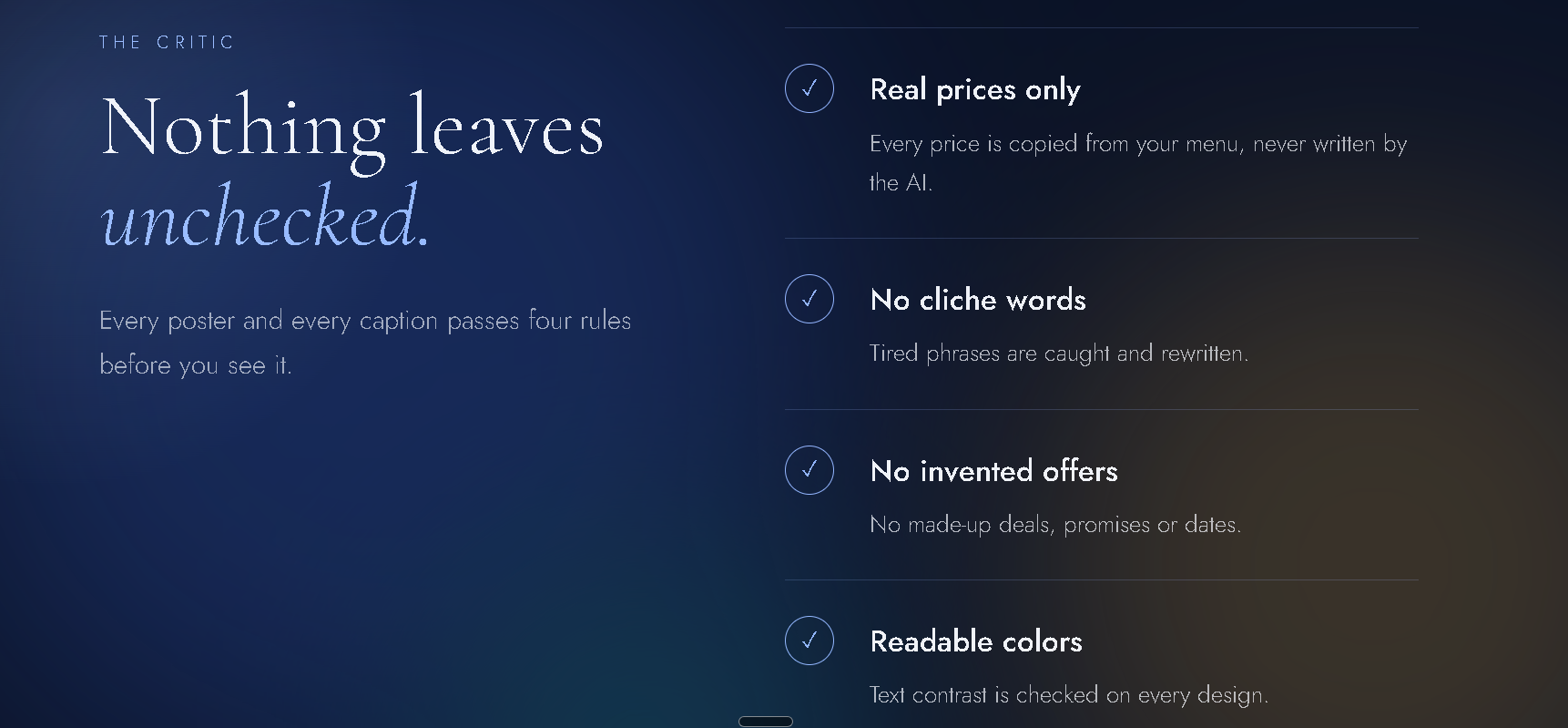
The biggest design challenge was balancing creativity with accuracy. An attractive poster is not useful if it invents a price or promises an unauthorized discount. That shaped Prism’s menu-based inputs and review checks.
Deployment was another challenge. My local code and Render initially pointed to different GitLab repositories. Resolving authentication and repository configuration taught me to trace problems through deployment settings and logs.
Accomplishments that I’m proud of
I’m proud of turning a real problem I had seen into a deployed project with a clear audience. Prism brings campaign creation, bilingual review replies, and marketing planning into one café-focused experience.
What I learned
I learned that useful AI products need more than good prompts. They need clear inputs, practical constraints, and human control. I also gained experience connecting AI services, building a complete web application, and troubleshooting deployment.
What’s next for Prism
I want to test Prism with café owners, improve design consistency and Arabic-language support, and make café brand details reusable across all three workspaces.
