-
-
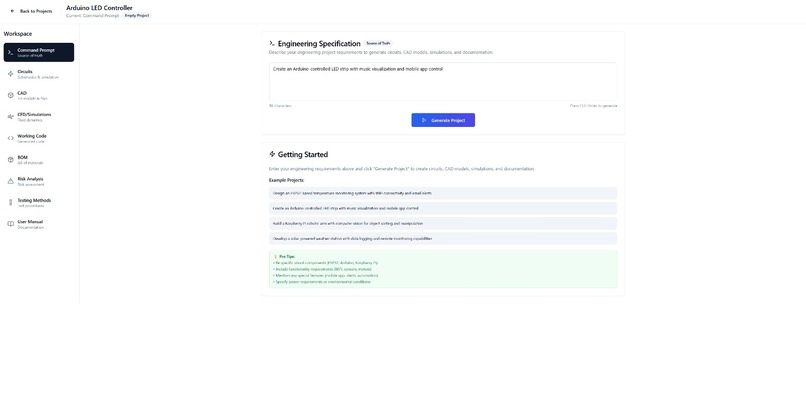
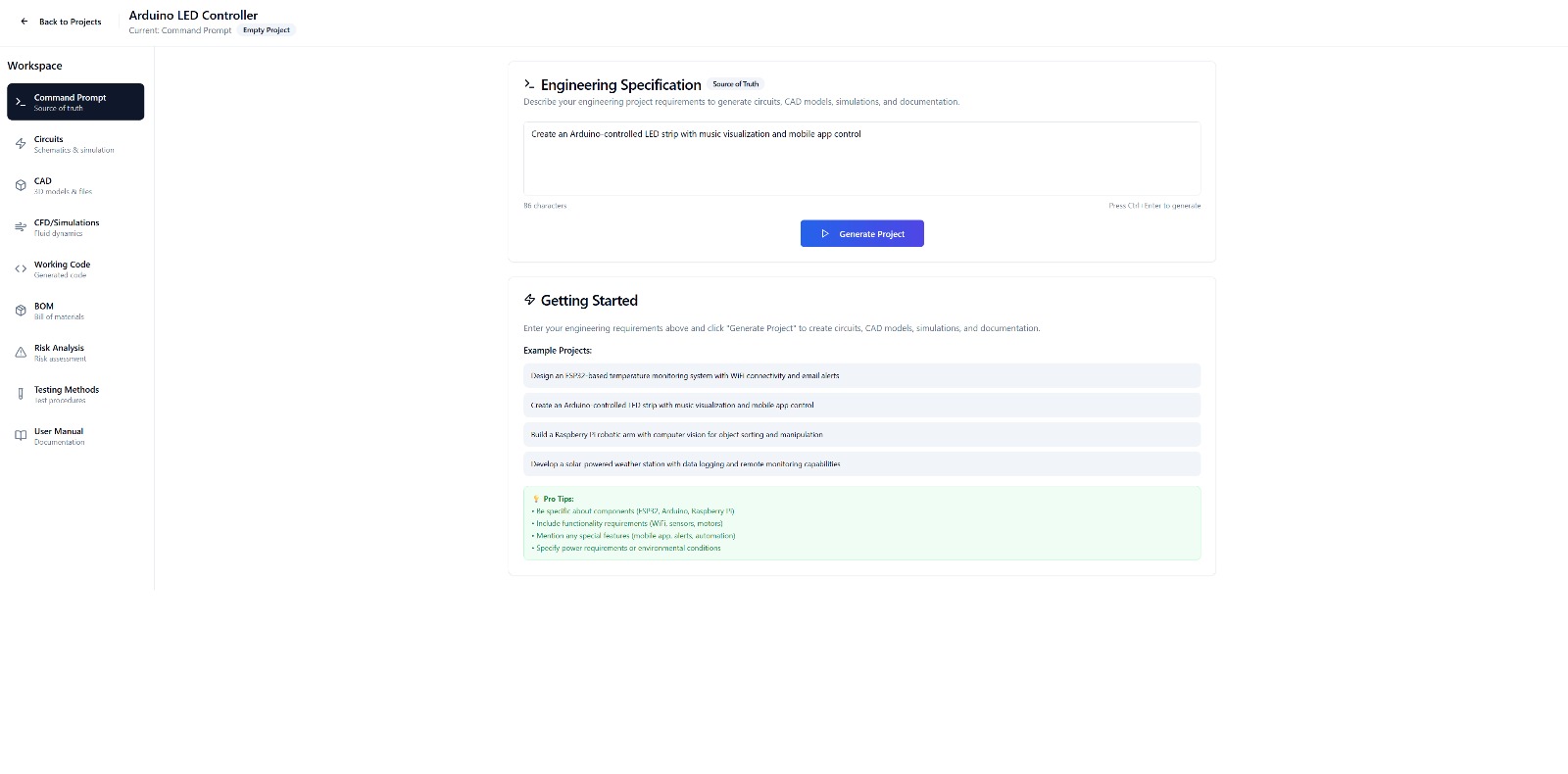
Command Window
-
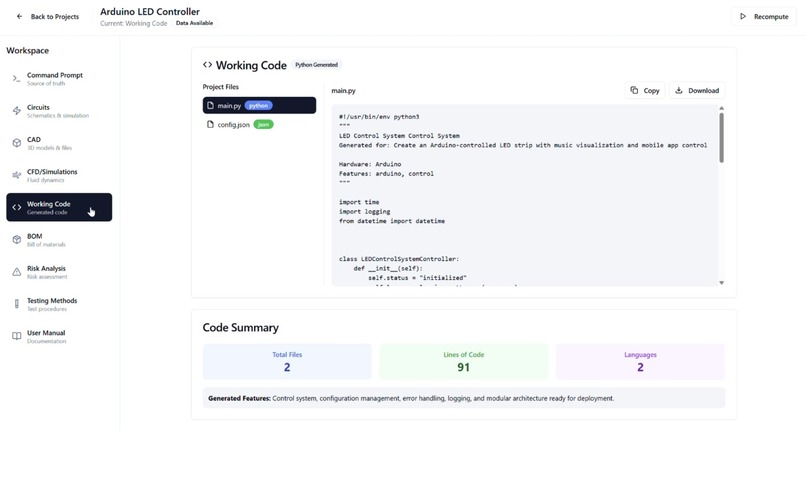
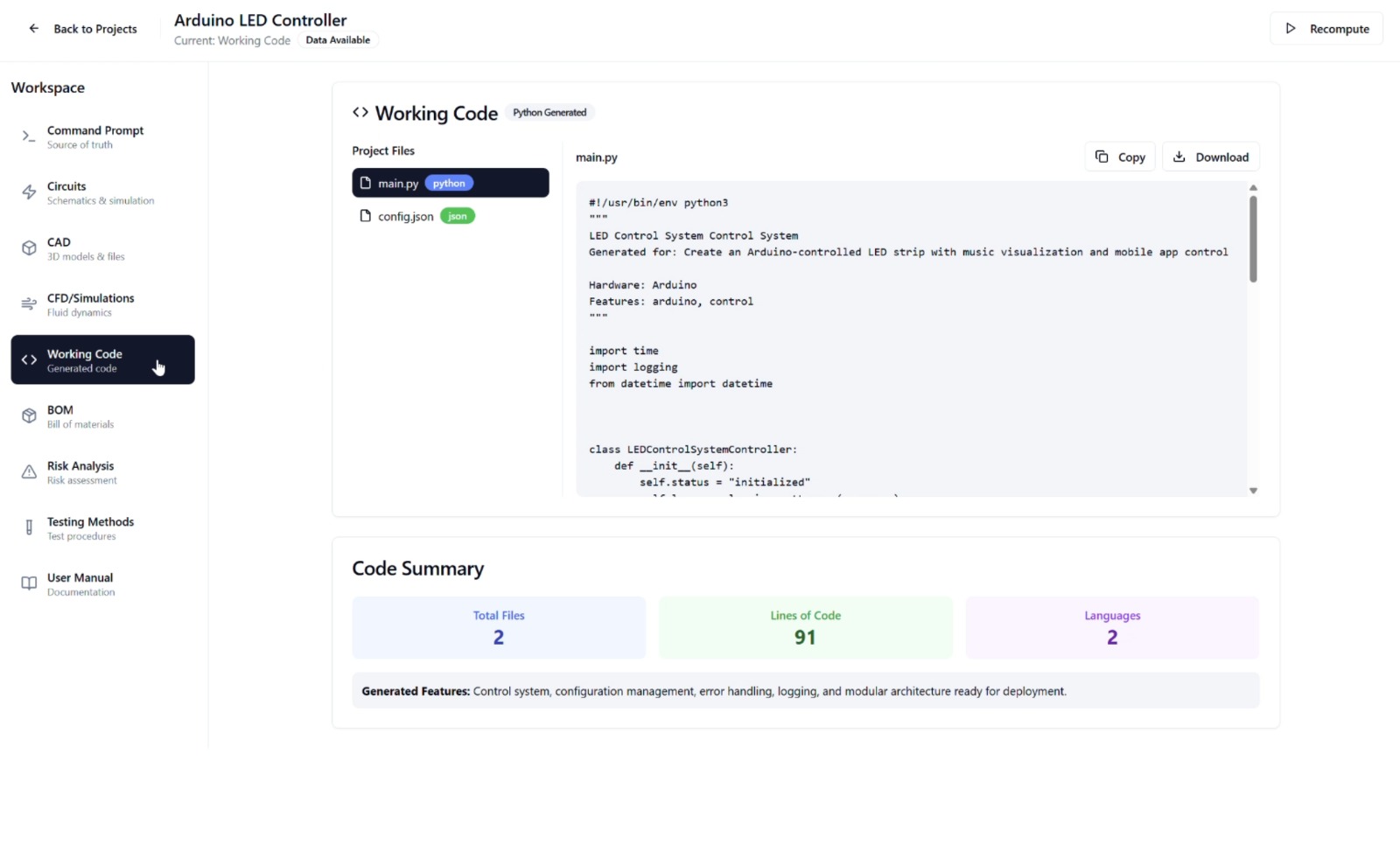
Code Section
-
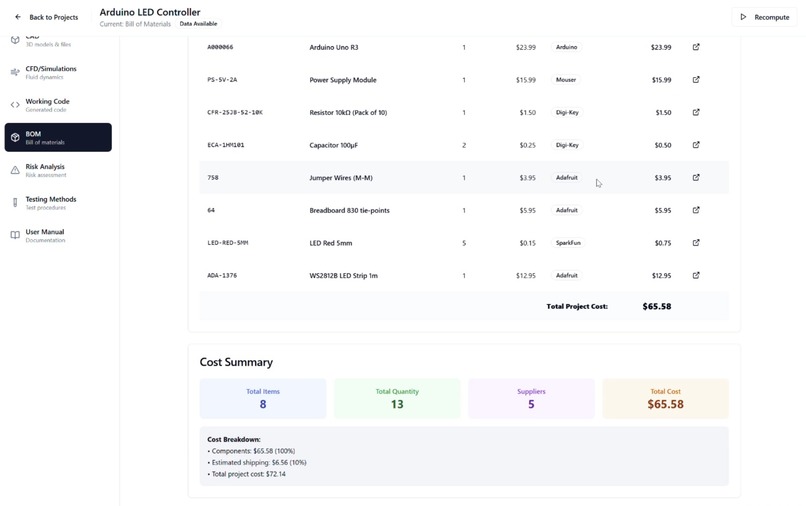
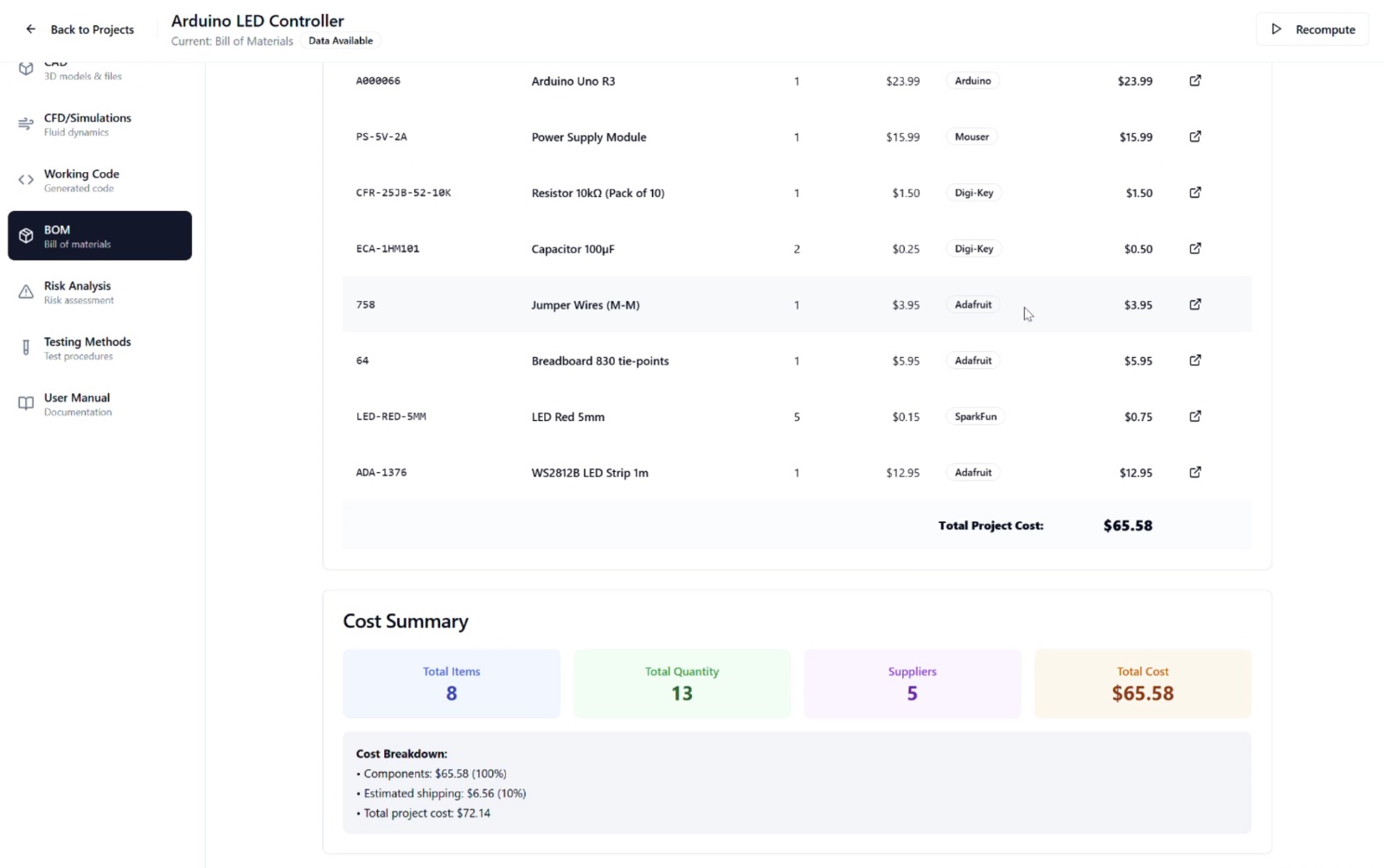
BOM
-
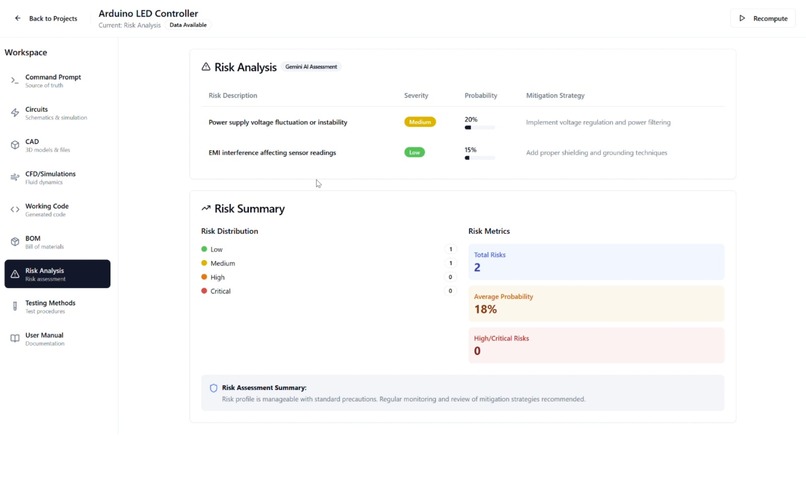
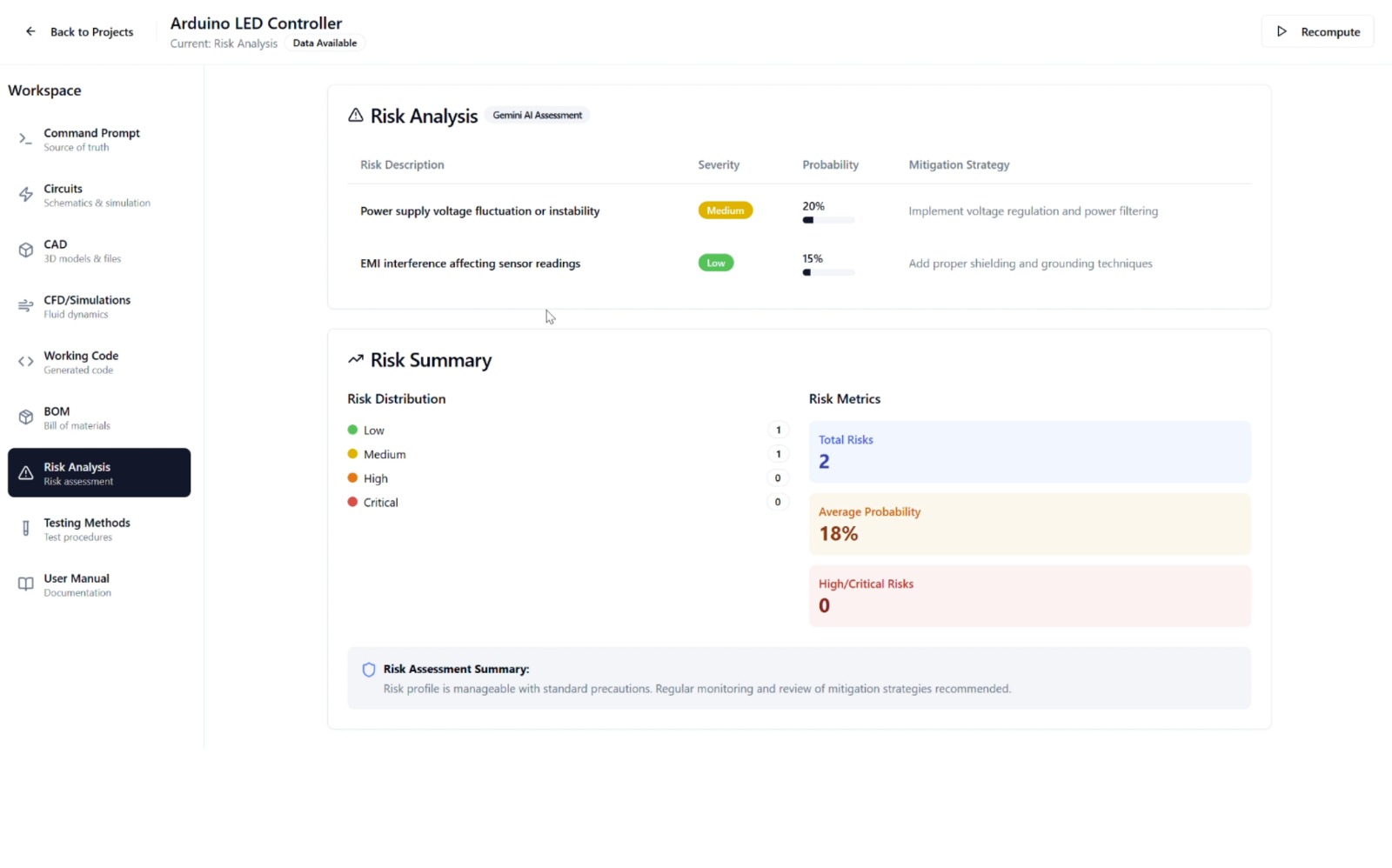
Risk Analysis
-
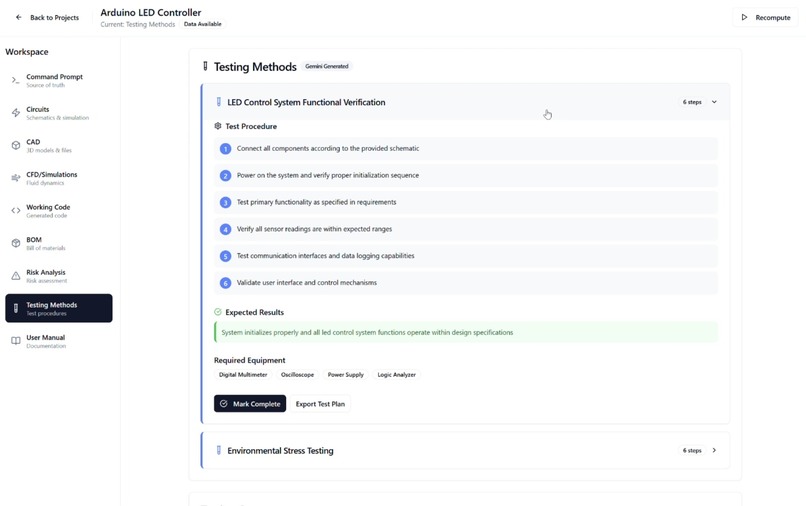
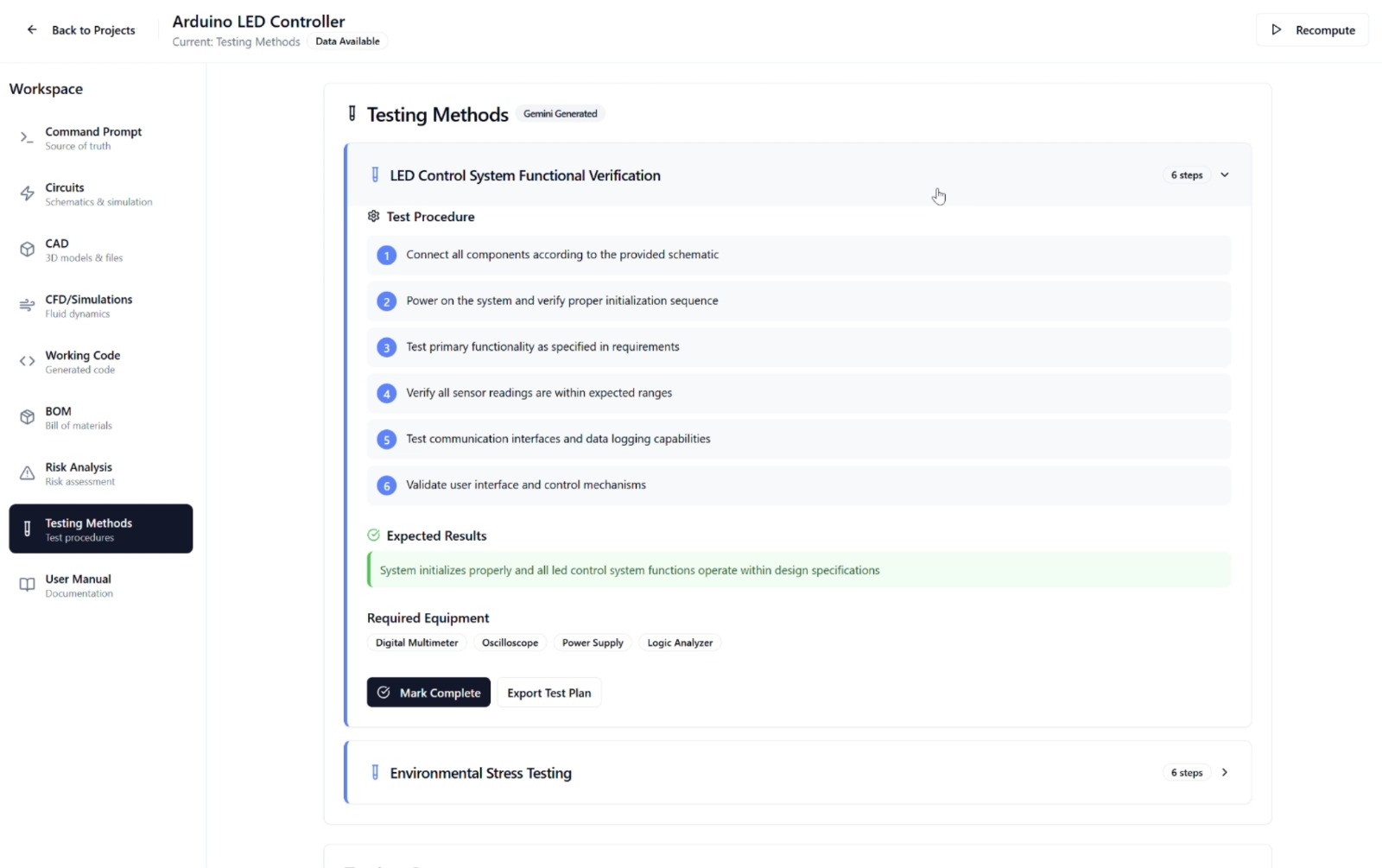
Testing Methods
-
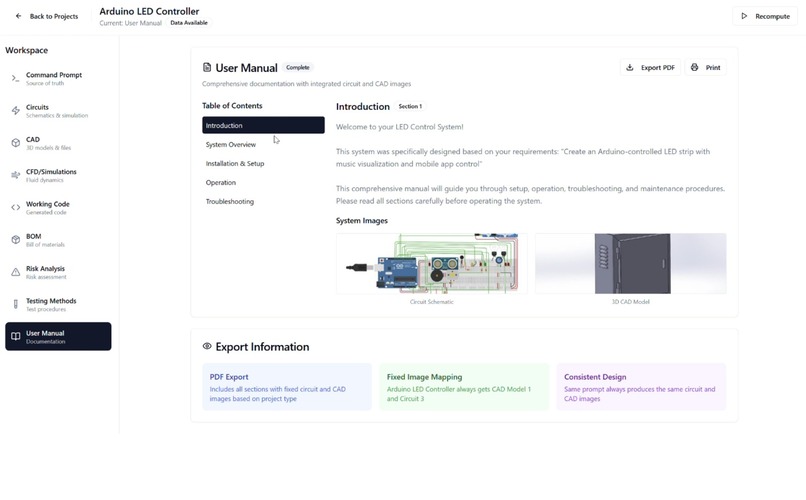
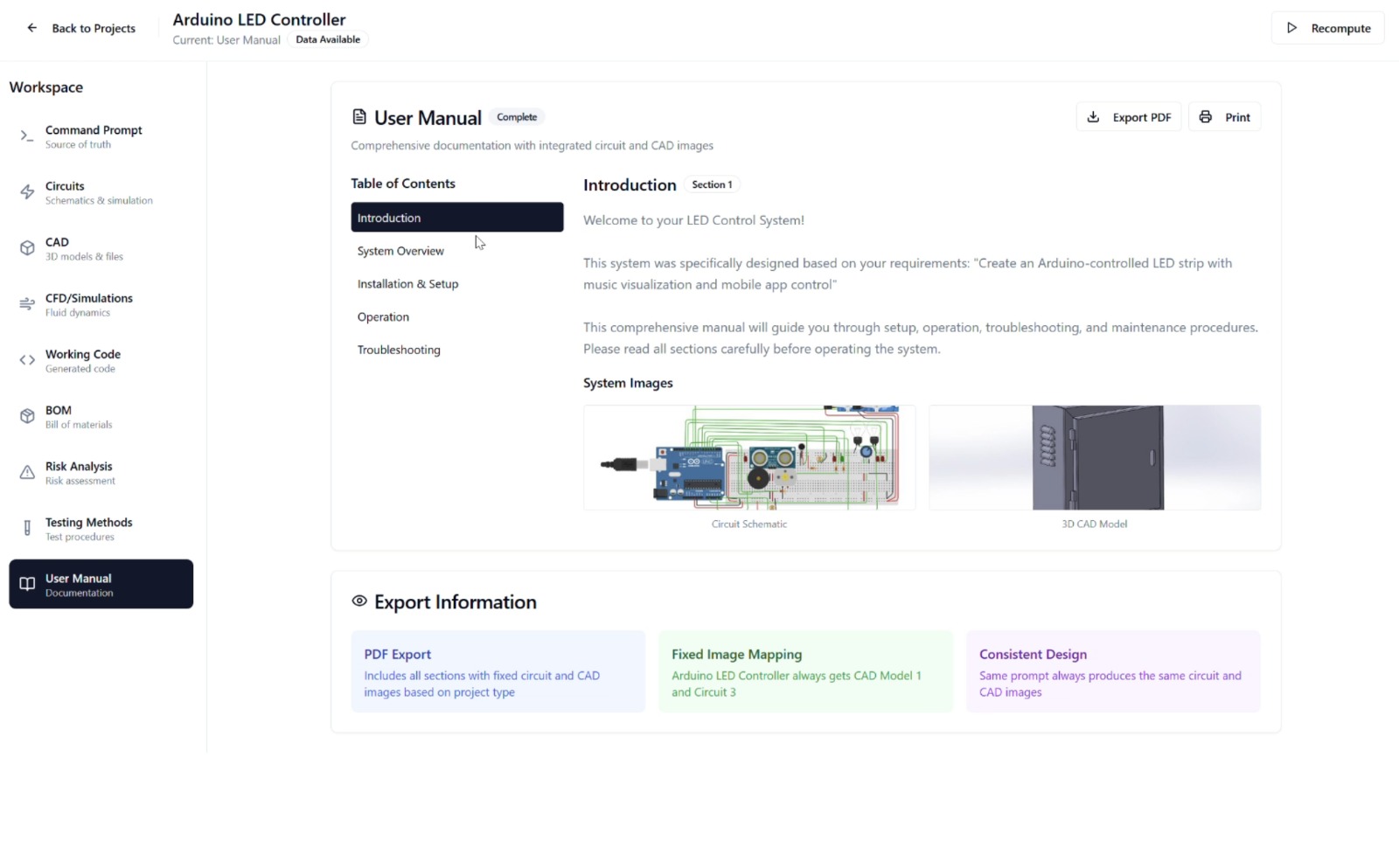
User Manual Generated: UI
-
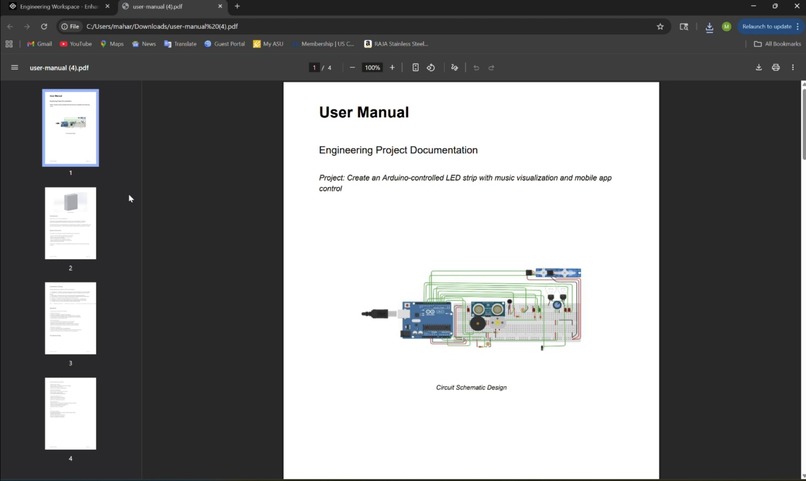
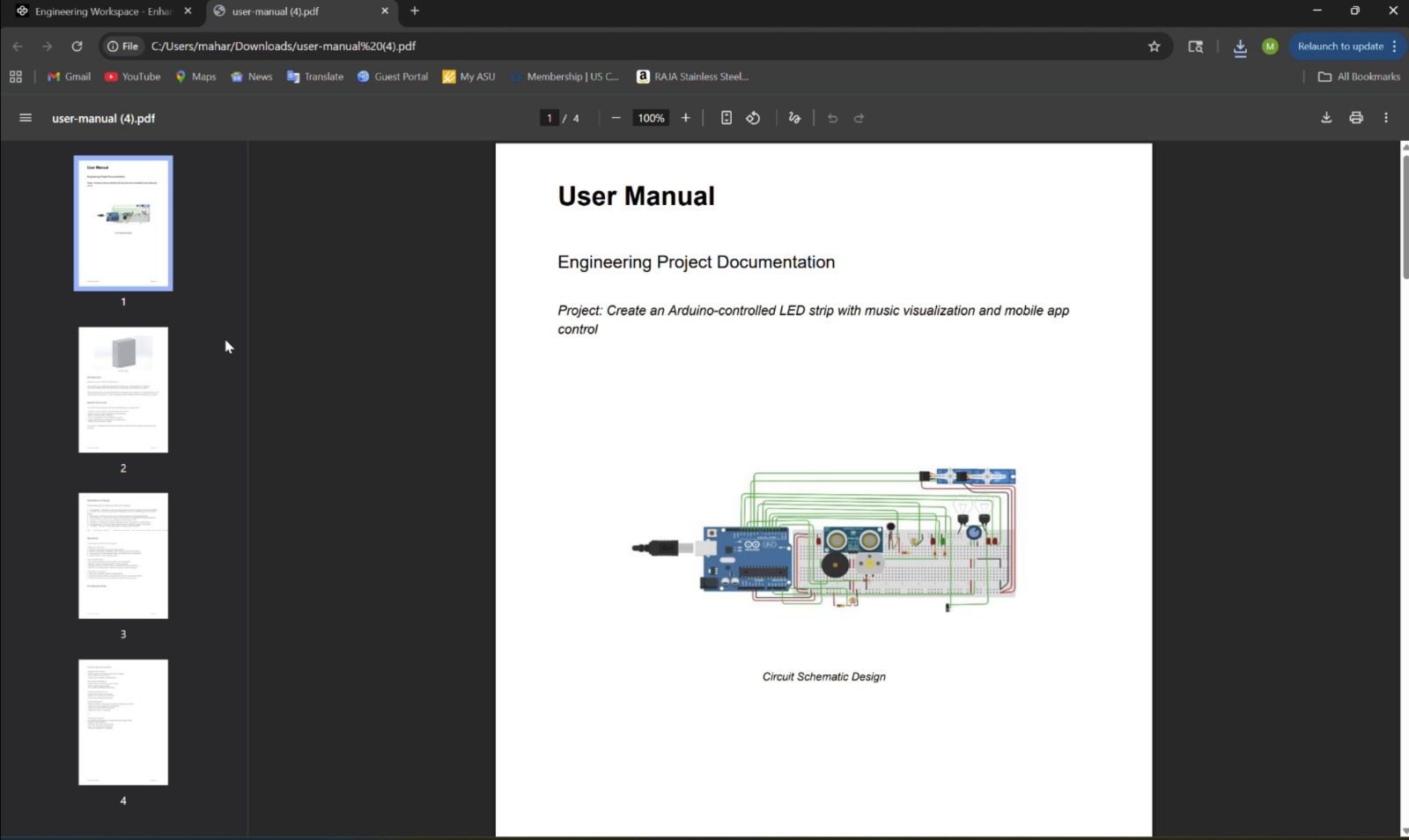
User Manual Generated: Export
-
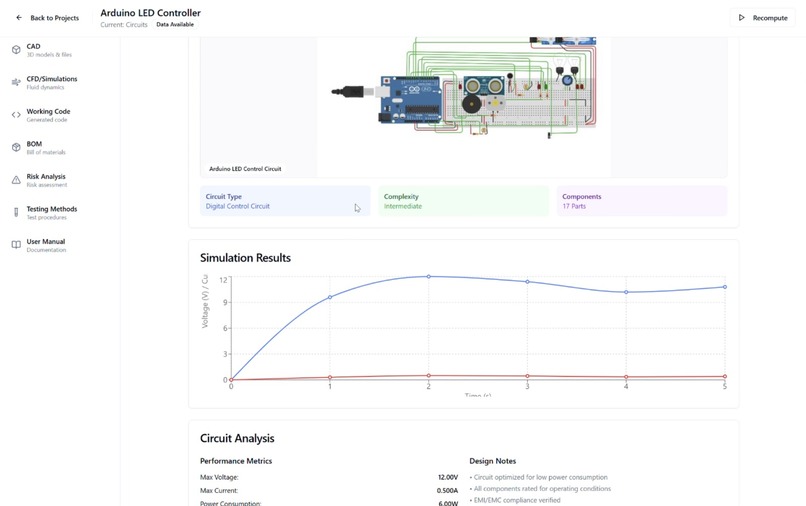
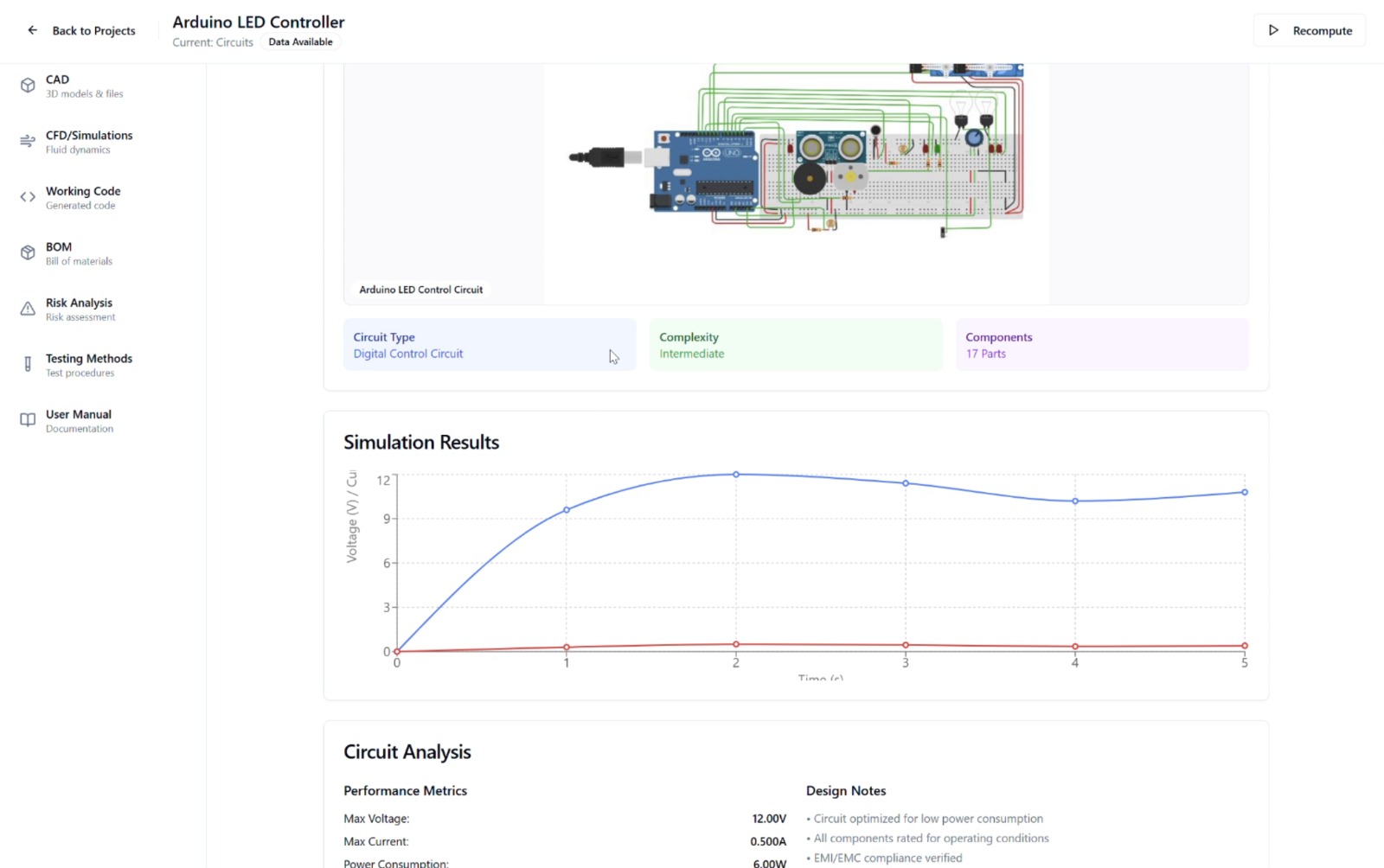
Circuit Created and Simulated
Inspiration
We were inspired by how difficult it still is to move from an idea to a working prototype in hardware. While software teams can rapidly spin up projects with a few commands, hardware teams must juggle fragmented workflows across circuit design, CAD modeling, simulations, BOM generation, and documentation. Our vision was to remove those barriers and build a system where a single prompt could generate an entire prototype, making hardware innovation as fast and accessible as software development.
What it does
PRiSM takes a user’s natural language prompt and automatically generates the critical components of a hardware project. It produces circuit diagrams with editable variables, CAD models with live previews and STEP downloads, CFD and stress simulations with metrics, fully generated working code, a real-time BOM with prices and suppliers, and detailed risk analysis, testing methods, and user manuals. Every time the user modifies the prompt or adjusts variables, the entire system recomputes so that the outputs always reflect the latest requirements.
How we built it
We built PRiSM with a Next.js frontend styled using Tailwind and shadcn/ui for a clean, responsive interface. The Command Prompt acts as the single source of truth, where any change triggers recomputation across all sections. On the backend, we integrated multiple APIs: Flux AI for circuits, Zoo API for CAD previews and STEP files, SimScale API for simulations, Octopart API for real-time BOM data, and Gemini API for risk analysis, testing methods, and documentation. To ensure reliability during the hackathon, we also implemented mock fallback routes so the platform works even when an API is unavailable or gated behind beta access.
Challenges we ran into
One major challenge was API access. Flux’s API is still in private beta, so we had to create mock GraphQL handlers to simulate it. SimScale simulations also take several minutes, so we pre-fetched and cached results to keep the demo smooth. Each API returned data in different formats, and normalizing them into one unified schema required careful design. Synchronizing the UI so that all sections updated seamlessly on prompt changes was also complex. Finally, the hackathon time crunch forced us to prioritize features that best highlighted impact while leaving some advanced integrations for the future.
Accomplishments that we're proud of
We are proud that PRiSM demonstrates a complete end-to-end hardware design pipeline from a single prompt. It generates usable, exportable assets like schematics, STEP models, BOM tables, and even risk analysis documentation. We are also proud of creating a smooth and polished user interface with live updates across multiple engineering domains, and of implementing robust mock fallbacks so that our platform is reliable even without guaranteed API access.
What we learned
We learned how to integrate diverse APIs into one cohesive workflow, how to normalize inconsistent data formats into a unified schema, and how to build a UX that feels seamless despite the complexity of the backend. We also learned the importance of balancing ambitious features with fallback modes for hackathon reliability. Most importantly, we saw how combining AI with domain-specific APIs can drastically lower the barrier to hardware prototyping.
What's next for PRiSM
In the future, we plan to enhance PRiSM with higher-end APIs and professional licenses for CAD and simulation, which will allow us to generate even more accurate, industry-grade outputs. We aim to integrate advanced manufacturing checks, enable deeper simulation capabilities with faster runtimes, and expand support for export formats across multiple CAD ecosystems. Our long-term vision is for PRiSM to become a true “hardware compiler,” turning natural language requirements into build-ready prototypes for engineers, researchers, and startups worldwide.
Built With
- fluxapi
- github
- next.js
- node.js
- octopartapi
- python
- simscaleapi
- tailwind
- typescript
- zooapi


Log in or sign up for Devpost to join the conversation.