
Inspiration
Misinformation has always existed online, but as more of our lives move into digital spaces, its impact feels stronger and more pervasive than ever. We spend hours scrolling every day, constantly consuming posts, headlines, videos, and threads, often without realizing how much of what we see may be incomplete, misleading, or entirely false. Sometimes misinformation shows up as harmless misunderstandings or exaggerated jokes, but in more serious cases it reinforces harmful stereotypes, spreads hate, distorts public understanding of health or social issues, and disproportionately harms minority groups. With the rise of AI-generated content, the problem has greatly grown. Posts are now easier to create, manipulate, and mass-produce, increasing the volume of information we encounter daily. Then when we are exposed to such an overwhelming amount of content, the chances of absorbing misleading narratives often in subtle ways become much higher.
We have both personally experienced how difficult it can be to distinguish credible information from misinformation while scrolling. Social media posts are usually very simplified and fragments of much more complex realities. Important issues like health, gender equality, politics, and social justice cannot be accurately understood through a single post, yet that is often the only exposure many users get. Even small, repeated inaccuracies can quietly shape the way we think without us realizing it.
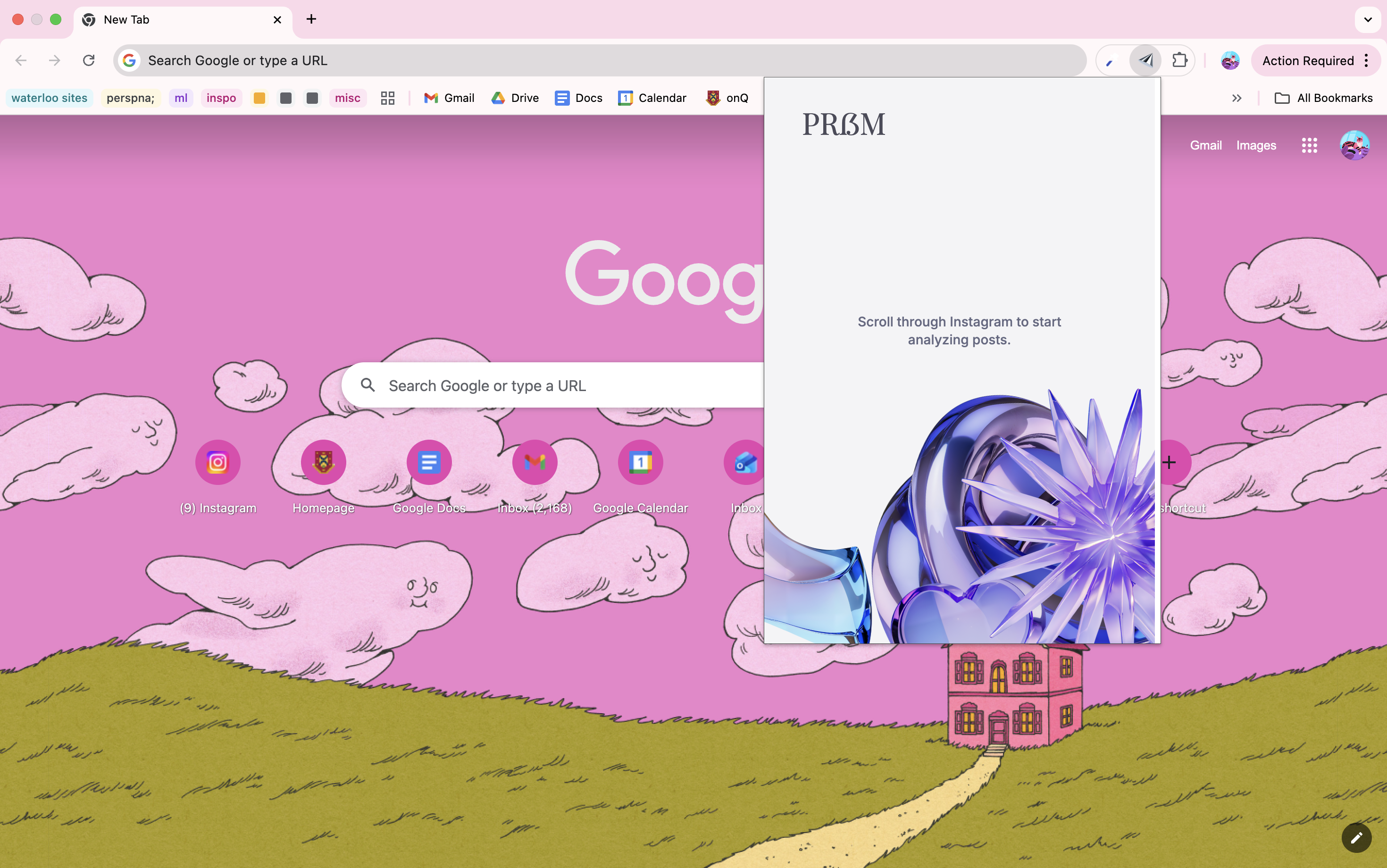
This realization motivated us to build Prism, a Chrome extension that identifies potential misinformation across multiple formats, including text-based posts, images, and videos as well as analyzing user profiles.
What Prism does
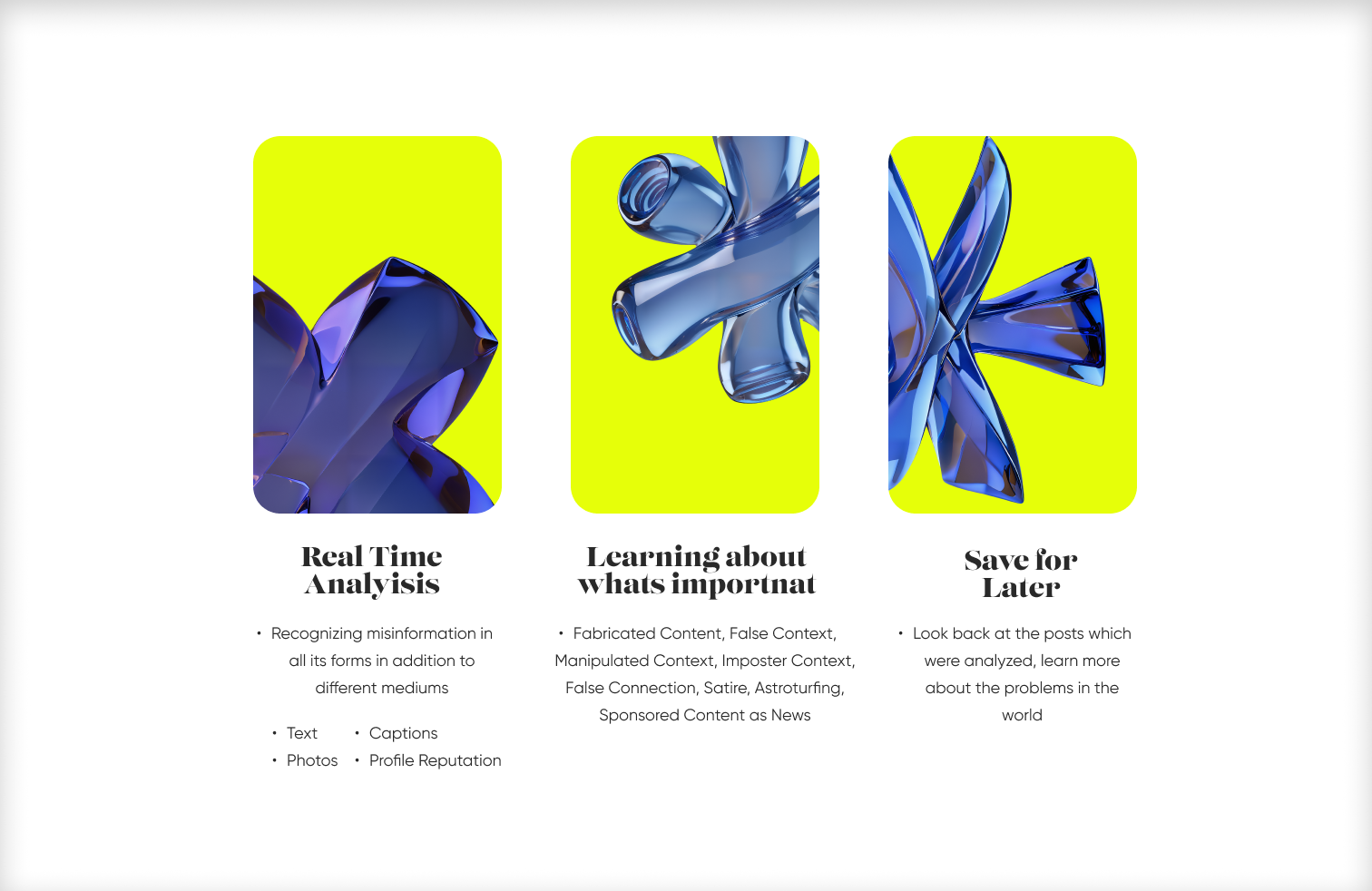
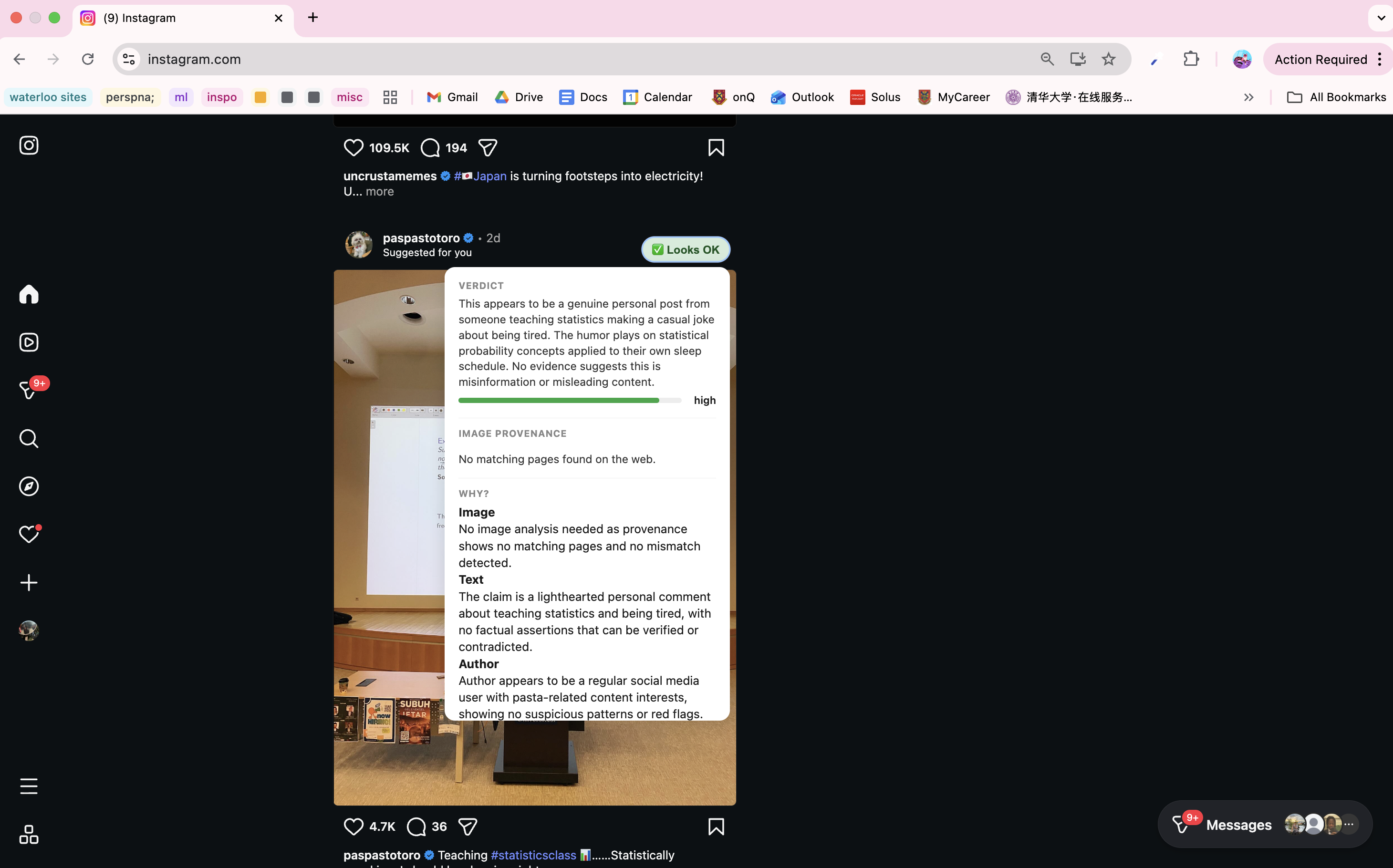
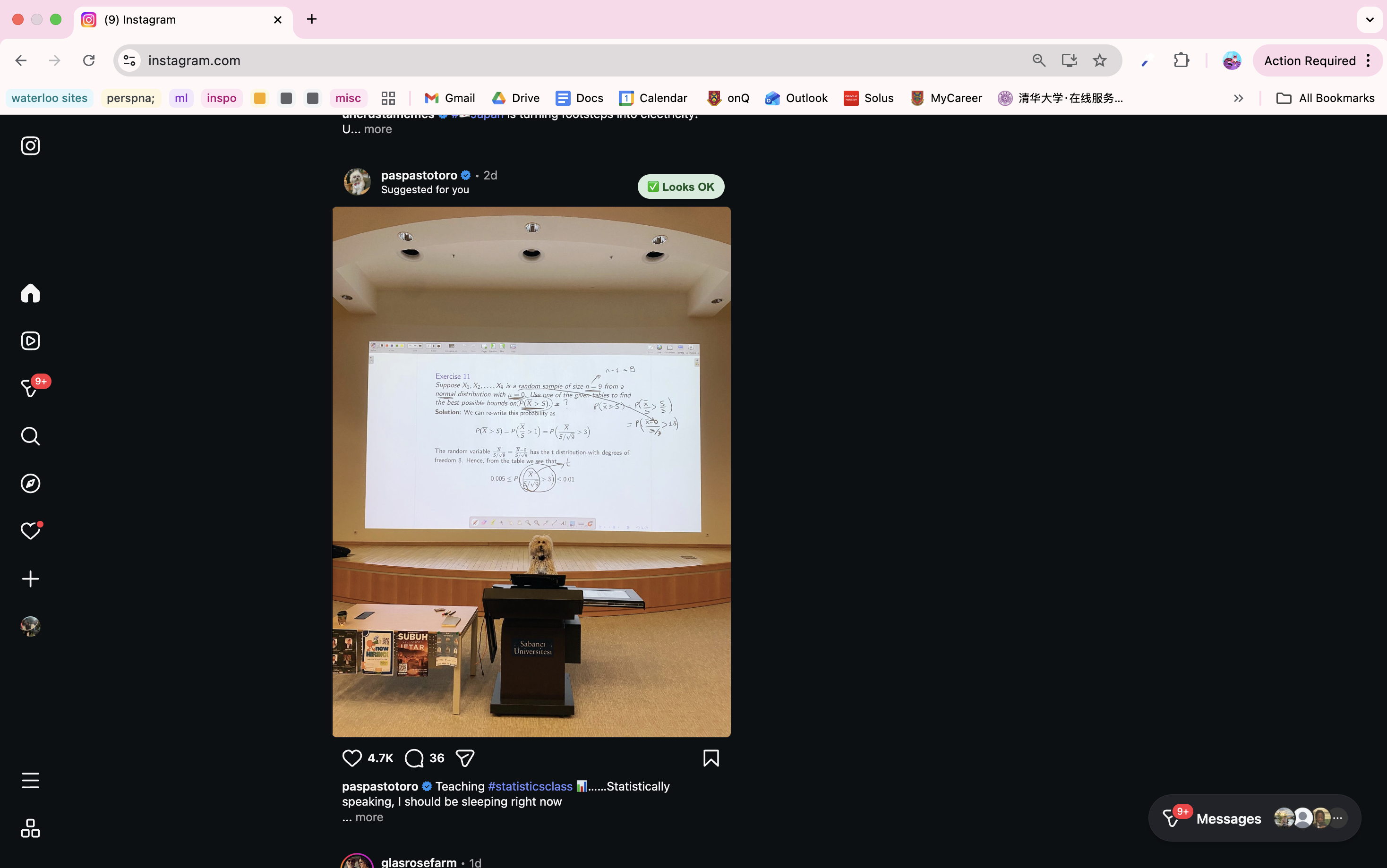
Prism runs while you browse social media and helps you “see the full spectrum of truth.” Instead of simply labeling content as true or false, Prism provides context, flags questionable claims, and encourages users to dig deeper by surfacing credible sources.
While brainstorming our project, we learned that misinformation goes beyond simply false statements and includes eight distinct types:
- Fabricated Content
- False Context
- Manipulated Context
- Imposter Context
- False Connection
- Satire
- Astroturfing
- Sponsored Content as News
We designed Prism to consider this complexity and label the specific type present in a post, so users can understand how something may be misleading rather than receiving a single binary judgment.
UI / Design process
When we started designing the UI for Prism, we decided to begin with the name and let it guide the overall theme. Once we landed on “Prism,” the ideas started flowing immediately, almost too many at once. When most people think of a prism, they picture refracted glass splitting light into a rainbow, and that was our first instinct as well. We were really excited about incorporating that rainbow refraction into our brand identity and visual direction, but after spending hours experimenting in Figma and staring at a design that just was not coming together, we realized it was not translating the way we had imagined.
We eventually shifted toward a colorful glass design. The more we reflected on it, the more we realized that prisms are not limited to the stereotypical triangular glass pyramid refracting light into a rainbow. A prism can take many three dimensional forms, which also align really well with our project and mission. Glass can be a symbolic element for representing clarity, transparency, and perspective, all of which are core to our product. That connection quickly led us to our motto, “See the full spectrum of truth.” Instead of focusing only on the rainbow aesthetic, we leaned into the idea of layered glass components representing depth, nuance, and multiple angles of understanding.
Looking back, we wish we had explored even more creative directions like incorporating a wider variety of shapes, textures, or interactive visual elements to better capture the idea of multiple perspectives but time constraints limited how much we could pivot and experiment. That being said we are genuinely proud of how the final slides turned out. Adding the yellow accent colour created a really nice contrast against the cooler tones and a nice touch and bit of pep that we felt the first design was missing. Overall we am really happy with how everything turned out!
How we built it
Prism is a Chrome extension with a modern web UI and a backend that performs analysis and retrieval:
- Frontend: React (extension UI and interactions)
- Backend: FastAPI (API endpoints to analyze content and return results)
- LLM reasoning: Anthropic’s Claude (claim analysis, categorization, and context synthesis)
- Source retrieval: Brave Search API (finds credible references and supporting context)
- Image investigation: Google Vision API (helps identify image sources and where they came from)
- Design: Figma (brand + UI system)
At a high level, Prism extracts signals from the page (text, media, and profile cues), sends them to the backend, and returns an explanation: what seems questionable, what kind of misleading pattern it matches, and what sources a user can consult to verify.
Challenges we ran into
Our biggest challenge was defining the right problem. We originally started with AI deepfake detection, but we realized that AI-generated content itself is not automatically harmful. What matters is how it’s used. Something can be AI-generated and harmless, while other content may be AI-generated and used to push a false narrative.
That realization forced a pivot mid-hackathon: instead of focusing only on “is this AI,” we broadened the scope to “is this misleading, incomplete, or false and in what way?” Making that pivot meant rethinking our detection approach, the UI messaging, and how we explained outcomes to users, all under tight time constraints.
Accomplishments we’re proud of
- A polished product in 24 hours: Prism feels real and usable, not like a prototype held together with tape.
- Design quality: The UI is cohesive, branded, and clear, and it matches the product’s mission.
- A tool we’d actually use: We can genuinely imagine friends and family using this while scrolling.
- Nuanced labeling: Designing around multiple types of misinformation made the tool more educational and less judgmental.
What we learned
We learned that it’s okay to pivot even within a 24-hour hackathon, and not to be afraid to pivot. In fact, being willing to pivot earlier gives you more time to rebuild cleanly and make the final product stronger. We also learned that misinformation detection isn’t just a technical problem it’s a communication problem. The way you present uncertainty, context, and sources matters as much as the model output.
What’s next
We want to clean Prism up a little bit more, improve our misinformation detection so it’s as accurate as possible, and potentially publish it on the Chrome Web Store.
Built With
- bravebrowser
- bravesearchapi
- chromeextension
- claude
- fastapi
- googlevisionapi
- javascript
- python
- react


Log in or sign up for Devpost to join the conversation.