Inspiration
I am a pre-law student with a background in mathematics and programming from my high school years, where I actively participated in mathematics and programming Olympiads. I've always been fascinated by combining these different skill sets to solve real-world problems while building projects for fun.
Leading up to the build week, I kept thinking about one question after reading the challenge categories: How can we make understanding privacy updates easier for everyday people?
People are often critical of big tech—and sometimes for good reason. Are our data really safe? Are companies building privacy into the products we use every day? When vulnerabilities are discovered, do companies actually respond and improve their devices?
That led me to the idea behind Prisim.
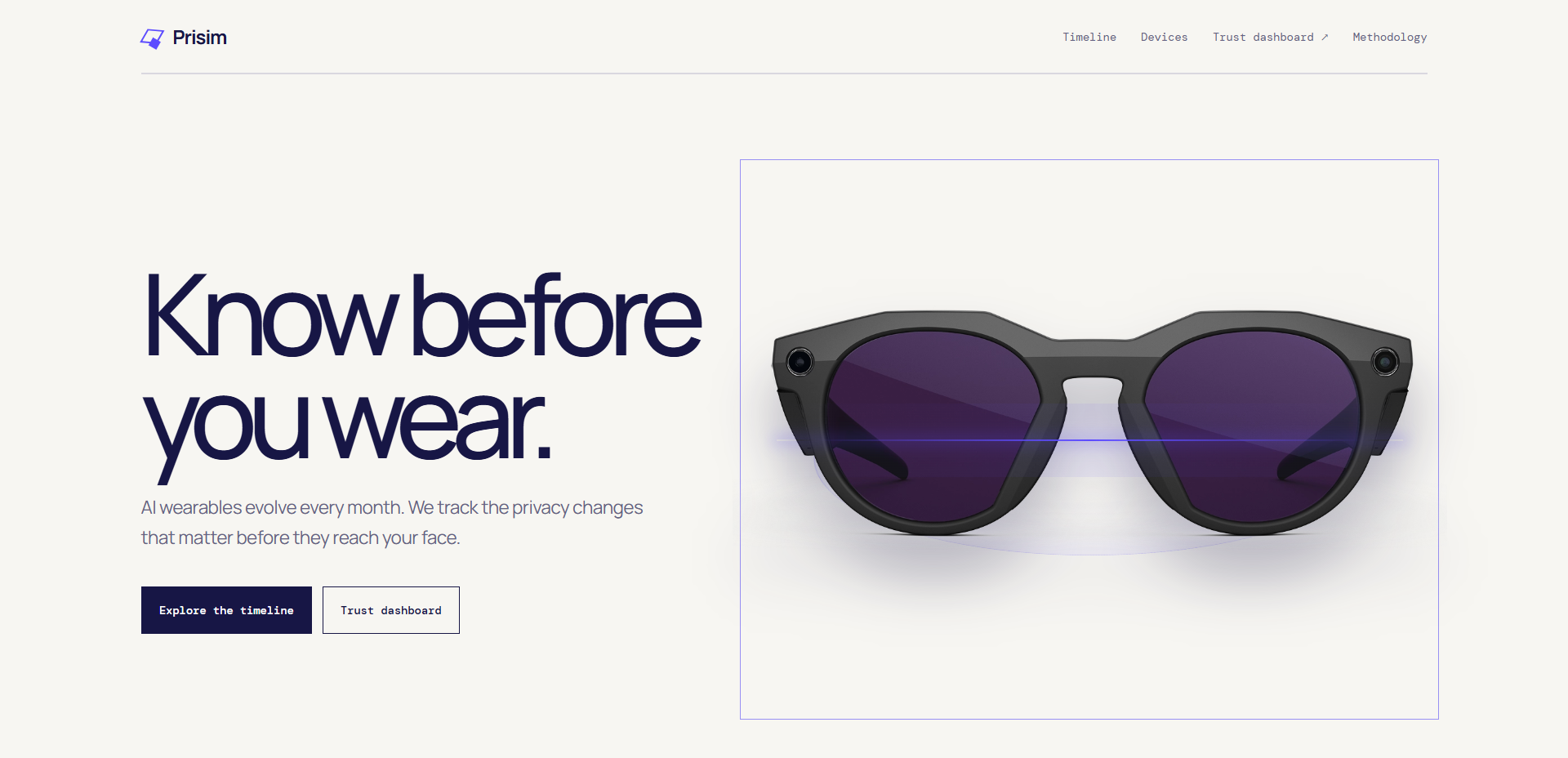
I explored a number of existing privacy-focused websites, but many of them felt overwhelming, overly technical, or centered on fear. While privacy is a serious topic, I don't think learning about it has to be intimidating. Instead, I wanted to build an open-source platform that tells the story of how AI wearables evolve over time, making privacy updates engaging, approachable, and easy to understand.
What it does
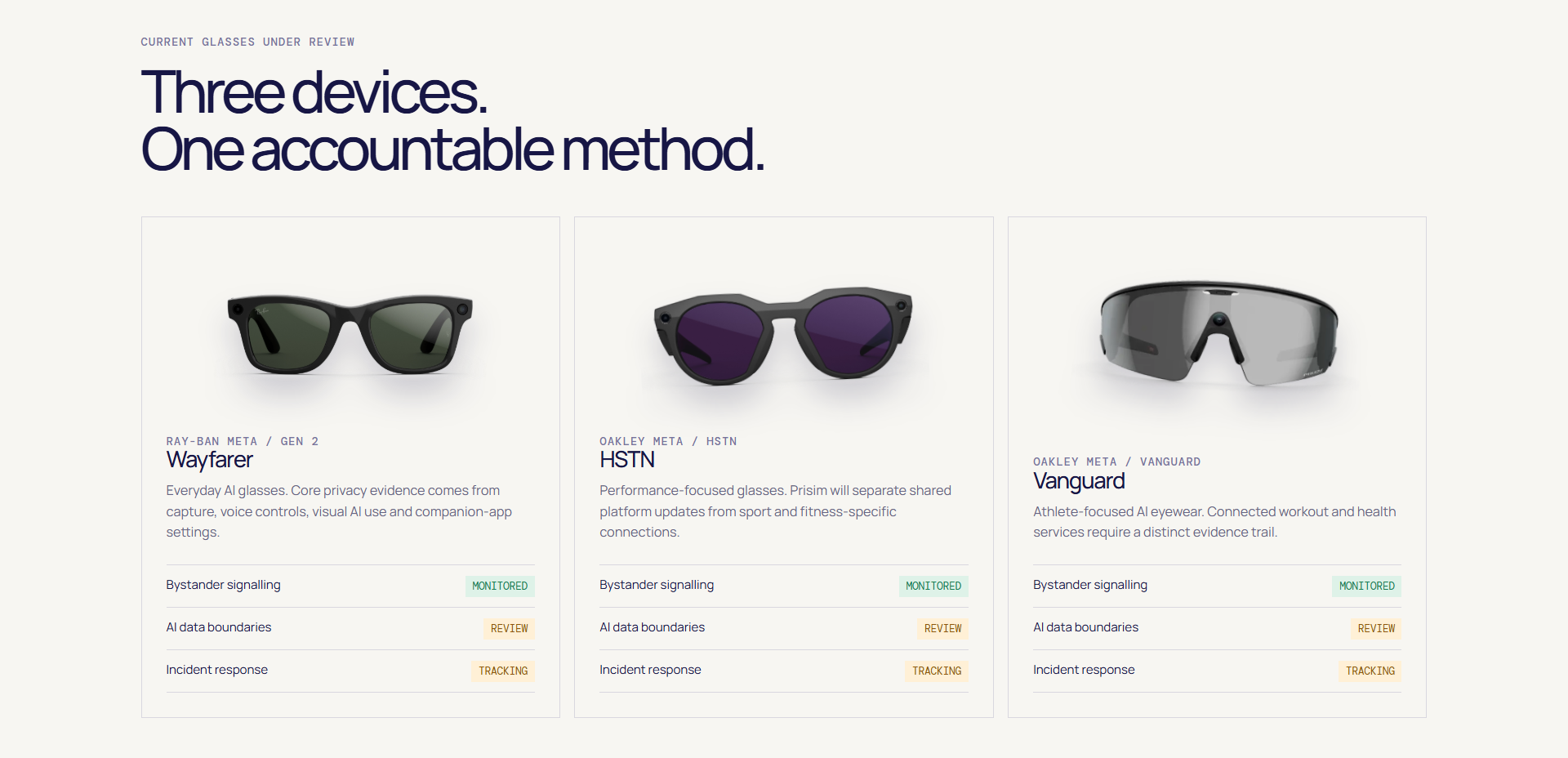
For this hackathon, I focused on Meta's AI smart glasses.
Prisim tracks meaningful privacy-related changes across official Meta changelogs and cross-references them with trusted news coverage to identify the updates that actually matter.
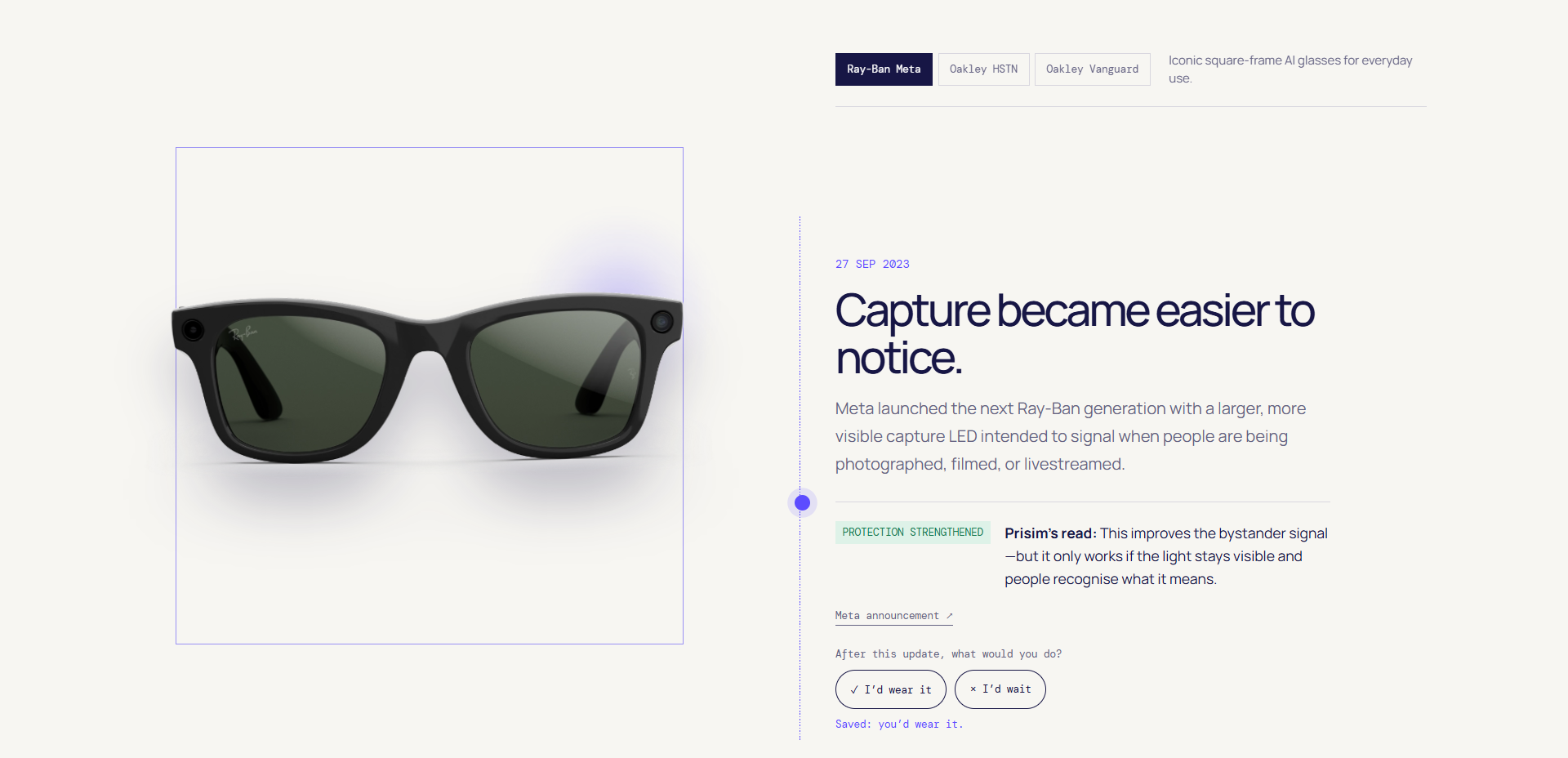
Instead of presenting changelogs verbatim, Prisim translates them into concise, human-readable summaries that explain:
- What changed
- Why it matters
- How it affects user privacy
- Whether the update improves or expands the device's capabilities
The experience is presented as an interactive timeline rather than a documentation page, allowing users to follow the evolution of the product through its most significant privacy milestones.
I also introduced a "Buy or Bail" interaction where visitors can indicate whether a particular version of the product makes them more or less confident about purchasing it. Rather than focusing solely on features, I wanted to build an experience that encourages users to think critically about trust while keeping the interface enjoyable and approachable.
How we built it
I built Prisim using ChatGPT 5.6 Terra and Codex, constantly switching between different models to compare their reasoning styles and outputs.
ChatGPT helped gather information from official changelogs and reputable news sources, while extensive prompt engineering and iterative design conversations helped shape the overall direction of the product.
I spent a considerable amount of time refining the design rather than immediately jumping into development. I shared design references that matched the aesthetic I wanted so that the visual language remained consistent throughout the project.
I also sourced wearable product assets, designed the storytelling flow, and eventually published everything to a public GitHub repository. One fun constraint I gave myself was keeping the project inside a single HTML file, making it lightweight, easy to understand, and simple for future contributors to explore.
Challenges we ran into
One of the biggest challenges was setting up the repository and getting comfortable with the Codex standalone environment. In hindsight, I probably would have been slightly more productive building directly inside my usual IDE, but it was a great opportunity to learn a different workflow.
Another challenge was finding high-quality product assets and deciding which sources should be trusted enough to appear alongside official changelogs. The project relies heavily on presenting accurate information without becoming overly opinionated, so selecting the right references required careful consideration.
Accomplishments that we're proud of
I'm proud that we managed to keep the project simple without sacrificing the original vision.
Rather than creating another comparison website filled with specifications and long privacy policies, we built something that feels more like an interactive story about how AI wearables evolve over time.
I'm also incredibly happy with the overall design. Friends who tested the project consistently commented on how polished and engaging the experience felt, which was one of my primary goals from the start.
What we learned
This build week gave me a much deeper appreciation for GPT-5.6's reasoning abilities and collaborative workflow.
It was also my first time using the standalone Codex application. I normally work with GitHub Copilot inside VS Code, but I genuinely enjoyed the more focused and minimalist experience that Codex provides.
I can definitely see myself using this workflow for future portfolio projects, especially those I plan to publish on GitHub Pages. It reinforced the idea that AI-assisted programming works best when paired with clear product thinking and strong design direction rather than simply generating code.
What's next for Prisim
This project is only the beginning.
I plan to expand beyond Meta's smart glasses and support additional AI wearables, smart devices, and eventually consumer AI applications.
One area I'm still carefully considering is the trust scoring system. I want to avoid assigning arbitrary numbers that could unfairly misrepresent products. Instead, I'd like every score to be grounded in transparent evidence, official documentation, and publicly reported incidents so users understand exactly why a product's trust level changes over time.
Ultimately, my goal is for Prisim to become an open, community-driven resource where anyone can easily follow how the technology they wear evolves—and make more informed decisions about the products they choose to trust.
Built With
- codex
- html5


Log in or sign up for Devpost to join the conversation.