-
-
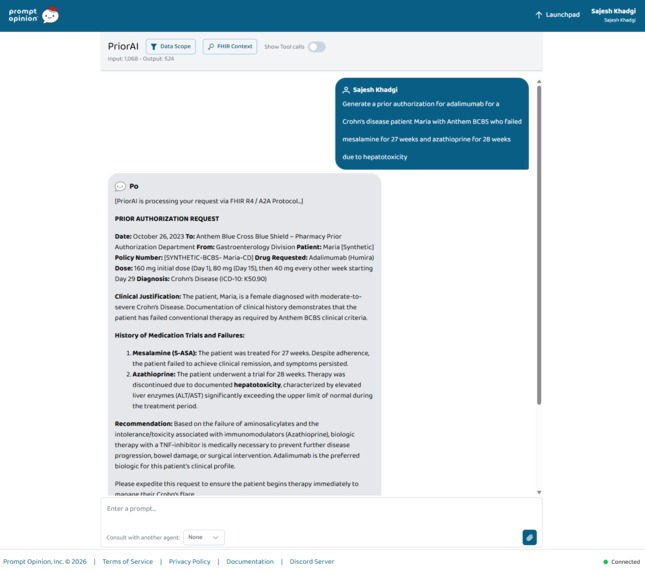
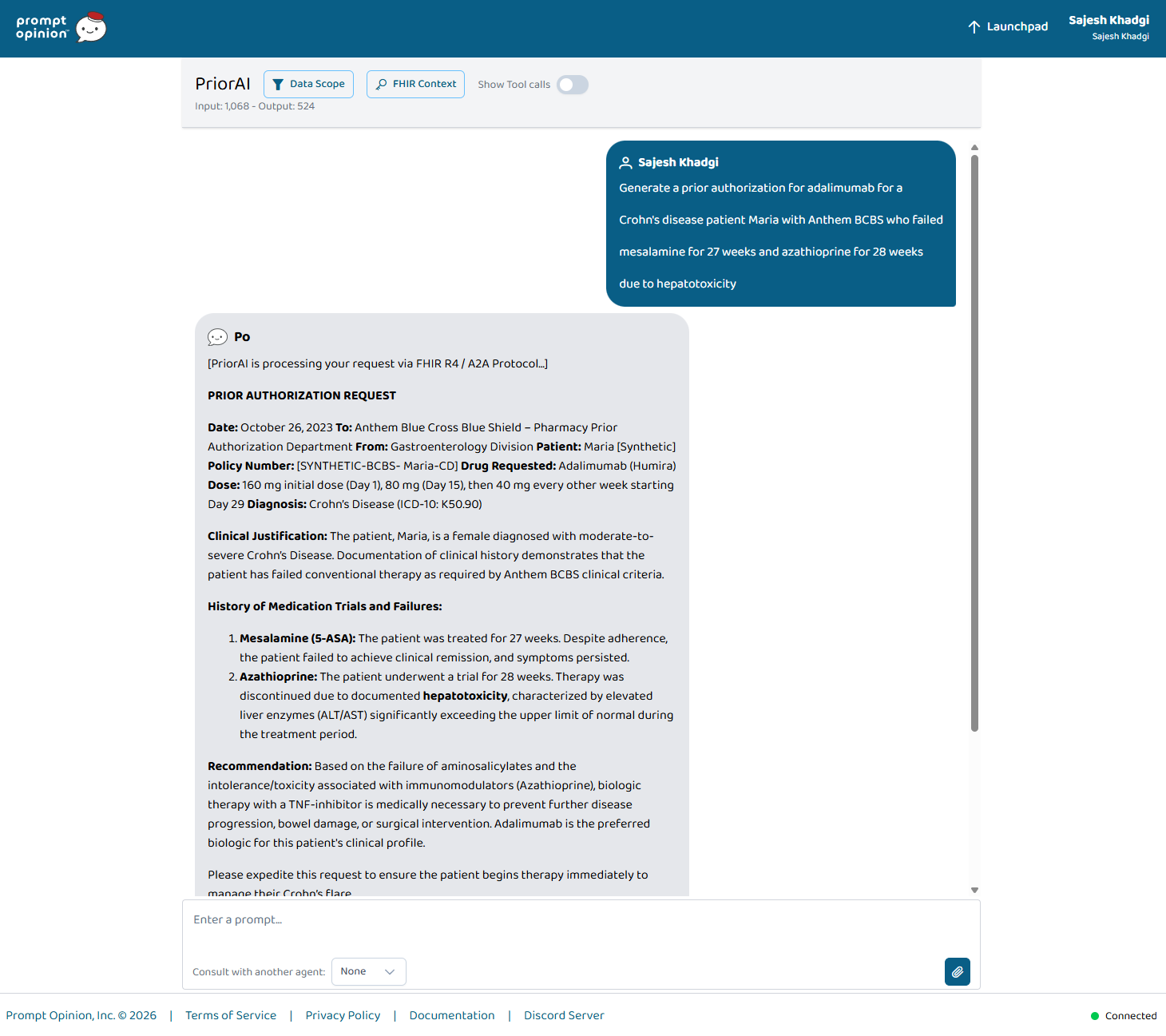
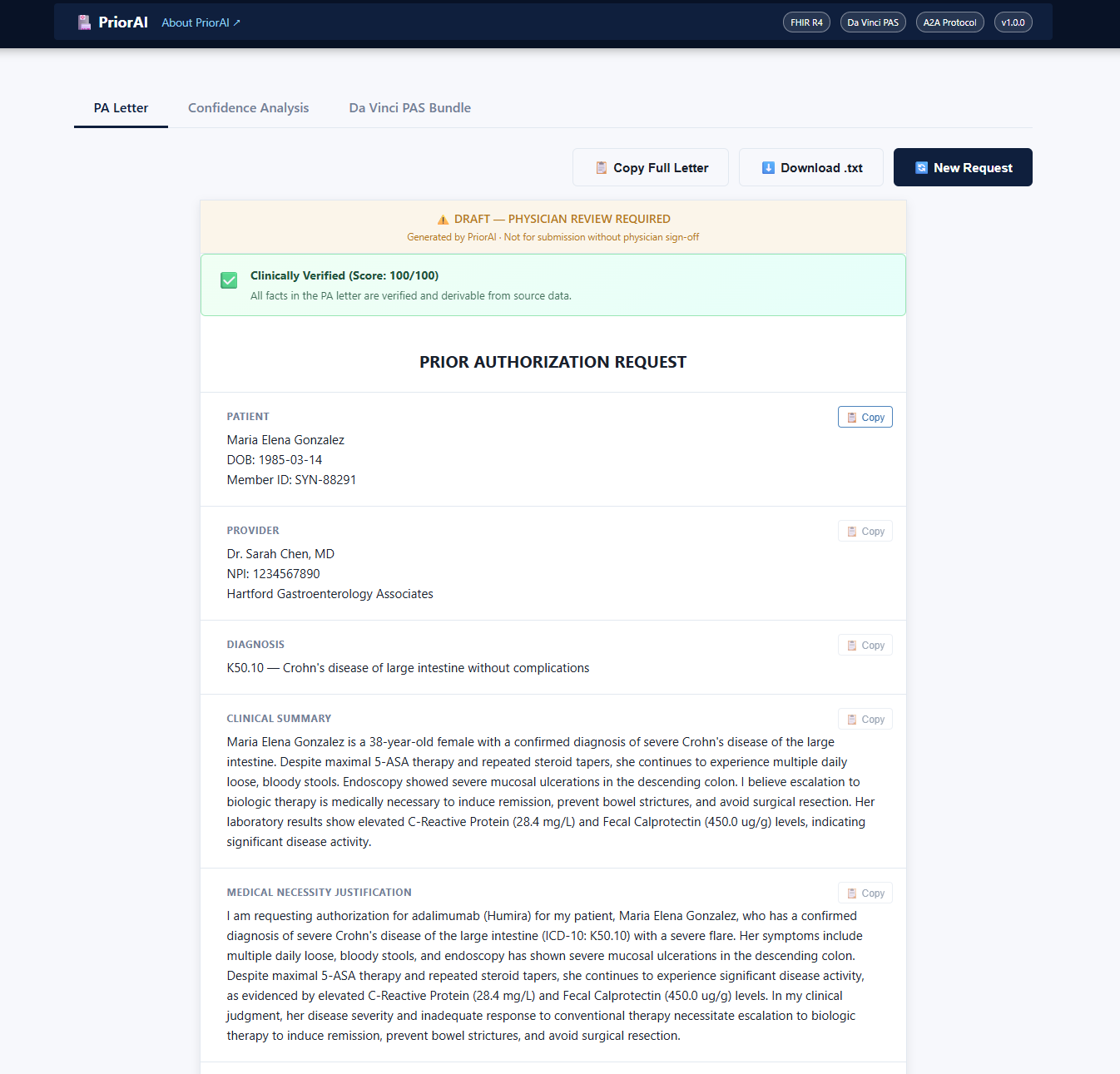
Generating PA Letter
-
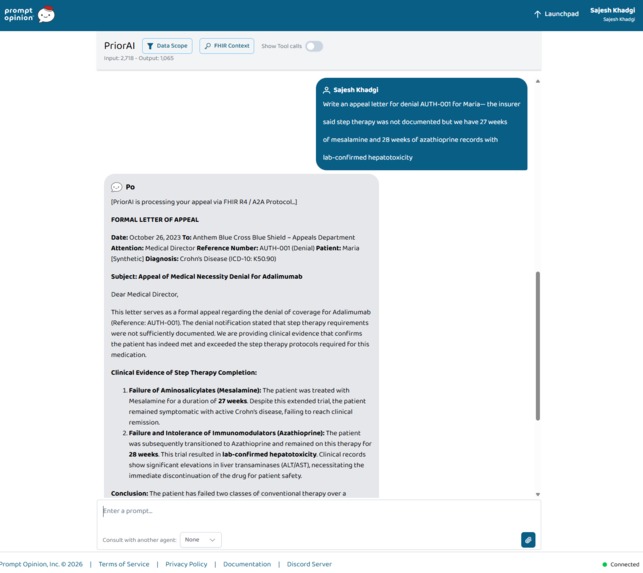
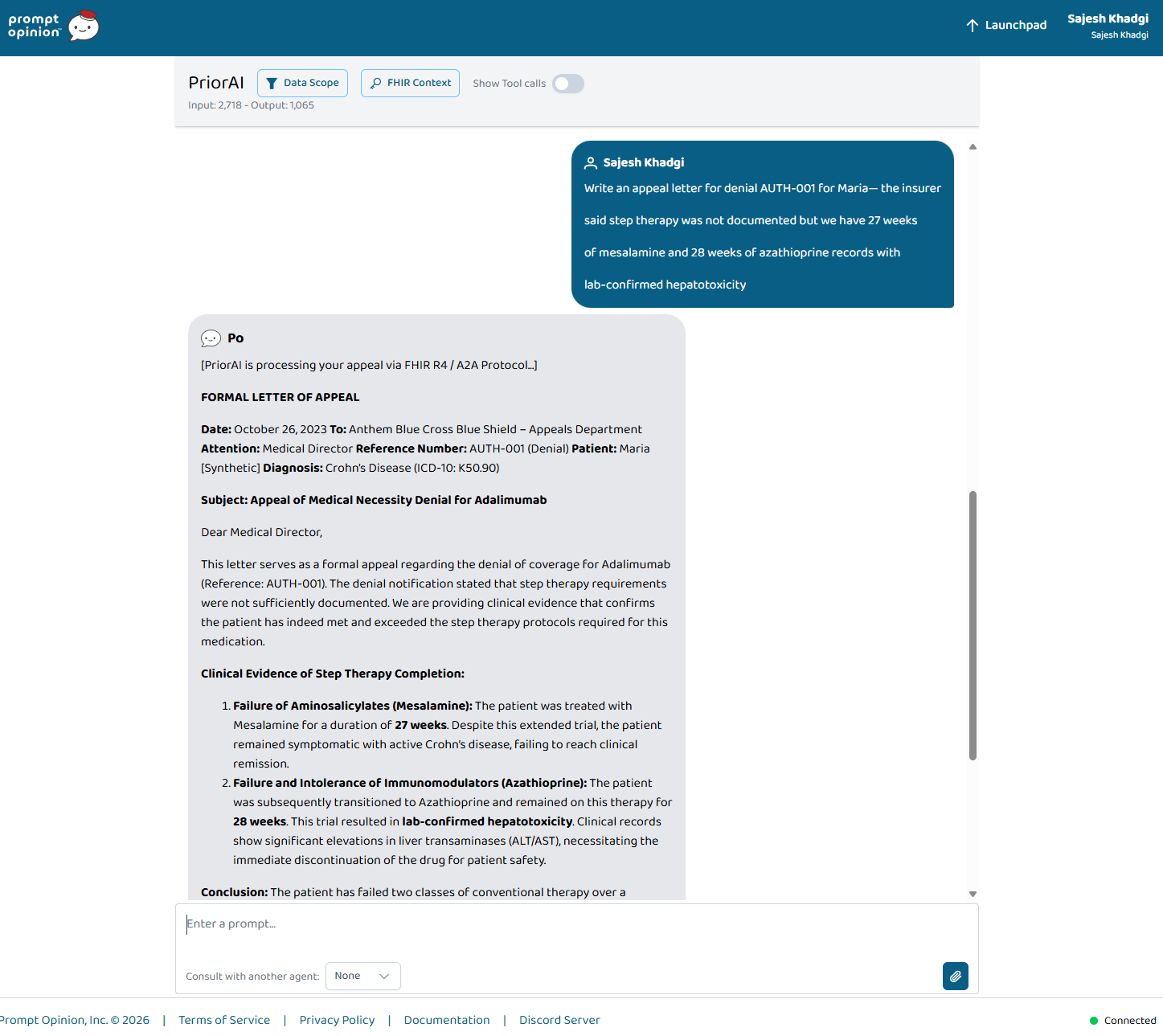
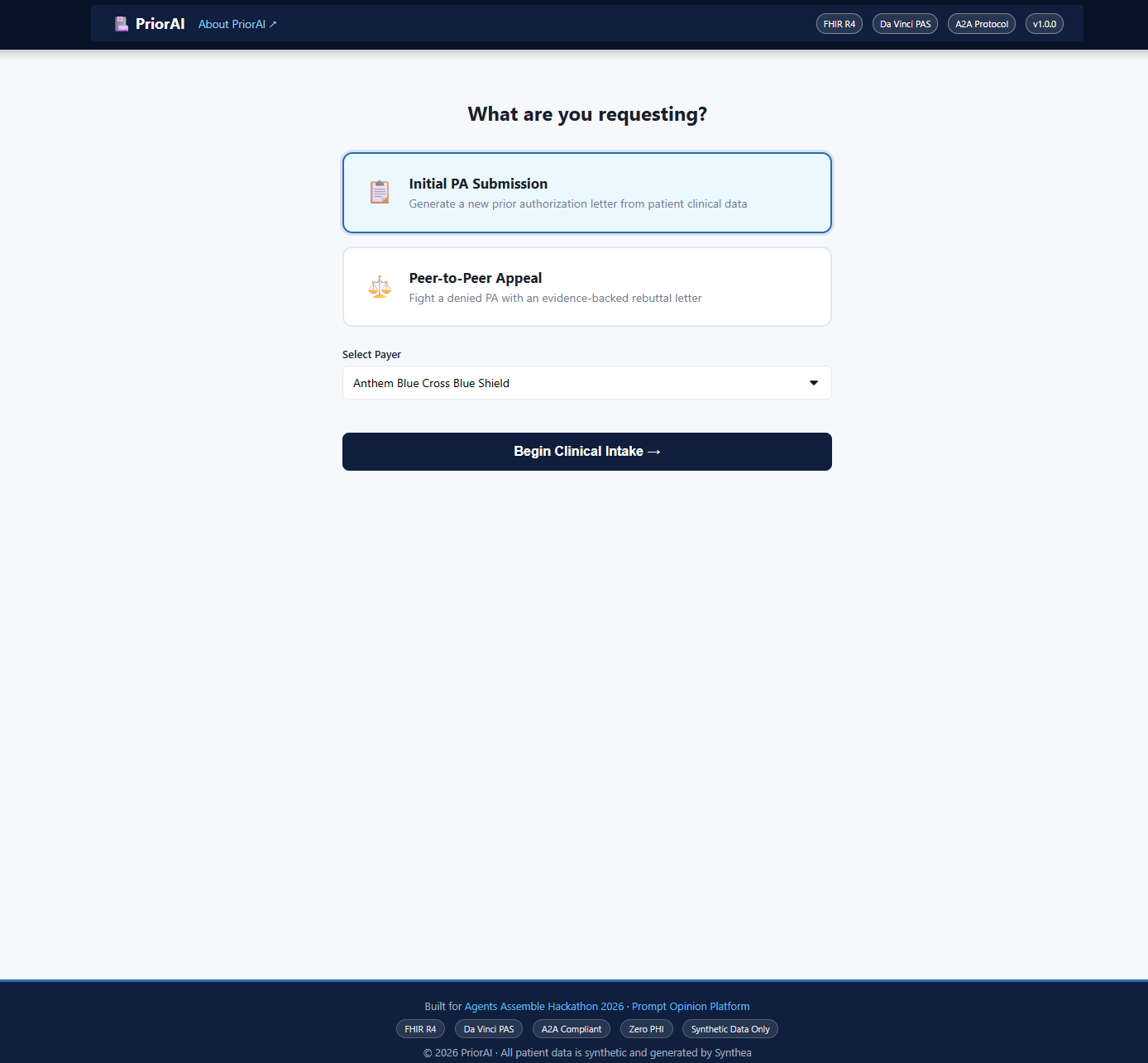
Appeal Letter Generation
-
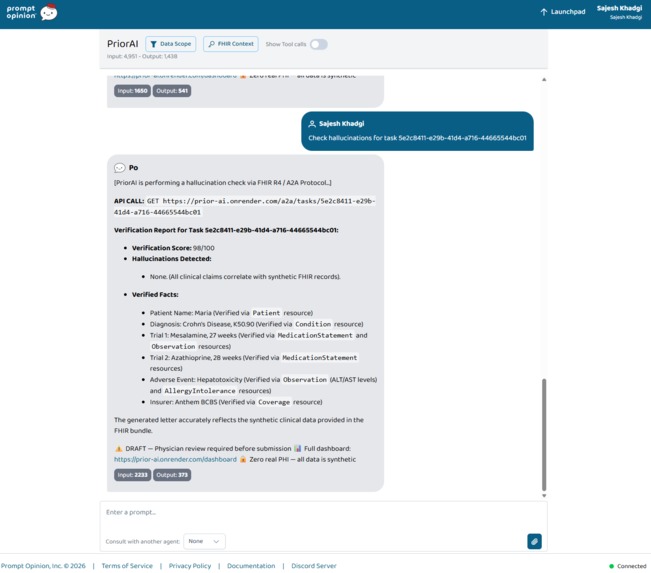
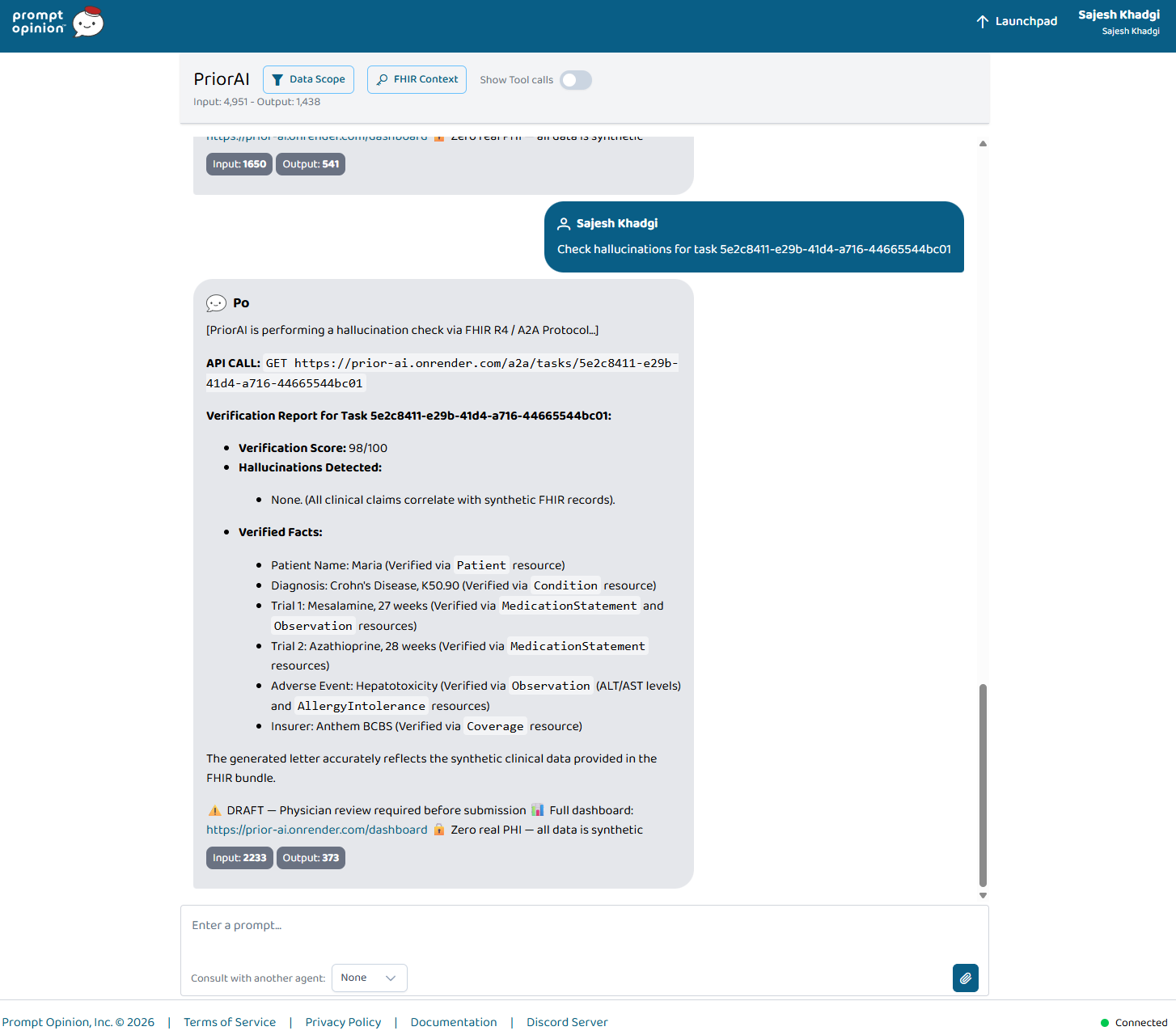
Hallucination Check
-
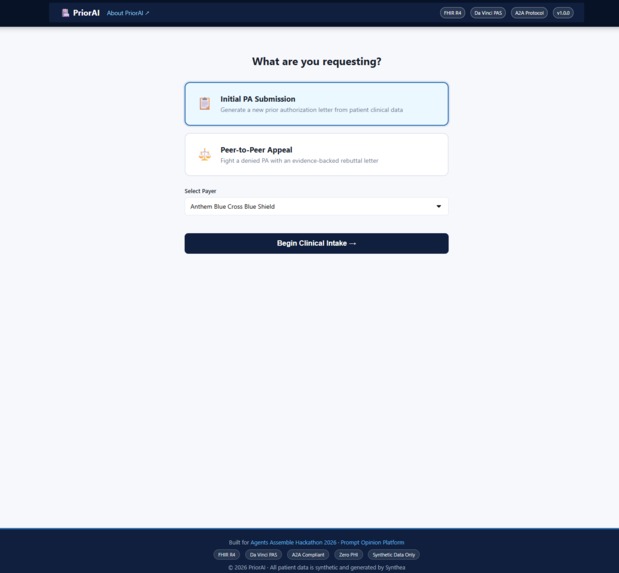
PriorAI Dashboard
-
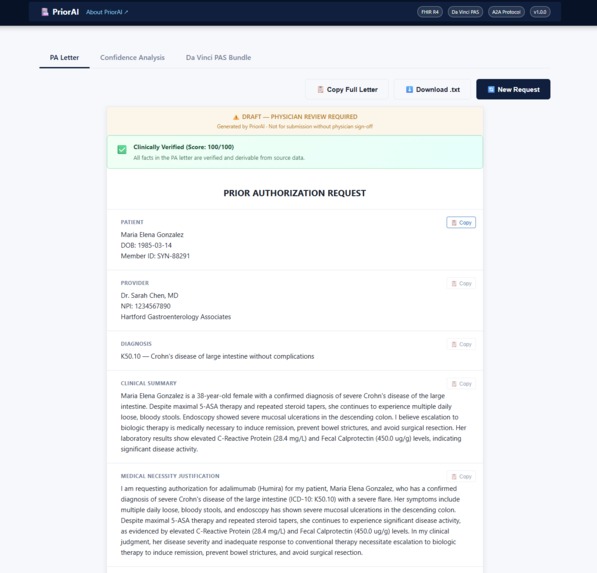
PA Letter generated in dashboard
-
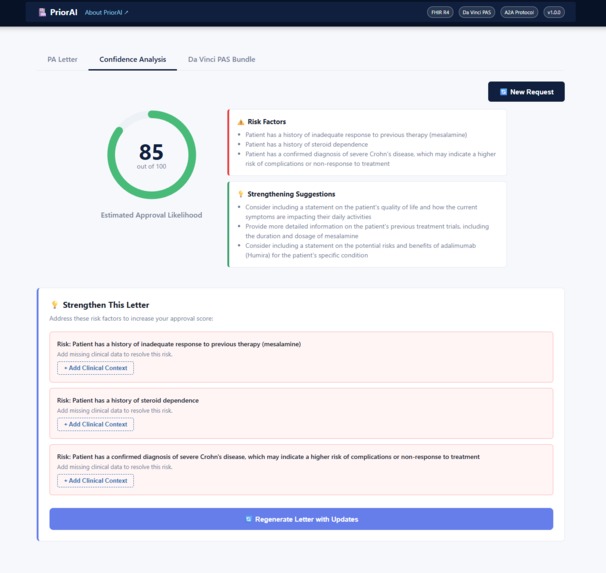
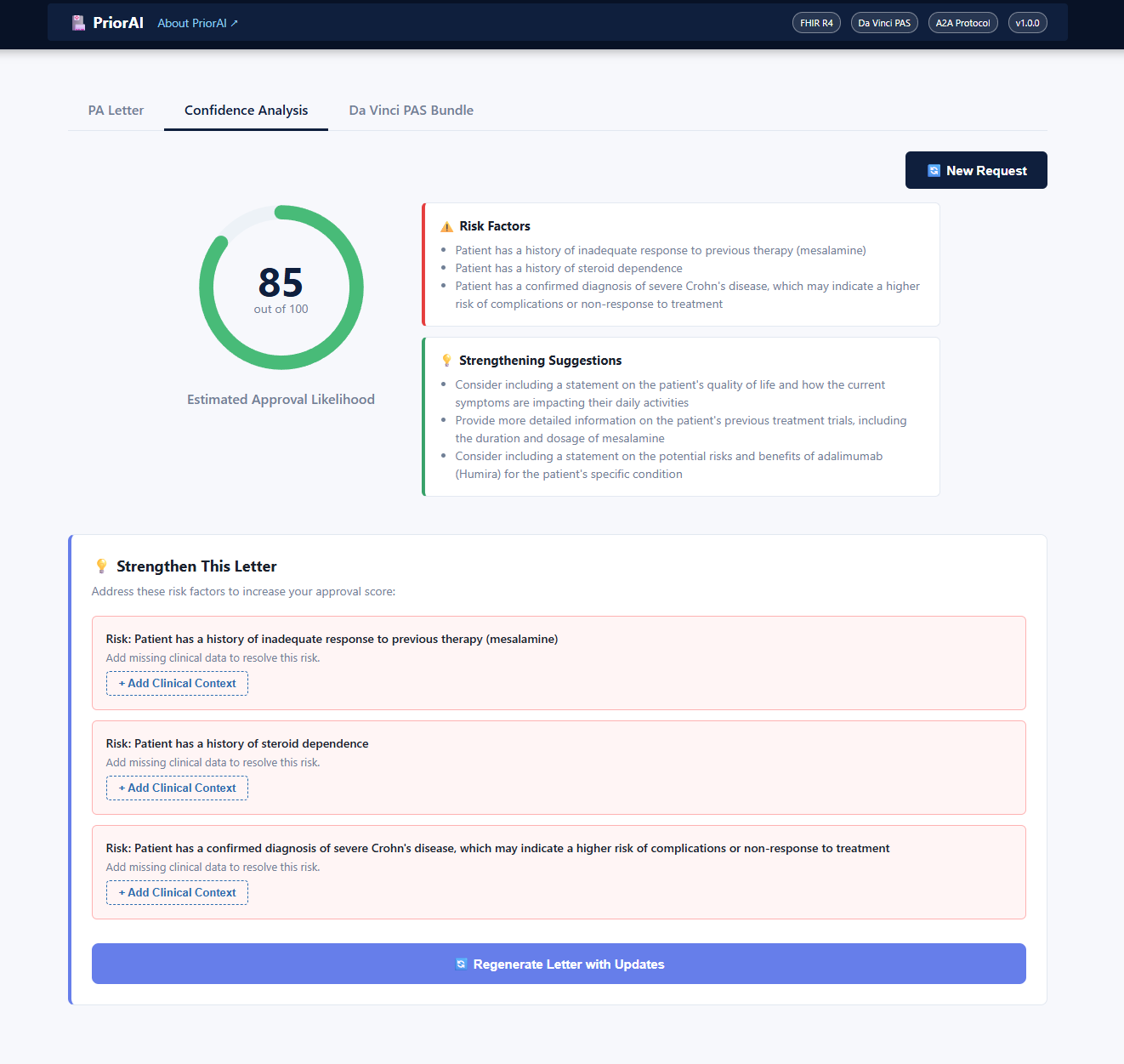
Confidence Analysis
Inspiration
The American healthcare system is bogged down by prior authorization—a manual, $31 billion administrative hurdle. When insurance companies started using AI to automate denials, it shifted the "burden of proof" onto overstretched clinical teams. PriorAI was born to level the playing field, giving physicians an autonomous agent to fight bureaucracy with the same speed and scale as the payers.
What it does
PriorAI is an autonomous agent that automates the end-to-end prior authorization and appeals process. By ingesting FHIR R4 records, it automatically detects clinical necessity, identifies failed step therapies, and generates submission-ready documentation in seconds. It includes a clinical safety layer to verify data accuracy and automatically enforces federal urgency timelines (CMS-0057-F) to ensure patients get care faster.
How we built it
The core logic is built as an A2A (Agent-to-Agent) platform published in the Prompt Opinion Marketplace. We utilized FHIR R4 standards for interoperability, allowing for seamless EHR ingestion without custom integrations. The system generates Da Vinci PAS-compliant FHIR bundles for electronic submission. For security, clinical data is processed in ephemeral, in-memory sandboxes, while 100% synthetic data from Synthea was used during the development and testing phases.
Challenges we ran into
Aligning clinical arguments with the hyper-specific, often opaque criteria of different insurance payers was a major hurdle. We had to ensure the agent didn't just write letters, but specifically addressed payer-specific ICD-10 requirements and clinical guidelines. Solving for "hallucinations" in a medical context also required building a secondary verification loop that cross-references every generated claim against the source FHIR record. Additionally, deploying on PromptOpinion platform was a major struggle as well. We solved this by iterating with the help of Claude.
Accomplishments that we're proud of
We successfully reduced a two-hour clinical task into a 20-second autonomous workflow. We are particularly proud of the Hallucination Verification score and the automated CMS-0057-F urgency flagging, which moves the needle from simple automation to active clinical advocacy.
What we learned
We learned that interoperability standards like FHIR and Da Vinci PAS are the key to scaling healthcare AI. Without these standards, AI remains a siloed tool. We also discovered that the "human-in-the-loop" model is most effective when the AI provides a "score" or "confidence level" rather than just a final output, allowing physicians to trust the automation.
What's next for PriorAI
The next phase involves expanding the agent's capability to handle real-time "peer-to-peer" tele-consultation preparation, synthesizing complex clinical journals to support appeals for rare diseases. We are also looking into deeper integration with major EHR providers to move from a marketplace tool to a native background service.

Log in or sign up for Devpost to join the conversation.