-
-
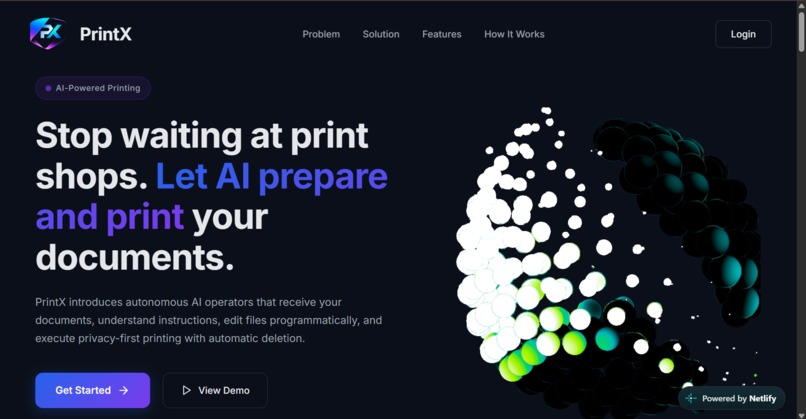
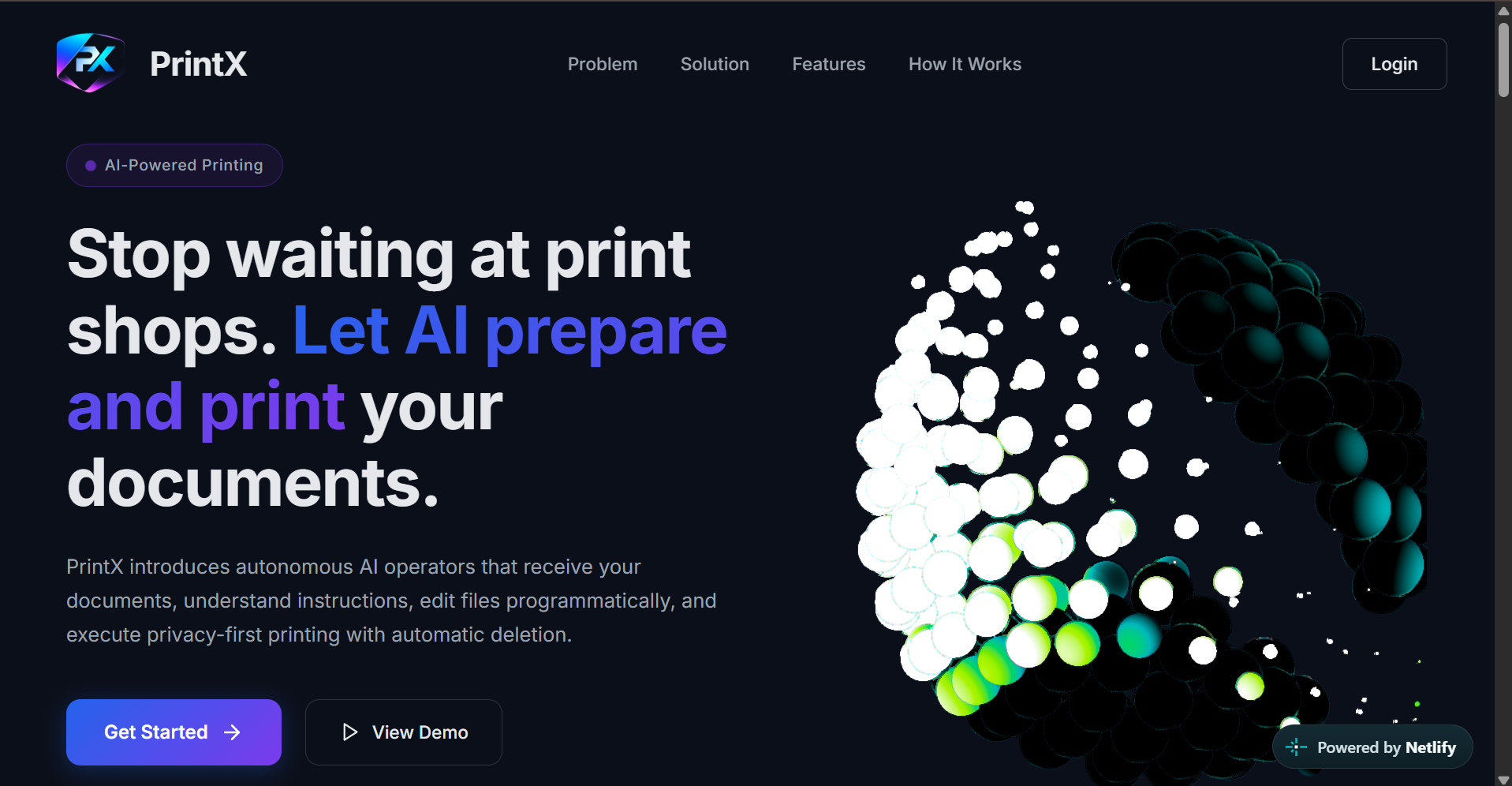
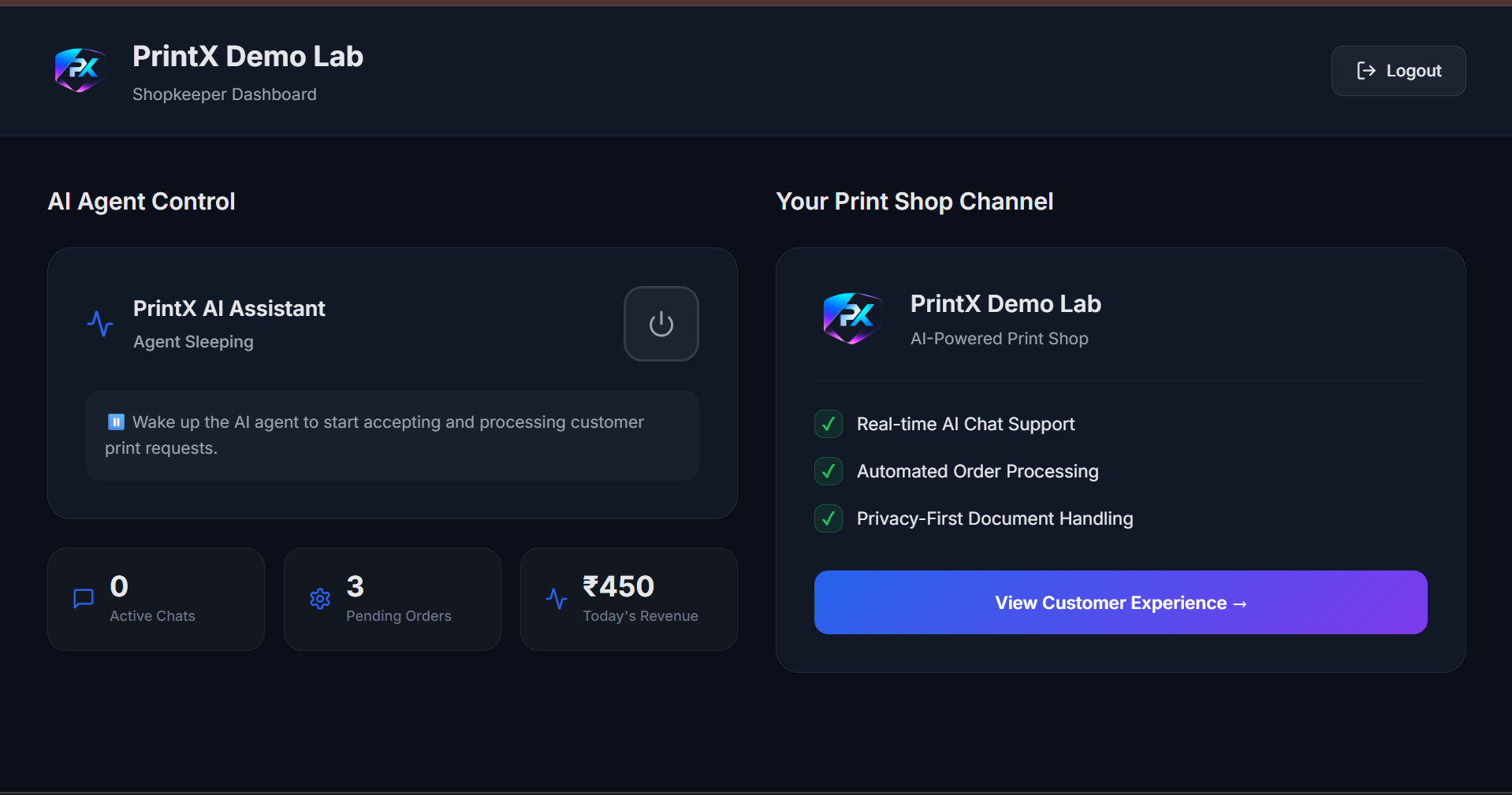
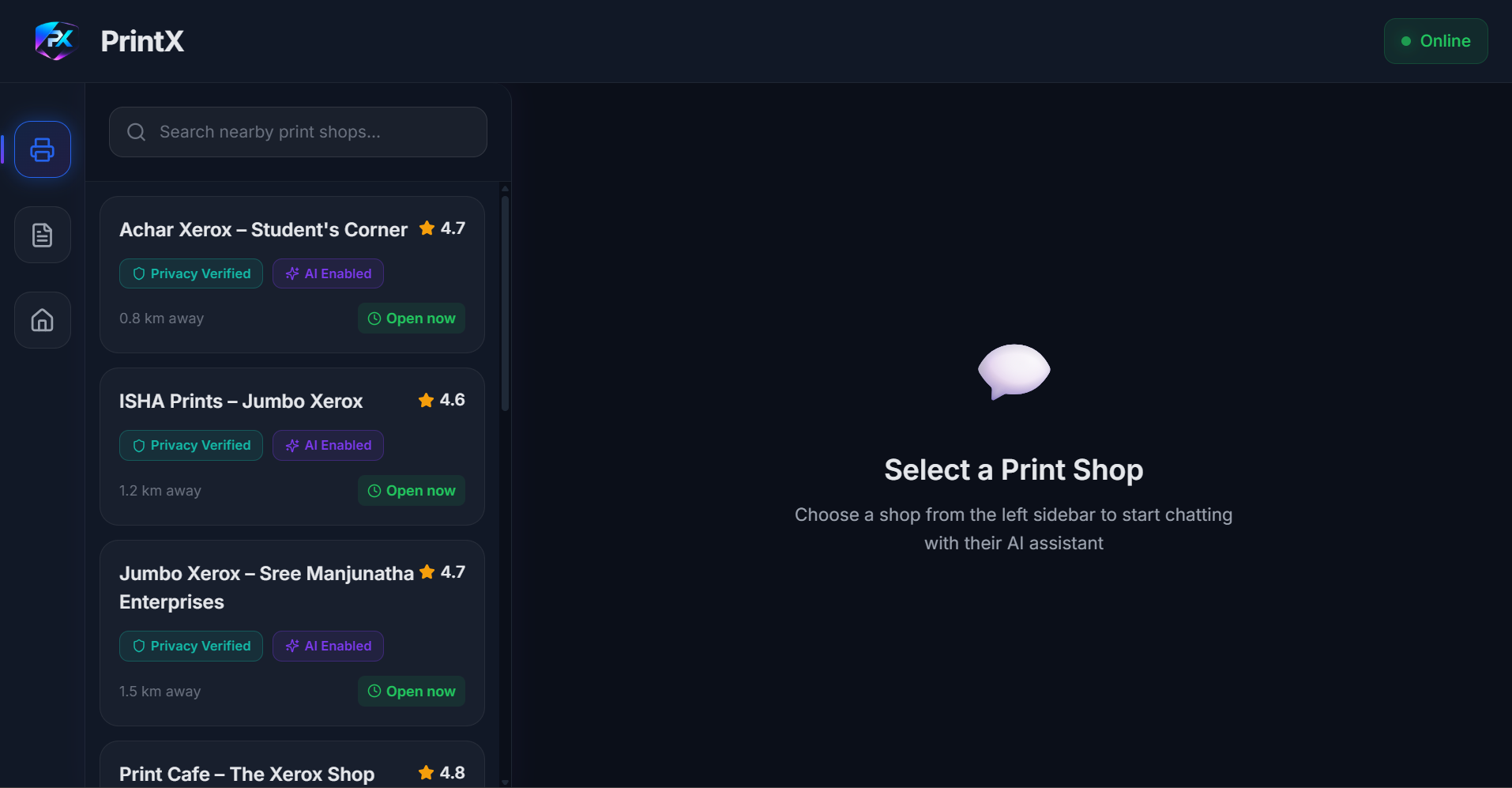
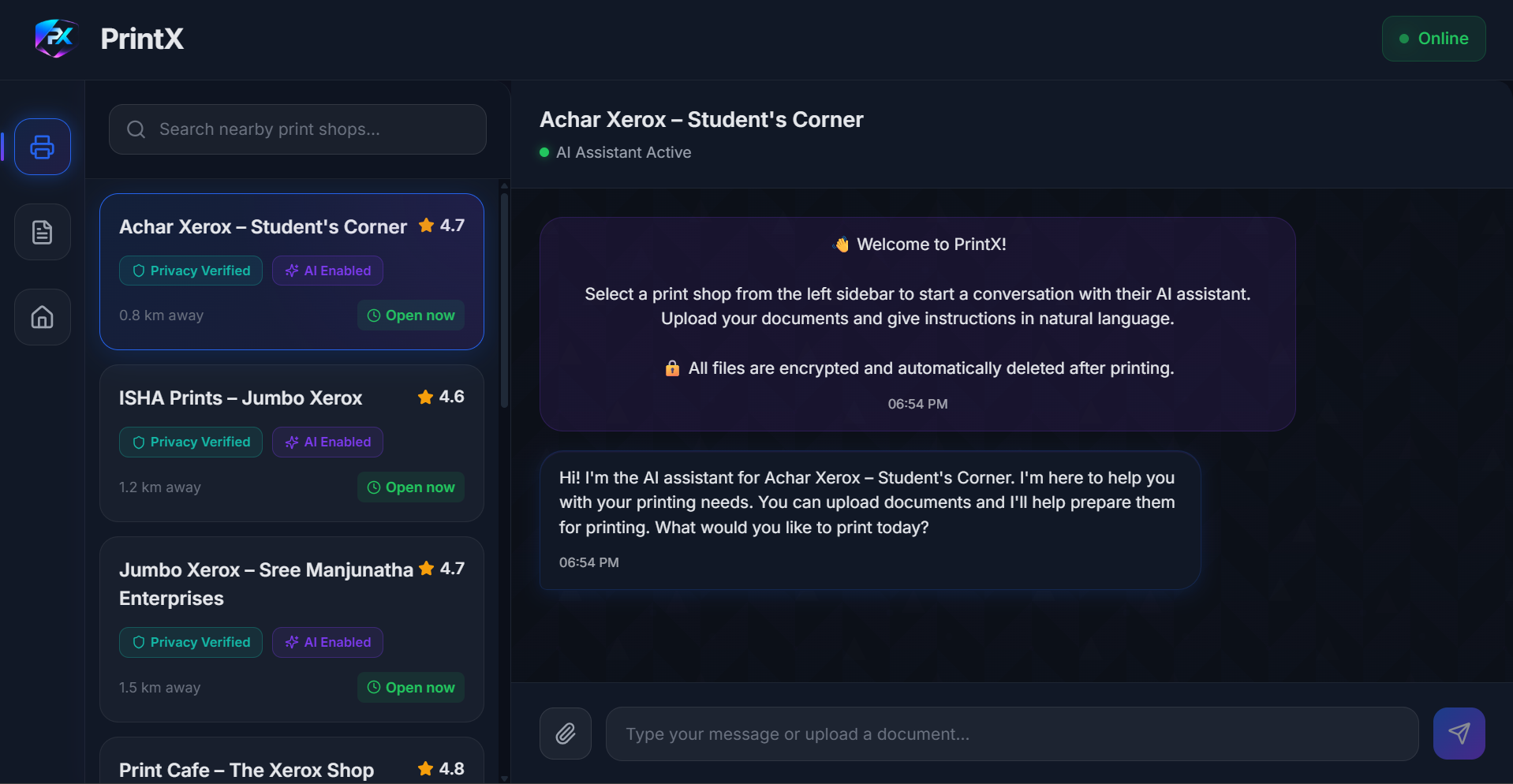
landing page
-
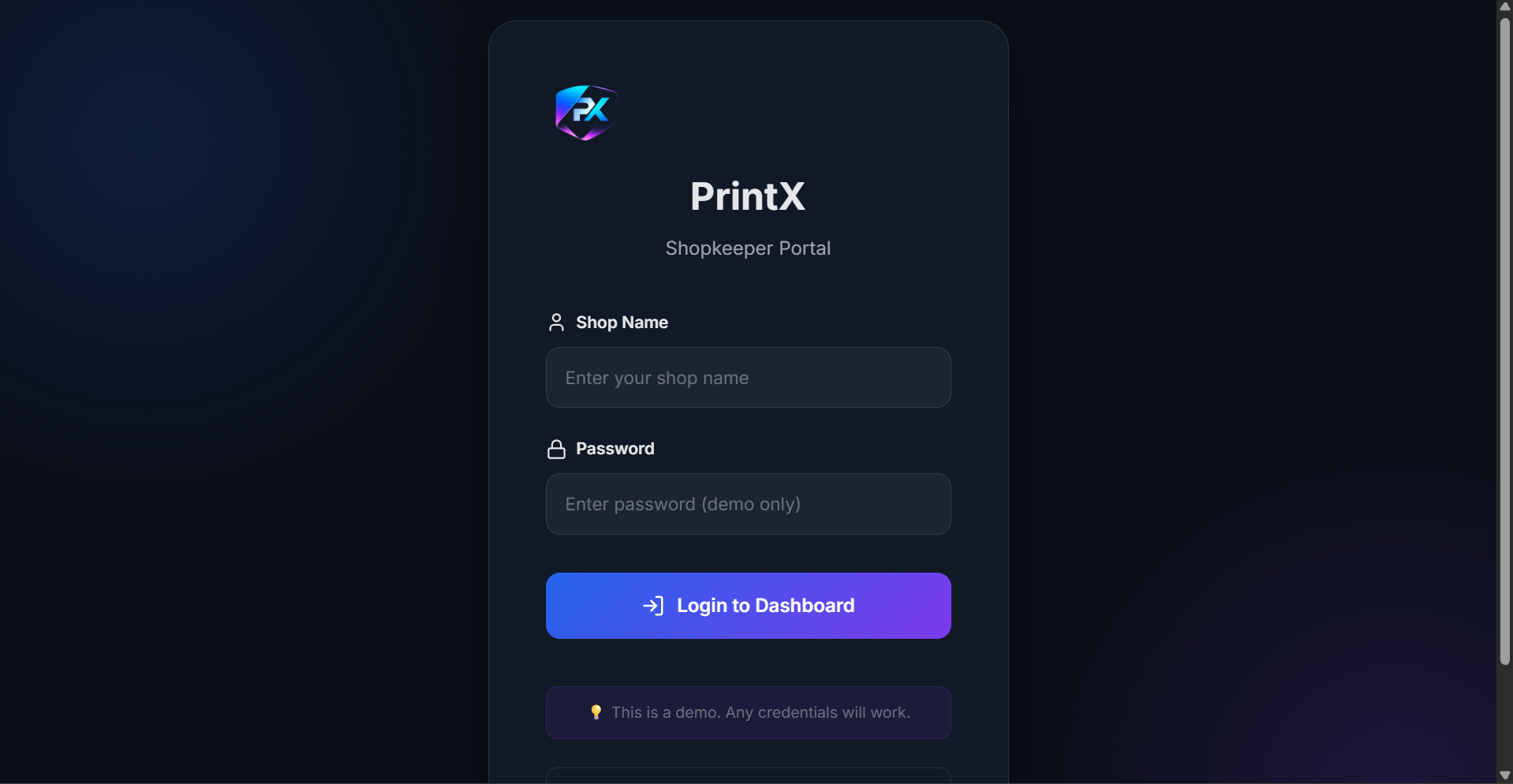
login page
-
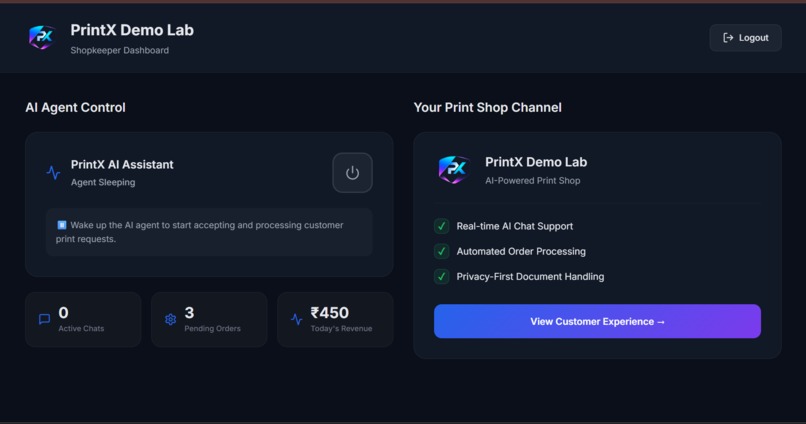
setup page
-
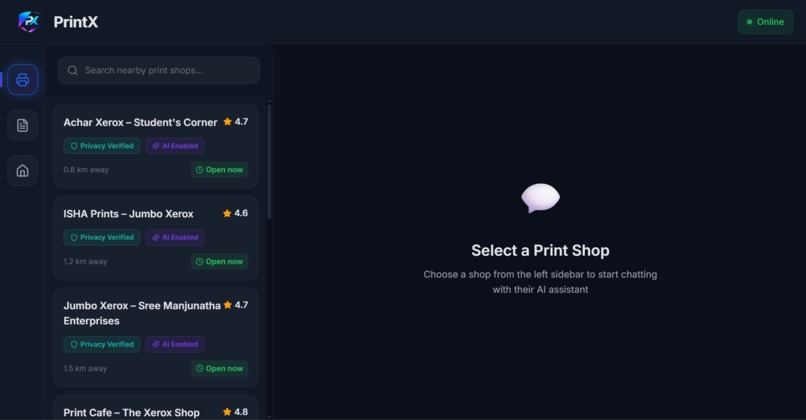
user interaction page
-
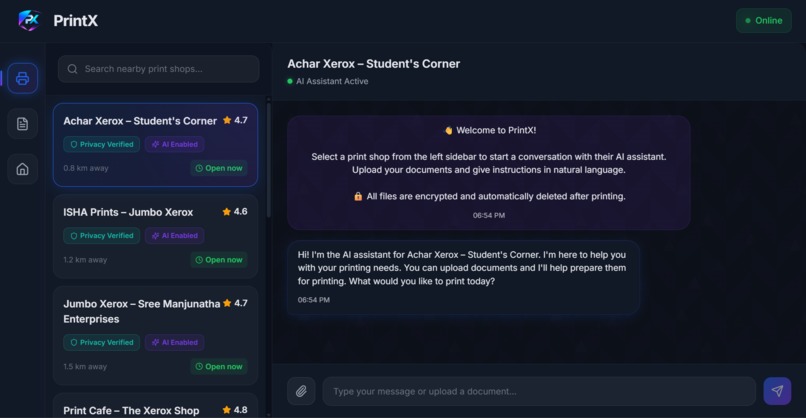
user conversion page
-
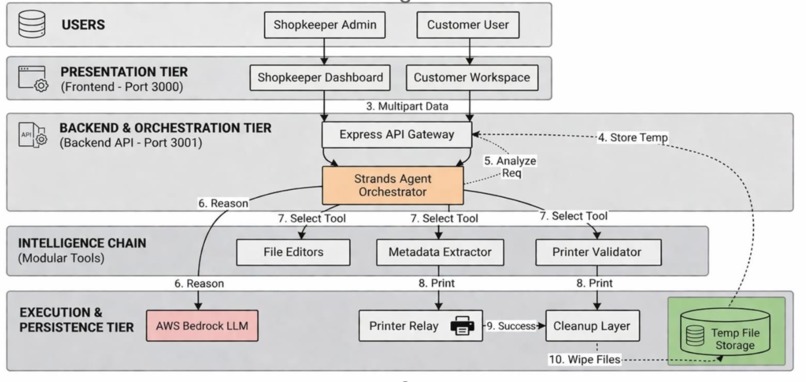
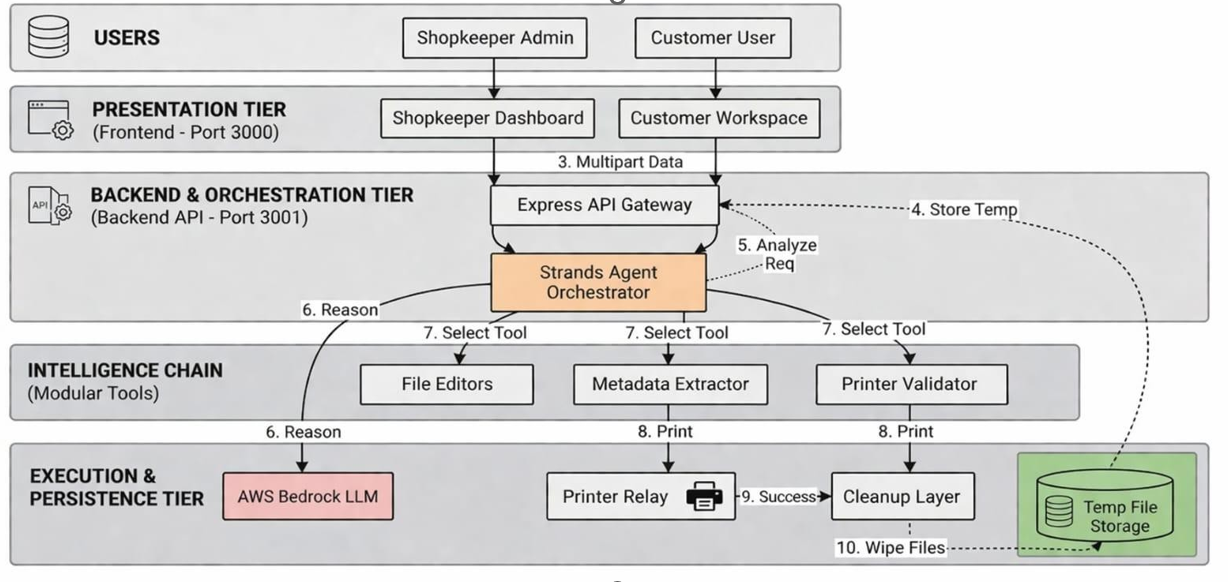
Architecture Diagrams
Inspiration
We've all stood outside a Xerox shop during college — waiting in line, sending files over WhatsApp, explaining what needs to be printed, and watching the shopkeeper repeat the same steps for every customer.
The problem isn't printing itself. It's the manual workflow surrounding printing. Documents have to be downloaded, instructions interpreted, names or pages edited, copies created, print settings configured, and files eventually removed. When multiple customers arrive together, these repetitive tasks create queues, errors, and unnecessary workload for shopkeepers — and sensitive documents can remain stored long after the job is done.
What it does
PrintX turns this traditional workflow into an AI-orchestrated printing pipeline. Users select a print shop, upload a document, and describe what they need in plain language — for example, "Create two more copies and change the names to Omkar L Kulkarni and Monika SM."
Instead of manually performing every operation, PrintX understands the request, plans the required actions, invokes the right document-processing tools, generates the output, and returns it for the user to verify before it's sent to print.
The core workflow: Select Shop → Upload → Describe → Agent Processes → Preview → Print → Clean Up.
How we built it
PrintX separates reasoning from execution. AWS Bedrock provides the reasoning capability, while the Strands Agents SDK orchestrates the agent and its available tools. The agent decides what needs to happen; deterministic tools handle how the operation is actually performed — so the LLM is never directly manipulating document files itself.
Human Intent → AWS Bedrock → Strands Agent → Tool Selection →
Deterministic Document Processing → User Preview →
Print Execution → Temporary File Cleanup
Amazon S3 handles temporary document storage, and AWS Lambda provides isolated execution for processing operations.
Tech stack: React + Tailwind CSS (frontend), Node.js / Express / TypeScript (backend), AWS Bedrock (AI), Strands Agents SDK (agent orchestration), Amazon S3 (storage), AWS Lambda (execution), Yarn (package management).
Because print shops handle resumes, academic records, and other personal documents, we treated storage as temporary workflow data rather than permanent application data: Upload → Process → Preview → Print → Delete.
Challenges we ran into
- Translating ambiguous natural-language instructions ("print only the first page twice," "remove the last page") into deterministic document operations
- Defining clear boundaries between what the agent decides and what the tools execute
- Coordinating multi-step workflows reliably
- Building a trustworthy preview step before a physical, irreversible action
- Managing the lifecycle of temporary documents end-to-end
The physical printing step also introduces a challenge most AI applications don't have: the final output isn't another message or API response — it's a real document produced by a physical printer.
Accomplishments that we're proud of
Getting an agent to reliably turn messy, human phrasing into a safe, verifiable, multi-step document pipeline — while keeping the LLM out of direct file manipulation — and doing it with a genuine privacy-by-design lifecycle (nothing sticks around after the print job finishes).
What we learned
The biggest lesson: an agent is not simply an LLM connected to a chat interface. Understanding a request is only the beginning — the system still needs reliable mechanisms to modify documents, generate files, manage storage, and eventually trigger a physical action. That led us to a simple principle:
Let the model reason. Let the agent orchestrate. Let deterministic tools execute.
Keeping these responsibilities separate made the system more predictable and easier to extend.
What's next for PrintX
Printing is just the starting point — it's a familiar example of a bigger pattern: humans translating customer intent into repetitive operational tasks. We want to explore what happens when that translation layer becomes autonomous more broadly, moving AI out of the chat window and into an execution layer that connects human intent to real-world outcomes.
PrintX doesn't replace the printer. It replaces the manual workflow surrounding it.
Built With
- amazon-web-services
- api
- application
- automation
- cloud
- computing
- document
- file
- human-in-the-loop
- node.js
- privacy
- processing
- react
- real-world
- rest
- serverless
- strands
- typescript
- web
- workflow