-
-
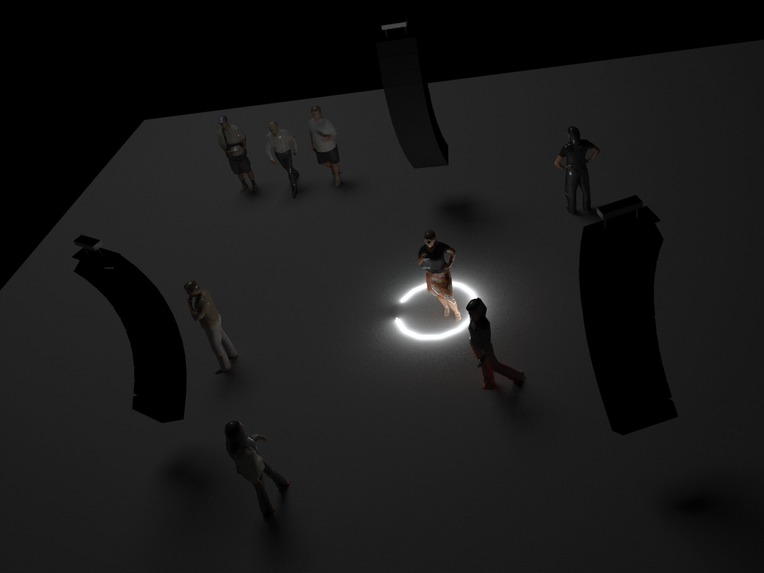
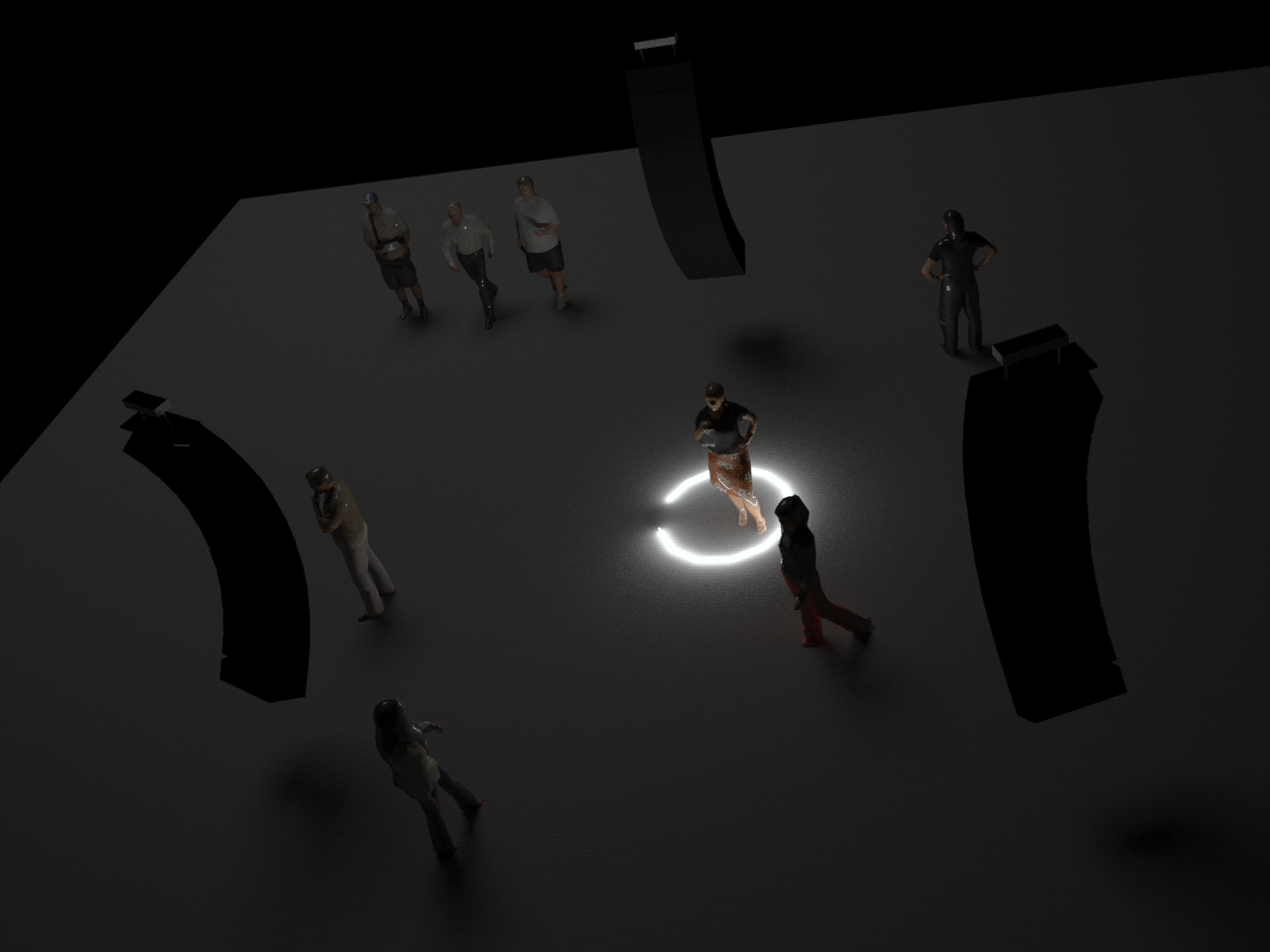
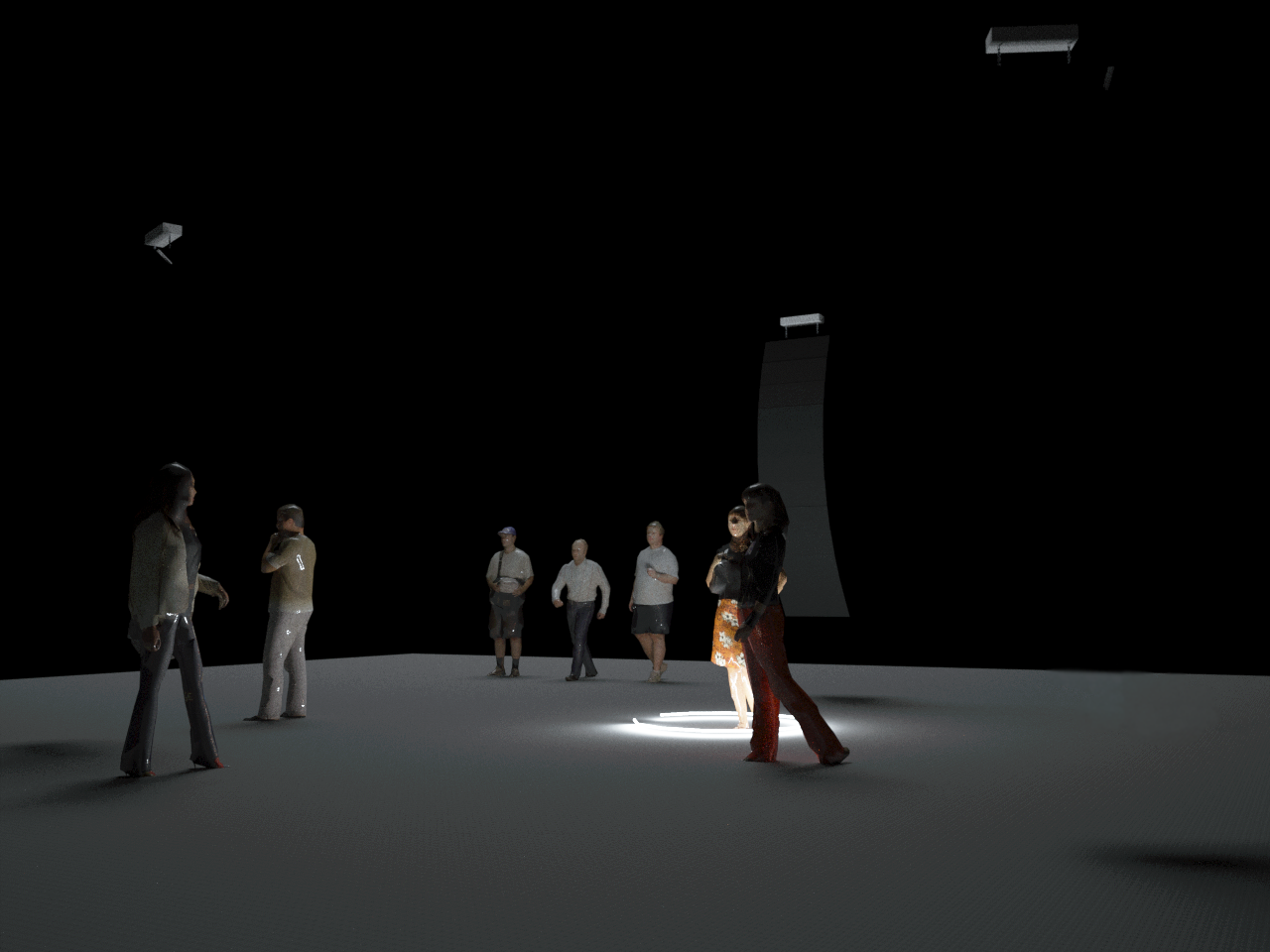
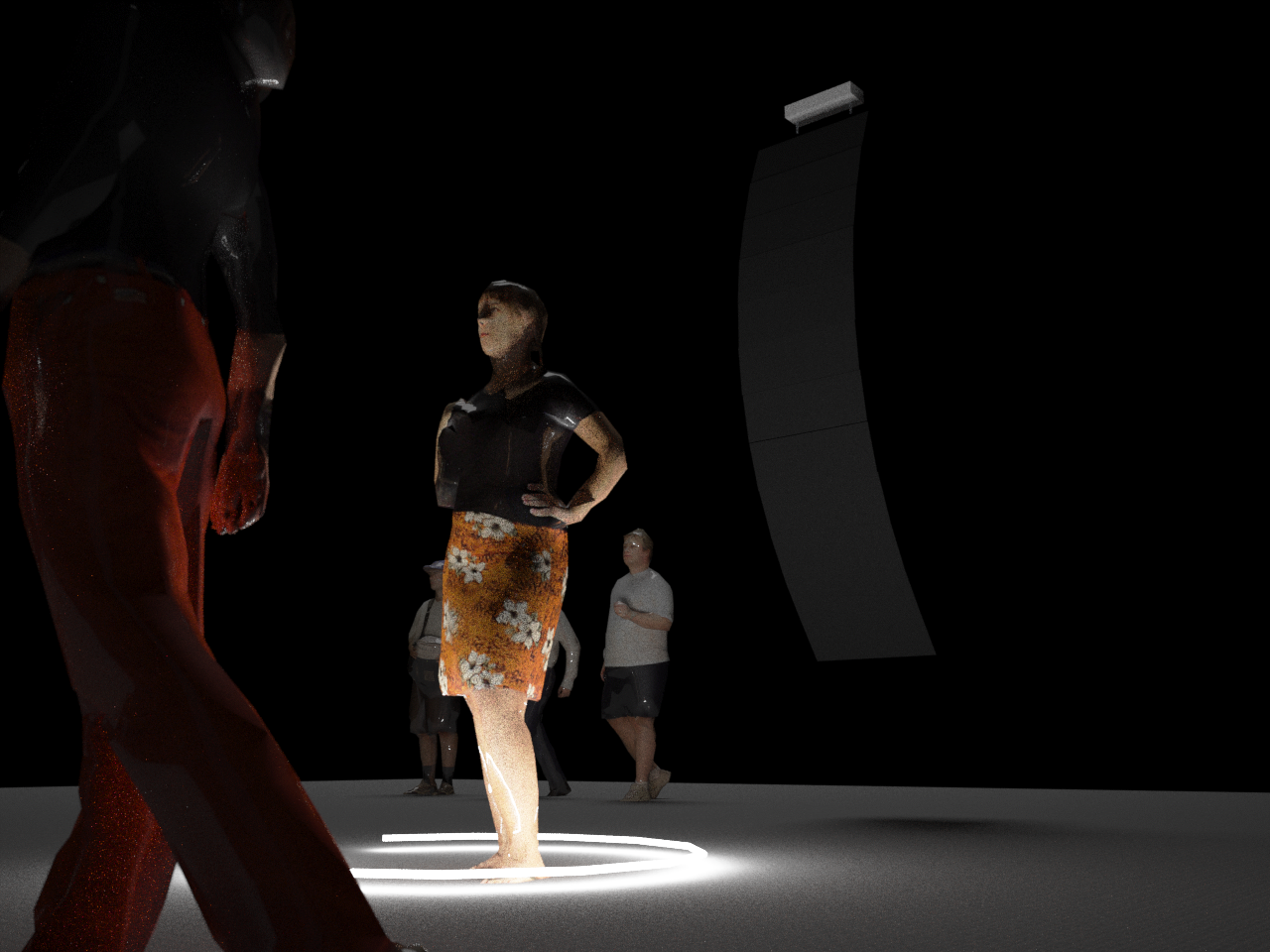
Setup of the 3 line-array speakers
-
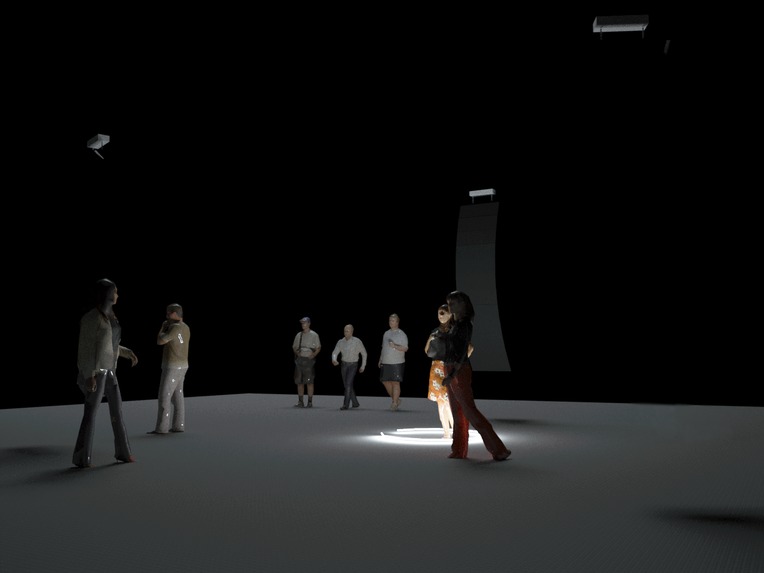
Visitors can walk outside or between speakers
-
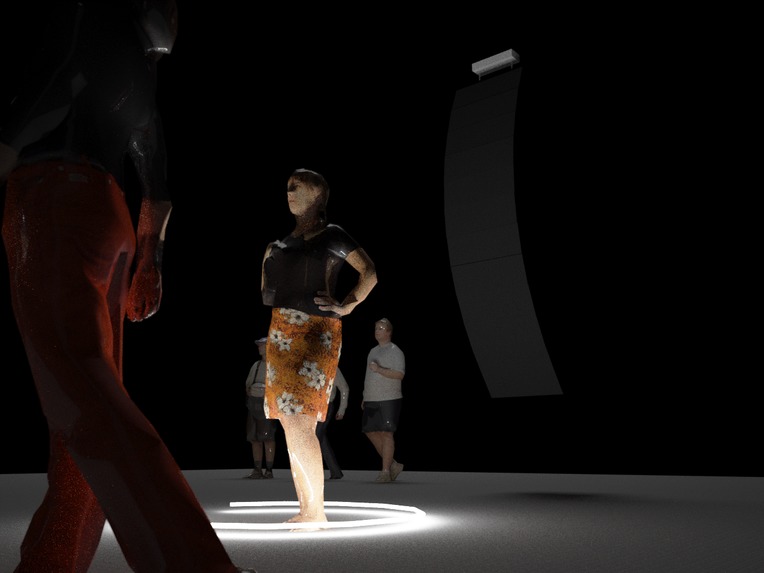
A DMX controlled circle light at the center halps defining the different parts of the game
-
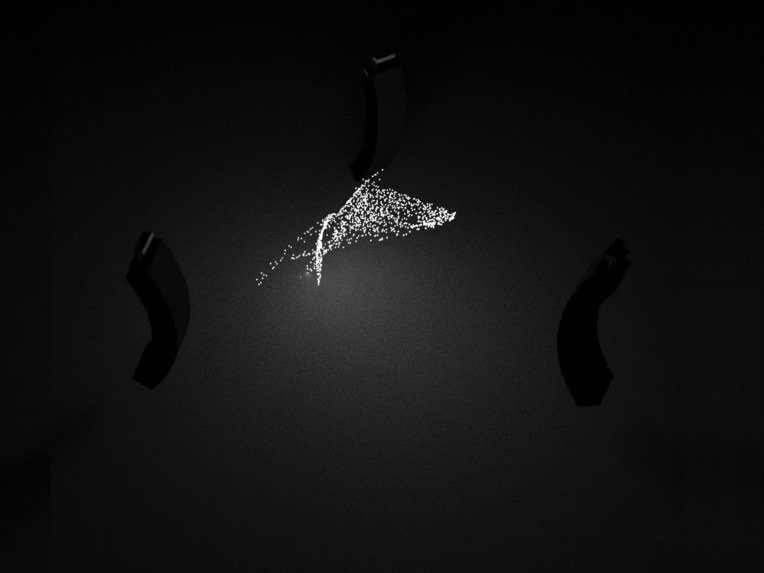
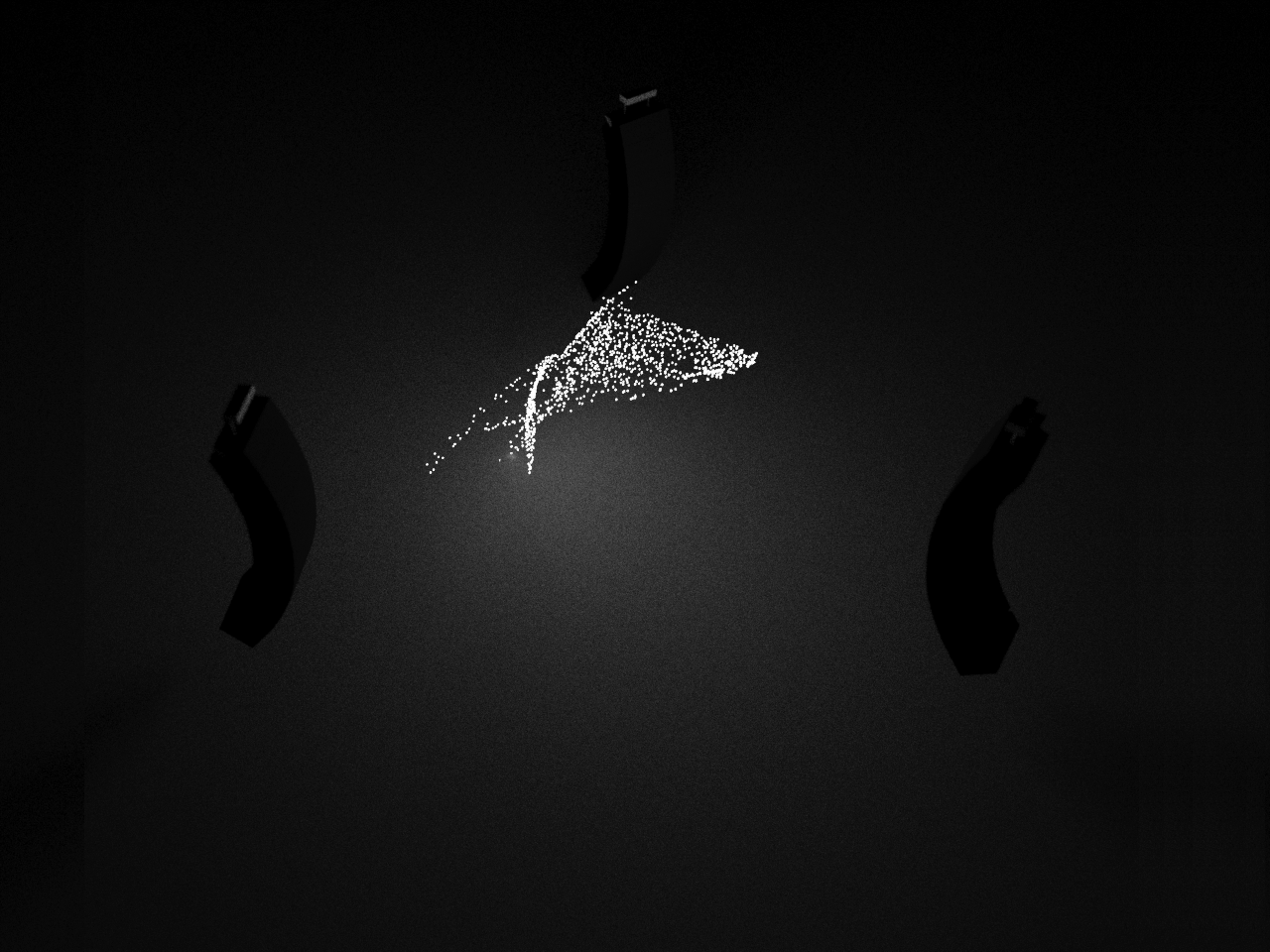
Audio spatialisation simulation based on particles
-
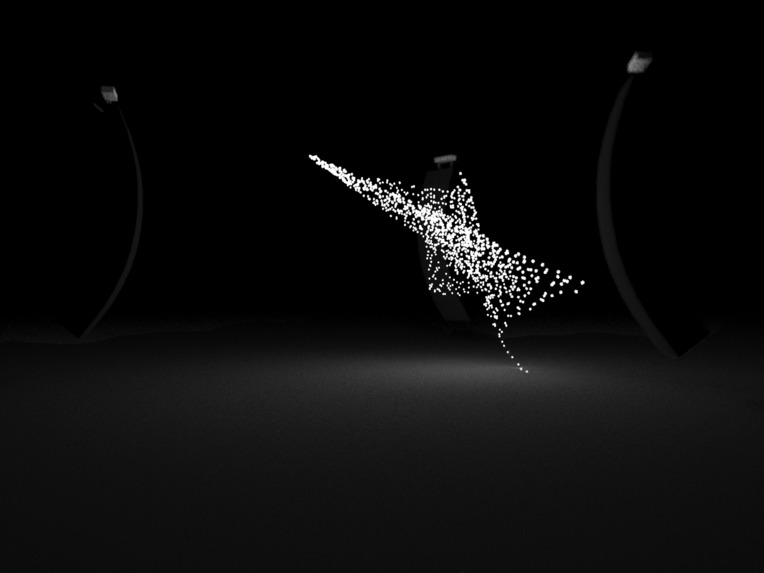
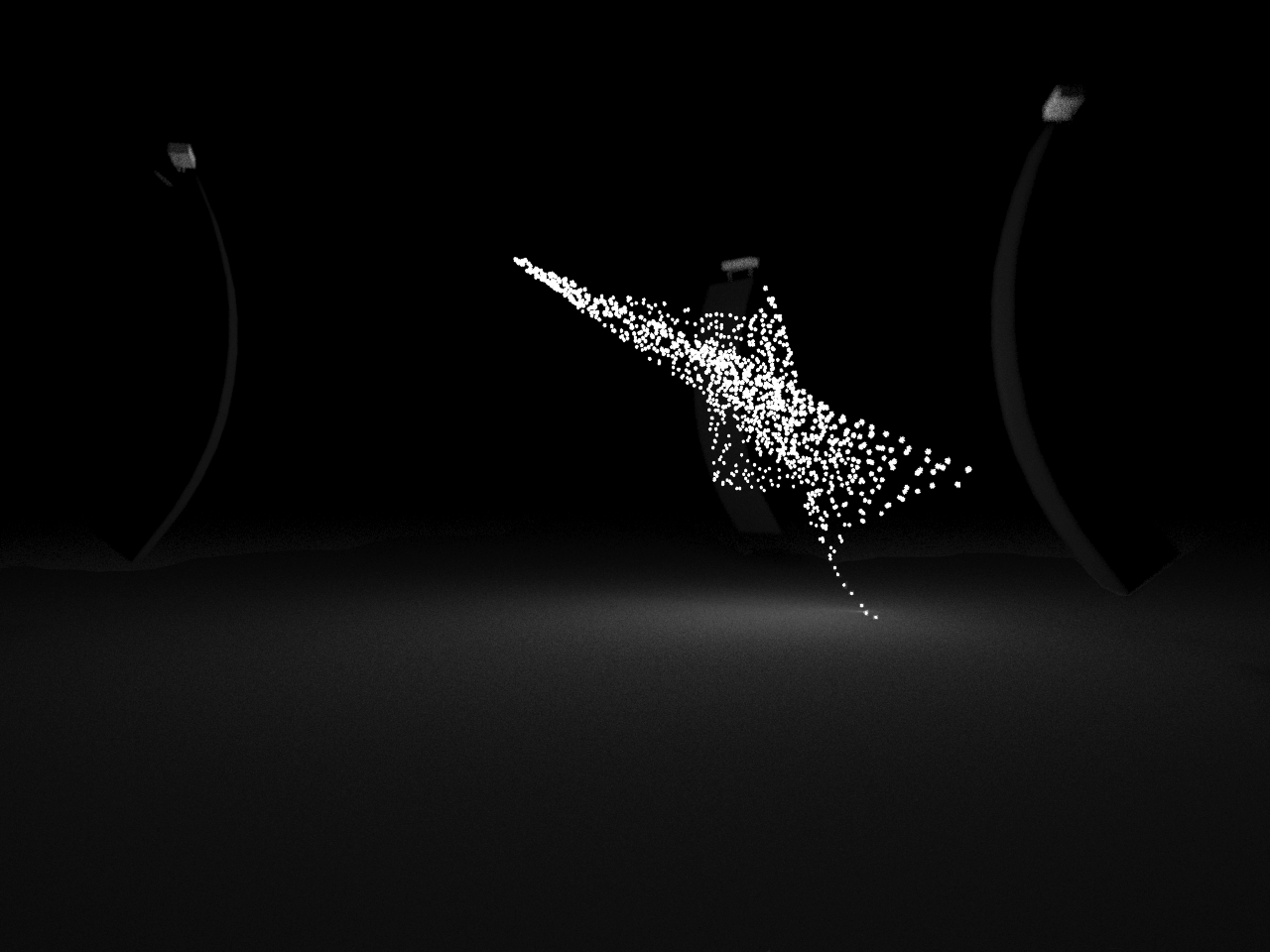
Audio spatialisation simulation based on particles
-
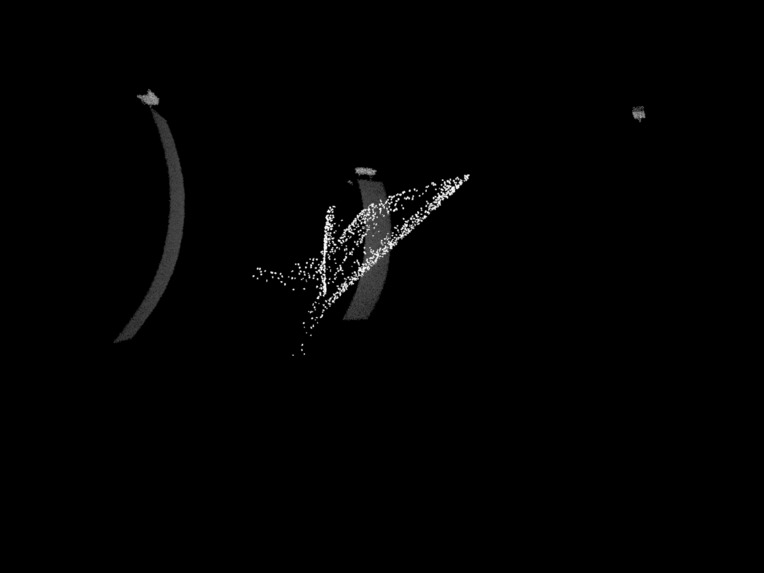
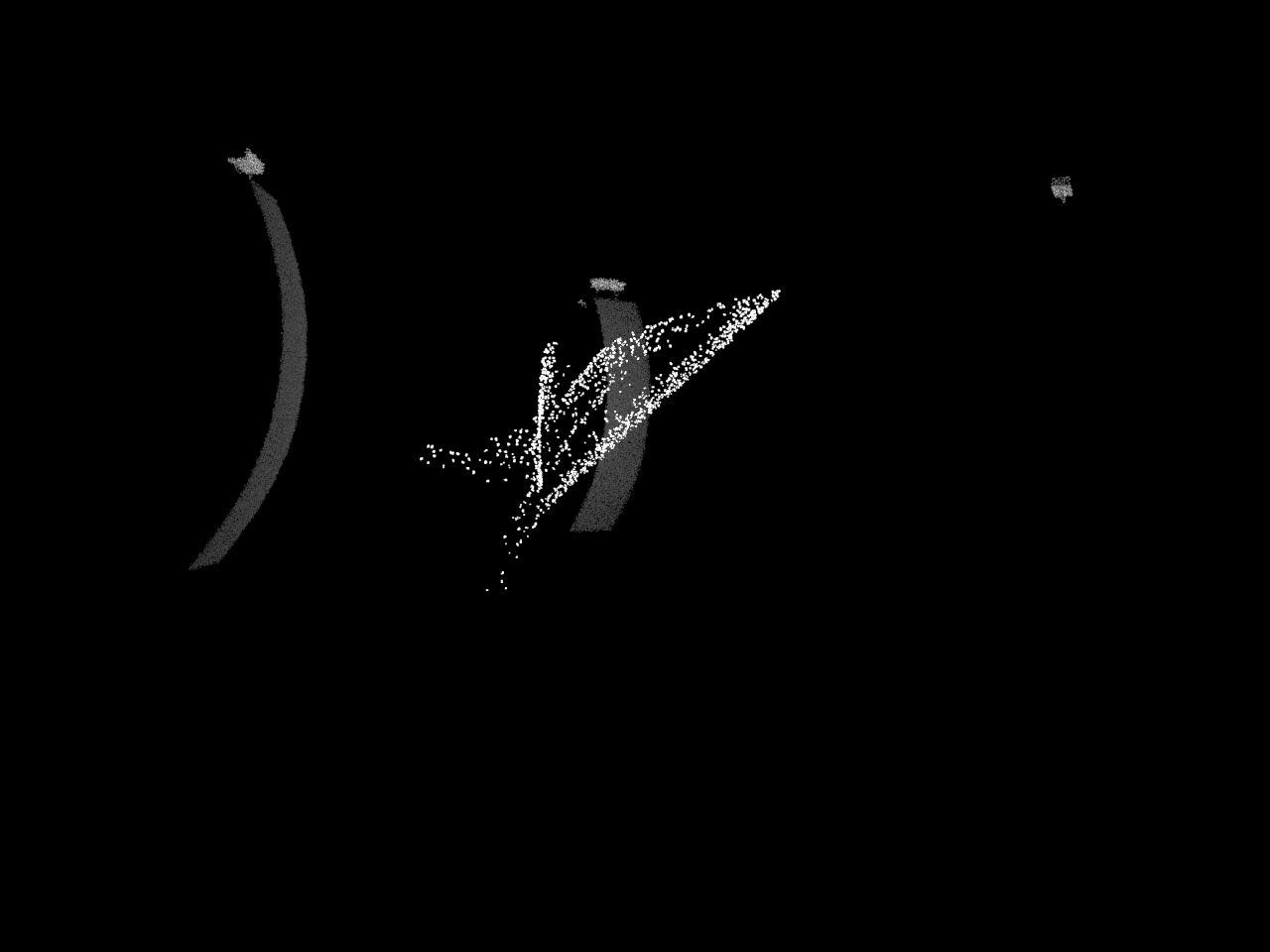
Audio spatialisation simulation based on particles
Inspiration
- From previous 3d-audio piece Bacchantes: https://www.opasquet.fr/bacchantes/
- James Turell’s room light installations: https://tinyurl.com/mmsvh858
- Manfred Mohr and Vera Molnar: https://tinyurl.com/h4yed3ww
- Use of Flucoma (for which I am part of): https://www.flucoma.org/about/
- More text: https://www.opasquet.fr/principles-theory-wealth/
What it does
Principles of the Theory of Wealth (temporary title) is an immersive generative music “music-theatre” piece based on live fictional concurrent game strategies constituting a dramaturgy. The set of the piece consists on three line-array speakers placed in triangle (see pictures below). It makes use of the Nash Equilibrium, from Game Theory, as a convergence tool for controlling my compositional machine learning system Flucoma (audio segmentation and generative systems from a dataset of micro-phonic grains).
The piece narrates, in a logical and sequential ways, a fictional match between three opposite computer game strategies: Deep Blue, AlphaGo and MuZero. The three algorithms all won against human master players. They show how far autonomous logical thinking can go. Their notoriety moreover demonstrates how games not only represent the information world but are ruling it in its entirety. Such a general administration is emphasized by new-liberal and ultra-liberal economic game systems. Guy Debord’s Society of the Spectacle is not only a show but a complex mess disconnected from tangible action. Deep Blue, AlphaGo and MuZero represent elementary rational mechanisms of that clutter. Nick Bostrom’s hypothesis about living in a simulation here takes a more societal course.
Team
I am looking for collaborators involved with the programming part (I maybe cannot do everything myself) and the artistic part (mostly the generative vs. story telling aspect of it).
How we built it
Each three “character”, speakers, of the piece carries a different game strategy and is represented by a computer. We here have Deep Blue, the chess computer, AlphaGo, the Go computer, and MuZero, the ultimate master learning rules by itself. We need to develop those three strategies:
- Deep Blue uses brute force computing power. This is very good for audio noise synthesis.
- AlphaGo uses a Monte Carlo tree search algorithm. This is very good for answering using a rhythmic tree data representation walking within the search space.
- MuZero solves problems by learning a model that focuses only on the most important aspects of the environment for planning. This is good for clustering musical parts.
Challenges we run into
The difficulty to keep a "narration", a musical story-line using rhythmic patterns between the three machines. The overall should end up being a global concurrent system in a similar way as GANs; or using actually then. The biggest challenge is that it should not be a demo, not being boring after a while. The real challenge is thus finding a valuable way to transform such a system into a piece.
Accomplishments that we're proud of
Bacchantes: https://www.opasquet.fr/bacchantes/ and all the previous pieces in relation with that: https://www.opasquet.fr/keys-kingdom/ (Hip Hop piece using a bayesian approach) https://www.opasquet.fr/proxima/ (old-style CA) https://www.opasquet.fr/thinking-things/ (voice synthesis + 3d printed robots and concatenative synthesis) https://www.opasquet.fr/dual-coronagraphs/ (generative macroscopic (!) form using noisy GA and perlin noise as data)
What's next for Principles of the Theory of Wealth
The piece would eventually be available as a traditional musical album through either Mego Edition (Vienna), Motto Ed. (Berlin), Opal Tapes (London) or Skam Records (Detroit). I am then planning to create pieces in the same direction using the same type of “logical narration” exploring Albert Einstein’s sudden moment of enlightenment about general relativity while walking on the hill of Bern’s Rosengarten.
Build with
Max MSP, Rhino, Python, my own rhythm generative system, Flucoma, Modalys for modal physical modelling audio synthesis, Spat for audio spatialization.
Built With
- max
- python
- rhino


Log in or sign up for Devpost to join the conversation.